Do Now:
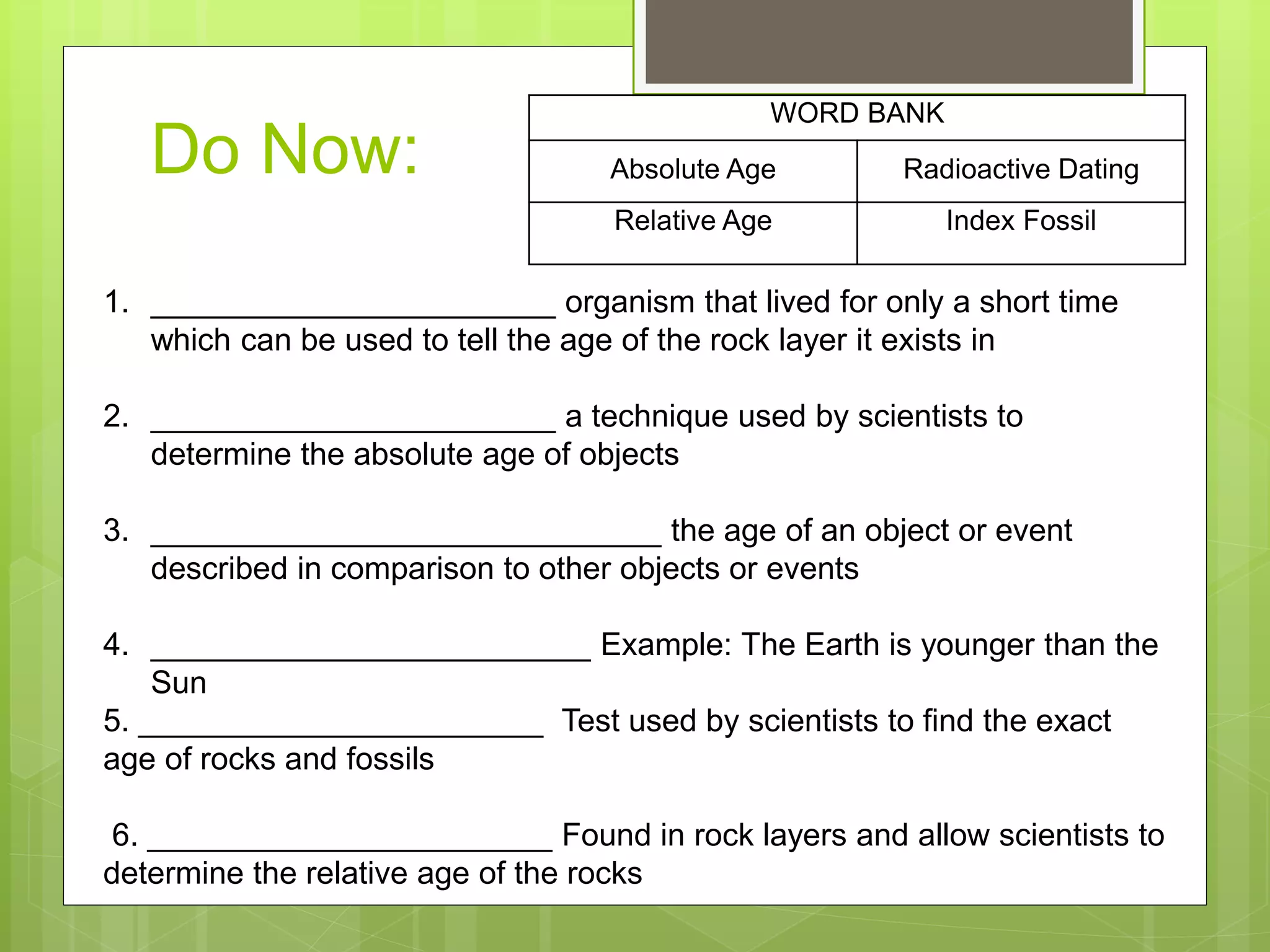
WORD BANK
Absolute Age Radioactive Dating
Relative Age Index Fossil
1. _______________________ organism that lived for only a short time
which can be used to tell the age of the rock layer it exists in
2. _______________________ a technique used by scientists to
determine the absolute age of objects
3. _____________________________ the age of an object or event
described in comparison to other objects or events
4. _________________________ Example: The Earth is younger than the
Sun
5. _______________________ Test used by scientists to find the exact
age of rocks and fossils
6. _______________________ Found in rock layers and allow scientists to
determine the relative age of the rocks
Key Idea
 Scientists can find of relative age of rock
layers based on their order in the earth.
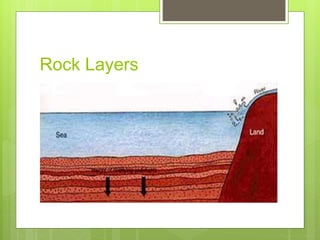
Rock Layers
 Sedimentary rocks are formed when
sediments are cemented together by heat and
pressure to form rocks
 This conversion of sediments into rock
happens after the sediments are buried by
new sediments. Sedimentary rocks form in
horizontal layers.
Rock Layers
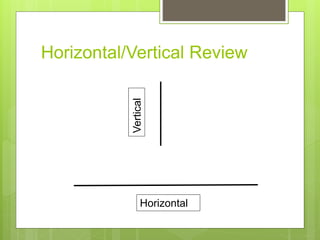
Horizontal/Vertical Review
Vertical
Horizontal
Rock Layers
 When the sedimentary rock buried deep enough
they undergo more heat and pressure to
become different kinds of rock.
 Quick Review: if sedimentary rocks undergo heat
and pressure to become a new type of rock, what
type of rock is it now??
Rock Layers
 These layers can be used to help scientists to
date rocks and fossils.
Law of Superposition
The Law of Superposition states
that each undisturbed layer of
sedimentary rock is older than a
layer above it.
Law of Superposition
 The bottom layer of rock forms first, which means that
it is the oldest
 Each layer above that is younger than the one below
and the top layer is the youngest of all.
 This ordering is a type of relative dating because you
can’t be sure when each layer was formed, so you
know the layer’s age in relation to the other layers
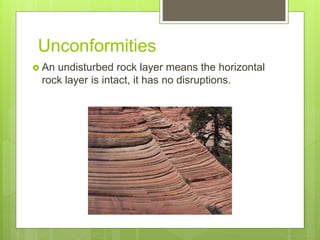
Unconformities
 An undisturbed rock layer means the horizontal
rock layer is intact, it has no disruptions.
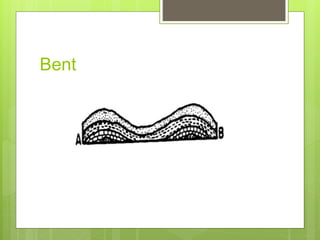
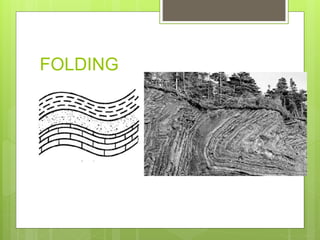
Bent
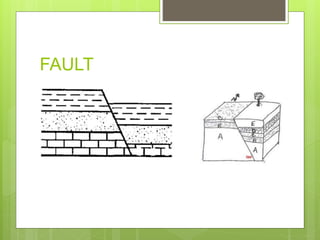
FAULT
FOLDING
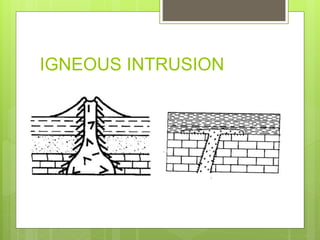
IGNEOUS INTRUSION
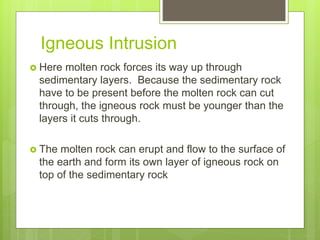
Igneous Intrusion
 Here molten rock forces its way up through
sedimentary layers. Because the sedimentary rock
have to be present before the molten rock can cut
through, the igneous rock must be younger than the
layers it cuts through.
 The molten rock can erupt and flow to the surface of
the earth and form its own layer of igneous rock on
top of the sedimentary rock
Unconformity
If there is an unconformity, then the
youngest layer may not be on top.
Scientists can determine the original order
by comparing the disturbed rock layers with
a similar stack of undisturbed rock layers.
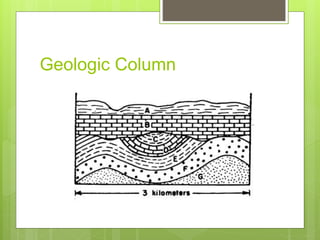
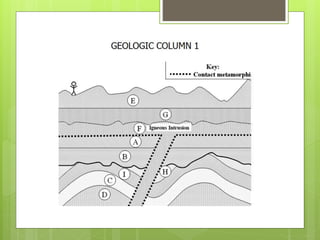
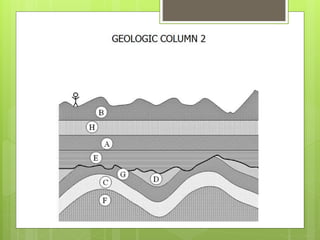
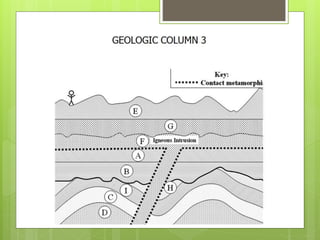
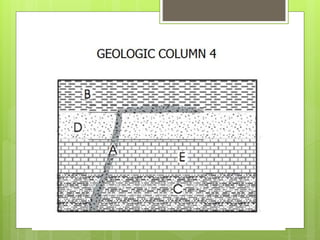
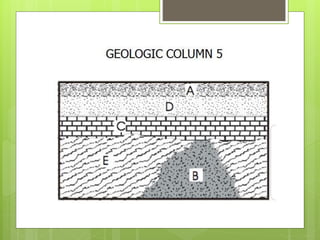
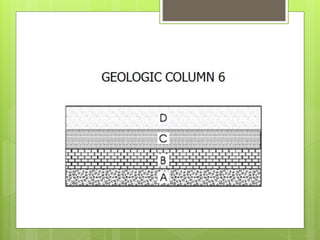
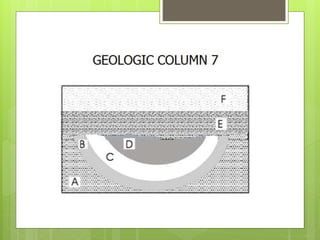
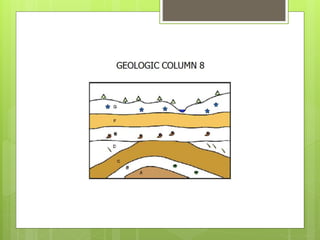
Geologic Column
Gallery Walk!
 2 minutes at each station
 Write down the order of age of each layer of
the geologic column from OLDEST to
YOUNGEST
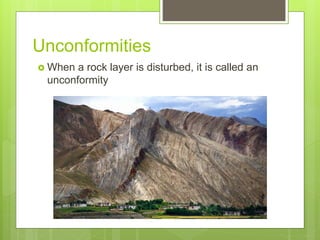
Unconformities
 When a rock layer is disturbed, it is called an
unconformity
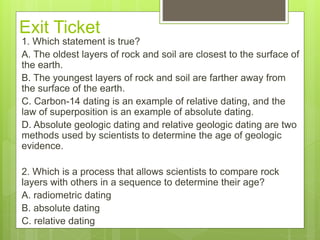
Exit Ticket
1. Which statement is true?
A. The oldest layers of rock and soil are closest to the surface of
the earth.
B. The youngest layers of rock and soil are farther away from
the surface of the earth.
C. Carbon-14 dating is an example of relative dating, and the
law of superposition is an example of absolute dating.
D. Absolute geologic dating and relative geologic dating are two
methods used by scientists to determine the age of geologic
evidence.
2. Which is a process that allows scientists to compare rock
layers with others in a sequence to determine their age?
A. radiometric dating
B. absolute dating
C. relative dating

Law of superposition ppt

  • 1.
    Do Now: WORD BANK AbsoluteAge Radioactive Dating Relative Age Index Fossil 1. _______________________ organism that lived for only a short time which can be used to tell the age of the rock layer it exists in 2. _______________________ a technique used by scientists to determine the absolute age of objects 3. _____________________________ the age of an object or event described in comparison to other objects or events 4. _________________________ Example: The Earth is younger than the Sun 5. _______________________ Test used by scientists to find the exact age of rocks and fossils 6. _______________________ Found in rock layers and allow scientists to determine the relative age of the rocks
  • 2.
    Key Idea  Scientistscan find of relative age of rock layers based on their order in the earth.
  • 3.
    Rock Layers  Sedimentaryrocks are formed when sediments are cemented together by heat and pressure to form rocks  This conversion of sediments into rock happens after the sediments are buried by new sediments. Sedimentary rocks form in horizontal layers.
  • 4.
  • 5.
  • 6.
    Rock Layers  Whenthe sedimentary rock buried deep enough they undergo more heat and pressure to become different kinds of rock.  Quick Review: if sedimentary rocks undergo heat and pressure to become a new type of rock, what type of rock is it now??
  • 7.
    Rock Layers  Theselayers can be used to help scientists to date rocks and fossils.
  • 8.
    Law of Superposition TheLaw of Superposition states that each undisturbed layer of sedimentary rock is older than a layer above it.
  • 9.
    Law of Superposition The bottom layer of rock forms first, which means that it is the oldest  Each layer above that is younger than the one below and the top layer is the youngest of all.  This ordering is a type of relative dating because you can’t be sure when each layer was formed, so you know the layer’s age in relation to the other layers
  • 10.
    Unconformities  An undisturbedrock layer means the horizontal rock layer is intact, it has no disruptions.
  • 11.
  • 12.
  • 13.
  • 14.
  • 15.
    Igneous Intrusion  Heremolten rock forces its way up through sedimentary layers. Because the sedimentary rock have to be present before the molten rock can cut through, the igneous rock must be younger than the layers it cuts through.  The molten rock can erupt and flow to the surface of the earth and form its own layer of igneous rock on top of the sedimentary rock
  • 16.
    Unconformity If there isan unconformity, then the youngest layer may not be on top. Scientists can determine the original order by comparing the disturbed rock layers with a similar stack of undisturbed rock layers.
  • 17.
  • 18.
    Gallery Walk!  2minutes at each station  Write down the order of age of each layer of the geologic column from OLDEST to YOUNGEST
  • 19.
    Unconformities  When arock layer is disturbed, it is called an unconformity
  • 28.
    Exit Ticket 1. Whichstatement is true? A. The oldest layers of rock and soil are closest to the surface of the earth. B. The youngest layers of rock and soil are farther away from the surface of the earth. C. Carbon-14 dating is an example of relative dating, and the law of superposition is an example of absolute dating. D. Absolute geologic dating and relative geologic dating are two methods used by scientists to determine the age of geologic evidence. 2. Which is a process that allows scientists to compare rock layers with others in a sequence to determine their age? A. radiometric dating B. absolute dating C. relative dating