Clinical features associated with
late changes
โ€ขIncreasing difficulty in walking.
โ€ขUnable to walk, only stands with
assistance.
โ€ขIn final stages difficulty in all
BADLs and then requires round the
clock care.
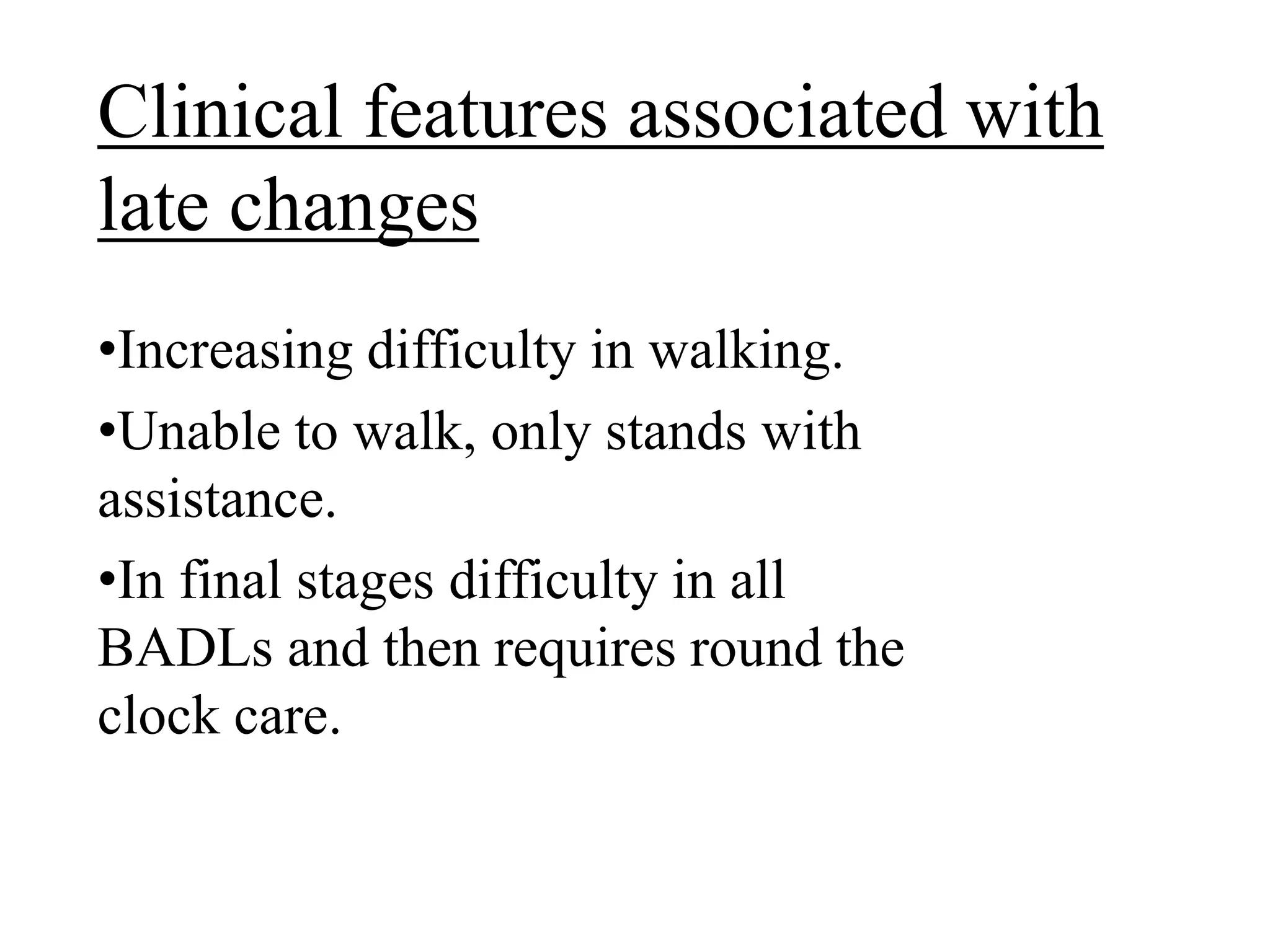
Vignos Lower Limb Functional
Classification Scale
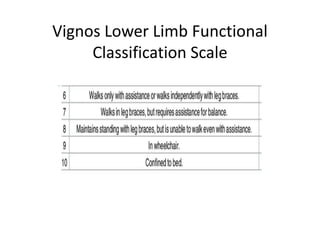
CAUSES OF LATE CHANGES-
1. Growth spurt โ€“ increase in bone mass and
limb weight, which the progressively weak
muscles are unable to stabilise and mobilise.
Increasing compensatory positions to stand
against gravity.
Contractures
Altered length tension relationships: More
energy production to produce a movement
increases energy demands for BADLs.
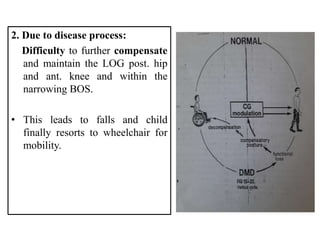
2. Due to disease process:
Difficulty to further compensate
and maintain the LOG post. hip
and ant. knee and within the
narrowing BOS.
โ€ข This leads to falls and child
finally resorts to wheelchair for
mobility.
โ€ข Most common problem once WC bound
โ€ข Trunk weakness in not the cause of scoliosis in DMD.
(because symmetrical trunk weakness)
CAUSES-
1. Pelvic tilt- caused due to asymmetric hip flexor or IT band
contracture or improper seating methods.
2. Trick movts associated with usage of dominant hand causes
leaning to non dominant side to free the dominant hand.
โ€ข Rarely scoliosis is seen in ambulatory โ€“ asymmetric equinus
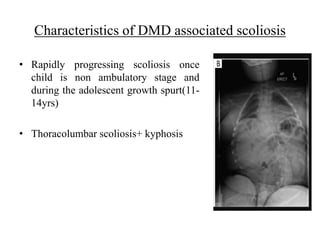
Characteristics of DMD associated scoliosis
โ€ข Rapidly progressing scoliosis once
child is non ambulatory stage and
during the adolescent growth spurt(11-
14yrs)
โ€ข Thoracolumbar scoliosis+ kyphosis
EFFECTS OF SCOLOSIS
๏ƒ˜Reduced FVC - reduced biomechanical movt.
Ribs, mechanical disadvantage of intercostals and
accessory muscles of respiration
๏ƒ˜Every 10ยบ - 4% reduction
๏ƒ˜Reduced tolerance sitting and not able to use
hands for function
๏ƒ˜Pain
๏ƒ˜Care giving problems
๏ƒ˜Compression of heart
๏ƒ˜Cosmetically displeasing
OBESITY
โ€ข WC bound child - 1,200 kcal/day
โ€ข Any increase in weight according to standard ht wt ratio
decreases the duration of ambulation and increased wc
associated complication.
โ€ข The physical activity and food intake should be proportional to
each other.

Late changes in Duchene's Muscular Dystrophy

  • 1.
    Clinical features associatedwith late changes โ€ขIncreasing difficulty in walking. โ€ขUnable to walk, only stands with assistance. โ€ขIn final stages difficulty in all BADLs and then requires round the clock care.
  • 2.
    Vignos Lower LimbFunctional Classification Scale
  • 3.
    CAUSES OF LATECHANGES- 1. Growth spurt โ€“ increase in bone mass and limb weight, which the progressively weak muscles are unable to stabilise and mobilise. Increasing compensatory positions to stand against gravity. Contractures Altered length tension relationships: More energy production to produce a movement increases energy demands for BADLs.
  • 4.
    2. Due todisease process: Difficulty to further compensate and maintain the LOG post. hip and ant. knee and within the narrowing BOS. โ€ข This leads to falls and child finally resorts to wheelchair for mobility.
  • 5.
    โ€ข Most commonproblem once WC bound โ€ข Trunk weakness in not the cause of scoliosis in DMD. (because symmetrical trunk weakness) CAUSES- 1. Pelvic tilt- caused due to asymmetric hip flexor or IT band contracture or improper seating methods. 2. Trick movts associated with usage of dominant hand causes leaning to non dominant side to free the dominant hand. โ€ข Rarely scoliosis is seen in ambulatory โ€“ asymmetric equinus
  • 6.
    Characteristics of DMDassociated scoliosis โ€ข Rapidly progressing scoliosis once child is non ambulatory stage and during the adolescent growth spurt(11- 14yrs) โ€ข Thoracolumbar scoliosis+ kyphosis
  • 7.
    EFFECTS OF SCOLOSIS ๏ƒ˜ReducedFVC - reduced biomechanical movt. Ribs, mechanical disadvantage of intercostals and accessory muscles of respiration ๏ƒ˜Every 10ยบ - 4% reduction ๏ƒ˜Reduced tolerance sitting and not able to use hands for function ๏ƒ˜Pain ๏ƒ˜Care giving problems ๏ƒ˜Compression of heart ๏ƒ˜Cosmetically displeasing
  • 8.
    OBESITY โ€ข WC boundchild - 1,200 kcal/day โ€ข Any increase in weight according to standard ht wt ratio decreases the duration of ambulation and increased wc associated complication. โ€ข The physical activity and food intake should be proportional to each other.