LARGE DIAMETER RING
MANUFACTURING
TAREK GEDDAWI 84
MOHAMED KHAMIS 128
KARIM ESSAM 112
MOHAMED ABDEL-MONEIM 141
MOHAMED EMAD 146
AHMED SAAD 21
MOHAMED SHERIF 126
MOHAMED HASSAN 126
MOHAMMED FOUAD 148
MOHAMED MAHMOUD 153
MOHAMED EMAD 147
PRESENTED TO: DR. MOHAMED A. DAHA
PROCESS
• The Process of Manufacturing Large
Rings Requires Two Main Forming
Operations:
• Forging: Upset Forging/Punching
• Rolling: Ring Rolling Process
FORGING
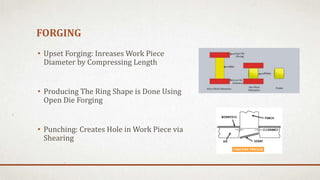
• Upset Forging: Inreases Work Piece
Diameter by Compressing Length
• Producing The Ring Shape is Done Using
Open Die Forging
• Punching: Creates Hole in Work Piece via
Shearing
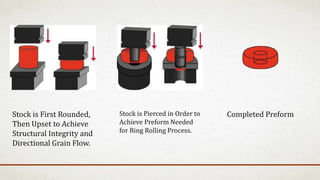
Stock is First Rounded,
Then Upset to Achieve
Structural Integrity and
Directional Grain Flow.
Stock is Pierced in Order to
Achieve Preform Needed
for Ring Rolling Process.
Completed Preform
ROLLING
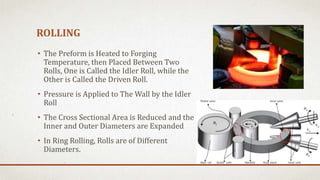
• The Preform is Heated to Forging
Temperature, then Placed Between Two
Rolls, One is Called the Idler Roll, while the
Other is Called the Driven Roll.
• Pressure is Applied to The Wall by the Idler
Roll
• The Cross Sectional Area is Reduced and the
Inner and Outer Diameters are Expanded
• In Ring Rolling, Rolls are of Different
Diameters.
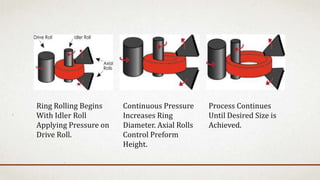
Ring Rolling Begins
With Idler Roll
Applying Pressure on
Drive Roll.
Continuous Pressure
Increases Ring
Diameter. Axial Rolls
Control Preform
Height.
Process Continues
Until Desired Size is
Achieved.
RING ROLLING
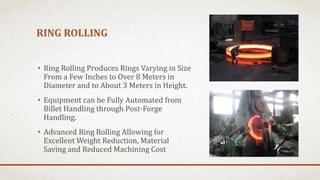
• Ring Rolling Produces Rings Varying in Size
From a Few Inches to Over 8 Meters in
Diameter and to About 3 Meters in Height.
• Equipment can be Fully Automated from
Billet Handling through Post-Forge
Handling.
• Advanced Ring Rolling Allowing for
Excellent Weight Reduction, Material
Saving and Reduced Machining Cost
RING ROLLING
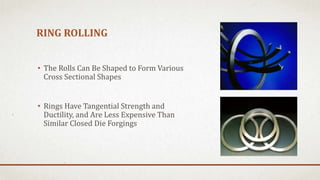
• The Rolls Can Be Shaped to Form Various
Cross Sectional Shapes
• Rings Have Tangential Strength and
Ductility, and Are Less Expensive Than
Similar Closed Die Forgings
RING ROLLING
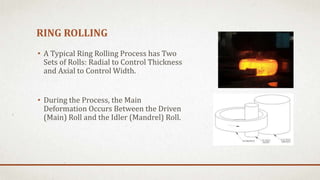
• A Typical Ring Rolling Process has Two
Sets of Rolls: Radial to Control Thickness
and Axial to Control Width.
• During the Process, the Main
Deformation Occurs Between the Driven
(Main) Roll and the Idler (Mandrel) Roll.
RING ROLLING
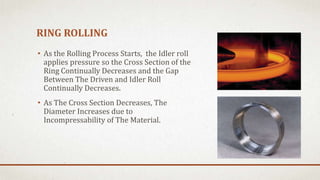
• As the Rolling Process Starts, the Idler roll
applies pressure so the Cross Section of the
Ring Continually Decreases and the Gap
Between The Driven and Idler Roll
Continually Decreases.
• As The Cross Section Decreases, The
Diameter Increases due to
Incompressability of The Material.
APPLICATIONS
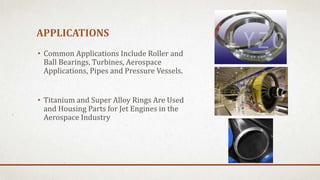
• Common Applications Include Roller and
Ball Bearings, Turbines, Aerospace
Applications, Pipes and Pressure Vessels.
• Titanium and Super Alloy Rings Are Used
and Housing Parts for Jet Engines in the
Aerospace Industry
ADVANTAGES AND DISADVANTAGES
• Advantages:
• Uniform Quality
• Smooth Surface Finish
• Close Tolerance
• Short Production Time
• Relatively Small Material Loss
• Disadvantages:
• Ring Rolling is Poor in Filling the
Roll Cavities
• Some Formed Rings Require
Trueing and/Or Machining
Operations to be Used.
PRACTICAL CASE STUDY
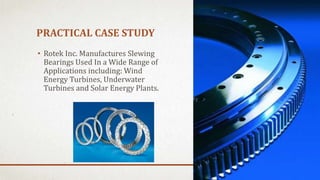
• Rotek Inc. Manufactures Slewing
Bearings Used In a Wide Range of
Applications including: Wind
Energy Turbines, Underwater
Turbines and Solar Energy Plants.
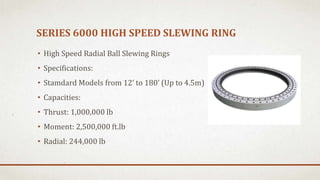
SERIES 6000 HIGH SPEED SLEWING RING
• High Speed Radial Ball Slewing Rings
• Specifications:
• Stamdard Models from 12’ to 180’ (Up to 4.5m)
• Capacities:
• Thrust: 1,000,000 lb
• Moment: 2,500,000 ft.lb
• Radial: 244,000 lb
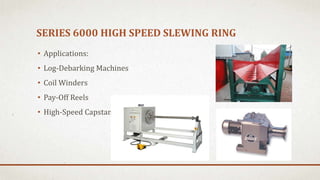
SERIES 6000 HIGH SPEED SLEWING RING
• Applications:
• Log-Debarking Machines
• Coil Winders
• Pay-Off Reels
• High-Speed Capstans
REFERENCES
• http://thelibraryofmanufacturing.com/ring_rolling.html
• https://www.forging.org/system/files/field_document/UBETRingRolling.pdf
• http://thelibraryofmanufacturing.com/ring_rolling.html
• http://patent.ipexl.com/GB/877579ZZDASHZZA.html
THANK YOU

Large diameter ring manufacturing | Metal Forming Operations

  • 1.
    LARGE DIAMETER RING MANUFACTURING TAREKGEDDAWI 84 MOHAMED KHAMIS 128 KARIM ESSAM 112 MOHAMED ABDEL-MONEIM 141 MOHAMED EMAD 146 AHMED SAAD 21 MOHAMED SHERIF 126 MOHAMED HASSAN 126 MOHAMMED FOUAD 148 MOHAMED MAHMOUD 153 MOHAMED EMAD 147 PRESENTED TO: DR. MOHAMED A. DAHA
  • 2.
    PROCESS • The Processof Manufacturing Large Rings Requires Two Main Forming Operations: • Forging: Upset Forging/Punching • Rolling: Ring Rolling Process
  • 3.
    FORGING • Upset Forging:Inreases Work Piece Diameter by Compressing Length • Producing The Ring Shape is Done Using Open Die Forging • Punching: Creates Hole in Work Piece via Shearing
  • 4.
    Stock is FirstRounded, Then Upset to Achieve Structural Integrity and Directional Grain Flow. Stock is Pierced in Order to Achieve Preform Needed for Ring Rolling Process. Completed Preform
  • 5.
    ROLLING • The Preformis Heated to Forging Temperature, then Placed Between Two Rolls, One is Called the Idler Roll, while the Other is Called the Driven Roll. • Pressure is Applied to The Wall by the Idler Roll • The Cross Sectional Area is Reduced and the Inner and Outer Diameters are Expanded • In Ring Rolling, Rolls are of Different Diameters.
  • 6.
    Ring Rolling Begins WithIdler Roll Applying Pressure on Drive Roll. Continuous Pressure Increases Ring Diameter. Axial Rolls Control Preform Height. Process Continues Until Desired Size is Achieved.
  • 7.
    RING ROLLING • RingRolling Produces Rings Varying in Size From a Few Inches to Over 8 Meters in Diameter and to About 3 Meters in Height. • Equipment can be Fully Automated from Billet Handling through Post-Forge Handling. • Advanced Ring Rolling Allowing for Excellent Weight Reduction, Material Saving and Reduced Machining Cost
  • 8.
    RING ROLLING • TheRolls Can Be Shaped to Form Various Cross Sectional Shapes • Rings Have Tangential Strength and Ductility, and Are Less Expensive Than Similar Closed Die Forgings
  • 9.
    RING ROLLING • ATypical Ring Rolling Process has Two Sets of Rolls: Radial to Control Thickness and Axial to Control Width. • During the Process, the Main Deformation Occurs Between the Driven (Main) Roll and the Idler (Mandrel) Roll.
  • 10.
    RING ROLLING • Asthe Rolling Process Starts, the Idler roll applies pressure so the Cross Section of the Ring Continually Decreases and the Gap Between The Driven and Idler Roll Continually Decreases. • As The Cross Section Decreases, The Diameter Increases due to Incompressability of The Material.
  • 11.
    APPLICATIONS • Common ApplicationsInclude Roller and Ball Bearings, Turbines, Aerospace Applications, Pipes and Pressure Vessels. • Titanium and Super Alloy Rings Are Used and Housing Parts for Jet Engines in the Aerospace Industry
  • 12.
    ADVANTAGES AND DISADVANTAGES •Advantages: • Uniform Quality • Smooth Surface Finish • Close Tolerance • Short Production Time • Relatively Small Material Loss • Disadvantages: • Ring Rolling is Poor in Filling the Roll Cavities • Some Formed Rings Require Trueing and/Or Machining Operations to be Used.
  • 13.
    PRACTICAL CASE STUDY •Rotek Inc. Manufactures Slewing Bearings Used In a Wide Range of Applications including: Wind Energy Turbines, Underwater Turbines and Solar Energy Plants.
  • 14.
    SERIES 6000 HIGHSPEED SLEWING RING • High Speed Radial Ball Slewing Rings • Specifications: • Stamdard Models from 12’ to 180’ (Up to 4.5m) • Capacities: • Thrust: 1,000,000 lb • Moment: 2,500,000 ft.lb • Radial: 244,000 lb
  • 15.
    SERIES 6000 HIGHSPEED SLEWING RING • Applications: • Log-Debarking Machines • Coil Winders • Pay-Off Reels • High-Speed Capstans
  • 16.
    REFERENCES • http://thelibraryofmanufacturing.com/ring_rolling.html • https://www.forging.org/system/files/field_document/UBETRingRolling.pdf •http://thelibraryofmanufacturing.com/ring_rolling.html • http://patent.ipexl.com/GB/877579ZZDASHZZA.html
  • 17.