LAP CBD EXPLORATION
DR SREEJOY PATNAIK
E.C MEMBER EAST ZONE , IAGES
FIAGES FAMS FAIS
G.C MEMBER , ASI, ODISHA
POPULARITY OF LAP.CBDE
Is preferred more frequently.
Increasing surgeon’s expertise in Laparoscopy.
Increasing demand of a single procedure .
One time hospitalisation and anaesthesia.
Reduction of costs.
Success rate is 80-90%.
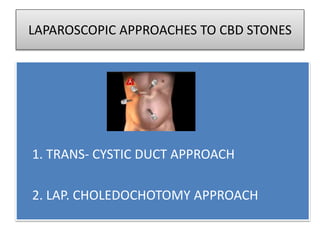
LAPAROSCOPIC APPROACHES TO CBD STONES
1. TRANS- CYSTIC DUCT APPROACH
2. LAP. CHOLEDOCHOTOMY APPROACH
INDICATIONS OF TRANS CYSTIC
APPROACH
 CBD diameter < 6 mm
 Stone location distal to the cystic duct / CBDjunction
 Cystic duct diameter > 4 mm
 Fewer than 3 to 6 stones within the CBD
 Stones smaller than 10 mm
 Cystic duct entrance into CBD is straight and lateral
 Laparoscopic suturing ability poor
Laparoscopic Trans Cystic Duct Approach to CBD stones
Contra-indications
1. Stone diameter > 6mm
2. Cystic duct diameter < 4mm
3. Intra hepatic stones
4. Cystic duct entrance - posterior or distal to CBD stones
Advantages
1. T-tube is eliminated
2. Risk of CBD stricture post. choledochotomy is eliminated
INDICATIONS FOR CHOLEDOCHOTOMY
• Failed laparoscopic trans cystic exploration or preoperative ERCP stone
extraction
• Narrow entrance & course of cystic duct ( spiral,very low, post.)
• Valves in the cystic duct.
• Dilated CBD > 1 cm
• Large stones > 10 mm or impacted, requiring lithotripsy.
• Multiple stones
• Intra-hepatic stones.
• Suturing ability -good
Laparoscopic choledochotomy for CBD stones
Contra-indications
1. CBD diameter less than 6mm
2. Poor laparoscopic suturing ability
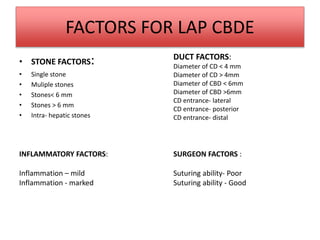
FACTORS FOR LAP CBDE
• STONE FACTORS:
• Single stone
• Muliple stones
• Stones< 6 mm
• Stones > 6 mm
• Intra- hepatic stones
DUCT FACTORS:
Diameter of CD < 4 mm
Diameter of CD > 4mm
Diameter of CBD < 6mm
Diameter of CBD >6mm
CD entrance- lateral
CD entrance- posterior
CD entrance- distal
INFLAMMATORY FACTORS:
Inflammation – mild
Inflammation - marked
SURGEON FACTORS :
Suturing ability- Poor
Suturing ability - Good
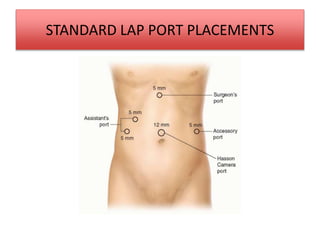
STANDARD LAP PORT PLACEMENTS
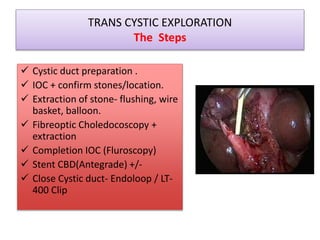
TRANS CYSTIC EXPLORATION
The Steps
 Cystic duct preparation .
 IOC + confirm stones/location.
 Extraction of stone- flushing, wire
basket, balloon.
 Fibreoptic Choledocoscopy +
extraction
 Completion IOC (Fluroscopy)
 Stent CBD(Antegrade) +/-
 Close Cystic duct- Endoloop / LT-
400 Clip
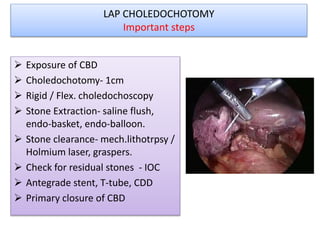
LAP CHOLEDOCHOTOMY
Important steps
 Exposure of CBD
 Choledochotomy- 1cm
 Rigid / Flex. choledochoscopy
 Stone Extraction- saline flush,
endo-basket, endo-balloon.
 Stone clearance- mech.lithotrpsy /
Holmium laser, graspers.
 Check for residual stones - IOC
 Antegrade stent, T-tube, CDD
 Primary closure of CBD
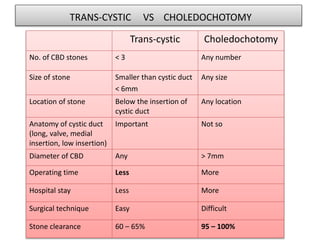
TRANS-CYSTIC VS CHOLEDOCHOTOMY
Trans-cystic Choledochotomy
No. of CBD stones < 3 Any number
Size of stone Smaller than cystic duct
< 6mm
Any size
Location of stone Below the insertion of
cystic duct
Any location
Anatomy of cystic duct
(long, valve, medial
insertion, low insertion)
Important Not so
Diameter of CBD Any > 7mm
Operating time Less More
Hospital stay Less More
Surgical technique Easy Difficult
Stone clearance 60 – 65% 95 – 100%
VIDEO PROCEDURE
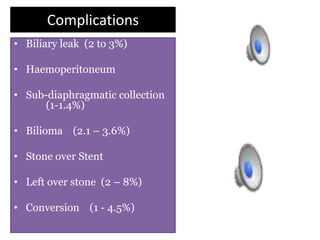
Complications
• Biliary leak (2 to 3%)
• Haemoperitoneum
• Sub-diaphragmatic collection
(1-1.4%)
• Bilioma (2.1 – 3.6%)
• Stone over Stent
• Left over stone (2 – 8%)
• Conversion (1 - 4.5%)
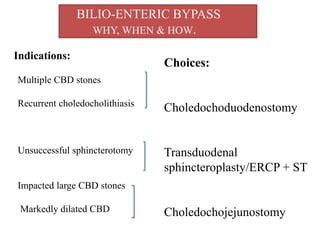
BILIO-ENTERIC BYPASS
WHY, WHEN & HOW.
Indications:
Multiple CBD stones
Recurrent choledocholithiasis
Unsuccessful sphincterotomy
Impacted large CBD stones
Markedly dilated CBD
Choices:
Choledochoduodenostomy
Transduodenal
sphincteroplasty/ERCP + ST
Choledochojejunostomy

LAP CBD ppt

  • 1.
    LAP CBD EXPLORATION DRSREEJOY PATNAIK E.C MEMBER EAST ZONE , IAGES FIAGES FAMS FAIS G.C MEMBER , ASI, ODISHA
  • 2.
    POPULARITY OF LAP.CBDE Ispreferred more frequently. Increasing surgeon’s expertise in Laparoscopy. Increasing demand of a single procedure . One time hospitalisation and anaesthesia. Reduction of costs. Success rate is 80-90%.
  • 3.
    LAPAROSCOPIC APPROACHES TOCBD STONES 1. TRANS- CYSTIC DUCT APPROACH 2. LAP. CHOLEDOCHOTOMY APPROACH
  • 4.
    INDICATIONS OF TRANSCYSTIC APPROACH  CBD diameter < 6 mm  Stone location distal to the cystic duct / CBDjunction  Cystic duct diameter > 4 mm  Fewer than 3 to 6 stones within the CBD  Stones smaller than 10 mm  Cystic duct entrance into CBD is straight and lateral  Laparoscopic suturing ability poor
  • 5.
    Laparoscopic Trans CysticDuct Approach to CBD stones Contra-indications 1. Stone diameter > 6mm 2. Cystic duct diameter < 4mm 3. Intra hepatic stones 4. Cystic duct entrance - posterior or distal to CBD stones Advantages 1. T-tube is eliminated 2. Risk of CBD stricture post. choledochotomy is eliminated
  • 6.
    INDICATIONS FOR CHOLEDOCHOTOMY •Failed laparoscopic trans cystic exploration or preoperative ERCP stone extraction • Narrow entrance & course of cystic duct ( spiral,very low, post.) • Valves in the cystic duct. • Dilated CBD > 1 cm • Large stones > 10 mm or impacted, requiring lithotripsy. • Multiple stones • Intra-hepatic stones. • Suturing ability -good
  • 7.
    Laparoscopic choledochotomy forCBD stones Contra-indications 1. CBD diameter less than 6mm 2. Poor laparoscopic suturing ability
  • 8.
    FACTORS FOR LAPCBDE • STONE FACTORS: • Single stone • Muliple stones • Stones< 6 mm • Stones > 6 mm • Intra- hepatic stones DUCT FACTORS: Diameter of CD < 4 mm Diameter of CD > 4mm Diameter of CBD < 6mm Diameter of CBD >6mm CD entrance- lateral CD entrance- posterior CD entrance- distal INFLAMMATORY FACTORS: Inflammation – mild Inflammation - marked SURGEON FACTORS : Suturing ability- Poor Suturing ability - Good
  • 9.
  • 10.
    TRANS CYSTIC EXPLORATION TheSteps  Cystic duct preparation .  IOC + confirm stones/location.  Extraction of stone- flushing, wire basket, balloon.  Fibreoptic Choledocoscopy + extraction  Completion IOC (Fluroscopy)  Stent CBD(Antegrade) +/-  Close Cystic duct- Endoloop / LT- 400 Clip
  • 11.
    LAP CHOLEDOCHOTOMY Important steps Exposure of CBD  Choledochotomy- 1cm  Rigid / Flex. choledochoscopy  Stone Extraction- saline flush, endo-basket, endo-balloon.  Stone clearance- mech.lithotrpsy / Holmium laser, graspers.  Check for residual stones - IOC  Antegrade stent, T-tube, CDD  Primary closure of CBD
  • 12.
    TRANS-CYSTIC VS CHOLEDOCHOTOMY Trans-cysticCholedochotomy No. of CBD stones < 3 Any number Size of stone Smaller than cystic duct < 6mm Any size Location of stone Below the insertion of cystic duct Any location Anatomy of cystic duct (long, valve, medial insertion, low insertion) Important Not so Diameter of CBD Any > 7mm Operating time Less More Hospital stay Less More Surgical technique Easy Difficult Stone clearance 60 – 65% 95 – 100%
  • 13.
  • 14.
    Complications • Biliary leak(2 to 3%) • Haemoperitoneum • Sub-diaphragmatic collection (1-1.4%) • Bilioma (2.1 – 3.6%) • Stone over Stent • Left over stone (2 – 8%) • Conversion (1 - 4.5%)
  • 15.
    BILIO-ENTERIC BYPASS WHY, WHEN& HOW. Indications: Multiple CBD stones Recurrent choledocholithiasis Unsuccessful sphincterotomy Impacted large CBD stones Markedly dilated CBD Choices: Choledochoduodenostomy Transduodenal sphincteroplasty/ERCP + ST Choledochojejunostomy