
CURRENT ISSUES IN SECOND
LANGUAGE ACQUISITION
LANGUAGE
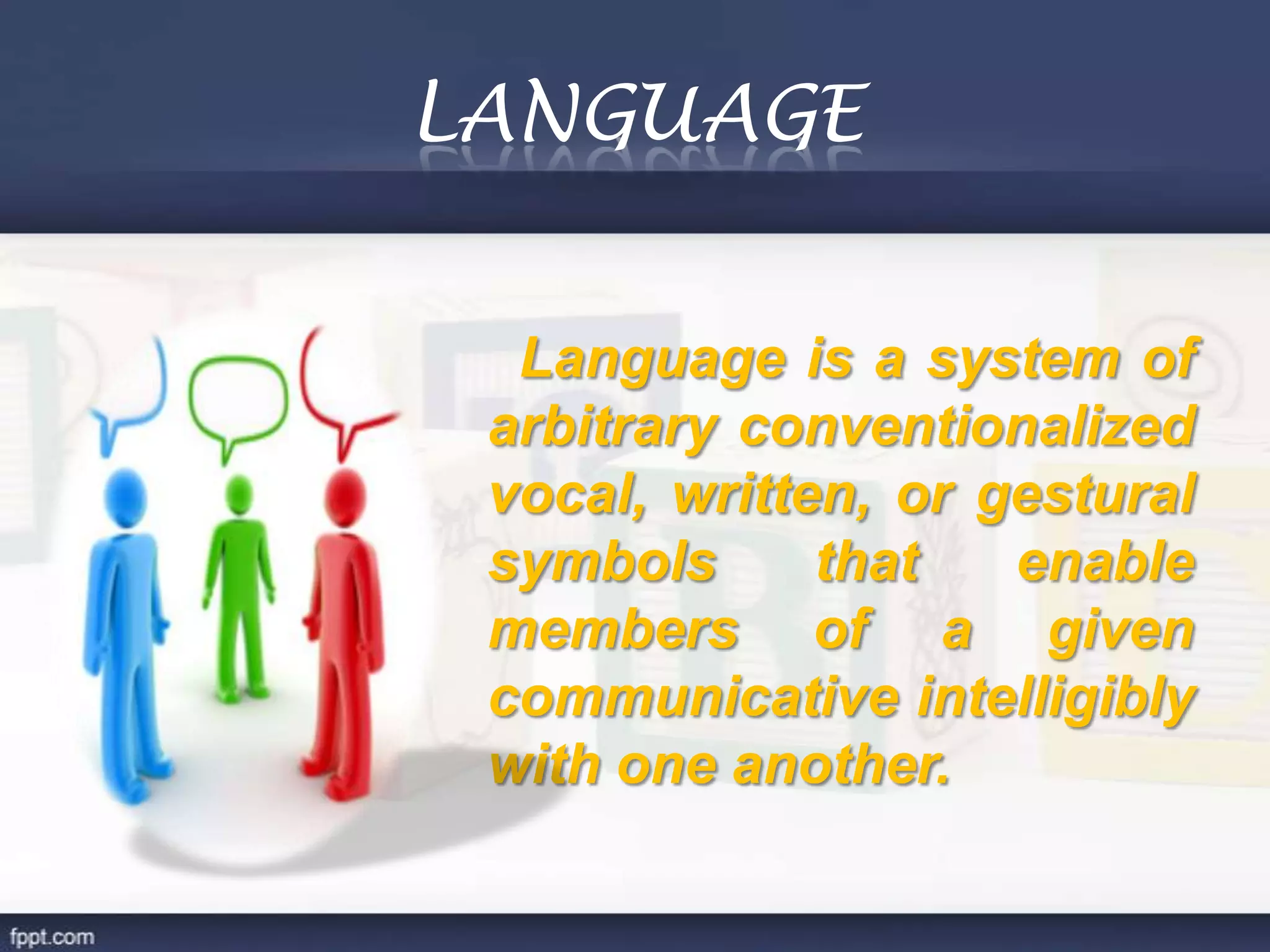
Language is a system of
arbitrary conventionalized
vocal, written, or gestural
symbols that enable
members of a given
communicative intelligibly
with one another.
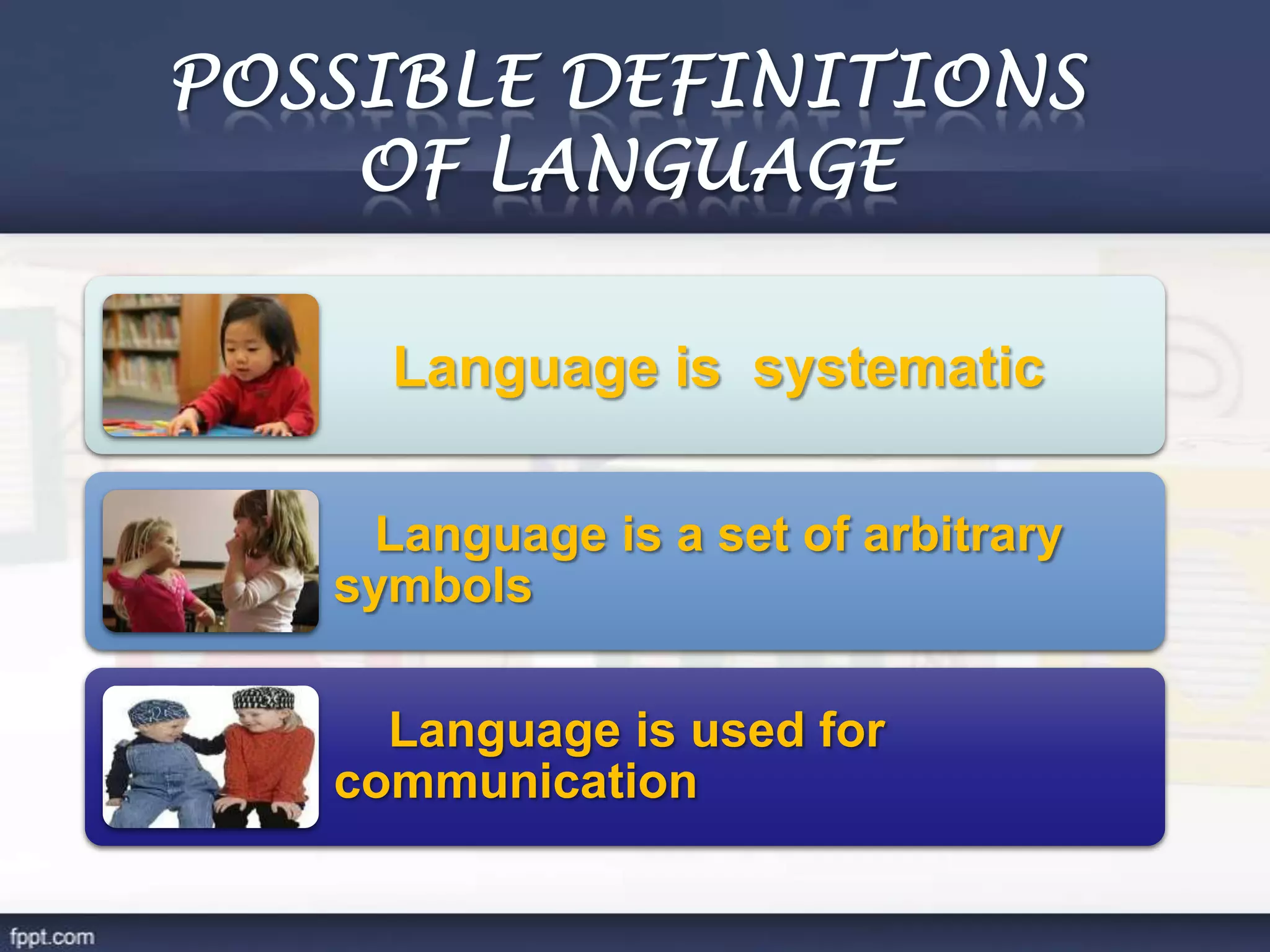
Language is systematic
Language is a set of arbitrary
symbols
Language is used for
communication
POSSIBLE AREAS
LEARNING
TEACHING
SCHOOLS OF
THOUGHT IN SECOND
LANGUAGE
ACQUISITION
Structuralism/
Behaviorism
Constructivism
Language could be dismantled into small pieces or units
and these units could be described scientifically,
contrasted, and added up again to form the whole.
Structural or descriptive school of linguistics.
Leonard Bloomfield, Edward Sapir, and Charles Fries.
Describe human languages and to identify the structural
characteristics of those language.
Typical behavioristic models were classical and operant
conditioning, rote verbal learning, instrumental learning,
discrimination learning, and other empirical approaches to
studying human behavior.
Vygotsky described as a social constructivist by some,
maintained that social interaction was foundational in
cognitive development and rejected the emotion
of predetermined stages.
Piaget stressed the importance of individual cognitive
development as a relatively solitary act.
Biological timetables and stages of development; social
interaction was claimed only to trigger
development at the right moment in time.
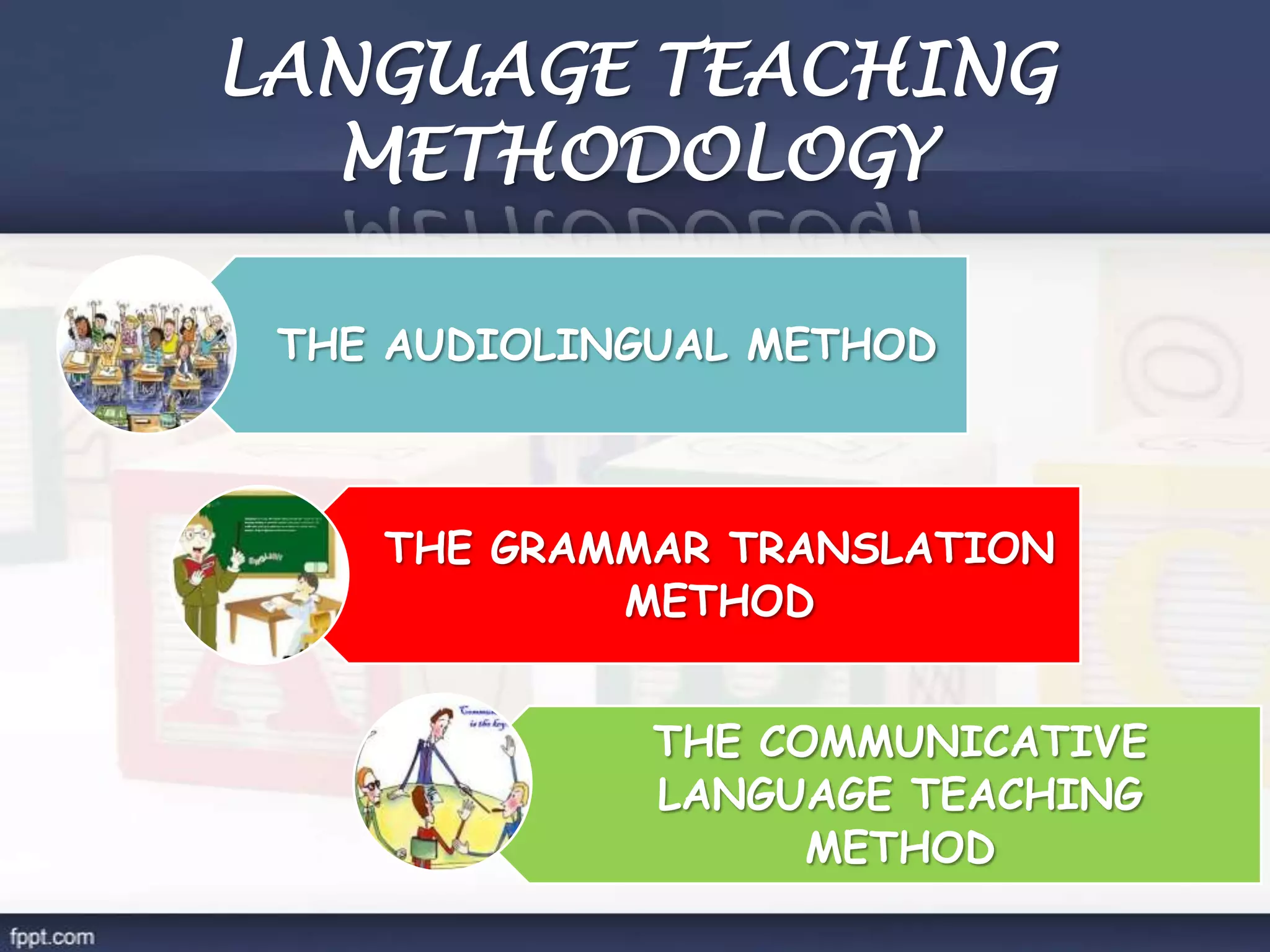
LANGUAGE TEACHING
METHODOLOGY
THE AUDIOLINGUAL METHOD
THE GRAMMAR TRANSLATION
METHOD
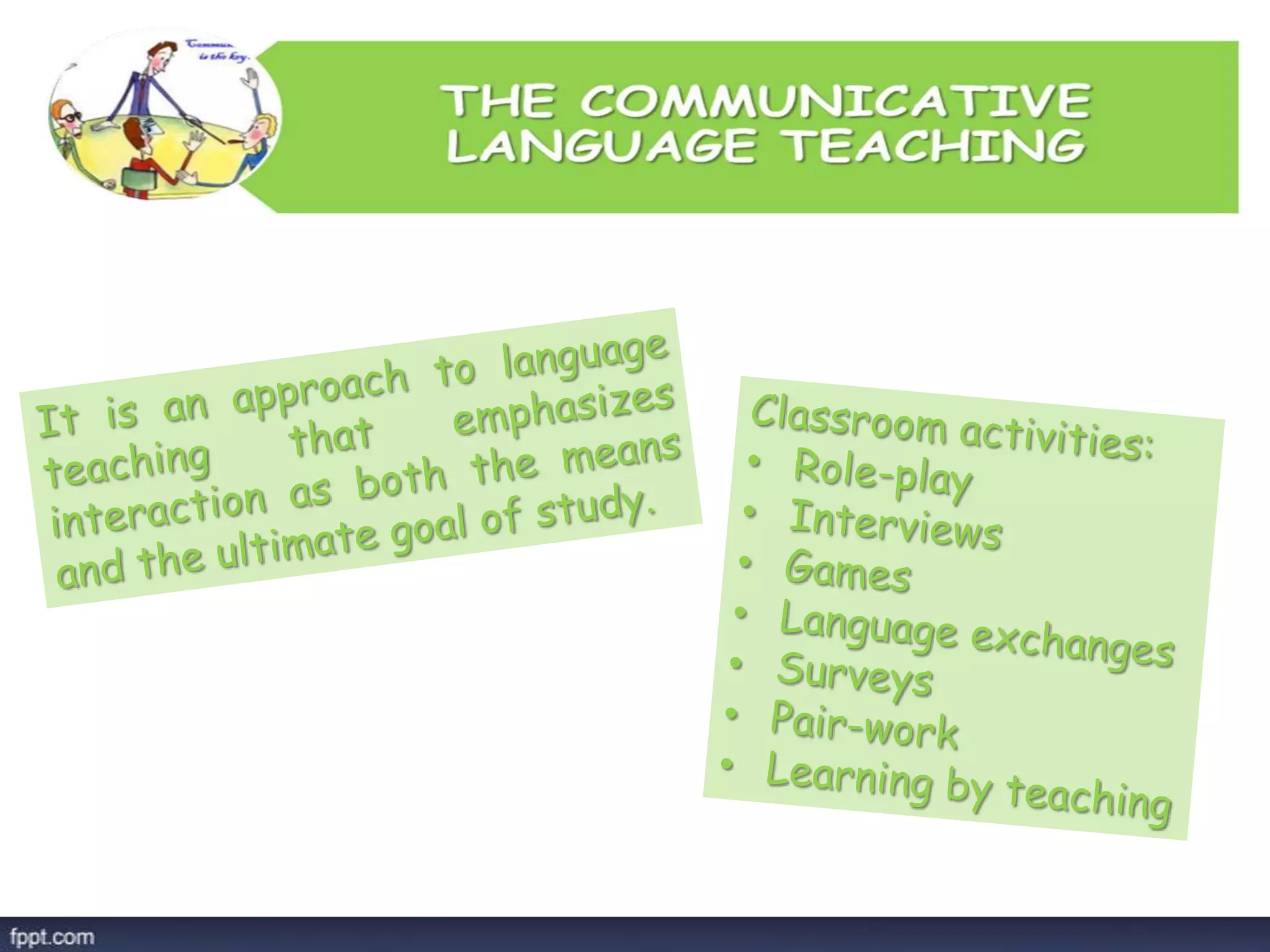
THE COMMUNICATIVE
LANGUAGE TEACHING
METHOD
The audio-lingual method, Army Method, or New Key,[1] is a style of teaching used in
teaching foreign languages. It is based on behaviorist theory, which professes that
certain traits of living things, and in this case humans, could be trained through a system
of reinforcement—correct use of a trait would receive positive feedback while incorrect
use of that trait would receive negative feedback.
The audio-lingual method, Army Method, or New Key,[1] is a style of teaching used in
teaching foreign languages. It is based on behaviorist theory, which professes that
certain traits of living things, and in this case humans, could be trained through a system
of reinforcement—correct use of a trait would receive positive feedback while incorrect
use of that trait would receive negative feedback.
Language learning and teaching

Language learning and teaching

  • 3.
    CURRENT ISSUES INSECOND LANGUAGE ACQUISITION
  • 4.
    LANGUAGE Language is asystem of arbitrary conventionalized vocal, written, or gestural symbols that enable members of a given communicative intelligibly with one another.
  • 5.
    Language is systematic Languageis a set of arbitrary symbols Language is used for communication
  • 6.
  • 7.
  • 8.
  • 9.
    SCHOOLS OF THOUGHT INSECOND LANGUAGE ACQUISITION Structuralism/ Behaviorism Constructivism
  • 10.
    Language could bedismantled into small pieces or units and these units could be described scientifically, contrasted, and added up again to form the whole. Structural or descriptive school of linguistics. Leonard Bloomfield, Edward Sapir, and Charles Fries. Describe human languages and to identify the structural characteristics of those language.
  • 11.
    Typical behavioristic modelswere classical and operant conditioning, rote verbal learning, instrumental learning, discrimination learning, and other empirical approaches to studying human behavior.
  • 12.
    Vygotsky described asa social constructivist by some, maintained that social interaction was foundational in cognitive development and rejected the emotion of predetermined stages. Piaget stressed the importance of individual cognitive development as a relatively solitary act. Biological timetables and stages of development; social interaction was claimed only to trigger development at the right moment in time.
  • 13.
    LANGUAGE TEACHING METHODOLOGY THE AUDIOLINGUALMETHOD THE GRAMMAR TRANSLATION METHOD THE COMMUNICATIVE LANGUAGE TEACHING METHOD
  • 14.
    The audio-lingual method,Army Method, or New Key,[1] is a style of teaching used in teaching foreign languages. It is based on behaviorist theory, which professes that certain traits of living things, and in this case humans, could be trained through a system of reinforcement—correct use of a trait would receive positive feedback while incorrect use of that trait would receive negative feedback.
  • 15.
    The audio-lingual method,Army Method, or New Key,[1] is a style of teaching used in teaching foreign languages. It is based on behaviorist theory, which professes that certain traits of living things, and in this case humans, could be trained through a system of reinforcement—correct use of a trait would receive positive feedback while incorrect use of that trait would receive negative feedback.