Language Basic Concepts,
theories & Pedagogy. English in
Use.
By Komal Shahedadpuri
Research Scholar
Dept of English,
MK Bhavnagar University.
English Language Teaching
● Global lingua franca
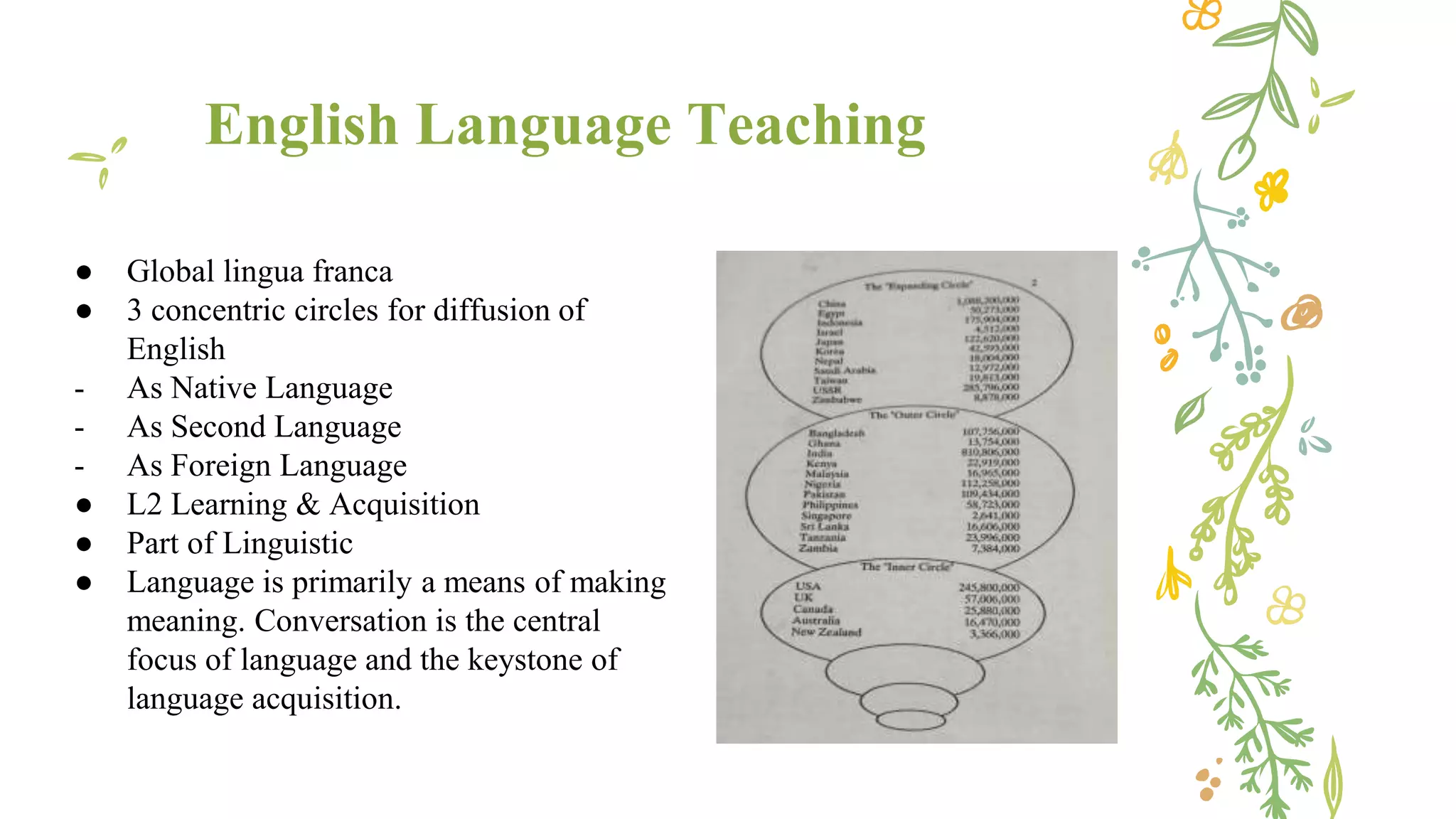
● 3 concentric circles for diffusion of
English
- As Native Language
- As Second Language
- As Foreign Language
● L2 Learning & Acquisition
● Part of Linguistic
● Language is primarily a means of making
meaning. Conversation is the central
focus of language and the keystone of
language acquisition.
Basic Language Terms
● Cliche
● Register
● Pidgin
● Creole
● Dialect
● Idiolect
● Langue
● Parole
Language Theories
● Human Brain and language acquisition
● Behaviourism & learning (Pavlov&Skinner)
● Cognitivism - Universal Grammar Theory (Nativist,Chomsky)
● Gestalt learning Theory (Wertheimer, Kohler & Koffka)
● Stephen Krashen’s Theory (SLA)
● Script Theory (Silvan Tomkins in 1954)
● Constructivist Learning Theory (John Dewey)
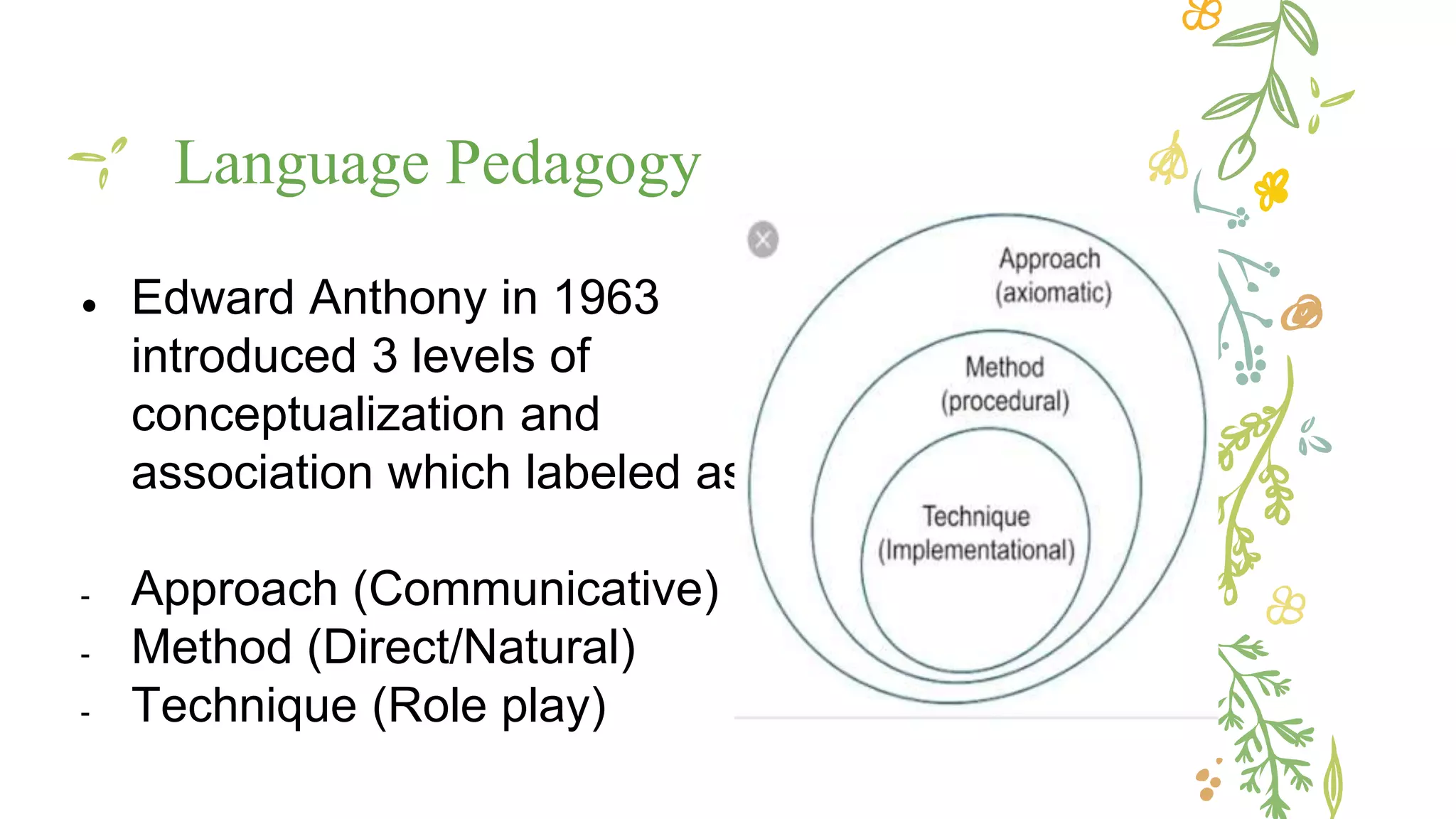
Language Pedagogy
● Edward Anthony in 1963
introduced 3 levels of
conceptualization and
association which labeled as
- Approach (Communicative)
- Method (Direct/Natural)
- Technique (Role play)
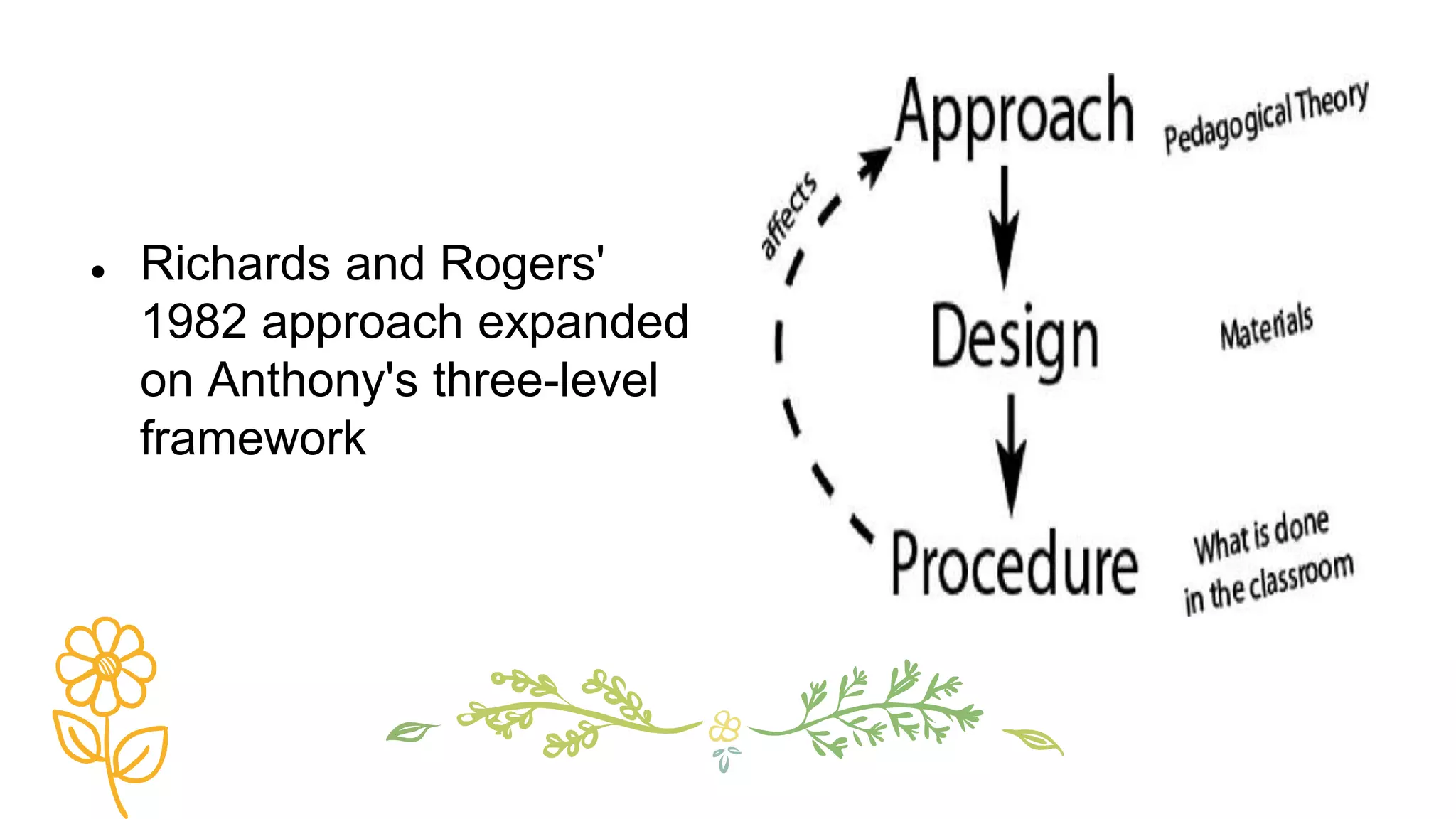
● Richards and Rogers'
1982 approach expanded
on Anthony's three-level
framework
There are three principal views:
The structural view treats language as a system of structurally related elements to code
meaning (e.g. grammar).
The functional view sees language as a vehicle to express or accomplish a certain
function, such as requesting something.
The interactive view sees language as a vehicle for the creation and maintenance of
social relations, focusing on patterns of moves, acts, negotiation and interaction found in
conversational exchanges. This view has been fairly dominant since the 1980s
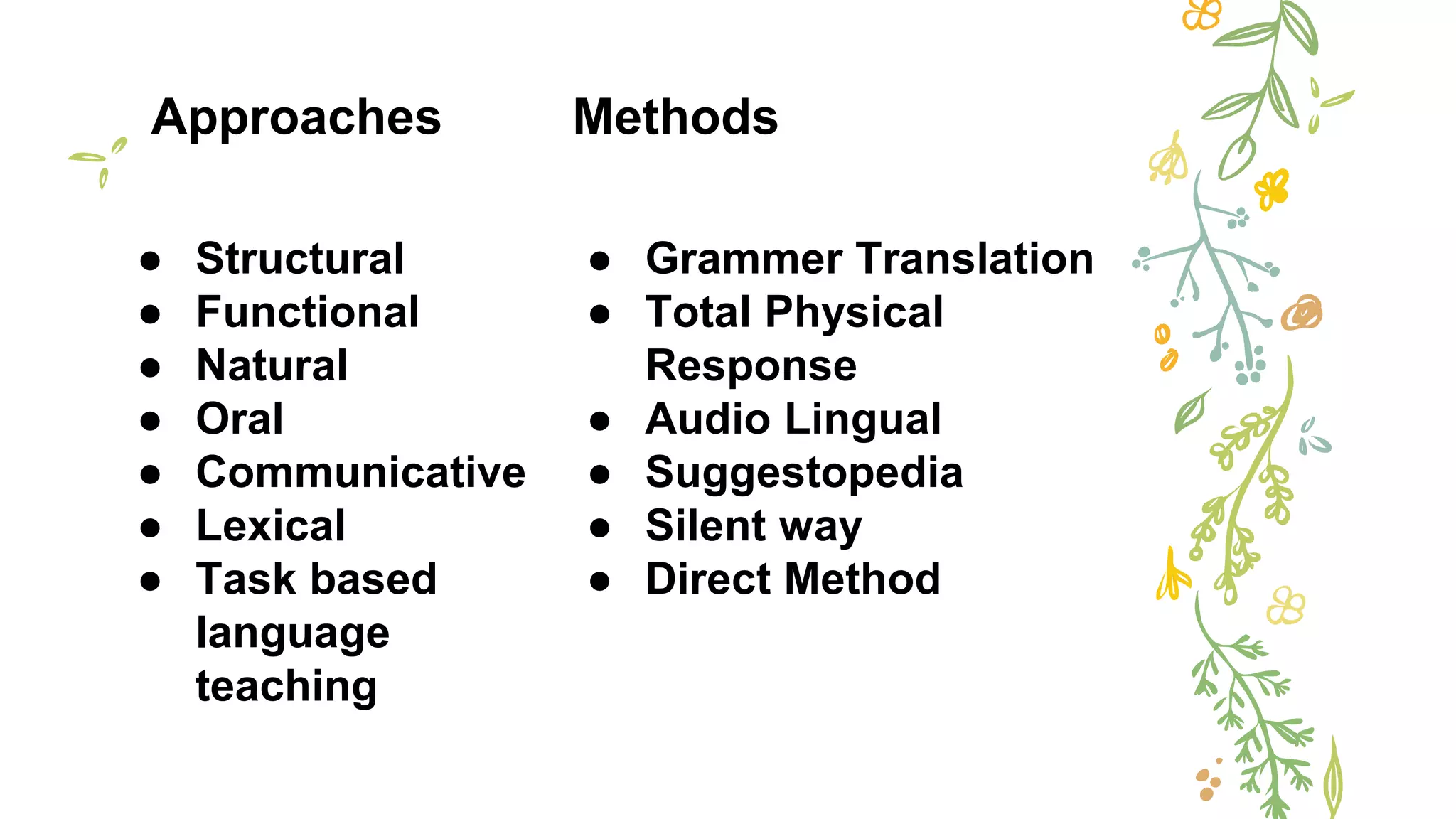
Approaches
● Structural
● Functional
● Natural
● Oral
● Communicative
● Lexical
● Task based
language
teaching
Methods
● Grammer Translation
● Total Physical
Response
● Audio Lingual
● Suggestopedia
● Silent way
● Direct Method
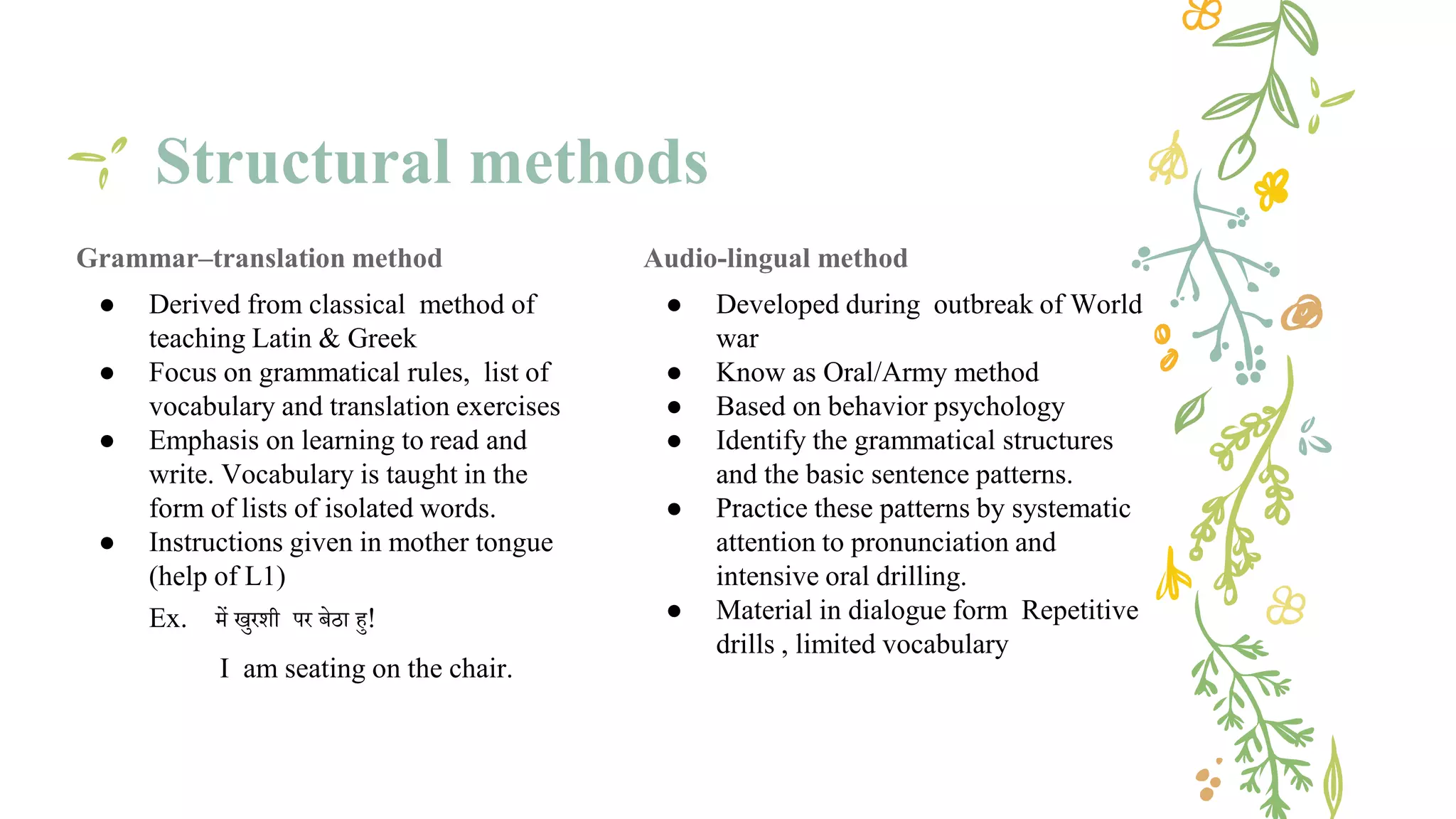
Structural methods
Grammar–translation method
● Derived from classical method of
teaching Latin & Greek
● Focus on grammatical rules, list of
vocabulary and translation exercises
● Emphasis on learning to read and
write. Vocabulary is taught in the
form of lists of isolated words.
● Instructions given in mother tongue
(help of L1)
Ex. में खुरशी पर बेठा हु!
I am seating on the chair.
Audio-lingual method
● Developed during outbreak of World
war
● Know as Oral/Army method
● Based on behavior psychology
● Identify the grammatical structures
and the basic sentence patterns.
● Practice these patterns by systematic
attention to pronunciation and
intensive oral drilling.
● Material in dialogue form Repetitive
drills , limited vocabulary
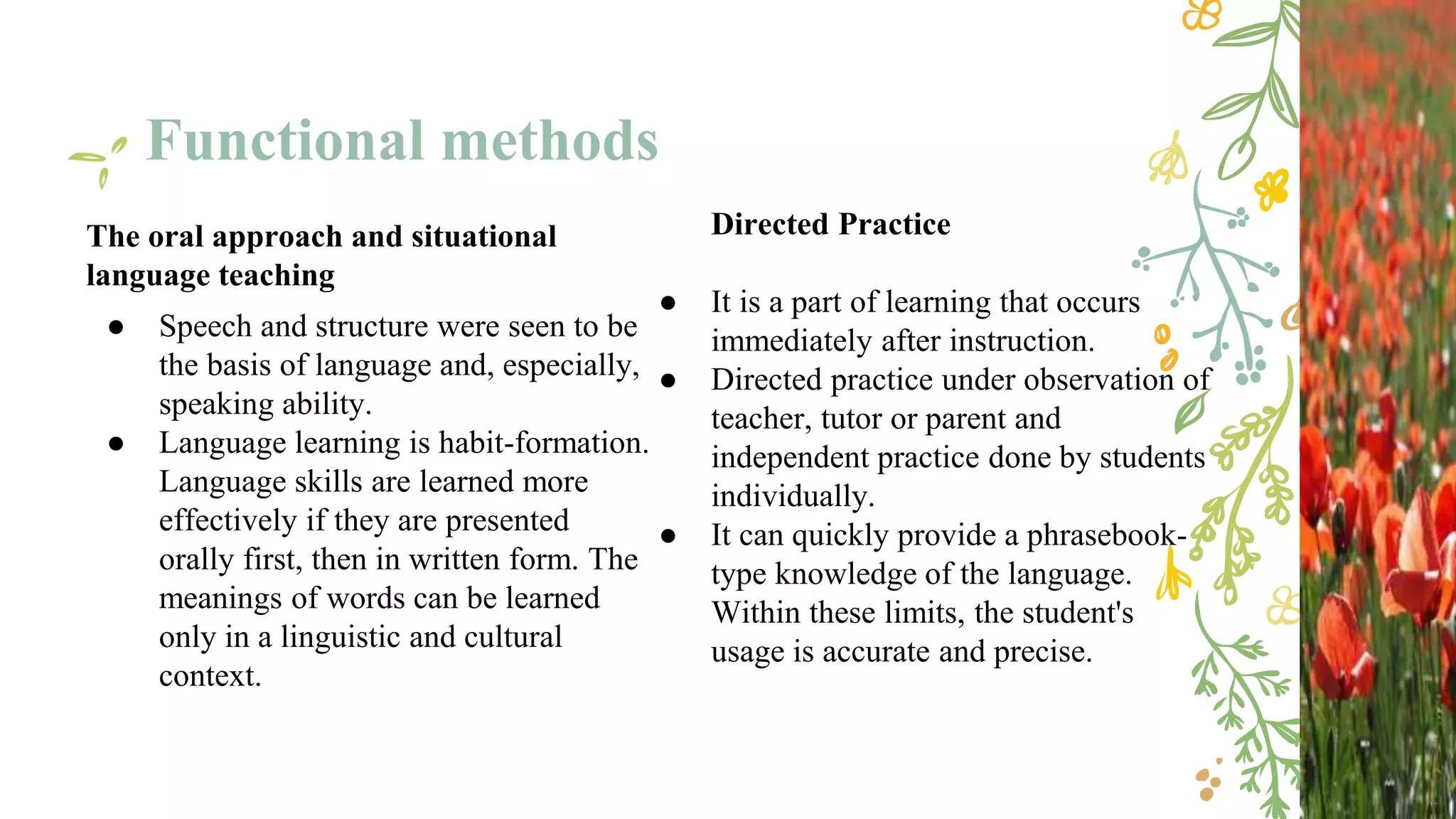
Functional methods
The oral approach and situational
language teaching
● Speech and structure were seen to be
the basis of language and, especially,
speaking ability.
● Language learning is habit-formation.
Language skills are learned more
effectively if they are presented
orally first, then in written form. The
meanings of words can be learned
only in a linguistic and cultural
context.
Directed Practice
● It is a part of learning that occurs
immediately after instruction.
● Directed practice under observation of
teacher, tutor or parent and
independent practice done by students
individually.
● It can quickly provide a phrasebook-
type knowledge of the language.
Within these limits, the student's
usage is accurate and precise.
Silent Way (Caleb Gattegno)
● Makes extensive use of silence as a
teaching method
● It was first introduced in Gattegno's
book Teaching Foreign Languages in
Schools: The Silent Way in 1963.
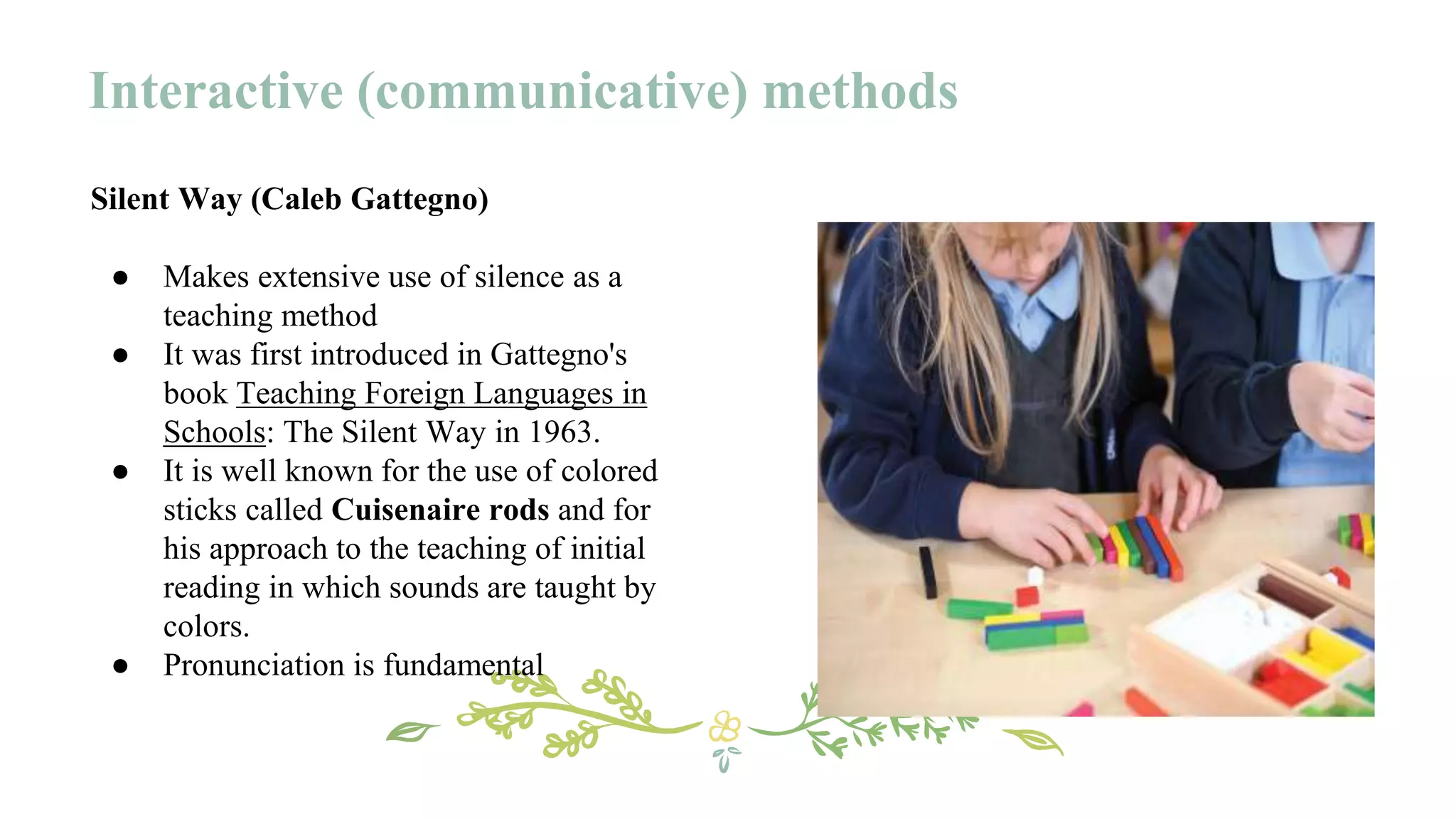
● It is well known for the use of colored
sticks called Cuisenaire rods and for
his approach to the teaching of initial
reading in which sounds are taught by
colors.
● Pronunciation is fundamental
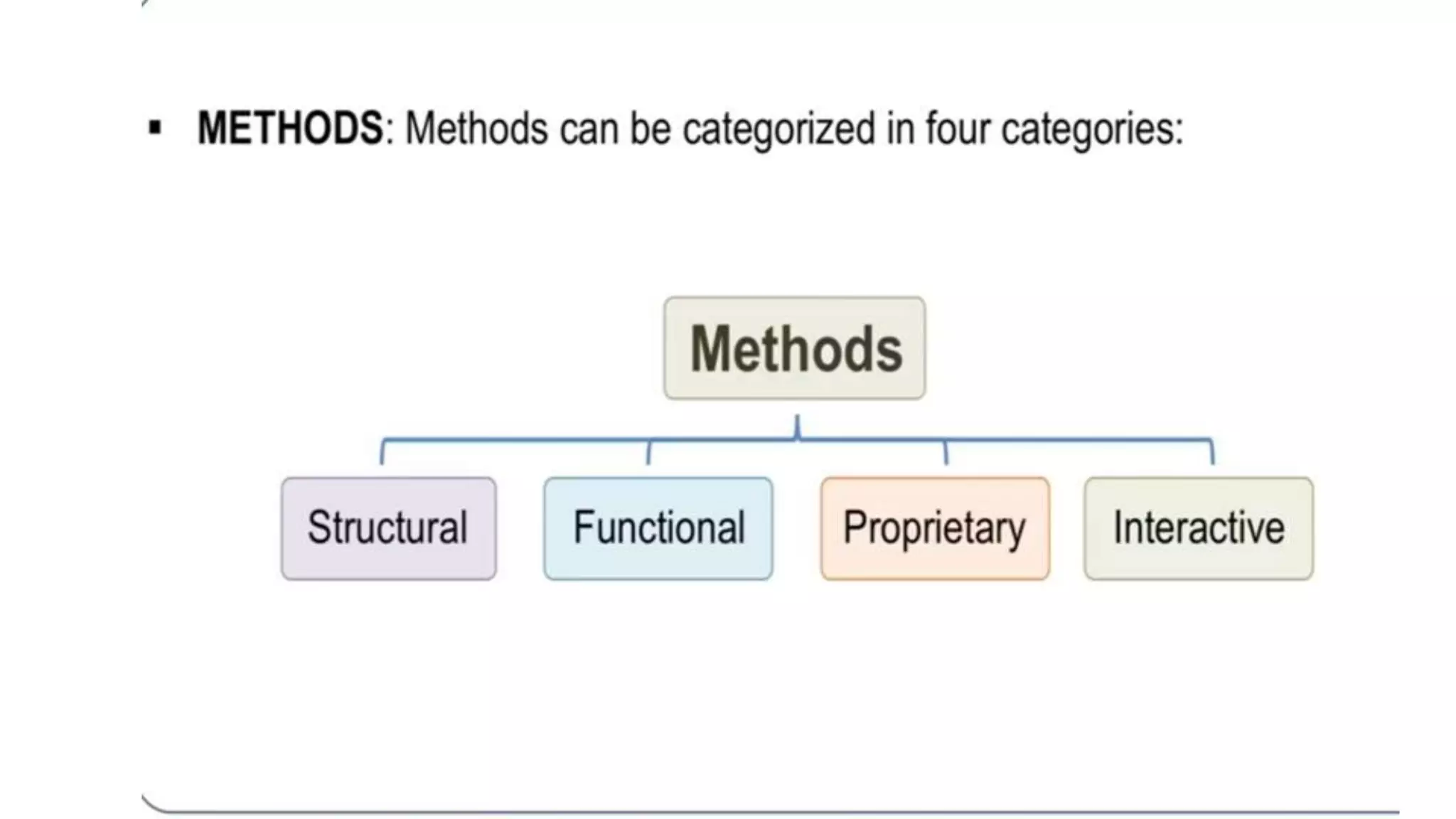
Interactive (communicative) methods
The series method(François Gouin)
● Teaching learners DIRECTLY
(without translation) and conceptually
(without grammatical rules and
explanations) Series of connected
sentences that are easy to perceive
● Direct "translation" of experience into
words, makes for a "living
language"through a chronological
sequence of events. .
Direct method
● It sought to immerse the learner
in the same way as when a first
language is learnt.
● All teaching is done in the
target language, grammar is
taught inductively, there is a
focus on speaking and
listening, and only useful
‘everyday' language is taught.
Communicative language teaching
(approach)
● Emphasizes interaction as both the
means and the ultimate goal of
learning a language
● At level of approach (theory) ,
design and procedure
● Successful communication in the
target language is the main goal of
communicative language teaching
● Dogme language teaching
Task based language teaching
(TBLT)
● An approach which offers
students opportunities to
actively engage in
communication through various
tasks.
● Students are free to use
whatever vocabulary and
grammar they know.
● Students will be exposed to a
whole range of lexical phrases,
collocations and patterns as well
as language forms
Teaching Proficiency through Reading
and Storytelling
● Developed by Blaine Ray, a
language teacher in California, in the
1990s
● Part of the comprehension approach
to language teaching
● Incorporate narrative and descriptive
component
● Stories contain vocabulary and
grammar introduced with physical
gestures or body movements
developed and then dramatized in
the class
Total physical response (TRP)
James Asher , psychologist
● Strong association of action and
vocabulary
● Teaching language or vocabulary
concepts by using physical
movement to react to verbal input
● Connection between language and
child psychology
● the coordination of speech and
action
Ex. Parents say shut the door that
followed by physical action of a child
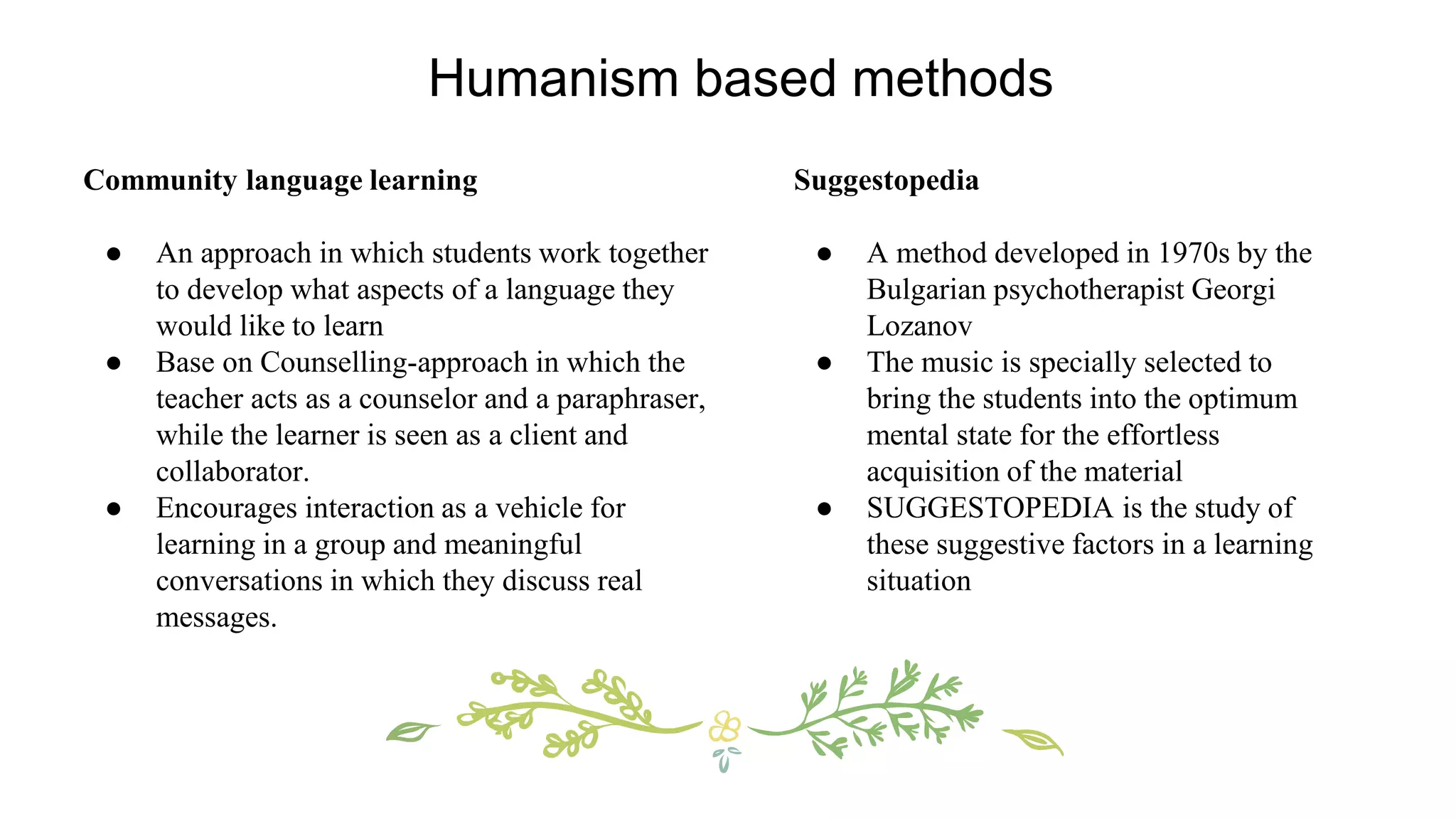
Community language learning
● An approach in which students work together
to develop what aspects of a language they
would like to learn
● Base on Counselling-approach in which the
teacher acts as a counselor and a paraphraser,
while the learner is seen as a client and
collaborator.
● Encourages interaction as a vehicle for
learning in a group and meaningful
conversations in which they discuss real
messages.
Suggestopedia
● A method developed in 1970s by the
Bulgarian psychotherapist Georgi
Lozanov
● The music is specially selected to
bring the students into the optimum
mental state for the effortless
acquisition of the material
● SUGGESTOPEDIA is the study of
these suggestive factors in a learning
situation
Humanism based methods
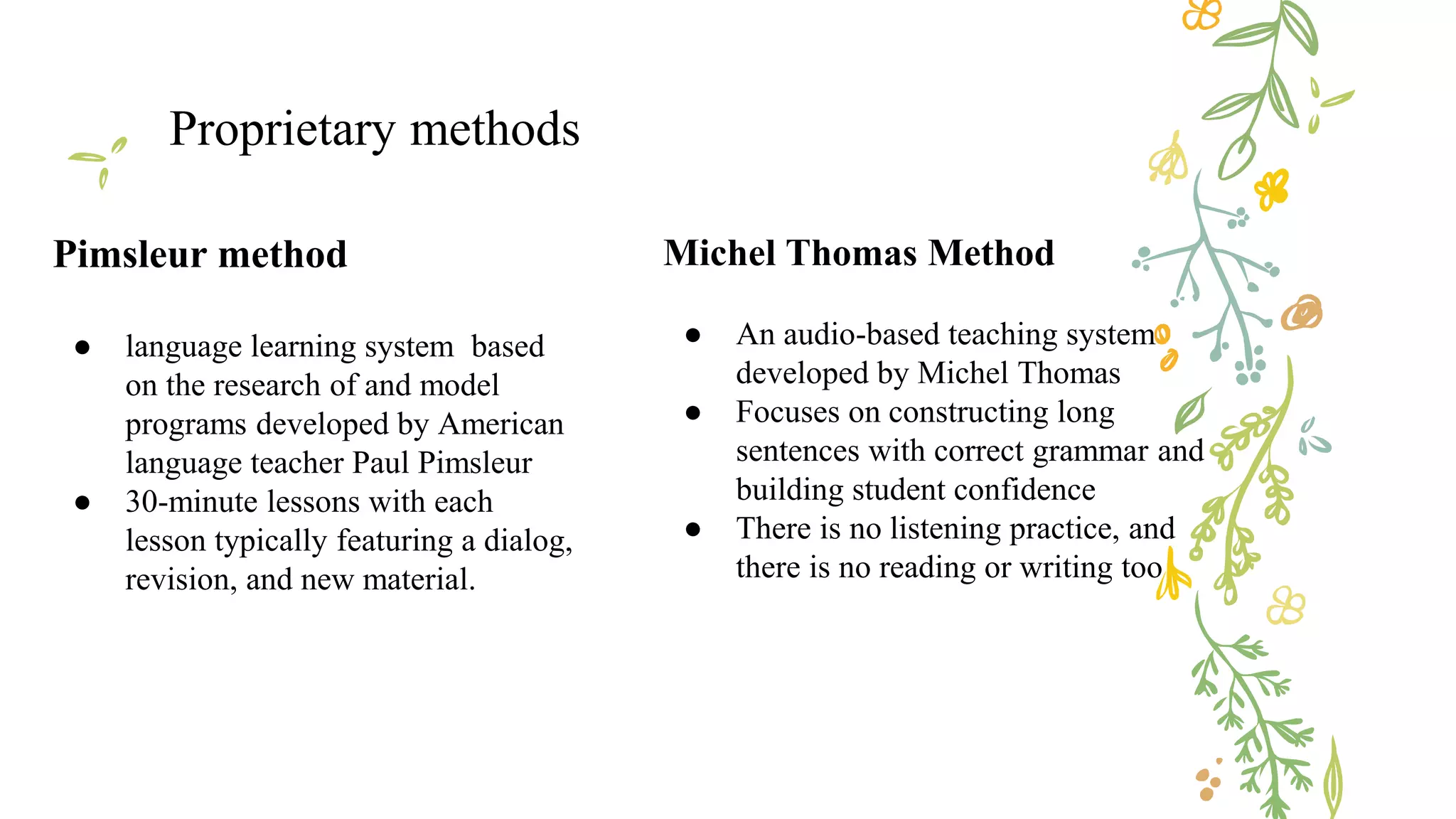
Pimsleur method
● language learning system based
on the research of and model
programs developed by American
language teacher Paul Pimsleur
● 30-minute lessons with each
lesson typically featuring a dialog,
revision, and new material.
Proprietary methods
Michel Thomas Method
● An audio-based teaching system
developed by Michel Thomas
● Focuses on constructing long
sentences with correct grammar and
building student confidence
● There is no listening practice, and
there is no reading or writing too
To sum up…
● Thus, there are diverse pedagogical approaches in English
language teaching that can make language studies more
innovation, interesting and easy for learner.
● In brief, learning methods are many just like roads are many but
the point or destination where we are supposed to reach is one. So
get command over English language as L2 is essential and we are
marching towards it.
Thanks!
Any questions???.....
“One language sets you in
a corridor for life. Two
languages open every
door along the way."
Frank Smith

Language basic concepts, theories and pedagogy

  • 1.
    Language Basic Concepts, theories& Pedagogy. English in Use. By Komal Shahedadpuri Research Scholar Dept of English, MK Bhavnagar University.
  • 2.
    English Language Teaching ●Global lingua franca ● 3 concentric circles for diffusion of English - As Native Language - As Second Language - As Foreign Language ● L2 Learning & Acquisition ● Part of Linguistic ● Language is primarily a means of making meaning. Conversation is the central focus of language and the keystone of language acquisition.
  • 4.
    Basic Language Terms ●Cliche ● Register ● Pidgin ● Creole ● Dialect ● Idiolect ● Langue ● Parole
  • 5.
    Language Theories ● HumanBrain and language acquisition ● Behaviourism & learning (Pavlov&Skinner) ● Cognitivism - Universal Grammar Theory (Nativist,Chomsky) ● Gestalt learning Theory (Wertheimer, Kohler & Koffka) ● Stephen Krashen’s Theory (SLA) ● Script Theory (Silvan Tomkins in 1954) ● Constructivist Learning Theory (John Dewey)
  • 6.
    Language Pedagogy ● EdwardAnthony in 1963 introduced 3 levels of conceptualization and association which labeled as - Approach (Communicative) - Method (Direct/Natural) - Technique (Role play)
  • 7.
    ● Richards andRogers' 1982 approach expanded on Anthony's three-level framework
  • 8.
    There are threeprincipal views: The structural view treats language as a system of structurally related elements to code meaning (e.g. grammar). The functional view sees language as a vehicle to express or accomplish a certain function, such as requesting something. The interactive view sees language as a vehicle for the creation and maintenance of social relations, focusing on patterns of moves, acts, negotiation and interaction found in conversational exchanges. This view has been fairly dominant since the 1980s
  • 9.
    Approaches ● Structural ● Functional ●Natural ● Oral ● Communicative ● Lexical ● Task based language teaching Methods ● Grammer Translation ● Total Physical Response ● Audio Lingual ● Suggestopedia ● Silent way ● Direct Method
  • 11.
    Structural methods Grammar–translation method ●Derived from classical method of teaching Latin & Greek ● Focus on grammatical rules, list of vocabulary and translation exercises ● Emphasis on learning to read and write. Vocabulary is taught in the form of lists of isolated words. ● Instructions given in mother tongue (help of L1) Ex. में खुरशी पर बेठा हु! I am seating on the chair. Audio-lingual method ● Developed during outbreak of World war ● Know as Oral/Army method ● Based on behavior psychology ● Identify the grammatical structures and the basic sentence patterns. ● Practice these patterns by systematic attention to pronunciation and intensive oral drilling. ● Material in dialogue form Repetitive drills , limited vocabulary
  • 12.
    Functional methods The oralapproach and situational language teaching ● Speech and structure were seen to be the basis of language and, especially, speaking ability. ● Language learning is habit-formation. Language skills are learned more effectively if they are presented orally first, then in written form. The meanings of words can be learned only in a linguistic and cultural context. Directed Practice ● It is a part of learning that occurs immediately after instruction. ● Directed practice under observation of teacher, tutor or parent and independent practice done by students individually. ● It can quickly provide a phrasebook- type knowledge of the language. Within these limits, the student's usage is accurate and precise.
  • 13.
    Silent Way (CalebGattegno) ● Makes extensive use of silence as a teaching method ● It was first introduced in Gattegno's book Teaching Foreign Languages in Schools: The Silent Way in 1963. ● It is well known for the use of colored sticks called Cuisenaire rods and for his approach to the teaching of initial reading in which sounds are taught by colors. ● Pronunciation is fundamental Interactive (communicative) methods
  • 14.
    The series method(FrançoisGouin) ● Teaching learners DIRECTLY (without translation) and conceptually (without grammatical rules and explanations) Series of connected sentences that are easy to perceive ● Direct "translation" of experience into words, makes for a "living language"through a chronological sequence of events. . Direct method ● It sought to immerse the learner in the same way as when a first language is learnt. ● All teaching is done in the target language, grammar is taught inductively, there is a focus on speaking and listening, and only useful ‘everyday' language is taught.
  • 15.
    Communicative language teaching (approach) ●Emphasizes interaction as both the means and the ultimate goal of learning a language ● At level of approach (theory) , design and procedure ● Successful communication in the target language is the main goal of communicative language teaching ● Dogme language teaching Task based language teaching (TBLT) ● An approach which offers students opportunities to actively engage in communication through various tasks. ● Students are free to use whatever vocabulary and grammar they know. ● Students will be exposed to a whole range of lexical phrases, collocations and patterns as well as language forms
  • 16.
    Teaching Proficiency throughReading and Storytelling ● Developed by Blaine Ray, a language teacher in California, in the 1990s ● Part of the comprehension approach to language teaching ● Incorporate narrative and descriptive component ● Stories contain vocabulary and grammar introduced with physical gestures or body movements developed and then dramatized in the class Total physical response (TRP) James Asher , psychologist ● Strong association of action and vocabulary ● Teaching language or vocabulary concepts by using physical movement to react to verbal input ● Connection between language and child psychology ● the coordination of speech and action Ex. Parents say shut the door that followed by physical action of a child
  • 17.
    Community language learning ●An approach in which students work together to develop what aspects of a language they would like to learn ● Base on Counselling-approach in which the teacher acts as a counselor and a paraphraser, while the learner is seen as a client and collaborator. ● Encourages interaction as a vehicle for learning in a group and meaningful conversations in which they discuss real messages. Suggestopedia ● A method developed in 1970s by the Bulgarian psychotherapist Georgi Lozanov ● The music is specially selected to bring the students into the optimum mental state for the effortless acquisition of the material ● SUGGESTOPEDIA is the study of these suggestive factors in a learning situation Humanism based methods
  • 18.
    Pimsleur method ● languagelearning system based on the research of and model programs developed by American language teacher Paul Pimsleur ● 30-minute lessons with each lesson typically featuring a dialog, revision, and new material. Proprietary methods Michel Thomas Method ● An audio-based teaching system developed by Michel Thomas ● Focuses on constructing long sentences with correct grammar and building student confidence ● There is no listening practice, and there is no reading or writing too
  • 19.
    To sum up… ●Thus, there are diverse pedagogical approaches in English language teaching that can make language studies more innovation, interesting and easy for learner. ● In brief, learning methods are many just like roads are many but the point or destination where we are supposed to reach is one. So get command over English language as L2 is essential and we are marching towards it.
  • 23.
    Thanks! Any questions???..... “One languagesets you in a corridor for life. Two languages open every door along the way." Frank Smith