GUJARAT TECHNOLOGICAL 
UNIVERSITY 
BIRLA VISHWAKARMA 
MAHAVIDHYALAYA 
SEMINAR TOPIC 
LAND USE AND TRANSPORTATION PLANNING 
KUSHALKUMAR G PATEL 
140080713009
INTRODUCTION 
 LAND USE: Land use means the humans use of 
land that includes how humans are using land for 
e.g. agriculture, residential, commercial, industrial 
development etc. 
 TRANSPORTATION PLANNING: It involves the 
planning required to provide necessary 
transportation facilities to society/community. 
(generally streets, highways, footpaths and public 
transport lines)
ISSUE 
 The major issue with the land use is that the 
migration of population form rural to urban which 
changed the usage of land. 
 This developed a need of creating transportation 
facilities such as roads, driveway access points, 
sidewalks, and bike routes etc. 
 These facilities are the result of land use decisions
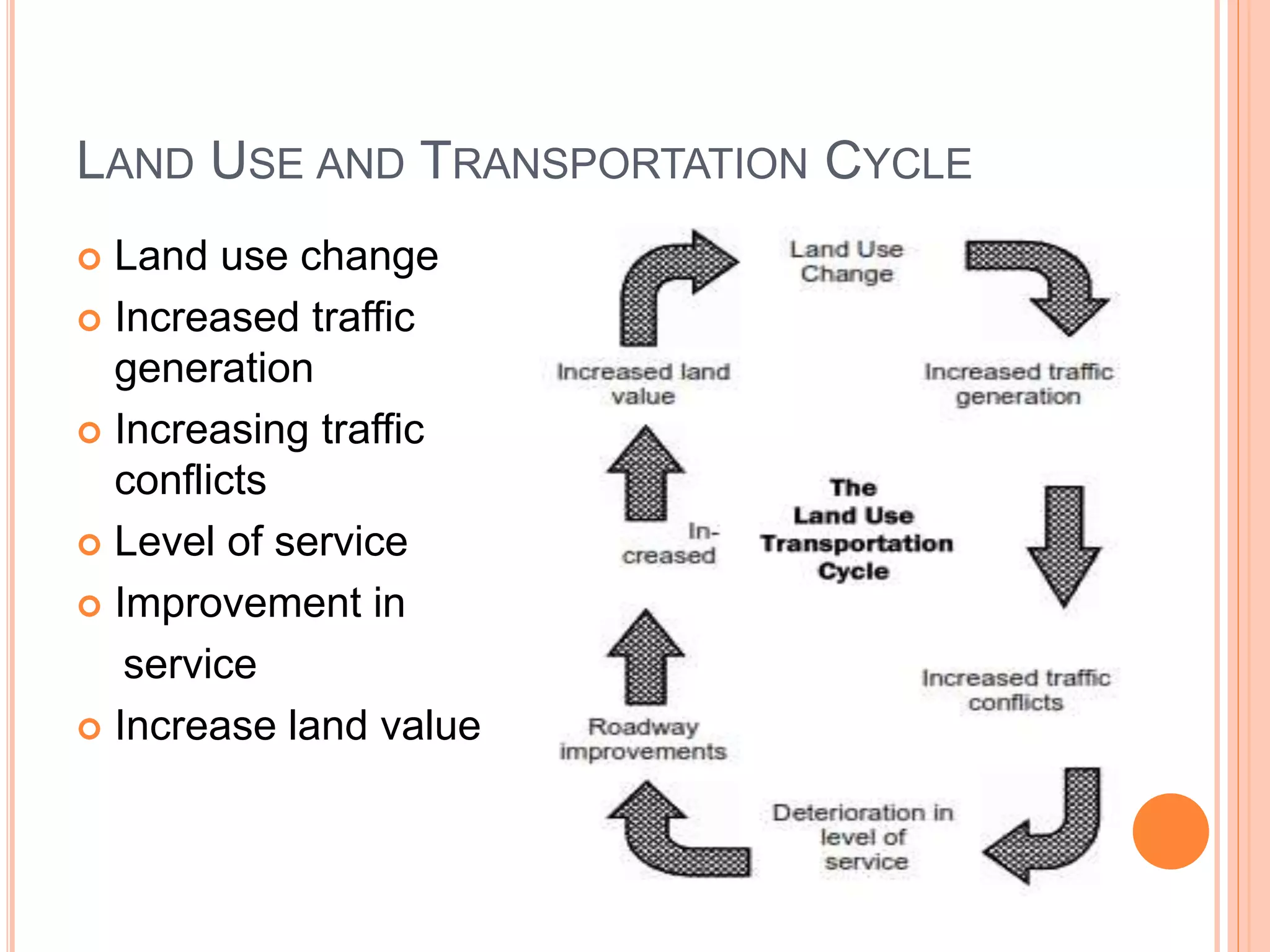
LAND USE AND TRANSPORTATION CYCLE 
 Land use change 
 Increased traffic 
generation 
 Increasing traffic 
conflicts 
 Level of service 
 Improvement in 
service 
 Increase land value
POLICY FOR INTEGRATING LAND USE WITH 
TRANSPORTATION 
 Nodal Development/Zoning concentrates 
development (e.g., creating a village) to encourage 
walking or bicycle use so that land between nodes 
can be used for low density, low traffic land uses. 
 Livable Walkable Communities are municipalities 
that provide facilities to promote walking, bicycling, 
services, and activities that promote a healthier 
lifestyle. 
 Access Management is the ability to control the 
number and location of access points to a property.
RESULT OF INTEGRATING THE POLICIES 
 Adopting these strategies in Planning activity as 
land use and transportation policies and in Zoning 
as development standards, and implementing them 
will significantly Improve the outputs.
BENIFITS 
 Provide a greater choice of travel modes 
 Distributing goods and services more efficiently 
 Improving road safety 
 Reducing the environmental impacts of the 
transport system 
 Creating more attractive and lively urban and 
suburban centers
CONCLUSION 
 Land use decisions directly impact the transportation 
system and facilities in the region. Land use 
generates vehicle trips leading to traffic congestion 
and costly roadway capacity improvements. 
 To achieve sustainable development, planning 
decision-makers should adopt and implement Master 
Plan of land use and transportation policies and 
implementation strategies should promote 
Nodal Development / Zoning 
Livable Walkable Communities 
Access Management
REFERENCES 
 How To Link Land Use and Transportation Planning by 
Prepared by Strafford Regional Planning Commission. 
Funded by the NH Office of State Planning and the NH 
Department of Transportation. 
 The Integrated Transport and Land Use Plan (South 
Australia Development Plan). 
 Integration Of Transport & Land-use ( case study of leiden-gouda 
area ) 
 http://en.wikipedia.org/wiki/Transportation_planning 
 http://en.wikipedia.org/wiki/Land_use
“Look deep into nature, and then 
you will understand everything 
better.” 
— Albert Einstein 
THANK YOU 

Land use planning

  • 1.
    GUJARAT TECHNOLOGICAL UNIVERSITY BIRLA VISHWAKARMA MAHAVIDHYALAYA SEMINAR TOPIC LAND USE AND TRANSPORTATION PLANNING KUSHALKUMAR G PATEL 140080713009
  • 2.
    INTRODUCTION  LANDUSE: Land use means the humans use of land that includes how humans are using land for e.g. agriculture, residential, commercial, industrial development etc.  TRANSPORTATION PLANNING: It involves the planning required to provide necessary transportation facilities to society/community. (generally streets, highways, footpaths and public transport lines)
  • 3.
    ISSUE  Themajor issue with the land use is that the migration of population form rural to urban which changed the usage of land.  This developed a need of creating transportation facilities such as roads, driveway access points, sidewalks, and bike routes etc.  These facilities are the result of land use decisions
  • 5.
    LAND USE ANDTRANSPORTATION CYCLE  Land use change  Increased traffic generation  Increasing traffic conflicts  Level of service  Improvement in service  Increase land value
  • 6.
    POLICY FOR INTEGRATINGLAND USE WITH TRANSPORTATION  Nodal Development/Zoning concentrates development (e.g., creating a village) to encourage walking or bicycle use so that land between nodes can be used for low density, low traffic land uses.  Livable Walkable Communities are municipalities that provide facilities to promote walking, bicycling, services, and activities that promote a healthier lifestyle.  Access Management is the ability to control the number and location of access points to a property.
  • 7.
    RESULT OF INTEGRATINGTHE POLICIES  Adopting these strategies in Planning activity as land use and transportation policies and in Zoning as development standards, and implementing them will significantly Improve the outputs.
  • 8.
    BENIFITS  Providea greater choice of travel modes  Distributing goods and services more efficiently  Improving road safety  Reducing the environmental impacts of the transport system  Creating more attractive and lively urban and suburban centers
  • 9.
    CONCLUSION  Landuse decisions directly impact the transportation system and facilities in the region. Land use generates vehicle trips leading to traffic congestion and costly roadway capacity improvements.  To achieve sustainable development, planning decision-makers should adopt and implement Master Plan of land use and transportation policies and implementation strategies should promote Nodal Development / Zoning Livable Walkable Communities Access Management
  • 10.
    REFERENCES  HowTo Link Land Use and Transportation Planning by Prepared by Strafford Regional Planning Commission. Funded by the NH Office of State Planning and the NH Department of Transportation.  The Integrated Transport and Land Use Plan (South Australia Development Plan).  Integration Of Transport & Land-use ( case study of leiden-gouda area )  http://en.wikipedia.org/wiki/Transportation_planning  http://en.wikipedia.org/wiki/Land_use
  • 11.
    “Look deep intonature, and then you will understand everything better.” — Albert Einstein THANK YOU 