Download as PDF, PPTX
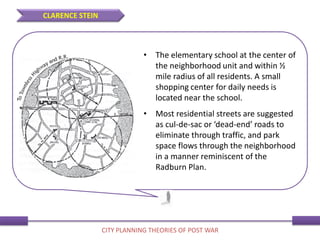
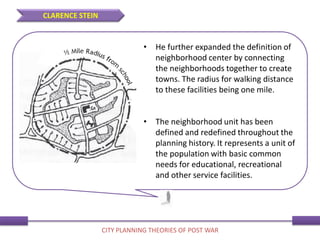
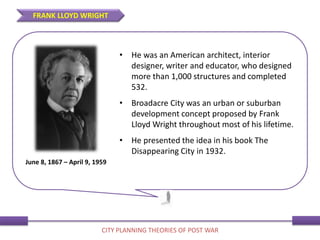
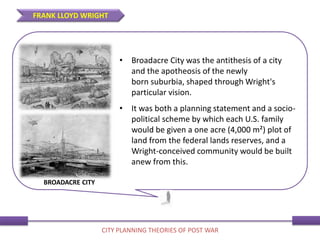
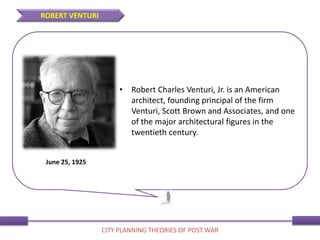
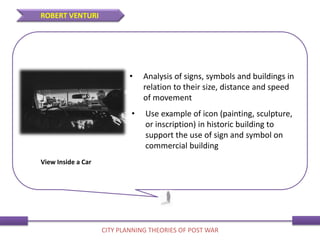
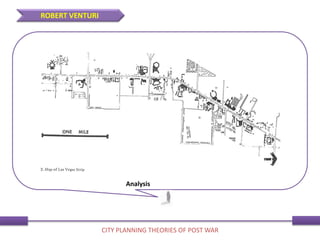
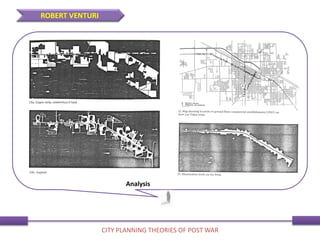
![• Objectively analyze the commercial strips of
Las Vegas as a phenomenon of architectural
communication (without discussion of values)
- Revolutionary for architects
- To question how we look at things
• Architects always look judgmentally at the
environment, dissatisfied with existing
conditions and want to change rather than try
to enhance what is there
• We look back at history to go forward, and
look down [at ordinary environment] to go up
1972 - Learning From Las Vegas
ROBERT VENTURI
CITY PLANNING THEORIES OF POST WAR](https://image.slidesharecdn.com/cityplanningtheoriespostwar-151208193942-lva1-app6892/85/City-planning-theories-post-war-38-320.jpg)
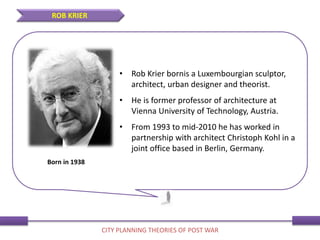
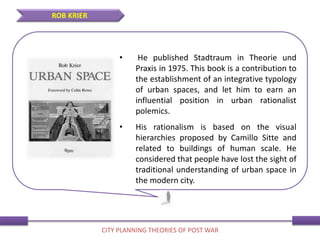
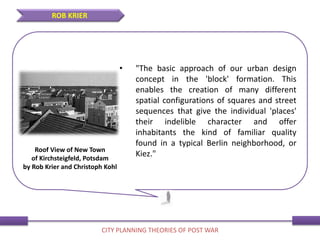
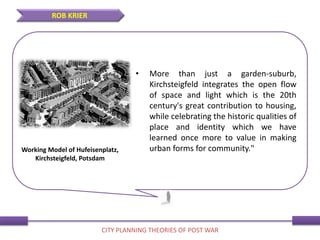
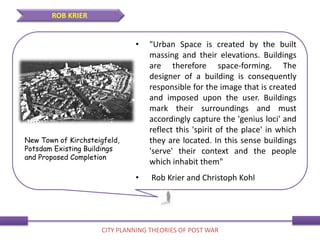

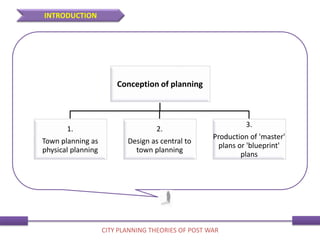
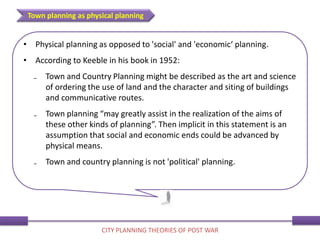
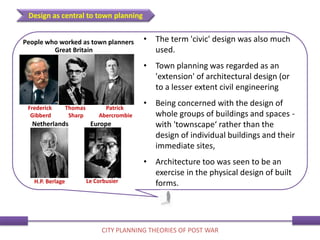
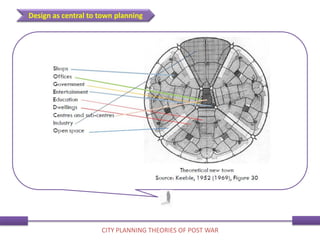
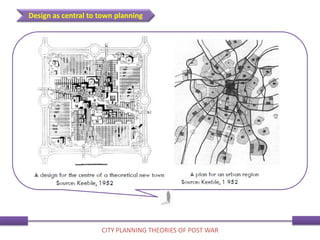
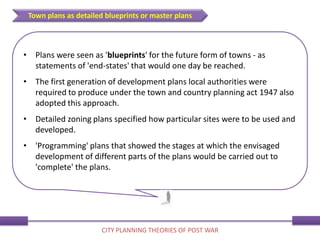
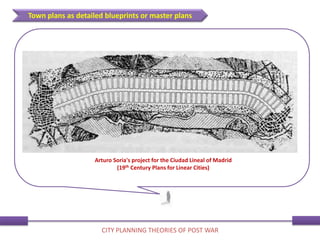
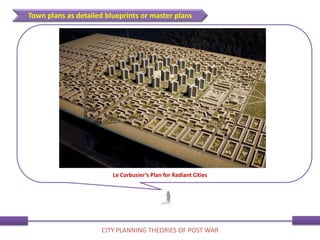
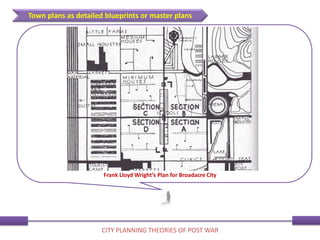
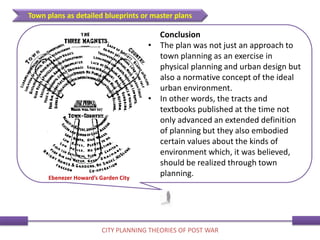
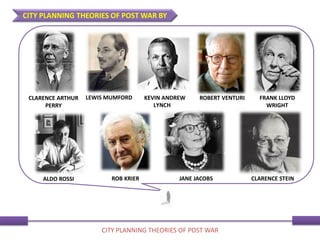
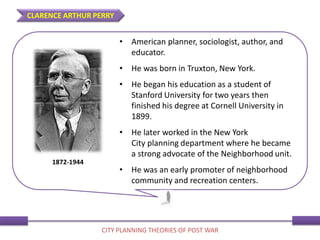
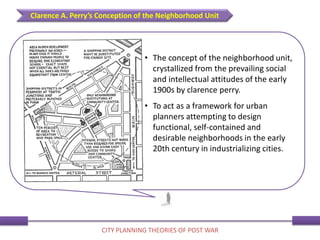
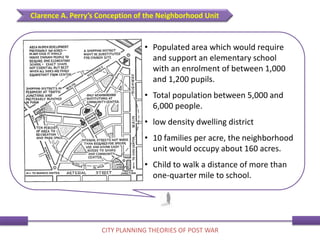
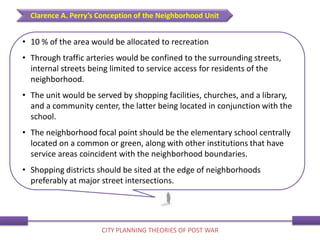
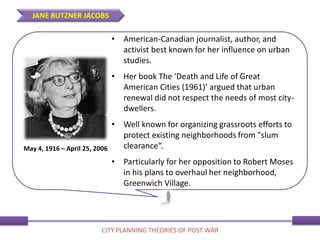
The document discusses several key theories and thinkers in post-war city planning, beginning with three main conceptions: 1) town planning as physical planning, 2) design as central to town planning, and 3) the production of "master" or "blueprint" plans. It then profiles several influential planners and their ideas, including Clarence Perry and the neighborhood unit, Lewis Mumford and the organic city, Kevin Lynch and the elements of urban form, Jane Jacobs and bottom-up community planning, Clarence Stein and the expansion of the neighborhood concept, and Frank Lloyd Wright's Broadacre City decentralized plan.


![[LECTURE 2] theories of urban form and structure.pdf](https://cdn.slidesharecdn.com/ss_thumbnails/lecture2theoiesofurbanform-250325070207-6f803777-thumbnail.jpg?width=640&height=640&fit=bounds)


