CASE STUDY: 5
MUSEUM ROAD, GAINESVILLE FLORIDA
RIANNON ZENDOR, KUSHAL PATEL
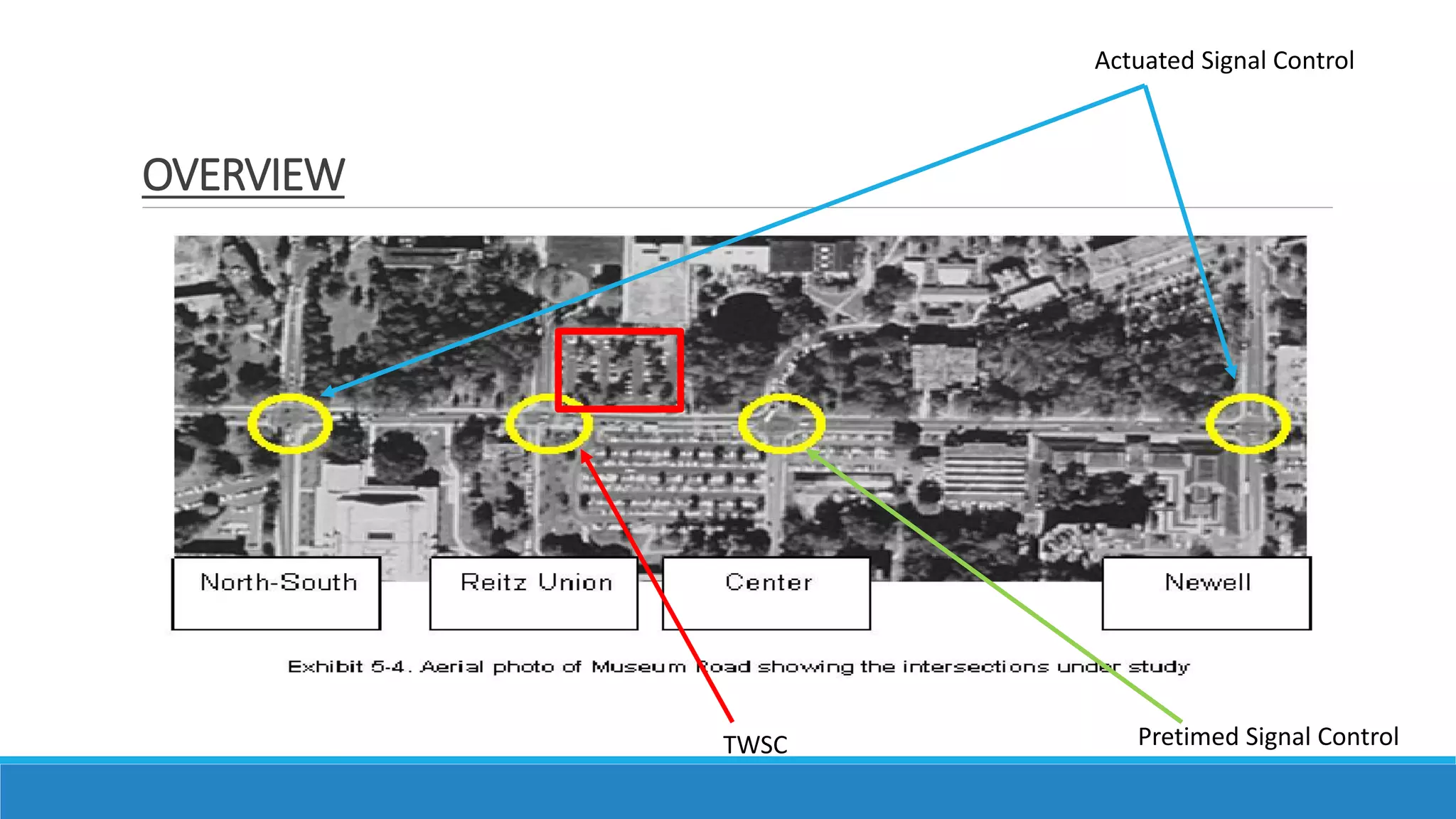
OVERVIEW
Actuated Signal Control
Pretimed Signal ControlTWSC
TWO WAY STOP CONTROLLED INTERSECTION
◦ Multimodal purpose, Automobile will not be the top priority.
◦ Demand is exceed to capacity
◦ Heavy LT’s to new facility
◦ Signalization will require geometric modifications.
SIGNALIZED INTERSECTION
◦ Queue blocks adjacent intersection
◦ Protected LT’s
◦ Exclusive pedestrian phasing
◦ Demand about to exceed capacity
SCOPE OF ANAYLSIS
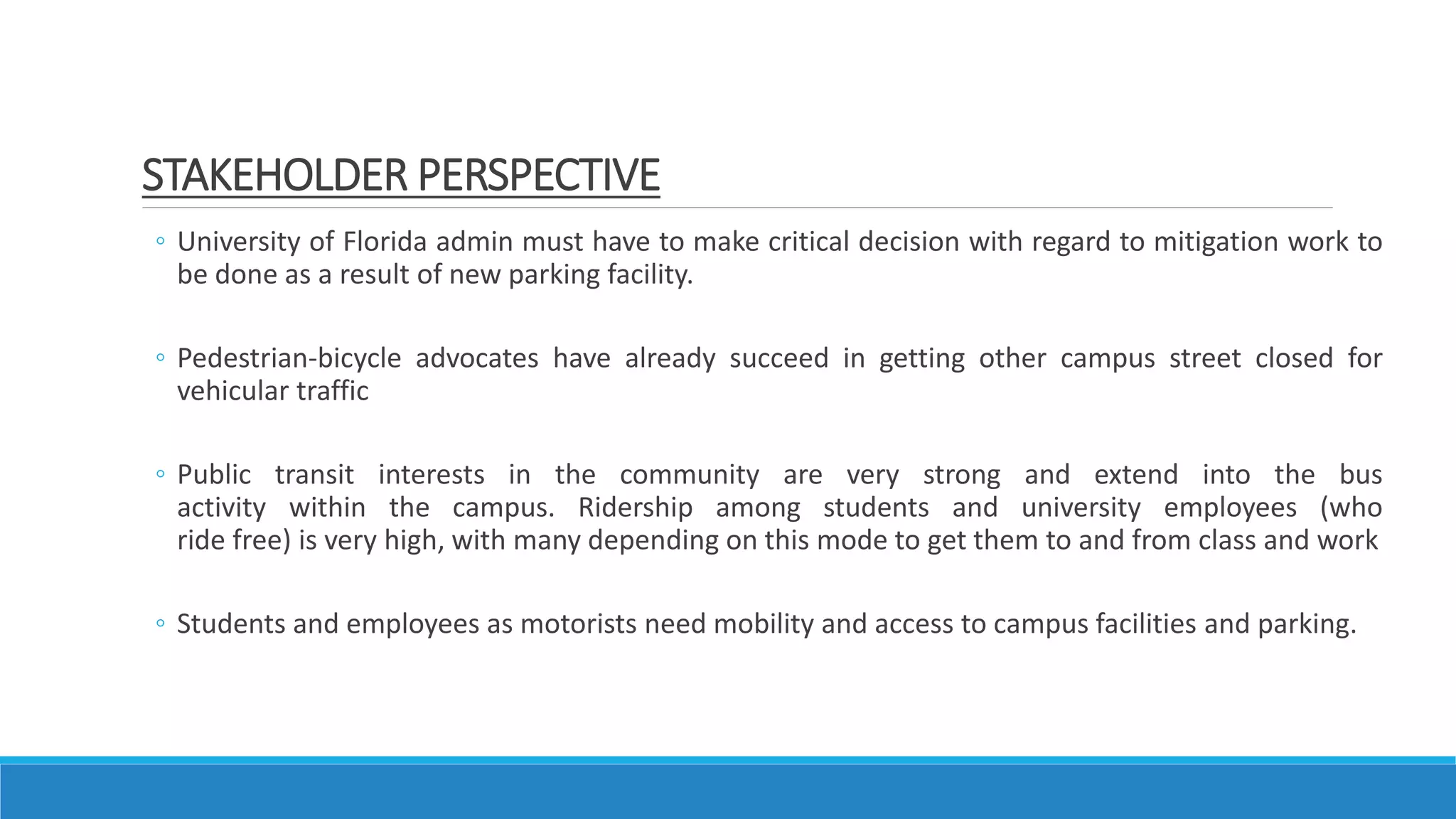
◦ University of Florida admin must have to make critical decision with regard to mitigation work to
be done as a result of new parking facility.
◦ Pedestrian-bicycle advocates have already succeed in getting other campus street closed for
vehicular traffic
◦ Public transit interests in the community are very strong and extend into the bus
activity within the campus. Ridership among students and university employees (who
ride free) is very high, with many depending on this mode to get them to and from class and work
◦ Students and employees as motorists need mobility and access to campus facilities and parking.
STAKEHOLDER PERSPECTIVE
◦ Main objective behind this study was to develop alternatives analysis using HCM method and
to compute performance measures which will assist decision makers for improving
intersection control with pedestrian and bicycle safety.
GOALS AND OBJECTIVE
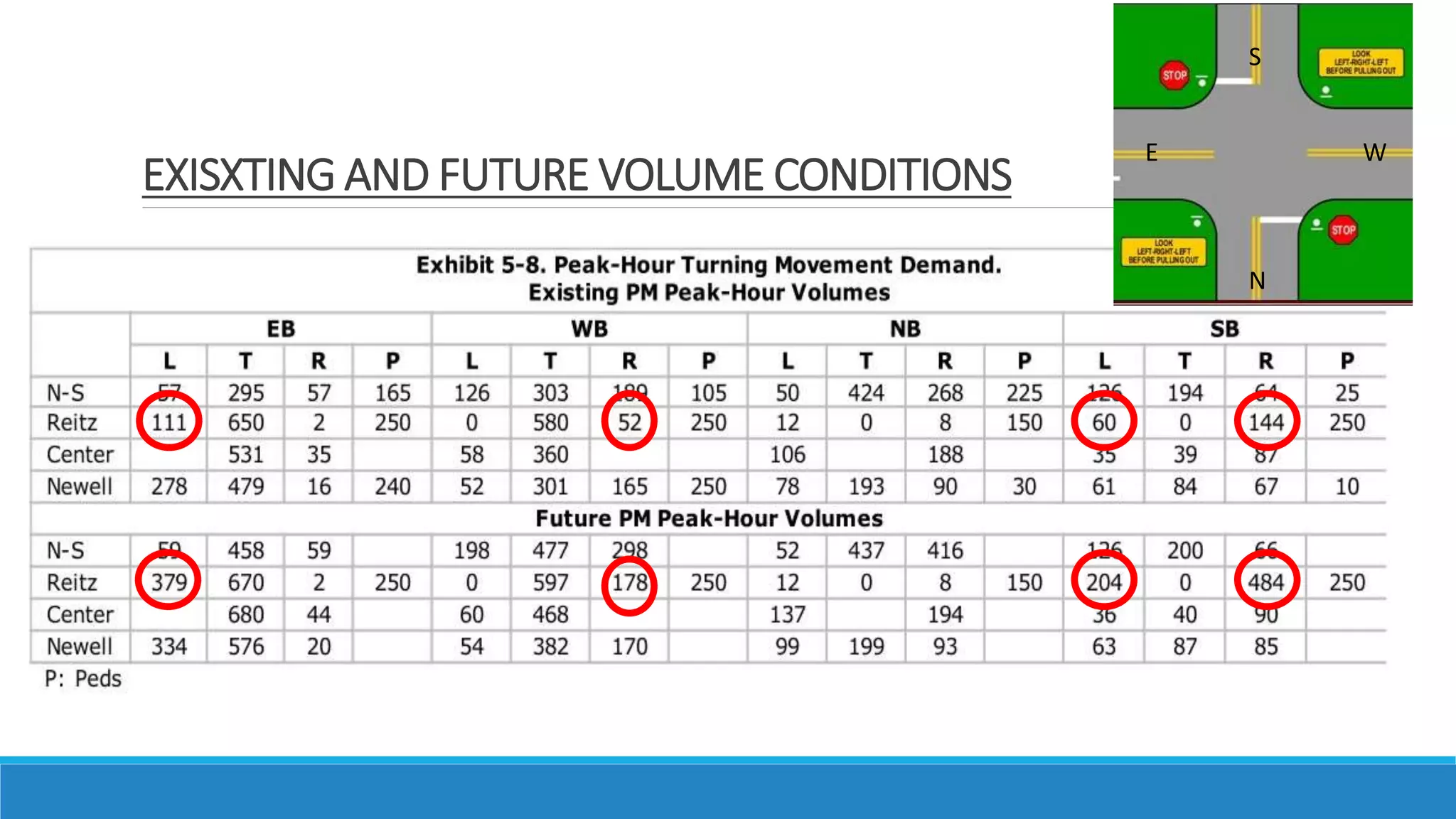
EXISXTING AND FUTURE VOLUME CONDITIONS
N
S
WE
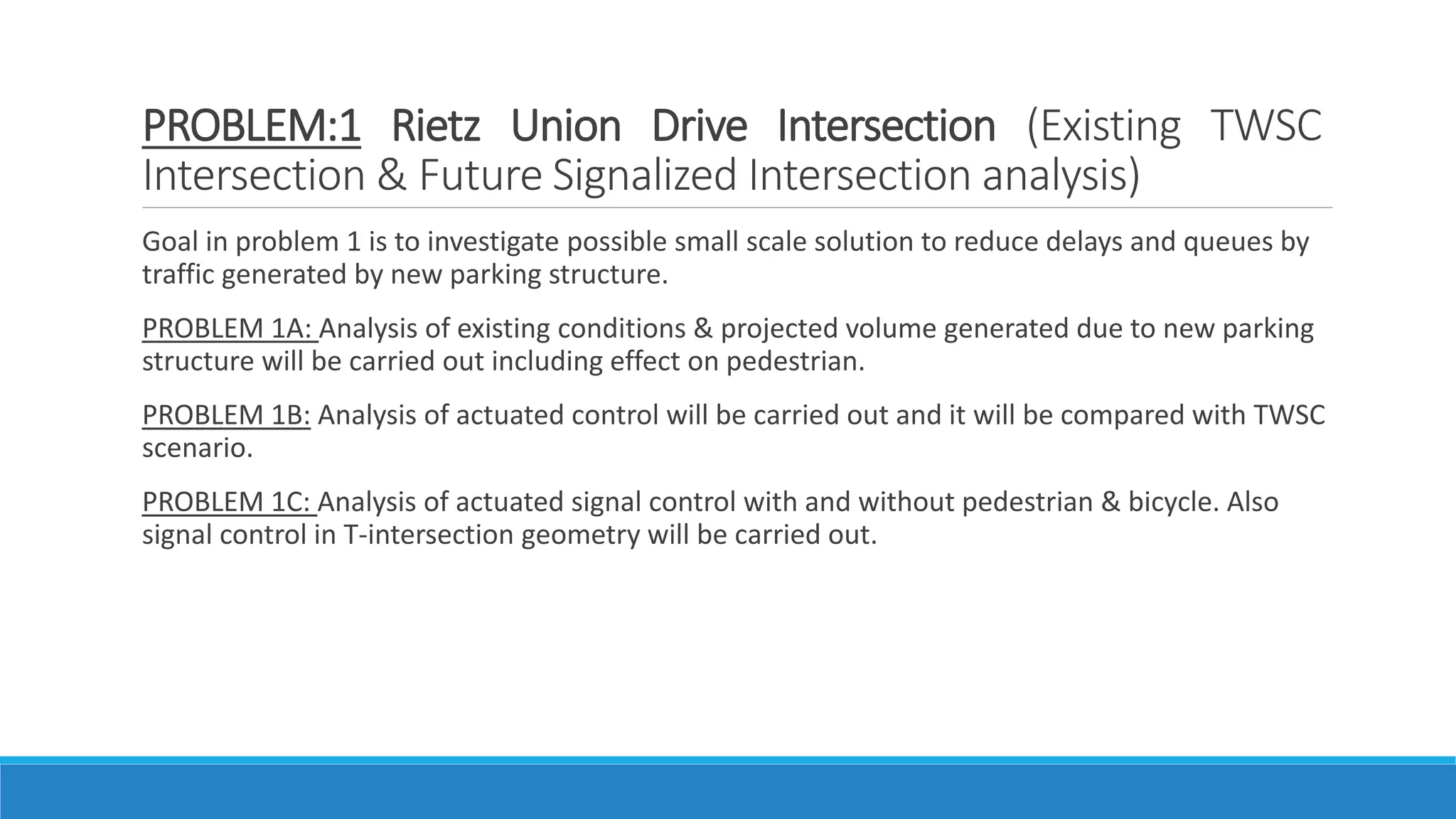
PROBLEM:1 Rietz Union Drive Intersection (Existing TWSC
Intersection & Future Signalized Intersection analysis)
Goal in problem 1 is to investigate possible small scale solution to reduce delays and queues by
traffic generated by new parking structure.
PROBLEM 1A: Analysis of existing conditions & projected volume generated due to new parking
structure will be carried out including effect on pedestrian.
PROBLEM 1B: Analysis of actuated control will be carried out and it will be compared with TWSC
scenario.
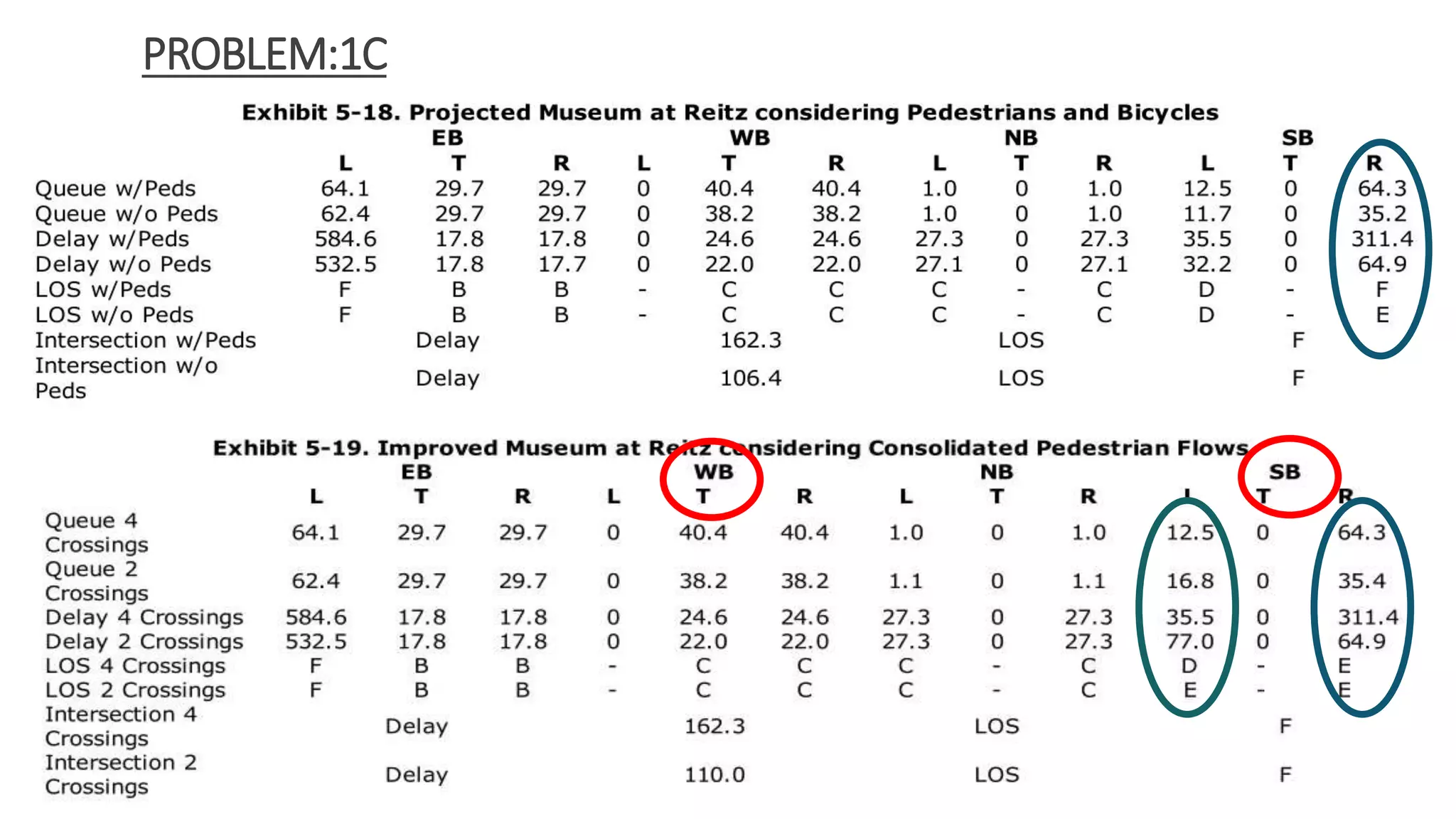
PROBLEM 1C: Analysis of actuated signal control with and without pedestrian & bicycle. Also
signal control in T-intersection geometry will be carried out.
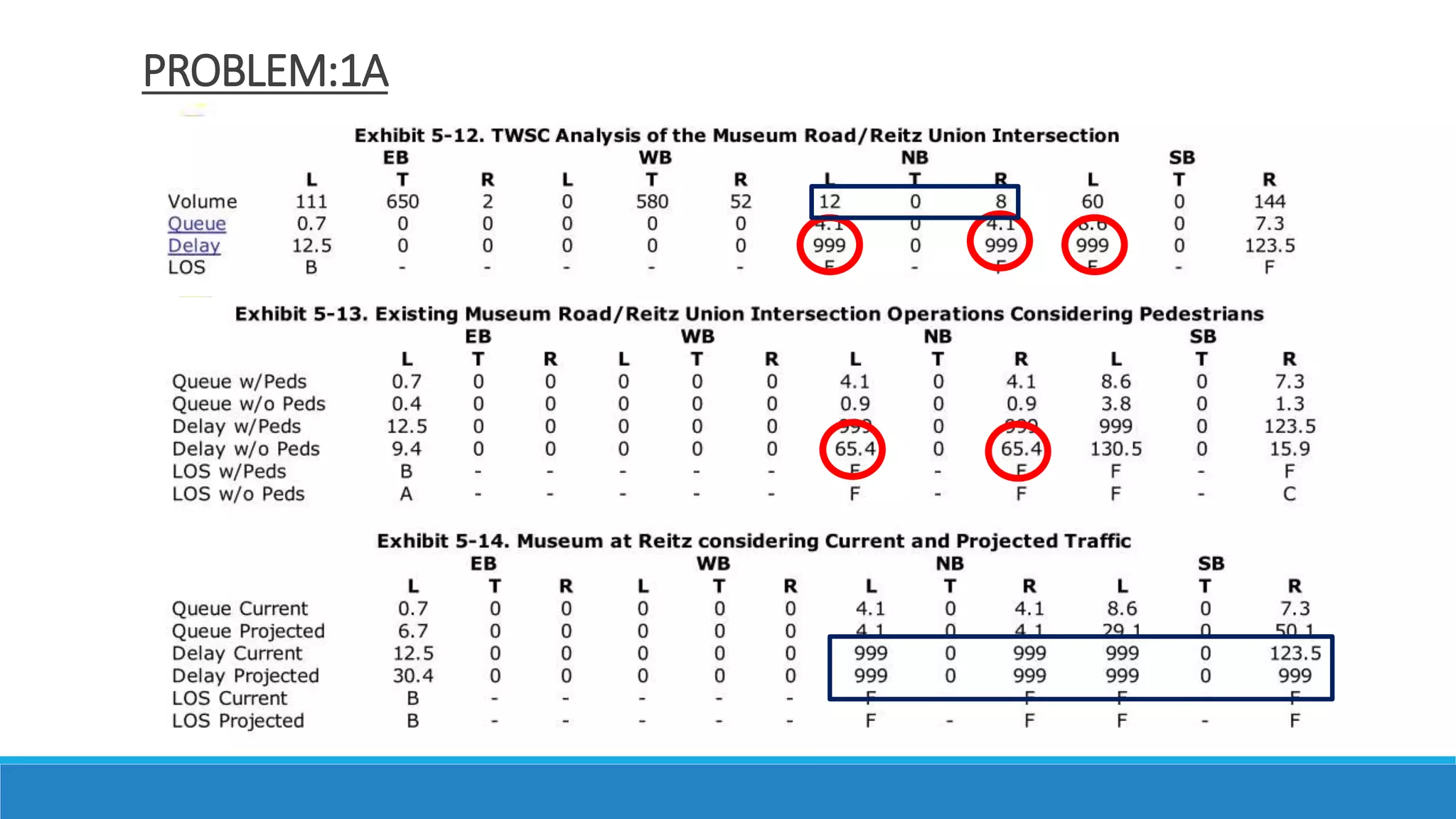
• Delays at southbound and northbound are 999s that is not realistic Hence its suggested that if delay is
beyond LOS range of 50s it is said to be LOS F.
PROBLEM:1A
• Here we can say that effect of pedestrian are dramatic on delays. Hence its very important to
considered pedestrian in analysis.
PROBLEM:1B
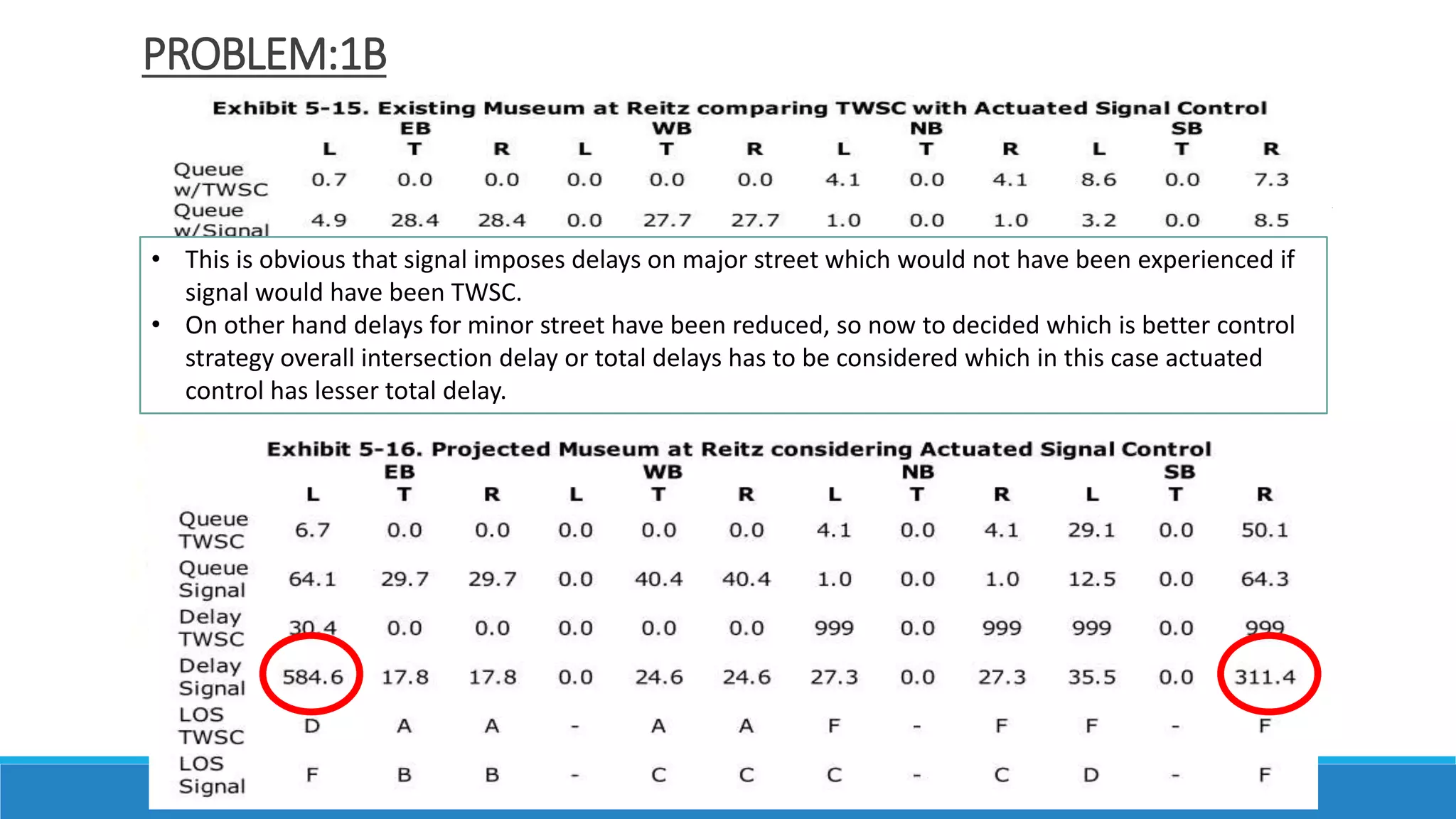
• This is obvious that signal imposes delays on major street which would not have been experienced if
signal would have been TWSC.
• On other hand delays for minor street have been reduced, so now to decided which is better control
strategy overall intersection delay or total delays has to be considered which in this case actuated
control has lesser total delay.
It can be observed that southbound Left turns will be affected maximum, its queue will be double
and delay will increase by about 35%
PROBLEM:1C
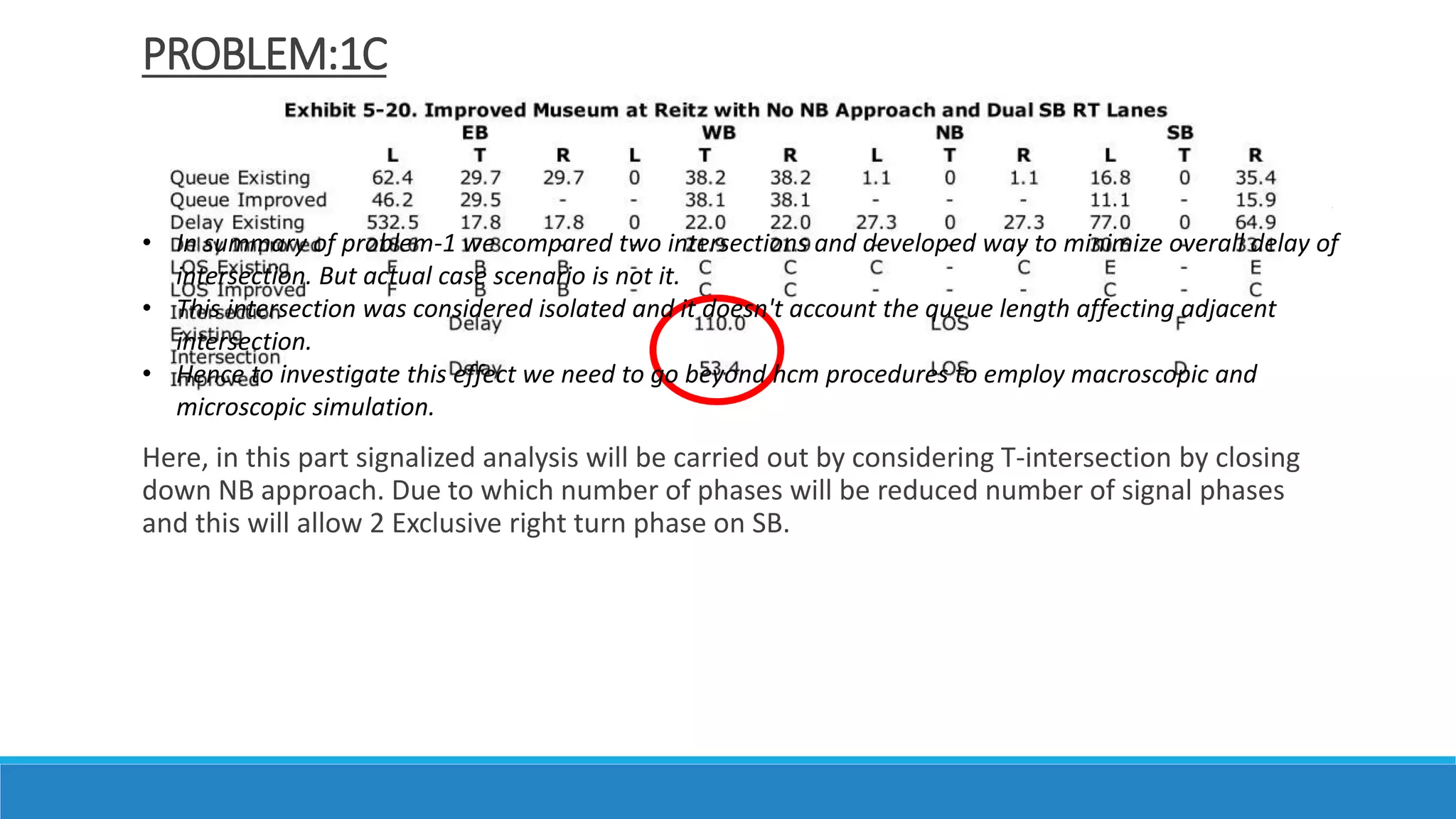
Here, in this part signalized analysis will be carried out by considering T-intersection by closing
down NB approach. Due to which number of phases will be reduced number of signal phases
and this will allow 2 Exclusive right turn phase on SB.
PROBLEM:1C
• In summary of problem-1 we compared two intersections and developed way to minimize overall delay of
intersection. But actual case scenario is not it.
• This intersection was considered isolated and it doesn't account the queue length affecting adjacent
intersection.
• Hence to investigate this effect we need to go beyond hcm procedures to employ macroscopic and
microscopic simulation.
PROBLEM:2 Reitz Union Drive Intersection Improvement
Strategies (effects of pedestrian, signal phasing and
coordination)
PROBLEM:3 Signal Timing Analysis of Rietz Union
Drive/Museum Road (actuated signal detection & signal timing,
pedestrian LOS)

Presentation hcm 2010 case study

  • 1.
    CASE STUDY: 5 MUSEUMROAD, GAINESVILLE FLORIDA RIANNON ZENDOR, KUSHAL PATEL
  • 2.
  • 3.
    TWO WAY STOPCONTROLLED INTERSECTION ◦ Multimodal purpose, Automobile will not be the top priority. ◦ Demand is exceed to capacity ◦ Heavy LT’s to new facility ◦ Signalization will require geometric modifications. SIGNALIZED INTERSECTION ◦ Queue blocks adjacent intersection ◦ Protected LT’s ◦ Exclusive pedestrian phasing ◦ Demand about to exceed capacity SCOPE OF ANAYLSIS
  • 4.
    ◦ University ofFlorida admin must have to make critical decision with regard to mitigation work to be done as a result of new parking facility. ◦ Pedestrian-bicycle advocates have already succeed in getting other campus street closed for vehicular traffic ◦ Public transit interests in the community are very strong and extend into the bus activity within the campus. Ridership among students and university employees (who ride free) is very high, with many depending on this mode to get them to and from class and work ◦ Students and employees as motorists need mobility and access to campus facilities and parking. STAKEHOLDER PERSPECTIVE
  • 5.
    ◦ Main objectivebehind this study was to develop alternatives analysis using HCM method and to compute performance measures which will assist decision makers for improving intersection control with pedestrian and bicycle safety. GOALS AND OBJECTIVE
  • 6.
    EXISXTING AND FUTUREVOLUME CONDITIONS N S WE
  • 7.
    PROBLEM:1 Rietz UnionDrive Intersection (Existing TWSC Intersection & Future Signalized Intersection analysis) Goal in problem 1 is to investigate possible small scale solution to reduce delays and queues by traffic generated by new parking structure. PROBLEM 1A: Analysis of existing conditions & projected volume generated due to new parking structure will be carried out including effect on pedestrian. PROBLEM 1B: Analysis of actuated control will be carried out and it will be compared with TWSC scenario. PROBLEM 1C: Analysis of actuated signal control with and without pedestrian & bicycle. Also signal control in T-intersection geometry will be carried out.
  • 8.
    • Delays atsouthbound and northbound are 999s that is not realistic Hence its suggested that if delay is beyond LOS range of 50s it is said to be LOS F. PROBLEM:1A • Here we can say that effect of pedestrian are dramatic on delays. Hence its very important to considered pedestrian in analysis.
  • 9.
    PROBLEM:1B • This isobvious that signal imposes delays on major street which would not have been experienced if signal would have been TWSC. • On other hand delays for minor street have been reduced, so now to decided which is better control strategy overall intersection delay or total delays has to be considered which in this case actuated control has lesser total delay.
  • 10.
    It can beobserved that southbound Left turns will be affected maximum, its queue will be double and delay will increase by about 35% PROBLEM:1C
  • 11.
    Here, in thispart signalized analysis will be carried out by considering T-intersection by closing down NB approach. Due to which number of phases will be reduced number of signal phases and this will allow 2 Exclusive right turn phase on SB. PROBLEM:1C • In summary of problem-1 we compared two intersections and developed way to minimize overall delay of intersection. But actual case scenario is not it. • This intersection was considered isolated and it doesn't account the queue length affecting adjacent intersection. • Hence to investigate this effect we need to go beyond hcm procedures to employ macroscopic and microscopic simulation.
  • 12.
    PROBLEM:2 Reitz UnionDrive Intersection Improvement Strategies (effects of pedestrian, signal phasing and coordination)
  • 13.
    PROBLEM:3 Signal TimingAnalysis of Rietz Union Drive/Museum Road (actuated signal detection & signal timing, pedestrian LOS)