Parasite and Parasitism,
classification of Protozoans &
Helminths – II
(Helminths only)
SACHIN KUMAR SHARMA
PH.D. SCHOLAR
DEPARTMENT OF MICROBIOLOGY
SMIMS, SMU
Parasite
Parasite is a living organism, which lives in or upon another organism
(host) and derives nutrients directly from it, without giving any benefit to
the host.
Medical Parasitology deals with the study of animal parasites, which infect
and produce diseases in human beings.
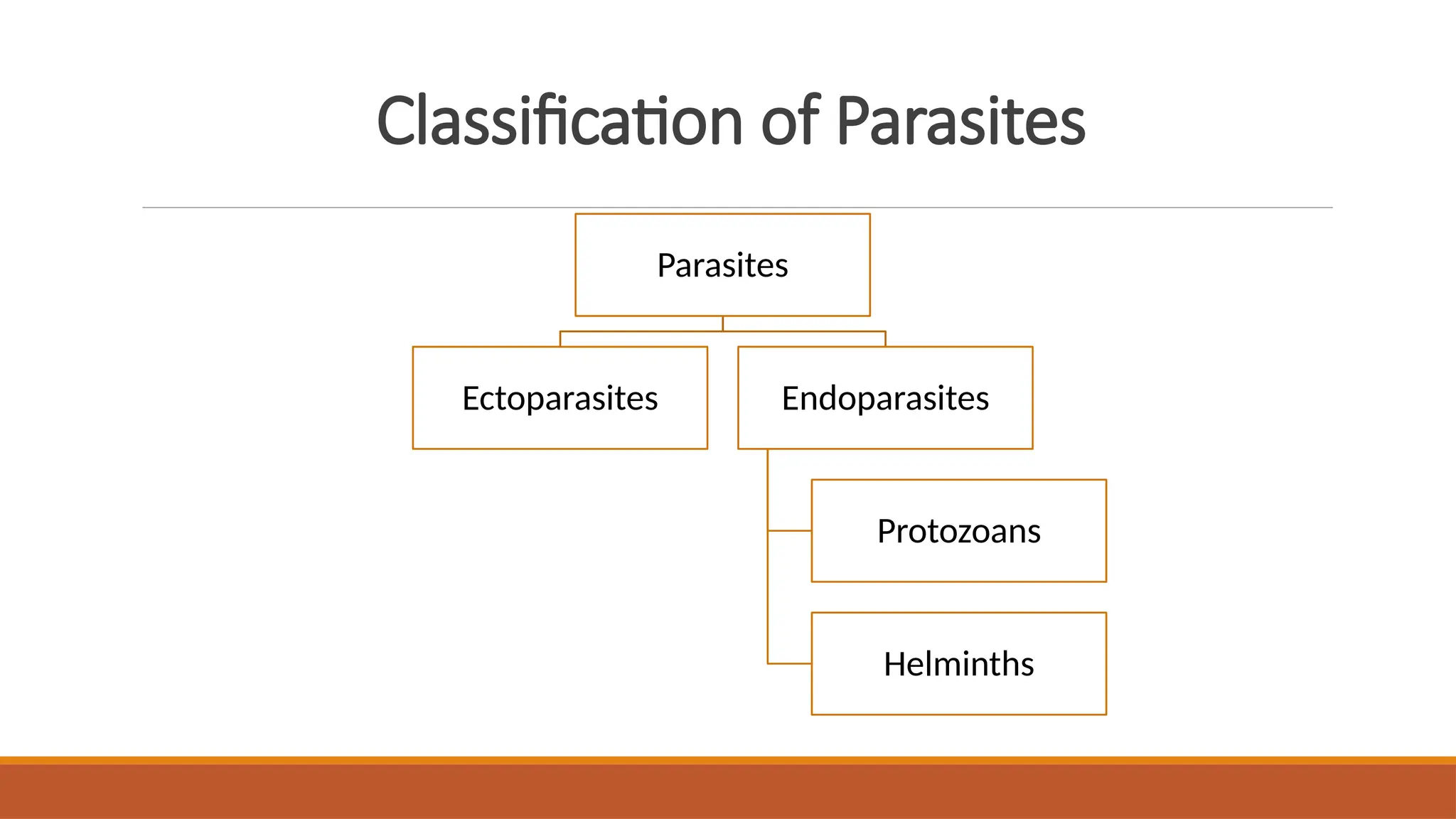
Classification of Parasites
Parasites
Ectoparasites Endoparasites
Protozoans
Helminths
Ectoparasites
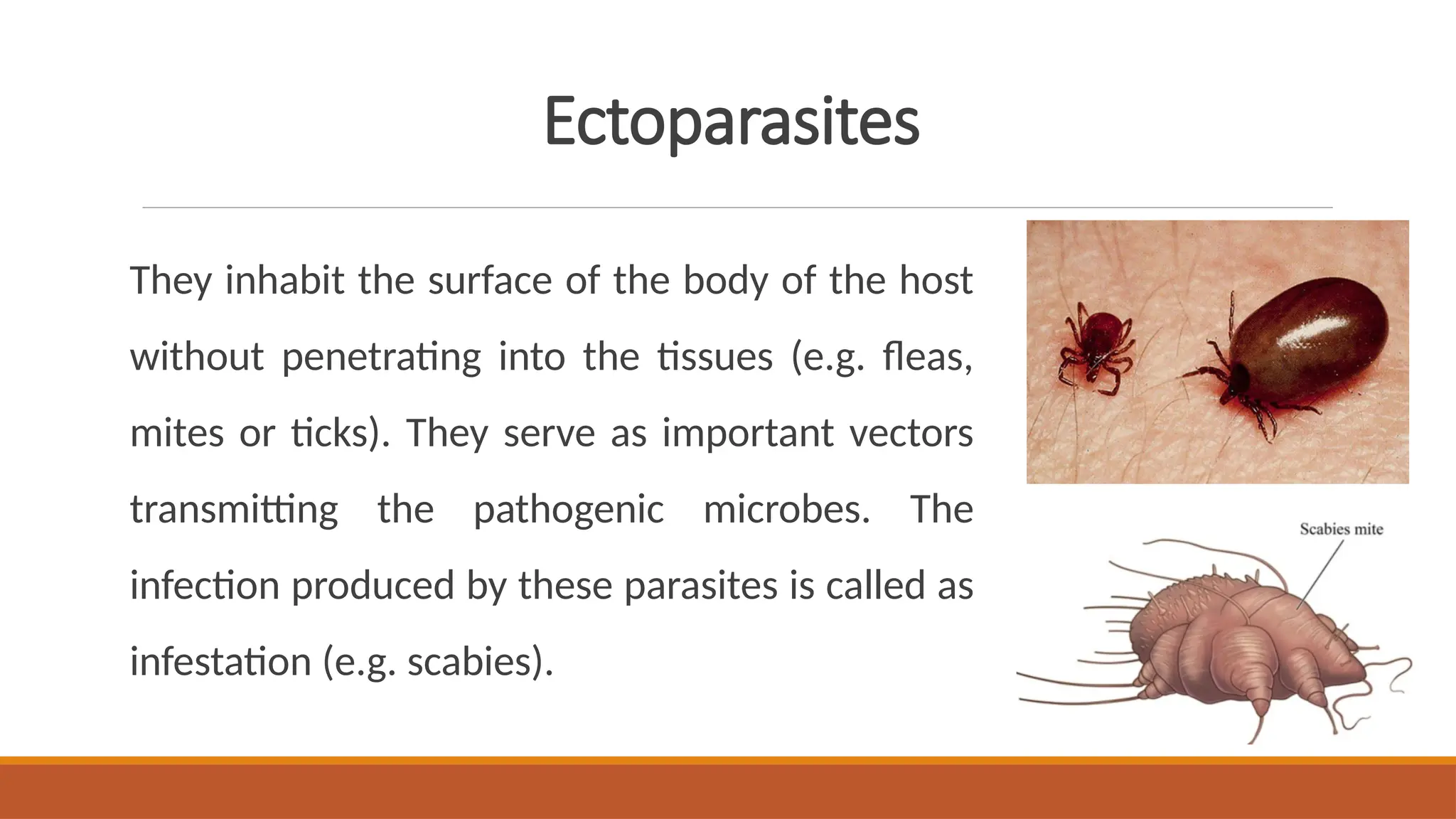
They inhabit the surface of the body of the host
without penetrating into the tissues (e.g. fleas,
mites or ticks). They serve as important vectors
transmitting the pathogenic microbes. The
infection produced by these parasites is called as
infestation (e.g. scabies).
Endoparasites
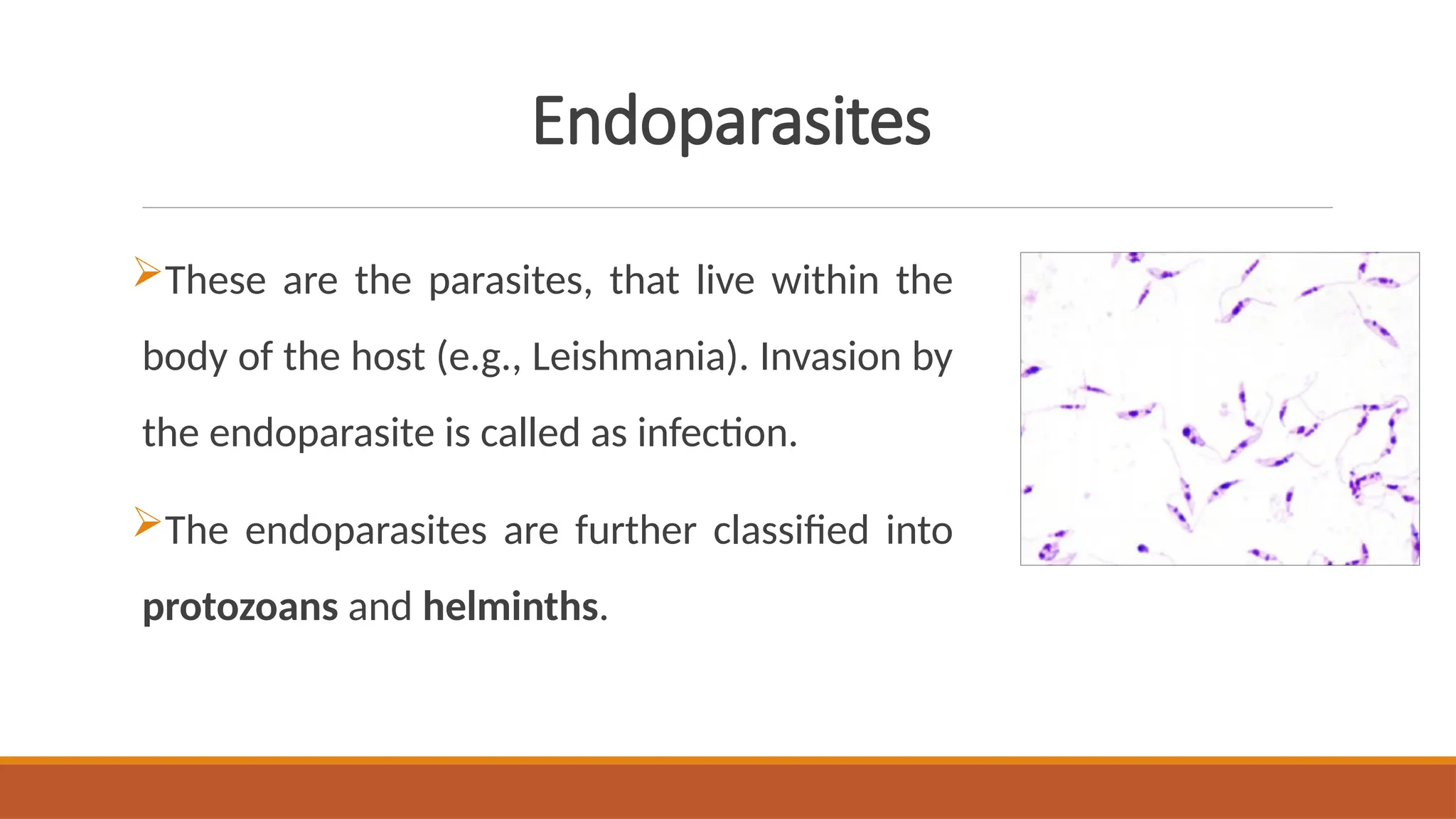
These are the parasites, that live within the
body of the host (e.g., Leishmania). Invasion by
the endoparasite is called as infection.
The endoparasites are further classified into
protozoans and helminths.
Protozoa
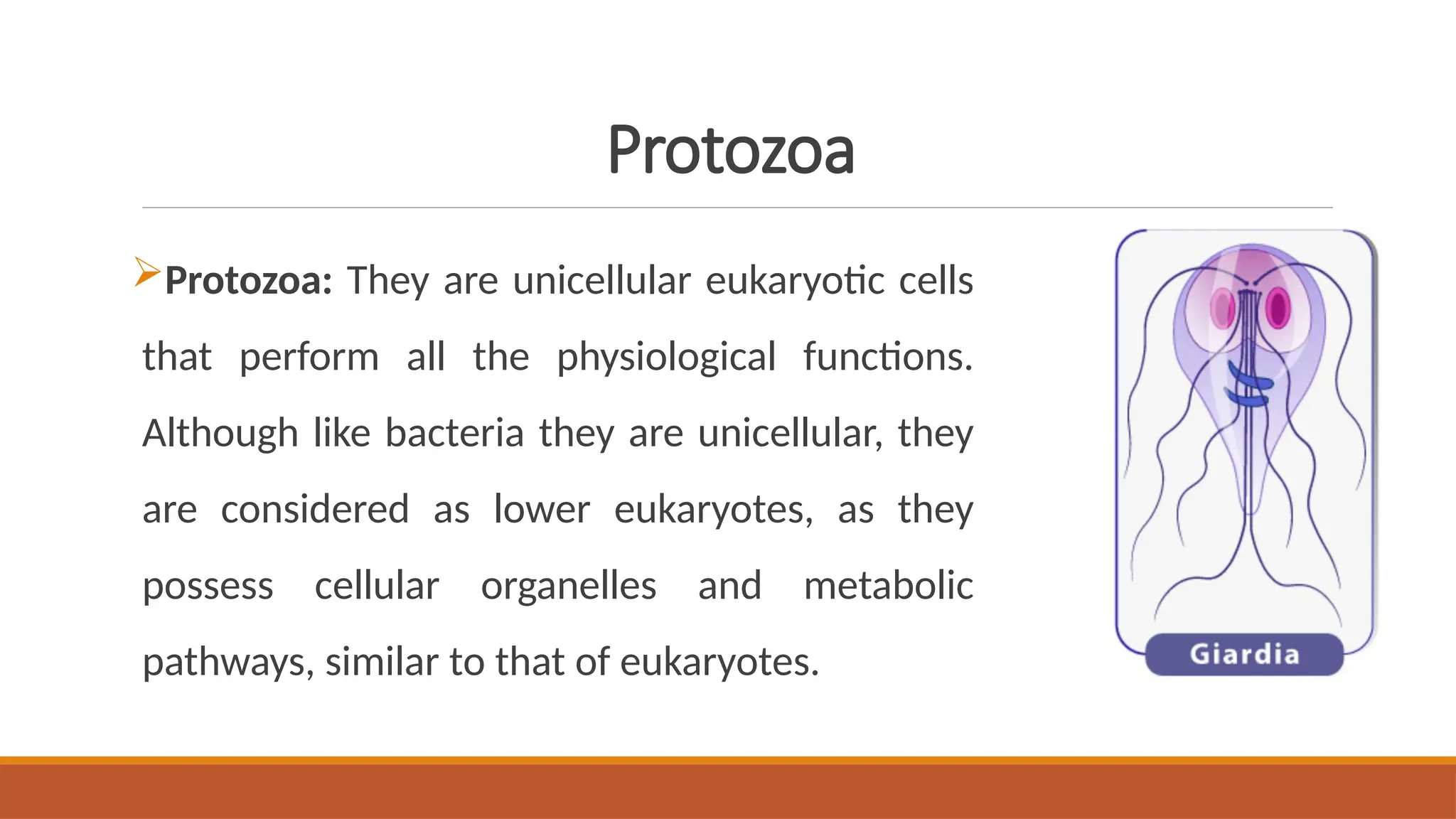
Protozoa: They are unicellular eukaryotic cells
that perform all the physiological functions.
Although like bacteria they are unicellular, they
are considered as lower eukaryotes, as they
possess cellular organelles and metabolic
pathways, similar to that of eukaryotes.
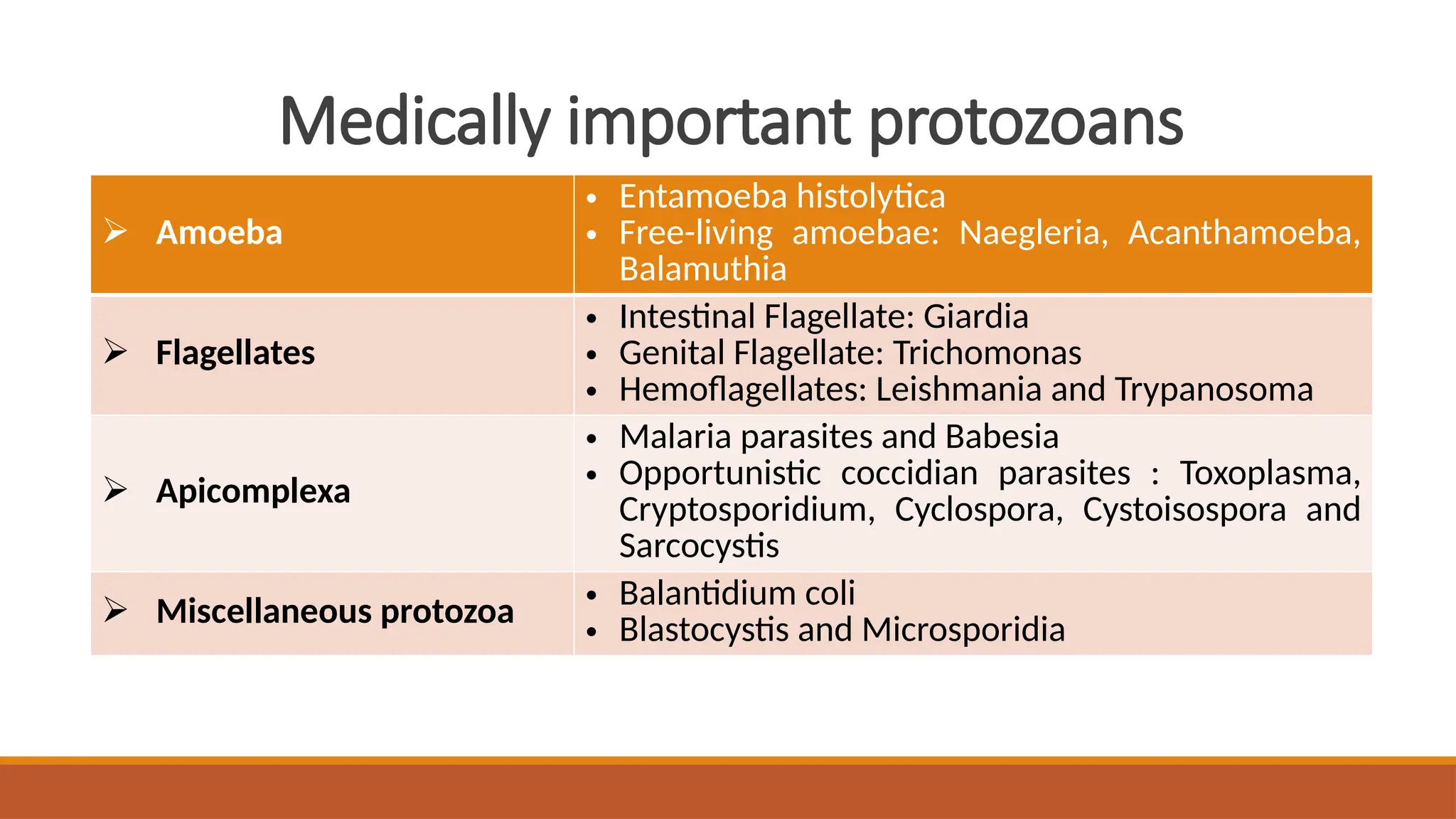
Medically important protozoans
 Amoeba
• Entamoeba histolytica
• Free-living amoebae: Naegleria, Acanthamoeba,
Balamuthia
 Flagellates
• Intestinal Flagellate: Giardia
• Genital Flagellate: Trichomonas
• Hemoflagellates: Leishmania and Trypanosoma
 Apicomplexa
• Malaria parasites and Babesia
• Opportunistic coccidian parasites : Toxoplasma,
Cryptosporidium, Cyclospora, Cystoisospora and
Sarcocystis
 Miscellaneous protozoa • Balantidium coli
• Blastocystis and Microsporidia
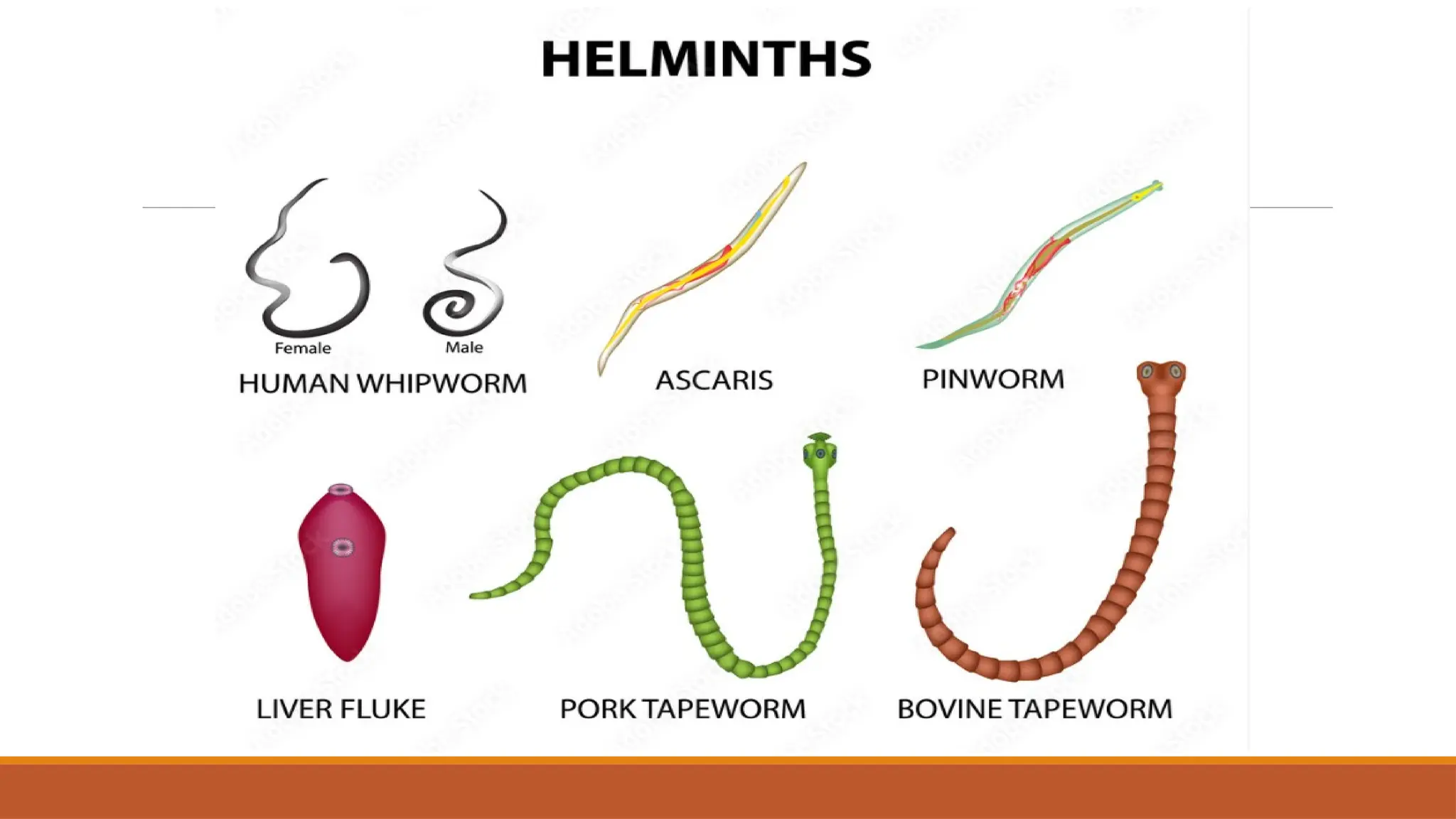
Helminths
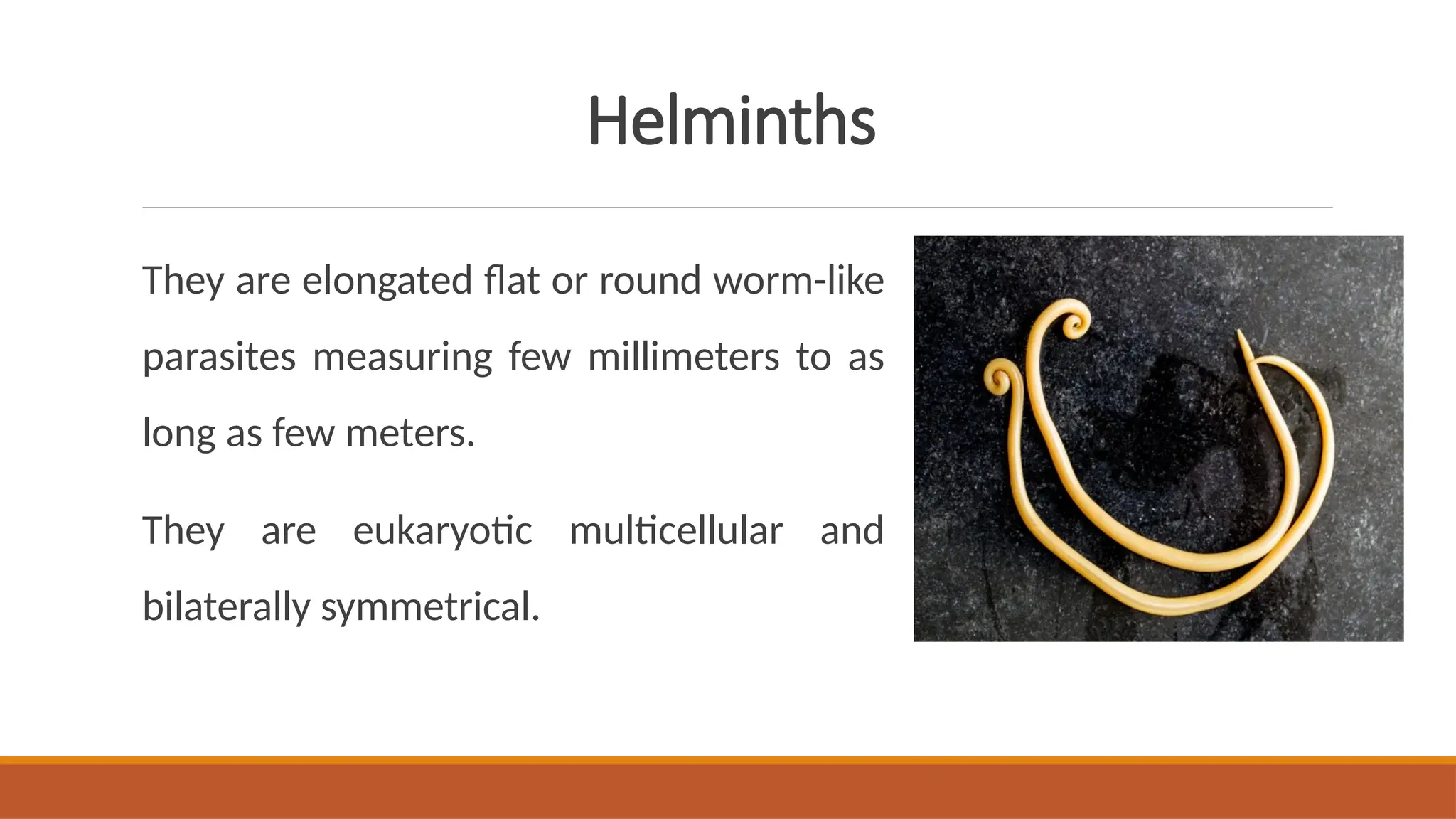
They are elongated flat or round worm-like
parasites measuring few millimeters to as
long as few meters.
They are eukaryotic multicellular and
bilaterally symmetrical.
Helminths (Contd.)
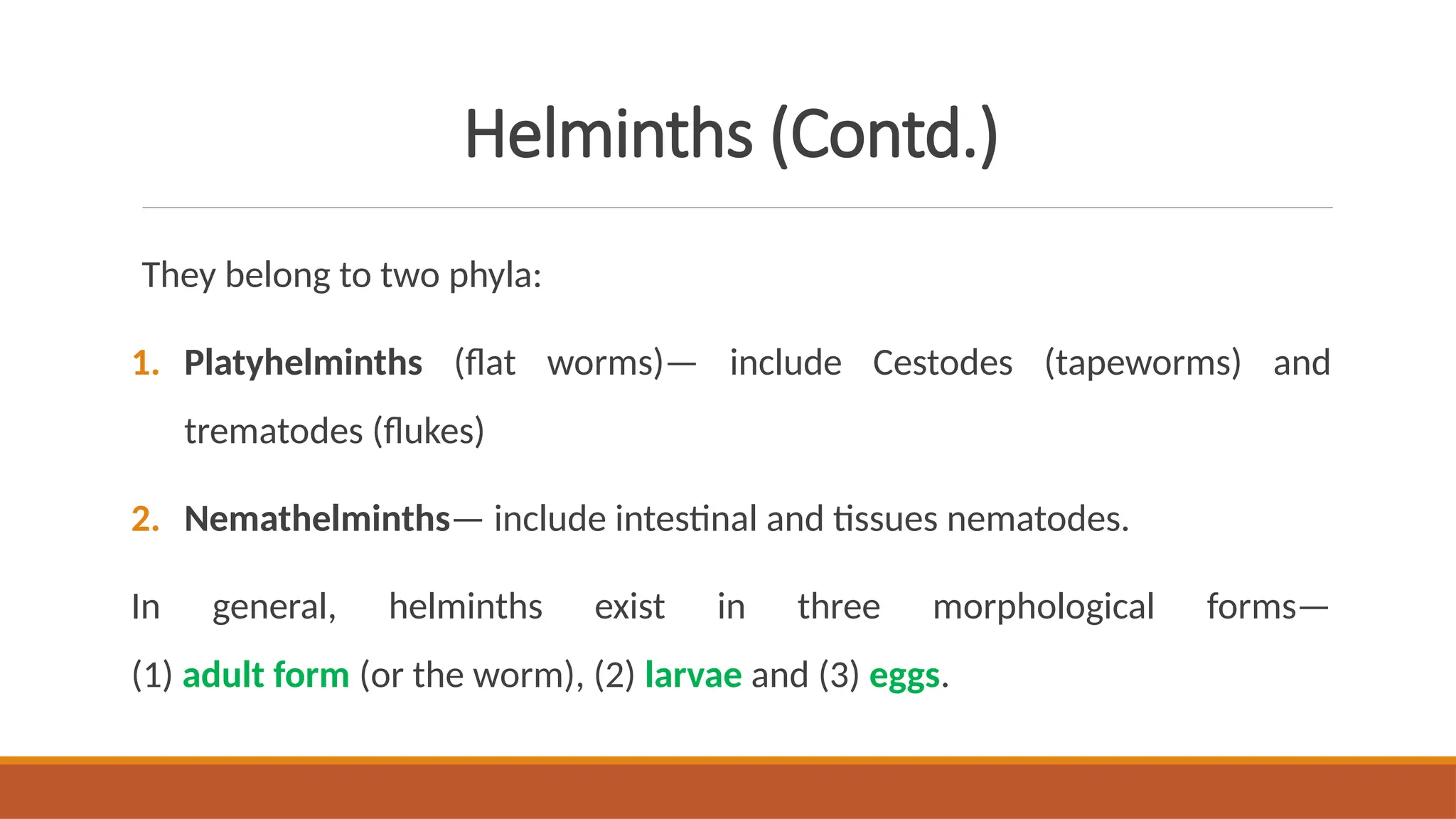
They belong to two phyla:
1. Platyhelminths (flat worms)— include Cestodes (tapeworms) and
trematodes (flukes)
2. Nemathelminths— include intestinal and tissues nematodes.
In general, helminths exist in three morphological forms—
(1) adult form (or the worm), (2) larvae and (3) eggs.
Medically important Helminths
 Cestodes
• Diphyllobothrium
• Taenia
• Echinococcus, Hymenolepis, Dipylidium
 Trematodes or flukes
• Schistosoma, Fasciola, Clonorchis,
Opisthorchis, Fasciolopsis, Paragonimus
 Intestinal Nematodes
• Strongyloides & Ascaris
• Trichuris, Enterobius
• Hookworm
 Somatic Nematodes
• Filarial nematodes
• Dracunculus
• Trichinella
Nematodes
Intestinal Nematodes:
Small Intestinal Nematodes: Ascaris, Hookworm and Strongyloides.
Large Intestinal Nematodes: Tricuris and Entrobius.
Tissue or Somatic Nematodes
Filarial nematodes: They comprise of several vector borne parasites
Wuchereria bancrofti and Brugia malayi cause lymphatic filariasis
Loa loa, Onchocerca volvulus, and Mansonella cause cutaneous filariasis
Dracunculus medinensis and Trichinella spiralis
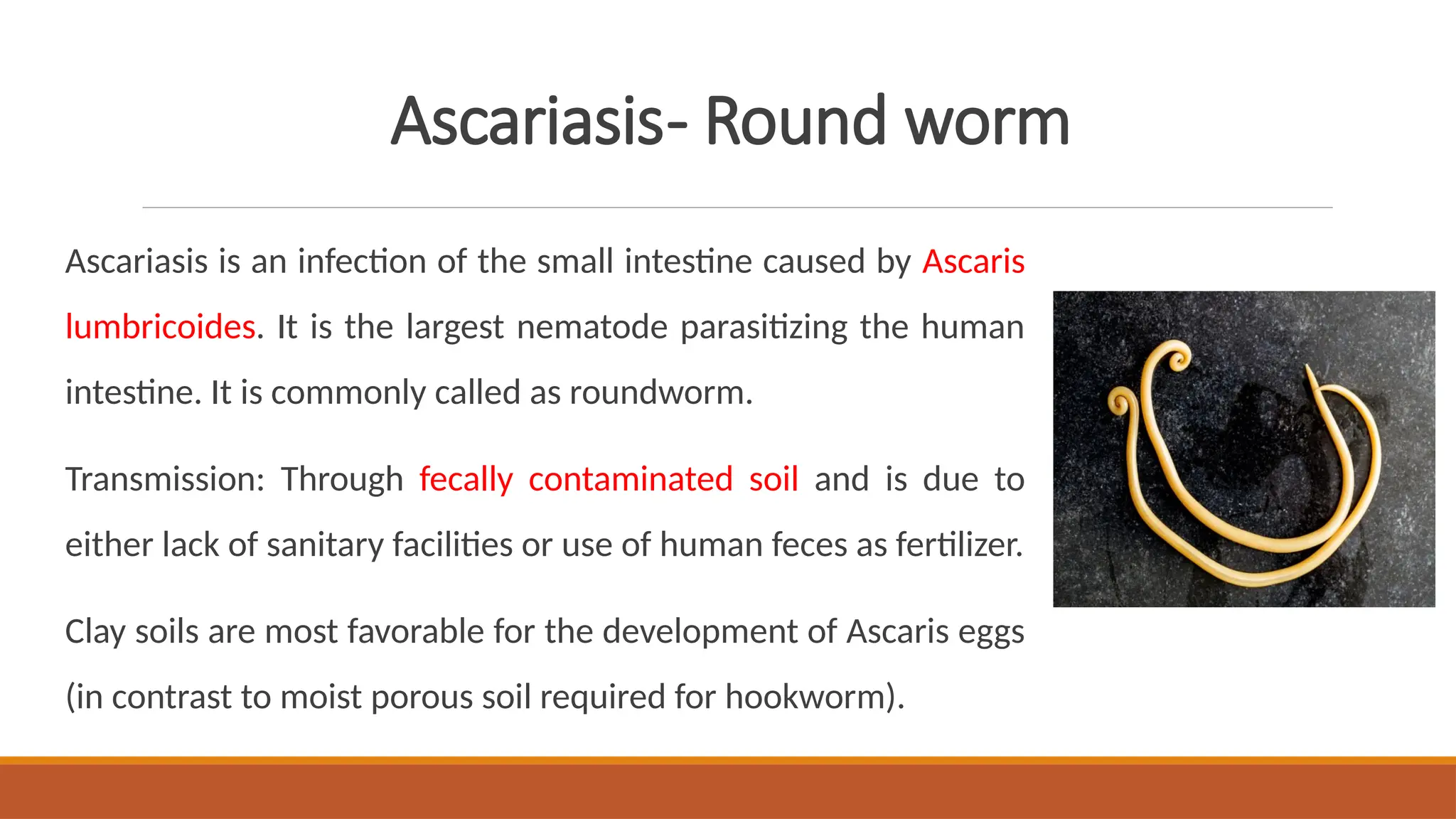
Ascariasis- Round worm
Ascariasis is an infection of the small intestine caused by Ascaris
lumbricoides. It is the largest nematode parasitizing the human
intestine. It is commonly called as roundworm.
Transmission: Through fecally contaminated soil and is due to
either lack of sanitary facilities or use of human feces as fertilizer.
Clay soils are most favorable for the development of Ascaris eggs
(in contrast to moist porous soil required for hookworm).
Ascariasis (Contd.)
Risk factors: Children (most important disseminator of the disease) and
malnutrition
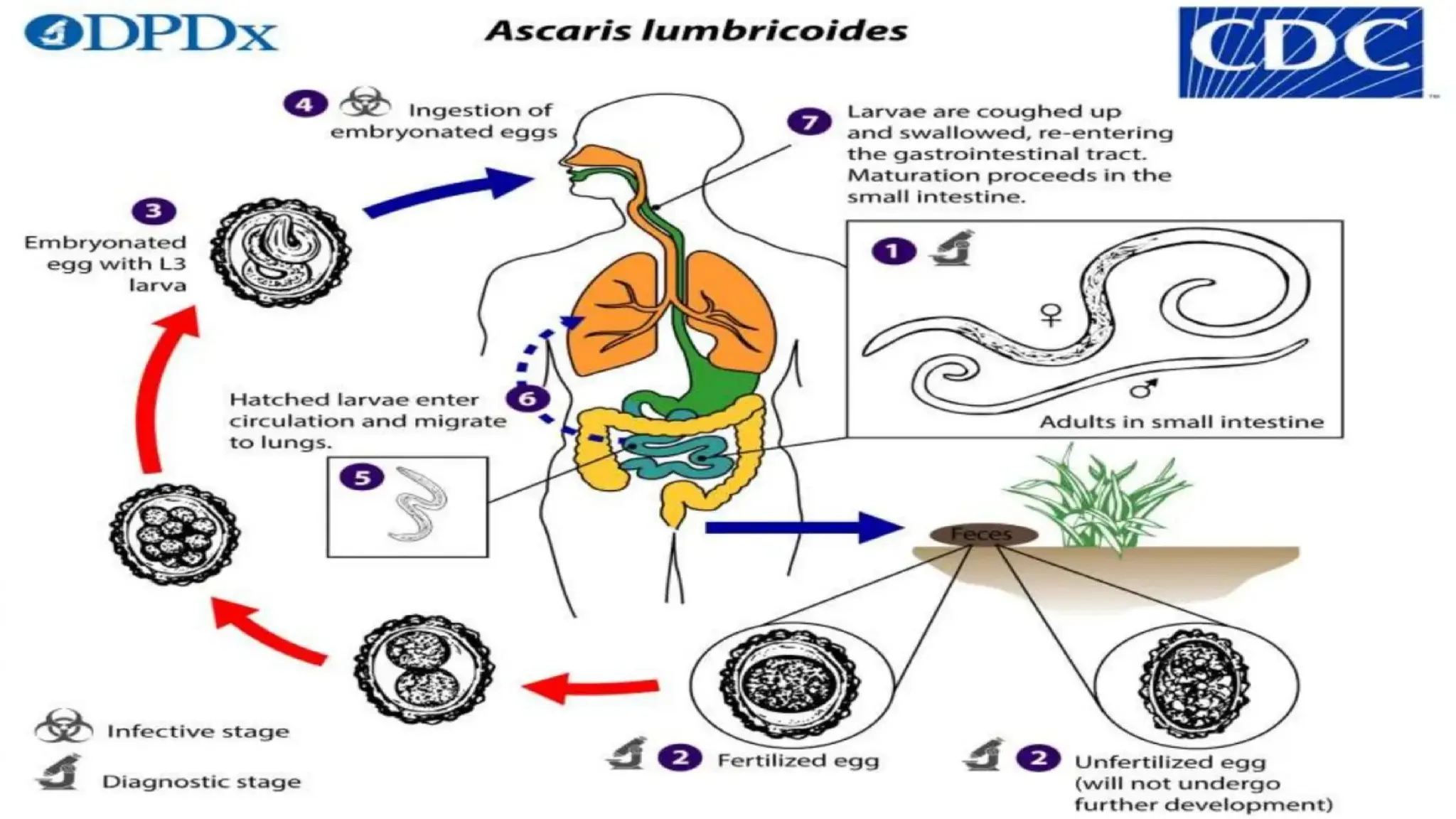
Ascaris exists in three forms: adult, larvae (four stages) and egg.
Adult worm is cylindrical and measures 15-31 cm.
The female worms liberate two types of eggs-(1) fertilized eggs, and (2)
unfertilized eggs.
Hookworm
It is one of the important causes of iron deficiency anemia in both tropics and temperate countries.
Transmission : Skin penetration Via Soil.
Only two species are human pathogens; cause intestinal disease.
1. Ancylostoma duodenale or old world hookworm
2. Necator americanus or new world hookworm or American hookworm.
Endemic index: Chandler’s index is used in the epidemiological studies of hookworm disease to
estimate the morbidity and mortality in the community due to hookworm infection (which depends
much upon the worm load).
Hookworm (Contd.)
3 Morphological forms: adult, larvae (four stages) and egg.
Ancylostoma and Necator can be differentiated by the morphology
of adult worm and third stage larva. Eggs and first stage larvae of
both are morphologically indistinguishable.
Adult worm is small (7–13 mm) in size, has a bent in the anterior end
(hence called as hookworm).
The adult worm of Ancylostoma and Necator can be differentiated
by buccal capsule with teeth or cutting plate (present in the anterior
end) and copulatory bursa (present in the posterior end)
L1 larva - rhabditiform larva whereas L3 stage larva- filariform larva
Strongyloides
Strongyloidiasis caused by an intestinal nematode Strongyloides stercoralis.
It was known as the “Military worm” as it was first found in the feces of French soldiers in
Cochin-China in 1876.
Human infection is mainly caused by S. stercoralis and rarely by S. fuelleborni.
S. stercoralis exists in three forms: adult, larvae (four stages) and egg.
 Adult worm: Only female worms are seen in the small intestine of man, measures 2–3 mm
long. Male worms are free-living present in environment, but not in human intestine
 Eggs: Strongyloides are ovoviviparous, i.e. eggs once laid, immediately hatch out to larvae.
Clinical features
Affect due to Migrating Larva
Cutaneous lesions: This may occur in previously sensitized persons
 Infective larvae may provoke pruritic maculopapular dermatitis and rashes
(“ground itch”) at the site of skin penetration
 Serpiginous tracks may be formed due to subcutaneous migration of the larva.
Mild transient pneumonitis: Migrating larvae through the lungs
occasionally cause mild transient pneumonitis, asthma and bronchitis;
but the severity and frequency of lung manifestation is less compared
to ascariasis.
Cestodes
Cestodes are long, segmented, flattened dorsoventrally, tape like worms, therefore also called
as tapeworms.
Cestodes
(Based on Habitat)
Intestinal
Examples are:
Taenia solium, Taenia
saginata, Hymenolepsis,
diphyllobothrium spp.
Somatic/tissue
(Found in human
muscles/Organs)
Taenia Solium
Causes Cysticercosis affecting
CNS, Muscles and Eye)
Echnicoccus spp.
Agent of Hydatid disease
affecting liver
Cestodes (Contd.)
Adult worm consists of three parts.
1. Head or scolex: It is the organ of attachment, helps in attachment to intestinal mucosa
by virtue of bearing four cup like muscular structures called suckers or acetabula.
2. Neck: Neck is portion from which the segments (proglottids) arise.
3. Strobila (body or trunk): It consists of a number of segments (or proglottids).
Based on the reproductive organs they bear, proglottids can further be grouped into 3 types:
i. Immature segments: Here, male and female reproductive organs are not differentiated
ii. Mature segments: Cestodes are monoecious, i.e., contain male and female organs in
the same segment, male organs appear first.
iii. Gravid segments or fertilized segments: Following fertilization, the uterus gets filled
with eggs. Other organs are atrophied.
Cestodes (Contd.)
Eggs
Eggs are considered as the diagnostic form.
In most cestodes, the eggs are round to oval, consist of an embryo (or oncosphere) with six hooklets,
surrounded by radially striated embryophore. A thin outer egg shell may be present initially, which
eventually gets lost.
Larva
Embryonated eggs undergo further development to form larvae
In Taenia, the larval stage is called as cysticercus.
In Hymenolepis, the larval stage is called as cysticercoid
In Echinococcus, it is called as hydatid cyst.
Intestinal Taeniasis- Taenia
Taenia exists in three morphological forms.
Adult worm: comprises of head or scolex, neck and a body
divided into several proglottids.
 The scolex bears four cup like muscular suckers which helps
in attachment.
 In T. solium, the scolex has a beak like apical protrusion
called as rostellum. The rostellum is armed with two rows
of hooklets (hence called as armed tapeworm). Scolex of T. Soilium
Scolex of T. Saginata
Taenia (Contd.)
Eggs contain embryo or oncosphere which
contains three pair of hooklets, surrounded by
an embryophore.
Larvae: Cysticercus is the larval stage of Taenia.
It contains a muscular organ with bladder like
sac. It is called as: Cysticercus bovis in T. saginata
Cysticercus cellulosae in T. solium
Schematic diagrams of eggs of cestodes
Life cycle of Taenia passes through two hosts.
• Definitive host: Man
• Intermediate host: Cattle for T. saginata
(hence called beef tapeworm) and pigs for
T. solium (hence called pork tapeworm)
Life Cycle
Hymenolepis nana
It is the smallest cestode (2.5–4 cm in length) infecting man causing
Hymenolepiasis, hence also called as dwarf tapeworm. Eggs are the infective
form as well as the diagnostic form of the parasite.
Clinical manifestations: H. nana infection is usually asymptomatic. When the
worm burden exceeds, patients develop symptoms like anorexia, abdominal
pain, headache, dizziness and diarrhea with mucus.
Life Cycle
Man is the only host.
Infective form: Eggs.
Eggs of H. nana
Egg is round to slightly oval in shape, 30–47 µm size
 It has two membranes that surrounds an embryo with six
hooklets. Space between the two membranes is filled with yolk
granules
Polar filaments: Both the poles of embryophore are thickened
from which four to eight polar filaments emerge.
Non-bile stained (colorless in saline mount): It is the only cestode
egg that is not stained by bile when passed through the intestine.
Echnicoccus granulosus (Dog Tapeworm)
•Cystic echinococcosis, also known as hydatid disease.
•It is a tissue cestode, exits in three morphological forms— adult,
larva (called hydatid cyst), and egg.
•The adult worm resides in dog’s intestine. 3–6 mm long, consists of
head, neck and a strobila or body made up of three
proglottids/segments.
•The larval form is called as hydatid cyst. It is the pathogenic form,
forms cystic lesions in liver and other viscera of man.
•Eggs: E. granulosus eggs are morphologically similar to Taenia
eggs, consists of an embryo with six hooklets surrounded by an
embryophore.
Life Cycle
Infective form: Eggs are the infective form.
Mode of transmission: Man (and other
intermediate hosts) acquires the infection by
ingestion of food contaminated with dog’s feces
containing E. granulosus eggs
Hydatid cyst
It is a fluid-filled bladder-like cyst; unilocular, subspherical in shape and
average size measures 5–8 cm (from few mm to >30 cm).
•Cyst wall consists of three layers: outer pericyst (host derived), middle
ectocyst and inner endocyst
•Brood capsule: The inner side of the endocyst gives rise to brood
capsule, and also secretes the hydatid fluid. The brood capsule contains
number of protoscolices (future head)
•Hydatid fluid: It is clear, pale yellow colored fluid, which is antigenic,
toxic and anaphylactic
•Hydatid sand: Some of the brood capsules and protoscolices break off
and get deposited at the bottom as hydatid sand
Clinical Features
Site: Most common site is liver (60–70%, right lobe) or lung (20%), followed by kidney, muscle, spleen,
soft tissue, brain, bone and others.
Asymptomatic: The cysts grow up to 5–10 cm in size within the first year and can survive for years or
even decades, without any symptoms
Symptoms: Few patients develop symptoms which may be due to:
1. Pressure effect of the enlarging cyst: Leads to palpable abdominal mass, hepatomegaly, abdominal
tenderness, portal hypertension and ascites
2. Obstruction: Daughter cysts may erode into the biliary tree or a bronchus and enter into the lumen to
cause cholestasis, cholangitis, and dyspnea
3. Secondary bacterial infection, causing pyogenic abscess in liver.
Thank you

Parasite and parasitism, classification of protozoans & helminths- II.pptx

  • 1.
    Parasite and Parasitism, classificationof Protozoans & Helminths – II (Helminths only) SACHIN KUMAR SHARMA PH.D. SCHOLAR DEPARTMENT OF MICROBIOLOGY SMIMS, SMU
  • 2.
    Parasite Parasite is aliving organism, which lives in or upon another organism (host) and derives nutrients directly from it, without giving any benefit to the host. Medical Parasitology deals with the study of animal parasites, which infect and produce diseases in human beings.
  • 3.
    Classification of Parasites Parasites EctoparasitesEndoparasites Protozoans Helminths
  • 4.
    Ectoparasites They inhabit thesurface of the body of the host without penetrating into the tissues (e.g. fleas, mites or ticks). They serve as important vectors transmitting the pathogenic microbes. The infection produced by these parasites is called as infestation (e.g. scabies).
  • 5.
    Endoparasites These are theparasites, that live within the body of the host (e.g., Leishmania). Invasion by the endoparasite is called as infection. The endoparasites are further classified into protozoans and helminths.
  • 6.
    Protozoa Protozoa: They areunicellular eukaryotic cells that perform all the physiological functions. Although like bacteria they are unicellular, they are considered as lower eukaryotes, as they possess cellular organelles and metabolic pathways, similar to that of eukaryotes.
  • 7.
    Medically important protozoans Amoeba • Entamoeba histolytica • Free-living amoebae: Naegleria, Acanthamoeba, Balamuthia  Flagellates • Intestinal Flagellate: Giardia • Genital Flagellate: Trichomonas • Hemoflagellates: Leishmania and Trypanosoma  Apicomplexa • Malaria parasites and Babesia • Opportunistic coccidian parasites : Toxoplasma, Cryptosporidium, Cyclospora, Cystoisospora and Sarcocystis  Miscellaneous protozoa • Balantidium coli • Blastocystis and Microsporidia
  • 8.
    Helminths They are elongatedflat or round worm-like parasites measuring few millimeters to as long as few meters. They are eukaryotic multicellular and bilaterally symmetrical.
  • 9.
    Helminths (Contd.) They belongto two phyla: 1. Platyhelminths (flat worms)— include Cestodes (tapeworms) and trematodes (flukes) 2. Nemathelminths— include intestinal and tissues nematodes. In general, helminths exist in three morphological forms— (1) adult form (or the worm), (2) larvae and (3) eggs.
  • 11.
    Medically important Helminths Cestodes • Diphyllobothrium • Taenia • Echinococcus, Hymenolepis, Dipylidium  Trematodes or flukes • Schistosoma, Fasciola, Clonorchis, Opisthorchis, Fasciolopsis, Paragonimus  Intestinal Nematodes • Strongyloides & Ascaris • Trichuris, Enterobius • Hookworm  Somatic Nematodes • Filarial nematodes • Dracunculus • Trichinella
  • 13.
    Nematodes Intestinal Nematodes: Small IntestinalNematodes: Ascaris, Hookworm and Strongyloides. Large Intestinal Nematodes: Tricuris and Entrobius. Tissue or Somatic Nematodes Filarial nematodes: They comprise of several vector borne parasites Wuchereria bancrofti and Brugia malayi cause lymphatic filariasis Loa loa, Onchocerca volvulus, and Mansonella cause cutaneous filariasis Dracunculus medinensis and Trichinella spiralis
  • 14.
    Ascariasis- Round worm Ascariasisis an infection of the small intestine caused by Ascaris lumbricoides. It is the largest nematode parasitizing the human intestine. It is commonly called as roundworm. Transmission: Through fecally contaminated soil and is due to either lack of sanitary facilities or use of human feces as fertilizer. Clay soils are most favorable for the development of Ascaris eggs (in contrast to moist porous soil required for hookworm).
  • 15.
    Ascariasis (Contd.) Risk factors:Children (most important disseminator of the disease) and malnutrition Ascaris exists in three forms: adult, larvae (four stages) and egg. Adult worm is cylindrical and measures 15-31 cm. The female worms liberate two types of eggs-(1) fertilized eggs, and (2) unfertilized eggs.
  • 17.
    Hookworm It is oneof the important causes of iron deficiency anemia in both tropics and temperate countries. Transmission : Skin penetration Via Soil. Only two species are human pathogens; cause intestinal disease. 1. Ancylostoma duodenale or old world hookworm 2. Necator americanus or new world hookworm or American hookworm. Endemic index: Chandler’s index is used in the epidemiological studies of hookworm disease to estimate the morbidity and mortality in the community due to hookworm infection (which depends much upon the worm load).
  • 18.
    Hookworm (Contd.) 3 Morphologicalforms: adult, larvae (four stages) and egg. Ancylostoma and Necator can be differentiated by the morphology of adult worm and third stage larva. Eggs and first stage larvae of both are morphologically indistinguishable. Adult worm is small (7–13 mm) in size, has a bent in the anterior end (hence called as hookworm). The adult worm of Ancylostoma and Necator can be differentiated by buccal capsule with teeth or cutting plate (present in the anterior end) and copulatory bursa (present in the posterior end) L1 larva - rhabditiform larva whereas L3 stage larva- filariform larva
  • 20.
    Strongyloides Strongyloidiasis caused byan intestinal nematode Strongyloides stercoralis. It was known as the “Military worm” as it was first found in the feces of French soldiers in Cochin-China in 1876. Human infection is mainly caused by S. stercoralis and rarely by S. fuelleborni. S. stercoralis exists in three forms: adult, larvae (four stages) and egg.  Adult worm: Only female worms are seen in the small intestine of man, measures 2–3 mm long. Male worms are free-living present in environment, but not in human intestine  Eggs: Strongyloides are ovoviviparous, i.e. eggs once laid, immediately hatch out to larvae.
  • 21.
    Clinical features Affect dueto Migrating Larva Cutaneous lesions: This may occur in previously sensitized persons  Infective larvae may provoke pruritic maculopapular dermatitis and rashes (“ground itch”) at the site of skin penetration  Serpiginous tracks may be formed due to subcutaneous migration of the larva. Mild transient pneumonitis: Migrating larvae through the lungs occasionally cause mild transient pneumonitis, asthma and bronchitis; but the severity and frequency of lung manifestation is less compared to ascariasis.
  • 23.
    Cestodes Cestodes are long,segmented, flattened dorsoventrally, tape like worms, therefore also called as tapeworms. Cestodes (Based on Habitat) Intestinal Examples are: Taenia solium, Taenia saginata, Hymenolepsis, diphyllobothrium spp. Somatic/tissue (Found in human muscles/Organs) Taenia Solium Causes Cysticercosis affecting CNS, Muscles and Eye) Echnicoccus spp. Agent of Hydatid disease affecting liver
  • 24.
    Cestodes (Contd.) Adult wormconsists of three parts. 1. Head or scolex: It is the organ of attachment, helps in attachment to intestinal mucosa by virtue of bearing four cup like muscular structures called suckers or acetabula. 2. Neck: Neck is portion from which the segments (proglottids) arise. 3. Strobila (body or trunk): It consists of a number of segments (or proglottids). Based on the reproductive organs they bear, proglottids can further be grouped into 3 types: i. Immature segments: Here, male and female reproductive organs are not differentiated ii. Mature segments: Cestodes are monoecious, i.e., contain male and female organs in the same segment, male organs appear first. iii. Gravid segments or fertilized segments: Following fertilization, the uterus gets filled with eggs. Other organs are atrophied.
  • 25.
    Cestodes (Contd.) Eggs Eggs areconsidered as the diagnostic form. In most cestodes, the eggs are round to oval, consist of an embryo (or oncosphere) with six hooklets, surrounded by radially striated embryophore. A thin outer egg shell may be present initially, which eventually gets lost. Larva Embryonated eggs undergo further development to form larvae In Taenia, the larval stage is called as cysticercus. In Hymenolepis, the larval stage is called as cysticercoid In Echinococcus, it is called as hydatid cyst.
  • 26.
    Intestinal Taeniasis- Taenia Taeniaexists in three morphological forms. Adult worm: comprises of head or scolex, neck and a body divided into several proglottids.  The scolex bears four cup like muscular suckers which helps in attachment.  In T. solium, the scolex has a beak like apical protrusion called as rostellum. The rostellum is armed with two rows of hooklets (hence called as armed tapeworm). Scolex of T. Soilium Scolex of T. Saginata
  • 27.
    Taenia (Contd.) Eggs containembryo or oncosphere which contains three pair of hooklets, surrounded by an embryophore. Larvae: Cysticercus is the larval stage of Taenia. It contains a muscular organ with bladder like sac. It is called as: Cysticercus bovis in T. saginata Cysticercus cellulosae in T. solium Schematic diagrams of eggs of cestodes
  • 28.
    Life cycle ofTaenia passes through two hosts. • Definitive host: Man • Intermediate host: Cattle for T. saginata (hence called beef tapeworm) and pigs for T. solium (hence called pork tapeworm) Life Cycle
  • 30.
    Hymenolepis nana It isthe smallest cestode (2.5–4 cm in length) infecting man causing Hymenolepiasis, hence also called as dwarf tapeworm. Eggs are the infective form as well as the diagnostic form of the parasite. Clinical manifestations: H. nana infection is usually asymptomatic. When the worm burden exceeds, patients develop symptoms like anorexia, abdominal pain, headache, dizziness and diarrhea with mucus.
  • 31.
    Life Cycle Man isthe only host. Infective form: Eggs.
  • 32.
    Eggs of H.nana Egg is round to slightly oval in shape, 30–47 µm size  It has two membranes that surrounds an embryo with six hooklets. Space between the two membranes is filled with yolk granules Polar filaments: Both the poles of embryophore are thickened from which four to eight polar filaments emerge. Non-bile stained (colorless in saline mount): It is the only cestode egg that is not stained by bile when passed through the intestine.
  • 33.
    Echnicoccus granulosus (DogTapeworm) •Cystic echinococcosis, also known as hydatid disease. •It is a tissue cestode, exits in three morphological forms— adult, larva (called hydatid cyst), and egg. •The adult worm resides in dog’s intestine. 3–6 mm long, consists of head, neck and a strobila or body made up of three proglottids/segments. •The larval form is called as hydatid cyst. It is the pathogenic form, forms cystic lesions in liver and other viscera of man. •Eggs: E. granulosus eggs are morphologically similar to Taenia eggs, consists of an embryo with six hooklets surrounded by an embryophore.
  • 34.
    Life Cycle Infective form:Eggs are the infective form. Mode of transmission: Man (and other intermediate hosts) acquires the infection by ingestion of food contaminated with dog’s feces containing E. granulosus eggs
  • 35.
    Hydatid cyst It isa fluid-filled bladder-like cyst; unilocular, subspherical in shape and average size measures 5–8 cm (from few mm to >30 cm). •Cyst wall consists of three layers: outer pericyst (host derived), middle ectocyst and inner endocyst •Brood capsule: The inner side of the endocyst gives rise to brood capsule, and also secretes the hydatid fluid. The brood capsule contains number of protoscolices (future head) •Hydatid fluid: It is clear, pale yellow colored fluid, which is antigenic, toxic and anaphylactic •Hydatid sand: Some of the brood capsules and protoscolices break off and get deposited at the bottom as hydatid sand
  • 36.
    Clinical Features Site: Mostcommon site is liver (60–70%, right lobe) or lung (20%), followed by kidney, muscle, spleen, soft tissue, brain, bone and others. Asymptomatic: The cysts grow up to 5–10 cm in size within the first year and can survive for years or even decades, without any symptoms Symptoms: Few patients develop symptoms which may be due to: 1. Pressure effect of the enlarging cyst: Leads to palpable abdominal mass, hepatomegaly, abdominal tenderness, portal hypertension and ascites 2. Obstruction: Daughter cysts may erode into the biliary tree or a bronchus and enter into the lumen to cause cholestasis, cholangitis, and dyspnea 3. Secondary bacterial infection, causing pyogenic abscess in liver.
  • 37.