





























LECTURE L11
THE BROADCAST CENTURY
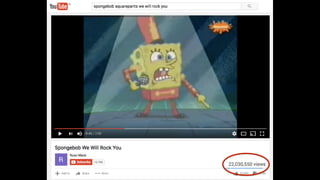
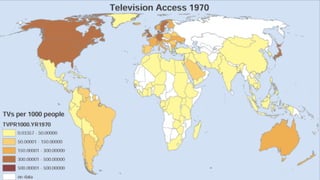
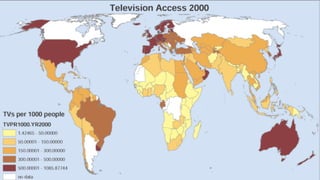
Why does this exist?
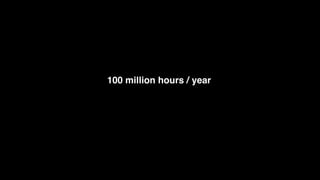
100 million hours / year
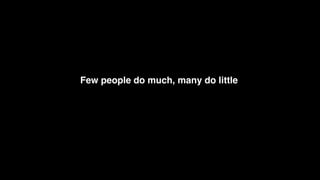
Few people do much, many do little
200 million minutes / day
Where do people find the time?
EARLY ENTERTAINMENT
"The wireless music box has no imaginable commercial value.
Who would pay for a message sent to nobody in particular?"
-- David Sarnoff's associates in response to
his urgings for investment in the radio in the 1920s.
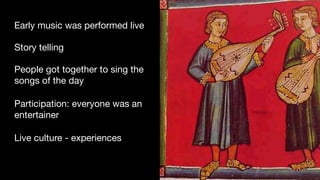
Early music was performed live
Story telling
People got together to sing the 

songs of the day
Live culture - experiences
Participation: everyone was an

entertainer
Read-Write Culture
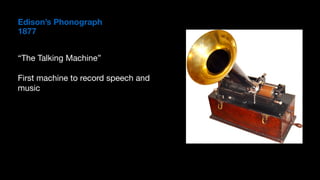
Edison’s Phonograph
1877
“The Talking Machine”

First machine to record speech and
music
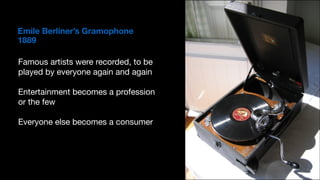
Emile Berliner’s Gramophone

1889
Famous artists were recorded, to be
played by everyone again and again

Entertainment becomes a profession
or the few

Everyone else becomes a consumer
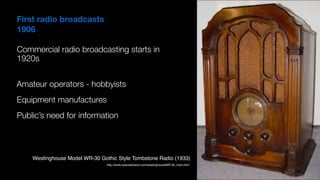
First radio broadcasts
1906
Commercial radio broadcasting starts in
1920s
Public’s need for information
Equipment manufactures
http://www.tuberadioland.com/westinghouseWR-30_main.html
Westinghouse Model WR-30 Gothic Style Tombstone Radio (1933)
Amateur operators - hobbyists
ENTER THE TV
"The wireless music box has no imaginable commercial value.
Who would pay for a message sent to nobody in particular?"
-- David Sarnoff's associates in response to
his urgings for investment in the radio in the 1920s.
For God’s sake go down to the reception and 

get rid of a lunatic who’s down there. 

He says he’s got a machine for seeing by wireless!
— Editor of the Daily Express in response 

to a prospective visit by John Logie Baird
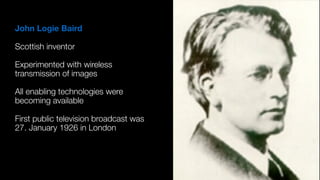
John Logie Baird
Scottish inventor
Experimented with wireless

transmission of images
All enabling technologies were
becoming available
First public television broadcast was
27. January 1926 in London
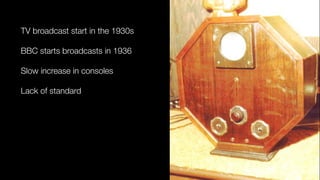
TV broadcast start in the 1930s
BBC starts broadcasts in 1936
Slow increase in consoles
Lack of standard
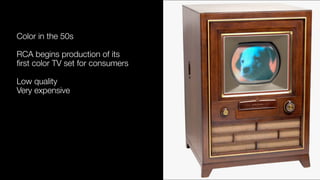
Color in the 50s
RCA begins production of its 

first color TV set for consumers
Low quality 

Very expensive
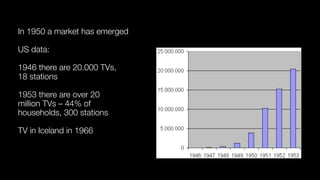
In 1950 a market has emerged
US data:
1946 there are 20.000 TVs, 

18 stations
1953 there are over 20

million TVs – 44% of 

households, 300 stations
TV in Iceland in 1966
Source:	DataMonitor
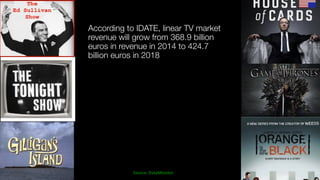
According to IDATE, linear TV market
revenue will grow from 368.9 billion
euros in revenue in 2014 to 424.7
billion euros in 2018
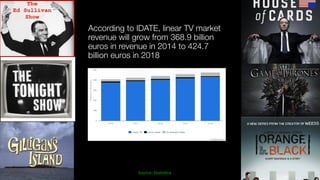
Source:	Statistica
According to IDATE, linear TV market
revenue will grow from 368.9 billion
euros in revenue in 2014 to 424.7
billion euros in 2018
Why is TV so powerful?
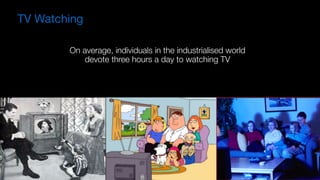
TV Watching
On average, individuals in the industrialised world
devote three hours a day to watching TV
TV Watching
On average, individuals in the industrialised world
devote three hours a day to watching TV
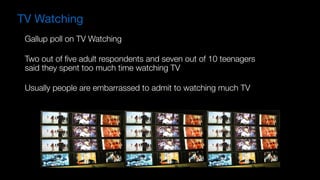
Gallup poll on TV Watching
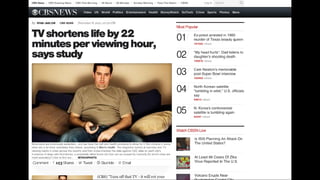
Two out of five adult respondents and seven out of 10 teenagers
said they spent too much time watching TV
Usually people are embarrassed to admit to watching much TV
TV Watching
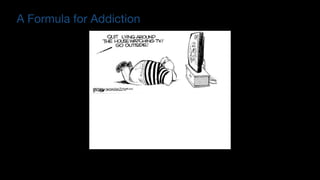
A Formula for Addiction
TV is passive and relaxing
Reduces alertness
Effect is fast
Trigger - Behaviour - Reward - Repeat
Problem: TV addiction
A Formula for Addiction
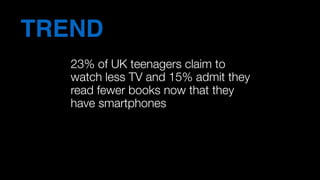
23% of UK teenagers claim to
watch less TV and 15% admit they
read fewer books now that they
have smartphones
TREND
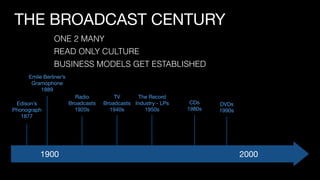
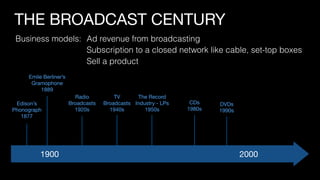
1900 2000
Edison’s 

Phonograph

1877
Emile Berliner’s

Gramophone

1889
Radio

Broadcasts

1920s
TV

Broadcasts

1940s
The Record

Industry - LPs

1950s
CDs

1980s
DVDs

1990s
THE BROADCAST CENTURY
ONE 2 MANY
BUSINESS MODELS GET ESTABLISHED
READ ONLY CULTURE
1900 2000
Edison’s 

Phonograph

1877
Emile Berliner’s

Gramophone

1889
Radio

Broadcasts

1920s
TV

Broadcasts

1940s
The Record

Industry - LPs

1950s
CDs

1980s
DVDs

1990s
THE BROADCAST CENTURY
Business models: Ad revenue from broadcasting
Subscription to a closed network like cable, set-top boxes
Sell a product
Lawrence Lessig
Laws that choke creativity
TV GOES DIGITAL
"The wireless music box has no imaginable commercial value.
Who would pay for a message sent to nobody in particular?"
-- David Sarnoff's associates in response to
his urgings for investment in the radio in the 1920s.
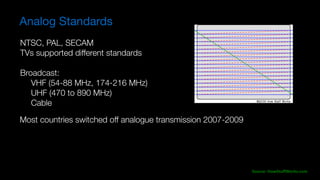
Analog Standards
NTSC, PAL, SECAM
TVs supported different standards
	
Broadcast:
	 VHF (54-88 MHz, 174-216 MHz)
	 UHF (470 to 890 MHz)
	 Cable
Most countries switched off analogue transmission 2007-2009
Source:	HowStuffWorks.com
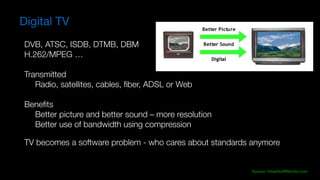
Digital TV
DVB, ATSC, ISDB, DTMB, DBM
H.262/MPEG …
Transmitted
	 Radio, satellites, cables, fiber, ADSL or Web
	
Benefits
	 Better picture and better sound – more resolution
	 Better use of bandwidth using compression
TV becomes a software problem - who cares about standards anymore
Source:	HowStuffWorks.com
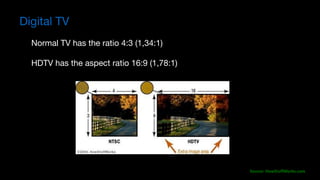
Normal TV has the ratio 4:3 (1,34:1) 

HDTV has the aspect ratio 16:9 (1,78:1)

Digital TV
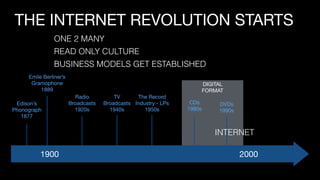
DIGITAL

FORMAT
1900 2000
Edison’s 

Phonograph

1877
Emile Berliner’s

Gramophone

1889
Radio

Broadcasts

1920s
TV

Broadcasts

1940s
The Record

Industry - LPs

1950s
CDs

1980s
DVDs

1990s
THE INTERNET REVOLUTION STARTS
ONE 2 MANY
BUSINESS MODELS GET ESTABLISHED
READ ONLY CULTURE
INTERNET
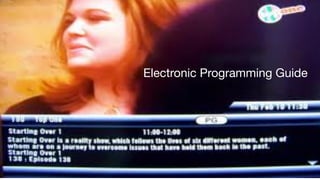
Electronic Programming Guide
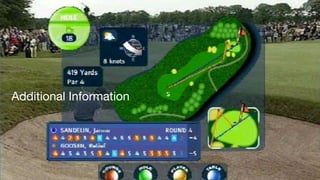
Additional Information
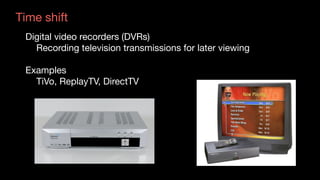
Time shift
Digital video recorders (DVRs) 

	 Recording television transmissions for later viewing

Examples 

	 TiVo, ReplayTV, DirectTV
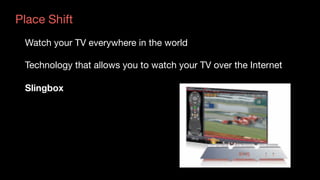
Place Shift
Watch your TV everywhere in the world

Technology that allows you to watch your TV over the Internet

Slingbox
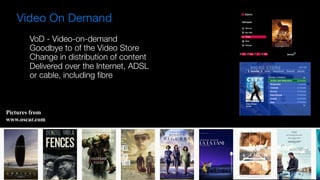
Pictures from
www.oscar.com
VoD - Video-on-demand
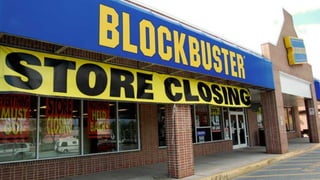
Goodbye to of the Video Store
Change in distribution of content
Delivered over the Internet, ADSL

or cable, including fibre
Video On Demand
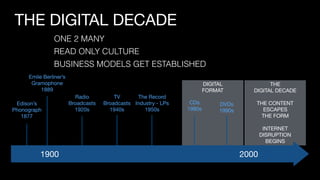
THE 

DIGITAL DECADE

THE CONTENT

ESCAPES

THE FORM

INTERNET 

DISRUPTION

BEGINS
DIGITAL

FORMAT
1900 2000
Edison’s 

Phonograph

1877
Emile Berliner’s

Gramophone

1889
Radio

Broadcasts

1920s
TV

Broadcasts

1940s
The Record

Industry - LPs

1950s
CDs

1980s
DVDs

1990s
THE DIGITAL DECADE
ONE 2 MANY
BUSINESS MODELS GET ESTABLISHED
READ ONLY CULTURE
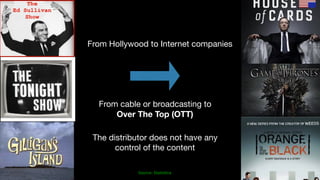
Source:	Statistica
From Hollywood to Internet companies
From cable or broadcasting to 

Over The Top (OTT)
The distributor does not have any
control of the content
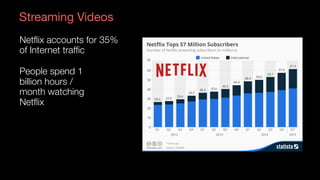
Streaming Videos
Netflix accounts for 35%
of Internet traffic
People spend 1
billion hours /
month watching
Netflix
500 hours of video are uploaded to YouTube alone every minute
It would take an individual over 5 million years to watch the
amount of video that will cross global IP networks each month
in 2019
Every second, nearly a million minutes of video content will cross
the network by 2019
Globally, consumer internet video traffic will be 80 percent of all
consumer Internet traffic in 2019, up from 64 percent in 2014
Internet Video - “Over the Top”
Realse, Cisco
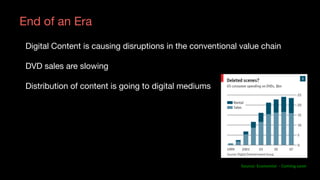
Source:	Economist		-	Coming	soon
End of an Era
Digital Content is causing disruptions in the conventional value chain

DVD sales are slowing

Distribution of content is going to digital mediums
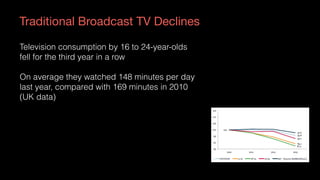
Traditional Broadcast TV Declines
Television consumption by 16 to 24-year-olds
fell for the third year in a row
On average they watched 148 minutes per day
last year, compared with 169 minutes in 2010
(UK data)
END OF BROADCASTING
"The wireless music box has no imaginable commercial value.
Who would pay for a message sent to nobody in particular?"
-- David Sarnoff's associates in response to
his urgings for investment in the radio in the 1920s.
Where do people find the time?
TV
200 billion hours / year
Watching TV
100 million hours / year
2000 wikipedias / year
Clay Shirky
On Cognitive Surplus
Since the 1940s people have been passively consuming TV
Now people are learning how to use free time more constructively for
creative acts rather than consumptive ones, particularly with the advent of
online tools that allow new forms of collaboration
Cognitive Surplus is about the management of free time


With all the access to online activity that the Internet, the web and
smartphone brought people are now turning their free time from
consumption of media to more engaging activities
Cognitive Surplus
Read-only Culture
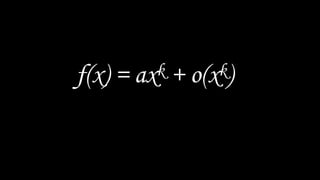
f(x) = axk + o(xk)
MOVIE
STARS
Chris Anderson
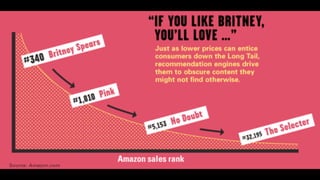
On the Long Tail
Hit culture
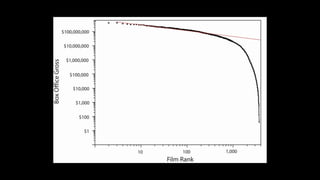
Bottlenecks in the Distribution channels
The Power Law
Pareto Principle
For many events, roughly
80% of the effects come
from 20% of the causes
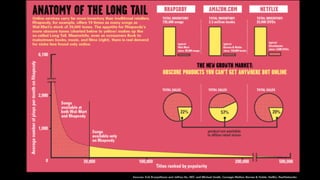
Economy of
SCARCITY
Economy of
ABUNDANCE
LONG TAIL
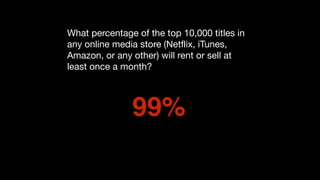
What percentage of the top 10,000 titles in
any online media store (Netflix, iTunes,
Amazon, or any other) will rent or sell at
least once a month?
99%
USER
GENERTATED
CONTENT
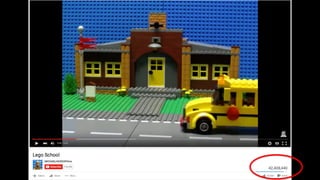
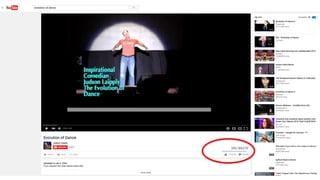
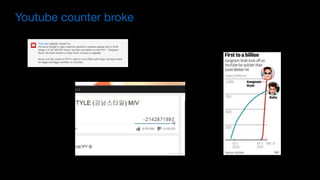
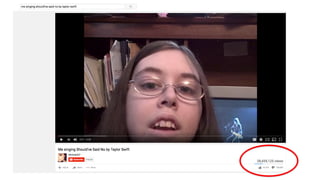
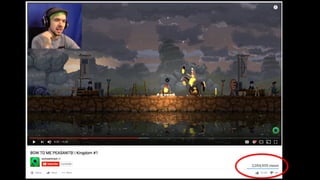
Youtube counter broke
EVERYBODY

IS A

PRODUCER
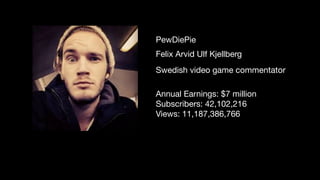
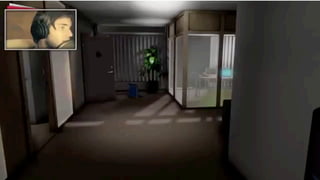
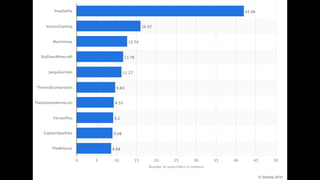
Felix Arvid Ulf Kjellberg
PewDiePie
Swedish video game commentator
Annual Earnings: $7 million

Subscribers: 42,102,216

Views: 11,187,386,766
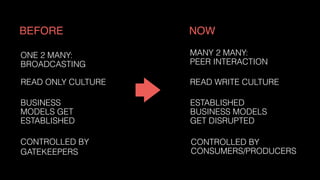
MANY 2 MANY: 

PEER INTERACTION
ESTABLISHED
BUSINESS MODELS
GET DISRUPTED
READ WRITE CULTURE
ONE 2 MANY: 

BROADCASTING
BUSINESS
MODELS GET
ESTABLISHED
READ ONLY CULTURE
BEFORE NOW
CONTROLLED BY
GATEKEEPERS
CONTROLLED BY
CONSUMERS/PRODUCERS
THE 

DIGITAL DECADE

THE CONTENT

ESCAPES

THE FORM

INTERNET 

DISRUPTION

BEGINS
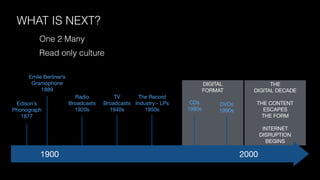
DIGITAL

FORMAT
1900 2000
Edison’s 

Phonograph

1877
Emile Berliner’s

Gramophone

1889
Radio

Broadcasts

1920s
TV

Broadcasts

1940s
The Record

Industry - LPs

1950s
CDs

1980s
DVDs

1990s
One 2 Many
Read only culture
WHAT IS NEXT?
THE 

DIGITAL DECADE

THE CONTENT

ESCAPES

THE FORM

INTERNET 

DISRUPTION

BEGINS
DIGITAL

FORMAT
1900 2000
CDs

1980s
DVDs

1990s
One 2 Many
Read only culture
THE 

TRANSFORMATION
DECADE

BUSINESS MODELS
CHANGE

SMARTPHONES

REAL TIME SOFTWARE

CLOUD AND AI
2010
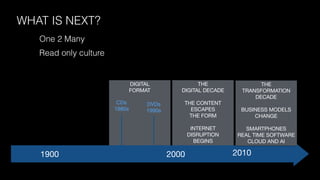
WHAT IS NEXT?
THE 

DIGITAL DECADE

THE CONTENT

ESCAPES

THE FORM

INTERNET 

DISRUPTION

BEGINS
DIGITAL

FORMAT
1900 2000
CDs

1980s
DVDs

1990s
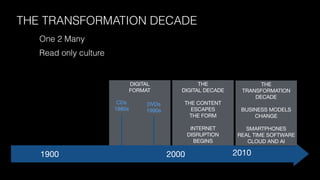
One 2 Many
Read only culture
THE 

TRANSFORMATION
DECADE

BUSINESS MODELS
CHANGE

SMARTPHONES

REAL TIME SOFTWARE

CLOUD AND AI
2010
THE TRANSFORMATION DECADE
Future of TV
NEXT
Digital Transformation

L11 The Broadcast Century

  • 1.
  • 3.
  • 6.
  • 7.
    Few people domuch, many do little
  • 8.
  • 9.
    Where do peoplefind the time?
  • 10.
    EARLY ENTERTAINMENT "The wirelessmusic box has no imaginable commercial value. Who would pay for a message sent to nobody in particular?" -- David Sarnoff's associates in response to his urgings for investment in the radio in the 1920s.
  • 11.
    Early music wasperformed live Story telling People got together to sing the 
 songs of the day Live culture - experiences Participation: everyone was an entertainer
  • 12.
  • 13.
    Edison’s Phonograph 1877 “The TalkingMachine” First machine to record speech and music
  • 14.
    Emile Berliner’s Gramophone
 1889 Famousartists were recorded, to be played by everyone again and again Entertainment becomes a profession or the few Everyone else becomes a consumer
  • 15.
    First radio broadcasts 1906 Commercialradio broadcasting starts in 1920s Public’s need for information Equipment manufactures http://www.tuberadioland.com/westinghouseWR-30_main.html Westinghouse Model WR-30 Gothic Style Tombstone Radio (1933) Amateur operators - hobbyists
  • 16.
    ENTER THE TV "Thewireless music box has no imaginable commercial value. Who would pay for a message sent to nobody in particular?" -- David Sarnoff's associates in response to his urgings for investment in the radio in the 1920s. For God’s sake go down to the reception and 
 get rid of a lunatic who’s down there. 
 He says he’s got a machine for seeing by wireless! — Editor of the Daily Express in response 
 to a prospective visit by John Logie Baird
  • 17.
    John Logie Baird Scottishinventor Experimented with wireless
 transmission of images All enabling technologies were becoming available First public television broadcast was 27. January 1926 in London
  • 19.
    TV broadcast startin the 1930s BBC starts broadcasts in 1936 Slow increase in consoles Lack of standard
  • 20.
    Color in the50s RCA begins production of its 
 first color TV set for consumers Low quality 
 Very expensive
  • 21.
    In 1950 amarket has emerged US data: 1946 there are 20.000 TVs, 
 18 stations 1953 there are over 20
 million TVs – 44% of 
 households, 300 stations TV in Iceland in 1966
  • 22.
    Source: DataMonitor According to IDATE,linear TV market revenue will grow from 368.9 billion euros in revenue in 2014 to 424.7 billion euros in 2018
  • 23.
    Source: Statistica According to IDATE,linear TV market revenue will grow from 368.9 billion euros in revenue in 2014 to 424.7 billion euros in 2018
  • 26.
    Why is TVso powerful?
  • 28.
    TV Watching On average,individuals in the industrialised world devote three hours a day to watching TV
  • 29.
    TV Watching On average,individuals in the industrialised world devote three hours a day to watching TV
  • 30.
    Gallup poll onTV Watching Two out of five adult respondents and seven out of 10 teenagers said they spent too much time watching TV Usually people are embarrassed to admit to watching much TV TV Watching
  • 31.
    A Formula forAddiction TV is passive and relaxing Reduces alertness Effect is fast Trigger - Behaviour - Reward - Repeat Problem: TV addiction
  • 33.
    A Formula forAddiction
  • 34.
    23% of UKteenagers claim to watch less TV and 15% admit they read fewer books now that they have smartphones TREND
  • 35.
    1900 2000 Edison’s 
 Phonograph 1877 EmileBerliner’s Gramophone 1889 Radio Broadcasts 1920s TV Broadcasts 1940s The Record Industry - LPs 1950s CDs 1980s DVDs 1990s THE BROADCAST CENTURY ONE 2 MANY BUSINESS MODELS GET ESTABLISHED READ ONLY CULTURE
  • 36.
    1900 2000 Edison’s 
 Phonograph 1877 EmileBerliner’s Gramophone 1889 Radio Broadcasts 1920s TV Broadcasts 1940s The Record Industry - LPs 1950s CDs 1980s DVDs 1990s THE BROADCAST CENTURY Business models: Ad revenue from broadcasting Subscription to a closed network like cable, set-top boxes Sell a product
  • 37.
    Lawrence Lessig Laws thatchoke creativity
  • 39.
    TV GOES DIGITAL "Thewireless music box has no imaginable commercial value. Who would pay for a message sent to nobody in particular?" -- David Sarnoff's associates in response to his urgings for investment in the radio in the 1920s.
  • 40.
    Analog Standards NTSC, PAL,SECAM TVs supported different standards Broadcast: VHF (54-88 MHz, 174-216 MHz) UHF (470 to 890 MHz) Cable Most countries switched off analogue transmission 2007-2009 Source: HowStuffWorks.com
  • 41.
    Source: HowStuffWorks.com Digital TV DVB, ATSC,ISDB, DTMB, DBM H.262/MPEG … Transmitted Radio, satellites, cables, fiber, ADSL or Web Benefits Better picture and better sound – more resolution Better use of bandwidth using compression TV becomes a software problem - who cares about standards anymore
  • 42.
    Source: HowStuffWorks.com Normal TV hasthe ratio 4:3 (1,34:1) HDTV has the aspect ratio 16:9 (1,78:1) Digital TV
  • 43.
    DIGITAL
 FORMAT 1900 2000 Edison’s 
 Phonograph 1877 EmileBerliner’s Gramophone 1889 Radio Broadcasts 1920s TV Broadcasts 1940s The Record Industry - LPs 1950s CDs 1980s DVDs 1990s THE INTERNET REVOLUTION STARTS ONE 2 MANY BUSINESS MODELS GET ESTABLISHED READ ONLY CULTURE INTERNET
  • 44.
  • 45.
  • 46.
    Time shift Digital videorecorders (DVRs) Recording television transmissions for later viewing Examples TiVo, ReplayTV, DirectTV
  • 47.
    Place Shift Watch yourTV everywhere in the world Technology that allows you to watch your TV over the Internet Slingbox
  • 49.
    Pictures from www.oscar.com VoD -Video-on-demand Goodbye to of the Video Store Change in distribution of content Delivered over the Internet, ADSL
 or cable, including fibre Video On Demand
  • 50.
    THE 
 DIGITAL DECADE THECONTENT ESCAPES THE FORM INTERNET DISRUPTION BEGINS DIGITAL
 FORMAT 1900 2000 Edison’s 
 Phonograph 1877 Emile Berliner’s Gramophone 1889 Radio Broadcasts 1920s TV Broadcasts 1940s The Record Industry - LPs 1950s CDs 1980s DVDs 1990s THE DIGITAL DECADE ONE 2 MANY BUSINESS MODELS GET ESTABLISHED READ ONLY CULTURE
  • 52.
    Source: Statistica From Hollywood toInternet companies From cable or broadcasting to 
 Over The Top (OTT) The distributor does not have any control of the content
  • 53.
    Streaming Videos Netflix accountsfor 35% of Internet traffic People spend 1 billion hours / month watching Netflix
  • 54.
    500 hours ofvideo are uploaded to YouTube alone every minute It would take an individual over 5 million years to watch the amount of video that will cross global IP networks each month in 2019 Every second, nearly a million minutes of video content will cross the network by 2019 Globally, consumer internet video traffic will be 80 percent of all consumer Internet traffic in 2019, up from 64 percent in 2014 Internet Video - “Over the Top” Realse, Cisco
  • 56.
    Source: Economist - Coming soon End of anEra Digital Content is causing disruptions in the conventional value chain DVD sales are slowing Distribution of content is going to digital mediums
  • 57.
    Traditional Broadcast TVDeclines Television consumption by 16 to 24-year-olds fell for the third year in a row On average they watched 148 minutes per day last year, compared with 169 minutes in 2010 (UK data)
  • 58.
    END OF BROADCASTING "Thewireless music box has no imaginable commercial value. Who would pay for a message sent to nobody in particular?" -- David Sarnoff's associates in response to his urgings for investment in the radio in the 1920s.
  • 59.
    Where do peoplefind the time?
  • 61.
  • 62.
    200 billion hours/ year Watching TV
  • 64.
  • 65.
  • 66.
  • 68.
    Since the 1940speople have been passively consuming TV Now people are learning how to use free time more constructively for creative acts rather than consumptive ones, particularly with the advent of online tools that allow new forms of collaboration Cognitive Surplus is about the management of free time
 
 With all the access to online activity that the Internet, the web and smartphone brought people are now turning their free time from consumption of media to more engaging activities Cognitive Surplus
  • 69.
  • 70.
    f(x) = axk+ o(xk)
  • 72.
  • 73.
  • 75.
  • 76.
    Bottlenecks in theDistribution channels
  • 77.
  • 79.
    Pareto Principle For manyevents, roughly 80% of the effects come from 20% of the causes
  • 80.
  • 83.
  • 85.
  • 88.
    What percentage ofthe top 10,000 titles in any online media store (Netflix, iTunes, Amazon, or any other) will rent or sell at least once a month? 99%
  • 91.
  • 96.
  • 98.
  • 101.
    Felix Arvid UlfKjellberg PewDiePie Swedish video game commentator Annual Earnings: $7 million Subscribers: 42,102,216 Views: 11,187,386,766
  • 106.
    MANY 2 MANY:
 PEER INTERACTION ESTABLISHED BUSINESS MODELS GET DISRUPTED READ WRITE CULTURE ONE 2 MANY: 
 BROADCASTING BUSINESS MODELS GET ESTABLISHED READ ONLY CULTURE BEFORE NOW CONTROLLED BY GATEKEEPERS CONTROLLED BY CONSUMERS/PRODUCERS
  • 107.
    THE 
 DIGITAL DECADE THECONTENT ESCAPES THE FORM INTERNET DISRUPTION BEGINS DIGITAL
 FORMAT 1900 2000 Edison’s 
 Phonograph 1877 Emile Berliner’s Gramophone 1889 Radio Broadcasts 1920s TV Broadcasts 1940s The Record Industry - LPs 1950s CDs 1980s DVDs 1990s One 2 Many Read only culture WHAT IS NEXT?
  • 108.
    THE 
 DIGITAL DECADE THECONTENT ESCAPES THE FORM INTERNET DISRUPTION BEGINS DIGITAL
 FORMAT 1900 2000 CDs 1980s DVDs 1990s One 2 Many Read only culture THE 
 TRANSFORMATION DECADE BUSINESS MODELS CHANGE SMARTPHONES
 REAL TIME SOFTWARE CLOUD AND AI 2010 WHAT IS NEXT?
  • 109.
    THE 
 DIGITAL DECADE THECONTENT ESCAPES THE FORM INTERNET DISRUPTION BEGINS DIGITAL
 FORMAT 1900 2000 CDs 1980s DVDs 1990s One 2 Many Read only culture THE 
 TRANSFORMATION DECADE BUSINESS MODELS CHANGE SMARTPHONES
 REAL TIME SOFTWARE CLOUD AND AI 2010 THE TRANSFORMATION DECADE
  • 110.
  • 112.