Dr Jazeela Mohamed Siddique
Senior Resident
Department of Community Medicine
Govt. TD Medical College, Alappuzha
INTRODUCTION
• Arthropod borne viral haemorrhagic disease
• Febrile disease
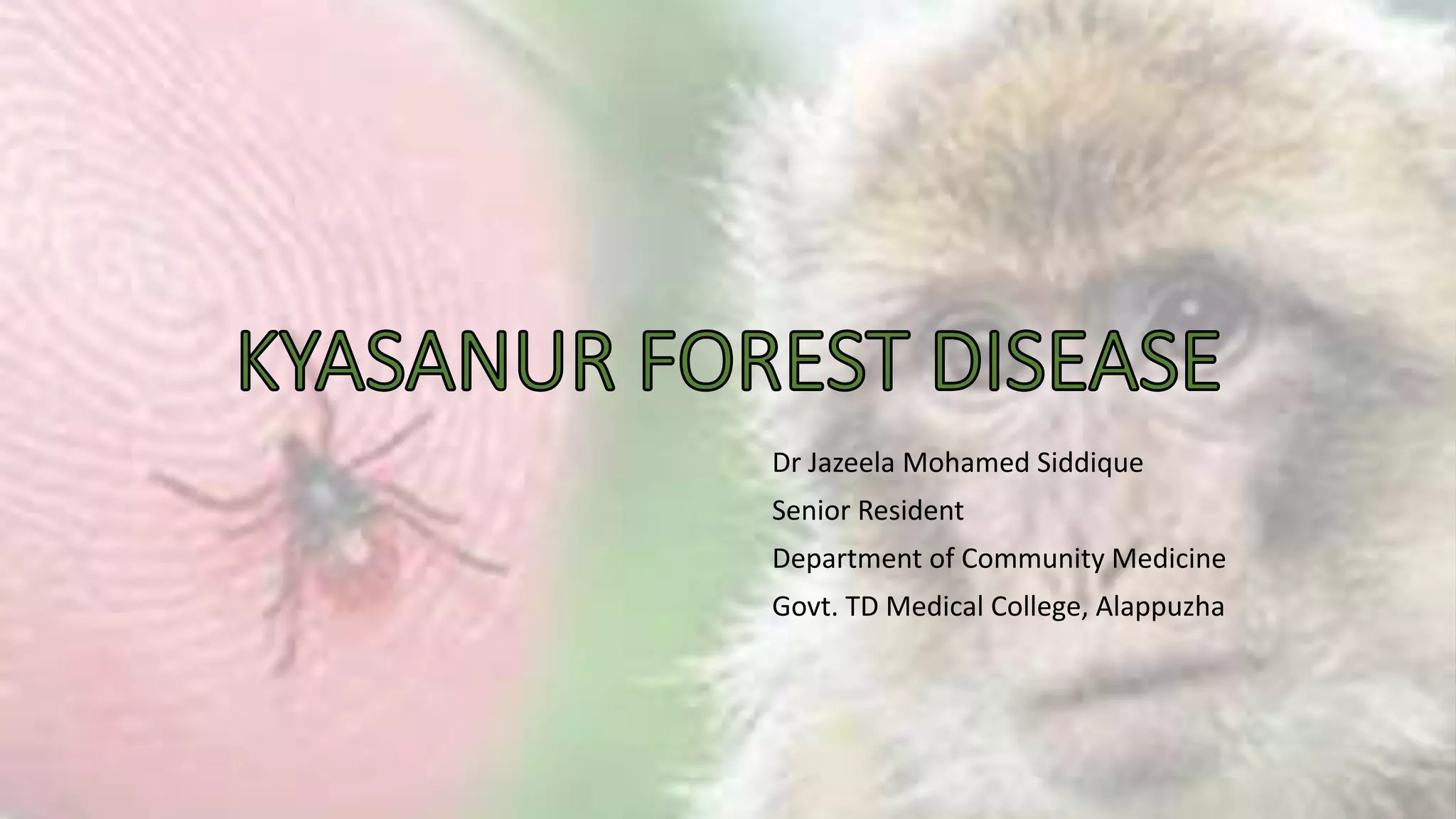
• Transmitted to man by bite of infective ticks
HISTORY
• 1957 : First recognised in Shimoga district of Karnataka
• Monkey disease
• Kyasanur Forest locality
• Mortality in monkeys  acute febrile prostrating illness among villagers
few human deaths
PROBLEM STATEMENT
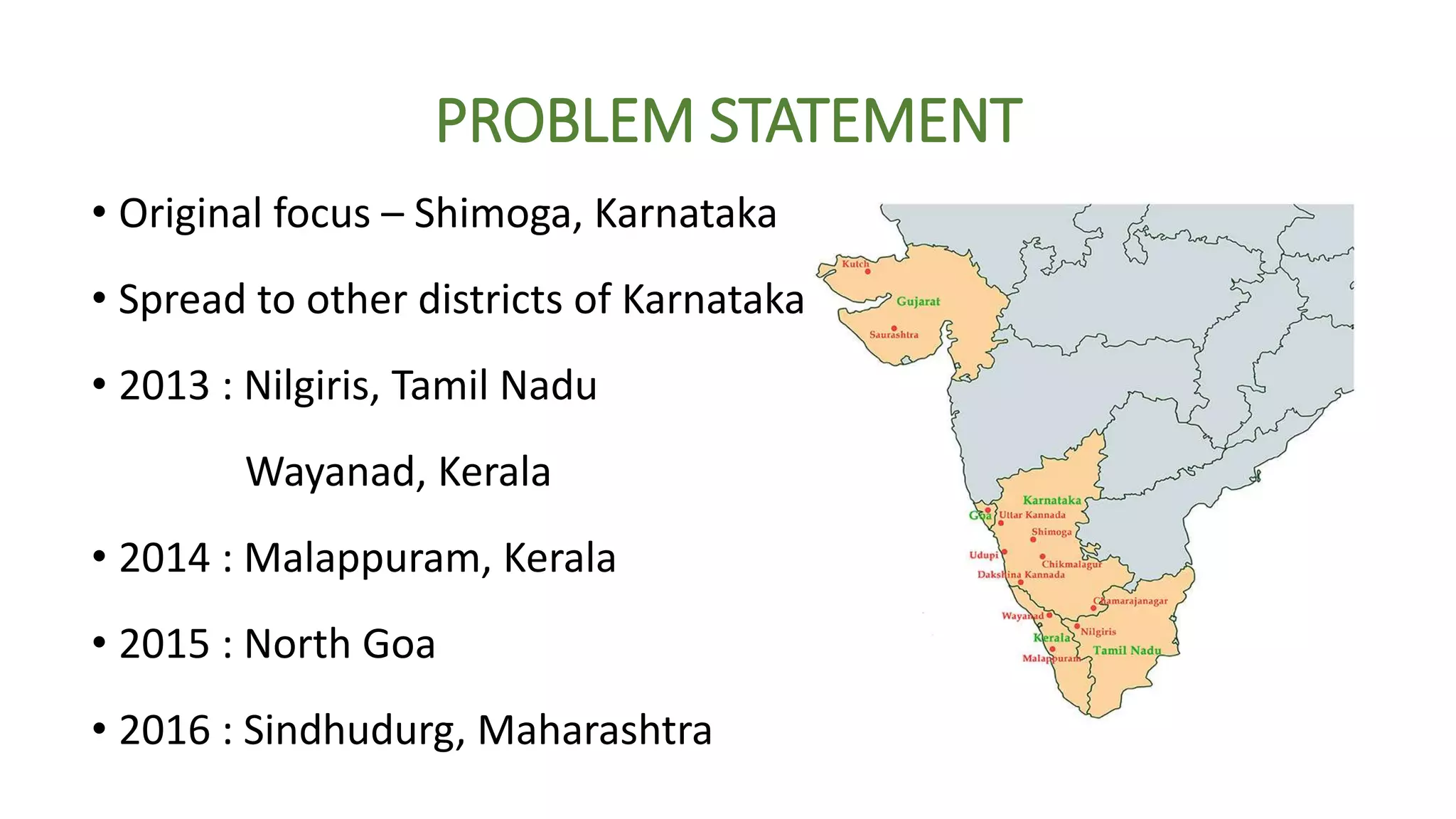
• Original focus – Shimoga, Karnataka
• Spread to other districts of Karnataka
• 2013 : Nilgiris, Tamil Nadu
Wayanad, Kerala
• 2014 : Malappuram, Kerala
• 2015 : North Goa
• 2016 : Sindhudurg, Maharashtra
EPIDEMIOLOGICAL DETERMINANTS
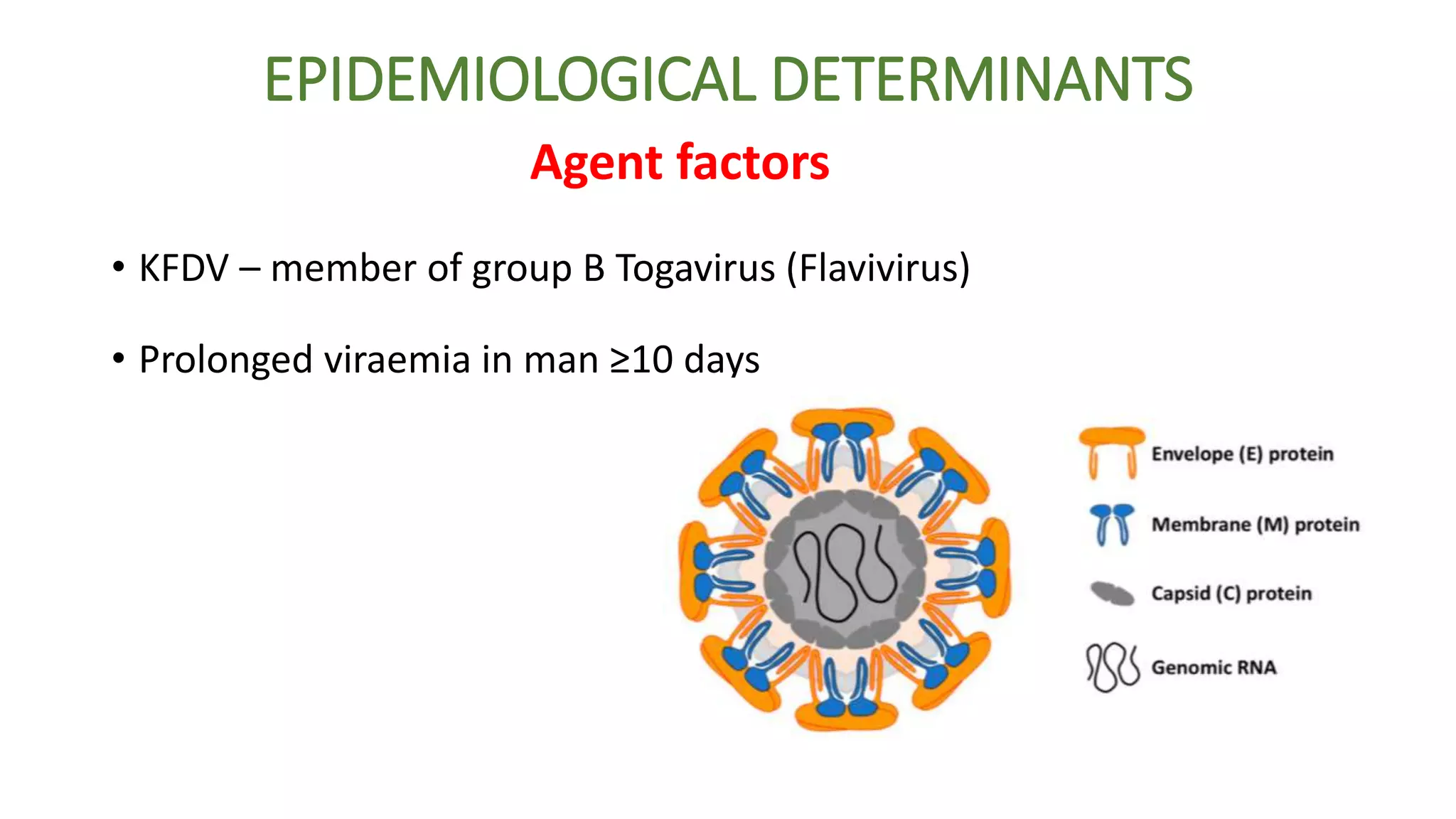
• KFDV – member of group B Togavirus (Flavivirus)
• Prolonged viraemia in man ≥10 days
Agent factors
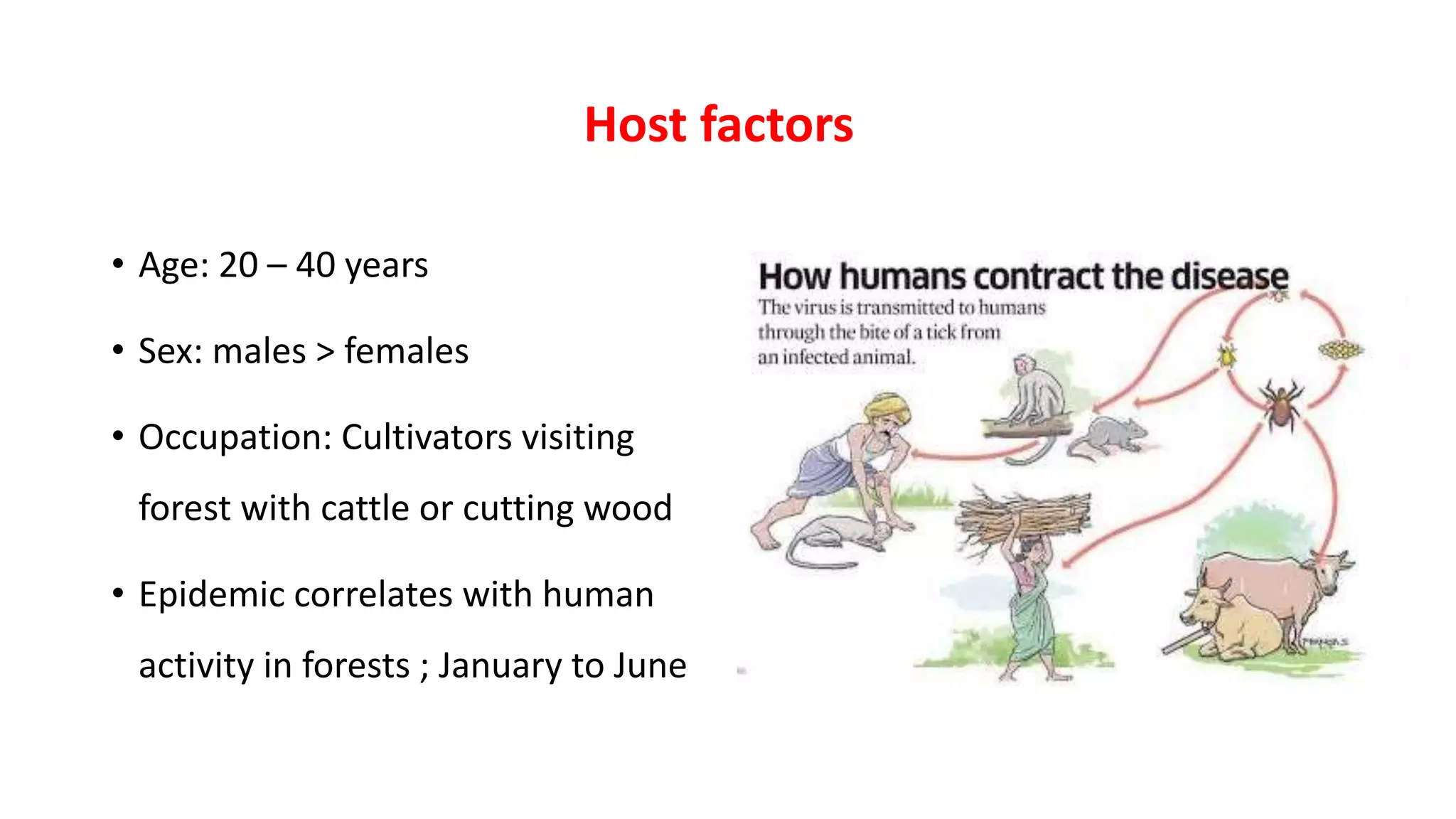
• Age: 20 – 40 years
• Sex: males > females
• Occupation: Cultivators visiting
forest with cattle or cutting wood
• Epidemic correlates with human
activity in forests ; January to June
Host factors
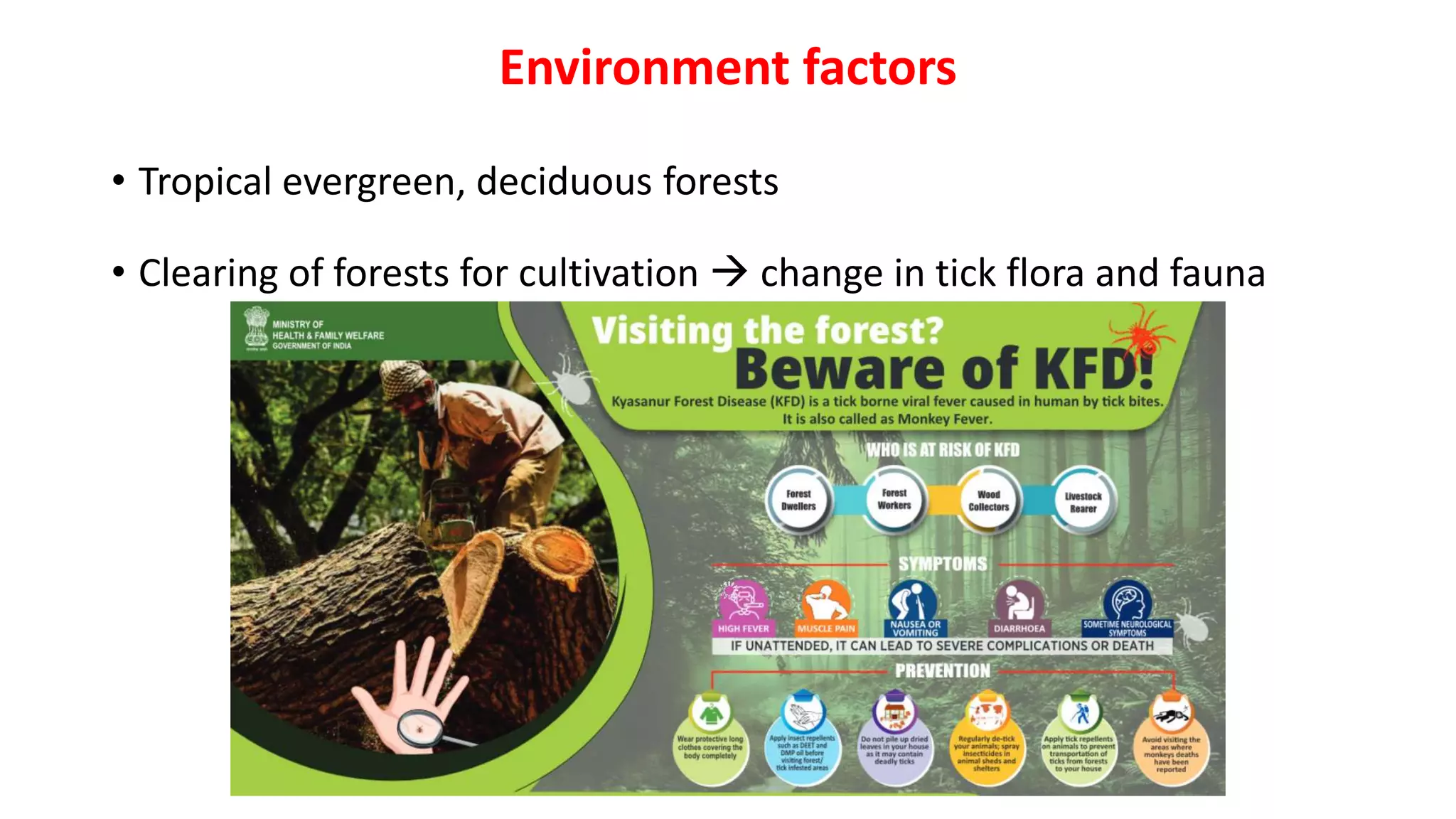
• Tropical evergreen, deciduous forests
• Clearing of forests for cultivation  change in tick flora and fauna
Environment factors
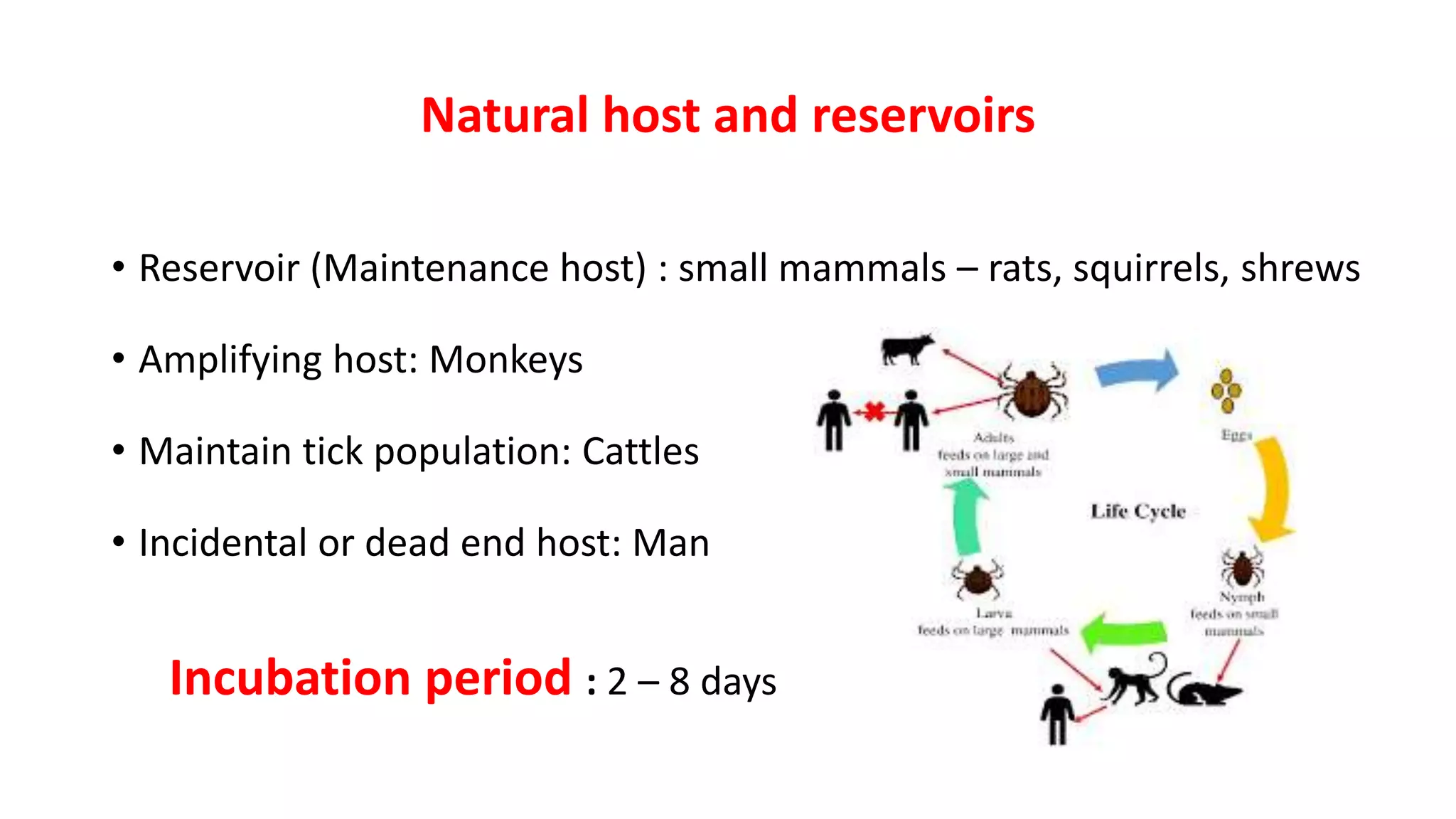
• Reservoir (Maintenance host) : small mammals – rats, squirrels, shrews
• Amplifying host: Monkeys
• Maintain tick population: Cattles
• Incidental or dead end host: Man
Natural host and reservoirs
Incubation period : 2 – 8 days
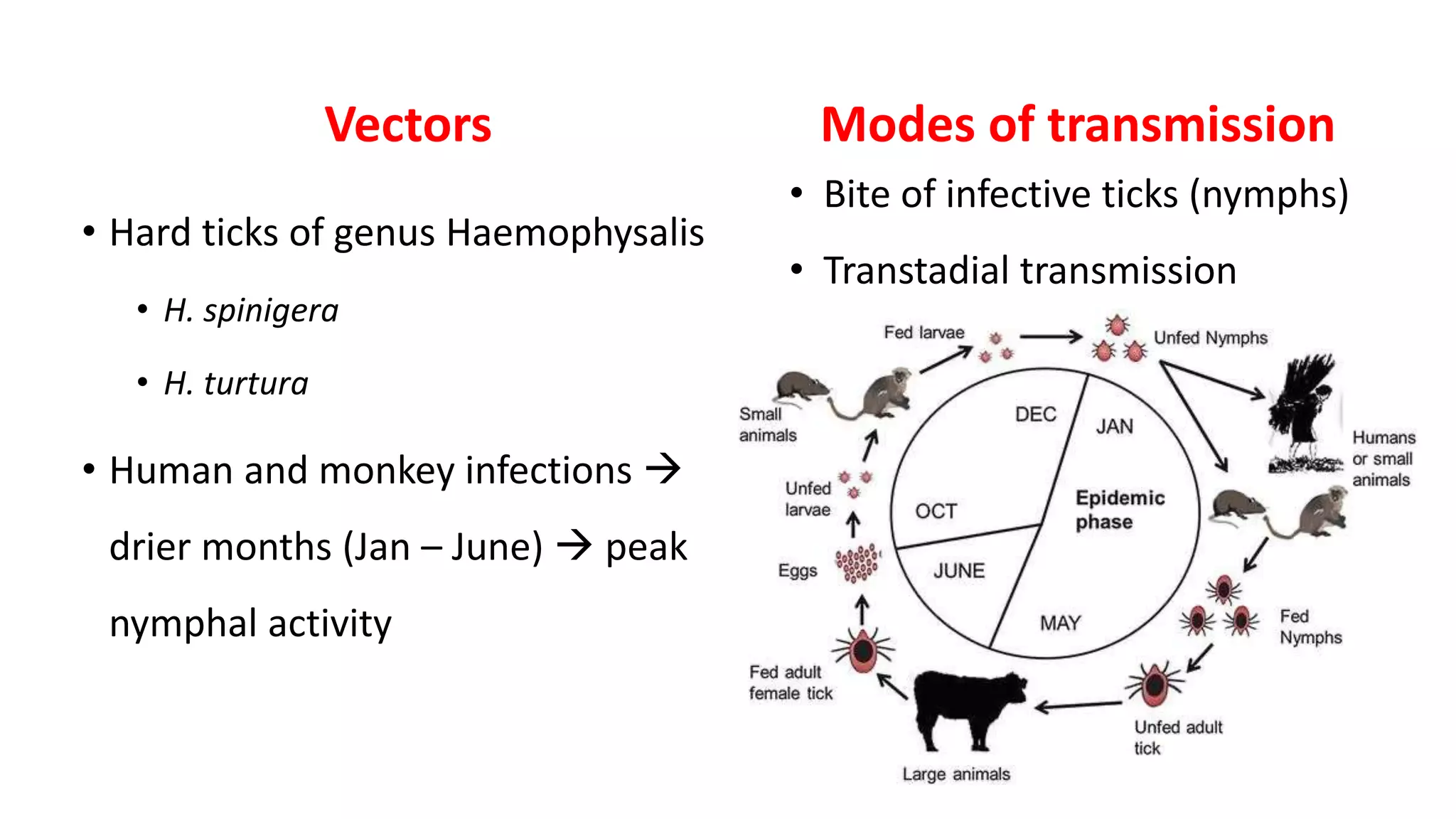
• Hard ticks of genus Haemophysalis
• H. spinigera
• H. turtura
• Human and monkey infections 
drier months (Jan – June)  peak
nymphal activity
Vectors Modes of transmission
• Bite of infective ticks (nymphs)
• Transtadial transmission
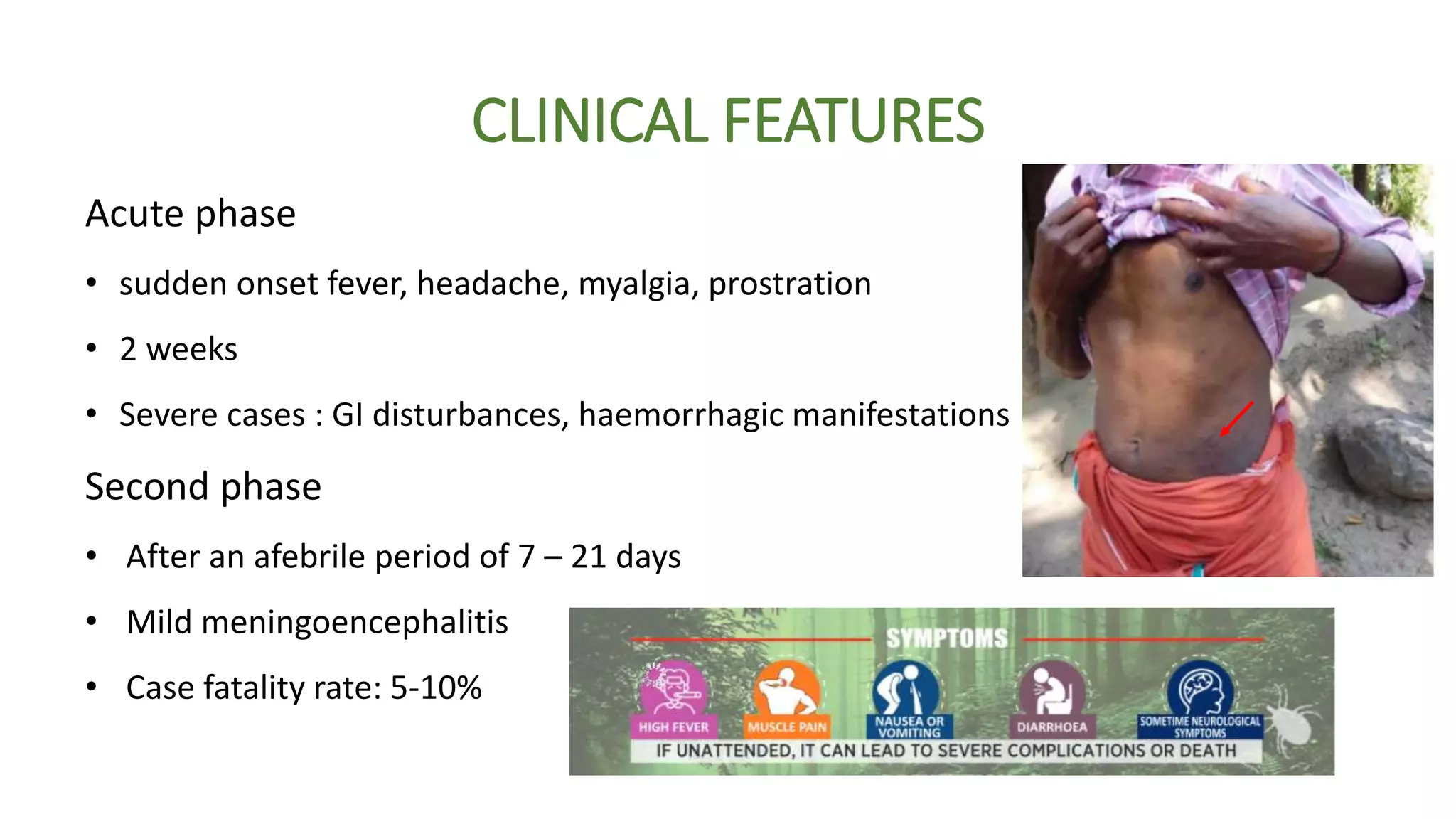
CLINICAL FEATURES
Acute phase
• sudden onset fever, headache, myalgia, prostration
• 2 weeks
• Severe cases : GI disturbances, haemorrhagic manifestations
Second phase
• After an afebrile period of 7 – 21 days
• Mild meningoencephalitis
• Case fatality rate: 5-10%
DIAGNOSIS
• History – occupation, travel to
forests
• Clinical signs and symptoms
• Confirmation
Virus in blood
Serological evidence
Conservative
• Antipyretics
• Analgesics
• Supportive therapy
TREATMENT
PREVENTION & CONTROL
• Control of ticks
 aircraft mounted equipment to dispense carbaryl, fenthion at 2.24 kg/hectare
at forest floor
 Spraying within 50 m around hotspots (monkey deaths)
Restriction of cattle movement  reduces vector population
• Personal protection
Adequate clothing- population at risk
Examine bodies at end of the day and
remove ticks
Discourage habit of sitting, lying on
ground
Insect repellants : DMP, DEET
• Vaccination
Population at risk – Killed KFD vaccine
2 doses – 1 month apart
Booster doses to be taken every 6-9 months
THANK YOU
https://www.slideshare.net/JazeelaMohamedSiddiq

KYASANUR FOREST DISEASE.pptx

  • 1.
    Dr Jazeela MohamedSiddique Senior Resident Department of Community Medicine Govt. TD Medical College, Alappuzha
  • 2.
    INTRODUCTION • Arthropod borneviral haemorrhagic disease • Febrile disease • Transmitted to man by bite of infective ticks
  • 3.
    HISTORY • 1957 :First recognised in Shimoga district of Karnataka • Monkey disease • Kyasanur Forest locality • Mortality in monkeys  acute febrile prostrating illness among villagers few human deaths
  • 4.
    PROBLEM STATEMENT • Originalfocus – Shimoga, Karnataka • Spread to other districts of Karnataka • 2013 : Nilgiris, Tamil Nadu Wayanad, Kerala • 2014 : Malappuram, Kerala • 2015 : North Goa • 2016 : Sindhudurg, Maharashtra
  • 5.
    EPIDEMIOLOGICAL DETERMINANTS • KFDV– member of group B Togavirus (Flavivirus) • Prolonged viraemia in man ≥10 days Agent factors
  • 6.
    • Age: 20– 40 years • Sex: males > females • Occupation: Cultivators visiting forest with cattle or cutting wood • Epidemic correlates with human activity in forests ; January to June Host factors
  • 7.
    • Tropical evergreen,deciduous forests • Clearing of forests for cultivation  change in tick flora and fauna Environment factors
  • 8.
    • Reservoir (Maintenancehost) : small mammals – rats, squirrels, shrews • Amplifying host: Monkeys • Maintain tick population: Cattles • Incidental or dead end host: Man Natural host and reservoirs Incubation period : 2 – 8 days
  • 9.
    • Hard ticksof genus Haemophysalis • H. spinigera • H. turtura • Human and monkey infections  drier months (Jan – June)  peak nymphal activity Vectors Modes of transmission • Bite of infective ticks (nymphs) • Transtadial transmission
  • 10.
    CLINICAL FEATURES Acute phase •sudden onset fever, headache, myalgia, prostration • 2 weeks • Severe cases : GI disturbances, haemorrhagic manifestations Second phase • After an afebrile period of 7 – 21 days • Mild meningoencephalitis • Case fatality rate: 5-10%
  • 11.
    DIAGNOSIS • History –occupation, travel to forests • Clinical signs and symptoms • Confirmation Virus in blood Serological evidence Conservative • Antipyretics • Analgesics • Supportive therapy TREATMENT
  • 12.
    PREVENTION & CONTROL •Control of ticks  aircraft mounted equipment to dispense carbaryl, fenthion at 2.24 kg/hectare at forest floor  Spraying within 50 m around hotspots (monkey deaths) Restriction of cattle movement  reduces vector population
  • 13.
    • Personal protection Adequateclothing- population at risk Examine bodies at end of the day and remove ticks Discourage habit of sitting, lying on ground Insect repellants : DMP, DEET
  • 14.
    • Vaccination Population atrisk – Killed KFD vaccine 2 doses – 1 month apart Booster doses to be taken every 6-9 months
  • 15.