HOSPITAL WASTE
MANAGEMENT
Dr Jazeela Mohamed Siddique
Senior resident
Department Of Community Medicine
Introduction
• Heath care waste – highest potential for infection and injury
• Hazardous waste per hospital per day
oHigh income countries – 0.5 kg
oLow income countries – 0.2 kg
• Crucial for environmental health protection
• Integral feature of health care services
Definition
• Biomedical waste (BMW)– Any waste generated during the
odiagnosis, treatment or immunization of human beings or animals,
oor in research activities pertaining thereto
oor in the production or testing of biologicals
[BMW Management and Handling rules, 1998 of India]
• 75 – 90% non-risk or general health care waste
• 10 – 25% hazardous waste
Sources of health-care waste
• Govt and private hospitals
• Nursing homes
• Physician’s clinic
• Dentist clinic
• PHC
• Medical research & training
• Mortuaries
• Blood bank & collection centres
• Animal & slaughter houses
• Laboratories
• Vaccinating centres
• Biotechnology institutions
Health care waste generation
Depends on
• Waste management methods
• Type of healthcare establishment
• Hospital specializations
• Proportion of reusable items
• Proportion of patients treated on day care
basis
80%
15%
1%
3%
1%
General health care waste
Pathological and infectious waste
Sharps
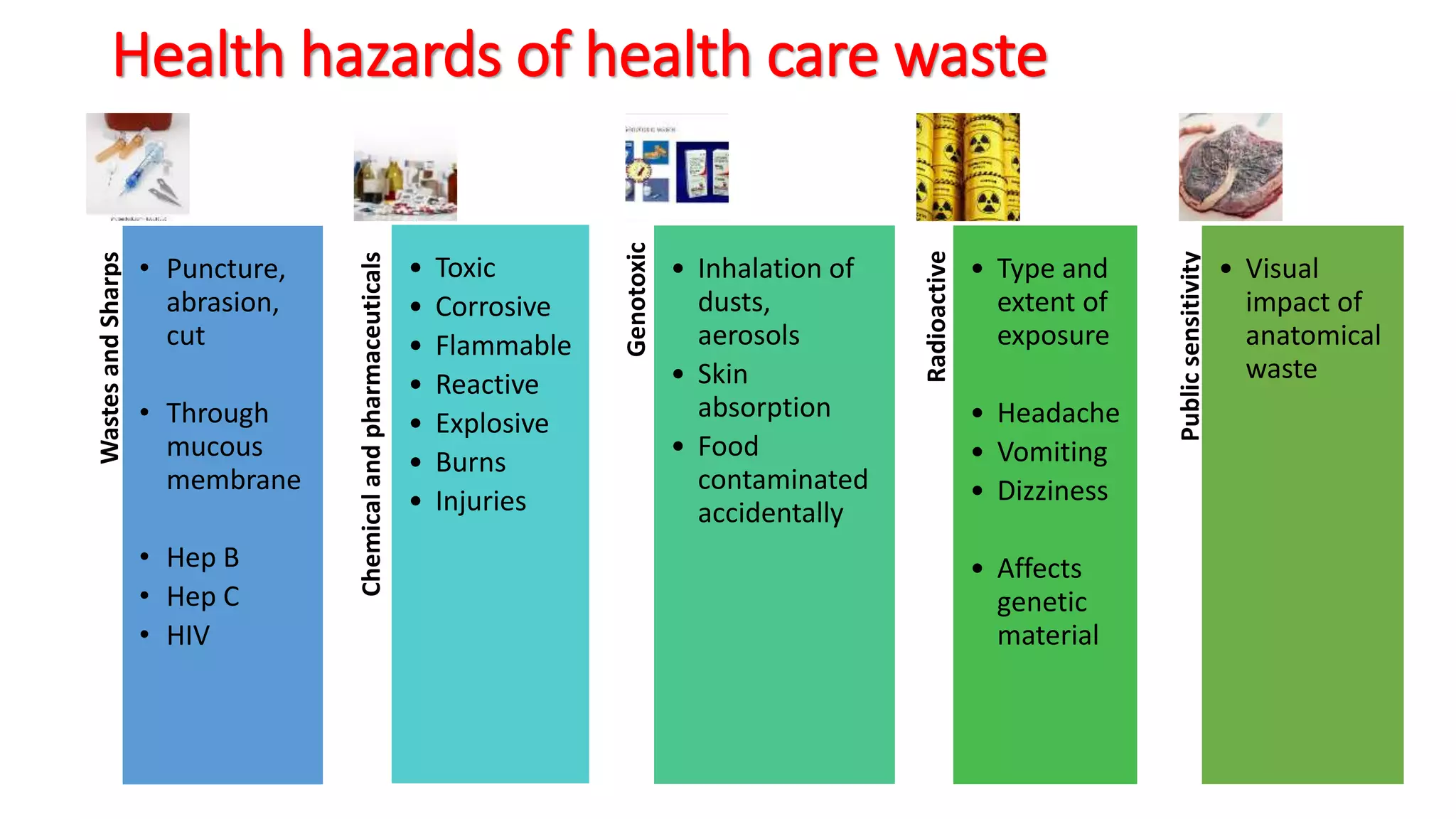
Health hazards of health care waste
Wastes
and
Sharps
• Puncture,
abrasion,
cut
• Through
mucous
membrane
• Hep B
• Hep C
• HIV
Chemical
and
pharmaceuticals
• Toxic
• Corrosive
• Flammable
• Reactive
• Explosive
• Burns
• Injuries
Genotoxic
• Inhalation of
dusts,
aerosols
• Skin
absorption
• Food
contaminated
accidentally
Radioactive
• Type and
extent of
exposure
• Headache
• Vomiting
• Dizziness
• Affects
genetic
material
Public
sensitivity
• Visual
impact of
anatomical
waste
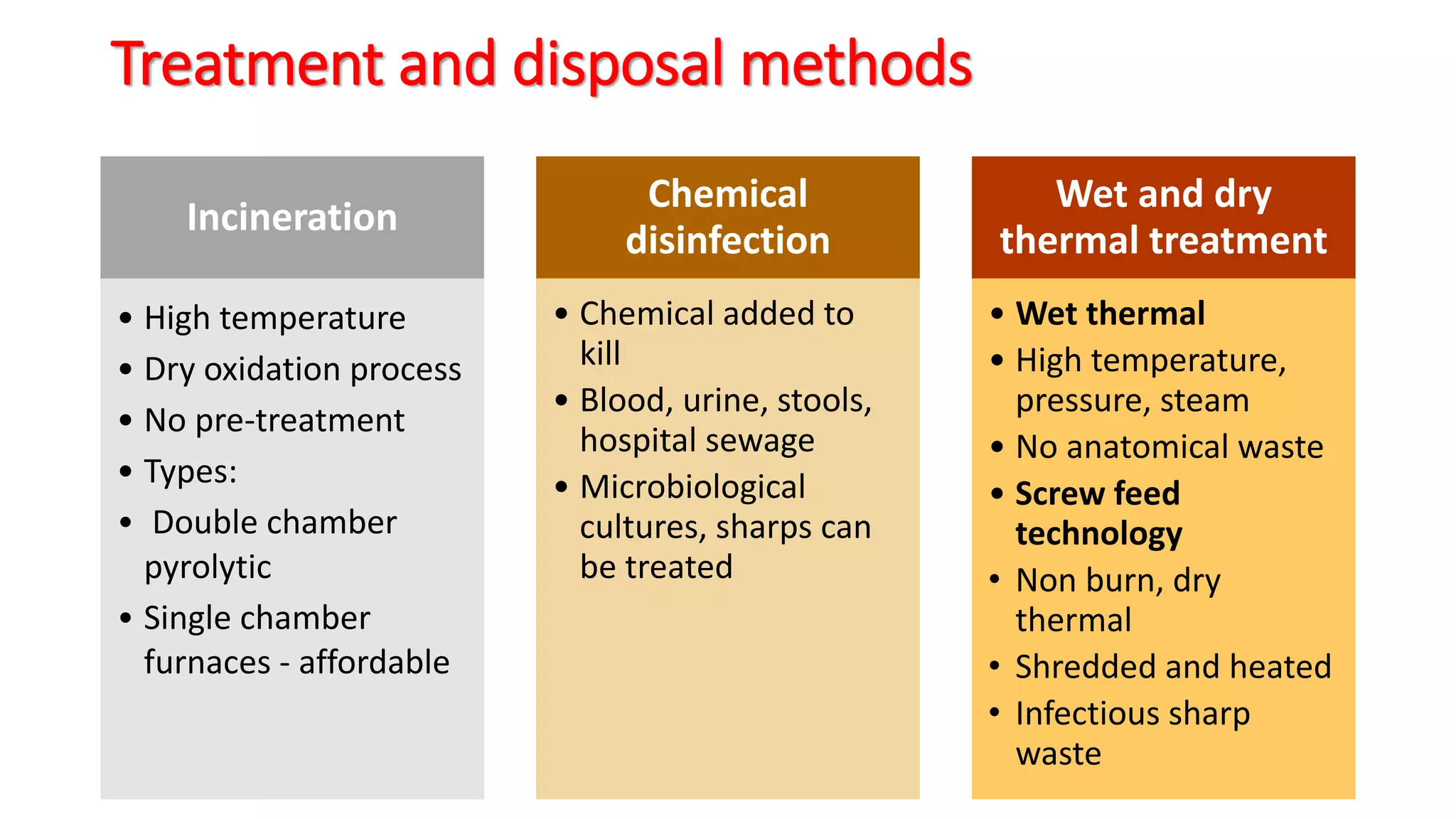
Treatment and disposal methods
Incineration
• High temperature
• Dry oxidation process
• No pre-treatment
• Types:
• Double chamber
pyrolytic
• Single chamber
furnaces - affordable
Chemical
disinfection
• Chemical added to
kill
• Blood, urine, stools,
hospital sewage
• Microbiological
cultures, sharps can
be treated
Wet and dry
thermal treatment
• Wet thermal
• High temperature,
pressure, steam
• No anatomical waste
• Screw feed
technology
• Non burn, dry
thermal
• Shredded and heated
• Infectious sharp
waste
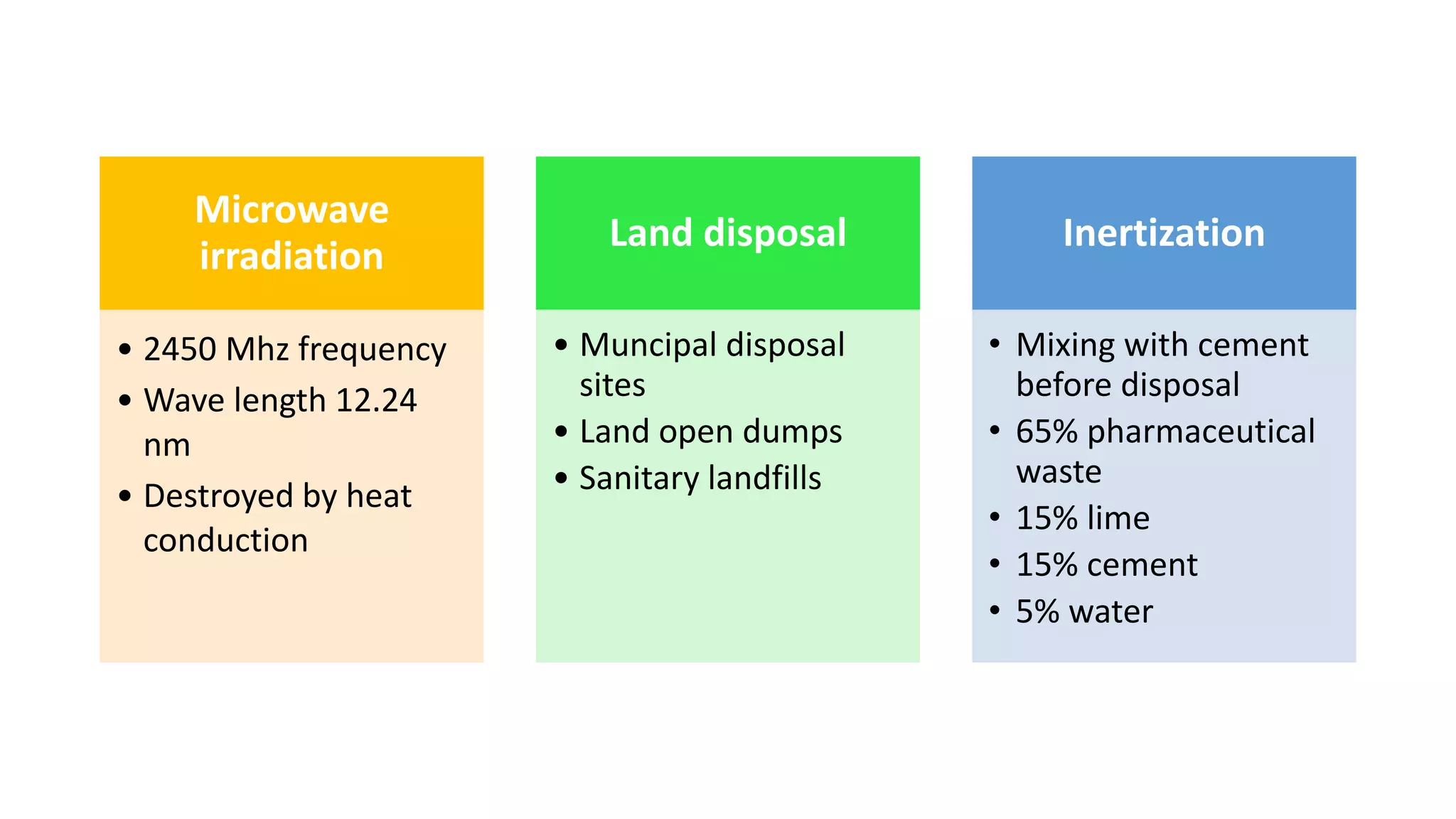
Microwave
irradiation
• 2450 Mhz frequency
• Wave length 12.24
nm
• Destroyed by heat
conduction
Land disposal
• Muncipal disposal
sites
• Land open dumps
• Sanitary landfills
Inertization
• Mixing with cement
before disposal
• 65% pharmaceutical
waste
• 15% lime
• 15% cement
• 5% water
Advantages and Disadvantages
Treatment Advantages Disadvantages
Rotary kiln All infectious waste High costs
Pyrolyic incineration High efficiency Incomplete destruction, High costs
Single chamber incineration Residues – landfills
No trained operators
Low investment and costs
Emission of pollutants
Removal of slag and soot
Drum or brick incinerator Drastic reduction of waste
Low investment and costs
99% reduction of micro organisms
Chemical disinfection Highly efficient
Inexpensive chemicals
Qualified operators
Inadequate for pharmaceutical and
chemical
Wet thermal treatment Environmentally sound Shredders breakdown
Microwave irradiation Good efficiency High investment and costs
Encapsulation Simple, low cost, safe Not for non-sharp waste
Safe burying Low cost Precautions at site
Inertization Inexpensive Not for infectious waste
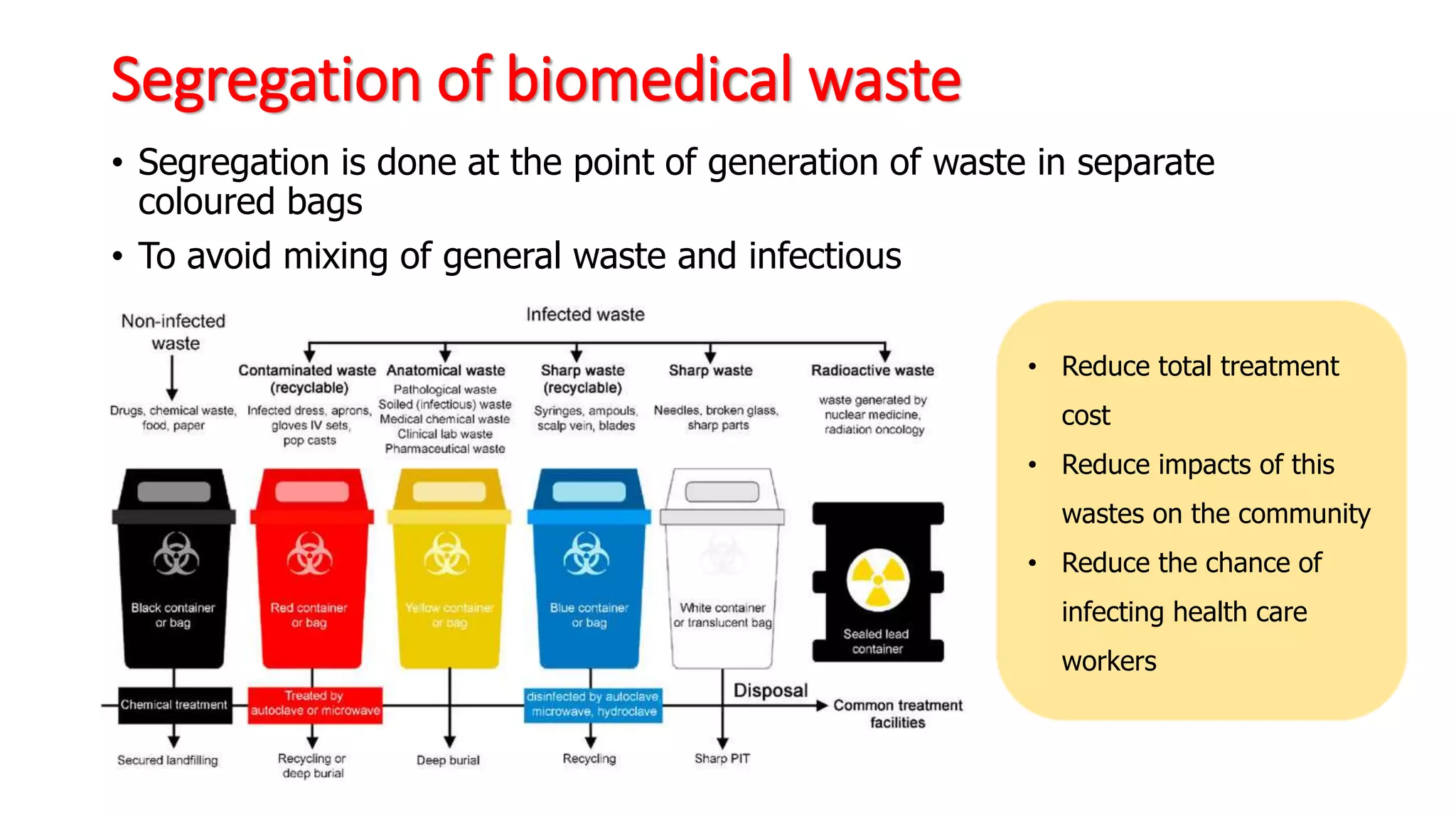
Segregation of biomedical waste
• Segregation is done at the point of generation of waste in separate
coloured bags
• To avoid mixing of general waste and infectious
• Reduce total treatment
cost
• Reduce impacts of this
wastes on the community
• Reduce the chance of
infecting health care
workers
Category Type of waste Type of bag/ container Treatment disposal
Yellow Human anatomical
Animal anatomical
Soiled waste
Expired medicines
Chemical waste
Discarded linen
Microbiological
Biotechnology
Clinical lab waste
Chemical liquid waste
Non chlorinated plastic
bag
Separate collection
Incineration
Plasma pyrolysis
Deep burial
Microwaving
Autoclaving
Shredding
Red Recyclable
Contaminated (IV sets,
catheters, gloves, etc)
Non chlorinated plastic
bag
Microwaving
Autoclaving
White Waste sharps including metals
(needles, syringes with fixed
needles)
Puncture proof, leak
proof, tamper proof
container
Autoclaving
Dry heat sterilisation
Shredding
Mutilation
Encapsulation
Blue Glassware (ampoules, vials)
Metallic body implants
Cardboard box with blue
marking
Disinfection with sodium
hypochlorite
Autoclaving, Recycling
Transportation
THANK YOU
https://www.slideshare.net/JazeelaMohamedSiddiq

HOSPITAL WASTE MANAGEMENT.pptx

  • 1.
    HOSPITAL WASTE MANAGEMENT Dr JazeelaMohamed Siddique Senior resident Department Of Community Medicine
  • 2.
    Introduction • Heath carewaste – highest potential for infection and injury • Hazardous waste per hospital per day oHigh income countries – 0.5 kg oLow income countries – 0.2 kg • Crucial for environmental health protection • Integral feature of health care services
  • 3.
    Definition • Biomedical waste(BMW)– Any waste generated during the odiagnosis, treatment or immunization of human beings or animals, oor in research activities pertaining thereto oor in the production or testing of biologicals [BMW Management and Handling rules, 1998 of India] • 75 – 90% non-risk or general health care waste • 10 – 25% hazardous waste
  • 4.
    Sources of health-carewaste • Govt and private hospitals • Nursing homes • Physician’s clinic • Dentist clinic • PHC • Medical research & training • Mortuaries • Blood bank & collection centres • Animal & slaughter houses • Laboratories • Vaccinating centres • Biotechnology institutions
  • 5.
    Health care wastegeneration Depends on • Waste management methods • Type of healthcare establishment • Hospital specializations • Proportion of reusable items • Proportion of patients treated on day care basis 80% 15% 1% 3% 1% General health care waste Pathological and infectious waste Sharps
  • 6.
    Health hazards ofhealth care waste Wastes and Sharps • Puncture, abrasion, cut • Through mucous membrane • Hep B • Hep C • HIV Chemical and pharmaceuticals • Toxic • Corrosive • Flammable • Reactive • Explosive • Burns • Injuries Genotoxic • Inhalation of dusts, aerosols • Skin absorption • Food contaminated accidentally Radioactive • Type and extent of exposure • Headache • Vomiting • Dizziness • Affects genetic material Public sensitivity • Visual impact of anatomical waste
  • 7.
    Treatment and disposalmethods Incineration • High temperature • Dry oxidation process • No pre-treatment • Types: • Double chamber pyrolytic • Single chamber furnaces - affordable Chemical disinfection • Chemical added to kill • Blood, urine, stools, hospital sewage • Microbiological cultures, sharps can be treated Wet and dry thermal treatment • Wet thermal • High temperature, pressure, steam • No anatomical waste • Screw feed technology • Non burn, dry thermal • Shredded and heated • Infectious sharp waste
  • 8.
    Microwave irradiation • 2450 Mhzfrequency • Wave length 12.24 nm • Destroyed by heat conduction Land disposal • Muncipal disposal sites • Land open dumps • Sanitary landfills Inertization • Mixing with cement before disposal • 65% pharmaceutical waste • 15% lime • 15% cement • 5% water
  • 9.
    Advantages and Disadvantages TreatmentAdvantages Disadvantages Rotary kiln All infectious waste High costs Pyrolyic incineration High efficiency Incomplete destruction, High costs Single chamber incineration Residues – landfills No trained operators Low investment and costs Emission of pollutants Removal of slag and soot Drum or brick incinerator Drastic reduction of waste Low investment and costs 99% reduction of micro organisms Chemical disinfection Highly efficient Inexpensive chemicals Qualified operators Inadequate for pharmaceutical and chemical Wet thermal treatment Environmentally sound Shredders breakdown Microwave irradiation Good efficiency High investment and costs Encapsulation Simple, low cost, safe Not for non-sharp waste Safe burying Low cost Precautions at site Inertization Inexpensive Not for infectious waste
  • 10.
    Segregation of biomedicalwaste • Segregation is done at the point of generation of waste in separate coloured bags • To avoid mixing of general waste and infectious • Reduce total treatment cost • Reduce impacts of this wastes on the community • Reduce the chance of infecting health care workers
  • 11.
    Category Type ofwaste Type of bag/ container Treatment disposal Yellow Human anatomical Animal anatomical Soiled waste Expired medicines Chemical waste Discarded linen Microbiological Biotechnology Clinical lab waste Chemical liquid waste Non chlorinated plastic bag Separate collection Incineration Plasma pyrolysis Deep burial Microwaving Autoclaving Shredding Red Recyclable Contaminated (IV sets, catheters, gloves, etc) Non chlorinated plastic bag Microwaving Autoclaving White Waste sharps including metals (needles, syringes with fixed needles) Puncture proof, leak proof, tamper proof container Autoclaving Dry heat sterilisation Shredding Mutilation Encapsulation Blue Glassware (ampoules, vials) Metallic body implants Cardboard box with blue marking Disinfection with sodium hypochlorite Autoclaving, Recycling
  • 13.
  • 14.