Chapter 6 Analyzing Consumer Markets and Buyer Behavior PowerPoint by Karen E. James Louisiana State University - Shreveport
Objectives Determine how cultural, social, personal, and psychological factors influence consumer buying behavior. Describe how the consumer makes a purchasing decision.
Consumer Behavior The field of  Consumer Behavior : “studies how individuals, groups, and organizations select, buy, use, and dispose of goods, services, ideas, or experiences to satisfy their needs and desires.”
How and Why Consumers Buy Buying behavior is influenced by: Cultural factors Social factors Personal factors Psychological factors
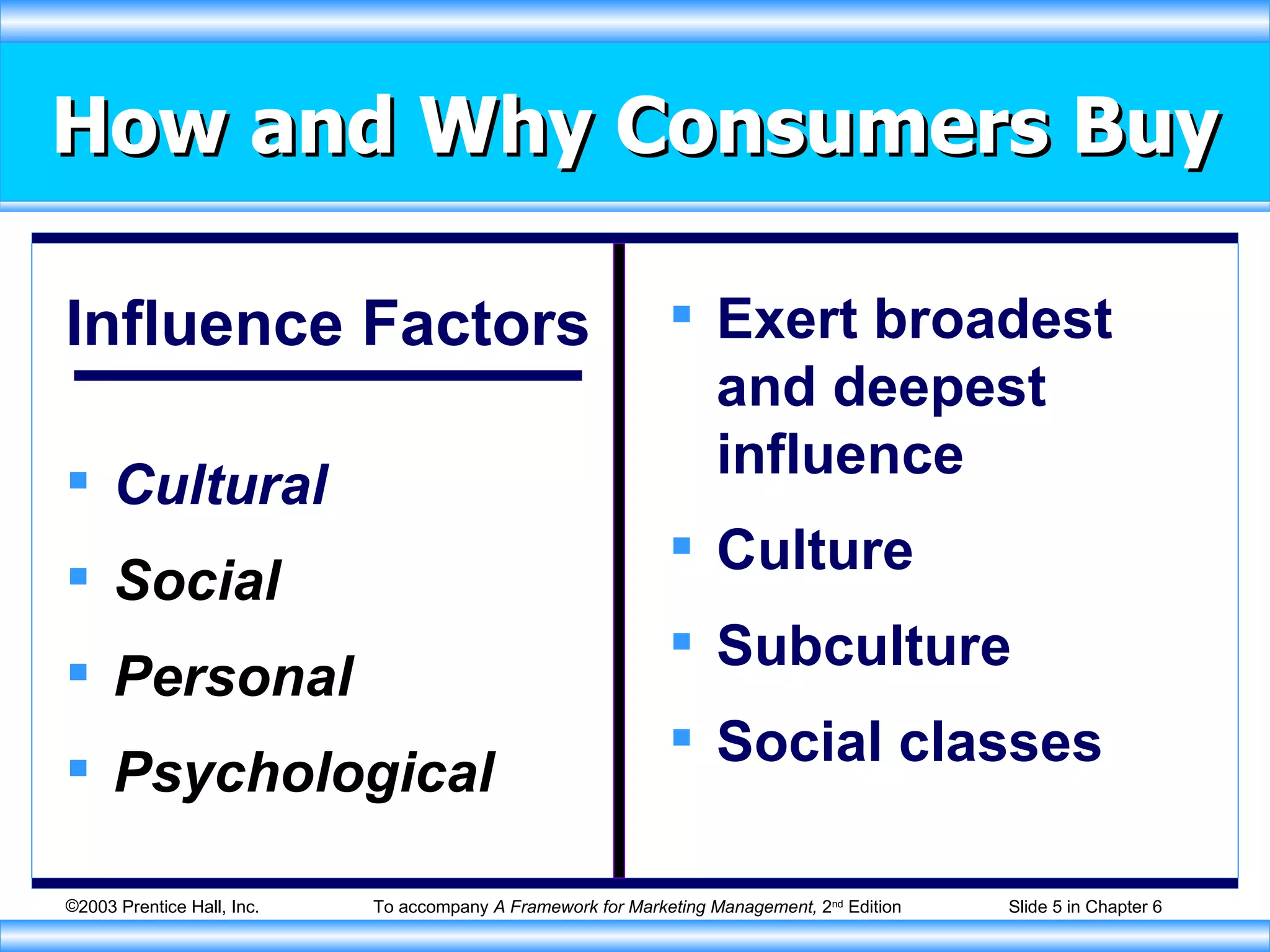
How and Why Consumers Buy Influence Factors Cultural Social Personal Psychological Exert broadest and deepest influence Culture Subculture Social classes
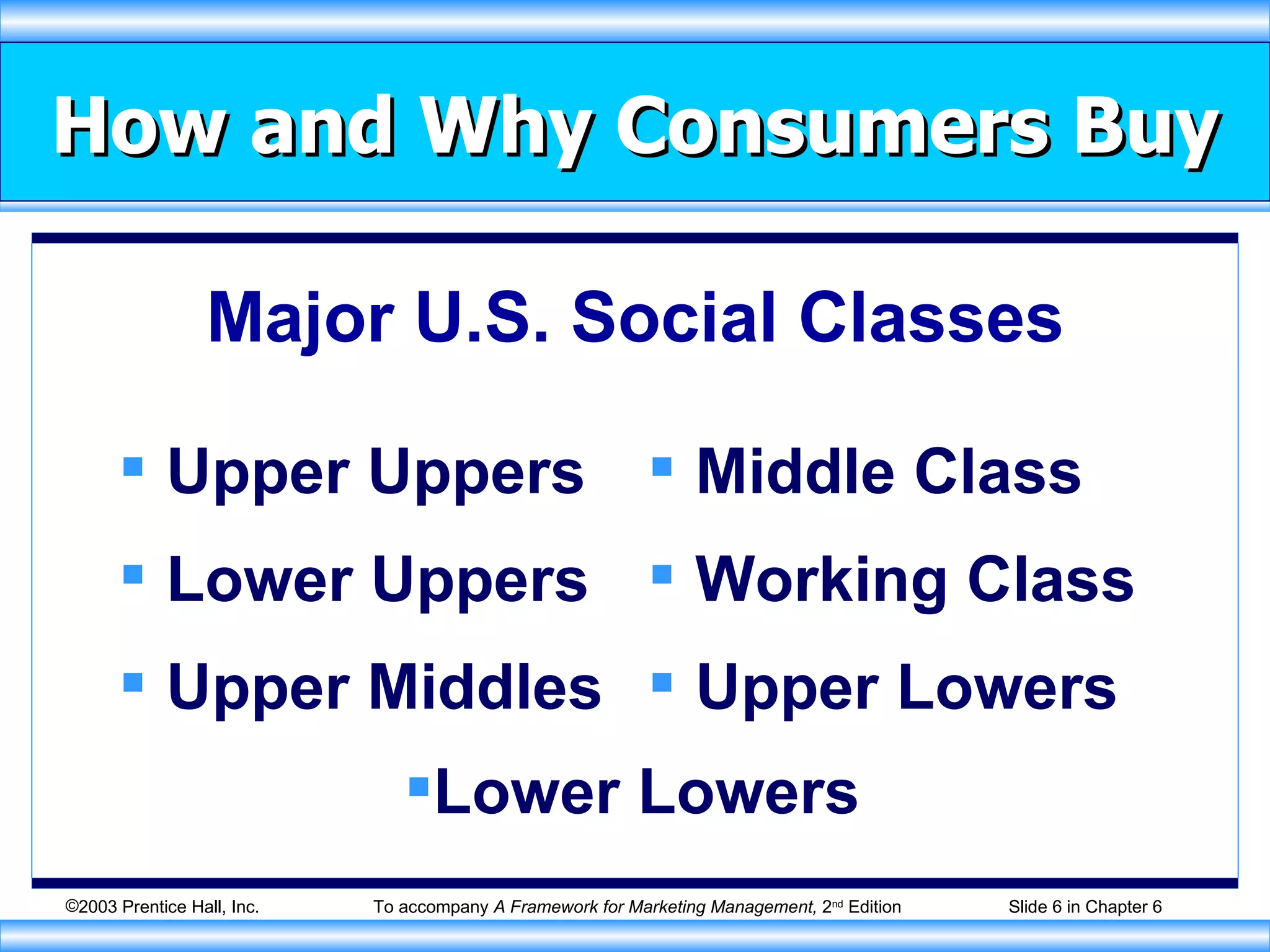
How and Why Consumers Buy Upper Uppers Lower Uppers Upper Middles Middle Class Working Class Upper Lowers Major U.S. Social Classes Lower Lowers
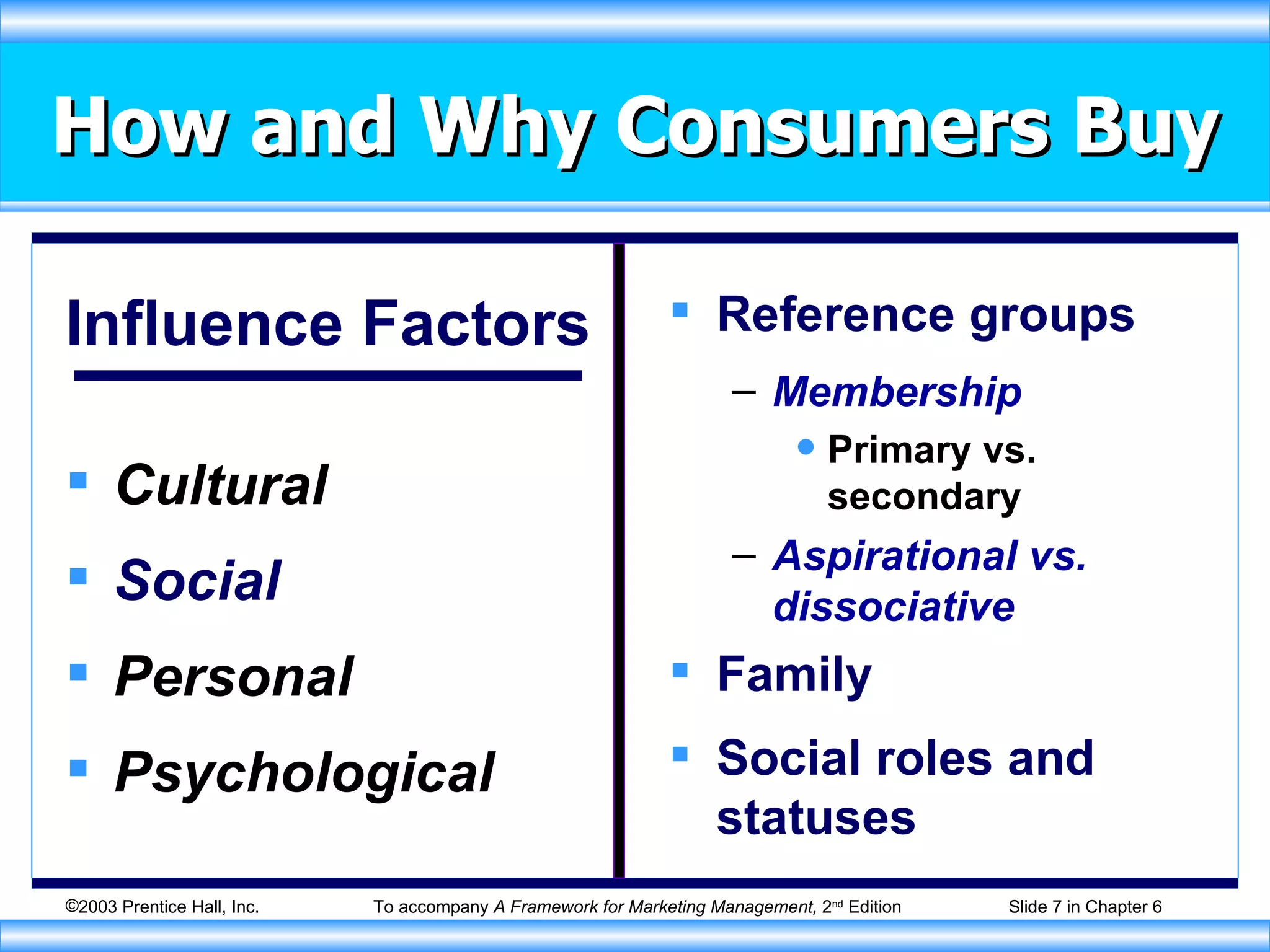
How and Why Consumers Buy Influence Factors Cultural Social Personal Psychological Reference groups Membership Primary vs. secondary  Aspirational vs. dissociative Family Social roles and statuses
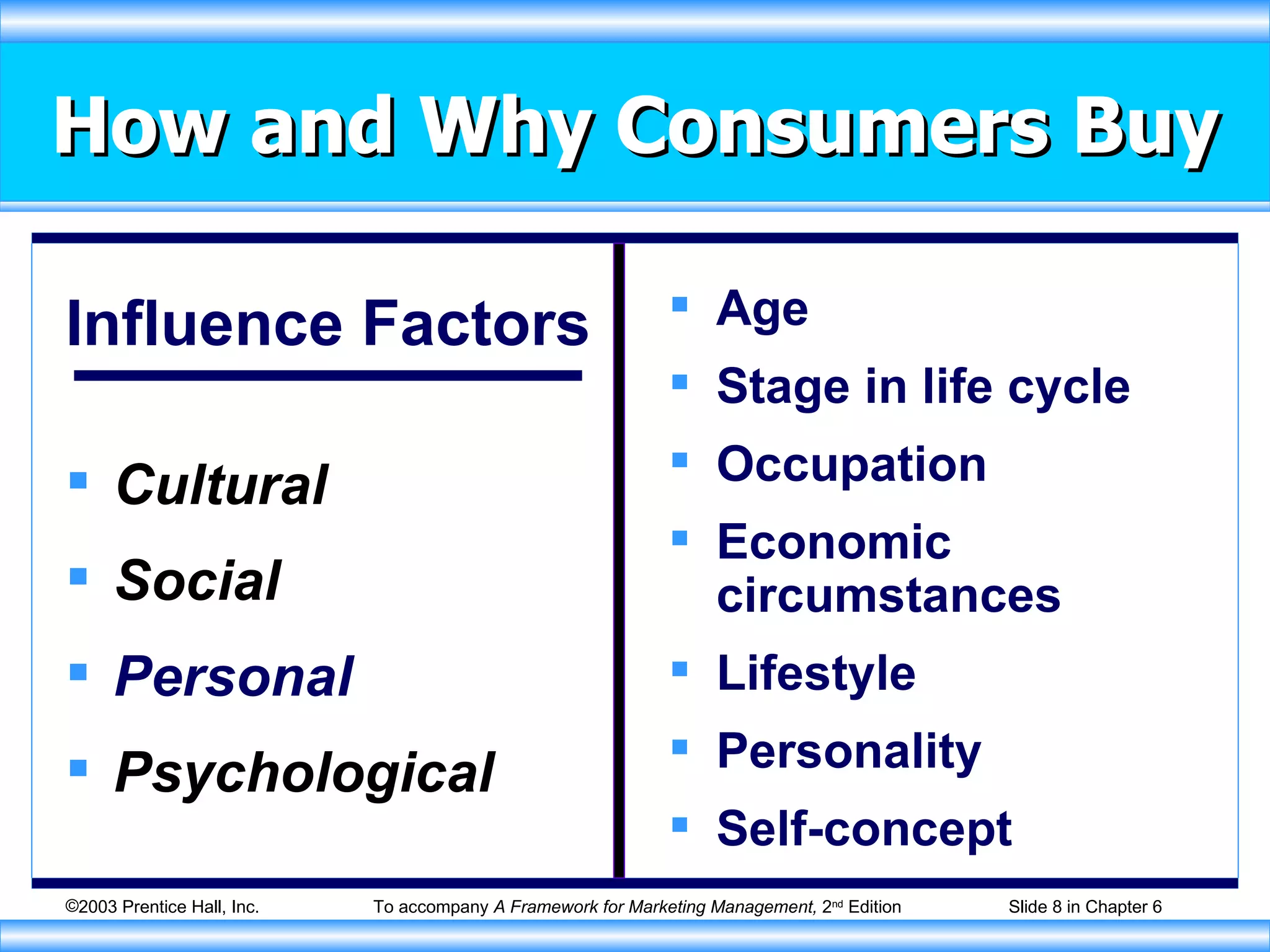
How and Why Consumers Buy Influence Factors Cultural Social Personal Psychological Age Stage in life cycle Occupation Economic circumstances Lifestyle Personality Self-concept
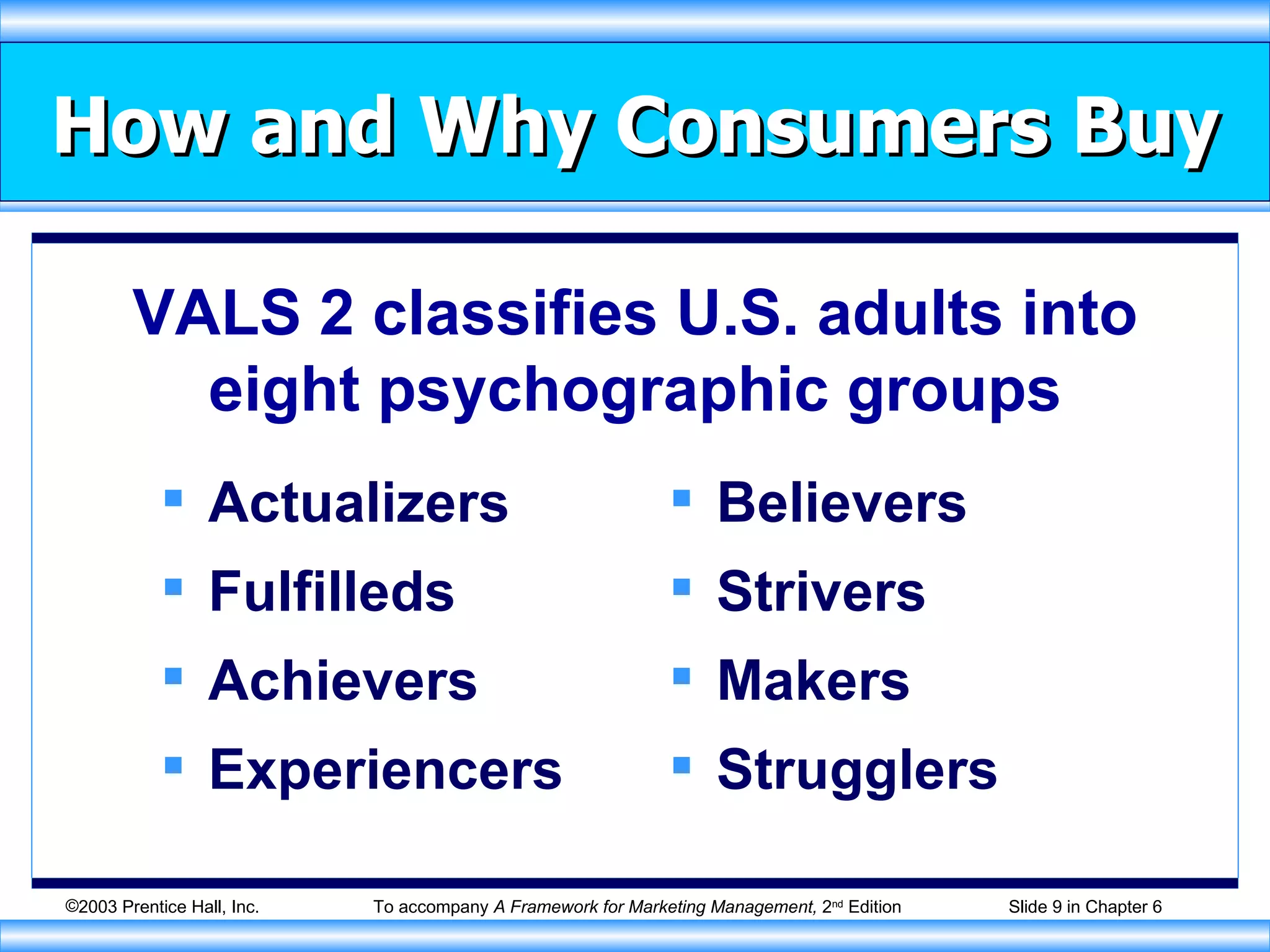
How and Why Consumers Buy Actualizers Fulfilleds Achievers Experiencers Believers Strivers Makers Strugglers VALS 2 classifies U.S. adults into eight psychographic groups
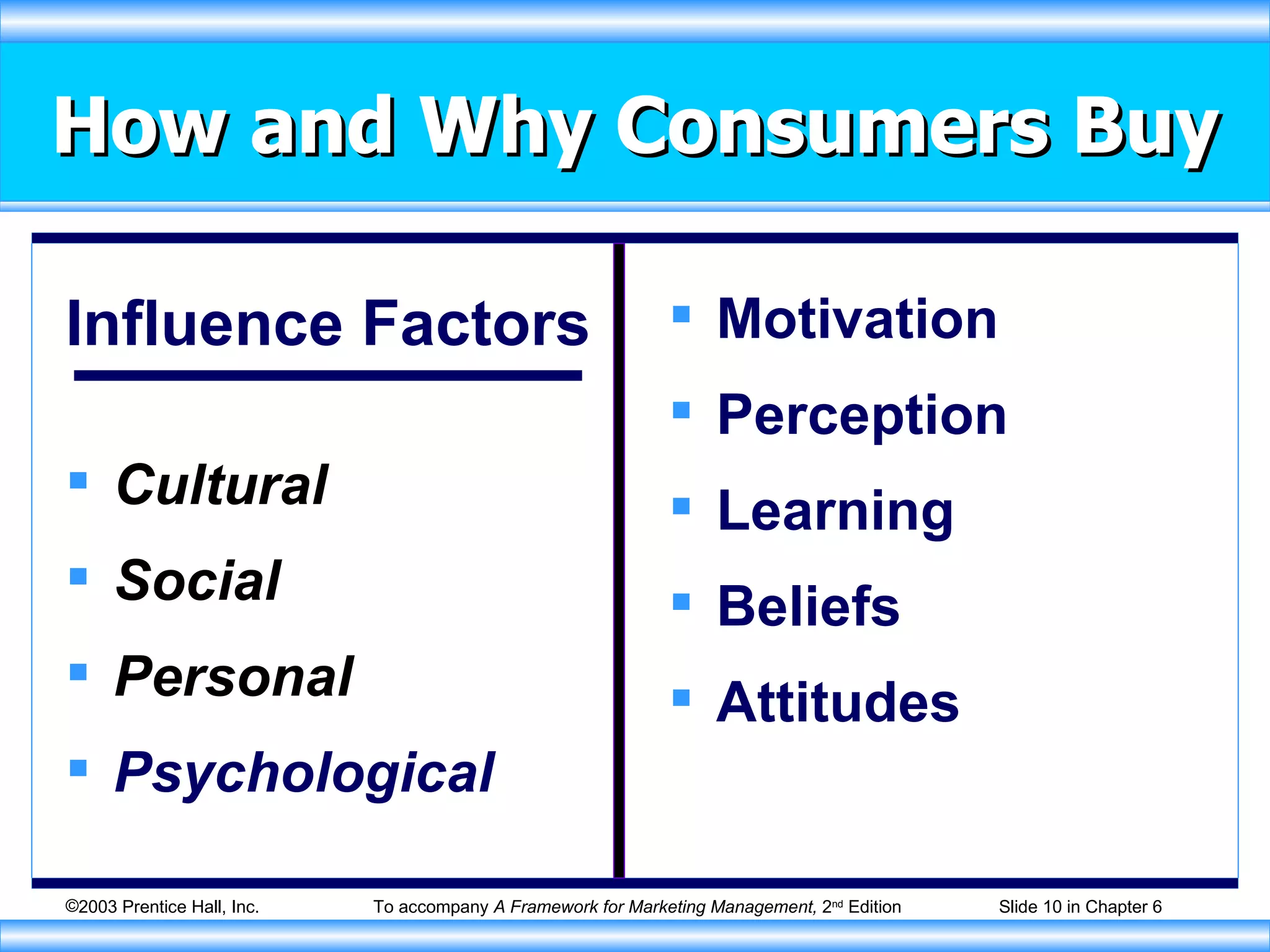
How and Why Consumers Buy Influence Factors Cultural Social Personal Psychological Motivation Perception Learning Beliefs Attitudes
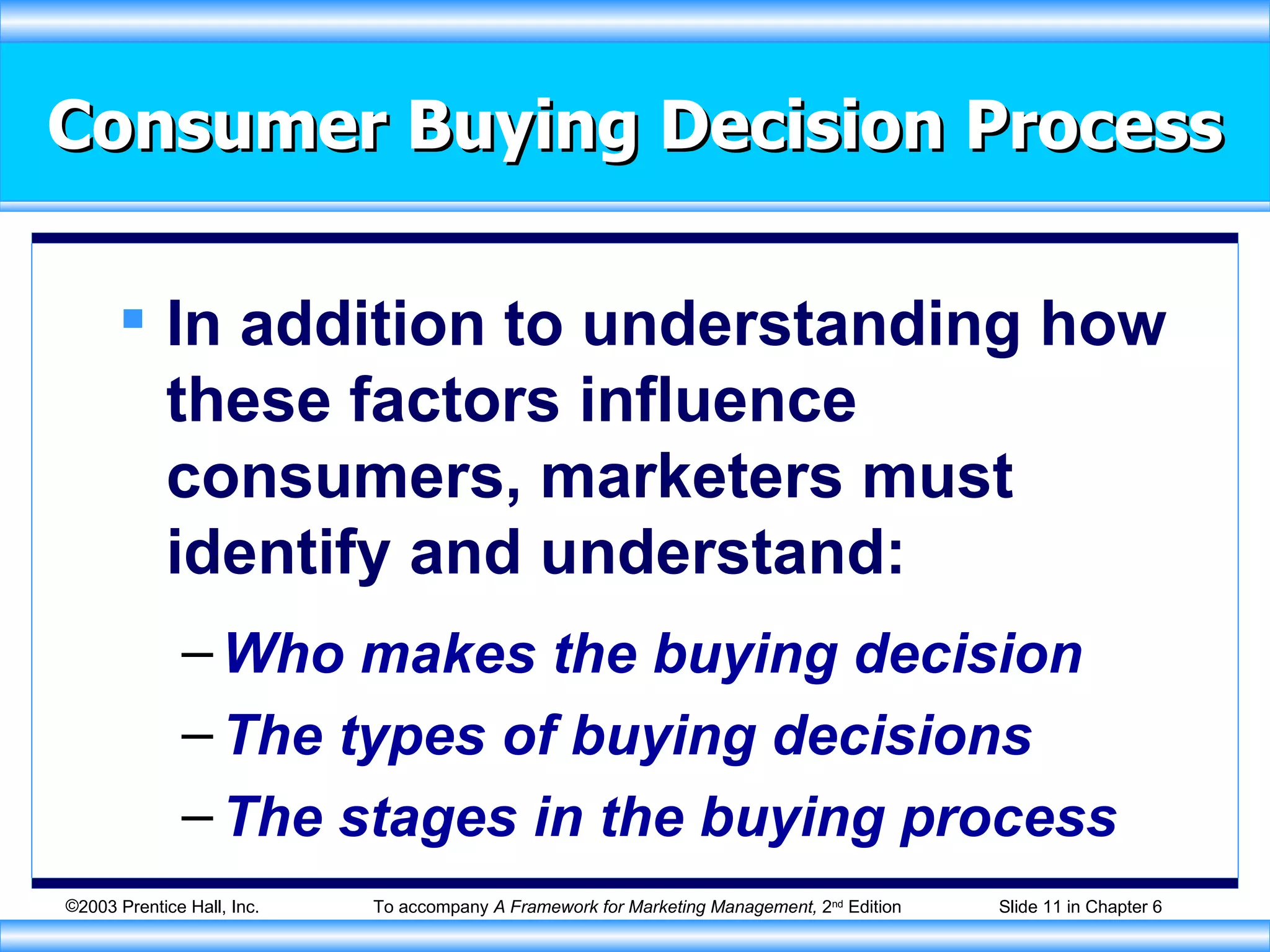
Consumer Buying Decision Process In addition to understanding how these factors influence consumers, marketers must identify and understand: Who makes the buying decision The types of buying decisions The stages in the buying process
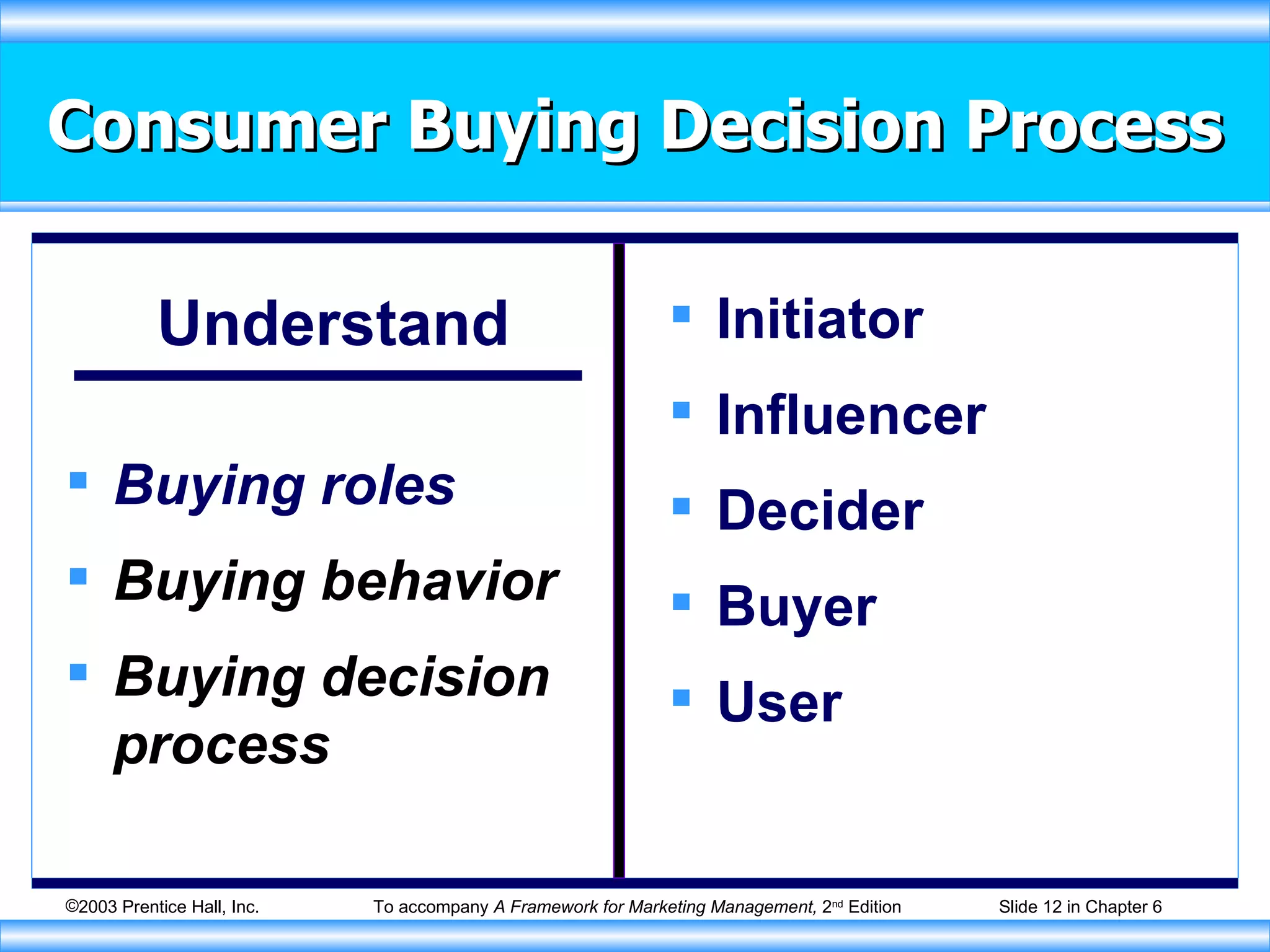
Consumer Buying Decision Process Understand Buying roles Buying behavior Buying decision process Initiator Influencer Decider Buyer User
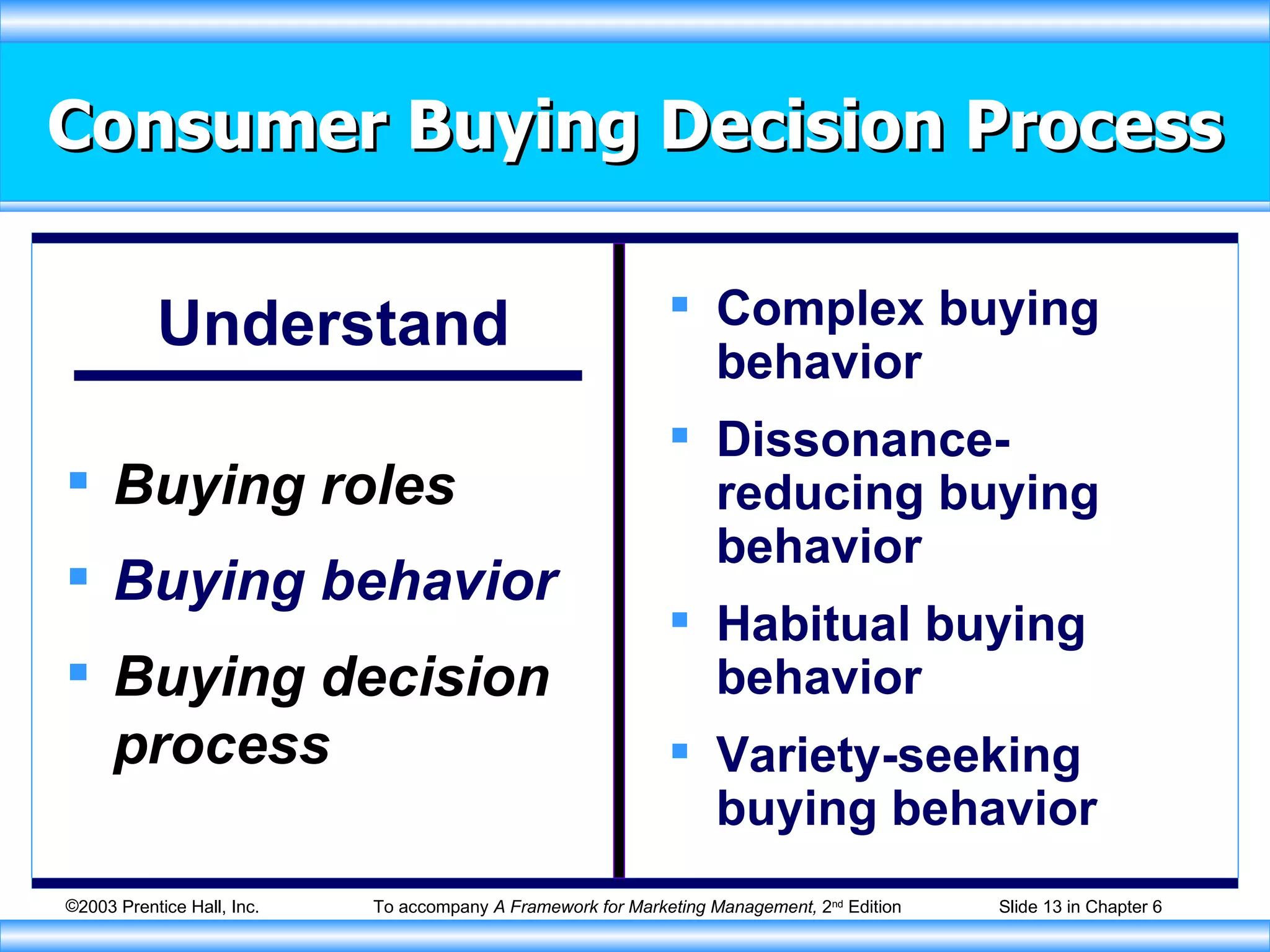
Consumer Buying Decision Process Understand Buying roles Buying behavior Buying decision process Complex buying behavior Dissonance-reducing buying behavior Habitual buying behavior Variety-seeking buying behavior
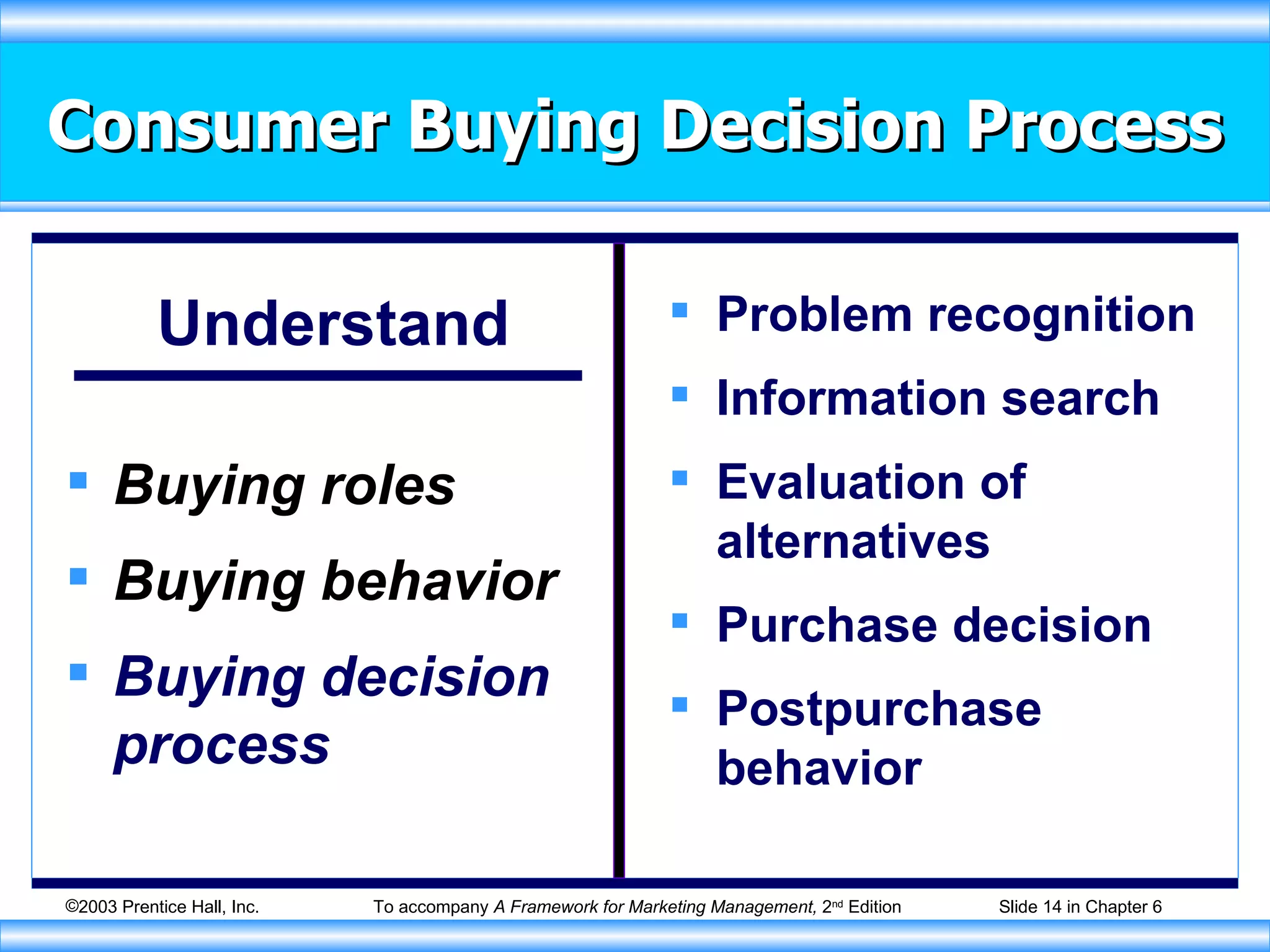
Consumer Buying Decision Process Understand Buying roles Buying behavior Buying decision process Problem recognition Information search Evaluation of alternatives Purchase decision Postpurchase behavior
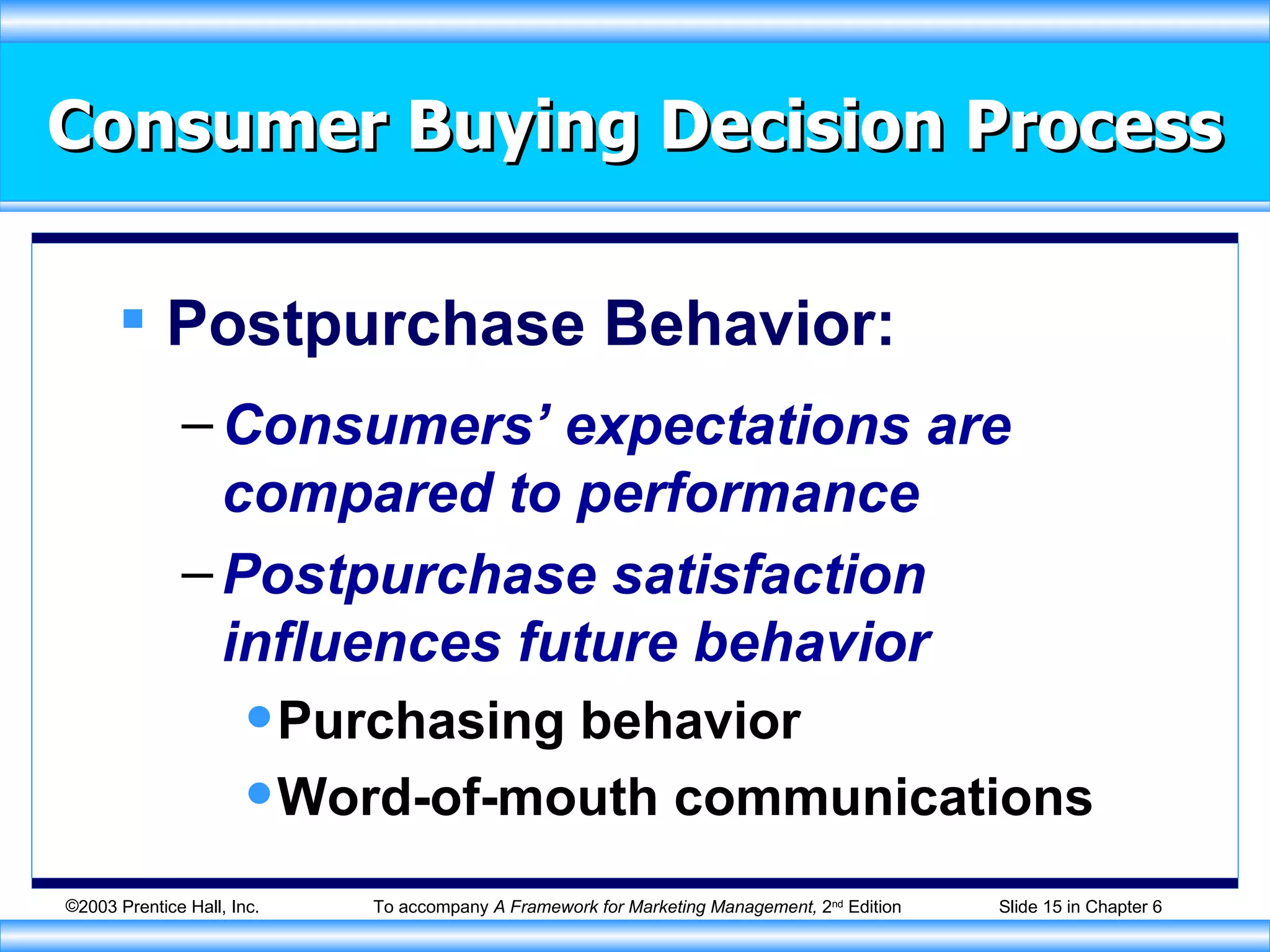
Consumer Buying Decision Process Postpurchase Behavior: Consumers’ expectations are compared to performance Postpurchase satisfaction influences future behavior Purchasing behavior Word-of-mouth communications
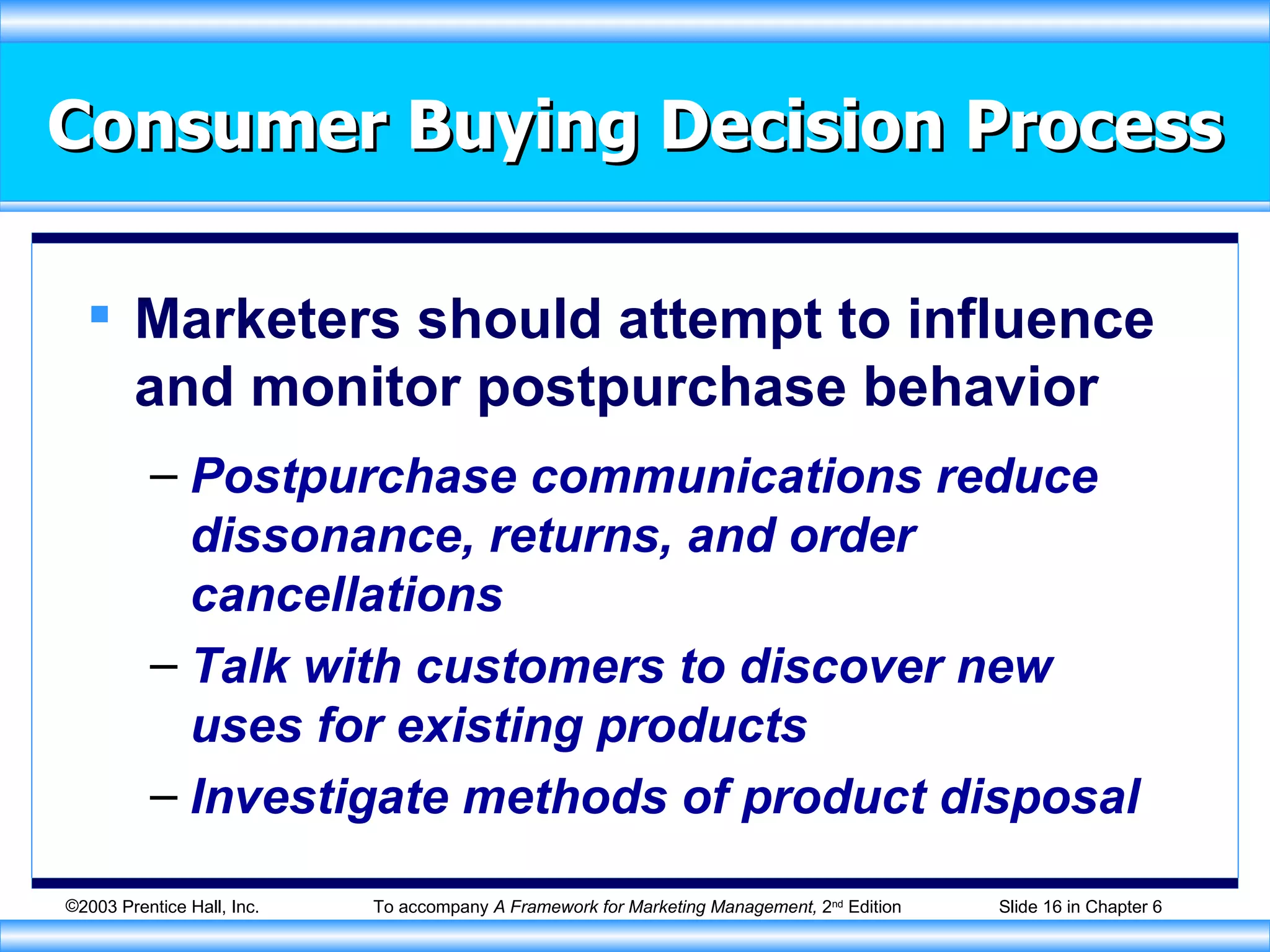
Consumer Buying Decision Process Marketers should attempt to influence and monitor postpurchase behavior Postpurchase communications reduce dissonance, returns, and order cancellations Talk with customers to discover new uses for existing products Investigate methods of product disposal

Kotler06exs Analyzing Consumer Markets And Buyer Behavior

  • 1.
    Chapter 6 AnalyzingConsumer Markets and Buyer Behavior PowerPoint by Karen E. James Louisiana State University - Shreveport
  • 2.
    Objectives Determine howcultural, social, personal, and psychological factors influence consumer buying behavior. Describe how the consumer makes a purchasing decision.
  • 3.
    Consumer Behavior Thefield of Consumer Behavior : “studies how individuals, groups, and organizations select, buy, use, and dispose of goods, services, ideas, or experiences to satisfy their needs and desires.”
  • 4.
    How and WhyConsumers Buy Buying behavior is influenced by: Cultural factors Social factors Personal factors Psychological factors
  • 5.
    How and WhyConsumers Buy Influence Factors Cultural Social Personal Psychological Exert broadest and deepest influence Culture Subculture Social classes
  • 6.
    How and WhyConsumers Buy Upper Uppers Lower Uppers Upper Middles Middle Class Working Class Upper Lowers Major U.S. Social Classes Lower Lowers
  • 7.
    How and WhyConsumers Buy Influence Factors Cultural Social Personal Psychological Reference groups Membership Primary vs. secondary Aspirational vs. dissociative Family Social roles and statuses
  • 8.
    How and WhyConsumers Buy Influence Factors Cultural Social Personal Psychological Age Stage in life cycle Occupation Economic circumstances Lifestyle Personality Self-concept
  • 9.
    How and WhyConsumers Buy Actualizers Fulfilleds Achievers Experiencers Believers Strivers Makers Strugglers VALS 2 classifies U.S. adults into eight psychographic groups
  • 10.
    How and WhyConsumers Buy Influence Factors Cultural Social Personal Psychological Motivation Perception Learning Beliefs Attitudes
  • 11.
    Consumer Buying DecisionProcess In addition to understanding how these factors influence consumers, marketers must identify and understand: Who makes the buying decision The types of buying decisions The stages in the buying process
  • 12.
    Consumer Buying DecisionProcess Understand Buying roles Buying behavior Buying decision process Initiator Influencer Decider Buyer User
  • 13.
    Consumer Buying DecisionProcess Understand Buying roles Buying behavior Buying decision process Complex buying behavior Dissonance-reducing buying behavior Habitual buying behavior Variety-seeking buying behavior
  • 14.
    Consumer Buying DecisionProcess Understand Buying roles Buying behavior Buying decision process Problem recognition Information search Evaluation of alternatives Purchase decision Postpurchase behavior
  • 15.
    Consumer Buying DecisionProcess Postpurchase Behavior: Consumers’ expectations are compared to performance Postpurchase satisfaction influences future behavior Purchasing behavior Word-of-mouth communications
  • 16.
    Consumer Buying DecisionProcess Marketers should attempt to influence and monitor postpurchase behavior Postpurchase communications reduce dissonance, returns, and order cancellations Talk with customers to discover new uses for existing products Investigate methods of product disposal