Consumer Behavior Influences on consumer behavior Psychological Decision making Attitudes and attitude change Sociocultural Reference groups Family decision making Culture and subculture
Consumer Problems and Recognition Consumer problem:   Discrepancy between  ideal  and  actua l state--e.g., consumer : has insufficient hair is hungry has run out of ink in his or her inkjet cartridge Problems can be solved in several ways -- e.g., stress  reduction <-----  vacation, movie, hot bath, medication
CONSUMER DECISIONS: Theory and Reality in Consumer Buying Information Search Problem Recognition Evaluation of Alternatives Purchase Postpurchase Evaluation/ Behaviors Theory Complications
Approaches to Search for Problem Solutions INTERNAL EXTERNAL Memory Thinking Word of mouth, media, store visits, trial CATALOG
Cost vs. Benefits of Search Market Characteristics Product Characteristics Consumer Characteristics Situation Characteristics
Decision Issues Types of decisions Routinized  response (e.g., gas, sodas) Limited  problem solving (e.g., car service, fast food) Extended  problem solving (e.g., new car, computer, medical procedures) Type of evaluation: Compensatory:   Decision based on overall value of alternatives (good attribute can outweigh bad ones) Non-compensatory:   Absolutely must meet at least one important criterion (e.g., car must have automatic transmission)
Variety Seeking and Impulse Buying Variety seeking need varies among consumers by  optimal stimulation level  (OSL) Use innovativeness Impulse purchases Motivation Consequences “ Don’t give me that same old cola, that same old cola-- I want a rock’n’roller!”
Psychological Influences Motivation Personality Perception Attention and competition for attention Selective perception Subliminal influence? Perceived risk Learning Change in behavior May or may not be conscious Values, beliefs, and attitudes Lifestyle—e.g., VALS2
Attitude Change Strategies Change Affect Classical conditioning Attitude toward the ad Mere exposure Change behavior (e.g., sampling) Change Belief Component Change existing beliefs Change importance of attributes Add beliefs Change ideal
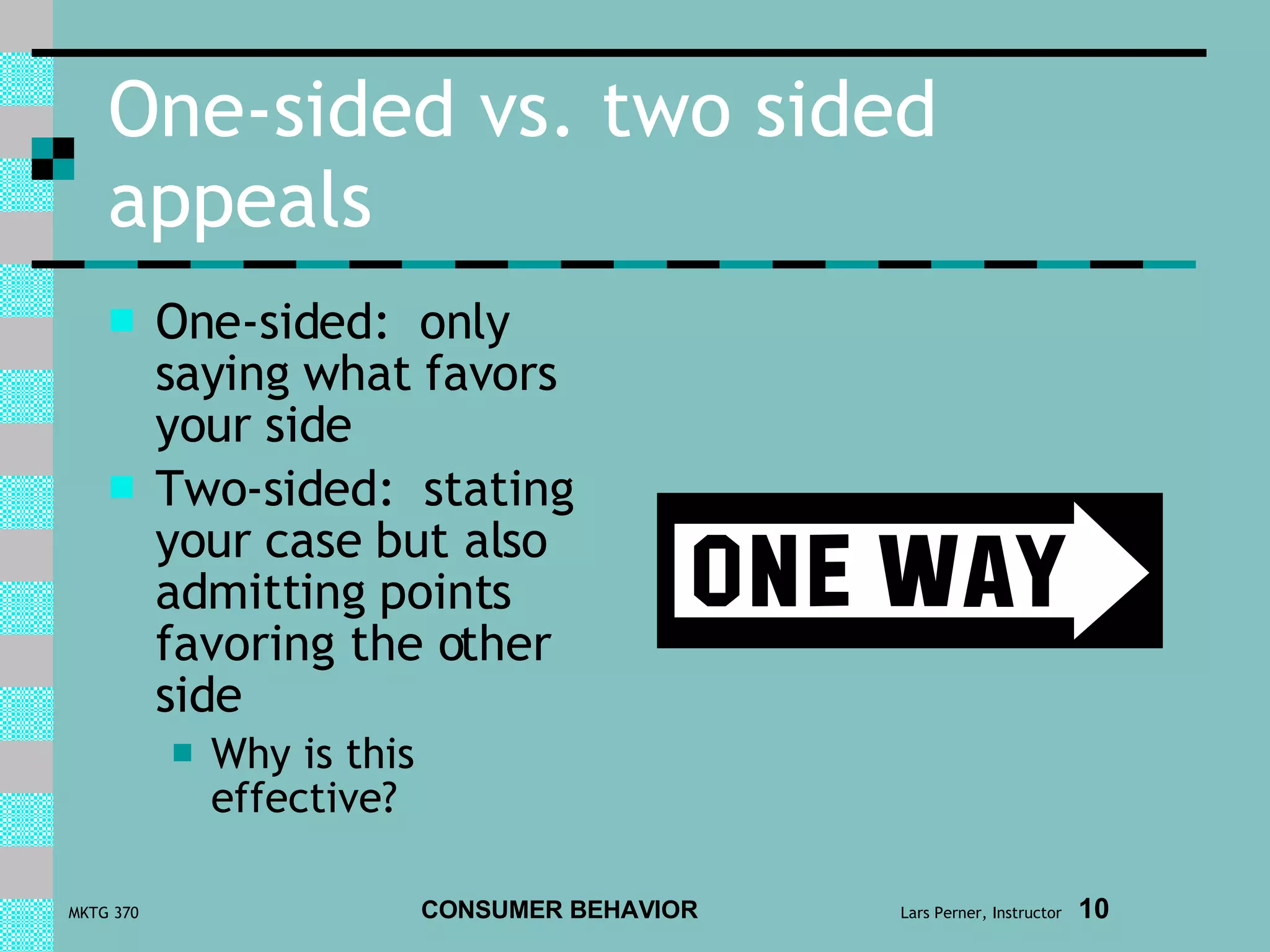
One-sided vs. two sided appeals One-sided:  only saying what favors your side Two-sided:  stating your case but also admitting points favoring the other side Why is this effective?
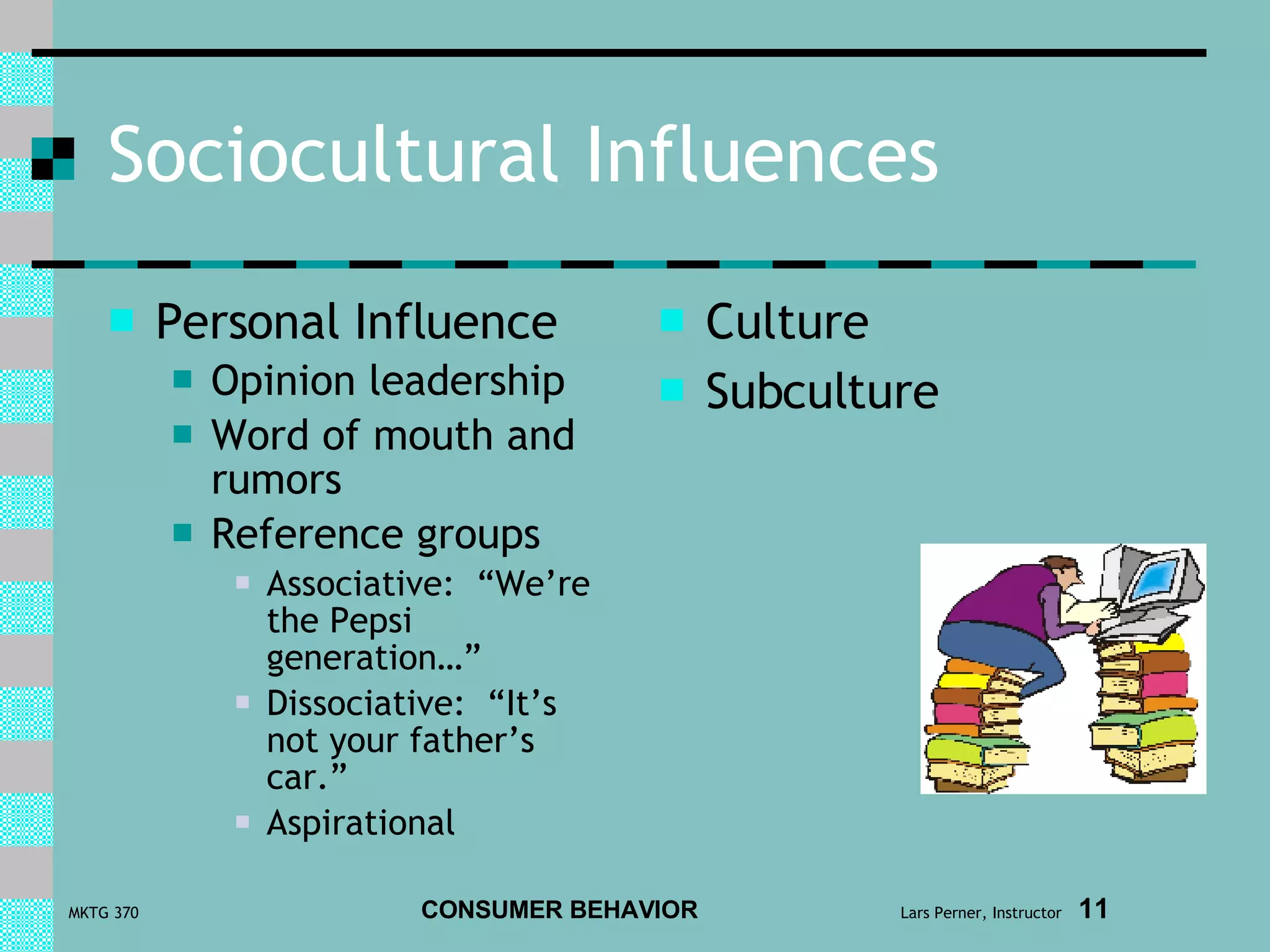
Sociocultural Influences Personal Influence Opinion leadership Word of mouth and rumors Reference groups Associative:  “We’re the Pepsi generation…” Dissociative:  “It’s not your father’s car.” Aspirational Culture Subculture
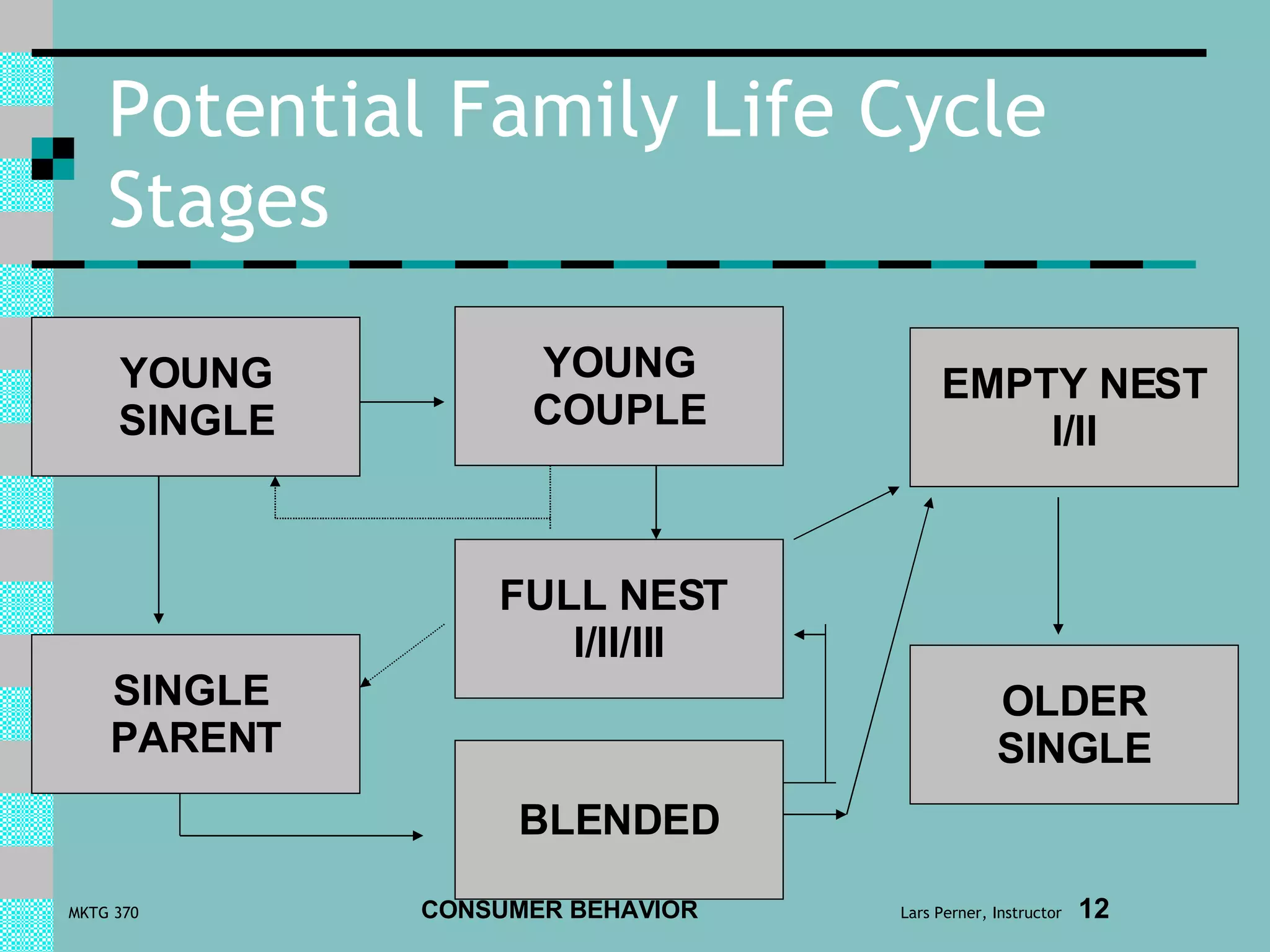
Potential Family Life Cycle Stages YOUNG SINGLE BLENDED SINGLE  PARENT FULL NEST  I/II/III EMPTY NEST I/II OLDER SINGLE YOUNG COUPLE
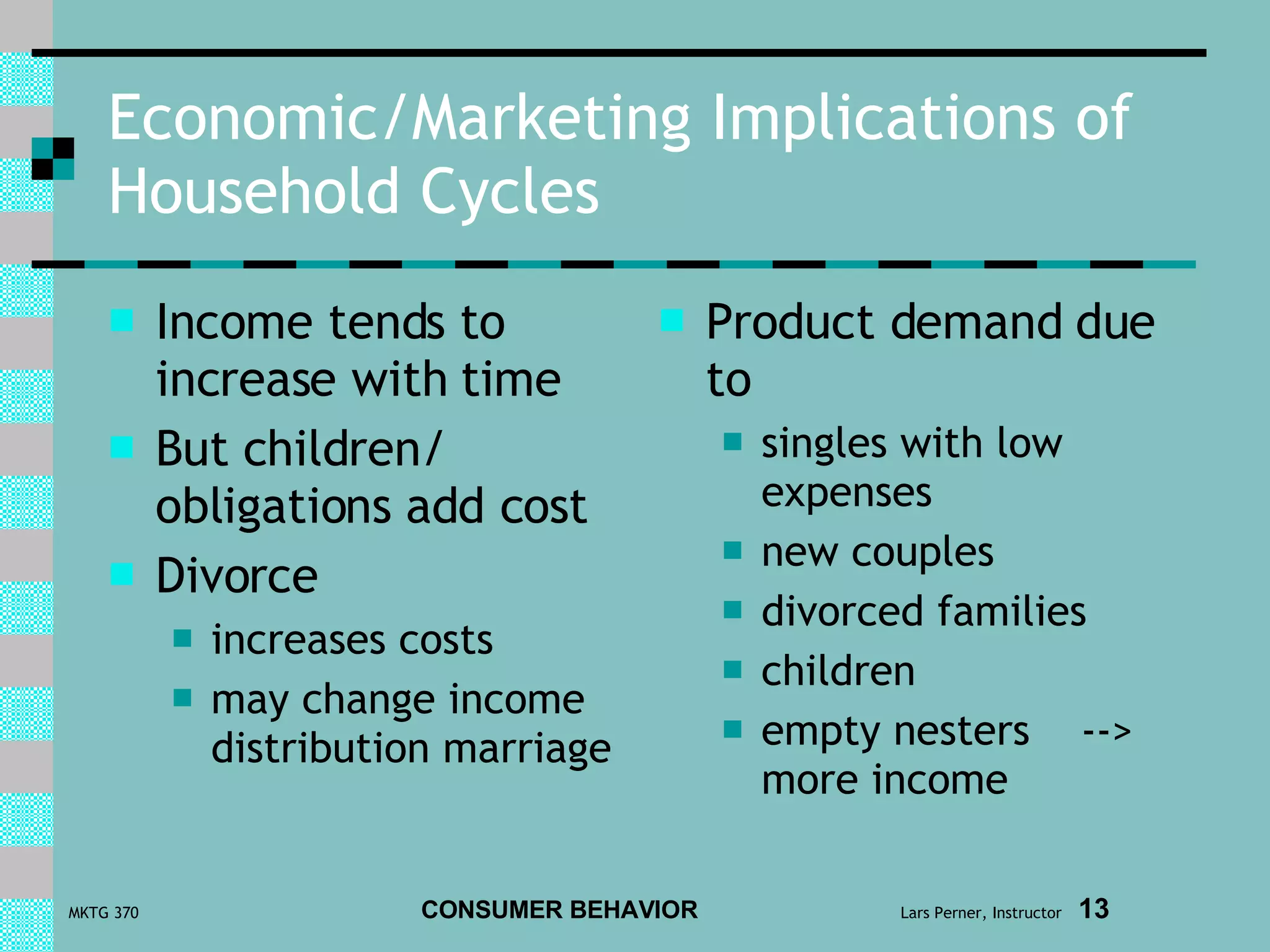
Economic/Marketing Implications of Household Cycles Income tends to increase with time But children/ obligations add cost Divorce increases costs may change income distribution marriage Product demand due to singles with low expenses new couples divorced families children empty nesters  --> more income
Household Decision Making Roles/influence Information gatherers/holders Influencers Decision makers Purchasers Users
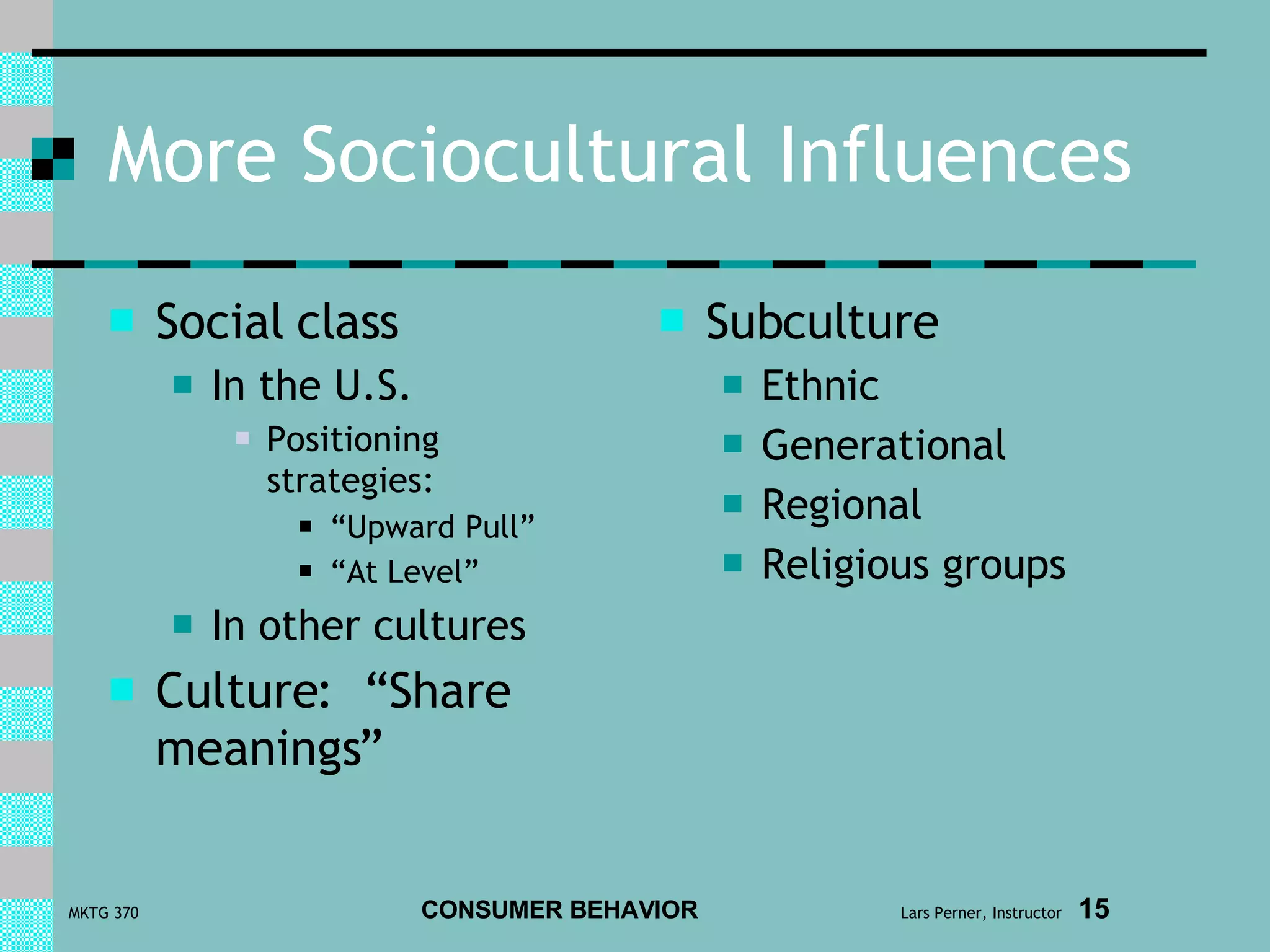
More Sociocultural Influences Social class In the U.S. Positioning strategies: “ Upward Pull” “ At Level” In other cultures Culture:  “Share meanings” Subculture Ethnic  Generational Regional Religious groups
Organizational Buyers Types Industrial Reseller Government and non-profit organizations Characteristics Greater involvement Bureaucracy Long term relationships
The Means-End Chain Large engine Fast acceleration Performance Feeling of power Self-esteem Aim  promotion/ positioning at higher levels of chain ! Attributes Consequences Values

Consumer Behavior

  • 1.
    Consumer Behavior Influenceson consumer behavior Psychological Decision making Attitudes and attitude change Sociocultural Reference groups Family decision making Culture and subculture
  • 2.
    Consumer Problems andRecognition Consumer problem: Discrepancy between ideal and actua l state--e.g., consumer : has insufficient hair is hungry has run out of ink in his or her inkjet cartridge Problems can be solved in several ways -- e.g., stress reduction <----- vacation, movie, hot bath, medication
  • 3.
    CONSUMER DECISIONS: Theoryand Reality in Consumer Buying Information Search Problem Recognition Evaluation of Alternatives Purchase Postpurchase Evaluation/ Behaviors Theory Complications
  • 4.
    Approaches to Searchfor Problem Solutions INTERNAL EXTERNAL Memory Thinking Word of mouth, media, store visits, trial CATALOG
  • 5.
    Cost vs. Benefitsof Search Market Characteristics Product Characteristics Consumer Characteristics Situation Characteristics
  • 6.
    Decision Issues Typesof decisions Routinized response (e.g., gas, sodas) Limited problem solving (e.g., car service, fast food) Extended problem solving (e.g., new car, computer, medical procedures) Type of evaluation: Compensatory: Decision based on overall value of alternatives (good attribute can outweigh bad ones) Non-compensatory: Absolutely must meet at least one important criterion (e.g., car must have automatic transmission)
  • 7.
    Variety Seeking andImpulse Buying Variety seeking need varies among consumers by optimal stimulation level (OSL) Use innovativeness Impulse purchases Motivation Consequences “ Don’t give me that same old cola, that same old cola-- I want a rock’n’roller!”
  • 8.
    Psychological Influences MotivationPersonality Perception Attention and competition for attention Selective perception Subliminal influence? Perceived risk Learning Change in behavior May or may not be conscious Values, beliefs, and attitudes Lifestyle—e.g., VALS2
  • 9.
    Attitude Change StrategiesChange Affect Classical conditioning Attitude toward the ad Mere exposure Change behavior (e.g., sampling) Change Belief Component Change existing beliefs Change importance of attributes Add beliefs Change ideal
  • 10.
    One-sided vs. twosided appeals One-sided: only saying what favors your side Two-sided: stating your case but also admitting points favoring the other side Why is this effective?
  • 11.
    Sociocultural Influences PersonalInfluence Opinion leadership Word of mouth and rumors Reference groups Associative: “We’re the Pepsi generation…” Dissociative: “It’s not your father’s car.” Aspirational Culture Subculture
  • 12.
    Potential Family LifeCycle Stages YOUNG SINGLE BLENDED SINGLE PARENT FULL NEST I/II/III EMPTY NEST I/II OLDER SINGLE YOUNG COUPLE
  • 13.
    Economic/Marketing Implications ofHousehold Cycles Income tends to increase with time But children/ obligations add cost Divorce increases costs may change income distribution marriage Product demand due to singles with low expenses new couples divorced families children empty nesters --> more income
  • 14.
    Household Decision MakingRoles/influence Information gatherers/holders Influencers Decision makers Purchasers Users
  • 15.
    More Sociocultural InfluencesSocial class In the U.S. Positioning strategies: “ Upward Pull” “ At Level” In other cultures Culture: “Share meanings” Subculture Ethnic Generational Regional Religious groups
  • 16.
    Organizational Buyers TypesIndustrial Reseller Government and non-profit organizations Characteristics Greater involvement Bureaucracy Long term relationships
  • 17.
    The Means-End ChainLarge engine Fast acceleration Performance Feeling of power Self-esteem Aim promotion/ positioning at higher levels of chain ! Attributes Consequences Values