Gaurav Bhut
Anuj Kargathra
Dharmesh jithara
Ronak vakariya
 Consumer may be anyone who is
engaged in evaluating, acquiring
and using of services.
Gaurav Bhut 2
 Consumer behaviour can be define as the
process whereby individuals decides whether,
what, when, where, how and from whom to
purchase goods or services.
 Broader View of Consumer behaviour
 It encompasses all of the behaviour that
consumer displays in searching for,
purchasing, using, evaluating and disposing of
product and services.
Gaurav Bhut 3
 To emerge as a winner in highly competitive
environment.
 To implement properly the modern marketing
concept in action.
 To be able to predict consumer response in case
of new services.
 To develop data bank related to consumer
behaviour and make it our completive edge.
Gaurav Bhut 4
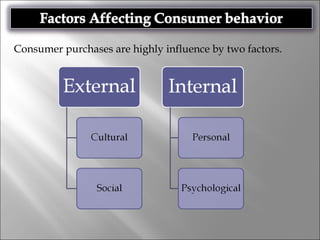
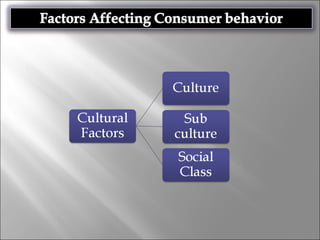
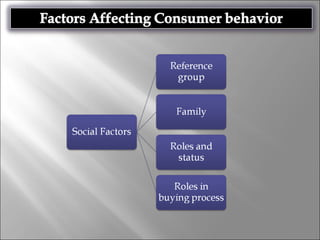
Consumer purchases are highly influence by two factors.
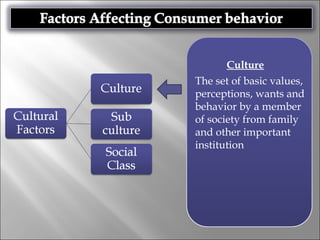
Culture
The set of basic values,
perceptions, wants and
behavior by a member
of society from family
and other important
institution
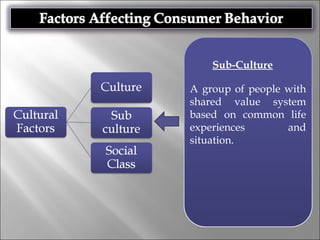
Sub-Culture
A group of people with
shared value system
based on common life
experiences and
situation.
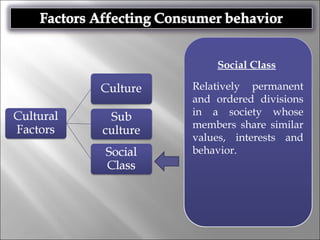
Social Class
Relatively permanent
and ordered divisions
in a society whose
members share similar
values, interests and
behavior.
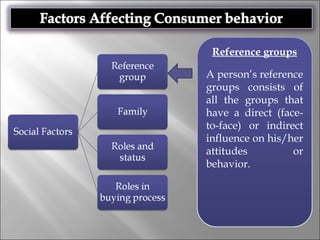
Reference groups
A person’s reference
groups consists of
all the groups that
have a direct (face-
to-face) or indirect
influence on his/her
attitudes or
behavior.
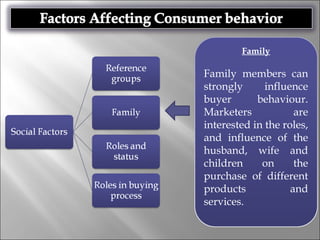
Family
Family members can
strongly influence
buyer behaviour.
Marketers are
interested in the roles,
and influence of the
husband, wife and
children on the
purchase of different
products and
services.
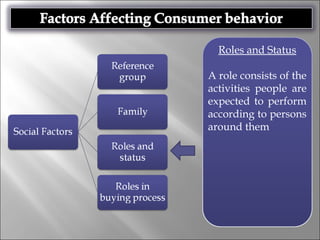
Roles and Status
A role consists of the
activities people are
expected to perform
according to persons
around them
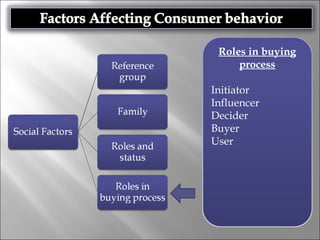
Roles in buying
process
Initiator
Influencer
Decider
Buyer
User
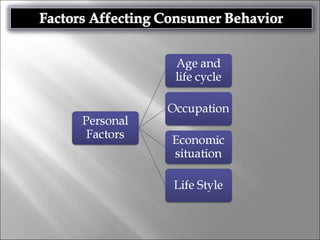
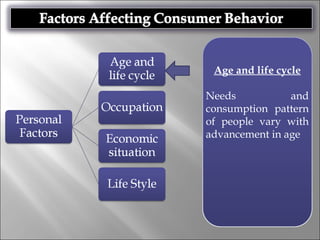
Age and life cycle
Needs and
consumption pattern
of people vary with
advancement in age
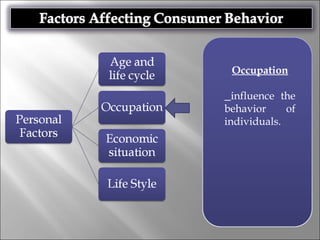
Occupation
influence the
behavior of
individuals.
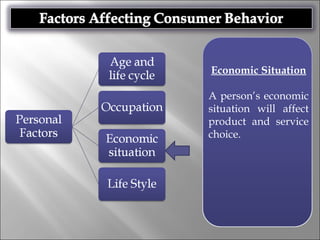
Economic Situation
A person’s economic
situation will affect
product and service
choice.
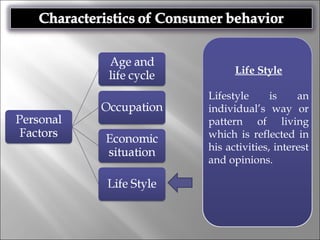
Life Style
Lifestyle is an
individual’s way or
pattern of living
which is reflected in
his activities, interest
and opinions.
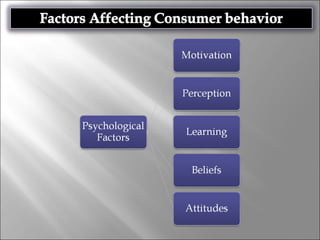
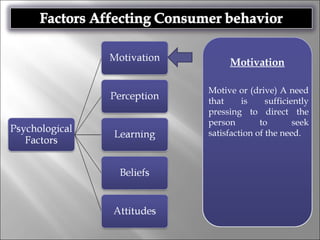
Motivation
Motive or (drive) A need
that is sufficiently
pressing to direct the
person to seek
satisfaction of the need.
Perception
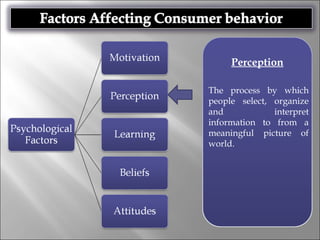
The process by which
people select, organize
and interpret
information to from a
meaningful picture of
world.
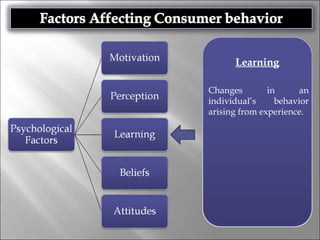
Learning
Changes in an
individual’s behavior
arising from experience.
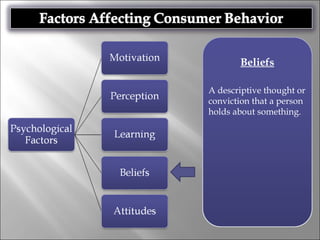
Beliefs
A descriptive thought or
conviction that a person
holds about something.
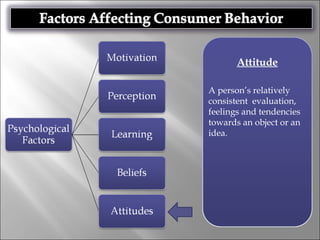
Attitude
A person’s relatively
consistent evaluation,
feelings and tendencies
towards an object or an
idea.
 Consumer seek and rely more on information.
 Consumer engage in greater post-purchase
evolution and information seeking with services
than with goods.
 Consumers engage in more post-purchase
evolution than pre-purchase.
 Consumers perceive greater risks when buying
services then when buying goods.
 The consumers evoked set of alternative is
smaller with services then with goods.
Gaurav Bhut 26
 Let us take service process as the drama ,where
the service personnel are “actors” and
customers are “audience”.
 Service encounters as role performance.
 Expectation of customers, if not fulfilled may
lead to dissatisfaction.
 When the customer is co producer, if not
satisfied with the services may not complain.
-due to attachment of human element.
 Customer compatibly and inability(online
booking).
Gaurav Bhut 27
Gaurav Bhut 28

Consumer behaviour presentation by :- gaurav bhut

  • 1.
  • 2.
     Consumer maybe anyone who is engaged in evaluating, acquiring and using of services. Gaurav Bhut 2
  • 3.
     Consumer behaviourcan be define as the process whereby individuals decides whether, what, when, where, how and from whom to purchase goods or services.  Broader View of Consumer behaviour  It encompasses all of the behaviour that consumer displays in searching for, purchasing, using, evaluating and disposing of product and services. Gaurav Bhut 3
  • 4.
     To emergeas a winner in highly competitive environment.  To implement properly the modern marketing concept in action.  To be able to predict consumer response in case of new services.  To develop data bank related to consumer behaviour and make it our completive edge. Gaurav Bhut 4
  • 5.
    Consumer purchases arehighly influence by two factors.
  • 7.
    Culture The set ofbasic values, perceptions, wants and behavior by a member of society from family and other important institution
  • 8.
    Sub-Culture A group ofpeople with shared value system based on common life experiences and situation.
  • 9.
    Social Class Relatively permanent andordered divisions in a society whose members share similar values, interests and behavior.
  • 11.
    Reference groups A person’sreference groups consists of all the groups that have a direct (face- to-face) or indirect influence on his/her attitudes or behavior.
  • 12.
    Family Family members can stronglyinfluence buyer behaviour. Marketers are interested in the roles, and influence of the husband, wife and children on the purchase of different products and services.
  • 13.
    Roles and Status Arole consists of the activities people are expected to perform according to persons around them
  • 14.
  • 16.
    Age and lifecycle Needs and consumption pattern of people vary with advancement in age
  • 17.
  • 18.
    Economic Situation A person’seconomic situation will affect product and service choice.
  • 19.
    Life Style Lifestyle isan individual’s way or pattern of living which is reflected in his activities, interest and opinions.
  • 21.
    Motivation Motive or (drive)A need that is sufficiently pressing to direct the person to seek satisfaction of the need.
  • 22.
    Perception The process bywhich people select, organize and interpret information to from a meaningful picture of world.
  • 23.
    Learning Changes in an individual’sbehavior arising from experience.
  • 24.
    Beliefs A descriptive thoughtor conviction that a person holds about something.
  • 25.
    Attitude A person’s relatively consistentevaluation, feelings and tendencies towards an object or an idea.
  • 26.
     Consumer seekand rely more on information.  Consumer engage in greater post-purchase evolution and information seeking with services than with goods.  Consumers engage in more post-purchase evolution than pre-purchase.  Consumers perceive greater risks when buying services then when buying goods.  The consumers evoked set of alternative is smaller with services then with goods. Gaurav Bhut 26
  • 27.
     Let ustake service process as the drama ,where the service personnel are “actors” and customers are “audience”.  Service encounters as role performance.  Expectation of customers, if not fulfilled may lead to dissatisfaction.  When the customer is co producer, if not satisfied with the services may not complain. -due to attachment of human element.  Customer compatibly and inability(online booking). Gaurav Bhut 27
  • 28.