Evaluation and
management of
potential renal
transplant recipient
Chaken Maniyan M.D.
Nephrology Fellow, Phramongkutklao Hospital
25.11.2016
Scope
§ General concepts
§ Timing for referral
§ Indication/contraindication
§ Focused medical condition
§ CVD/infection/malignancy
§ Urologic evaluation
§ Pretransplant Nephrectomy
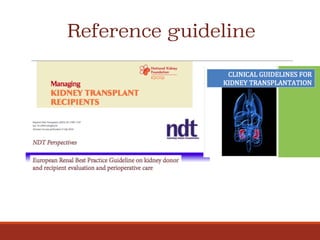
Reference guideline
General considerations
§All patients with ERSD should be considered for
kidney transplantation provided no absolute
contraindications exist (Grade A).
2005 Canadian Society of Transplantation consensus guidelines on eligibility for kidney transplantation
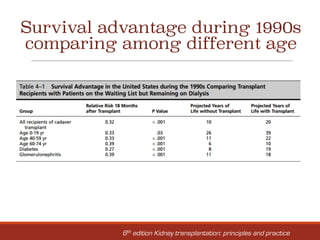
Survival advantage during 1990s
comparing among different age
6th edition Kidney transplantation: principles and practice
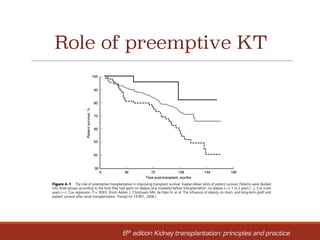
Role of preemptive KT
6th edition Kidney transplantation: principles and practice
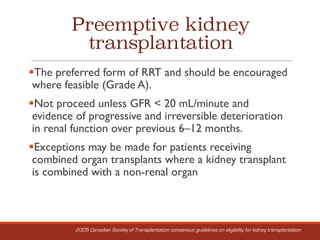
Preemptive kidney
transplantation
§The preferred form of RRT and should be encouraged
where feasible (Grade A).
§Not proceed unless GFR < 20 mL/minute and
evidence of progressive and irreversible deterioration
in renal function over previous 6–12 months.
§Exceptions may be made for patients receiving
combined organ transplants where a kidney transplant
is combined with a non-renal organ
2005 Canadian Society of Transplantation consensus guidelines on eligibility for kidney transplantation
Pre-transplantation
§Patient referral
§Patient assessment
§Pre-Transplant Immunization
§Patient approval
§Patient status while waiting
§Donor Selection (LivingVS Deceased)
§Kidney Organ Offering and Allocation
Canadian Clinical Guidelines for Kidney Transplantation, revised on Jan 29, 2015
Time for referral
§Potential transplant recipients should be referred for
evaluation by a transplant program once renal
replacement therapy is expected to be required within
the next 12 months (Grade C).
§Patients already requiring dialysis support should be
referred for transplant evaluation as soon as their
medical condition stabilizes (Grade C).
2005 Canadian Society of Transplantation consensus guidelines on eligibility for kidney transplantation
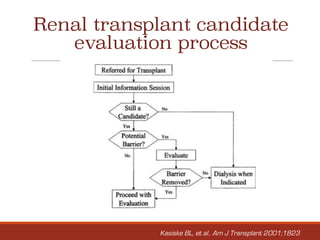
Renal transplant candidate
evaluation process
Kasiske BL, et al.. Am J Transplant 2001;1823
Patient Education and Consent
§ Patient education is core of process
§ Transplant evaluation implies not only the medical
assessment of potential recipient by the transplantation
team but also the assessment by the patients of
transplant option and its relevance to their well-being.
Absolute contraindications
§ Active infections
§ Active malignancy.
§ Active substance abuse
§ Reversible renal failure
§ Uncontrolled psychiatric disease.
§ Documented active and ongoing treatment nonadherence.
§A significantly shortened life expectancy < 1 yr
2005 Canadian Society of Transplantation consensus guidelines on eligibility for kidney transplantation
Age and functional capacity
§Advanced age per se is not a contraindication to
kidney transplantation (Grade B).
§Very young age and small size should not prevent early
referral for transplant evaluation (Grade B).
§Cognitive or neurodevelopmental delay is not an
absolute contraindication to renal transplantation in
children (Grade B).
2005 Canadian Society of Transplantation consensus guidelines on eligibility for kidney transplantation
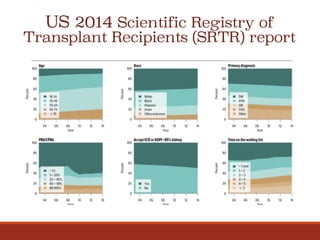
US 2014 Scientific Registry of
Transplant Recipients (SRTR) report
Initial evaluation
§ History and Physical Examination
§ Determine cause of underlying renal disease
§ Estimation of urine output
§ Result of kidney biopsy if available
§ Family history (ADPKD, Alport syndrome)
§ Potentially recurring renal diseases after transplantation
§ Symptoms of cardiac disease
§ Risk factors for CAD (DM , smoking, DLP, dyslipidemia, premature
death in family)
§ History of claudication
§ Hx possible exposure to tuberculosis and other infection, previous
treatment
Initial evaluation
§Evidence of CHF, carotid artery disease, and PVD
§Presence of femoral bruits and poor peripheral pulses (may further pelvic
vasculature with either a Doppler US or MRA )
Initial screening studies
§ ABO group, CBC, BUN, Cr, electrolytes, calcium, phosphorous, albumin, LFTs
prothrombin time, partial thromboplastin time, iPTH, and HbA1c (for diabetic
patients).
§ Pregnancy test for fertile women.
§ Serology for varicella, measles, mumps, and rubella viruses. If a potential
recipient is found to be nonimmune to these common childhood diseases
(vaccinated prior to KT)
§ Serologic testing for HIV, hepatitis B virus (HBsAg, HBsAb, HBcAb) and HCV
§ Human leukocyte antigen (HLA) typing , panel reactive antibody (PRA)
§ Urinalysis and urine culture
§ Drug screen.
Initial screening studies —
§CXR to exclude tuberculosis/effusion/mass
§ECG
§All men : testicular examination.
§Male >50 years à PSA and DRE (Ealier if strong family history)
§Breast examination and Papanicolaou smear.
§Women > 40 years: mammogram
§Mammography; the age for mammography should be lowered to 35 years if
there is a history of breast cancer in the premenopausal years in a first-degree
relative.
§ All patients >50 years: screening colonoscopy
§ Patients who have Hx of Barrett’s esophagus should have EGD
§ Abdominal and pelvic ultrasounds
Systemic conditions
§Severe hyperparathyroidism : parathyroidectomy prior to transplantation
§Primary oxalosis should be evaluated for combined kidney-liver transplantation.
§Systemic amyloidosis, esp cardiac involvement, may not be candidates for renal
transplant due to high mortality
§anti-GBM disease should be considered for KT if circulating anti-GBM antibody
is undetectable and they have quiescent disease (off cytotoxic agents) for at
least 6 months post-treatment
§SLE should be considered for renal transplantation if they have clinically
quiescent disease for at least 6 months off cytotoxic agents
§Renal transplant candidates with vasculitis (Wegener’s granulomatosis,
microscopic polyangiitis, pauci-immune necrotizing glomerulonephritis, Henoch-
Schonlein purpura) should be considered for renal transplantation if they have
quiescent disease for at least 12 months off cytotoxic agents
2005 Canadian Society of Transplantation consensus guidelines on eligibility for kidney transplantation
Specific conditions
§ Cardiovascular disease (CAD, heart failure)
§ Infection
§ Gastrointestinal disease
§ Cerebrovascular disease
§ Peripheral vascular disease
§ Pulmonary disease
§ Malignancy
§ Patients with a history of cancer
§ Abnormal lower urinary tract
§ Hematologic disorders
§ Obesity
§ Psychosocial issues
§ Frailty
Cardiovascular disease
§ Leading cause of death after KT
§ Major cause of morbidity and mortality in patients on
waiting list
Kasiske BL,	Maclean	JR,	Snyder	J.	J	Am	Soc Nephrol 2006;	17:900.
CVD Relative contraindications to KT:
§ Progressive symptoms of angina or severe CAD that
not amenable to angioplasty or bypass surgery
§ History of MI within 3-6 months
§ Severe ischemic cardiomyopathy (LVEF <30%)
Kasiske BL,	Malik	MA,	Herzog	CA.	Risk-stratified	screening	for	ischemic	heart	disease	in	kidney	transplant	candidates.	
Transplantation	2015;	80:815.
Cardiac evaluation
§ALL patients with
§Angina or
§Reduced LVEF or
§T1DM with DN as a cause of ESRD or
§Positive noninvasive stress test
§Refer for cardiology evaluation and angiography
K/DOQI Workgroup. K/DOQI clinical practice guidelines for CVD in dialysis pts. Am J Kidney Dis 2005; 45:S1.
Cardiac evaluation
§In patients without previous criteria with
§ Age >60 years
§ Diabetes mellitus
§ Hypertension
§ Dyslipidemia
§ Peripheral vascular disease
§ Previous history of CHD (such as myocardial infarction)
§ Left ventricular hypertrophy
§ Family history of heart disease
§ Dialysis vintage greater than one year
§ Prolonged duration of CKD
§ History of smoking
§ History of radiation therapy (either whole body or chest irradiation)
K/DOQI Workgroup. K/DOQI clinical practice guidelines for CVD in dialysis pts. Am J Kidney Dis 2005; 45:S1.
NEED 3 criteria
Cardiac evaluation
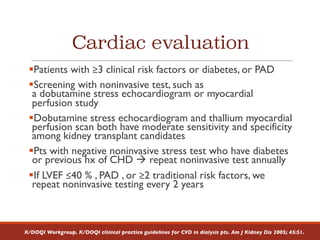
§Patients with ≥3 clinical risk factors or diabetes, or PAD
§Screening with noninvasive test, such as
a dobutamine stress echocardiogram or myocardial
perfusion study
§Dobutamine stress echocardiogram and thallium myocardial
perfusion scan both have moderate sensitivity and specificity
among kidney transplant candidates
§Pts with negative noninvasive stress test who have diabetes
or previous hx of CHD à repeat noninvasive test annually
§If LVEF ≤40 % , PAD , or ≥2 traditional risk factors, we
repeat noninvasive testing every 2 years
K/DOQI Workgroup. K/DOQI clinical practice guidelines for CVD in dialysis pts. Am J Kidney Dis 2005; 45:S1.
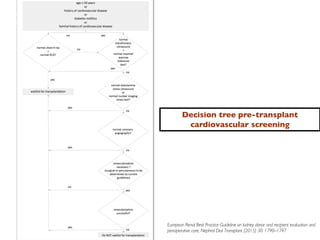
Decision tree pre-transplant
cardiovascular screening
European Renal Best Practice Guideline on kidney donor and recipient evaluation and
perioperative care, Nephrol Dial Transplant (2015) 30: 1790–1797
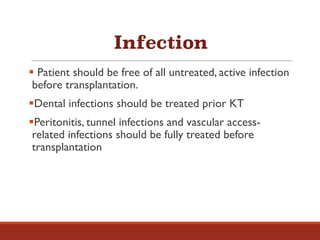
Infection
§ Patient should be free of all untreated, active infection
before transplantation.
§Dental infections should be treated prior KT
§Peritonitis, tunnel infections and vascular access-
related infections should be fully treated before
transplantation
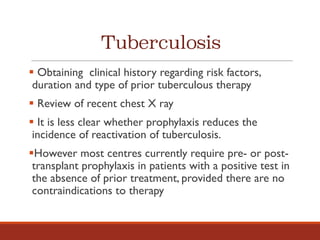
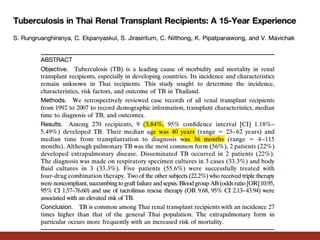
Tuberculosis
§ Obtaining clinical history regarding risk factors,
duration and type of prior tuberculous therapy
§ Review of recent chest X ray
§ It is less clear whether prophylaxis reduces the
incidence of reactivation of tuberculosis.
§However most centres currently require pre- or post-
transplant prophylaxis in patients with a positive test in
the absence of prior treatment, provided there are no
contraindications to therapy
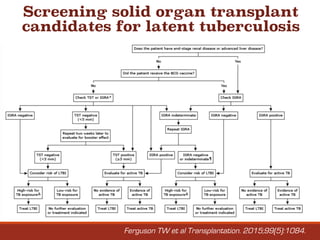
Screening solid organ transplant
candidates for latent tuberculosis
Ferguson TW et al Transplantation. 2015;99(5):1084.
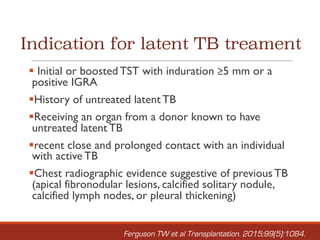
Indication for latent TB treament
§ Initial or boosted TST with induration ≥5 mm or a
positive IGRA
§History of untreated latent TB
§Receiving an organ from a donor known to have
untreated latent TB
§recent close and prolonged contact with an individual
with active TB
§Chest radiographic evidence suggestive of previous TB
(apical fibronodular lesions, calcified solitary nodule,
calcified lymph nodes, or pleural thickening)
Ferguson TW et al Transplantation. 2015;99(5):1084.
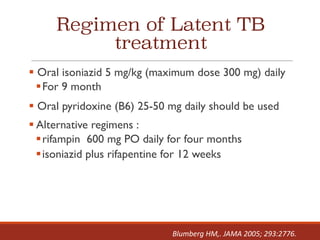
Regimen of Latent TB
treatment
§ Oral isoniazid 5 mg/kg (maximum dose 300 mg) daily
§For 9 month
§ Oral pyridoxine (B6) 25-50 mg daily should be used
§ Alternative regimens :
§rifampin 600 mg PO daily for four months
§isoniazid plus rifapentine for 12 weeks
Blumberg	HM,.	JAMA	2005;	293:2776.
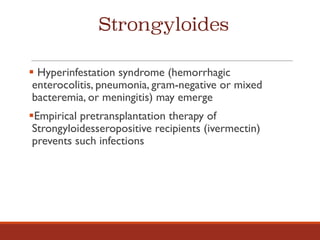
Strongyloides
§ Hyperinfestation syndrome (hemorrhagic
enterocolitis, pneumonia, gram-negative or mixed
bacteremia, or meningitis) may emerge
§Empirical pretransplantation therapy of
Strongyloidesseropositive recipients (ivermectin)
prevents such infections
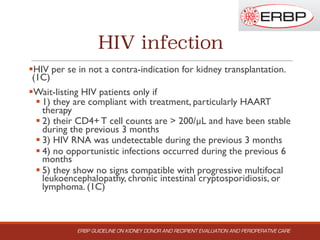
HIV infection
§HIV per se in not a contra-indication for kidney transplantation.
(1C)
§Wait-listing HIV patients only if
§ 1) they are compliant with treatment, particularly HAART
therapy
§ 2) their CD4+ T cell counts are > 200/µL and have been stable
during the previous 3 months
§ 3) HIV RNA was undetectable during the previous 3 months
§ 4) no opportunistic infections occurred during the previous 6
months
§ 5) they show no signs compatible with progressive multifocal
leukoencephalopathy, chronic intestinal cryptosporidiosis, or
lymphoma. (1C)
ERBP GUIDELINE ON KIDNEY DONOR AND RECIPIENT EVALUATION AND PERIOPERATIVE CARE
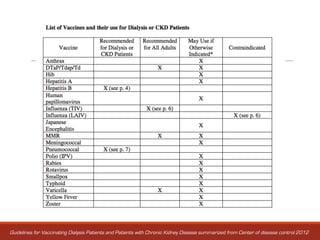
Immunization
Guidelines for Vaccinating Dialysis Patients and Patients with Chronic Kidney Disease summarized from Center of disease control 2012
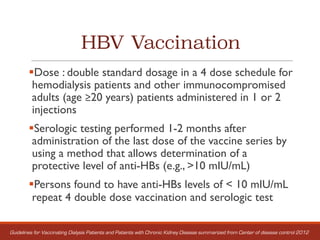
HBV Vaccination
§Dose : double standard dosage in a 4 dose schedule for
hemodialysis patients and other immunocompromised
adults (age ≥20 years) patients administered in 1 or 2
injections
§Serologic testing performed 1-2 months after
administration of the last dose of the vaccine series by
using a method that allows determination of a
protective level of anti-HBs (e.g., >10 mIU/mL)
§Persons found to have anti-HBs levels of < 10 mIU/mL
repeat 4 double dose vaccination and serologic test
Guidelines for Vaccinating Dialysis Patients and Patients with Chronic Kidney Disease summarized from Center of disease control 2012
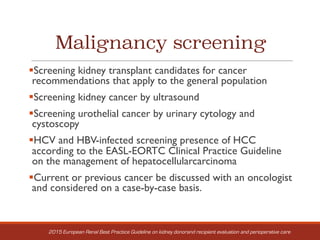
Malignancy
Malignancy screening
§Screening kidney transplant candidates for cancer
recommendations that apply to the general population
§Screening kidney cancer by ultrasound
§Screening urothelial cancer by urinary cytology and
cystoscopy
§HCV and HBV-infected screening presence of HCC
according to the EASL-EORTC Clinical Practice Guideline
on the management of hepatocellularcarcinoma
§Current or previous cancer be discussed with an oncologist
and considered on a case-by-case basis.
2015 European Renal Best Practice Guideline on kidney donorand recipient evaluation and perioperative care
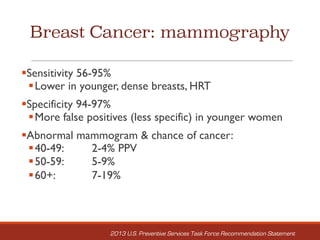
Breast Cancer: mammography
§Sensitivity 56-95%
§Lower in younger, dense breasts, HRT
§Specificity 94-97%
§More false positives (less specific) in younger women
§Abnormal mammogram & chance of cancer:
§40-49: 2-4% PPV
§50-59: 5-9%
§60+: 7-19%
2013 U.S. Preventive Services Task Force Recommendation Statement
Breast Cancer
§The USPSTF recommends screening mammography, with or
without clinical breast examination (CBE), every 1-2 years for
women aged 40 and older.
B recommendation
2013 U.S. Preventive Services Task Force Recommendation Statement
Cervical Cancer
§The USPSTF strongly recommends screening for cervical
cancer in women who have been sexually active and have a
cervix.
A recommendation
2013 U.S. Preventive Services Task Force Recommendation Statement
Cervical Cancer
§The USPSTF recommends against routinely screening women
older than age 65 for cervical cancer if they have had adequate
recent screening with normal Pap smears and are not
otherwise at high risk for cervical cancer .
D recommendation
2013 U.S. Preventive Services Task Force Recommendation Statement
Colorectal Cancer - DRE
§Little evidence
§Sensitivity much less than multiple test cards
§False negatives – no stool in vault
§False positives – rectal trauma
§Therefore, not recommended as a tool for colorectal cancer
screening
2012 U.S. Preventive Services Task Force Recommendation Statement
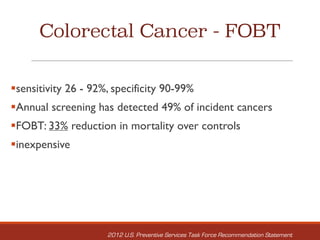
Colorectal Cancer - FOBT
§sensitivity 26 - 92%, specificity 90-99%
§Annual screening has detected 49% of incident cancers
§FOBT: 33% reduction in mortality over controls
§inexpensive
2012 U.S. Preventive Services Task Force Recommendation Statement
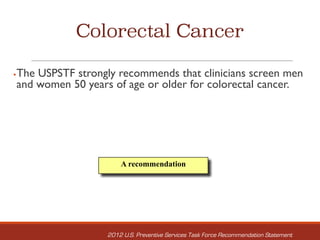
Colorectal Cancer
§The USPSTF strongly recommends that clinicians screen men
and women 50 years of age or older for colorectal cancer.
A recommendation
2012 U.S. Preventive Services Task Force Recommendation Statement
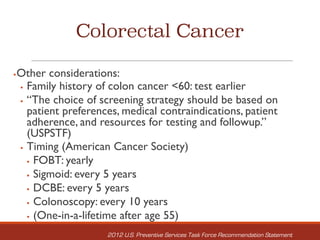
Colorectal Cancer
§Other considerations:
§ Family history of colon cancer <60: test earlier
§ “The choice of screening strategy should be based on
patient preferences, medical contraindications, patient
adherence, and resources for testing and followup.”
(USPSTF)
§ Timing (American Cancer Society)
§ FOBT: yearly
§ Sigmoid: every 5 years
§ DCBE: every 5 years
§ Colonoscopy: every 10 years
§ (One-in-a-lifetime after age 55)
2012 U.S. Preventive Services Task Force Recommendation Statement
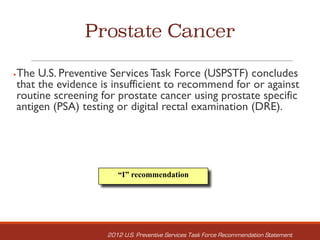
Prostate Cancer
§The U.S. Preventive Services Task Force (USPSTF) concludes
that the evidence is insufficient to recommend for or against
routine screening for prostate cancer using prostate specific
antigen (PSA) testing or digital rectal examination (DRE).
“I” recommendation
2012 U.S. Preventive Services Task Force Recommendation Statement
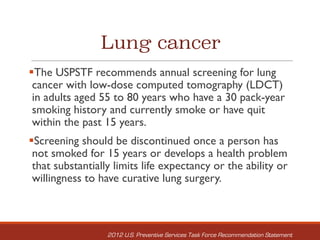
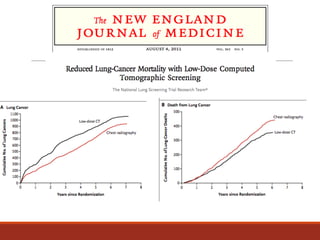
Lung cancer
§The USPSTF recommends annual screening for lung
cancer with low-dose computed tomography (LDCT)
in adults aged 55 to 80 years who have a 30 pack-year
smoking history and currently smoke or have quit
within the past 15 years.
§Screening should be discontinued once a person has
not smoked for 15 years or develops a health problem
that substantially limits life expectancy or the ability or
willingness to have curative lung surgery.
2012 U.S. Preventive Services Task Force Recommendation Statement
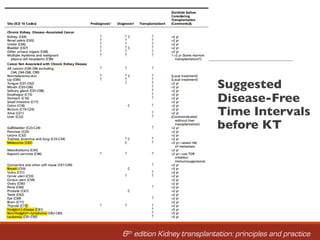
Suggested
Disease-Free
Time Intervals
before KT
6th edition Kidney transplantation: principles and practice
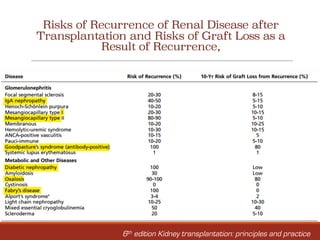
Recurrent renal disease
Risks of Recurrence of Renal Disease after
Transplantation and Risks of Graft Loss as a
Result of Recurrence,
6th edition Kidney transplantation: principles and practice
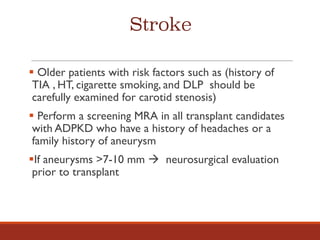
Stroke
§ Older patients with risk factors such as (history of
TIA , HT, cigarette smoking, and DLP should be
carefully examined for carotid stenosis)
§ Perform a screening MRA in all transplant candidates
with ADPKD who have a history of headaches or a
family history of aneurysm
§If aneurysms >7-10 mm à neurosurgical evaluation
prior to transplant
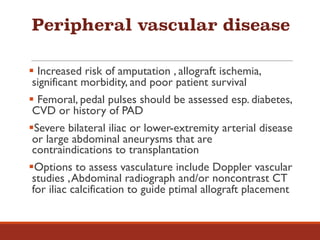
Peripheral vascular disease
§ Increased risk of amputation , allograft ischemia,
significant morbidity, and poor patient survival
§ Femoral, pedal pulses should be assessed esp. diabetes,
CVD or history of PAD
§Severe bilateral iliac or lower-extremity arterial disease
or large abdominal aneurysms that are
contraindications to transplantation
§Options to assess vasculature include Doppler vascular
studies ,Abdominal radiograph and/or noncontrast CT
for iliac calcification to guide ptimal allograft placement
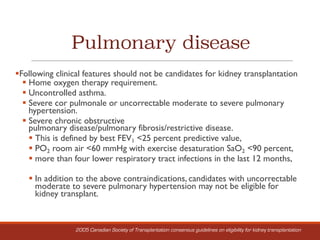
Pulmonary disease
§Following clinical features should not be candidates for kidney transplantation
§ Home oxygen therapy requirement.
§ Uncontrolled asthma.
§ Severe cor pulmonale or uncorrectable moderate to severe pulmonary
hypertension.
§ Severe chronic obstructive
pulmonary disease/pulmonary fibrosis/restrictive disease.
§ This is defined by best FEV1 <25 percent predictive value,
§ PO2 room air <60 mmHg with exercise desaturation SaO2 <90 percent,
§ more than four lower respiratory tract infections in the last 12 months,
§ In addition to the above contraindications, candidates with uncorrectable
moderate to severe pulmonary hypertension may not be eligible for
kidney transplant.
2005 Canadian Society of Transplantation consensus guidelines on eligibility for kidney transplantation
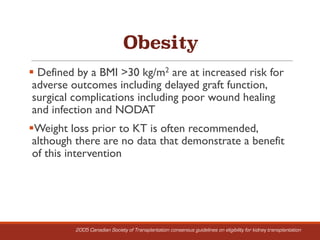
Obesity
§ Defined by a BMI >30 kg/m2 are at increased risk for
adverse outcomes including delayed graft function,
surgical complications including poor wound healing
and infection and NODAT
§Weight loss prior to KT is often recommended,
although there are no data that demonstrate a benefit
of this intervention
2005 Canadian Society of Transplantation consensus guidelines on eligibility for kidney transplantation
Urologic evaluation
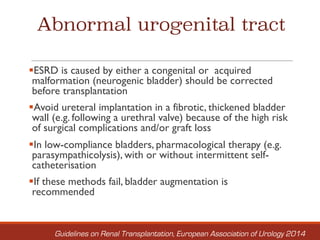
Abnormal urogenital tract
§ESRD is caused by either a congenital or acquired
malformation (neurogenic bladder) should be corrected
before transplantation
§Avoid ureteral implantation in a fibrotic, thickened bladder
wall (e.g. following a urethral valve) because of the high risk
of surgical complications and/or graft loss
§In low-compliance bladders, pharmacological therapy (e.g.
parasympathicolysis), with or without intermittent self-
catheterisation
§If these methods fail, bladder augmentation is
recommended
Guidelines on Renal Transplantation, European Association of Urology 2014
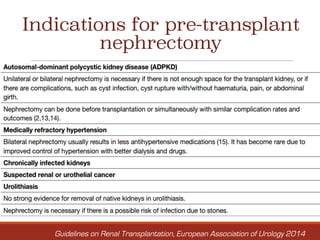
Indications for pre-transplant
nephrectomy
Guidelines on Renal Transplantation, European Association of Urology 2014
Thank you for your attention

Kidney transplantation candidate evaluation 2016 chaken maniyan

  • 1.
    Evaluation and management of potentialrenal transplant recipient Chaken Maniyan M.D. Nephrology Fellow, Phramongkutklao Hospital 25.11.2016
  • 2.
    Scope § General concepts §Timing for referral § Indication/contraindication § Focused medical condition § CVD/infection/malignancy § Urologic evaluation § Pretransplant Nephrectomy
  • 3.
  • 4.
    General considerations §All patientswith ERSD should be considered for kidney transplantation provided no absolute contraindications exist (Grade A). 2005 Canadian Society of Transplantation consensus guidelines on eligibility for kidney transplantation
  • 5.
    Survival advantage during1990s comparing among different age 6th edition Kidney transplantation: principles and practice
  • 6.
    Role of preemptiveKT 6th edition Kidney transplantation: principles and practice
  • 7.
    Preemptive kidney transplantation §The preferredform of RRT and should be encouraged where feasible (Grade A). §Not proceed unless GFR < 20 mL/minute and evidence of progressive and irreversible deterioration in renal function over previous 6–12 months. §Exceptions may be made for patients receiving combined organ transplants where a kidney transplant is combined with a non-renal organ 2005 Canadian Society of Transplantation consensus guidelines on eligibility for kidney transplantation
  • 8.
    Pre-transplantation §Patient referral §Patient assessment §Pre-TransplantImmunization §Patient approval §Patient status while waiting §Donor Selection (LivingVS Deceased) §Kidney Organ Offering and Allocation Canadian Clinical Guidelines for Kidney Transplantation, revised on Jan 29, 2015
  • 9.
    Time for referral §Potentialtransplant recipients should be referred for evaluation by a transplant program once renal replacement therapy is expected to be required within the next 12 months (Grade C). §Patients already requiring dialysis support should be referred for transplant evaluation as soon as their medical condition stabilizes (Grade C). 2005 Canadian Society of Transplantation consensus guidelines on eligibility for kidney transplantation
  • 10.
    Renal transplant candidate evaluationprocess Kasiske BL, et al.. Am J Transplant 2001;1823
  • 11.
    Patient Education andConsent § Patient education is core of process § Transplant evaluation implies not only the medical assessment of potential recipient by the transplantation team but also the assessment by the patients of transplant option and its relevance to their well-being.
  • 12.
    Absolute contraindications § Activeinfections § Active malignancy. § Active substance abuse § Reversible renal failure § Uncontrolled psychiatric disease. § Documented active and ongoing treatment nonadherence. §A significantly shortened life expectancy < 1 yr 2005 Canadian Society of Transplantation consensus guidelines on eligibility for kidney transplantation
  • 13.
    Age and functionalcapacity §Advanced age per se is not a contraindication to kidney transplantation (Grade B). §Very young age and small size should not prevent early referral for transplant evaluation (Grade B). §Cognitive or neurodevelopmental delay is not an absolute contraindication to renal transplantation in children (Grade B). 2005 Canadian Society of Transplantation consensus guidelines on eligibility for kidney transplantation
  • 14.
    US 2014 ScientificRegistry of Transplant Recipients (SRTR) report
  • 15.
    Initial evaluation § Historyand Physical Examination § Determine cause of underlying renal disease § Estimation of urine output § Result of kidney biopsy if available § Family history (ADPKD, Alport syndrome) § Potentially recurring renal diseases after transplantation § Symptoms of cardiac disease § Risk factors for CAD (DM , smoking, DLP, dyslipidemia, premature death in family) § History of claudication § Hx possible exposure to tuberculosis and other infection, previous treatment
  • 16.
    Initial evaluation §Evidence ofCHF, carotid artery disease, and PVD §Presence of femoral bruits and poor peripheral pulses (may further pelvic vasculature with either a Doppler US or MRA )
  • 17.
    Initial screening studies §ABO group, CBC, BUN, Cr, electrolytes, calcium, phosphorous, albumin, LFTs prothrombin time, partial thromboplastin time, iPTH, and HbA1c (for diabetic patients). § Pregnancy test for fertile women. § Serology for varicella, measles, mumps, and rubella viruses. If a potential recipient is found to be nonimmune to these common childhood diseases (vaccinated prior to KT) § Serologic testing for HIV, hepatitis B virus (HBsAg, HBsAb, HBcAb) and HCV § Human leukocyte antigen (HLA) typing , panel reactive antibody (PRA) § Urinalysis and urine culture § Drug screen.
  • 18.
    Initial screening studies— §CXR to exclude tuberculosis/effusion/mass §ECG §All men : testicular examination. §Male >50 years à PSA and DRE (Ealier if strong family history) §Breast examination and Papanicolaou smear. §Women > 40 years: mammogram §Mammography; the age for mammography should be lowered to 35 years if there is a history of breast cancer in the premenopausal years in a first-degree relative. § All patients >50 years: screening colonoscopy § Patients who have Hx of Barrett’s esophagus should have EGD § Abdominal and pelvic ultrasounds
  • 19.
    Systemic conditions §Severe hyperparathyroidism: parathyroidectomy prior to transplantation §Primary oxalosis should be evaluated for combined kidney-liver transplantation. §Systemic amyloidosis, esp cardiac involvement, may not be candidates for renal transplant due to high mortality §anti-GBM disease should be considered for KT if circulating anti-GBM antibody is undetectable and they have quiescent disease (off cytotoxic agents) for at least 6 months post-treatment §SLE should be considered for renal transplantation if they have clinically quiescent disease for at least 6 months off cytotoxic agents §Renal transplant candidates with vasculitis (Wegener’s granulomatosis, microscopic polyangiitis, pauci-immune necrotizing glomerulonephritis, Henoch- Schonlein purpura) should be considered for renal transplantation if they have quiescent disease for at least 12 months off cytotoxic agents 2005 Canadian Society of Transplantation consensus guidelines on eligibility for kidney transplantation
  • 20.
    Specific conditions § Cardiovasculardisease (CAD, heart failure) § Infection § Gastrointestinal disease § Cerebrovascular disease § Peripheral vascular disease § Pulmonary disease § Malignancy § Patients with a history of cancer § Abnormal lower urinary tract § Hematologic disorders § Obesity § Psychosocial issues § Frailty
  • 21.
    Cardiovascular disease § Leadingcause of death after KT § Major cause of morbidity and mortality in patients on waiting list Kasiske BL, Maclean JR, Snyder J. J Am Soc Nephrol 2006; 17:900.
  • 22.
    CVD Relative contraindicationsto KT: § Progressive symptoms of angina or severe CAD that not amenable to angioplasty or bypass surgery § History of MI within 3-6 months § Severe ischemic cardiomyopathy (LVEF <30%) Kasiske BL, Malik MA, Herzog CA. Risk-stratified screening for ischemic heart disease in kidney transplant candidates. Transplantation 2015; 80:815.
  • 23.
    Cardiac evaluation §ALL patientswith §Angina or §Reduced LVEF or §T1DM with DN as a cause of ESRD or §Positive noninvasive stress test §Refer for cardiology evaluation and angiography K/DOQI Workgroup. K/DOQI clinical practice guidelines for CVD in dialysis pts. Am J Kidney Dis 2005; 45:S1.
  • 24.
    Cardiac evaluation §In patientswithout previous criteria with § Age >60 years § Diabetes mellitus § Hypertension § Dyslipidemia § Peripheral vascular disease § Previous history of CHD (such as myocardial infarction) § Left ventricular hypertrophy § Family history of heart disease § Dialysis vintage greater than one year § Prolonged duration of CKD § History of smoking § History of radiation therapy (either whole body or chest irradiation) K/DOQI Workgroup. K/DOQI clinical practice guidelines for CVD in dialysis pts. Am J Kidney Dis 2005; 45:S1. NEED 3 criteria
  • 25.
    Cardiac evaluation §Patients with≥3 clinical risk factors or diabetes, or PAD §Screening with noninvasive test, such as a dobutamine stress echocardiogram or myocardial perfusion study §Dobutamine stress echocardiogram and thallium myocardial perfusion scan both have moderate sensitivity and specificity among kidney transplant candidates §Pts with negative noninvasive stress test who have diabetes or previous hx of CHD à repeat noninvasive test annually §If LVEF ≤40 % , PAD , or ≥2 traditional risk factors, we repeat noninvasive testing every 2 years K/DOQI Workgroup. K/DOQI clinical practice guidelines for CVD in dialysis pts. Am J Kidney Dis 2005; 45:S1.
  • 26.
    Decision tree pre-transplant cardiovascularscreening European Renal Best Practice Guideline on kidney donor and recipient evaluation and perioperative care, Nephrol Dial Transplant (2015) 30: 1790–1797
  • 28.
    Infection § Patient shouldbe free of all untreated, active infection before transplantation. §Dental infections should be treated prior KT §Peritonitis, tunnel infections and vascular access- related infections should be fully treated before transplantation
  • 29.
    Tuberculosis § Obtaining clinicalhistory regarding risk factors, duration and type of prior tuberculous therapy § Review of recent chest X ray § It is less clear whether prophylaxis reduces the incidence of reactivation of tuberculosis. §However most centres currently require pre- or post- transplant prophylaxis in patients with a positive test in the absence of prior treatment, provided there are no contraindications to therapy
  • 31.
    Screening solid organtransplant candidates for latent tuberculosis Ferguson TW et al Transplantation. 2015;99(5):1084.
  • 32.
    Indication for latentTB treament § Initial or boosted TST with induration ≥5 mm or a positive IGRA §History of untreated latent TB §Receiving an organ from a donor known to have untreated latent TB §recent close and prolonged contact with an individual with active TB §Chest radiographic evidence suggestive of previous TB (apical fibronodular lesions, calcified solitary nodule, calcified lymph nodes, or pleural thickening) Ferguson TW et al Transplantation. 2015;99(5):1084.
  • 33.
    Regimen of LatentTB treatment § Oral isoniazid 5 mg/kg (maximum dose 300 mg) daily §For 9 month § Oral pyridoxine (B6) 25-50 mg daily should be used § Alternative regimens : §rifampin 600 mg PO daily for four months §isoniazid plus rifapentine for 12 weeks Blumberg HM,. JAMA 2005; 293:2776.
  • 34.
    Strongyloides § Hyperinfestation syndrome(hemorrhagic enterocolitis, pneumonia, gram-negative or mixed bacteremia, or meningitis) may emerge §Empirical pretransplantation therapy of Strongyloidesseropositive recipients (ivermectin) prevents such infections
  • 35.
    HIV infection §HIV perse in not a contra-indication for kidney transplantation. (1C) §Wait-listing HIV patients only if § 1) they are compliant with treatment, particularly HAART therapy § 2) their CD4+ T cell counts are > 200/µL and have been stable during the previous 3 months § 3) HIV RNA was undetectable during the previous 3 months § 4) no opportunistic infections occurred during the previous 6 months § 5) they show no signs compatible with progressive multifocal leukoencephalopathy, chronic intestinal cryptosporidiosis, or lymphoma. (1C) ERBP GUIDELINE ON KIDNEY DONOR AND RECIPIENT EVALUATION AND PERIOPERATIVE CARE
  • 36.
  • 37.
    Guidelines for VaccinatingDialysis Patients and Patients with Chronic Kidney Disease summarized from Center of disease control 2012
  • 38.
    HBV Vaccination §Dose :double standard dosage in a 4 dose schedule for hemodialysis patients and other immunocompromised adults (age ≥20 years) patients administered in 1 or 2 injections §Serologic testing performed 1-2 months after administration of the last dose of the vaccine series by using a method that allows determination of a protective level of anti-HBs (e.g., >10 mIU/mL) §Persons found to have anti-HBs levels of < 10 mIU/mL repeat 4 double dose vaccination and serologic test Guidelines for Vaccinating Dialysis Patients and Patients with Chronic Kidney Disease summarized from Center of disease control 2012
  • 39.
  • 40.
    Malignancy screening §Screening kidneytransplant candidates for cancer recommendations that apply to the general population §Screening kidney cancer by ultrasound §Screening urothelial cancer by urinary cytology and cystoscopy §HCV and HBV-infected screening presence of HCC according to the EASL-EORTC Clinical Practice Guideline on the management of hepatocellularcarcinoma §Current or previous cancer be discussed with an oncologist and considered on a case-by-case basis. 2015 European Renal Best Practice Guideline on kidney donorand recipient evaluation and perioperative care
  • 41.
    Breast Cancer: mammography §Sensitivity56-95% §Lower in younger, dense breasts, HRT §Specificity 94-97% §More false positives (less specific) in younger women §Abnormal mammogram & chance of cancer: §40-49: 2-4% PPV §50-59: 5-9% §60+: 7-19% 2013 U.S. Preventive Services Task Force Recommendation Statement
  • 42.
    Breast Cancer §The USPSTFrecommends screening mammography, with or without clinical breast examination (CBE), every 1-2 years for women aged 40 and older. B recommendation 2013 U.S. Preventive Services Task Force Recommendation Statement
  • 43.
    Cervical Cancer §The USPSTFstrongly recommends screening for cervical cancer in women who have been sexually active and have a cervix. A recommendation 2013 U.S. Preventive Services Task Force Recommendation Statement
  • 44.
    Cervical Cancer §The USPSTFrecommends against routinely screening women older than age 65 for cervical cancer if they have had adequate recent screening with normal Pap smears and are not otherwise at high risk for cervical cancer . D recommendation 2013 U.S. Preventive Services Task Force Recommendation Statement
  • 45.
    Colorectal Cancer -DRE §Little evidence §Sensitivity much less than multiple test cards §False negatives – no stool in vault §False positives – rectal trauma §Therefore, not recommended as a tool for colorectal cancer screening 2012 U.S. Preventive Services Task Force Recommendation Statement
  • 46.
    Colorectal Cancer -FOBT §sensitivity 26 - 92%, specificity 90-99% §Annual screening has detected 49% of incident cancers §FOBT: 33% reduction in mortality over controls §inexpensive 2012 U.S. Preventive Services Task Force Recommendation Statement
  • 47.
    Colorectal Cancer §The USPSTFstrongly recommends that clinicians screen men and women 50 years of age or older for colorectal cancer. A recommendation 2012 U.S. Preventive Services Task Force Recommendation Statement
  • 48.
    Colorectal Cancer §Other considerations: §Family history of colon cancer <60: test earlier § “The choice of screening strategy should be based on patient preferences, medical contraindications, patient adherence, and resources for testing and followup.” (USPSTF) § Timing (American Cancer Society) § FOBT: yearly § Sigmoid: every 5 years § DCBE: every 5 years § Colonoscopy: every 10 years § (One-in-a-lifetime after age 55) 2012 U.S. Preventive Services Task Force Recommendation Statement
  • 49.
    Prostate Cancer §The U.S.Preventive Services Task Force (USPSTF) concludes that the evidence is insufficient to recommend for or against routine screening for prostate cancer using prostate specific antigen (PSA) testing or digital rectal examination (DRE). “I” recommendation 2012 U.S. Preventive Services Task Force Recommendation Statement
  • 50.
    Lung cancer §The USPSTFrecommends annual screening for lung cancer with low-dose computed tomography (LDCT) in adults aged 55 to 80 years who have a 30 pack-year smoking history and currently smoke or have quit within the past 15 years. §Screening should be discontinued once a person has not smoked for 15 years or develops a health problem that substantially limits life expectancy or the ability or willingness to have curative lung surgery. 2012 U.S. Preventive Services Task Force Recommendation Statement
  • 52.
    Suggested Disease-Free Time Intervals before KT 6thedition Kidney transplantation: principles and practice
  • 53.
  • 54.
    Risks of Recurrenceof Renal Disease after Transplantation and Risks of Graft Loss as a Result of Recurrence, 6th edition Kidney transplantation: principles and practice
  • 55.
    Stroke § Older patientswith risk factors such as (history of TIA , HT, cigarette smoking, and DLP should be carefully examined for carotid stenosis) § Perform a screening MRA in all transplant candidates with ADPKD who have a history of headaches or a family history of aneurysm §If aneurysms >7-10 mm à neurosurgical evaluation prior to transplant
  • 56.
    Peripheral vascular disease §Increased risk of amputation , allograft ischemia, significant morbidity, and poor patient survival § Femoral, pedal pulses should be assessed esp. diabetes, CVD or history of PAD §Severe bilateral iliac or lower-extremity arterial disease or large abdominal aneurysms that are contraindications to transplantation §Options to assess vasculature include Doppler vascular studies ,Abdominal radiograph and/or noncontrast CT for iliac calcification to guide ptimal allograft placement
  • 57.
    Pulmonary disease §Following clinicalfeatures should not be candidates for kidney transplantation § Home oxygen therapy requirement. § Uncontrolled asthma. § Severe cor pulmonale or uncorrectable moderate to severe pulmonary hypertension. § Severe chronic obstructive pulmonary disease/pulmonary fibrosis/restrictive disease. § This is defined by best FEV1 <25 percent predictive value, § PO2 room air <60 mmHg with exercise desaturation SaO2 <90 percent, § more than four lower respiratory tract infections in the last 12 months, § In addition to the above contraindications, candidates with uncorrectable moderate to severe pulmonary hypertension may not be eligible for kidney transplant. 2005 Canadian Society of Transplantation consensus guidelines on eligibility for kidney transplantation
  • 58.
    Obesity § Defined bya BMI >30 kg/m2 are at increased risk for adverse outcomes including delayed graft function, surgical complications including poor wound healing and infection and NODAT §Weight loss prior to KT is often recommended, although there are no data that demonstrate a benefit of this intervention 2005 Canadian Society of Transplantation consensus guidelines on eligibility for kidney transplantation
  • 59.
  • 60.
    Abnormal urogenital tract §ESRDis caused by either a congenital or acquired malformation (neurogenic bladder) should be corrected before transplantation §Avoid ureteral implantation in a fibrotic, thickened bladder wall (e.g. following a urethral valve) because of the high risk of surgical complications and/or graft loss §In low-compliance bladders, pharmacological therapy (e.g. parasympathicolysis), with or without intermittent self- catheterisation §If these methods fail, bladder augmentation is recommended Guidelines on Renal Transplantation, European Association of Urology 2014
  • 61.
    Indications for pre-transplant nephrectomy Guidelineson Renal Transplantation, European Association of Urology 2014
  • 62.
    Thank you foryour attention