WELCOME
RENAL TRANSPLANTATION: AN OVERVIEW
Ayman Refaie,MD
Chief, Nephrology & transplantation Unit
Urology and Nephrology Center
University of Mansoura
Agenda
• Benefits of transplantation
• Patient and donor selection
• The transplant anatomy
• Immunosuppressive medications
• Common post-transplant complications
• Mansoura Experience
Renal Transplantation
• Kidney transplantation is the most effective therapy for end-
stage renal disease.
• The transplanted organ can come from either a live donor or
deceased donor.
• Most deceased donor organs come from brain dead donors.
• Non-standard criteria donors:
– Expanded criteria donors (ECD).
– Donation after cardiac death (DCD).
Benefits of Transplantation
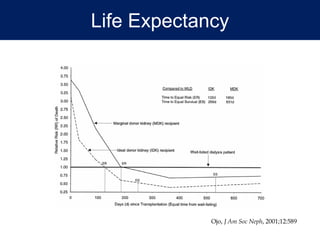
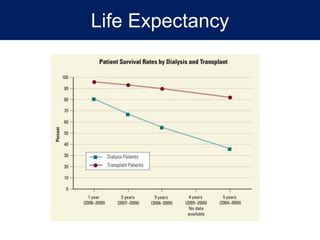
• Life expectancy
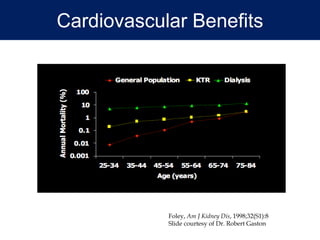
• Cardiovascular benefits
• Quality of life
• Socioeconomic benefits
Life Expectancy
Ojo, J Am Soc Neph, 2001;12:589
Life Expectancy
Cardiovascular Benefits
Foley, Am J Kidney Dis, 1998;32(S1):8
Slide courtesy of Dr. Robert Gaston
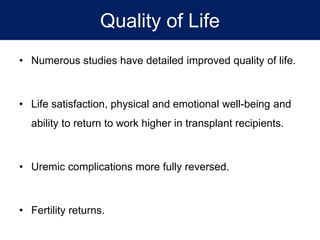
Quality of Life
• Numerous studies have detailed improved quality of life.
• Life satisfaction, physical and emotional well-being and
ability to return to work higher in transplant recipients.
• Uremic complications more fully reversed.
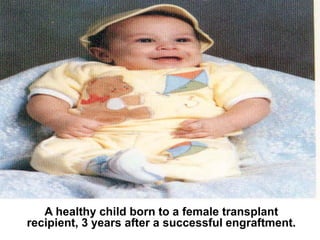
• Fertility returns.
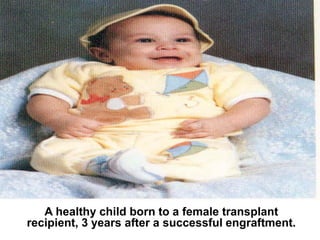
A healthy child born to a female transplant
recipient, 3 years after a successful engraftment.
Socioeconomic Benefits
• Increased rates of return to work.
• Mean cumulative costs of dialysis and transplantation
are equal for first year, then lower for transplantation.
Patient survival after kidney transplantation VS
hemodialysis
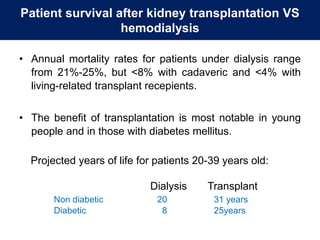
• Annual mortality rates for patients under dialysis range
from 21%-25%, but <8% with cadaveric and <4% with
living-related transplant recepients.
• The benefit of transplantation is most notable in young
people and in those with diabetes mellitus.
Projected years of life for patients 20-39 years old:
Dialysis Transplant
Non diabetic 20 31 years
Diabetic 8 25years
Patients selection for kidney transplantation
All patients with ESRD are candidates for KT unless
contraindicated
Contraindications to renal transplantation
- ABO incompatibility.
- Cystoxic antibodies against HLA antigens of donor.
- Recent or metastatic malignancy.
- Active infection.
- Severe extrarenal disease (cardiac, pulmonary, hepatic).
- Active vasculitis or glomeulonephritis.
- Noncompliance.
- Psychiatric illness including alcoholism and drug addiction.
- Primary oxalosis.
Recipient Selection
• General medical condition.
• Cardiovascular screening.
• Age-appropriate routine cancer screening (pap smear,
mammography, colonoscopy, PSA).
• Infection (HIV, Hepatitis, TB).
• Presence of preformed antibody (PRA).
– Pregnancy, prior transplant, blood transfusion
• Psychosocial evaluation, including compliance.
The kidney donor
 Living
- Living related.
- Living unrelated (emotionally motivated).
 Cadaveric
- Heart Beating
- Non-beating heart.
Criteria for living donor selection
- Highly motivated.
- Excellent medical condition with normal renal function.
- ABO blood group-compatible.
- HLA-identical or haploidentical with negative cross-
match.
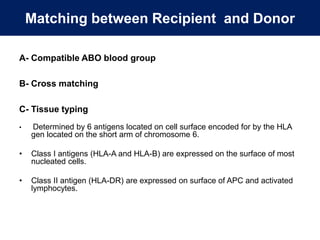
Matching between Recipient and Donor
A- Compatible ABO blood group
B- Cross matching
C- Tissue typing
• Determined by 6 antigens located on cell surface encoded for by the HLA
gen located on the short arm of chromosome 6.
• Class I antigens (HLA-A and HLA-B) are expressed on the surface of most
nucleated cells.
• Class II antigen (HLA-DR) are expressed on surface of APC and activated
lymphocytes.
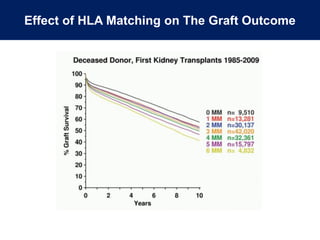
Effect of HLA Matching on The Graft Outcome
 Whether there is a medical condition that will put donor
at increased risk for complications for general anesthesia
or surgery.
 Whether the removal of one kidney will increase the
donor’s risk for developing renal insufficiency.
Principles involved in evaluating a prospective
living kidney donor
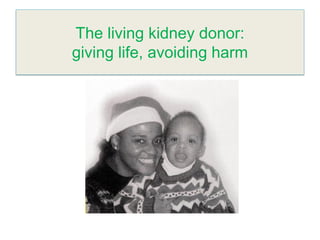
The living kidney donor:
giving life, avoiding harm
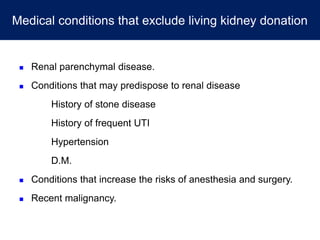
Medical conditions that exclude living kidney donation
 Renal parenchymal disease.
 Conditions that may predispose to renal disease
History of stone disease
History of frequent UTI
Hypertension
D.M.
 Conditions that increase the risks of anesthesia and surgery.
 Recent malignancy.
• Is it an easy task?
Potential living donors should undergo a rigorous screening
procedure to ensure the best functional outcome for recipients with
no or minimal morbidity for donors.
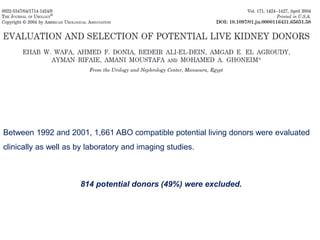
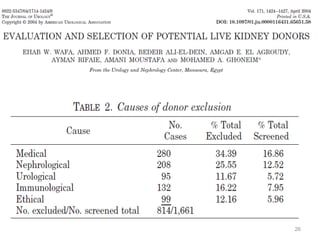
Between 1992 and 2001, 1,661 ABO compatible potential living donors were evaluated
clinically as well as by laboratory and imaging studies.
814 potential donors (49%) were excluded.
26
Does donation of a kidney pose a long-term risk
for the donor?
 Following nephrectomy, compensatory hypertrophy and
increase in GFR occur in the remaining kidney.
 Slight risk of poteinuria and hypertension.
 Meta-analysis of data from donors followed for >20y
confirmed safety of kidney donation.
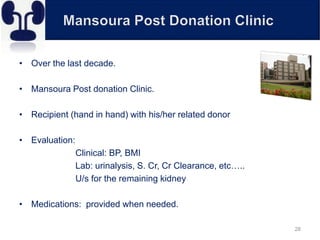
• Over the last decade.
• Mansoura Post donation Clinic.
• Recipient (hand in hand) with his/her related donor
• Evaluation:
Clinical: BP, BMI
Lab: urinalysis, S. Cr, Cr Clearance, etc…..
U/s for the remaining kidney
• Medications: provided when needed.
28
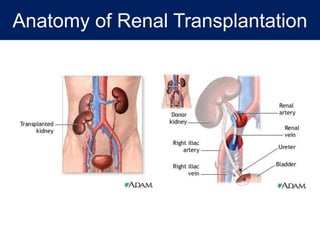
Anatomy of Renal Transplantation
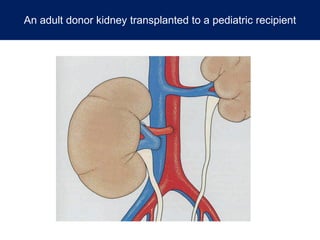
An adult donor kidney transplanted to a pediatric recipient
Principles of immunosuppressive treatment
1- Immunosuppressive therapy is required indefinitely.
2- The benefits of a successful transplant outweigh the risks of
chronic immunosuppression.
3- Large doses of immunosuppressant drugs are used in the
early transplant period.
4- Multidrug regimens are generally employed.
Induction immunosuppressive therapy
• Induction therapy
• Maintenance therapy
• Treatment of rejection
Induction Therapy: Why?
• To decrease rejection rate.
• To decrease graft loss.
• To lower DGF.
• To avoid or withdraw steroids.
• To avoid or delay CNIs.
• To transplant high risk patients.
• To induce tolerance……
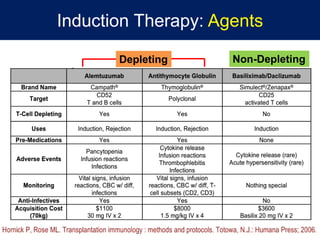
Induction Therapy: Agents
Depleting Non-Depleting
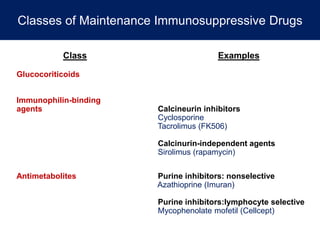
Class Examples
Glucocoriticoids
Immunophilin-binding
agents Calcineurin inhibitors
Cyclosporine
Tacrolimus (FK506)
Calcinurin-independent agents
Sirolimus (rapamycin)
Antimetabolites Purine inhibitors: nonselective
Azathioprine (Imuran)
Purine inhibitors:lymphocyte selective
Mycophenolate mofetil (Cellcept)
Classes of Maintenance Immunosuppressive Drugs
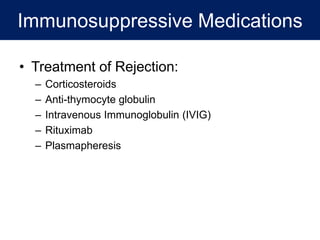
• Treatment of Rejection:
– Corticosteroids
– Anti-thymocyte globulin
– Intravenous Immunoglobulin (IVIG)
– Rituximab
– Plasmapheresis
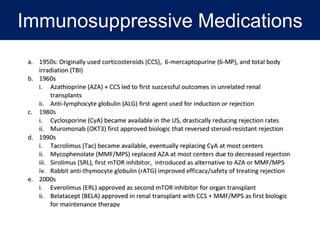
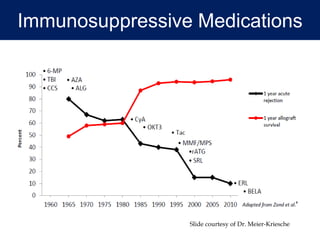
Immunosuppressive Medications
Slide courtesy of Dr. Meier-Kriesche
Calcineurin Inhibitors (CNIs)
• Used for maintenance immunosuppression.
• Two agents in clinical practice:
– Cyclosporine (Sandimmune®, Neoral®)
– Tacrolimus (Prograf®).
• At present are key to maintenance immunosuppression
and a component of the majority of transplant protocols.
mTOR Inhibitors
• Target site is the mammalian target of rapamycin
(mTOR), a key regulatory kinase in cell division.
• Sirolimus (Rapamune®)
Administered once daily, 24-hour trough levels
monitored.
• Everolimus (Certcan®)
Administered twice daily, 12-hour trough levels
monitored.
Sirolimus: Adverse Effects
• Nephrotoxicity:
– Delays recovery from ATN.
– Potentiates cyclosporine nephrotoxicity.
– Induces proteinuria.
– Tubulotoxic.
• Impairment of wound healing.
• Dyslipidemia (increased LDL and TGs).
• Pneumonitis.
• Cytopenias and anemia.
Antimetabolites
• Azathioprine (Imuran®) is a purine analogue that is
incorporated into RNA and inhibits cell replication.
• A mainstay of transplantation for 30 years, it has largely
been replaced by the below drugs.
• Mycophenolate mofetil (Cellcept®) and enteric-coated
mycophenolate sodium (Myfortic®) are prodrugs of
mycophenolic acid (MPA), an inhibitor of inosine
monophosphate dehydrogenase (IMPDH).
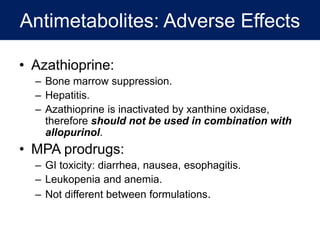
Antimetabolites: Adverse Effects
• Azathioprine:
– Bone marrow suppression.
– Hepatitis.
– Azathioprine is inactivated by xanthine oxidase,
therefore should not be used in combination with
allopurinol.
• MPA prodrugs:
– GI toxicity: diarrhea, nausea, esophagitis.
– Leukopenia and anemia.
– Not different between formulations.
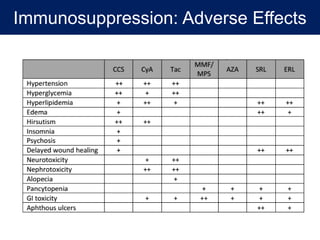
Immunosuppression: Adverse Effects
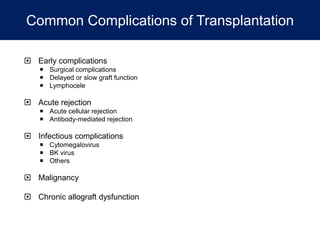
Common Complications of Transplantation
 Early complications
 Surgical complications
 Delayed or slow graft function
 Lymphocele
 Acute rejection
 Acute cellular rejection
 Antibody-mediated rejection
 Infectious complications
 Cytomegalovirus
 BK virus
 Others
 Malignancy
 Chronic allograft dysfunction
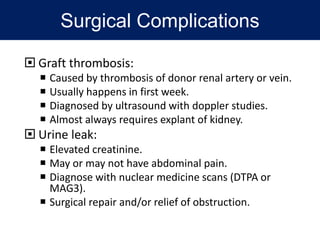
Surgical Complications
 Graft thrombosis:
 Caused by thrombosis of donor renal artery or vein.
 Usually happens in first week.
 Diagnosed by ultrasound with doppler studies.
 Almost always requires explant of kidney.
 Urine leak:
 Elevated creatinine.
 May or may not have abdominal pain.
 Diagnose with nuclear medicine scans (DTPA or
MAG3).
 Surgical repair and/or relief of obstruction.
Delayed Graft Function
• Need for dialysis in the first week after
transplantation.
• Causes:
– ATN from prolonged cold ischemia.
– Acute rejection.
– Recurrent disease.
• Usually requires biopsy for diagnosis and
management.
Lymphocele
• Collection of lymph caused by leakage from
iliac lymphatics.
• Presents several weeks post-operatively.
• Symptoms:
– Compression of kidney, ureter, bladder:
obstructive uropathy and ARF.
– Compression of iliac vessels: unilateral lower
extremity edema and DVT.
– Abdominal mass.
• Treatment is surgical.
Renal Allograft Rejection
1- Hyper acute.
2- Acute.
3- Chronic.
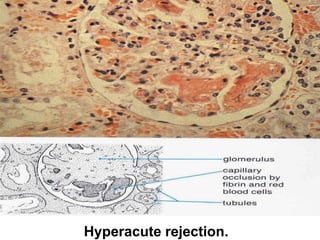
Hyperacute Rejection
 Mediated by preformed antibodies that recognize HLA antigens in
donor organ.
 Usually these are formed as a consequence of blood transfusion,
pregnancy, prior organ transplantation, autoimmune diseases.
 Modern CM tests detect these antibodies.
 Fibrinoid necrosis lead to immediate graft loss.
 Delayed form may occur several days following transplantation.
 Plasmapheresis and pulse steroid may be used.
Hyperacute rejection.
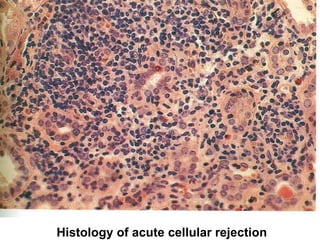
Acute Renal Allograft Rejection
 Mediated by activated T-lymphocytes.
 Activations of T-cells occur after recognition of graft
antigen either directly or after being processed and
presented by APC.
 This usually occur during the first 6 months.
 It manifest as increase in s. creatinine with or without
oliguria.
Histology of acute cellular rejection
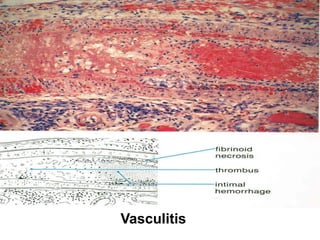
Vasculitis
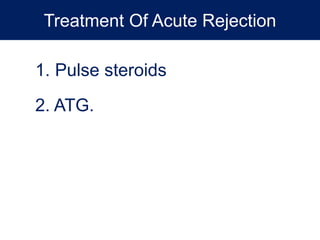
Treatment Of Acute Rejection
1. Pulse steroids
2. ATG.
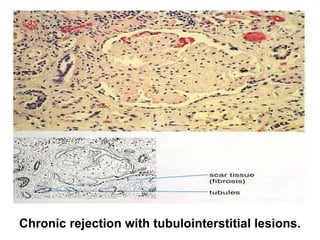
Chronic rejection with tubulointerstitial lesions.
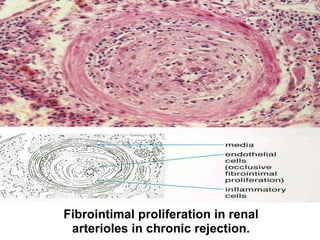
Fibrointimal proliferation in renal
arterioles in chronic rejection.
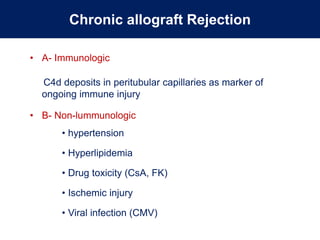
Chronic allograft Rejection
• A- Immunologic
C4d deposits in peritubular capillaries as marker of
ongoing immune injury
• B- Non-lummunologic
• hypertension
• Hyperlipidemia
• Drug toxicity (CsA, FK)
• Ischemic injury
• Viral infection (CMV)
• Manifest clinically by a slow and gradual decline in renal
function, usually more than 6 mon after transplant and typically
accompanied by moderate to heavy proteinuria.
• Histologically, characterized by glomerulo-sclerosis, interstitial
fibrosis, and obliteration of arteriolar lumina.
• Treatment is unsatisfactory.
Chronic allograft Rejection
What Are The Major Causes Of Long-Term Allograft Failure ?
• Chronic rejection.
• Death with functioning graft.
 Cardiovascular disease.
 Infection.
What Are The Most Common causes Of Death After
Kidney Transplantation?
Malignancy
 Recipient of organ transplants are at higher risk of developing
malignancy.
 May be related to impaired immune surveillance as a result of
immunosuppression.
 Skin cancer most common: sun protection mandatory.
 Routine cancer screening.
 Specific malignancies:
 Kaposi sarcoma
 Post-transplant lymphoproliferative disorder (PTLD)
Kidney Transplantation: Mansoura Experience
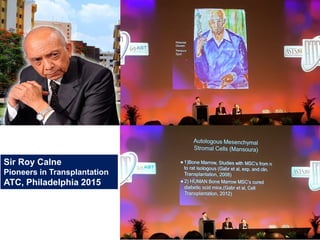
Sir Roy Calne
Pioneers in Transplantation
ATC, Philadelphia 2015
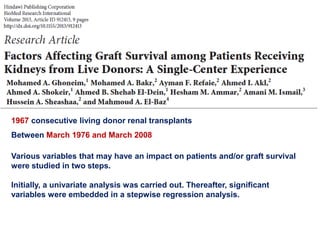
1967 consecutive living donor renal transplants
Between March 1976 and March 2008
Various variables that may have an impact on patients and/or graft survival
were studied in two steps.
Initially, a univariate analysis was carried out. Thereafter, significant
variables were embedded in a stepwise regression analysis.
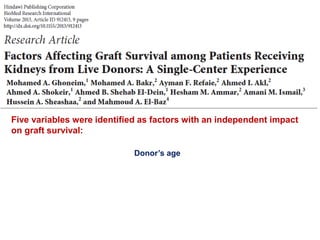
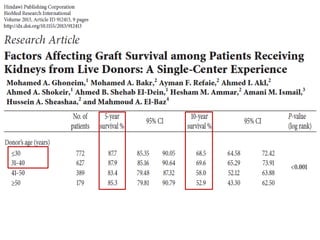
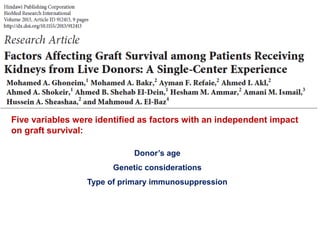
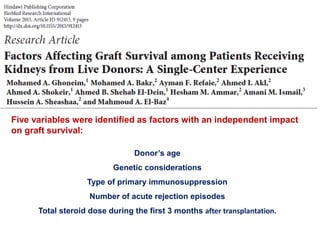
Five variables were identified as factors with an independent impact
on graft survival:
Donor’s age
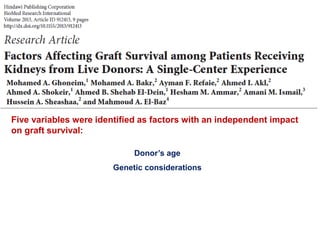
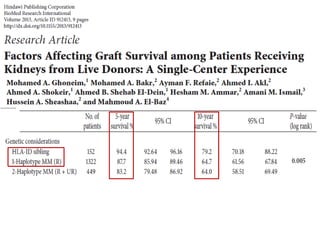
Five variables were identified as factors with an independent impact
on graft survival:
Donor’s age
Genetic considerations
Five variables were identified as factors with an independent impact
on graft survival:
Donor’s age
Genetic considerations
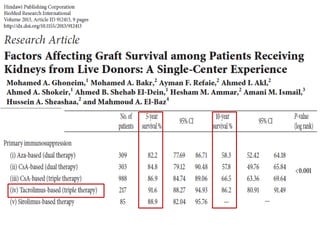
Type of primary immunosuppression
Five variables were identified as factors with an independent impact
on graft survival:
Donor’s age
Genetic considerations
Type of primary immunosuppression
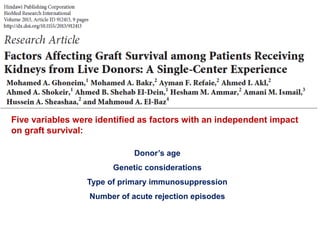
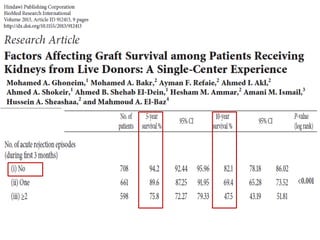
Number of acute rejection episodes
Five variables were identified as factors with an independent impact
on graft survival:
Donor’s age
Genetic considerations
Type of primary immunosuppression
Number of acute rejection episodes
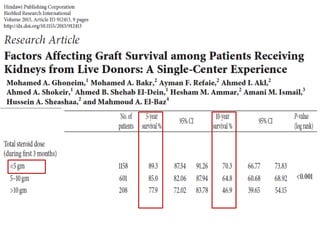
Total steroid dose during the first 3 months after transplantation.
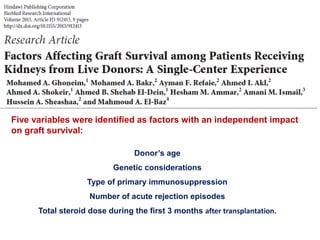
Five variables were identified as factors with an independent impact
on graft survival:
Donor’s age
Genetic considerations
Type of primary immunosuppression
Number of acute rejection episodes
Total steroid dose during the first 3 months after transplantation.
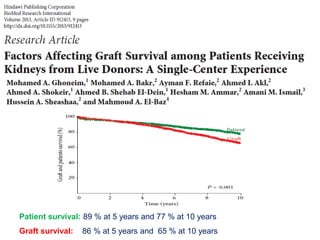
Patient survival: 89 % at 5 years and 77 % at 10 years
Graft survival: 86 % at 5 years and 65 % at 10 years
Conclusions
• Renal transplantation should be recommended as the preferred
mode of RRT for most patients with ESRD in whom surgery and
subsequent I.S. is safe and feasible
• Cr CI 50-100 ml/min.
• Anemia.
• Conception and childbearing.
• Growth in children.
• Bone metabolism.
• Work rehabilitation.
Conclusions
Factors Influencing The Longevity Of Renal Allograft
• Donor age
• HLA matching
• Delayed graft function
• Ischemia time.
• Number of acute rejection episodes.
• Native kidney disease.
• Ethnicity.
Risks associated with chronic Immunosuppression
• 1- Malignancy
• 2- Infection
• 3- Side effects of different drugs (steroids, CsA,
tacrolimus, MMF, …..)
Conclusions
A healthy child born to a female transplant
recipient, 3 years after a successful engraftment.
CONGRATULATIONS
Accepted abstracts (17)
CONGRATULATIONS
Accepted abstracts (5)
Thank You

Renal transplantation -friday_prof_ayman refaei

  • 2.
  • 3.
    RENAL TRANSPLANTATION: ANOVERVIEW Ayman Refaie,MD Chief, Nephrology & transplantation Unit Urology and Nephrology Center University of Mansoura
  • 4.
    Agenda • Benefits oftransplantation • Patient and donor selection • The transplant anatomy • Immunosuppressive medications • Common post-transplant complications • Mansoura Experience
  • 5.
    Renal Transplantation • Kidneytransplantation is the most effective therapy for end- stage renal disease. • The transplanted organ can come from either a live donor or deceased donor. • Most deceased donor organs come from brain dead donors. • Non-standard criteria donors: – Expanded criteria donors (ECD). – Donation after cardiac death (DCD).
  • 6.
    Benefits of Transplantation •Life expectancy • Cardiovascular benefits • Quality of life • Socioeconomic benefits
  • 7.
    Life Expectancy Ojo, JAm Soc Neph, 2001;12:589
  • 8.
  • 9.
    Cardiovascular Benefits Foley, AmJ Kidney Dis, 1998;32(S1):8 Slide courtesy of Dr. Robert Gaston
  • 10.
    Quality of Life •Numerous studies have detailed improved quality of life. • Life satisfaction, physical and emotional well-being and ability to return to work higher in transplant recipients. • Uremic complications more fully reversed. • Fertility returns.
  • 11.
    A healthy childborn to a female transplant recipient, 3 years after a successful engraftment.
  • 12.
    Socioeconomic Benefits • Increasedrates of return to work. • Mean cumulative costs of dialysis and transplantation are equal for first year, then lower for transplantation.
  • 13.
    Patient survival afterkidney transplantation VS hemodialysis • Annual mortality rates for patients under dialysis range from 21%-25%, but <8% with cadaveric and <4% with living-related transplant recepients. • The benefit of transplantation is most notable in young people and in those with diabetes mellitus. Projected years of life for patients 20-39 years old: Dialysis Transplant Non diabetic 20 31 years Diabetic 8 25years
  • 14.
    Patients selection forkidney transplantation All patients with ESRD are candidates for KT unless contraindicated
  • 15.
    Contraindications to renaltransplantation - ABO incompatibility. - Cystoxic antibodies against HLA antigens of donor. - Recent or metastatic malignancy. - Active infection. - Severe extrarenal disease (cardiac, pulmonary, hepatic). - Active vasculitis or glomeulonephritis. - Noncompliance. - Psychiatric illness including alcoholism and drug addiction. - Primary oxalosis.
  • 16.
    Recipient Selection • Generalmedical condition. • Cardiovascular screening. • Age-appropriate routine cancer screening (pap smear, mammography, colonoscopy, PSA). • Infection (HIV, Hepatitis, TB). • Presence of preformed antibody (PRA). – Pregnancy, prior transplant, blood transfusion • Psychosocial evaluation, including compliance.
  • 17.
    The kidney donor Living - Living related. - Living unrelated (emotionally motivated).  Cadaveric - Heart Beating - Non-beating heart.
  • 18.
    Criteria for livingdonor selection - Highly motivated. - Excellent medical condition with normal renal function. - ABO blood group-compatible. - HLA-identical or haploidentical with negative cross- match.
  • 19.
    Matching between Recipientand Donor A- Compatible ABO blood group B- Cross matching C- Tissue typing • Determined by 6 antigens located on cell surface encoded for by the HLA gen located on the short arm of chromosome 6. • Class I antigens (HLA-A and HLA-B) are expressed on the surface of most nucleated cells. • Class II antigen (HLA-DR) are expressed on surface of APC and activated lymphocytes.
  • 20.
    Effect of HLAMatching on The Graft Outcome
  • 21.
     Whether thereis a medical condition that will put donor at increased risk for complications for general anesthesia or surgery.  Whether the removal of one kidney will increase the donor’s risk for developing renal insufficiency. Principles involved in evaluating a prospective living kidney donor
  • 22.
    The living kidneydonor: giving life, avoiding harm
  • 23.
    Medical conditions thatexclude living kidney donation  Renal parenchymal disease.  Conditions that may predispose to renal disease History of stone disease History of frequent UTI Hypertension D.M.  Conditions that increase the risks of anesthesia and surgery.  Recent malignancy.
  • 24.
    • Is itan easy task? Potential living donors should undergo a rigorous screening procedure to ensure the best functional outcome for recipients with no or minimal morbidity for donors.
  • 25.
    Between 1992 and2001, 1,661 ABO compatible potential living donors were evaluated clinically as well as by laboratory and imaging studies. 814 potential donors (49%) were excluded.
  • 26.
  • 27.
    Does donation ofa kidney pose a long-term risk for the donor?  Following nephrectomy, compensatory hypertrophy and increase in GFR occur in the remaining kidney.  Slight risk of poteinuria and hypertension.  Meta-analysis of data from donors followed for >20y confirmed safety of kidney donation.
  • 28.
    • Over thelast decade. • Mansoura Post donation Clinic. • Recipient (hand in hand) with his/her related donor • Evaluation: Clinical: BP, BMI Lab: urinalysis, S. Cr, Cr Clearance, etc….. U/s for the remaining kidney • Medications: provided when needed. 28
  • 29.
    Anatomy of RenalTransplantation
  • 30.
    An adult donorkidney transplanted to a pediatric recipient
  • 31.
    Principles of immunosuppressivetreatment 1- Immunosuppressive therapy is required indefinitely. 2- The benefits of a successful transplant outweigh the risks of chronic immunosuppression. 3- Large doses of immunosuppressant drugs are used in the early transplant period. 4- Multidrug regimens are generally employed.
  • 32.
    Induction immunosuppressive therapy •Induction therapy • Maintenance therapy • Treatment of rejection
  • 33.
    Induction Therapy: Why? •To decrease rejection rate. • To decrease graft loss. • To lower DGF. • To avoid or withdraw steroids. • To avoid or delay CNIs. • To transplant high risk patients. • To induce tolerance……
  • 34.
  • 35.
    Class Examples Glucocoriticoids Immunophilin-binding agents Calcineurininhibitors Cyclosporine Tacrolimus (FK506) Calcinurin-independent agents Sirolimus (rapamycin) Antimetabolites Purine inhibitors: nonselective Azathioprine (Imuran) Purine inhibitors:lymphocyte selective Mycophenolate mofetil (Cellcept) Classes of Maintenance Immunosuppressive Drugs
  • 36.
    • Treatment ofRejection: – Corticosteroids – Anti-thymocyte globulin – Intravenous Immunoglobulin (IVIG) – Rituximab – Plasmapheresis Immunosuppressive Medications
  • 37.
  • 38.
  • 39.
    Calcineurin Inhibitors (CNIs) •Used for maintenance immunosuppression. • Two agents in clinical practice: – Cyclosporine (Sandimmune®, Neoral®) – Tacrolimus (Prograf®). • At present are key to maintenance immunosuppression and a component of the majority of transplant protocols.
  • 40.
    mTOR Inhibitors • Targetsite is the mammalian target of rapamycin (mTOR), a key regulatory kinase in cell division. • Sirolimus (Rapamune®) Administered once daily, 24-hour trough levels monitored. • Everolimus (Certcan®) Administered twice daily, 12-hour trough levels monitored.
  • 41.
    Sirolimus: Adverse Effects •Nephrotoxicity: – Delays recovery from ATN. – Potentiates cyclosporine nephrotoxicity. – Induces proteinuria. – Tubulotoxic. • Impairment of wound healing. • Dyslipidemia (increased LDL and TGs). • Pneumonitis. • Cytopenias and anemia.
  • 42.
    Antimetabolites • Azathioprine (Imuran®)is a purine analogue that is incorporated into RNA and inhibits cell replication. • A mainstay of transplantation for 30 years, it has largely been replaced by the below drugs. • Mycophenolate mofetil (Cellcept®) and enteric-coated mycophenolate sodium (Myfortic®) are prodrugs of mycophenolic acid (MPA), an inhibitor of inosine monophosphate dehydrogenase (IMPDH).
  • 43.
    Antimetabolites: Adverse Effects •Azathioprine: – Bone marrow suppression. – Hepatitis. – Azathioprine is inactivated by xanthine oxidase, therefore should not be used in combination with allopurinol. • MPA prodrugs: – GI toxicity: diarrhea, nausea, esophagitis. – Leukopenia and anemia. – Not different between formulations.
  • 44.
  • 45.
    Common Complications ofTransplantation  Early complications  Surgical complications  Delayed or slow graft function  Lymphocele  Acute rejection  Acute cellular rejection  Antibody-mediated rejection  Infectious complications  Cytomegalovirus  BK virus  Others  Malignancy  Chronic allograft dysfunction
  • 46.
    Surgical Complications  Graftthrombosis:  Caused by thrombosis of donor renal artery or vein.  Usually happens in first week.  Diagnosed by ultrasound with doppler studies.  Almost always requires explant of kidney.  Urine leak:  Elevated creatinine.  May or may not have abdominal pain.  Diagnose with nuclear medicine scans (DTPA or MAG3).  Surgical repair and/or relief of obstruction.
  • 47.
    Delayed Graft Function •Need for dialysis in the first week after transplantation. • Causes: – ATN from prolonged cold ischemia. – Acute rejection. – Recurrent disease. • Usually requires biopsy for diagnosis and management.
  • 48.
    Lymphocele • Collection oflymph caused by leakage from iliac lymphatics. • Presents several weeks post-operatively. • Symptoms: – Compression of kidney, ureter, bladder: obstructive uropathy and ARF. – Compression of iliac vessels: unilateral lower extremity edema and DVT. – Abdominal mass. • Treatment is surgical.
  • 49.
    Renal Allograft Rejection 1-Hyper acute. 2- Acute. 3- Chronic.
  • 50.
    Hyperacute Rejection  Mediatedby preformed antibodies that recognize HLA antigens in donor organ.  Usually these are formed as a consequence of blood transfusion, pregnancy, prior organ transplantation, autoimmune diseases.  Modern CM tests detect these antibodies.  Fibrinoid necrosis lead to immediate graft loss.  Delayed form may occur several days following transplantation.  Plasmapheresis and pulse steroid may be used.
  • 51.
  • 52.
    Acute Renal AllograftRejection  Mediated by activated T-lymphocytes.  Activations of T-cells occur after recognition of graft antigen either directly or after being processed and presented by APC.  This usually occur during the first 6 months.  It manifest as increase in s. creatinine with or without oliguria.
  • 53.
    Histology of acutecellular rejection
  • 54.
  • 55.
    Treatment Of AcuteRejection 1. Pulse steroids 2. ATG.
  • 56.
    Chronic rejection withtubulointerstitial lesions.
  • 57.
    Fibrointimal proliferation inrenal arterioles in chronic rejection.
  • 58.
    Chronic allograft Rejection •A- Immunologic C4d deposits in peritubular capillaries as marker of ongoing immune injury • B- Non-lummunologic • hypertension • Hyperlipidemia • Drug toxicity (CsA, FK) • Ischemic injury • Viral infection (CMV)
  • 59.
    • Manifest clinicallyby a slow and gradual decline in renal function, usually more than 6 mon after transplant and typically accompanied by moderate to heavy proteinuria. • Histologically, characterized by glomerulo-sclerosis, interstitial fibrosis, and obliteration of arteriolar lumina. • Treatment is unsatisfactory. Chronic allograft Rejection
  • 60.
    What Are TheMajor Causes Of Long-Term Allograft Failure ? • Chronic rejection. • Death with functioning graft.
  • 61.
     Cardiovascular disease. Infection. What Are The Most Common causes Of Death After Kidney Transplantation?
  • 62.
    Malignancy  Recipient oforgan transplants are at higher risk of developing malignancy.  May be related to impaired immune surveillance as a result of immunosuppression.  Skin cancer most common: sun protection mandatory.  Routine cancer screening.  Specific malignancies:  Kaposi sarcoma  Post-transplant lymphoproliferative disorder (PTLD)
  • 63.
  • 64.
    Sir Roy Calne Pioneersin Transplantation ATC, Philadelphia 2015
  • 66.
    1967 consecutive livingdonor renal transplants Between March 1976 and March 2008 Various variables that may have an impact on patients and/or graft survival were studied in two steps. Initially, a univariate analysis was carried out. Thereafter, significant variables were embedded in a stepwise regression analysis.
  • 67.
    Five variables wereidentified as factors with an independent impact on graft survival: Donor’s age
  • 69.
    Five variables wereidentified as factors with an independent impact on graft survival: Donor’s age Genetic considerations
  • 71.
    Five variables wereidentified as factors with an independent impact on graft survival: Donor’s age Genetic considerations Type of primary immunosuppression
  • 73.
    Five variables wereidentified as factors with an independent impact on graft survival: Donor’s age Genetic considerations Type of primary immunosuppression Number of acute rejection episodes
  • 75.
    Five variables wereidentified as factors with an independent impact on graft survival: Donor’s age Genetic considerations Type of primary immunosuppression Number of acute rejection episodes Total steroid dose during the first 3 months after transplantation.
  • 77.
    Five variables wereidentified as factors with an independent impact on graft survival: Donor’s age Genetic considerations Type of primary immunosuppression Number of acute rejection episodes Total steroid dose during the first 3 months after transplantation.
  • 78.
    Patient survival: 89% at 5 years and 77 % at 10 years Graft survival: 86 % at 5 years and 65 % at 10 years
  • 79.
    Conclusions • Renal transplantationshould be recommended as the preferred mode of RRT for most patients with ESRD in whom surgery and subsequent I.S. is safe and feasible • Cr CI 50-100 ml/min. • Anemia. • Conception and childbearing. • Growth in children. • Bone metabolism. • Work rehabilitation.
  • 80.
    Conclusions Factors Influencing TheLongevity Of Renal Allograft • Donor age • HLA matching • Delayed graft function • Ischemia time. • Number of acute rejection episodes. • Native kidney disease. • Ethnicity.
  • 81.
    Risks associated withchronic Immunosuppression • 1- Malignancy • 2- Infection • 3- Side effects of different drugs (steroids, CsA, tacrolimus, MMF, …..) Conclusions
  • 82.
    A healthy childborn to a female transplant recipient, 3 years after a successful engraftment.
  • 83.
  • 84.
  • 85.