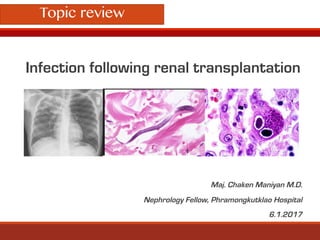
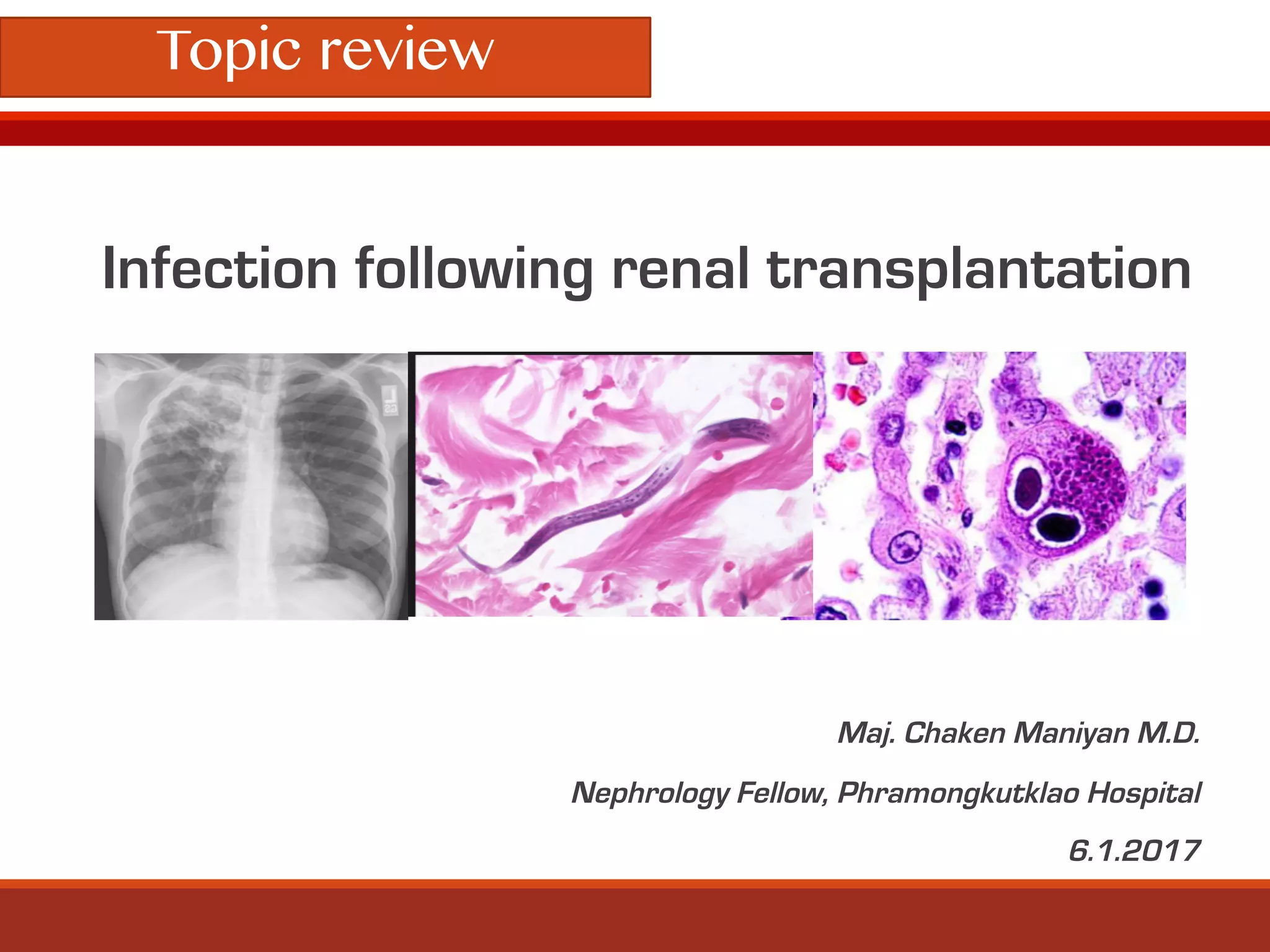
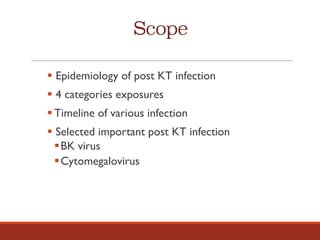
Infection following renal transplantation
Maj. Chaken Maniyan M.D.
Nephrology Fellow, Phramongkutklao Hospital
6.1.2017
Topic review
Scope
§ Epidemiology of post KT infection
§ 4 categories exposures
§ Timeline of various infection
§ Selected important post KT infection
§BK virus
§Cytomegalovirus
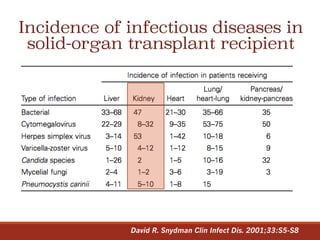
Incidence of infectious diseases in
solid-organ transplant recipient
David R. Snydman Clin Infect Dis. 2001;33:S5-S8
Epidemiologic Exposures :
4 categories
§ Donor-derived infections Most often infections
§ Recipient-derived infections
§ Nosocomial infections
§ Community infections
Fishman JA: Infection in solid-organ transplant recipients. N Engl J Med 357: 2601–2614, 2007
Donor-Derived Infections
§Bacteremia or fungemia infections (S.aureus, Candida
species, Gram-neg bacteria) in donors at the time of
donation can cause local (abscess) or systemic (bacteremic)
infections, and may selectively adhere to anastomotic sites
(vascular, urinary) to produce leaks or mycotic aneurysms.
§Virus: (CMV,BK) : greatest risk : seropositive to seronegative
recipients
§Latent infections, such as tuberculosis, toxoplasmosis, or
strongyloidiasis
Seminars in Nephrology, Vol 27, No 4, July 2007, pp 445-461
§ Colonization or latent infections that reactivate in the
setting of immune suppression
§ Common pathogens :TB ,parasites (e.g., Strongyloides
stercoralis & T. cruzi), viruses (CMV, EBV, herpes simplex,
varicella–zoster virus ,HBV, HCV, and HIV), and endemic
fungi( Histoplasma capsulatum, Coccidioides immitis, &
Paracoccidioides brasiliensis)
Recipient -Derived Infections
Fishman JA: Infection in solid-organ transplant recipients. N Engl J Med 357: 2601–2614, 2007
§Patients waiting for transplantation :colonized with
nosocomial, antimicrobial-resistant organisms :MRSA,
VRE ,fluconazole-resistant candida species, C. difficile, &
antimicrobial-resistant GNB or aspergillus species.35-
43
§Cause pneumonia or may infect hematomas, ascitic
fluid, wound & catheters
Fishman JA: Infection in solid-organ transplant recipients. N Engl J Med 357: 2601–2614, 2007
Nosocomial Infections and Antimicrobial Resistance
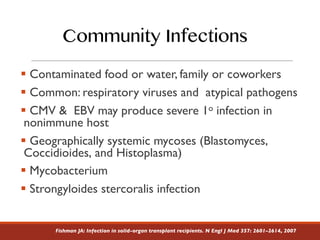
§ Contaminated food or water, family or coworkers
§ Common: respiratory viruses and atypical pathogens
§ CMV & EBV may produce severe 1o infection in
nonimmune host
§ Geographically systemic mycoses (Blastomyces,
Coccidioides, and Histoplasma)
§ Mycobacterium
§ Strongyloides stercoralis infection
Fishman JA: Infection in solid-organ transplant recipients. N Engl J Med 357: 2601–2614, 2007
Community Infections
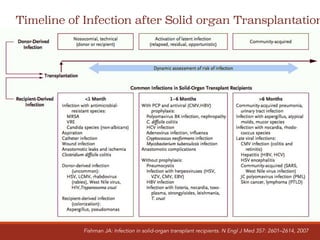
Timeline of Infection after Solid organ Transplantation
Fishman JA: Infection in solid-organ transplant recipients. N Engl J Med 357: 2601–2614, 2007
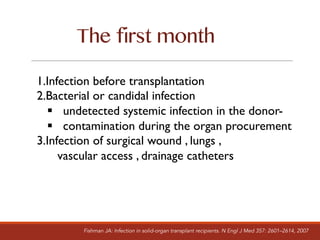
The first month
1.Infection before transplantation
2.Bacterial or candidal infection
§ undetected systemic infection in the donor-
§ contamination during the organ procurement
3.Infection of surgical wound , lungs ,
vascular access , drainage catheters
Fishman JA: Infection in solid-organ transplant recipients. N Engl J Med 357: 2601–2614, 2007
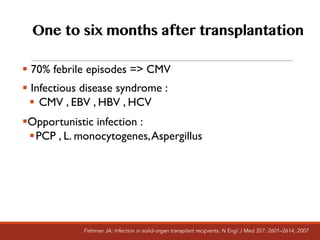
One to six months after transplantation
§ 70% febrile episodes => CMV
§ Infectious disease syndrome :
§ CMV , EBV , HBV , HCV
§Opportunistic infection :
§PCP , L. monocytogenes,Aspergillus
Fishman JA: Infection in solid-organ transplant recipients. N Engl J Med 357: 2601–2614, 2007
More than 6 months after
transplantation
§Divided into 3 groups in terms of infection risk
1. good result of transplantation : resemble as general
2. chronic viral infection ( absence of effective therapy )
3. poor result of transplantation
Opportunistic infection :PCP , Nocardia , L. monocytogenes,
Aspergillus
Fishman JA: Infection in solid-organ transplant recipients. N Engl J Med 357: 2601–2614, 2007
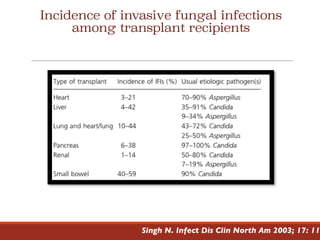
Incidence of invasive fungal infections
among transplant recipients
Singh N. Infect Dis Clin North Am 2003; 17: 11
§Human herpes viruses
§HSV1,2 ,VZV, EBV,CMV, HHV6,HHV7,HHV8
§Respiratory viruses
§Influenza, parainfluenza, RSV adenovirus
§Polyomavirus (BK, JC virus)
§Norovirus
§Hepatitis B , C
Viral infection
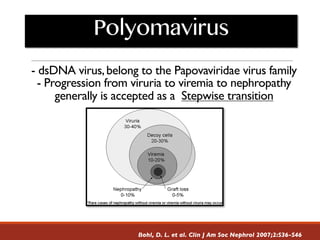
Bohl, D. L. et al. Clin J Am Soc Nephrol 2007;2:S36-S46
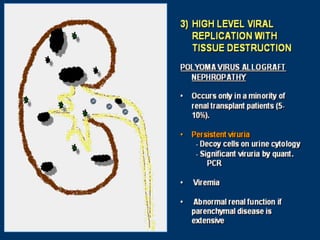
- dsDNA virus,belong to the Papovaviridae virus family
- Progression from viruria to viremia to nephropathy
generally is accepted as a Stepwise transition
Polyomavirus
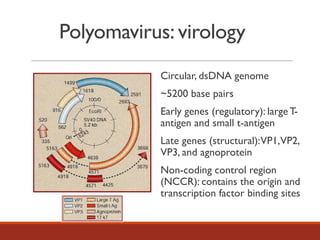
Polyomavirus: virology
Circular, dsDNA genome
~5200 base pairs
Early genes (regulatory): large T-
antigen and small t-antigen
Late genes (structural):VP1,VP2,
VP3, and agnoprotein
Non-coding control region
(NCCR): contains the origin and
transcription factor binding sites
§Primary infection : childhood (oral and/or respiratory exposure)
à resolved àVIRAL ENTER latent phase : urogenital tract
(kidneys (transitional epithelium, renal tubular epithelium, and
parietal epithelium of Bowman's capsule)), bladder, prostate) &
hematolymphoid tissue
§Reactivation : Latent infection :old age, DM ,pregnancy,
immunosuppressed state
§Clinical : transient renal dysfunction
hemorrhagic cystitis (BMT recipients)
ureteral obstruction/ ureteric stenosis
Lacking ; systemic symptoms
P.Randhawa,Transplantation Review 2007(21);77-85
Clinical feature
BKV infection after kidney
transplantation
§Reactivation/primary infection in KTx recipients
§Asymptomatic infection
§Ureteral stenosis
§Systemic vasculopathy
§Interstitial nephropathy (BKV nephropathy)
§onset of the disease occurs at a mean period of 10-13
months posttransplantation but at least 25% of cases are diagnosed
later
§ 10-80% graft loss: but, with increased awareness and improved diagnostic
techniques, the rate of graft loss has lowered
Dall A,. Clin J Am Soc Nephrol 2008; 3 Suppl 2:S68.
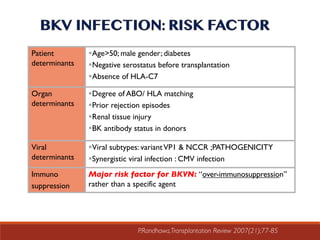
Patient
determinants
§Age>50; male gender; diabetes
§Negative serostatus before transplantation
§Absence of HLA-C7
Organ
determinants
§Degree of ABO/ HLA matching
§Prior rejection episodes
§Renal tissue injury
§BK antibody status in donors
Viral
determinants
§Viral subtypes: variantVP1 & NCCR ;PATHOGENICITY
§Synergistic viral infection : CMV infection
Immuno
suppression
Major risk factor for BKVN: “over-immunosuppression”
rather than a specific agent
P.Randhawa,Transplantation Review 2007(21);77-85
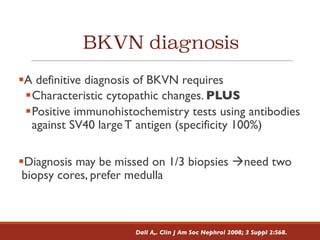
BKVN diagnosis
§A definitive diagnosis of BKVN requires
§Characteristic cytopathic changes. PLUS
§Positive immunohistochemistry tests using antibodies
against SV40 large T antigen (specificity 100%)
§Diagnosis may be missed on 1/3 biopsies àneed two
biopsy cores, prefer medulla
Dall A,. Clin J Am Soc Nephrol 2008; 3 Suppl 2:S68.
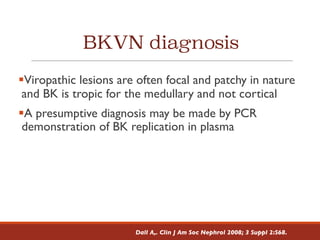
BKVN diagnosis
§Viropathic lesions are often focal and patchy in nature
and BK is tropic for the medullary and not cortical
§A presumptive diagnosis may be made by PCR
demonstration of BK replication in plasma
Dall A,. Clin J Am Soc Nephrol 2008; 3 Suppl 2:S68.
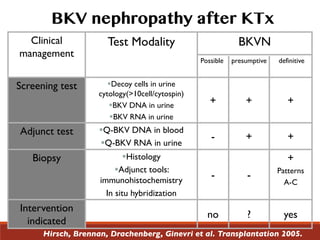
Clinical
management
Test Modality BKVN
Possible presumptive definitive
Screening test §Decoy cells in urine
cytology(>10cell/cytospin)
§BKV DNA in urine
§BKV RNA in urine
+ + +
Adjunct test §Q-BKV DNA in blood
§Q-BKV RNA in urine
- + +
Biopsy §Histology
§Adjunct tools:
immunohistochemistry
In situ hybridization
- -
+
Patterns
A-C
Intervention
indicated
no ? yes
BKV nephropathy after KTx
Hirsch, Brennan, Drachenberg, Ginevri et al. Transplantation 2005.
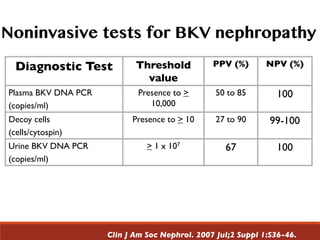
Diagnostic Test Threshold
value
PPV (%) NPV (%)
Plasma BKV DNA PCR
(copies/ml)
Presence to >
10,000
50 to 85 100
Decoy cells
(cells/cytospin)
Presence to > 10 27 to 90 99-100
Urine BKV DNA PCR
(copies/ml)
> 1 x 10⁷
67 100
Noninvasive tests for BKV nephropathy
Clin J Am Soc Nephrol. 2007 Jul;2 Suppl 1:S36-46.
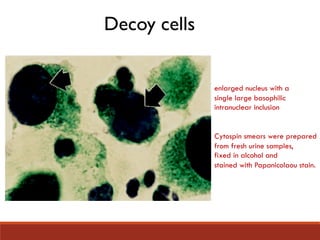
Decoy cells
enlarged nucleus with a
single large basophilic
intranuclear inclusion
Cytospin smears were prepared
from fresh urine samples,
fixed in alcohol and
stained with Papanicolaou stain.
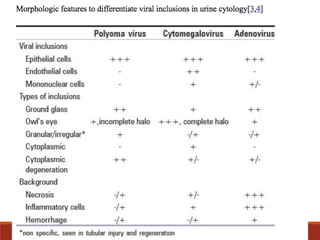
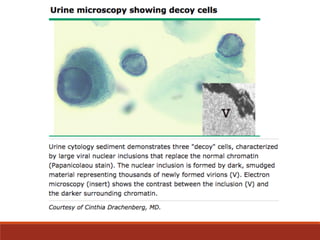
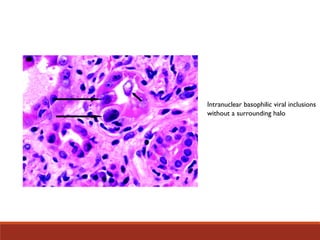
Intranuclear basophilic viral inclusions
without a surrounding halo
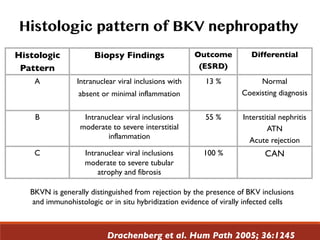
Histologic
Pattern
Biopsy Findings Outcome
(ESRD)
Differential
A Intranuclear viral inclusions with
absent or minimal inflammation
13 % Normal
Coexisting diagnosis
B Intranuclear viral inclusions
moderate to severe interstitial
inflammation
55 % Interstitial nephritis
ATN
Acute rejection
C Intranuclear viral inclusions
moderate to severe tubular
atrophy and fibrosis
100 % CAN
Histologic pattern of BKV nephropathy
Drachenberg et al. Hum Path 2005; 36:1245
BKVN is generally distinguished from rejection by the presence of BKV inclusions
and immunohistologic or in situ hybridization evidence of virally infected cells
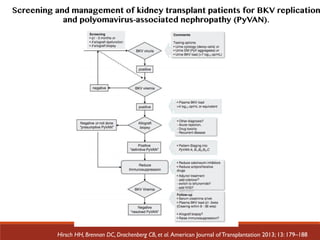
Screening and management of kidney transplant patients for BKV replication
and polyomavirus-associated nephropathy (PyVAN).
Hirsch HH, Brennan DC, Drachenberg CB, et al. American Journal of Transplantation 2013; 13: 179–188
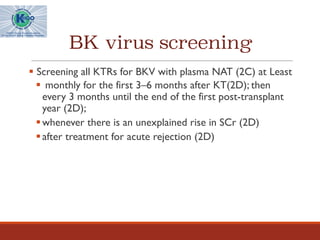
BK virus screening
§ Screening all KTRs for BKV with plasma NAT (2C) at Least
§ monthly for the first 3–6 months after KT(2D); then
every 3 months until the end of the first post-transplant
year (2D);
§whenever there is an unexplained rise in SCr (2D)
§after treatment for acute rejection (2D)
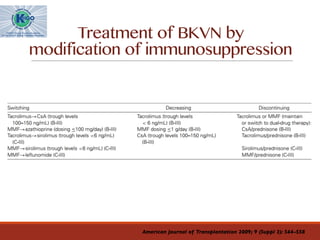
Treatment of BKVN by
modification of immunosuppression
American Journal of Transplantation 2009; 9 (Suppl 3): S44–S58
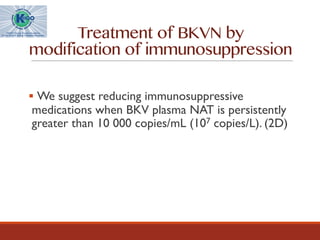
§ We suggest reducing immunosuppressive
medications when BKV plasma NAT is persistently
greater than 10 000 copies/mL (107 copies/L). (2D)
Treatment of BKVN by
modification of immunosuppression
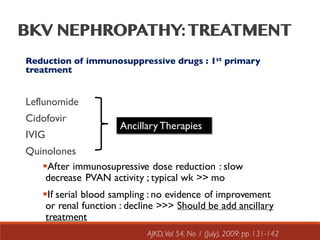
Reduction of immunosuppressive drugs : 1st primary
treatment
Leflunomide
Cidofovir
IVIG
Quinolones
Ancillary Therapies
§After immunosupressive dose reduction : slow
decrease PVAN activity ; typical wk >> mo
§If serial blood sampling : no evidence of improvement
or renal function : decline >>> Should be add ancillary
treatment
AJKD,Vol 54, No 1 (July), 2009: pp 131-142
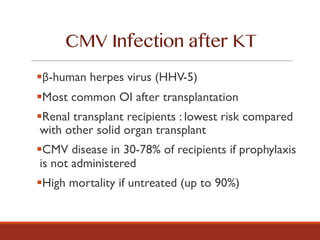
CMV Infection after KT
§β-human herpes virus (HHV-5)
§Most common OI after transplantation
§Renal transplant recipients : lowest risk compared
with other solid organ transplant
§CMV disease in 30-78% of recipients if prophylaxis
is not administered
§High mortality if untreated (up to 90%)
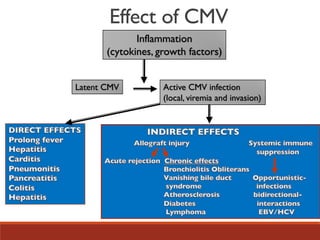
Effect of CMV
Inflammation
(cytokines, growth factors)
Latent CMV Active CMV infection
(local, viremia and invasion)
Terminology
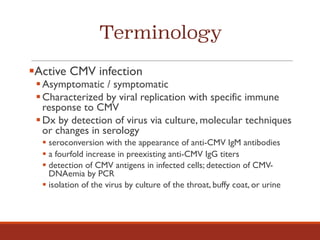
§Active CMV infection
§Asymptomatic / symptomatic
§Characterized by viral replication with specific immune
response to CMV
§Dx by detection of virus via culture, molecular techniques
or changes in serology
§ seroconversion with the appearance of anti-CMV IgM antibodies
§ a fourfold increase in preexisting anti-CMV IgG titers
§ detection of CMV antigens in infected cells; detection of CMV-
DNAemia by PCR
§ isolation of the virus by culture of the throat, buffy coat, or urine
Terminology
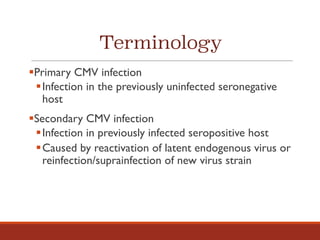
§Primary CMV infection
§Infection in the previously uninfected seronegative
host
§Secondary CMV infection
§Infection in previously infected seropositive host
§Caused by reactivation of latent endogenous virus or
reinfection/suprainfection of new virus strain
Terminology
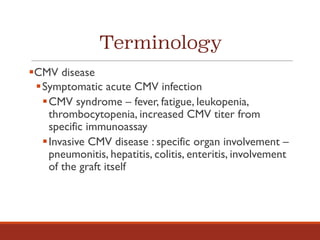
§CMV disease
§Symptomatic acute CMV infection
§CMV syndrome – fever, fatigue, leukopenia,
thrombocytopenia, increased CMV titer from
specific immunoassay
§Invasive CMV disease : specific organ involvement –
pneumonitis, hepatitis, colitis, enteritis, involvement
of the graft itself
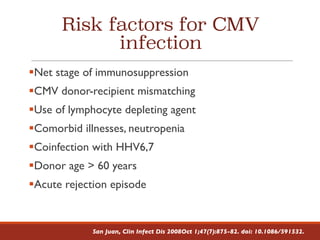
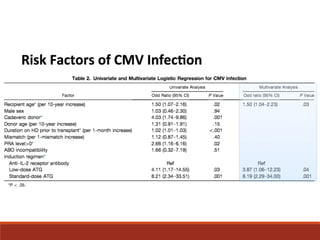
Risk factors for CMV
infection
§Net stage of immunosuppression
§CMV donor-recipient mismatching
§Use of lymphocyte depleting agent
§Comorbid illnesses, neutropenia
§Coinfection with HHV6,7
§Donor age > 60 years
§Acute rejection episode
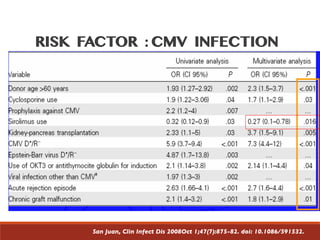
San Juan, Clin Infect Dis 2008Oct 1;47(7):875-82. doi: 10.1086/591532.
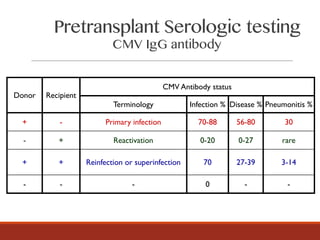
CMV IgG antibody
Donor Recipient
CMV Antibody status
Terminology Infection % Disease % Pneumonitis %
+ - Primary infection 70-88 56-80 30
- + Reactivation 0-20 0-27 rare
+ + Reinfection or superinfection 70 27-39 3-14
- - - 0 - -
Pretransplant Serologic testing
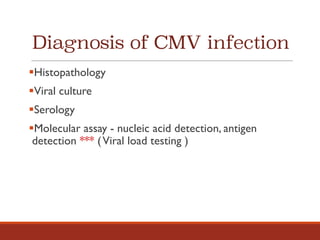
Diagnosis of CMV infection
§Histopathology
§Viral culture
§Serology
§Molecular assay - nucleic acid detection, antigen
detection *** (Viral load testing )
Diagnosis of CMV infection
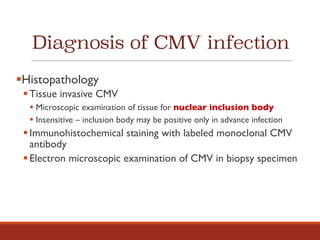
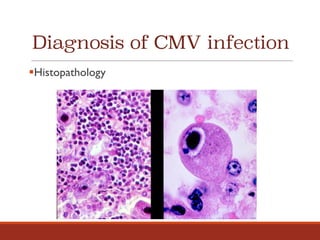
§Histopathology
§Tissue invasive CMV
§ Microscopic examination of tissue for nuclear inclusion body
§ Insensitive – inclusion body may be positive only in advance infection
§Immunohistochemical staining with labeled monoclonal CMV
antibody
§Electron microscopic examination of CMV in biopsy specimen
Diagnosis of CMV infection
§Histopathology
Diagnosis of CMV infection
§Viral culture
§Culture of urine, buffy coat, throat, BAL fluid
§Conventional culture – take weeks to process
§Detect typical cell cytopathic effect
§Rapid shell-vial culture technique : can be processed in 24
to 48 hours
§fluorescence tagged monoclonal antibody is used to
detect a CMV antigen expressed early in viral replication
§Not as sensitive as conventional culture
Diagnosis of CMV infection
§Serology
§Acute/convalescent
§CMV IgG or single IgM titer
§fourfold increase in CMV-IgG titer or a markedly
positive CMV-IgM titer may be used to suggest
recent infection
• Useful	for	screening	but	less	useful	for	diagnosis	of	
CMV	disease
• Serologic	response	may	be	delayed	or	absent	in	
primary	infection
Diagnosis of CMV infection
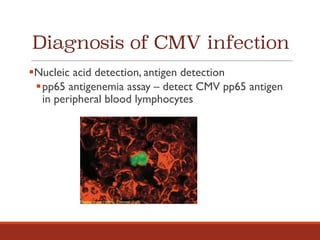
§Nucleic acid detection, antigen detection
§pp65 antigenemia assay – detect CMV pp65 antigen
in peripheral blood lymphocytes
Diagnosis of CMV infection
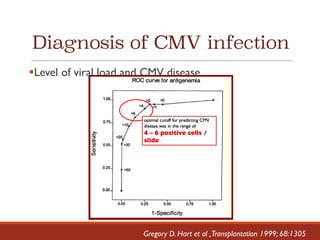
§Level of viral load and CMV disease
Gregory D. Hart et al ,Transplantation 1999; 68:1305
Diagnosis of CMV infection
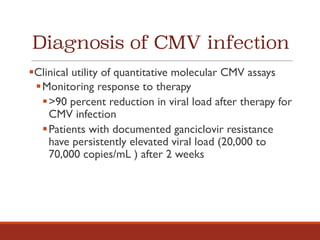
§Clinical utility of quantitative molecular CMV assays
§Monitoring response to therapy
§>90 percent reduction in viral load after therapy for
CMV infection
§Patients with documented ganciclovir resistance
have persistently elevated viral load (20,000 to
70,000 copies/mL ) after 2 weeks
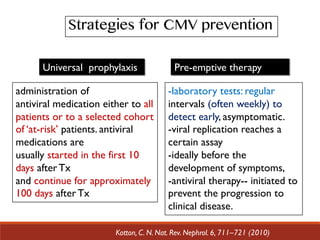
administration of
antiviral medication either to all
patients or to a selected cohort
of ‘at-risk’ patients. antiviral
medications are
usually started in the first 10
days after Tx
and continue for approximately
100 days after Tx
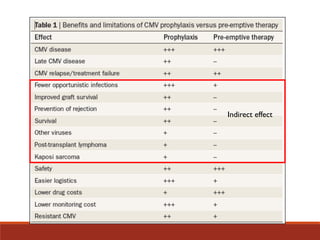
Universal prophylaxis
Kotton, C. N. Nat. Rev. Nephrol. 6, 711–721 (2010)
Pre-emptive therapy
-laboratory tests: regular
intervals (often weekly) to
detect early, asymptomatic.
-viral replication reaches a
certain assay
-ideally before the
development of symptoms,
-antiviral therapy-- initiated to
prevent the progression to
clinical disease.
Strategies for CMV prevention
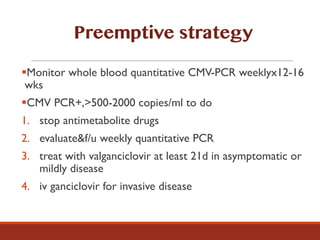
§Monitor whole blood quantitative CMV-PCR weeklyx12-16
wks
§CMV PCR+,>500-2000 copies/ml to do
1. stop antimetabolite drugs
2. evaluate&f/u weekly quantitative PCR
3. treat with valganciclovir at least 21d in asymptomatic or
mildly disease
4. iv ganciclovir for invasive disease
Preemptive strategy
Indirect effect
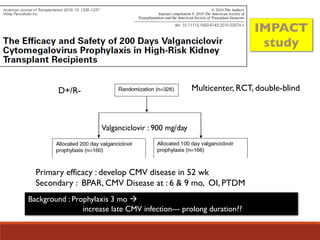
Multicenter, RCT, double-blindD+/R-
Valganciclovir : 900 mg/day
Primary efficacy : develop CMV disease in 52 wk
Secondary : BPAR, CMV Disease at : 6 & 9 mo, OI, PTDM
Background : Prophylaxis 3 mo à
increase late CMV infection--- prolong duration??
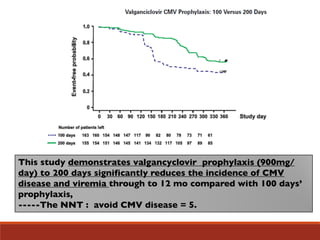
This study demonstrates valgancyclovir prophylaxis (900mg/
day) to 200 days significantly reduces the incidence of CMV
disease and viremia through to 12 mo compared with 100 days’
prophylaxis,
-----The NNT : avoid CMV disease = 5.
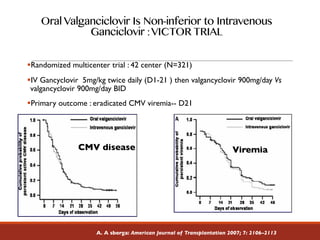
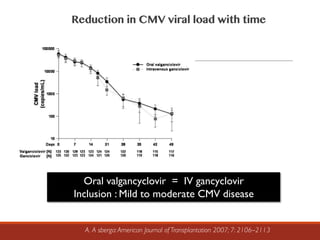
Oral Valganciclovir Is Non-inferior to Intravenous
Ganciclovir :VICTOR TRIAL
§Randomized multicenter trial : 42 center (N=321)
§IV Gancyclovir 5mg/kg twice daily (D1-21 ) then valgancyclovir 900mg/day Vs
valgancyclovir 900mg/day BID
§Primary outcome : eradicated CMV viremia-- D21
A. A sberga: American Journal of Transplantation 2007; 7: 2106–2113
CMV disease Viremia
A. A sberga:American Journal of Transplantation 2007; 7: 2106–2113
Oral valgancyclovir = IV gancyclovir
Inclusion : Mild to moderate CMV disease
Reduction in CMV viral load with time
Prophylaxis of CMV disease
American Journal of Transplantation 2009; 9 (Suppl 3): S44–S58
§ CMV prophylaxis:
§ We recommend that KTRs (except when donor and recipient both have
negative CMV serologies) receive chemoprophylaxis for CMV infection
with oral ganciclovir or valganciclovir
§ for at least 3 months after transplantation (1B)
§ for 6 weeks after treatment with aT-cell–depleting antibody. (1C)
Treatment of CMV disease
American Journal of Transplantation 2009; 9 (Suppl 3): S44–S58
§ All patients with serious (with tissue invasive) CMV disease be treated
with IV ganciclovir. (1D)
§ CMV disease in adult KTRs that is not serious (e.g. episodes that are
associated with mild clinical symptoms) be treated with either IV
ganciclovir or oral valganciclovir. (1D)
§ Continuing therapy until CMV is no longer detectable by plasma NAT
or pp65 antigenemia. (2D)
§ Suggest reducing immunosuppressive medication in life-threatening
CMV disease, and CMV disease that persists in the face of treatment,
until CMV disease has resolved. (2D)
Treatment of CMV disease
§Standard treatment
§Intravenous Ganciclovir 5 mg/kg every 12 hours
continue for 2-3 weeks
§Valganciclovir 900 mg twice daily for 21 day
§Reduction of immunosuppressive drugs if disease is
severe
§Patients with ongoing risk factors should receive
maintainance immunosuppressive therapy
§Leucopenia,granulocytopenia***
§Thrombocytopenia
§Azoospermia
( due to direct inhibit sperm-producting cells)
§Mild elevation serum Cr
• Usually	reversible	after	reducing	dose	or	stop	drug
• Prevent	with		concomitant	recombinant	G-CSF
Ganciclovir : Toxicity
Monitoring of CMV disease
American Journal of Transplantation 2009; 9 (Suppl 3): S44–S58
§ In patients with CMV disease, we suggest weekly monitoring of CMV by NAT
or pp65 antigenemia. (2D)
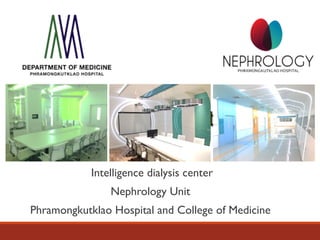
Intelligence dialysis center
Nephrology Unit
Phramongkutklao Hospital and College of Medicine

kidney transplantation infection

  • 1.
    Infection following renaltransplantation Maj. Chaken Maniyan M.D. Nephrology Fellow, Phramongkutklao Hospital 6.1.2017 Topic review
  • 2.
    Scope § Epidemiology ofpost KT infection § 4 categories exposures § Timeline of various infection § Selected important post KT infection §BK virus §Cytomegalovirus
  • 3.
    Incidence of infectiousdiseases in solid-organ transplant recipient David R. Snydman Clin Infect Dis. 2001;33:S5-S8
  • 4.
    Epidemiologic Exposures : 4categories § Donor-derived infections Most often infections § Recipient-derived infections § Nosocomial infections § Community infections Fishman JA: Infection in solid-organ transplant recipients. N Engl J Med 357: 2601–2614, 2007
  • 5.
    Donor-Derived Infections §Bacteremia orfungemia infections (S.aureus, Candida species, Gram-neg bacteria) in donors at the time of donation can cause local (abscess) or systemic (bacteremic) infections, and may selectively adhere to anastomotic sites (vascular, urinary) to produce leaks or mycotic aneurysms. §Virus: (CMV,BK) : greatest risk : seropositive to seronegative recipients §Latent infections, such as tuberculosis, toxoplasmosis, or strongyloidiasis Seminars in Nephrology, Vol 27, No 4, July 2007, pp 445-461
  • 6.
    § Colonization orlatent infections that reactivate in the setting of immune suppression § Common pathogens :TB ,parasites (e.g., Strongyloides stercoralis & T. cruzi), viruses (CMV, EBV, herpes simplex, varicella–zoster virus ,HBV, HCV, and HIV), and endemic fungi( Histoplasma capsulatum, Coccidioides immitis, & Paracoccidioides brasiliensis) Recipient -Derived Infections Fishman JA: Infection in solid-organ transplant recipients. N Engl J Med 357: 2601–2614, 2007
  • 7.
    §Patients waiting fortransplantation :colonized with nosocomial, antimicrobial-resistant organisms :MRSA, VRE ,fluconazole-resistant candida species, C. difficile, & antimicrobial-resistant GNB or aspergillus species.35- 43 §Cause pneumonia or may infect hematomas, ascitic fluid, wound & catheters Fishman JA: Infection in solid-organ transplant recipients. N Engl J Med 357: 2601–2614, 2007 Nosocomial Infections and Antimicrobial Resistance
  • 8.
    § Contaminated foodor water, family or coworkers § Common: respiratory viruses and atypical pathogens § CMV & EBV may produce severe 1o infection in nonimmune host § Geographically systemic mycoses (Blastomyces, Coccidioides, and Histoplasma) § Mycobacterium § Strongyloides stercoralis infection Fishman JA: Infection in solid-organ transplant recipients. N Engl J Med 357: 2601–2614, 2007 Community Infections
  • 9.
    Timeline of Infectionafter Solid organ Transplantation Fishman JA: Infection in solid-organ transplant recipients. N Engl J Med 357: 2601–2614, 2007
  • 10.
    The first month 1.Infectionbefore transplantation 2.Bacterial or candidal infection § undetected systemic infection in the donor- § contamination during the organ procurement 3.Infection of surgical wound , lungs , vascular access , drainage catheters Fishman JA: Infection in solid-organ transplant recipients. N Engl J Med 357: 2601–2614, 2007
  • 11.
    One to sixmonths after transplantation § 70% febrile episodes => CMV § Infectious disease syndrome : § CMV , EBV , HBV , HCV §Opportunistic infection : §PCP , L. monocytogenes,Aspergillus Fishman JA: Infection in solid-organ transplant recipients. N Engl J Med 357: 2601–2614, 2007
  • 12.
    More than 6months after transplantation §Divided into 3 groups in terms of infection risk 1. good result of transplantation : resemble as general 2. chronic viral infection ( absence of effective therapy ) 3. poor result of transplantation Opportunistic infection :PCP , Nocardia , L. monocytogenes, Aspergillus Fishman JA: Infection in solid-organ transplant recipients. N Engl J Med 357: 2601–2614, 2007
  • 13.
    Incidence of invasivefungal infections among transplant recipients Singh N. Infect Dis Clin North Am 2003; 17: 11
  • 14.
    §Human herpes viruses §HSV1,2,VZV, EBV,CMV, HHV6,HHV7,HHV8 §Respiratory viruses §Influenza, parainfluenza, RSV adenovirus §Polyomavirus (BK, JC virus) §Norovirus §Hepatitis B , C Viral infection
  • 15.
    Bohl, D. L.et al. Clin J Am Soc Nephrol 2007;2:S36-S46 - dsDNA virus,belong to the Papovaviridae virus family - Progression from viruria to viremia to nephropathy generally is accepted as a Stepwise transition Polyomavirus
  • 16.
    Polyomavirus: virology Circular, dsDNAgenome ~5200 base pairs Early genes (regulatory): large T- antigen and small t-antigen Late genes (structural):VP1,VP2, VP3, and agnoprotein Non-coding control region (NCCR): contains the origin and transcription factor binding sites
  • 17.
    §Primary infection :childhood (oral and/or respiratory exposure) à resolved àVIRAL ENTER latent phase : urogenital tract (kidneys (transitional epithelium, renal tubular epithelium, and parietal epithelium of Bowman's capsule)), bladder, prostate) & hematolymphoid tissue §Reactivation : Latent infection :old age, DM ,pregnancy, immunosuppressed state §Clinical : transient renal dysfunction hemorrhagic cystitis (BMT recipients) ureteral obstruction/ ureteric stenosis Lacking ; systemic symptoms P.Randhawa,Transplantation Review 2007(21);77-85 Clinical feature
  • 18.
    BKV infection afterkidney transplantation §Reactivation/primary infection in KTx recipients §Asymptomatic infection §Ureteral stenosis §Systemic vasculopathy §Interstitial nephropathy (BKV nephropathy) §onset of the disease occurs at a mean period of 10-13 months posttransplantation but at least 25% of cases are diagnosed later § 10-80% graft loss: but, with increased awareness and improved diagnostic techniques, the rate of graft loss has lowered Dall A,. Clin J Am Soc Nephrol 2008; 3 Suppl 2:S68.
  • 20.
    Patient determinants §Age>50; male gender;diabetes §Negative serostatus before transplantation §Absence of HLA-C7 Organ determinants §Degree of ABO/ HLA matching §Prior rejection episodes §Renal tissue injury §BK antibody status in donors Viral determinants §Viral subtypes: variantVP1 & NCCR ;PATHOGENICITY §Synergistic viral infection : CMV infection Immuno suppression Major risk factor for BKVN: “over-immunosuppression” rather than a specific agent P.Randhawa,Transplantation Review 2007(21);77-85
  • 21.
    BKVN diagnosis §A definitivediagnosis of BKVN requires §Characteristic cytopathic changes. PLUS §Positive immunohistochemistry tests using antibodies against SV40 large T antigen (specificity 100%) §Diagnosis may be missed on 1/3 biopsies àneed two biopsy cores, prefer medulla Dall A,. Clin J Am Soc Nephrol 2008; 3 Suppl 2:S68.
  • 22.
    BKVN diagnosis §Viropathic lesionsare often focal and patchy in nature and BK is tropic for the medullary and not cortical §A presumptive diagnosis may be made by PCR demonstration of BK replication in plasma Dall A,. Clin J Am Soc Nephrol 2008; 3 Suppl 2:S68.
  • 23.
    Clinical management Test Modality BKVN Possiblepresumptive definitive Screening test §Decoy cells in urine cytology(>10cell/cytospin) §BKV DNA in urine §BKV RNA in urine + + + Adjunct test §Q-BKV DNA in blood §Q-BKV RNA in urine - + + Biopsy §Histology §Adjunct tools: immunohistochemistry In situ hybridization - - + Patterns A-C Intervention indicated no ? yes BKV nephropathy after KTx Hirsch, Brennan, Drachenberg, Ginevri et al. Transplantation 2005.
  • 24.
    Diagnostic Test Threshold value PPV(%) NPV (%) Plasma BKV DNA PCR (copies/ml) Presence to > 10,000 50 to 85 100 Decoy cells (cells/cytospin) Presence to > 10 27 to 90 99-100 Urine BKV DNA PCR (copies/ml) > 1 x 10⁷ 67 100 Noninvasive tests for BKV nephropathy Clin J Am Soc Nephrol. 2007 Jul;2 Suppl 1:S36-46.
  • 25.
    Decoy cells enlarged nucleuswith a single large basophilic intranuclear inclusion Cytospin smears were prepared from fresh urine samples, fixed in alcohol and stained with Papanicolaou stain.
  • 28.
    Intranuclear basophilic viralinclusions without a surrounding halo
  • 29.
    Histologic Pattern Biopsy Findings Outcome (ESRD) Differential AIntranuclear viral inclusions with absent or minimal inflammation 13 % Normal Coexisting diagnosis B Intranuclear viral inclusions moderate to severe interstitial inflammation 55 % Interstitial nephritis ATN Acute rejection C Intranuclear viral inclusions moderate to severe tubular atrophy and fibrosis 100 % CAN Histologic pattern of BKV nephropathy Drachenberg et al. Hum Path 2005; 36:1245 BKVN is generally distinguished from rejection by the presence of BKV inclusions and immunohistologic or in situ hybridization evidence of virally infected cells
  • 30.
    Screening and managementof kidney transplant patients for BKV replication and polyomavirus-associated nephropathy (PyVAN). Hirsch HH, Brennan DC, Drachenberg CB, et al. American Journal of Transplantation 2013; 13: 179–188
  • 31.
    BK virus screening §Screening all KTRs for BKV with plasma NAT (2C) at Least § monthly for the first 3–6 months after KT(2D); then every 3 months until the end of the first post-transplant year (2D); §whenever there is an unexplained rise in SCr (2D) §after treatment for acute rejection (2D)
  • 32.
    Treatment of BKVNby modification of immunosuppression American Journal of Transplantation 2009; 9 (Suppl 3): S44–S58
  • 33.
    § We suggestreducing immunosuppressive medications when BKV plasma NAT is persistently greater than 10 000 copies/mL (107 copies/L). (2D) Treatment of BKVN by modification of immunosuppression
  • 34.
    Reduction of immunosuppressivedrugs : 1st primary treatment Leflunomide Cidofovir IVIG Quinolones Ancillary Therapies §After immunosupressive dose reduction : slow decrease PVAN activity ; typical wk >> mo §If serial blood sampling : no evidence of improvement or renal function : decline >>> Should be add ancillary treatment AJKD,Vol 54, No 1 (July), 2009: pp 131-142
  • 35.
    CMV Infection afterKT §β-human herpes virus (HHV-5) §Most common OI after transplantation §Renal transplant recipients : lowest risk compared with other solid organ transplant §CMV disease in 30-78% of recipients if prophylaxis is not administered §High mortality if untreated (up to 90%)
  • 36.
    Effect of CMV Inflammation (cytokines,growth factors) Latent CMV Active CMV infection (local, viremia and invasion)
  • 37.
    Terminology §Active CMV infection §Asymptomatic/ symptomatic §Characterized by viral replication with specific immune response to CMV §Dx by detection of virus via culture, molecular techniques or changes in serology § seroconversion with the appearance of anti-CMV IgM antibodies § a fourfold increase in preexisting anti-CMV IgG titers § detection of CMV antigens in infected cells; detection of CMV- DNAemia by PCR § isolation of the virus by culture of the throat, buffy coat, or urine
  • 38.
    Terminology §Primary CMV infection §Infectionin the previously uninfected seronegative host §Secondary CMV infection §Infection in previously infected seropositive host §Caused by reactivation of latent endogenous virus or reinfection/suprainfection of new virus strain
  • 39.
    Terminology §CMV disease §Symptomatic acuteCMV infection §CMV syndrome – fever, fatigue, leukopenia, thrombocytopenia, increased CMV titer from specific immunoassay §Invasive CMV disease : specific organ involvement – pneumonitis, hepatitis, colitis, enteritis, involvement of the graft itself
  • 40.
    Risk factors forCMV infection §Net stage of immunosuppression §CMV donor-recipient mismatching §Use of lymphocyte depleting agent §Comorbid illnesses, neutropenia §Coinfection with HHV6,7 §Donor age > 60 years §Acute rejection episode San Juan, Clin Infect Dis 2008Oct 1;47(7):875-82. doi: 10.1086/591532.
  • 41.
    San Juan, ClinInfect Dis 2008Oct 1;47(7):875-82. doi: 10.1086/591532.
  • 45.
    CMV IgG antibody DonorRecipient CMV Antibody status Terminology Infection % Disease % Pneumonitis % + - Primary infection 70-88 56-80 30 - + Reactivation 0-20 0-27 rare + + Reinfection or superinfection 70 27-39 3-14 - - - 0 - - Pretransplant Serologic testing
  • 46.
    Diagnosis of CMVinfection §Histopathology §Viral culture §Serology §Molecular assay - nucleic acid detection, antigen detection *** (Viral load testing )
  • 47.
    Diagnosis of CMVinfection §Histopathology §Tissue invasive CMV § Microscopic examination of tissue for nuclear inclusion body § Insensitive – inclusion body may be positive only in advance infection §Immunohistochemical staining with labeled monoclonal CMV antibody §Electron microscopic examination of CMV in biopsy specimen
  • 48.
    Diagnosis of CMVinfection §Histopathology
  • 49.
    Diagnosis of CMVinfection §Viral culture §Culture of urine, buffy coat, throat, BAL fluid §Conventional culture – take weeks to process §Detect typical cell cytopathic effect §Rapid shell-vial culture technique : can be processed in 24 to 48 hours §fluorescence tagged monoclonal antibody is used to detect a CMV antigen expressed early in viral replication §Not as sensitive as conventional culture
  • 50.
    Diagnosis of CMVinfection §Serology §Acute/convalescent §CMV IgG or single IgM titer §fourfold increase in CMV-IgG titer or a markedly positive CMV-IgM titer may be used to suggest recent infection • Useful for screening but less useful for diagnosis of CMV disease • Serologic response may be delayed or absent in primary infection
  • 51.
    Diagnosis of CMVinfection §Nucleic acid detection, antigen detection §pp65 antigenemia assay – detect CMV pp65 antigen in peripheral blood lymphocytes
  • 52.
    Diagnosis of CMVinfection §Level of viral load and CMV disease Gregory D. Hart et al ,Transplantation 1999; 68:1305
  • 53.
    Diagnosis of CMVinfection §Clinical utility of quantitative molecular CMV assays §Monitoring response to therapy §>90 percent reduction in viral load after therapy for CMV infection §Patients with documented ganciclovir resistance have persistently elevated viral load (20,000 to 70,000 copies/mL ) after 2 weeks
  • 54.
    administration of antiviral medicationeither to all patients or to a selected cohort of ‘at-risk’ patients. antiviral medications are usually started in the first 10 days after Tx and continue for approximately 100 days after Tx Universal prophylaxis Kotton, C. N. Nat. Rev. Nephrol. 6, 711–721 (2010) Pre-emptive therapy -laboratory tests: regular intervals (often weekly) to detect early, asymptomatic. -viral replication reaches a certain assay -ideally before the development of symptoms, -antiviral therapy-- initiated to prevent the progression to clinical disease. Strategies for CMV prevention
  • 55.
    §Monitor whole bloodquantitative CMV-PCR weeklyx12-16 wks §CMV PCR+,>500-2000 copies/ml to do 1. stop antimetabolite drugs 2. evaluate&f/u weekly quantitative PCR 3. treat with valganciclovir at least 21d in asymptomatic or mildly disease 4. iv ganciclovir for invasive disease Preemptive strategy
  • 56.
  • 57.
    Multicenter, RCT, double-blindD+/R- Valganciclovir: 900 mg/day Primary efficacy : develop CMV disease in 52 wk Secondary : BPAR, CMV Disease at : 6 & 9 mo, OI, PTDM Background : Prophylaxis 3 mo à increase late CMV infection--- prolong duration??
  • 58.
    This study demonstratesvalgancyclovir prophylaxis (900mg/ day) to 200 days significantly reduces the incidence of CMV disease and viremia through to 12 mo compared with 100 days’ prophylaxis, -----The NNT : avoid CMV disease = 5.
  • 59.
    Oral Valganciclovir IsNon-inferior to Intravenous Ganciclovir :VICTOR TRIAL §Randomized multicenter trial : 42 center (N=321) §IV Gancyclovir 5mg/kg twice daily (D1-21 ) then valgancyclovir 900mg/day Vs valgancyclovir 900mg/day BID §Primary outcome : eradicated CMV viremia-- D21 A. A sberga: American Journal of Transplantation 2007; 7: 2106–2113 CMV disease Viremia
  • 60.
    A. A sberga:AmericanJournal of Transplantation 2007; 7: 2106–2113 Oral valgancyclovir = IV gancyclovir Inclusion : Mild to moderate CMV disease Reduction in CMV viral load with time
  • 61.
    Prophylaxis of CMVdisease American Journal of Transplantation 2009; 9 (Suppl 3): S44–S58 § CMV prophylaxis: § We recommend that KTRs (except when donor and recipient both have negative CMV serologies) receive chemoprophylaxis for CMV infection with oral ganciclovir or valganciclovir § for at least 3 months after transplantation (1B) § for 6 weeks after treatment with aT-cell–depleting antibody. (1C)
  • 62.
    Treatment of CMVdisease American Journal of Transplantation 2009; 9 (Suppl 3): S44–S58 § All patients with serious (with tissue invasive) CMV disease be treated with IV ganciclovir. (1D) § CMV disease in adult KTRs that is not serious (e.g. episodes that are associated with mild clinical symptoms) be treated with either IV ganciclovir or oral valganciclovir. (1D) § Continuing therapy until CMV is no longer detectable by plasma NAT or pp65 antigenemia. (2D) § Suggest reducing immunosuppressive medication in life-threatening CMV disease, and CMV disease that persists in the face of treatment, until CMV disease has resolved. (2D)
  • 63.
    Treatment of CMVdisease §Standard treatment §Intravenous Ganciclovir 5 mg/kg every 12 hours continue for 2-3 weeks §Valganciclovir 900 mg twice daily for 21 day §Reduction of immunosuppressive drugs if disease is severe §Patients with ongoing risk factors should receive maintainance immunosuppressive therapy
  • 64.
    §Leucopenia,granulocytopenia*** §Thrombocytopenia §Azoospermia ( due todirect inhibit sperm-producting cells) §Mild elevation serum Cr • Usually reversible after reducing dose or stop drug • Prevent with concomitant recombinant G-CSF Ganciclovir : Toxicity
  • 65.
    Monitoring of CMVdisease American Journal of Transplantation 2009; 9 (Suppl 3): S44–S58 § In patients with CMV disease, we suggest weekly monitoring of CMV by NAT or pp65 antigenemia. (2D)
  • 66.
    Intelligence dialysis center NephrologyUnit Phramongkutklao Hospital and College of Medicine