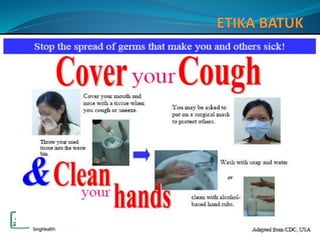
What the Cough 
Etiquette/ Respiratory 
Hygiene?
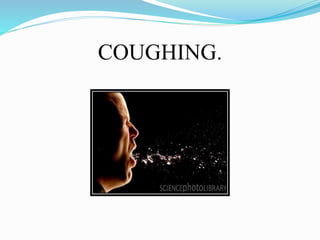
COUGHING.
(From Policies and Procedures on infection control , May 2010) 
Cough etiquette/respiratory hygiene is controlling 
the spread of pathogens from infected patients 
( source control) is key to avoid transmission to 
unprotected contact. 
For diseases transmitted through large droplets or 
droplet nuclei, respiratory hygiene/ cough 
etiquette should be applied by all individuals with 
respiratory symptoms. 
All individuals (HCWs, patient and visitors) with 
signs and symptoms of a respiratory infection 
should:
Cont……. 
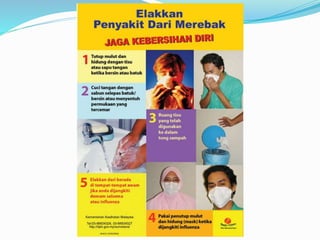
Cover their mouth and nose when 
coughing/sneezing; 
Use tissues, handkerchiefs, cloth mask or medical 
masks if available, as sourcecontrol to contain 
respiratory secretions and dispose of them into the 
waste containers; 
Use medical mask on a coughing/sneezing person 
when tolerated and appropriate and perform hand 
hygiene.
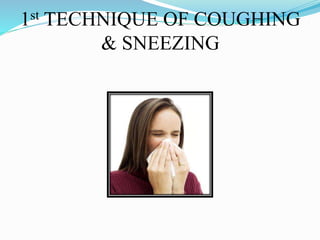
1st TECHNIQUE OF COUGHING 
& SNEEZING
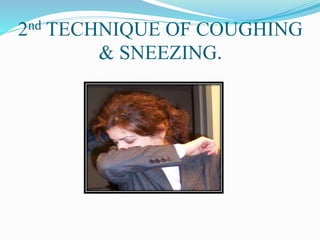
2nd TECHNIQUE OF COUGHING 
& SNEEZING.
Cont… 
Hospital should promote respiratory hygiene/ 
cough etiquette: 
Promote the use of respiratory 
hygiene/cough etiquette by all HCWs, patient 
and family members with acute febrile 
respiratory illness; 
 Educate HCWs, patient, family members and 
visitors on the importance of containing 
respiratory aerosois and secretion to help prevent 
the transmission of respiratory disease;
Cont… 
Consider providing resources for hand hygiene 
(e.g. dispensers of alcohol-base hand rubs, hand-washing 
supplied) and respiratory hygiene (e.g. 
tissues); areas of gatthering,such as waiting rooms, 
should be prioritized.
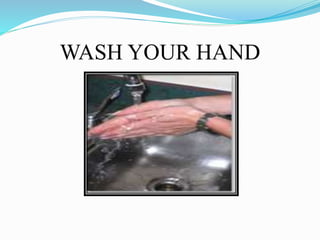
WASH YOUR HAND
Cough 
Etiquette/Respiratory 
hygiene in Healthcare 
Settings
(From CDC info 1 Aug. 2009) 
DEFINATION 
To prevent the transmission of all respiratory 
infections in healthcare settings, including influenza, 
the following infection control measures should be 
implemented at the first point of contact with a 
potentially infected person. They should be 
incorporated into infection control practices as one 
component of Standard Precautions.
Visual Alerts 
At the entrance to outpatient facilities (e.g., 
Emergency Departments, Physician Offices, 
outpatient clinics) instructing patients and 
persons who accompany them (e.g., family, 
friends) to inform healthcare personnel of 
symptoms of a respiratory infection when 
they first register for care and to practice 
Respiratory Hygiene/Cough Etiquette.
Masking and Separation of Persons with Respiratory 
Symptoms 
During periods of increased respiratory infection 
activity in the community, offer masks to persons 
who are coughing. 
Either procedure masks or surgical masks may be 
used to contain respiratory secretions. 
When space and chair availability permit, 
encourage coughing persons to sit at least three 
feet away from others in common waiting areas. 
Some facilities may find it logistically easier to 
institute this recommendation year-round.
We need to be prepared!! 
HOW?
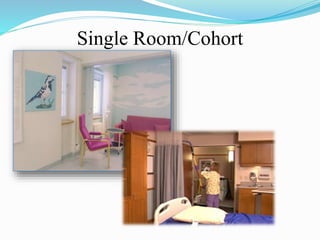
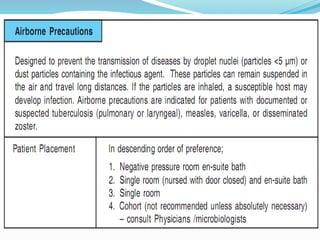
Patient Placement 
1. Negative pressure room en-suite bath 
2. Single room(nurse with door Closed) and 
en-suite bath
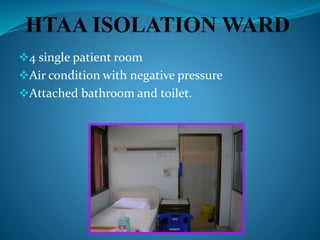
4 single patient room 
Air condition with negative pressure 
Attached bathroom and toilet.
Single Room/Cohort
Respiratory Protection(N95) 
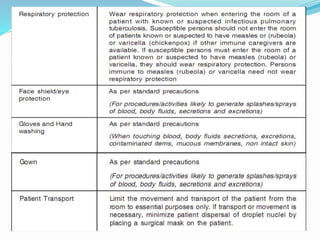
Wear respiratory protection(N95) 
when entering the room of a patient 
with known or suspected infectious 
pulmonary tuberculosis.
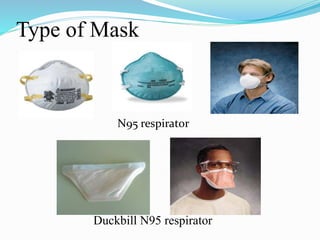
Type of Mask 
N95 respirator 
Duckbill N95 respirator
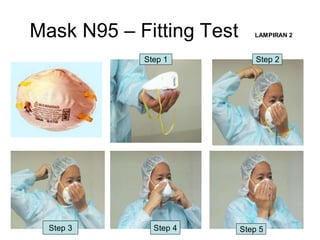
Mask N95 – Fitting Test LAMPIRAN 2 
Step 1 Step 2 
Step 3 Step 4 Step 5
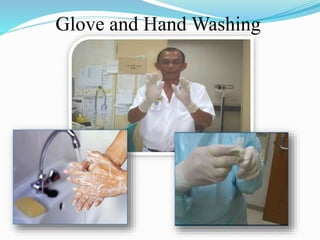
Glove and Hand Washing
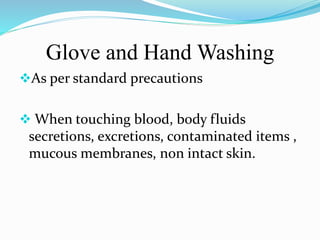
Glove and Hand Washing 
As per standard precautions 
 When touching blood, body fluids 
secretions, excretions, contaminated items , 
mucous membranes, non intact skin.
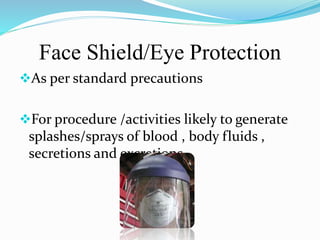
Face Shield/Eye Protection 
As per standard precautions 
For procedure /activities likely to generate 
splashes/sprays of blood , body fluids , 
secretions and excretions.
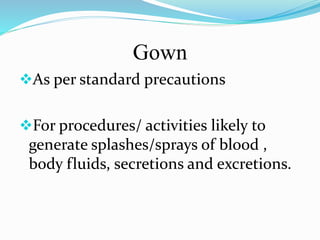
Gown 
As per standard precautions 
For procedures/ activities likely to 
generate splashes/sprays of blood , 
body fluids, secretions and excretions.
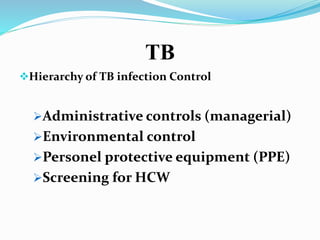
TB 
Hierarchy of TB infection Control 
Administrative controls (managerial) 
Environmental control 
Personel protective equipment (PPE) 
Screening for HCW
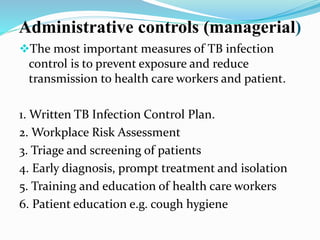
Administrative controls (managerial) 
The most important measures of TB infection 
control is to prevent exposure and reduce 
transmission to health care workers and patient. 
1. Written TB Infection Control Plan. 
2. Workplace Risk Assessment 
3. Triage and screening of patients 
4. Early diagnosis, prompt treatment and isolation 
5. Training and education of health care workers 
6. Patient education e.g. cough hygiene
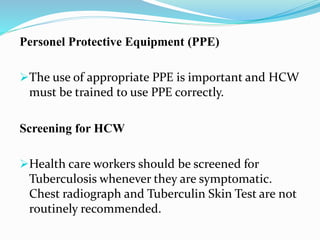
Personel Protective Equipment (PPE) 
The use of appropriate PPE is important and HCW 
must be trained to use PPE correctly. 
Screening for HCW 
Health care workers should be screened for 
Tuberculosis whenever they are symptomatic. 
Chest radiograph and Tuberculin Skin Test are not 
routinely recommended.
Inpatient Setting 
 All patients with infectious or potentially infectious Tuberculosis should 
be placed in(Airborne Infection Isolation /Negative Pressure) AII room if 
possible. However, if AII room is not available, TB patients should be 
cohorted from non tuberculosis patient, infectious from non infectious TB 
patients. 
 Isolation ward or area for TB patients should have maximum natural 
ventilation, mechanical ventilation by local exaust ventilation and air 
cleaning methods such as HEPA filter and/or Ultraviolet Germicidal 
Irradiation (UVGI) whenever appropriate. 
 All patients suspected or confirm TB should be educated about the 
importance of cough etiquette (refer to std precaution) and wear surgical 
or close the mouth/nose when sneezing or coughing.
Cont… 
All health care workers handling infectious TB 
patients should use PPE properly, ideally at least 
N95 mask. HCW handling non infectious or 
unconfirmed cases should use N95 whenever 
possible. 
Only minimum number of visitors should be 
allowed to visit active TB patient in the Ward. 
Protections for visitor are similar to medical staff.
Outpatient and Emergency 
Department 
Triage. 
Triaging patient at the counter should be done to 
identify high risk patients by history taking 
(patient with history of cough for more than 2 
weeks). Specific waiting area or room for patients 
are recommended. 
 Signage directing patients with chronic cough to 
go to specific or identified counter. These patients 
should be provided with surgical mask. 
 Provide N95 respirator for HCW in-charge of 
triaging.
Cont… 
Educate patient with suspected or confirmed 
infectious TB disease on strict respiratory hygiene 
and cough etiquette. 
 Sputum induction room should be made available 
at OPD. 
 Ideally patients should be seen in a designated 
consultation room for TB equipped with 
appropriate environmental control, good 
ventilation with or without UV light. HCW should 
be protected using N95.
KAWALAN INFEKSI HOSPITAL

KAWALAN INFEKSI HOSPITAL

  • 2.
    What the Cough Etiquette/ Respiratory Hygiene?
  • 3.
  • 4.
    (From Policies andProcedures on infection control , May 2010) Cough etiquette/respiratory hygiene is controlling the spread of pathogens from infected patients ( source control) is key to avoid transmission to unprotected contact. For diseases transmitted through large droplets or droplet nuclei, respiratory hygiene/ cough etiquette should be applied by all individuals with respiratory symptoms. All individuals (HCWs, patient and visitors) with signs and symptoms of a respiratory infection should:
  • 5.
    Cont……. Cover theirmouth and nose when coughing/sneezing; Use tissues, handkerchiefs, cloth mask or medical masks if available, as sourcecontrol to contain respiratory secretions and dispose of them into the waste containers; Use medical mask on a coughing/sneezing person when tolerated and appropriate and perform hand hygiene.
  • 7.
    1st TECHNIQUE OFCOUGHING & SNEEZING
  • 8.
    2nd TECHNIQUE OFCOUGHING & SNEEZING.
  • 9.
    Cont… Hospital shouldpromote respiratory hygiene/ cough etiquette: Promote the use of respiratory hygiene/cough etiquette by all HCWs, patient and family members with acute febrile respiratory illness;  Educate HCWs, patient, family members and visitors on the importance of containing respiratory aerosois and secretion to help prevent the transmission of respiratory disease;
  • 10.
    Cont… Consider providingresources for hand hygiene (e.g. dispensers of alcohol-base hand rubs, hand-washing supplied) and respiratory hygiene (e.g. tissues); areas of gatthering,such as waiting rooms, should be prioritized.
  • 11.
  • 12.
  • 13.
    (From CDC info1 Aug. 2009) DEFINATION To prevent the transmission of all respiratory infections in healthcare settings, including influenza, the following infection control measures should be implemented at the first point of contact with a potentially infected person. They should be incorporated into infection control practices as one component of Standard Precautions.
  • 14.
    Visual Alerts Atthe entrance to outpatient facilities (e.g., Emergency Departments, Physician Offices, outpatient clinics) instructing patients and persons who accompany them (e.g., family, friends) to inform healthcare personnel of symptoms of a respiratory infection when they first register for care and to practice Respiratory Hygiene/Cough Etiquette.
  • 15.
    Masking and Separationof Persons with Respiratory Symptoms During periods of increased respiratory infection activity in the community, offer masks to persons who are coughing. Either procedure masks or surgical masks may be used to contain respiratory secretions. When space and chair availability permit, encourage coughing persons to sit at least three feet away from others in common waiting areas. Some facilities may find it logistically easier to institute this recommendation year-round.
  • 16.
    We need tobe prepared!! HOW?
  • 17.
    Patient Placement 1.Negative pressure room en-suite bath 2. Single room(nurse with door Closed) and en-suite bath
  • 18.
    4 single patientroom Air condition with negative pressure Attached bathroom and toilet.
  • 19.
  • 20.
    Respiratory Protection(N95) Wearrespiratory protection(N95) when entering the room of a patient with known or suspected infectious pulmonary tuberculosis.
  • 21.
    Type of Mask N95 respirator Duckbill N95 respirator
  • 22.
    Mask N95 –Fitting Test LAMPIRAN 2 Step 1 Step 2 Step 3 Step 4 Step 5
  • 23.
  • 24.
    Glove and HandWashing As per standard precautions  When touching blood, body fluids secretions, excretions, contaminated items , mucous membranes, non intact skin.
  • 25.
    Face Shield/Eye Protection As per standard precautions For procedure /activities likely to generate splashes/sprays of blood , body fluids , secretions and excretions.
  • 26.

    Gown As perstandard precautions For procedures/ activities likely to generate splashes/sprays of blood , body fluids, secretions and excretions.
  • 30.
    TB Hierarchy ofTB infection Control Administrative controls (managerial) Environmental control Personel protective equipment (PPE) Screening for HCW
  • 31.
    Administrative controls (managerial) The most important measures of TB infection control is to prevent exposure and reduce transmission to health care workers and patient. 1. Written TB Infection Control Plan. 2. Workplace Risk Assessment 3. Triage and screening of patients 4. Early diagnosis, prompt treatment and isolation 5. Training and education of health care workers 6. Patient education e.g. cough hygiene
  • 32.
    Personel Protective Equipment(PPE) The use of appropriate PPE is important and HCW must be trained to use PPE correctly. Screening for HCW Health care workers should be screened for Tuberculosis whenever they are symptomatic. Chest radiograph and Tuberculin Skin Test are not routinely recommended.
  • 33.
    Inpatient Setting All patients with infectious or potentially infectious Tuberculosis should be placed in(Airborne Infection Isolation /Negative Pressure) AII room if possible. However, if AII room is not available, TB patients should be cohorted from non tuberculosis patient, infectious from non infectious TB patients.  Isolation ward or area for TB patients should have maximum natural ventilation, mechanical ventilation by local exaust ventilation and air cleaning methods such as HEPA filter and/or Ultraviolet Germicidal Irradiation (UVGI) whenever appropriate.  All patients suspected or confirm TB should be educated about the importance of cough etiquette (refer to std precaution) and wear surgical or close the mouth/nose when sneezing or coughing.
  • 34.
    Cont… All healthcare workers handling infectious TB patients should use PPE properly, ideally at least N95 mask. HCW handling non infectious or unconfirmed cases should use N95 whenever possible. Only minimum number of visitors should be allowed to visit active TB patient in the Ward. Protections for visitor are similar to medical staff.
  • 35.
    Outpatient and Emergency Department Triage. Triaging patient at the counter should be done to identify high risk patients by history taking (patient with history of cough for more than 2 weeks). Specific waiting area or room for patients are recommended.  Signage directing patients with chronic cough to go to specific or identified counter. These patients should be provided with surgical mask.  Provide N95 respirator for HCW in-charge of triaging.
  • 36.
    Cont… Educate patientwith suspected or confirmed infectious TB disease on strict respiratory hygiene and cough etiquette.  Sputum induction room should be made available at OPD.  Ideally patients should be seen in a designated consultation room for TB equipped with appropriate environmental control, good ventilation with or without UV light. HCW should be protected using N95.