
INDEX: INTRODUCTION FEATURES OF KAIZEN PHASES IN KAIZEN BENEFITS OF KAIZEN KAIZEN METHODS 5 S IN KAIZEN PIT FALLS OF KAIZEN
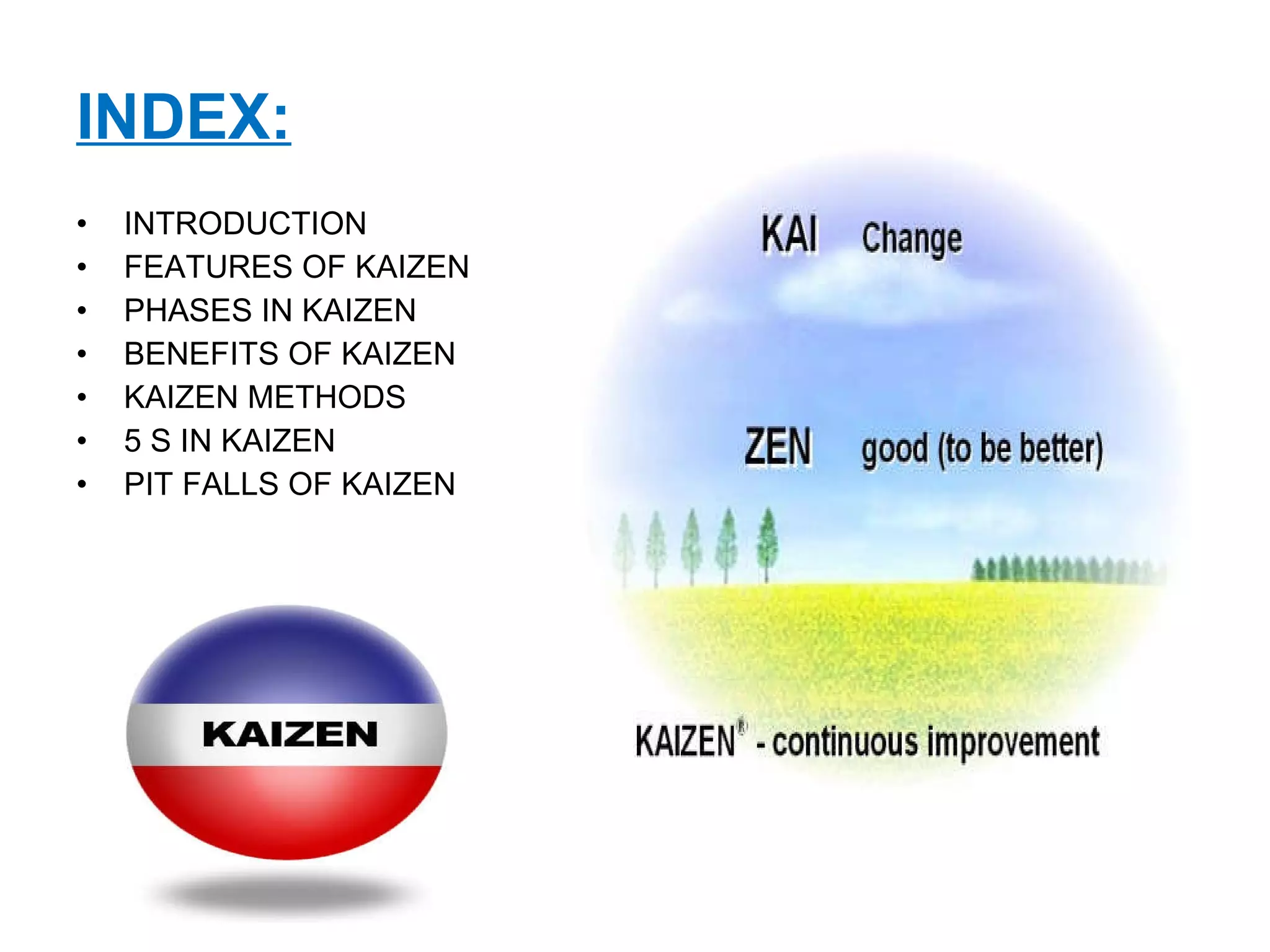
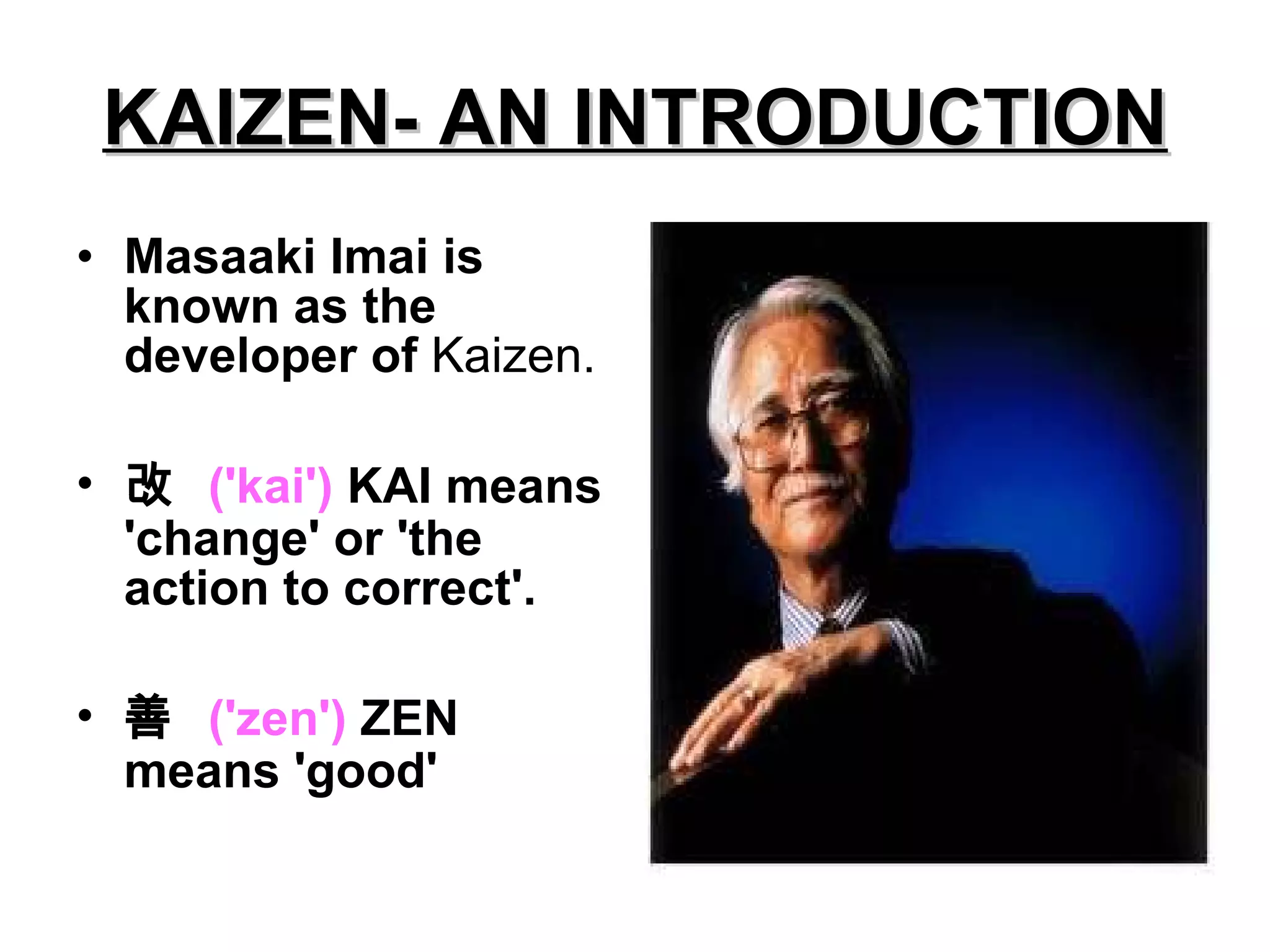
KAIZEN- AN INTRODUCTION Masaaki Imai is known as the developer of  Kaizen. 改  ('kai')  KAI means 'change' or 'the action to correct'.  善  ('zen')  ZEN means 'good'
 
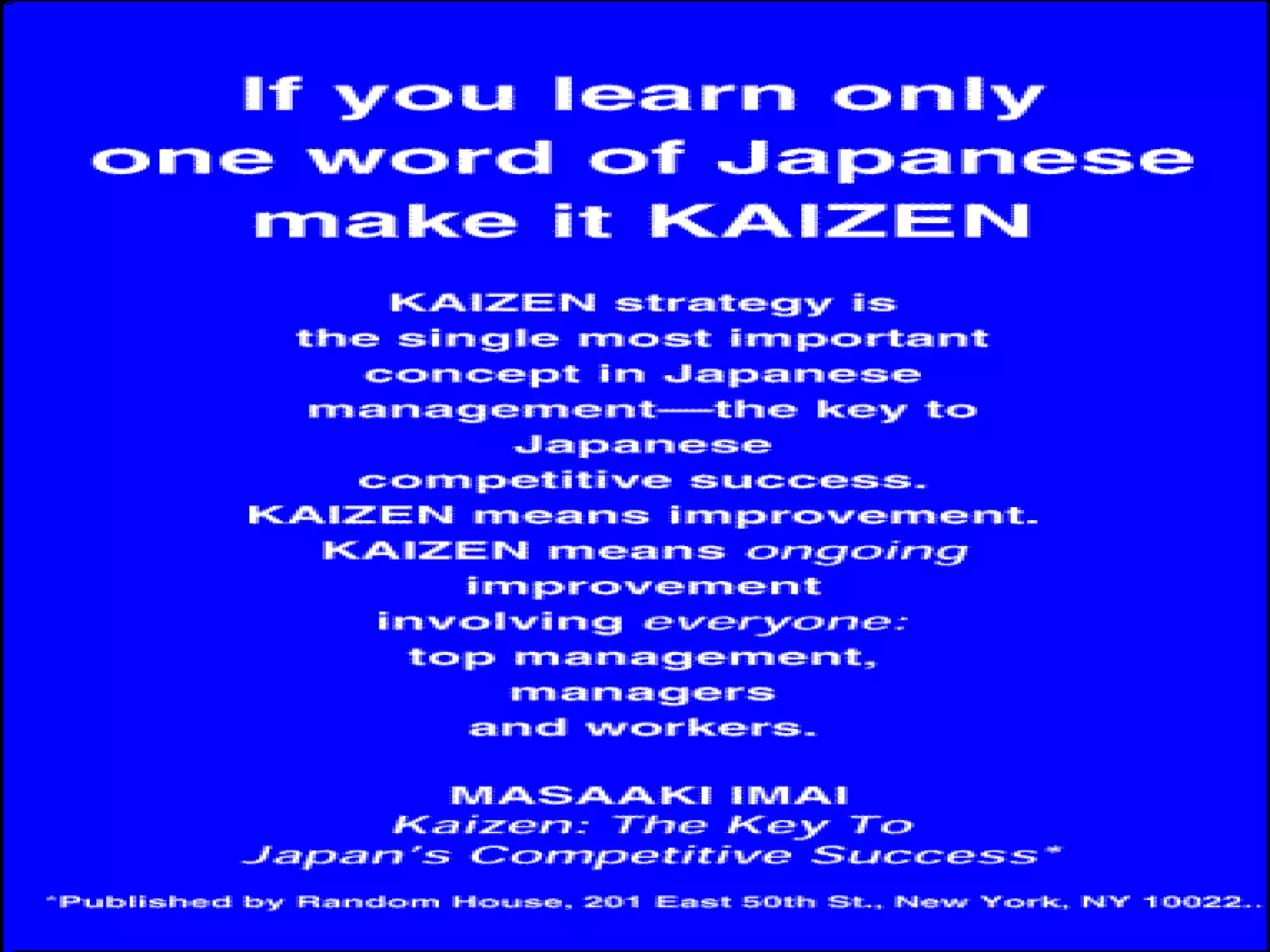
So basically kaizen is small incremental changes made for improving productivity and minimizing waste.  Kaizen has three main principles: •  Consider the process and the results! •  The need to look at the entire process of the job at hand and to evaluate the job as to the best way to get the job done .  •  Kaizen must be approached in such a way that no one is blamed and that the best process is put into place.
FEATURES OF KAIZEN Widely applicable  –  Can be used in both manufacturing and non-manufacturing environments Highly effective  & results oriented .  Kaizen events will generate  quick results, Measurable results, Establish the baseline, and measure the change!!! A Learning Experience  –   Every member of a Kaizen Team will walk away from the event learning something new! !  Team based & cross functional   –  Team members can be from various functions of the business. Top management participation is encouraged.
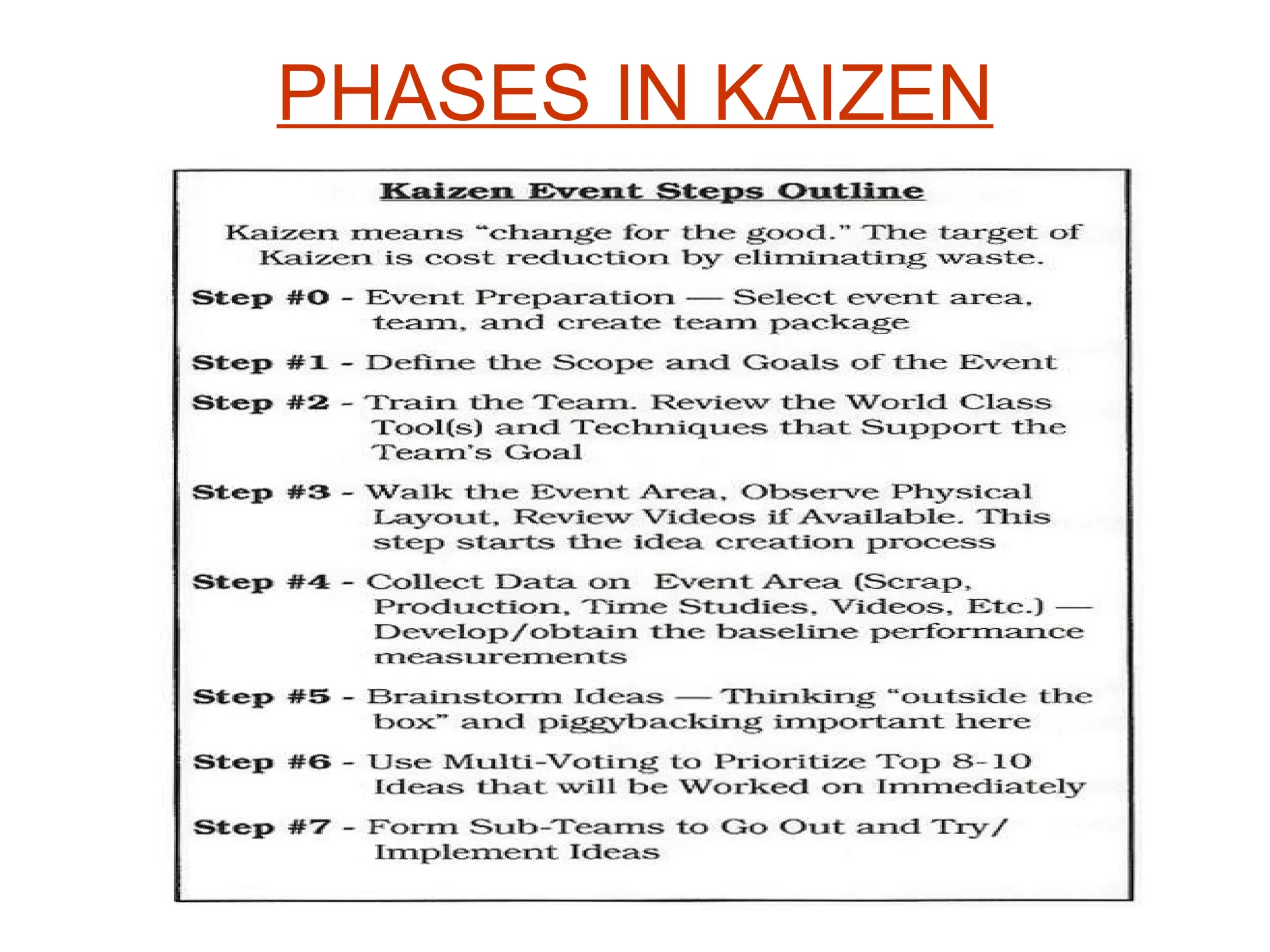
PHASES IN KAIZEN
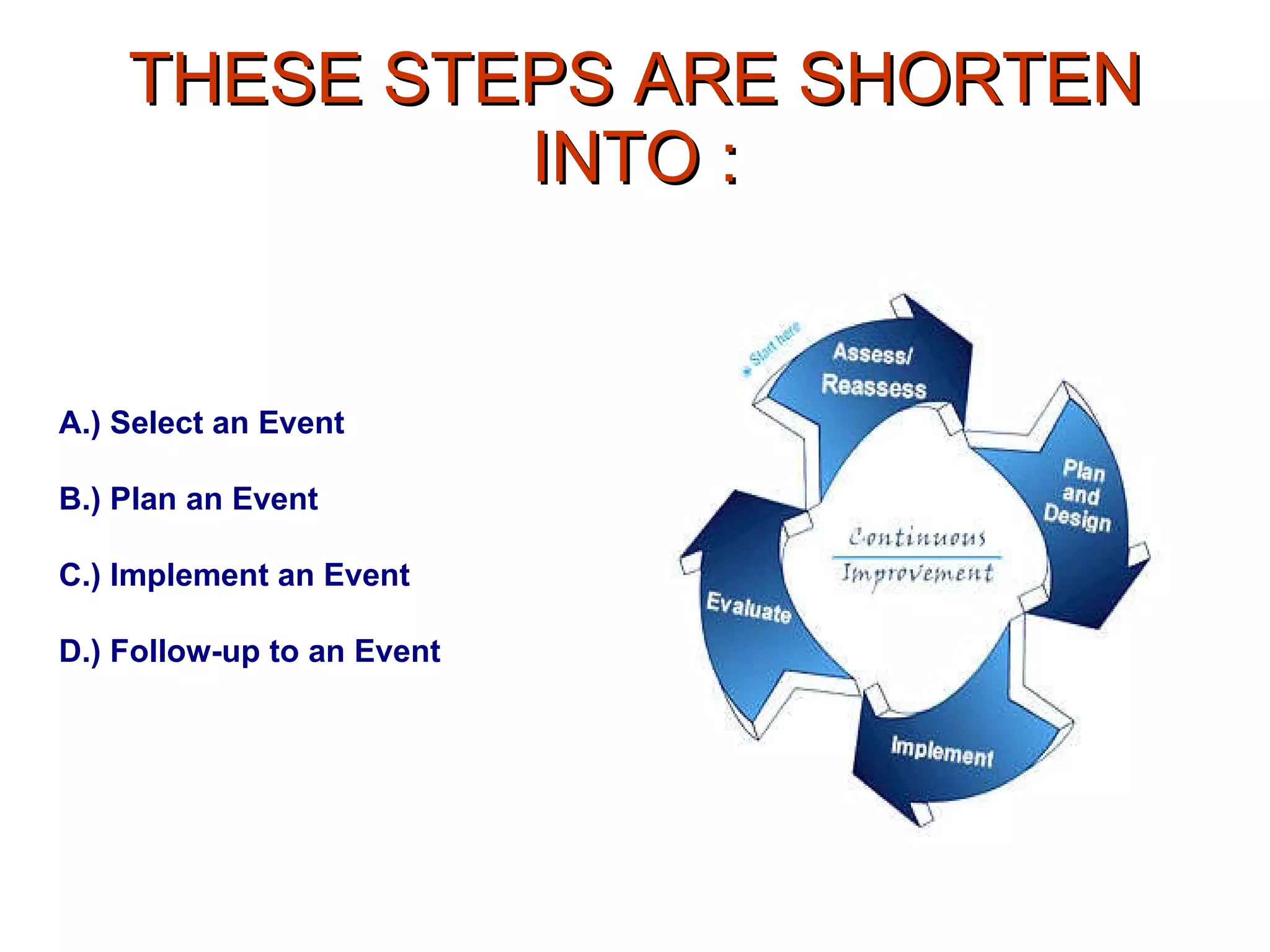
THESE STEPS ARE SHORTEN INTO : A.) Select an Event B.) Plan an Event   C.) Implement an Event D.) Follow-up to an Event
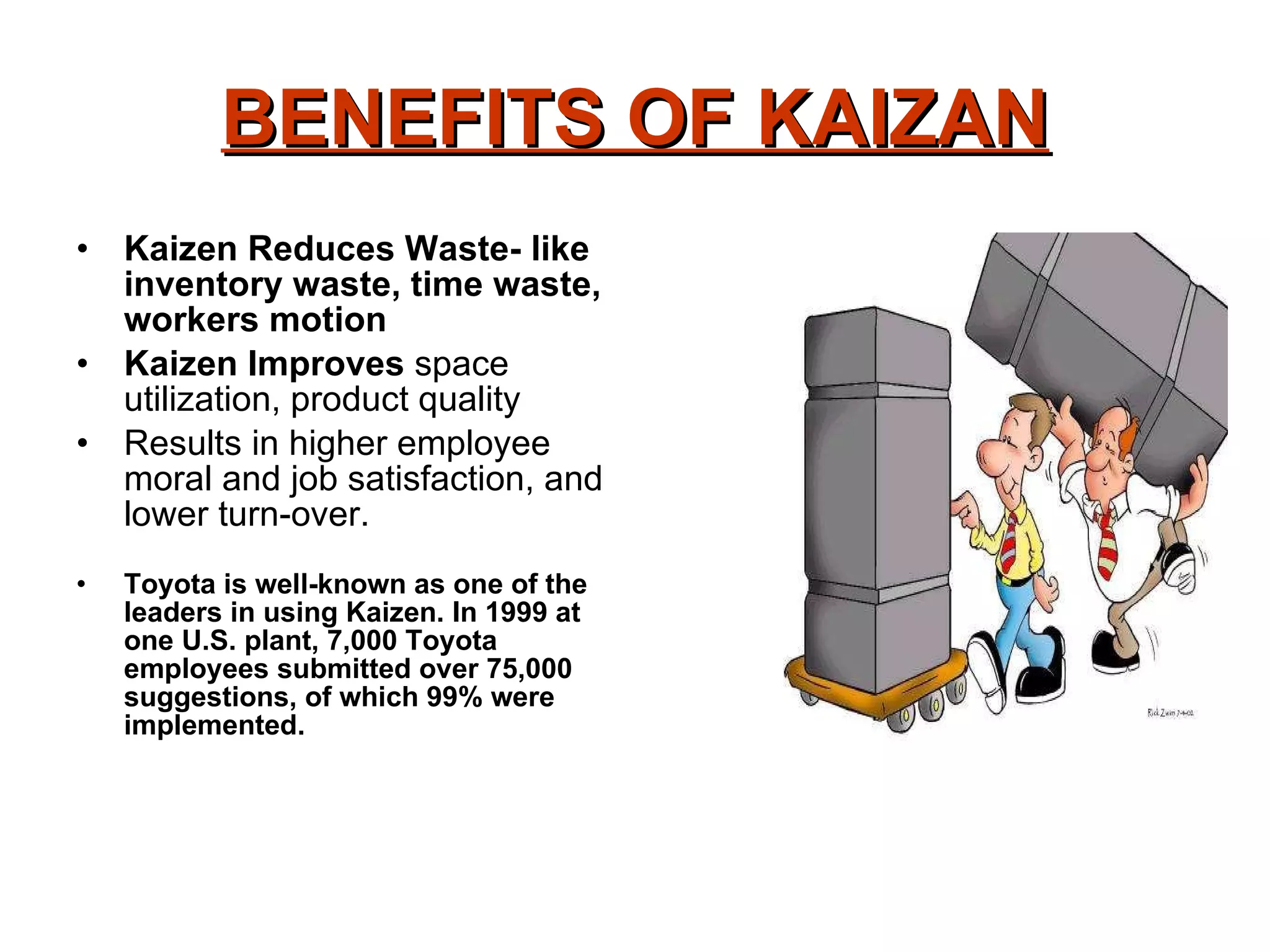
BENEFITS OF KAIZAN Kaizen Reduces Waste- like inventory waste, time waste, workers motion   Kaizen Improves  space utilization, product quality Results in higher employee moral and job satisfaction, and lower turn-over. Toyota is well-known as one of the leaders in using Kaizen. In 1999 at one U.S. plant, 7,000 Toyota employees submitted over 75,000 suggestions, of which 99% were implemented.
Varieties of Kaizen Methods Individual Versus Teamed Day-to-Day Versus Special Event Process Level Versus Sub process Level
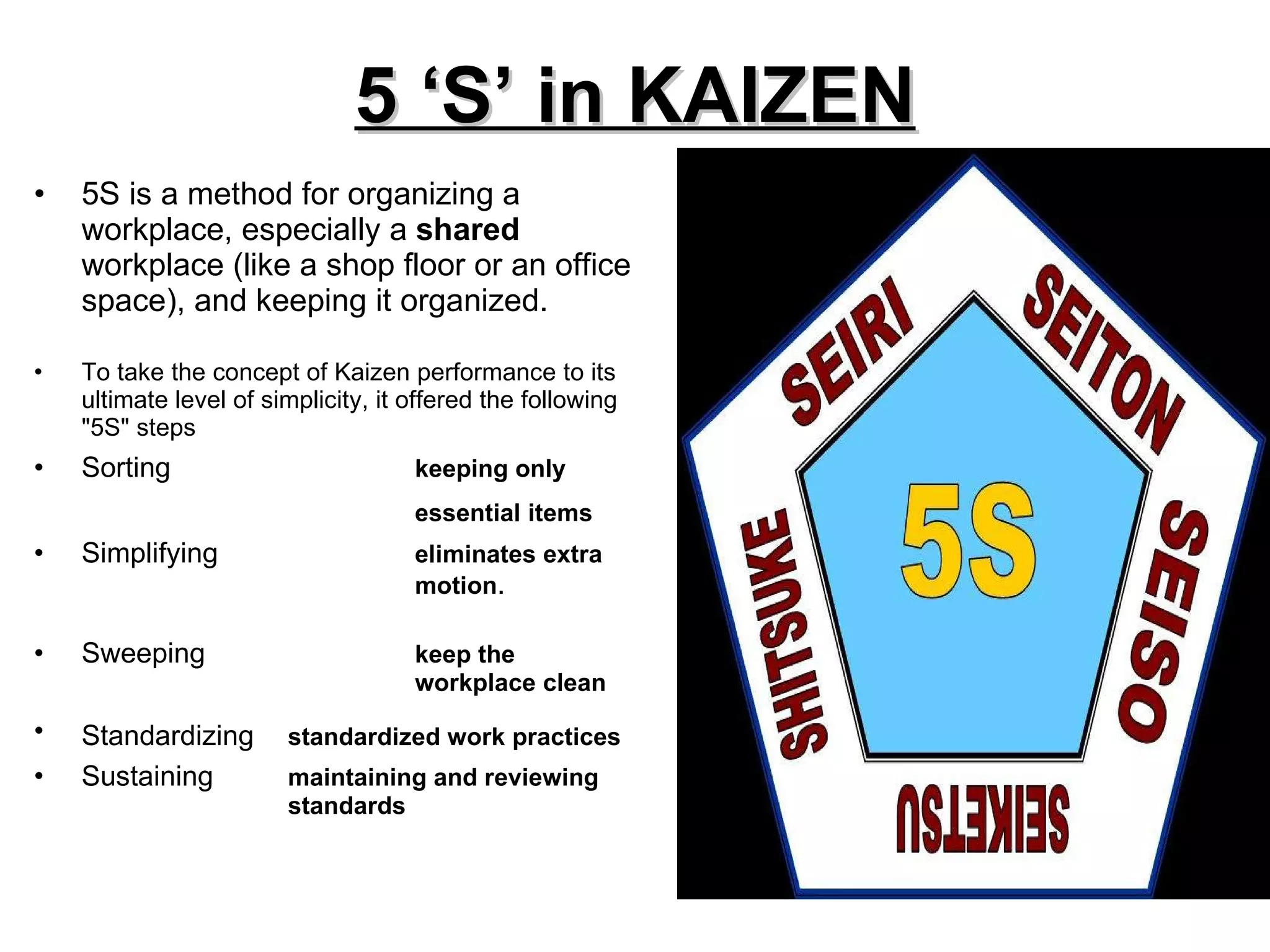
5 ‘S’ in KAIZEN 5S is a method for organizing a workplace, especially a  shared  workplace (like a shop floor or an office space), and keeping it organized.  To take the concept of Kaizen performance to its ultimate level of simplicity, it offered the following "5S" steps  Sorting keeping only  essential items   Simplifying eliminates extra  motion . Sweeping keep the  workplace clean  Standardizing standardized work practices   Sustaining maintaining and reviewing  standards
PIT FALLS IN KAIZEN Resistance to change  Lack of proper procedure to implement Too much suggestion may lead to confusion and time wastage
 

Kaizen

  • 1.
  • 2.
    INDEX: INTRODUCTION FEATURESOF KAIZEN PHASES IN KAIZEN BENEFITS OF KAIZEN KAIZEN METHODS 5 S IN KAIZEN PIT FALLS OF KAIZEN
  • 3.
    KAIZEN- AN INTRODUCTIONMasaaki Imai is known as the developer of Kaizen. 改 ('kai') KAI means 'change' or 'the action to correct'. 善 ('zen') ZEN means 'good'
  • 4.
  • 5.
    So basically kaizenis small incremental changes made for improving productivity and minimizing waste. Kaizen has three main principles: • Consider the process and the results! • The need to look at the entire process of the job at hand and to evaluate the job as to the best way to get the job done . • Kaizen must be approached in such a way that no one is blamed and that the best process is put into place.
  • 6.
    FEATURES OF KAIZENWidely applicable – Can be used in both manufacturing and non-manufacturing environments Highly effective & results oriented . Kaizen events will generate quick results, Measurable results, Establish the baseline, and measure the change!!! A Learning Experience – Every member of a Kaizen Team will walk away from the event learning something new! ! Team based & cross functional – Team members can be from various functions of the business. Top management participation is encouraged.
  • 7.
  • 8.
    THESE STEPS ARESHORTEN INTO : A.) Select an Event B.) Plan an Event C.) Implement an Event D.) Follow-up to an Event
  • 9.
    BENEFITS OF KAIZANKaizen Reduces Waste- like inventory waste, time waste, workers motion Kaizen Improves space utilization, product quality Results in higher employee moral and job satisfaction, and lower turn-over. Toyota is well-known as one of the leaders in using Kaizen. In 1999 at one U.S. plant, 7,000 Toyota employees submitted over 75,000 suggestions, of which 99% were implemented.
  • 10.
    Varieties of KaizenMethods Individual Versus Teamed Day-to-Day Versus Special Event Process Level Versus Sub process Level
  • 11.
    5 ‘S’ inKAIZEN 5S is a method for organizing a workplace, especially a shared workplace (like a shop floor or an office space), and keeping it organized. To take the concept of Kaizen performance to its ultimate level of simplicity, it offered the following "5S" steps Sorting keeping only essential items Simplifying eliminates extra motion . Sweeping keep the workplace clean Standardizing standardized work practices Sustaining maintaining and reviewing standards
  • 12.
    PIT FALLS INKAIZEN Resistance to change Lack of proper procedure to implement Too much suggestion may lead to confusion and time wastage
  • 13.