
KAIZEN
PLANNING
KAIZEN’S IDEA


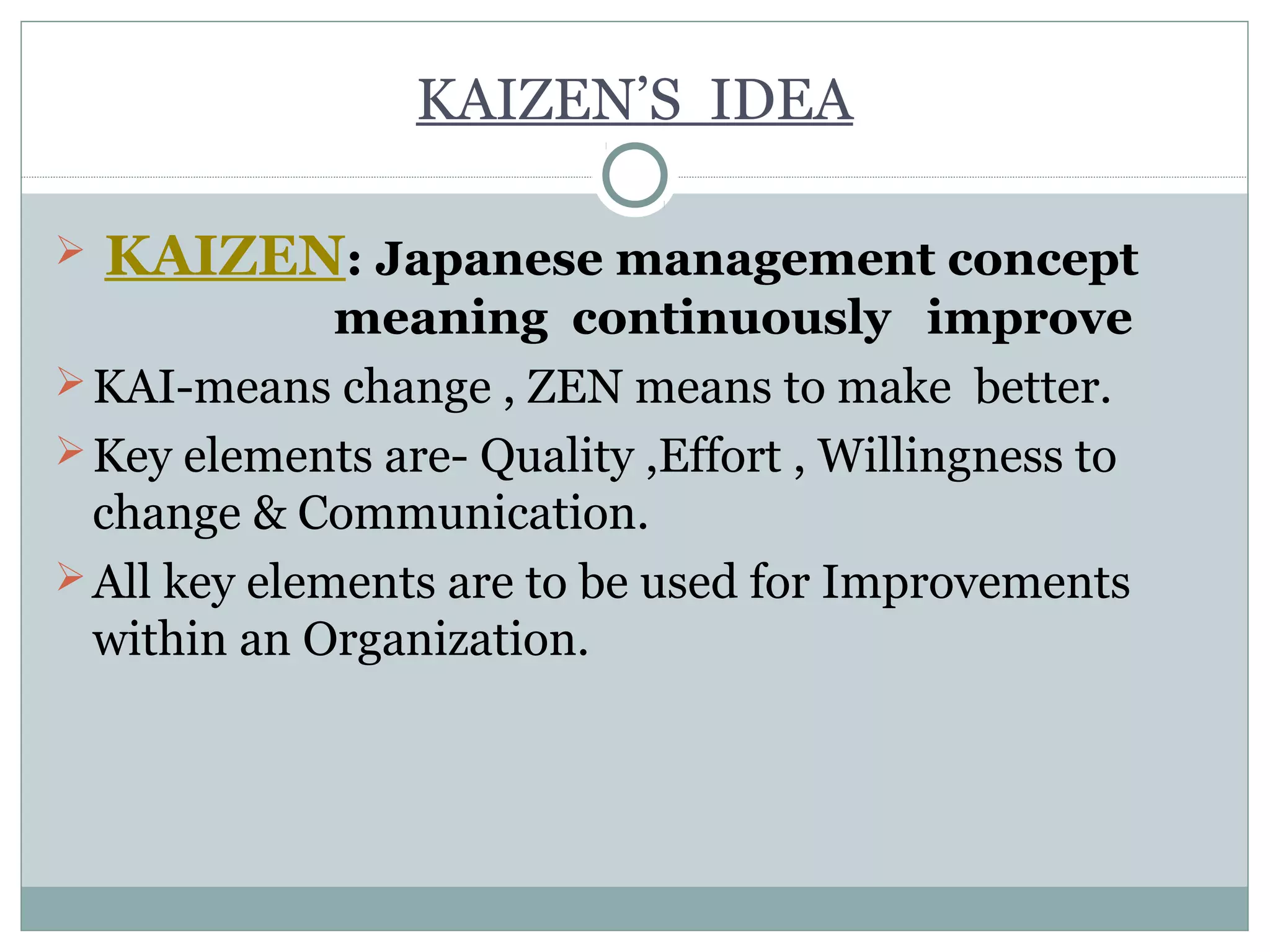
KAIZEN: Japanese management concept

meaning continuously improve
 KAI-means change , ZEN means to make better.
 Key elements are- Quality ,Effort , Willingness to
change & Communication.
 All key elements are to be used for Improvements
within an Organization.
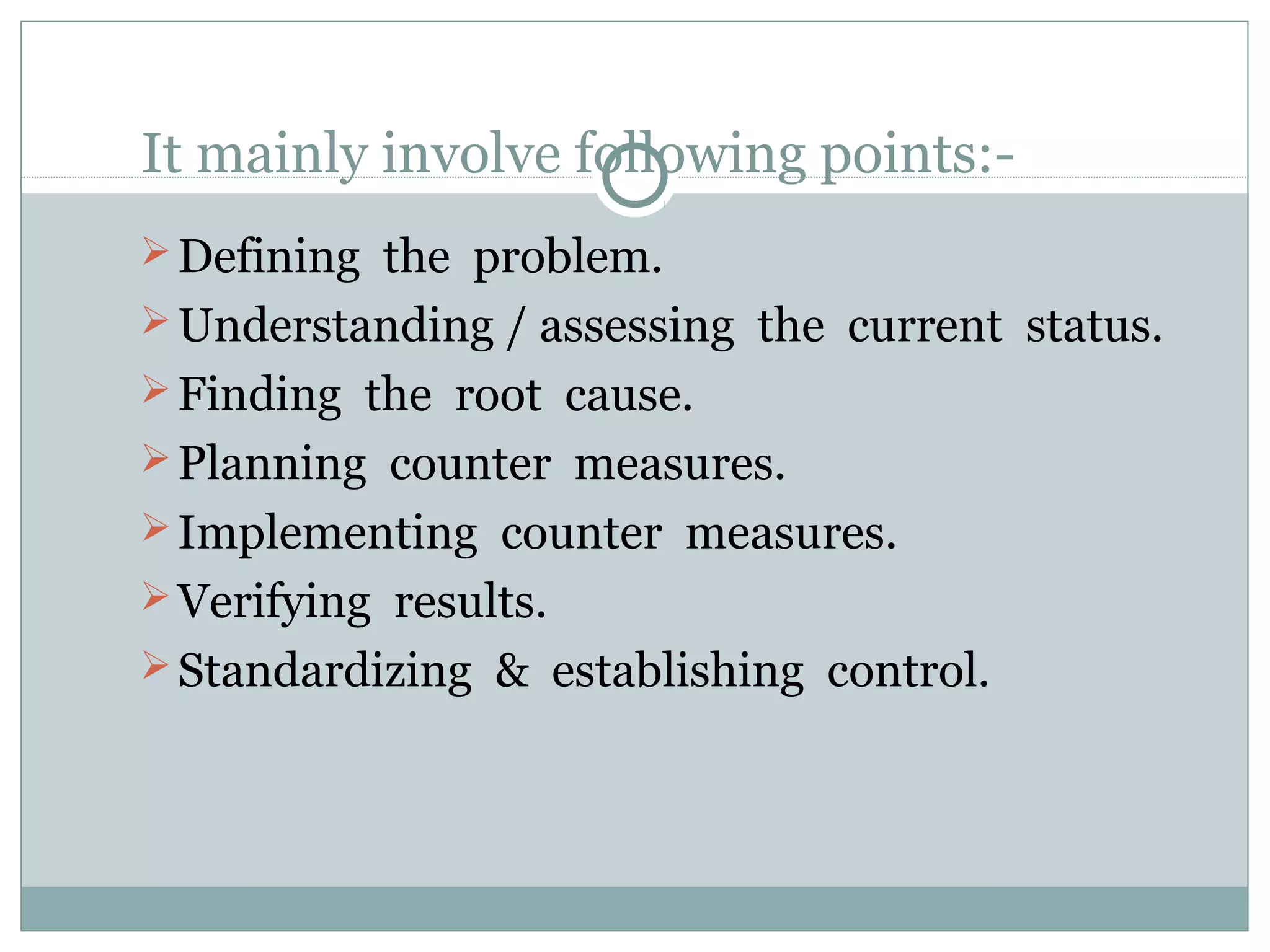
It mainly involve following points: Defining the problem.
 Understanding / assessing the current status.
 Finding the root cause.
 Planning counter measures.
 Implementing counter measures.
 Verifying results.
 Standardizing & establishing control.
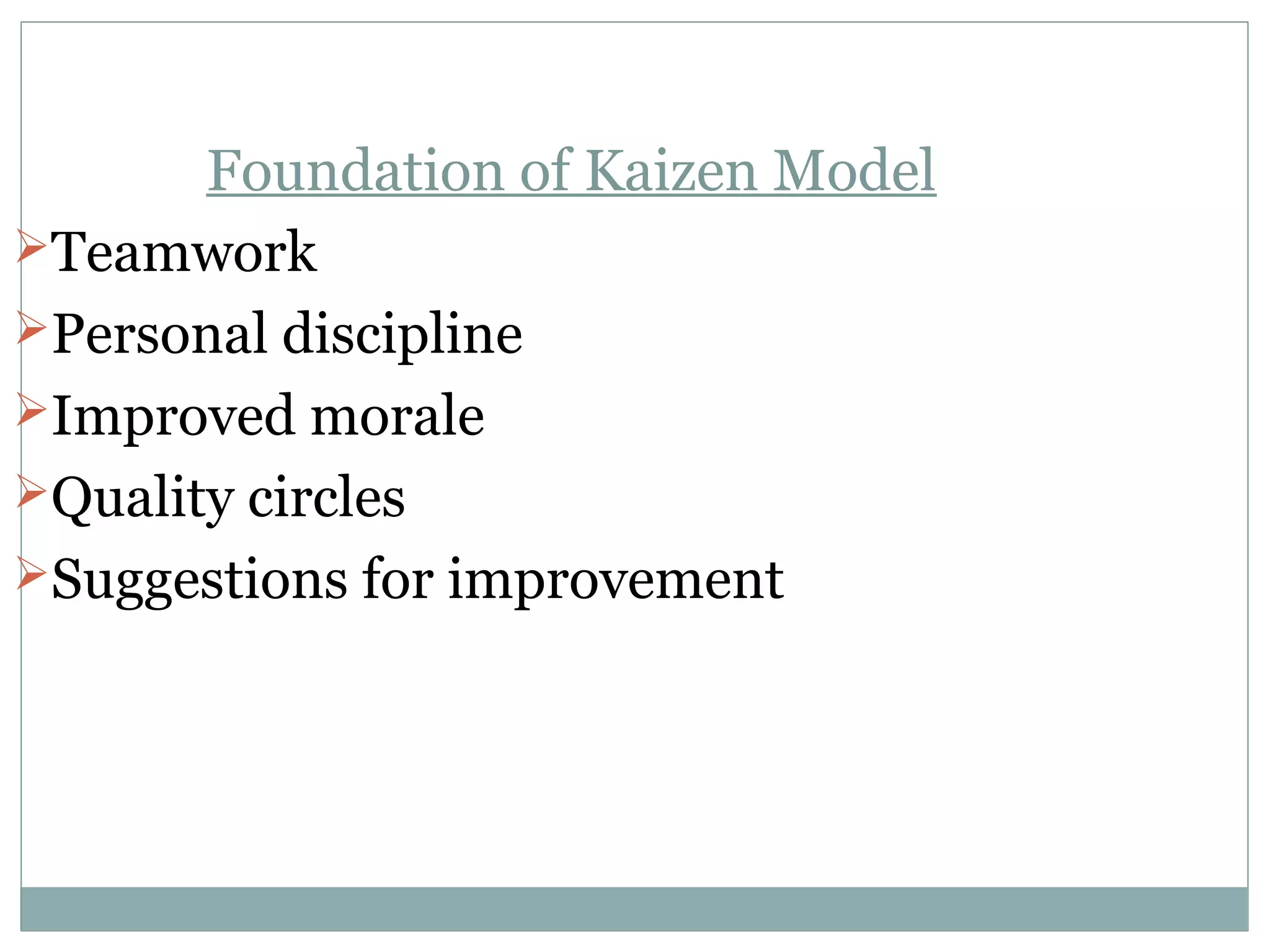
Foundation of Kaizen Model
Teamwork
Personal discipline
Improved morale
Quality circles
Suggestions for improvement
3 KEY ASPECTS OF KAIZEN
 Elimination of MUDA
 5S framework
 Standardization
5S PRINCIPLES
 Basic KAIZEN tool to begin.

5S refers to Seiri - sort
Seiton - set
Seison - shine
Seiketsu - standardize
Shitsuke - sustain
 5S Principles in Manufacturing Management are used
more in reference to the Lean Manufacturing
processes.
5S PRINCIPLES

 The 5S practices are thoroughly embedded in the

Japanese culture which believes that
 a clean workplace is “part way”
to having a clean and organized mind.
mind
 there is a place for everything and
everything in its place.
5S PRINCIPLES
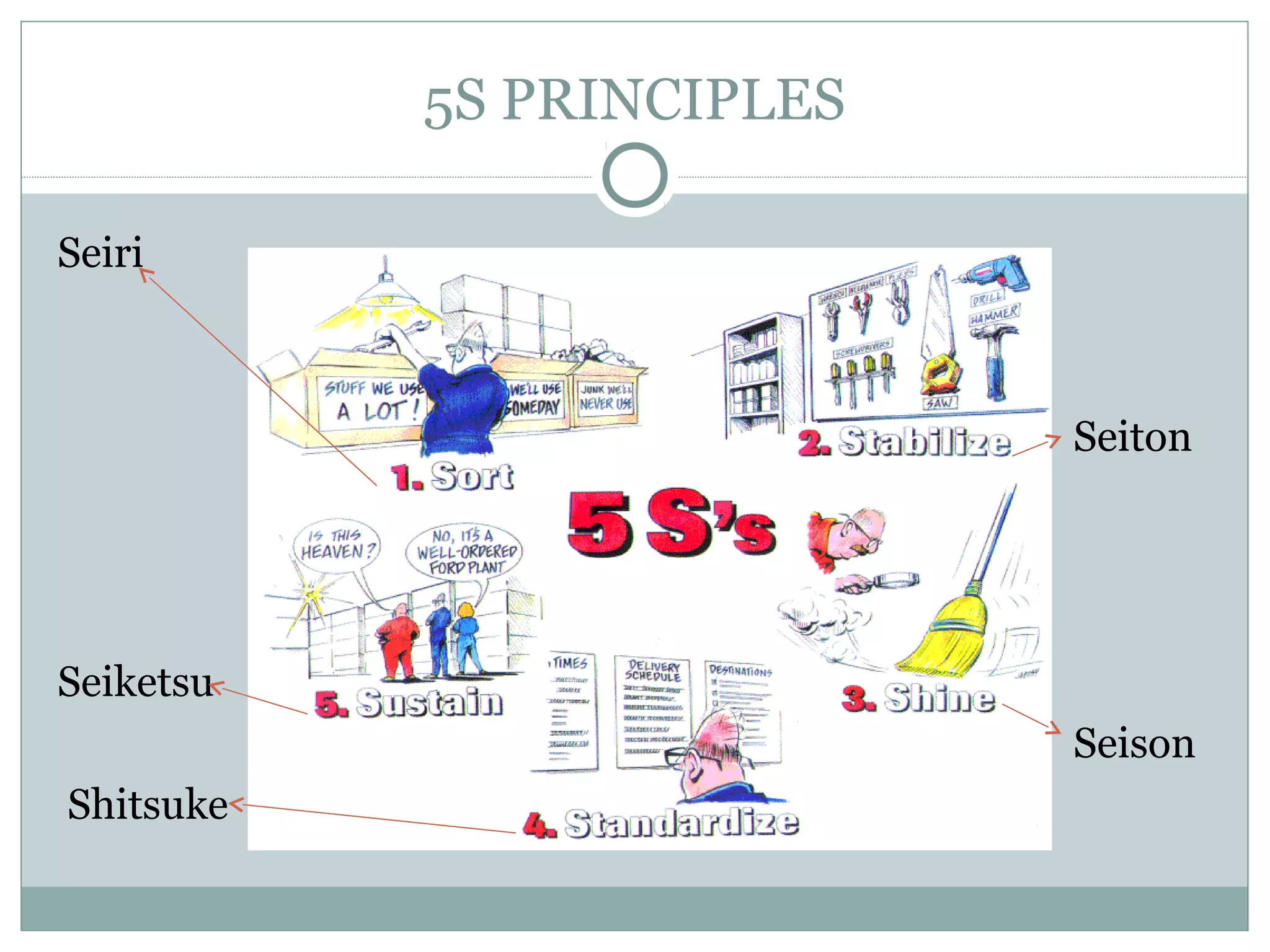
Seiri

Seiton

Seiketsu
Seison
Shitsuke
5S PRINCIPLES
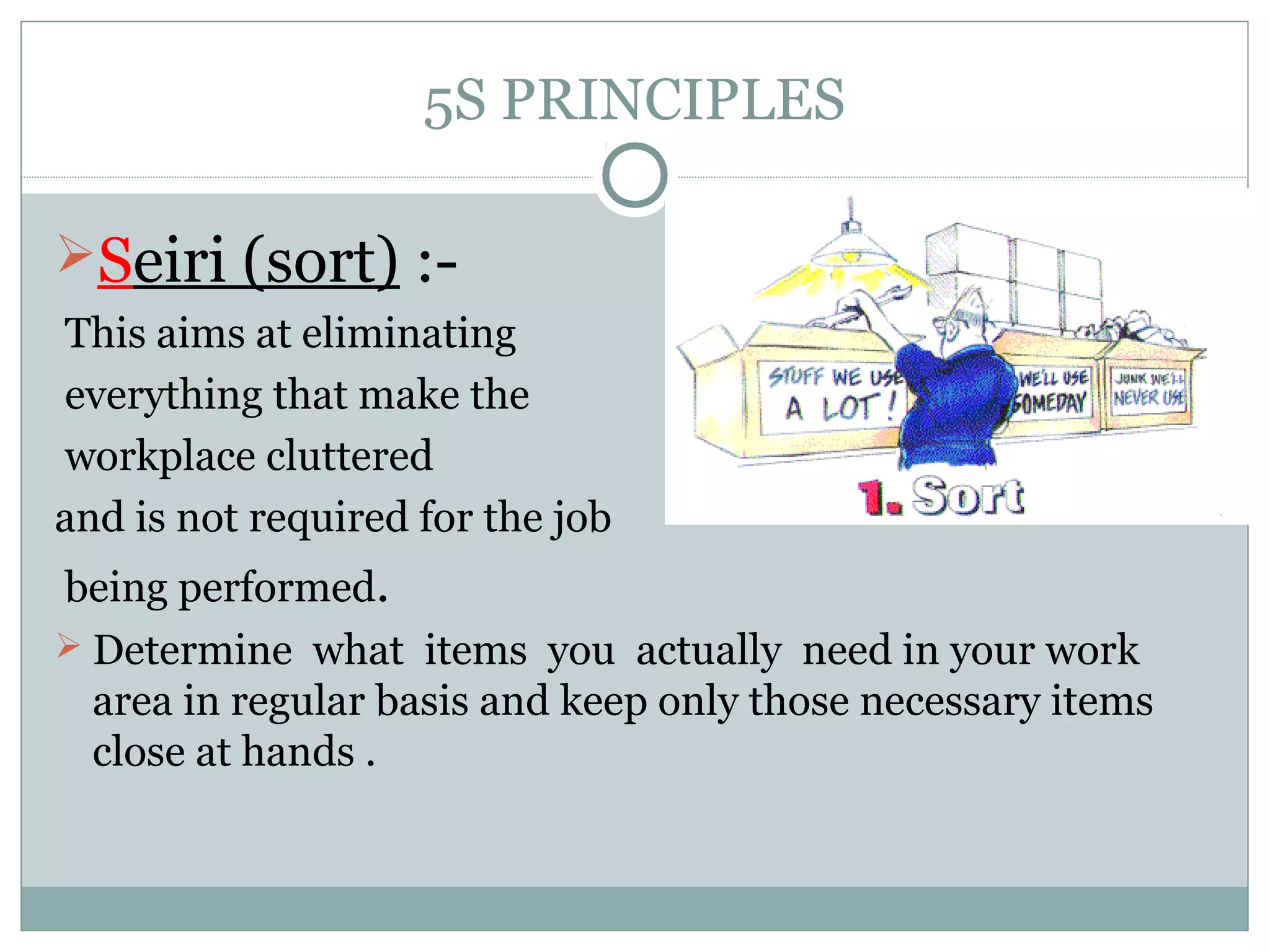
Seiri (sort) :This aims at eliminating
everything that make the
workplace cluttered
and is not required for the job
being performed.
 Determine what items you actually need in your work
area in regular basis and keep only those necessary items
close at hands .
5S PRINCIPLES
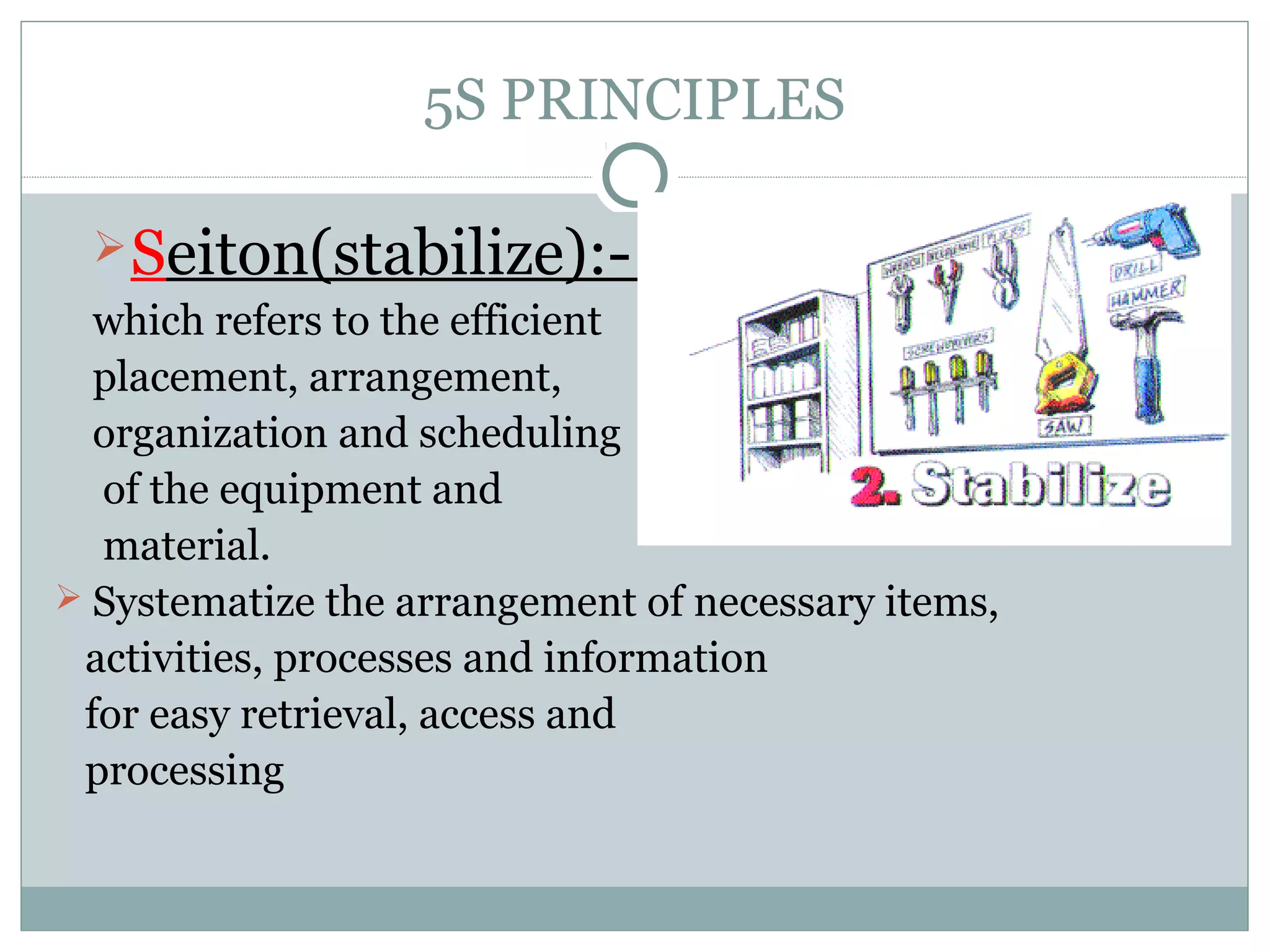
 Seiton(stabilize):which refers to the efficient
placement, arrangement,
organization and scheduling
of the equipment and
material.
 Systematize the arrangement of necessary items,
activities, processes and information
for easy retrieval, access and
processing
5S PRINCIPLES
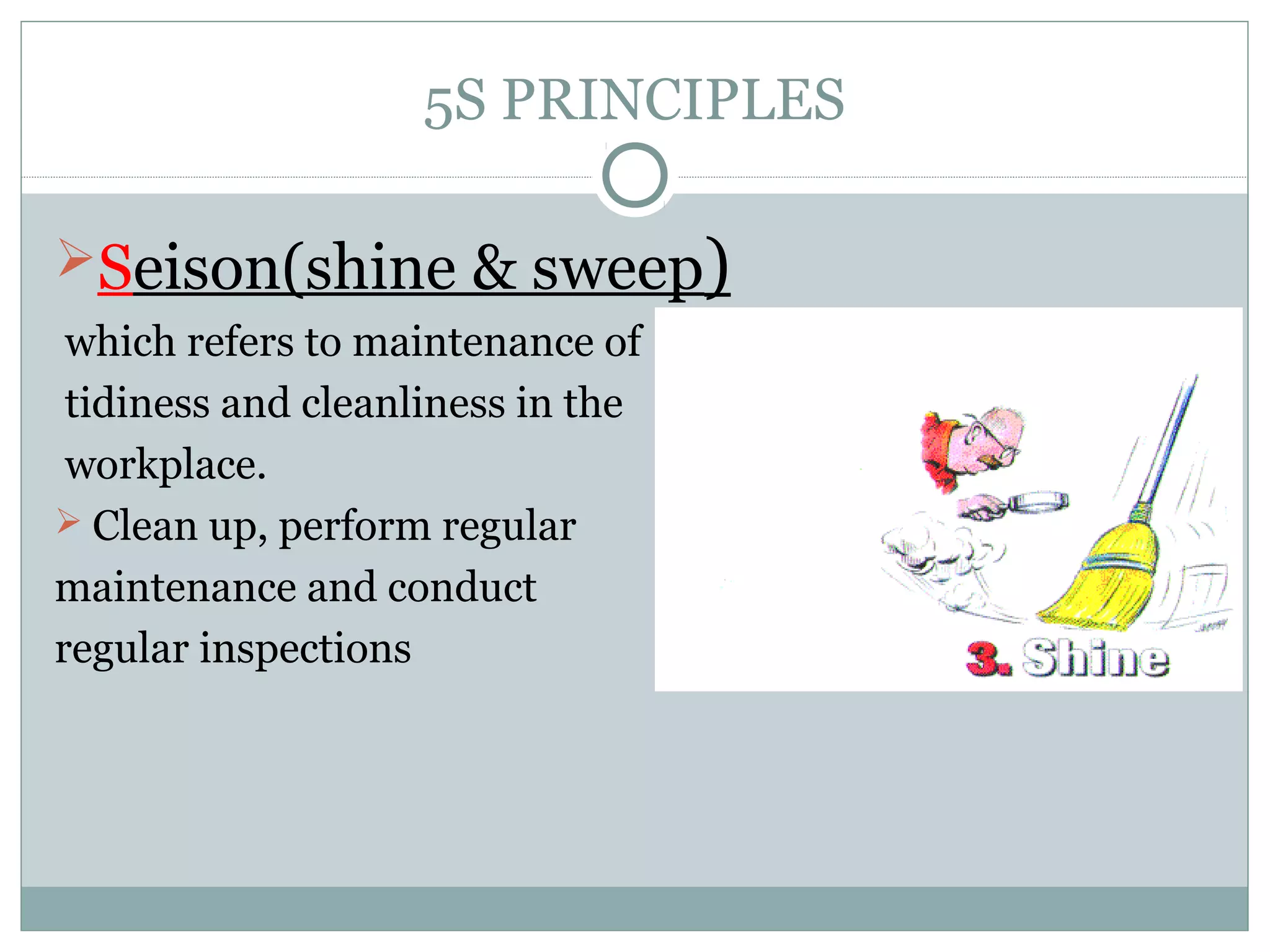
Seison(shine & sweep)
which refers to maintenance of
tidiness and cleanliness in the
workplace.
 Clean up, perform regular
maintenance and conduct
regular inspections
5S PRINCIPLES

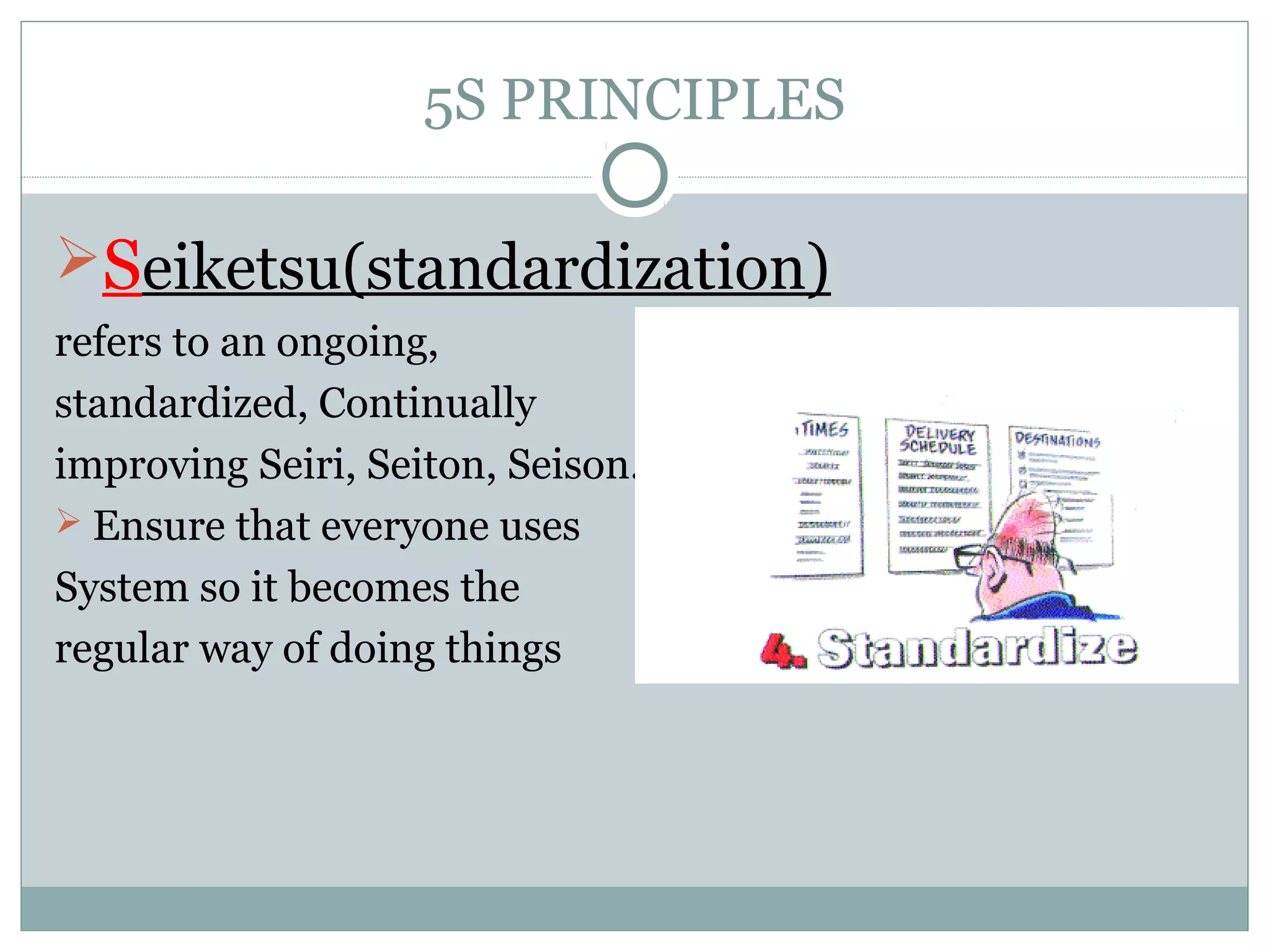
Seiketsu(standardization)
refers to an ongoing,
standardized, Continually
improving Seiri, Seiton, Seison.
 Ensure that everyone uses
System so it becomes the
regular way of doing things
5S PRINCIPLES
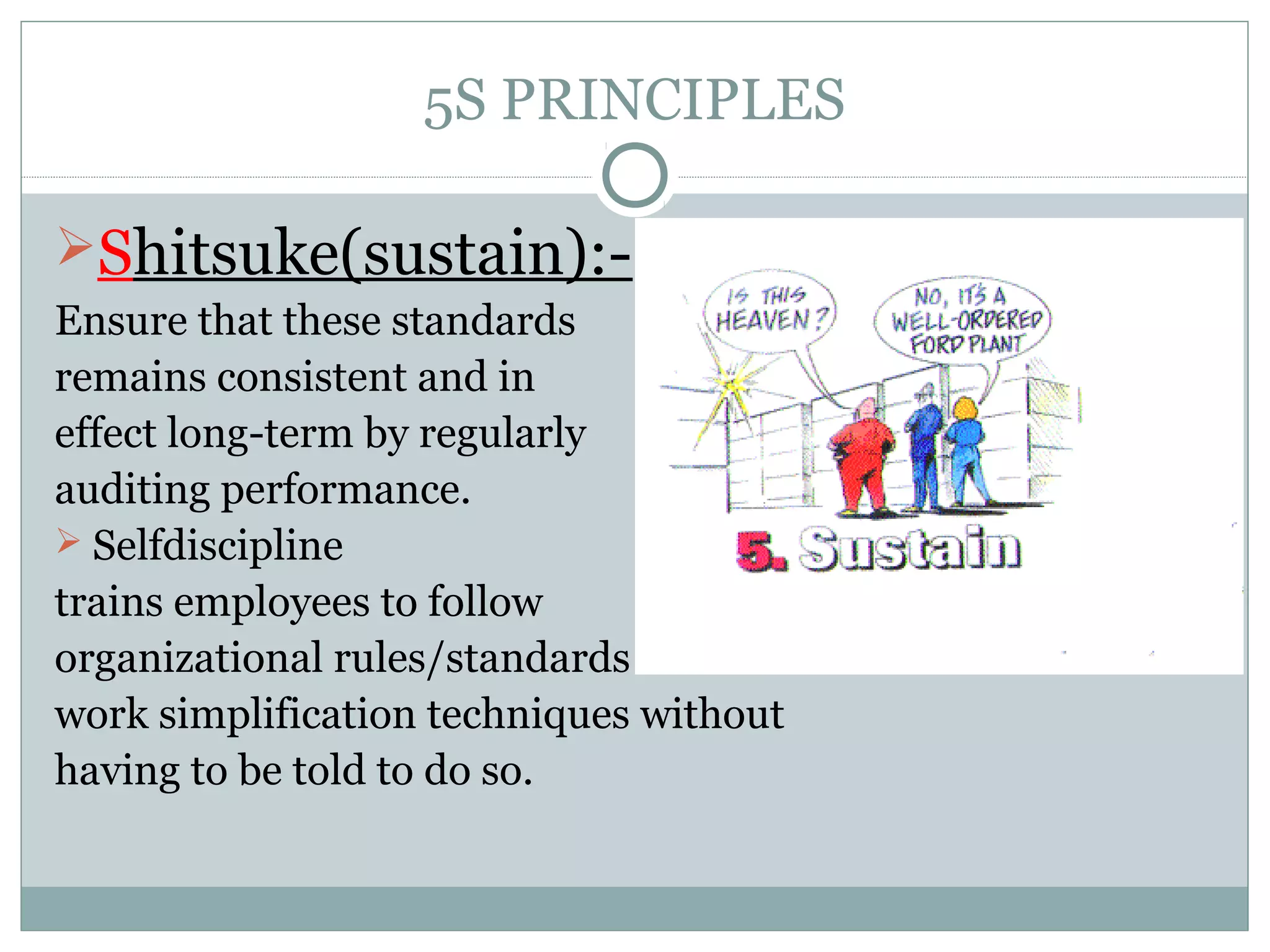
Shitsuke(sustain):Ensure that these standards
remains consistent and in
effect long-term by regularly
auditing performance.
 Selfdiscipline
trains employees to follow
organizational rules/standards and
work simplification techniques without
having to be told to do so.
FINAL ANALYSIS(Advantages)
Resonates well with speed of change at

operational level in the organization.
Make it easier for everyone , including
newcomers.
KAIZEN has more potential in incremental
change situations than in abrupt
turnarounds.
THANK YOU

Kaizen & 5S Planning

  • 1.
  • 2.
    KAIZEN’S IDEA  KAIZEN: Japanesemanagement concept meaning continuously improve  KAI-means change , ZEN means to make better.  Key elements are- Quality ,Effort , Willingness to change & Communication.  All key elements are to be used for Improvements within an Organization.
  • 3.
    It mainly involvefollowing points: Defining the problem.  Understanding / assessing the current status.  Finding the root cause.  Planning counter measures.  Implementing counter measures.  Verifying results.  Standardizing & establishing control.
  • 4.
    Foundation of KaizenModel Teamwork Personal discipline Improved morale Quality circles Suggestions for improvement
  • 5.
    3 KEY ASPECTSOF KAIZEN  Elimination of MUDA  5S framework  Standardization
  • 6.
    5S PRINCIPLES  BasicKAIZEN tool to begin. 5S refers to Seiri - sort Seiton - set Seison - shine Seiketsu - standardize Shitsuke - sustain  5S Principles in Manufacturing Management are used more in reference to the Lean Manufacturing processes.
  • 7.
    5S PRINCIPLES  The5S practices are thoroughly embedded in the Japanese culture which believes that  a clean workplace is “part way” to having a clean and organized mind. mind  there is a place for everything and everything in its place.
  • 8.
  • 9.
    5S PRINCIPLES Seiri (sort):This aims at eliminating everything that make the workplace cluttered and is not required for the job being performed.  Determine what items you actually need in your work area in regular basis and keep only those necessary items close at hands .
  • 10.
    5S PRINCIPLES  Seiton(stabilize):whichrefers to the efficient placement, arrangement, organization and scheduling of the equipment and material.  Systematize the arrangement of necessary items, activities, processes and information for easy retrieval, access and processing
  • 11.
    5S PRINCIPLES Seison(shine &sweep) which refers to maintenance of tidiness and cleanliness in the workplace.  Clean up, perform regular maintenance and conduct regular inspections
  • 12.
    5S PRINCIPLES Seiketsu(standardization) refers toan ongoing, standardized, Continually improving Seiri, Seiton, Seison.  Ensure that everyone uses System so it becomes the regular way of doing things
  • 13.
    5S PRINCIPLES Shitsuke(sustain):Ensure thatthese standards remains consistent and in effect long-term by regularly auditing performance.  Selfdiscipline trains employees to follow organizational rules/standards and work simplification techniques without having to be told to do so.
  • 14.
    FINAL ANALYSIS(Advantages) Resonates wellwith speed of change at operational level in the organization. Make it easier for everyone , including newcomers. KAIZEN has more potential in incremental change situations than in abrupt turnarounds.
  • 15.