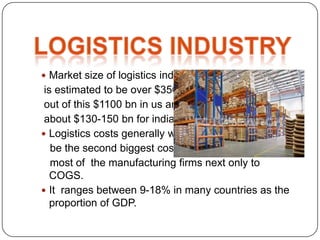
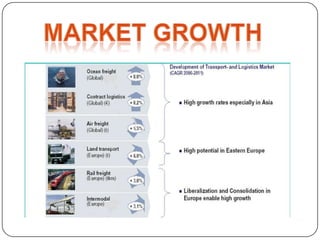
 Market size of logistics industry
 is estimated to be over $3500 bn
 out of this $1100 bn in us and
 about $130-150 bn for india.
 Logistics costs generally would
   be the second biggest costs for
   most of the manufacturing firms next only to
   COGS.
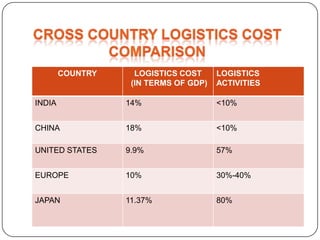
 It ranges between 9-18% in many countries as the
   proportion of GDP.
COUNTRY     LOGISTICS COST     LOGISTICS
                   (IN TERMS OF GDP)   ACTIVITIES

INDIA             14%                  <10%


CHINA             18%                  <10%

UNITED STATES     9.9%                 57%


EUROPE            10%                  30%-40%


JAPAN             11.37%               80%
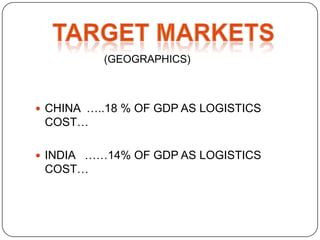
(GEOGRAPHICS)


 CHINA …..18 % OF GDP AS LOGISTICS
 COST…

 INDIA ……14% OF GDP AS LOGISTICS
 COST…
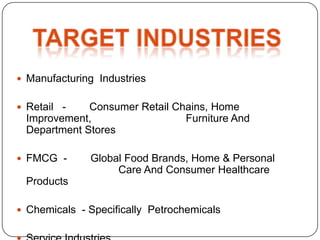
 Manufacturing Industries


 Retail -   Consumer Retail Chains, Home
 Improvement,                  Furniture And
 Department Stores

 FMCG -      Global Food Brands, Home & Personal
                   Care And Consumer Healthcare
 Products

 Chemicals - Specifically Petrochemicals
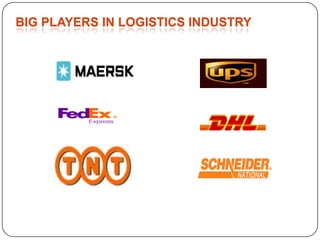
BIG PLAYERS IN LOGISTICS INDUSTRY
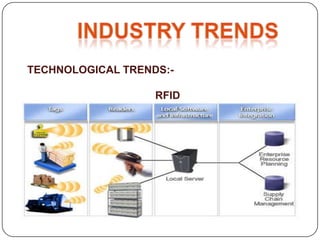
TECHNOLOGICAL TRENDS:-

                   RFID
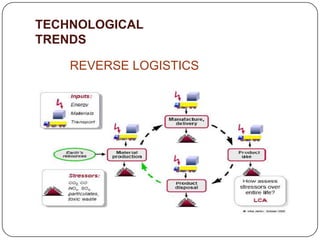
TECHNOLOGICAL
TRENDS

    REVERSE LOGISTICS
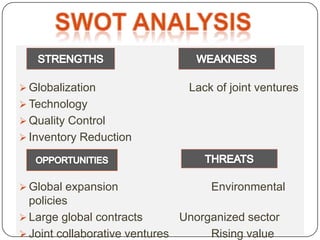
 Globalization                Lack of joint ventures
 Technology
 Quality Control
 Inventory Reduction


 Global expansion                  Environmental
  policies
 Large global contracts       Unorganized sector
 Joint collaborative ventures      Rising value
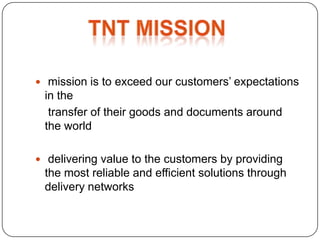
 mission is to exceed our customers’ expectations
 in the
  transfer of their goods and documents around
 the world

 delivering value to the customers by providing
 the most reliable and efficient solutions through
 delivery networks
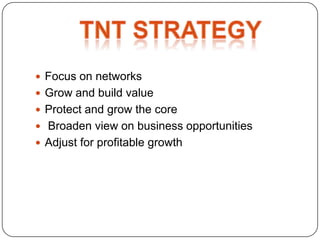
 Focus on networks
 Grow and build value
 Protect and grow the core
 Broaden view on business opportunities
 Adjust for profitable growth
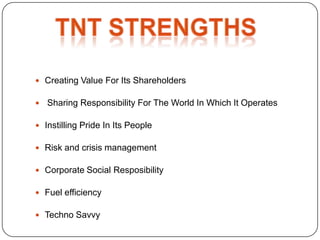
 Creating Value For Its Shareholders

   Sharing Responsibility For The World In Which It Operates

 Instilling Pride In Its People

 Risk and crisis management

 Corporate Social Resposibility

 Fuel efficiency

 Techno Savvy
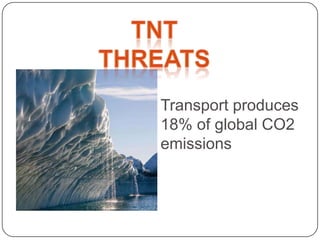
Transport produces
18% of global CO2
emissions
 Nearly seven billion tonnes of cargo are moved
 by sea each year - equivalent to one ton for every
 human on the planet.

 If all of Maersk Line's containers were placed one
 after the other, they would measure approx.
 19,000 km. This is equal to the distance from
 Paris(FRANCE) to Cape Town(SOUTH AFRICA)
 and back again.

 At any one point in time, Maersk Line is
 transporting cargo worth approximately three
 percent of the world's GNP (world GNP in 2005:
 USD 36,356,240,000,000).
 If all of Maersk Line's containers were stacked on
 top of each other, they would reach approximately
 4,500 kilometres into the air. This is equivalent to
 the railway distance from Beijing to Shenzhen in
 China.

 A single 20-foot container can hold about 48,000
 bananas. So, in theory, a PS-vessel such as the
 EMMA MAERSK can transport approximately 528
 million bananas in a single voyage - enough to
 give every person in Europe or North America a
 banana for breakfast.
• PRESENTED BY:-
             KUMAR RAMA SHANKAR

Logistics Industry

  • 4.
     Market sizeof logistics industry is estimated to be over $3500 bn out of this $1100 bn in us and about $130-150 bn for india.  Logistics costs generally would be the second biggest costs for most of the manufacturing firms next only to COGS.  It ranges between 9-18% in many countries as the proportion of GDP.
  • 5.
    COUNTRY LOGISTICS COST LOGISTICS (IN TERMS OF GDP) ACTIVITIES INDIA 14% <10% CHINA 18% <10% UNITED STATES 9.9% 57% EUROPE 10% 30%-40% JAPAN 11.37% 80%
  • 6.
    (GEOGRAPHICS)  CHINA …..18% OF GDP AS LOGISTICS COST…  INDIA ……14% OF GDP AS LOGISTICS COST…
  • 7.
     Manufacturing Industries Retail - Consumer Retail Chains, Home Improvement, Furniture And Department Stores  FMCG - Global Food Brands, Home & Personal Care And Consumer Healthcare Products  Chemicals - Specifically Petrochemicals
  • 8.
    BIG PLAYERS INLOGISTICS INDUSTRY
  • 11.
  • 12.
    TECHNOLOGICAL TRENDS REVERSE LOGISTICS
  • 13.
     Globalization Lack of joint ventures  Technology  Quality Control  Inventory Reduction  Global expansion Environmental policies  Large global contracts Unorganized sector  Joint collaborative ventures Rising value
  • 15.
     mission isto exceed our customers’ expectations in the transfer of their goods and documents around the world  delivering value to the customers by providing the most reliable and efficient solutions through delivery networks
  • 16.
     Focus onnetworks  Grow and build value  Protect and grow the core  Broaden view on business opportunities  Adjust for profitable growth
  • 18.
     Creating ValueFor Its Shareholders  Sharing Responsibility For The World In Which It Operates  Instilling Pride In Its People  Risk and crisis management  Corporate Social Resposibility  Fuel efficiency  Techno Savvy
  • 19.
    Transport produces 18% ofglobal CO2 emissions
  • 21.
     Nearly sevenbillion tonnes of cargo are moved by sea each year - equivalent to one ton for every human on the planet.  If all of Maersk Line's containers were placed one after the other, they would measure approx. 19,000 km. This is equal to the distance from Paris(FRANCE) to Cape Town(SOUTH AFRICA) and back again.  At any one point in time, Maersk Line is transporting cargo worth approximately three percent of the world's GNP (world GNP in 2005: USD 36,356,240,000,000).
  • 22.
     If allof Maersk Line's containers were stacked on top of each other, they would reach approximately 4,500 kilometres into the air. This is equivalent to the railway distance from Beijing to Shenzhen in China.  A single 20-foot container can hold about 48,000 bananas. So, in theory, a PS-vessel such as the EMMA MAERSK can transport approximately 528 million bananas in a single voyage - enough to give every person in Europe or North America a banana for breakfast.
  • 23.
    • PRESENTED BY:- KUMAR RAMA SHANKAR