JUST IN TIME
BY,
JIBIN PAULOSE
E-BATCH
What is JIT?
 A system of supplying goods as close as possible
to when they are actually needed
 Keeping less inventory on hand by keeping less
storing costs.
 Also known as JUST IN TIME PRODUCTION / The
TOYOTA PDN. SYSTEM.
 Its origin and development was in Japan, largely
in the 1960s and 1970s, particularly at Toyota.
Developments of JIT
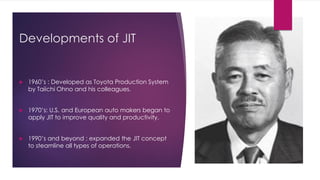
 1960’s : Developed as Toyota Production System
by Taiichi Ohno and his colleagues.
 1970’s: U.S. and European auto makers began to
apply JIT to improve quality and productivity.
 1990’s and beyond : expanded the JIT concept
to steamline all types of operations.
Definition of JIT
 A set of techniques to increase productivity, improve quality and reduce
cost of an operation.
 A management philosophy to promote elimination of waste and
continuous improvement of productivity
That is, for Just in time, we need:
 Right materials
 Right place
 At the Right time.
Features
 Elimination of waste
 Quality at source
 Balanced and flexible work flow.
 Respect for people
 Continuous improvement(Kaizen).
 Simplification and visual control
 Focus on customer needs
 Partnership with key supplier's.
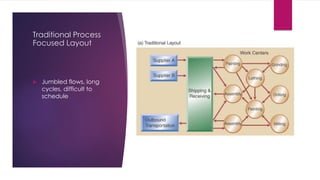
Traditional Process
Focused Layout
 Jumbled flows, long
cycles, difficult to
schedule
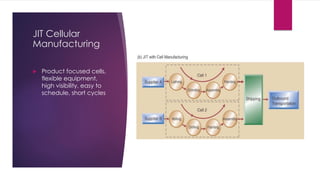
JIT Cellular
Manufacturing
 Product focused cells,
flexible equipment,
high visibility, easy to
schedule, short cycles
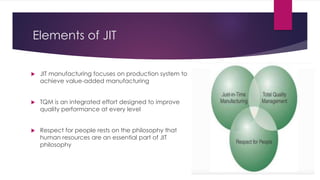
Elements of JIT
 JIT manufacturing focuses on production system to
achieve value-added manufacturing
 TQM is an integrated effort designed to improve
quality performance at every level
 Respect for people rests on the philosophy that
human resources are an essential part of JIT
philosophy
JIT and TQM- Partners
 Build quality into all processes
 Focus on continuous improvement - Kaizen
 Quality at the source- sequential inspection
 Jidoka (authority to stop line)
 Poka-yoke(inadvertent error prevention, fail-safe all processes)
 Preventive maintenance- scheduled
 Work environment- everything in its place, a place for everything
Respect for People: The Role of
Employees
 Genuine and meaningful respect for associates
 JIT uses bottom-round management – consensus management(slow
decision making process by committees or teams
 Actively engage in problem-solving (quality circles)
 Everyone is empowered
 Everyone is responsible for quality: understand both internal and external
customer needs
 Team approaches used for problem-solving
 Decisions made from bottom-up
 Everyone is responsible for preventive maintenance
The Role of Management
 Responsible for culture of mutual trust
 Serve as coaches & facilitators
 Support culture with appropriate
incentive system including non-monetary
 Responsible for developing workers
 Provide multi-functional training
 Facilitate teamwork
Supplier Relationships
and JIT
 Use single-source suppliers when possible
 Build long-term relationships
 Work together to certify processes
 Co-locate facilities to reduce transport if
possible
 Stabilize delivery schedules
 Share cost & other information
 Early involvement during new product
designs
Implementing JIT
 Starts with a company shared vision of where it is and
where it wants to go
 Management needs to create the right atmosphere
 Implementation needs a designated “Champion”
 Implement the sequence of following steps
 Make quality improvements
 Reorganize workplace
 Reduce setup times
Continued..
 Reduce lot sizes & lead times
 Implement layout changes
 Cellular manufacturing & close proximity
 Switch to pull production
 Develop relationship with suppliers
The seven wastes
 Waste of over production
 Waste of waiting
 Waste of transportation
 Waste of over processing
 Waste of inventory
 Waste of motion
 Waste of making defective products
Claims for JIT
 Reduced inventory
 Reduced WIP
 Shorter lead times- not too early, not too
late..
 JIT is the result business want, not a
starting point.
JIT action areas…
 Develop people- increase skills productivity, morale
 Eliminate waste in all areas
 Optimize materials handling and production flow
 Control tooling
 Improve continuously
ADVANTAGES
 Less space needed
 Waste reduction
 Smaller investments
DISADVANTAGES
 Risk of running out of stock
 Lack of control over time frame
 More planning required
Limitations
 Culture difference
 Traditional approach
 Difference in implementation of JIT
 Resistance to change
OTHER FACTORS NEEDED FOR JIT:
 Relationship b/w management & employee
 Employee commitment
 Employee skill

Just in time

  • 1.
    JUST IN TIME BY, JIBINPAULOSE E-BATCH
  • 2.
    What is JIT? A system of supplying goods as close as possible to when they are actually needed  Keeping less inventory on hand by keeping less storing costs.  Also known as JUST IN TIME PRODUCTION / The TOYOTA PDN. SYSTEM.  Its origin and development was in Japan, largely in the 1960s and 1970s, particularly at Toyota.
  • 3.
    Developments of JIT 1960’s : Developed as Toyota Production System by Taiichi Ohno and his colleagues.  1970’s: U.S. and European auto makers began to apply JIT to improve quality and productivity.  1990’s and beyond : expanded the JIT concept to steamline all types of operations.
  • 4.
    Definition of JIT A set of techniques to increase productivity, improve quality and reduce cost of an operation.  A management philosophy to promote elimination of waste and continuous improvement of productivity
  • 5.
    That is, forJust in time, we need:  Right materials  Right place  At the Right time.
  • 6.
    Features  Elimination ofwaste  Quality at source  Balanced and flexible work flow.  Respect for people  Continuous improvement(Kaizen).  Simplification and visual control  Focus on customer needs  Partnership with key supplier's.
  • 7.
    Traditional Process Focused Layout Jumbled flows, long cycles, difficult to schedule
  • 8.
    JIT Cellular Manufacturing  Productfocused cells, flexible equipment, high visibility, easy to schedule, short cycles
  • 9.
    Elements of JIT JIT manufacturing focuses on production system to achieve value-added manufacturing  TQM is an integrated effort designed to improve quality performance at every level  Respect for people rests on the philosophy that human resources are an essential part of JIT philosophy
  • 10.
    JIT and TQM-Partners  Build quality into all processes  Focus on continuous improvement - Kaizen  Quality at the source- sequential inspection  Jidoka (authority to stop line)  Poka-yoke(inadvertent error prevention, fail-safe all processes)  Preventive maintenance- scheduled  Work environment- everything in its place, a place for everything
  • 11.
    Respect for People:The Role of Employees  Genuine and meaningful respect for associates  JIT uses bottom-round management – consensus management(slow decision making process by committees or teams  Actively engage in problem-solving (quality circles)  Everyone is empowered  Everyone is responsible for quality: understand both internal and external customer needs  Team approaches used for problem-solving  Decisions made from bottom-up  Everyone is responsible for preventive maintenance
  • 12.
    The Role ofManagement  Responsible for culture of mutual trust  Serve as coaches & facilitators  Support culture with appropriate incentive system including non-monetary  Responsible for developing workers  Provide multi-functional training  Facilitate teamwork
  • 13.
    Supplier Relationships and JIT Use single-source suppliers when possible  Build long-term relationships  Work together to certify processes  Co-locate facilities to reduce transport if possible  Stabilize delivery schedules  Share cost & other information  Early involvement during new product designs
  • 14.
    Implementing JIT  Startswith a company shared vision of where it is and where it wants to go  Management needs to create the right atmosphere  Implementation needs a designated “Champion”  Implement the sequence of following steps  Make quality improvements  Reorganize workplace  Reduce setup times
  • 15.
    Continued..  Reduce lotsizes & lead times  Implement layout changes  Cellular manufacturing & close proximity  Switch to pull production  Develop relationship with suppliers
  • 16.
    The seven wastes Waste of over production  Waste of waiting  Waste of transportation  Waste of over processing  Waste of inventory  Waste of motion  Waste of making defective products
  • 17.
    Claims for JIT Reduced inventory  Reduced WIP  Shorter lead times- not too early, not too late..  JIT is the result business want, not a starting point.
  • 18.
    JIT action areas… Develop people- increase skills productivity, morale  Eliminate waste in all areas  Optimize materials handling and production flow  Control tooling  Improve continuously
  • 19.
    ADVANTAGES  Less spaceneeded  Waste reduction  Smaller investments DISADVANTAGES  Risk of running out of stock  Lack of control over time frame  More planning required
  • 20.
    Limitations  Culture difference Traditional approach  Difference in implementation of JIT  Resistance to change OTHER FACTORS NEEDED FOR JIT:  Relationship b/w management & employee  Employee commitment  Employee skill