School Improvement 
Plans (SIPs) 
Interview of Nancy Strobel and Brian Curtis 
Brouillet Elementary School 
Puyallup School District 
Interview Conducted By: Jenna Buswell 
WSUP Ed Psy 510---Dr. Glenn Malone
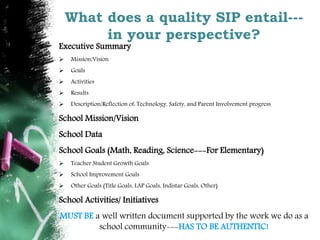
What does a quality SIP entail--- 
in your perspective? 
Executive Summary 
 Mission/Vision 
 Goals 
 Activities 
 Results 
 Description/Reflection of: Technology, Safety, and Parent Involvement progress 
School Mission/Vision 
School Data 
School Goals (Math, Reading, Science---For Elementary) 
 Teacher Student Growth Goals 
 School Improvement Goals 
 Other Goals (Title Goals, LAP Goals, Indistar Goals, Other) 
School Activities/ Initiatives 
MUST BE a well written document supported by the work we do as a 
school community---HAS TO BE AUTHENTIC!
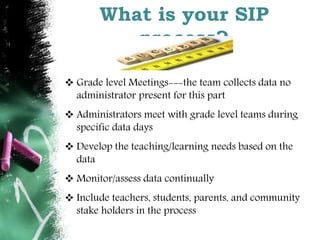
What is your SIP 
process? 
 Grade level Meetings---the team collects data no 
administrator present for this part 
 Administrators meet with grade level teams during 
specific data days 
 Develop the teaching/learning needs based on the 
data 
 Monitor/assess data continually 
 Include teachers, students, parents, and community 
stake holders in the process
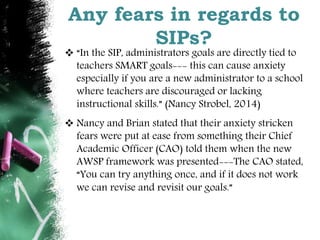
Any fears in regards to 
SIPs? 
 “In the SIP, administrators goals are directly tied to 
teachers SMART goals--- this can cause anxiety 
especially if you are a new administrator to a school 
where teachers are discouraged or lacking 
instructional skills.” (Nancy Strobel, 2014) 
 Nancy and Brian stated that their anxiety stricken 
fears were put at ease from something their Chief 
Academic Officer (CAO) told them when the new 
AWSP framework was presented---The CAO stated, 
“You can try anything once, and if it does not work 
we can revise and revisit our goals.”
Is there certain data you 
gravitate to when making 
your school’s SIP? 
that EVERY CHILD meets grade 
level expectations 
Personal Reflection: Although, I agree with this goal---isn’t that our 
purpose as educators? I really wanted to hear more in regards to 
what specific data is really sought after by my leaders in regards to 
our school and where we stand with state and district standards.
Does the district 
provide you with a 
template?  The Puyallup School District has given direct 
instruction on how to write and where to place 
the school’s SIP so all invested parties have access 
to it 
 This template is new for the 2014/2015 school 
year 
 The SIP is to be on EVERY schools website in the 
“About Us” section prior to the end of the school 
year 
SIP PSD Template 
Where the SIP is required to be placed in PSD
Is the district involved 
in your SIP process? 
In the Puyallup School District the Chief 
Academic Officers (COA’s) are involved in the 
collaborative SIP creation process and review 
of the effectiveness of the SIP with the school 
principals towards the end of the academic 
school year
How do you sustain 
your SIP? 
 “The mindset and belief that our work is truly never 
finished---cycling through the SIP, our work is 
never done, there is always room for improvement” 
(Nancy Strobel,2014) 
 Having technology at your fingertips definitely plays 
a role in maintaining and monitoring your SIP 
“PERFORMANCE PLUS---is an educational leaders new 
best friend” (Nancy Strobel,2014)
Conclusion 
SIPs are critical in ensuring that 
educational leaders and schools as a 
whole are held accountable by 
continually looking at data to lead 
educational practices and student 
learning--- the work is never 
done!

Jenna SIP Presentation

  • 1.
    School Improvement Plans(SIPs) Interview of Nancy Strobel and Brian Curtis Brouillet Elementary School Puyallup School District Interview Conducted By: Jenna Buswell WSUP Ed Psy 510---Dr. Glenn Malone
  • 2.
    What does aquality SIP entail--- in your perspective? Executive Summary  Mission/Vision  Goals  Activities  Results  Description/Reflection of: Technology, Safety, and Parent Involvement progress School Mission/Vision School Data School Goals (Math, Reading, Science---For Elementary)  Teacher Student Growth Goals  School Improvement Goals  Other Goals (Title Goals, LAP Goals, Indistar Goals, Other) School Activities/ Initiatives MUST BE a well written document supported by the work we do as a school community---HAS TO BE AUTHENTIC!
  • 3.
    What is yourSIP process?  Grade level Meetings---the team collects data no administrator present for this part  Administrators meet with grade level teams during specific data days  Develop the teaching/learning needs based on the data  Monitor/assess data continually  Include teachers, students, parents, and community stake holders in the process
  • 4.
    Any fears inregards to SIPs?  “In the SIP, administrators goals are directly tied to teachers SMART goals--- this can cause anxiety especially if you are a new administrator to a school where teachers are discouraged or lacking instructional skills.” (Nancy Strobel, 2014)  Nancy and Brian stated that their anxiety stricken fears were put at ease from something their Chief Academic Officer (CAO) told them when the new AWSP framework was presented---The CAO stated, “You can try anything once, and if it does not work we can revise and revisit our goals.”
  • 5.
    Is there certaindata you gravitate to when making your school’s SIP? that EVERY CHILD meets grade level expectations Personal Reflection: Although, I agree with this goal---isn’t that our purpose as educators? I really wanted to hear more in regards to what specific data is really sought after by my leaders in regards to our school and where we stand with state and district standards.
  • 6.
    Does the district provide you with a template?  The Puyallup School District has given direct instruction on how to write and where to place the school’s SIP so all invested parties have access to it  This template is new for the 2014/2015 school year  The SIP is to be on EVERY schools website in the “About Us” section prior to the end of the school year SIP PSD Template Where the SIP is required to be placed in PSD
  • 7.
    Is the districtinvolved in your SIP process? In the Puyallup School District the Chief Academic Officers (COA’s) are involved in the collaborative SIP creation process and review of the effectiveness of the SIP with the school principals towards the end of the academic school year
  • 8.
    How do yousustain your SIP?  “The mindset and belief that our work is truly never finished---cycling through the SIP, our work is never done, there is always room for improvement” (Nancy Strobel,2014)  Having technology at your fingertips definitely plays a role in maintaining and monitoring your SIP “PERFORMANCE PLUS---is an educational leaders new best friend” (Nancy Strobel,2014)
  • 9.
    Conclusion SIPs arecritical in ensuring that educational leaders and schools as a whole are held accountable by continually looking at data to lead educational practices and student learning--- the work is never done!