What is School
Improvement Planning?
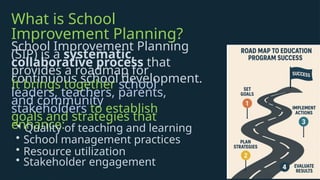
School Improvement Planning
(SIP) is a systematic,
collaborative process that
provides a roadmap for
continuous school development.
It brings together school
leaders, teachers, parents,
and community
stakeholders to establish
goals and strategies that
enhance:
• Quality of teaching and learning
• School management practices
• Resource utilization
• Stakeholder engagement
Core Objectives of School Improvement Planning
1
Enhance Student Learning
Implement evidence-based instructional practices that improve academic
outcomes and support holistic development
2
Strengthen Professional Development
Foster teacher growth through targeted training, coaching, and collaborative
learning communities
3
Improve Leadership & Governance
Develop effective administrative systems and cultivate distributed
leadership across the school
4
Optimize Resource Allocation
Ensure strategic use of time, funds, facilities, and personnel to maximize
educational impact
5
Engage Stakeholders
Meaningfully involve parents, local government, and community partners
in school decision-making processes
The SIP Development Process:
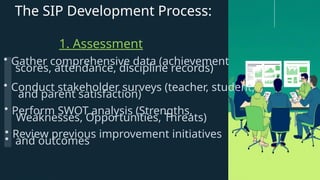
1. Assessment
• Gather comprehensive data (achievement
scores, attendance, discipline records)
• Conduct stakeholder surveys (teacher, student,
and parent satisfaction)
• Perform SWOT analysis (Strengths,
Weaknesses, Opportunities, Threats)
• Review previous improvement initiatives
• and outcomes
The SIP Development
Process:
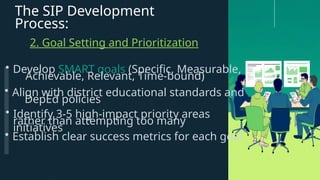
2. Goal Setting and Prioritization
• Develop SMART goals (Specific, Measurable,
Achievable, Relevant, Time-bound)
• Align with district educational standards and
DepEd policies
• Identify 3-5 high-impact priority areas
rather than attempting too many
initiatives
• Establish clear success metrics for each goal
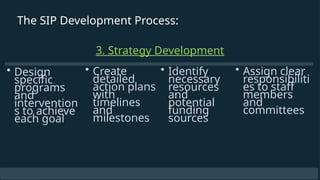
The SIP Development Process:
3. Strategy Development
• Design
specific
programs
and
intervention
s to achieve
each goal
• Create
detailed
action plans
with
timelines
and
milestones
• Assign clear
responsibiliti
es to staff
members
and
committees
• Identify
necessary
resources
and
potential
funding
sources
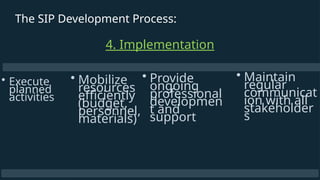
The SIP Development Process:
4. Implementation
• Execute
planned
activities
• Mobilize
resources
efficiently
(budget,
personnel,
materials)
• Provide
ongoing
professional
developmen
t and
support
• Maintain
regular
communicat
ion with all
stakeholder
s
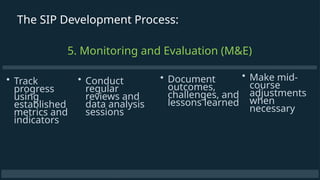
The SIP Development Process:
5. Monitoring and Evaluation (M&E)
• Track
progress
using
established
metrics and
indicators
• Conduct
regular
reviews and
data analysis
sessions
• Document
outcomes,
challenges, and
lessons learned
• Make mid-
course
adjustments
when
necessary
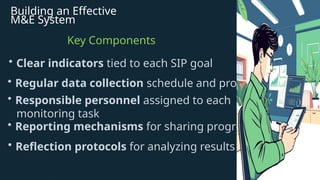
Building an Effective
M&E System
Key Components
• Clear indicators tied to each SIP goal
• Regular data collection schedule and protocols
• Responsible personnel assigned to each
monitoring task
• Reporting mechanisms for sharing progress
• Reflection protocols for analyzing results
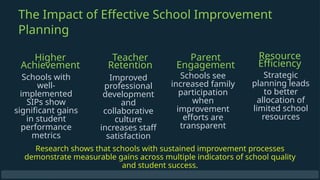
The Impact of Effective School Improvement
Planning
Higher
Achievement
Schools with
well-
implemented
SIPs show
significant gains
in student
performance
metrics
Teacher
Retention
Improved
professional
development
and
collaborative
culture
increases staff
satisfaction
Parent
Engagement
Schools see
increased family
participation
when
improvement
efforts are
transparent
Resource
Efficiency
Strategic
planning leads
to better
allocation of
limited school
resources
Research shows that schools with sustained improvement processes
demonstrate measurable gains across multiple indicators of school quality
and student success.

Principles of School Improvement Planning

  • 1.
    What is School ImprovementPlanning? School Improvement Planning (SIP) is a systematic, collaborative process that provides a roadmap for continuous school development. It brings together school leaders, teachers, parents, and community stakeholders to establish goals and strategies that enhance: • Quality of teaching and learning • School management practices • Resource utilization • Stakeholder engagement
  • 2.
    Core Objectives ofSchool Improvement Planning 1 Enhance Student Learning Implement evidence-based instructional practices that improve academic outcomes and support holistic development 2 Strengthen Professional Development Foster teacher growth through targeted training, coaching, and collaborative learning communities 3 Improve Leadership & Governance Develop effective administrative systems and cultivate distributed leadership across the school 4 Optimize Resource Allocation Ensure strategic use of time, funds, facilities, and personnel to maximize educational impact 5 Engage Stakeholders Meaningfully involve parents, local government, and community partners in school decision-making processes
  • 3.
    The SIP DevelopmentProcess: 1. Assessment • Gather comprehensive data (achievement scores, attendance, discipline records) • Conduct stakeholder surveys (teacher, student, and parent satisfaction) • Perform SWOT analysis (Strengths, Weaknesses, Opportunities, Threats) • Review previous improvement initiatives • and outcomes
  • 4.
    The SIP Development Process: 2.Goal Setting and Prioritization • Develop SMART goals (Specific, Measurable, Achievable, Relevant, Time-bound) • Align with district educational standards and DepEd policies • Identify 3-5 high-impact priority areas rather than attempting too many initiatives • Establish clear success metrics for each goal
  • 5.
    The SIP DevelopmentProcess: 3. Strategy Development • Design specific programs and intervention s to achieve each goal • Create detailed action plans with timelines and milestones • Assign clear responsibiliti es to staff members and committees • Identify necessary resources and potential funding sources
  • 6.
    The SIP DevelopmentProcess: 4. Implementation • Execute planned activities • Mobilize resources efficiently (budget, personnel, materials) • Provide ongoing professional developmen t and support • Maintain regular communicat ion with all stakeholder s
  • 7.
    The SIP DevelopmentProcess: 5. Monitoring and Evaluation (M&E) • Track progress using established metrics and indicators • Conduct regular reviews and data analysis sessions • Document outcomes, challenges, and lessons learned • Make mid- course adjustments when necessary
  • 8.
    Building an Effective M&ESystem Key Components • Clear indicators tied to each SIP goal • Regular data collection schedule and protocols • Responsible personnel assigned to each monitoring task • Reporting mechanisms for sharing progress • Reflection protocols for analyzing results
  • 9.
    The Impact ofEffective School Improvement Planning Higher Achievement Schools with well- implemented SIPs show significant gains in student performance metrics Teacher Retention Improved professional development and collaborative culture increases staff satisfaction Parent Engagement Schools see increased family participation when improvement efforts are transparent Resource Efficiency Strategic planning leads to better allocation of limited school resources Research shows that schools with sustained improvement processes demonstrate measurable gains across multiple indicators of school quality and student success.