SIP
InterviewPlanting the seeds for
Student and Staff Success
Traci M Frank
EdPsy 510
9/19/13
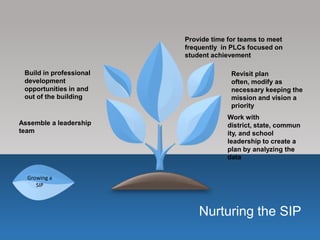
Nurturing the SIP
Assemble a leadership
team
Work with
district, state, commun
ity, and school
leadership to create a
plan by analyzing the
data
Build in professional
development
opportunities in and
out of the building
Growing a
SIP
Revisit plan
often, modify as
necessary keeping the
mission and vision a
priority
Provide time for teams to meet
frequently in PLCs focused on
student achievement
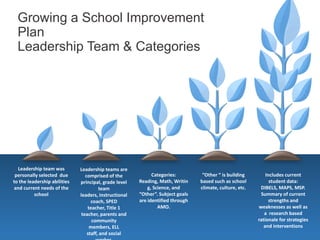
Growing a School Improvement
Plan
Leadership Team & Categories
Leadership team was
personally selected due
to the leadership abilities
and current needs of the
school
Leadership teams are
comprised of the
principal, grade level
team
leaders, instructional
coach, SPED
teacher, Title 1
teacher, parents and
community
members, ELL
staff, and social
Categories:
Reading, Math, Writin
g, Science, and
“Other”. Subject goals
are identified through
AMO.
“Other “ is building
based such as school
climate, culture, etc.
Includes current
student data:
DIBELS, MAPS, MSP.
Summary of current
strengths and
weaknesses as well as
a research based
rationale for strategies
and interventions
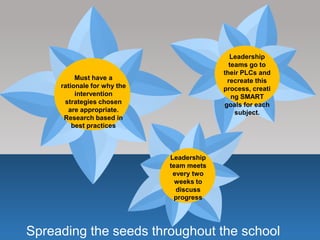
Spreading the seeds throughout the school
Must have a
rationale for why the
intervention
strategies chosen
are appropriate.
Research based in
best practices
Leadership
teams go to
their PLCs and
recreate this
process, creati
ng SMART
goals for each
subject.
Leadership
team meets
every two
weeks to
discuss
progress
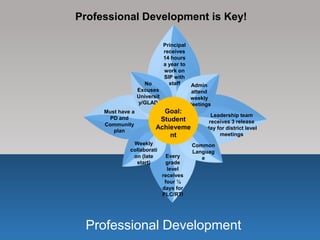
Professional Development
Professional Development is Key!
Must have a
PD and
Community
plan
Principal
receives
14 hours
a year to
work on
SIP with
staff
Leadership team
receives 3 release
day for district level
meetings
Every
grade
level
receives
four ½
days for
PLC/RTI
Weekly
collaborati
on (late
start)
Admin
attend
weekly
meetings
No
Excuses
Universit
y/GLAD
Common
Languag
e
Goal:
Student
Achieveme
nt
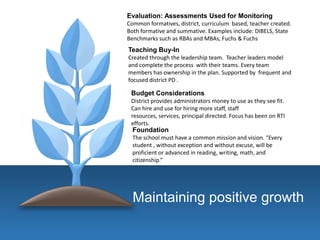
Maintaining positive growth
Foundation
The school must have a common mission and vision. “Every
student , without exception and without excuse, will be
proficient or advanced in reading, writing, math, and
citizenship.”
Budget Considerations
District provides administrators money to use as they see fit.
Can hire and use for hiring more staff, staff
resources, services, principal directed. Focus has been on RTI
efforts.
Teaching Buy-In
Created through the leadership team. Teacher leaders model
and complete the process with their teams. Every team
members has ownership in the plan. Supported by frequent and
focused district PD .
Evaluation: Assessments Used for Monitoring
Common formatives, district, curriculum based, teacher created.
Both formative and summative. Examples include: DIBELS, State
Benchmarks such as RBAs and MBAs, Fuchs & Fuchs

Traci's CSIP ppt

  • 1.
    SIP InterviewPlanting the seedsfor Student and Staff Success Traci M Frank EdPsy 510 9/19/13
  • 2.
    Nurturing the SIP Assemblea leadership team Work with district, state, commun ity, and school leadership to create a plan by analyzing the data Build in professional development opportunities in and out of the building Growing a SIP Revisit plan often, modify as necessary keeping the mission and vision a priority Provide time for teams to meet frequently in PLCs focused on student achievement
  • 3.
    Growing a SchoolImprovement Plan Leadership Team & Categories Leadership team was personally selected due to the leadership abilities and current needs of the school Leadership teams are comprised of the principal, grade level team leaders, instructional coach, SPED teacher, Title 1 teacher, parents and community members, ELL staff, and social Categories: Reading, Math, Writin g, Science, and “Other”. Subject goals are identified through AMO. “Other “ is building based such as school climate, culture, etc. Includes current student data: DIBELS, MAPS, MSP. Summary of current strengths and weaknesses as well as a research based rationale for strategies and interventions
  • 4.
    Spreading the seedsthroughout the school Must have a rationale for why the intervention strategies chosen are appropriate. Research based in best practices Leadership teams go to their PLCs and recreate this process, creati ng SMART goals for each subject. Leadership team meets every two weeks to discuss progress
  • 5.
    Professional Development Professional Developmentis Key! Must have a PD and Community plan Principal receives 14 hours a year to work on SIP with staff Leadership team receives 3 release day for district level meetings Every grade level receives four ½ days for PLC/RTI Weekly collaborati on (late start) Admin attend weekly meetings No Excuses Universit y/GLAD Common Languag e Goal: Student Achieveme nt
  • 6.
    Maintaining positive growth Foundation Theschool must have a common mission and vision. “Every student , without exception and without excuse, will be proficient or advanced in reading, writing, math, and citizenship.” Budget Considerations District provides administrators money to use as they see fit. Can hire and use for hiring more staff, staff resources, services, principal directed. Focus has been on RTI efforts. Teaching Buy-In Created through the leadership team. Teacher leaders model and complete the process with their teams. Every team members has ownership in the plan. Supported by frequent and focused district PD . Evaluation: Assessments Used for Monitoring Common formatives, district, curriculum based, teacher created. Both formative and summative. Examples include: DIBELS, State Benchmarks such as RBAs and MBAs, Fuchs & Fuchs