TOPIC-
JAK STAT PATHWAY
SUBMITTED BY-
TANUSHREE AND MUSKAN
JAK STAT PATHWAY
(JANUS KINAS SIGNAL TRANSDUCER AND ACTIVATOR OF
TRANSCRIPTION)
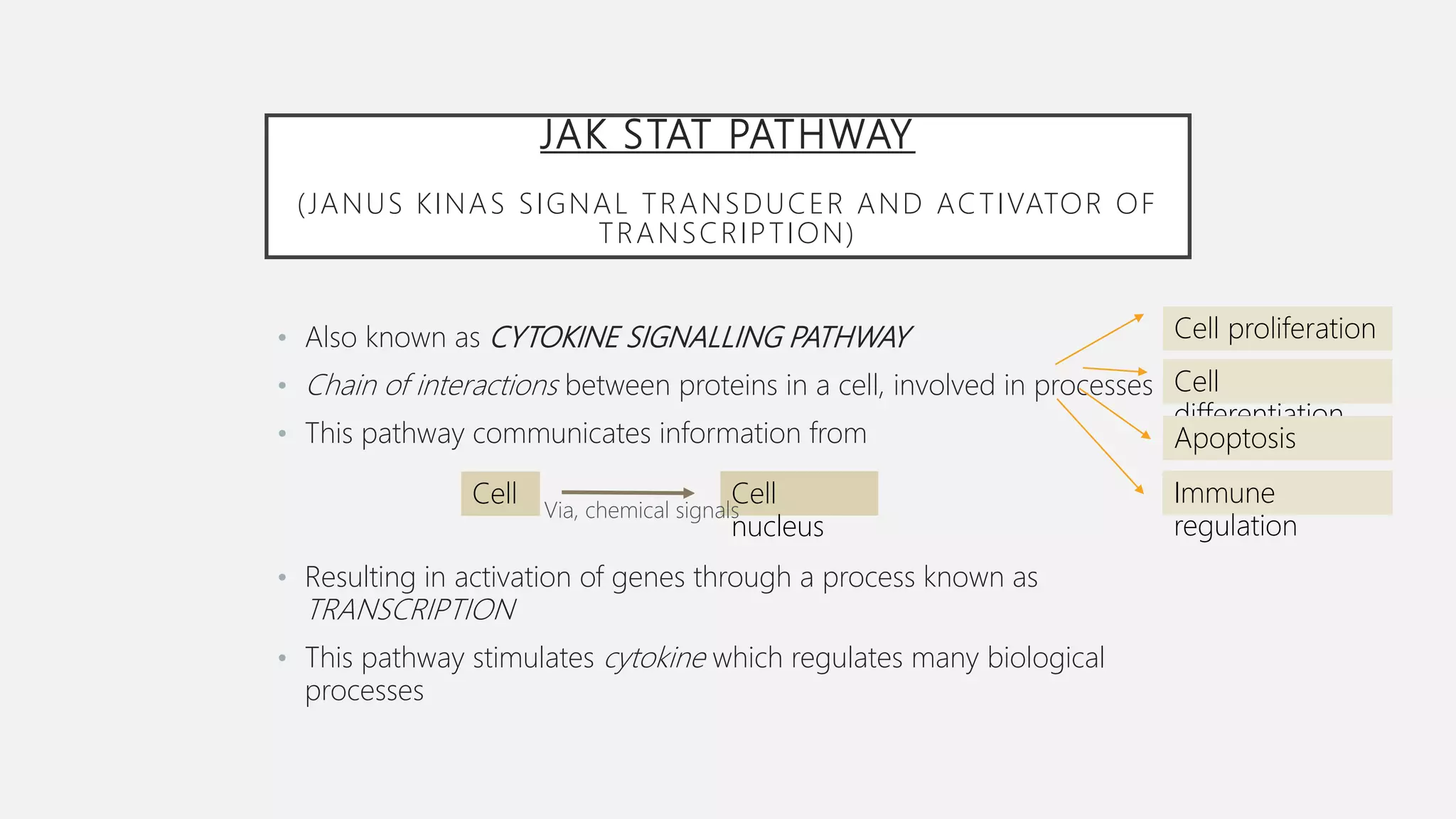
• Also known as CYTOKINE SIGNALLING PATHWAY
• Chain of interactions between proteins in a cell, involved in processes
• This pathway communicates information from
• Resulting in activation of genes through a process known as
TRANSCRIPTION
• This pathway stimulates cytokine which regulates many biological
processes
Cell Cell
nucleus
Via, chemical signals
Cell proliferation
Cell
differentiation
Apoptosis
Immune
regulation
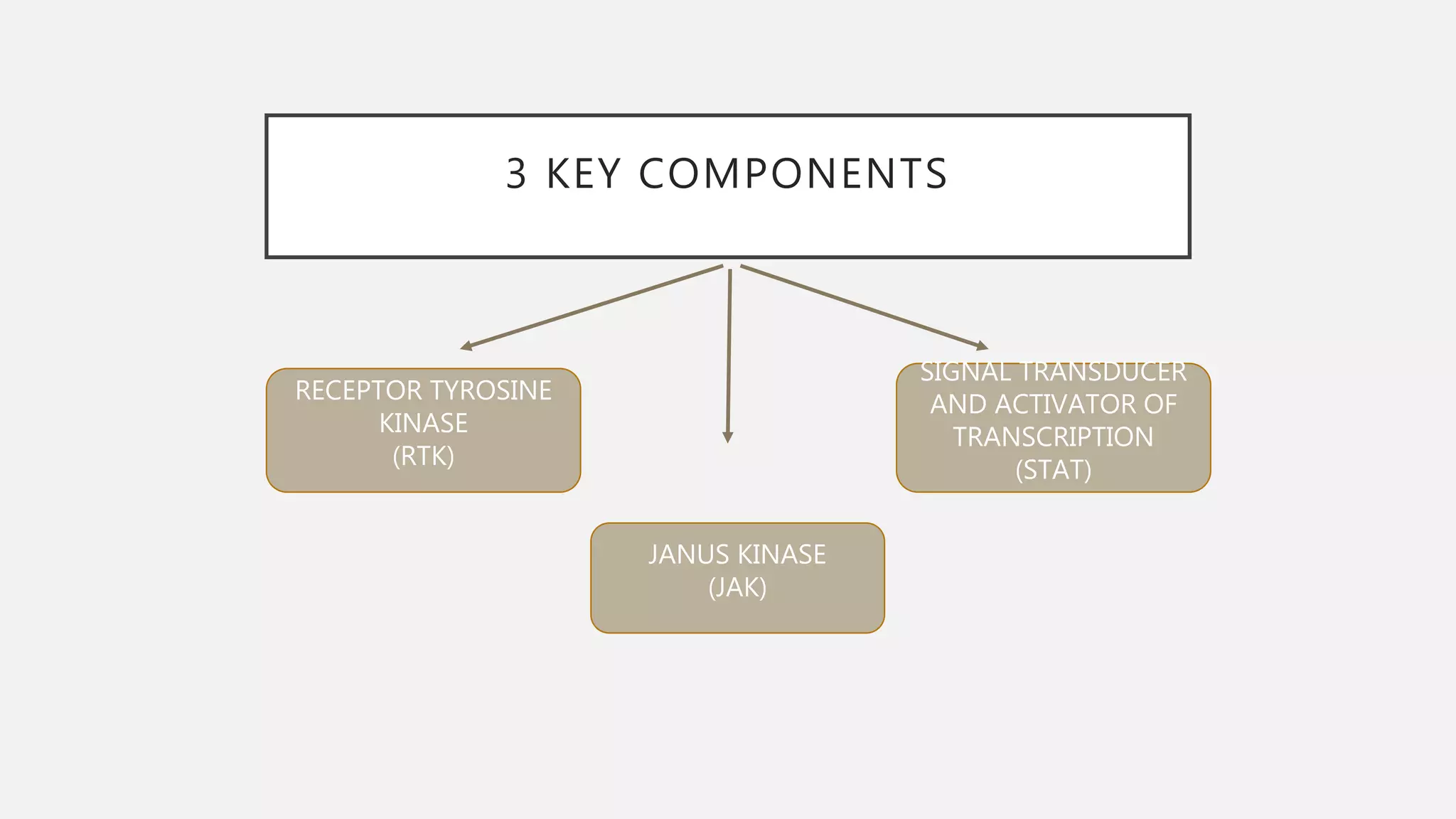
3 KEY COMPONENTS
JANUS KINASE
(JAK)
RECEPTOR TYROSINE
KINASE
(RTK)
SIGNAL TRANSDUCER
AND ACTIVATOR OF
TRANSCRIPTION
(STAT)
STRUCTURE OF JAK
JAK Proteins
 JAK 1
 JAK 2
 JAK 3
 TYK 2
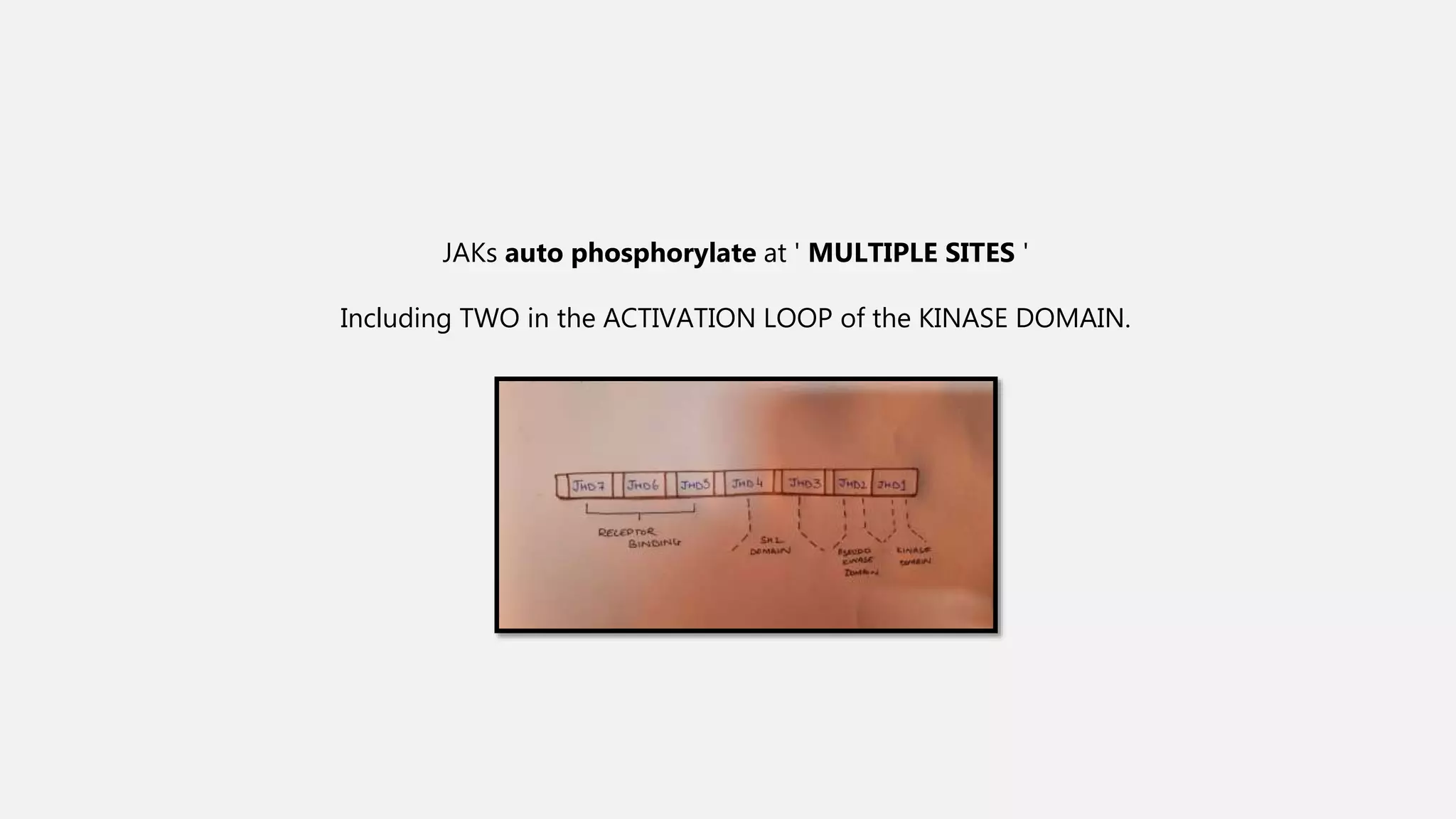
4 DOMAINS
 FERM domain
 SH2 domain
 PSEUDOKINASE
domain
 KINASE domain
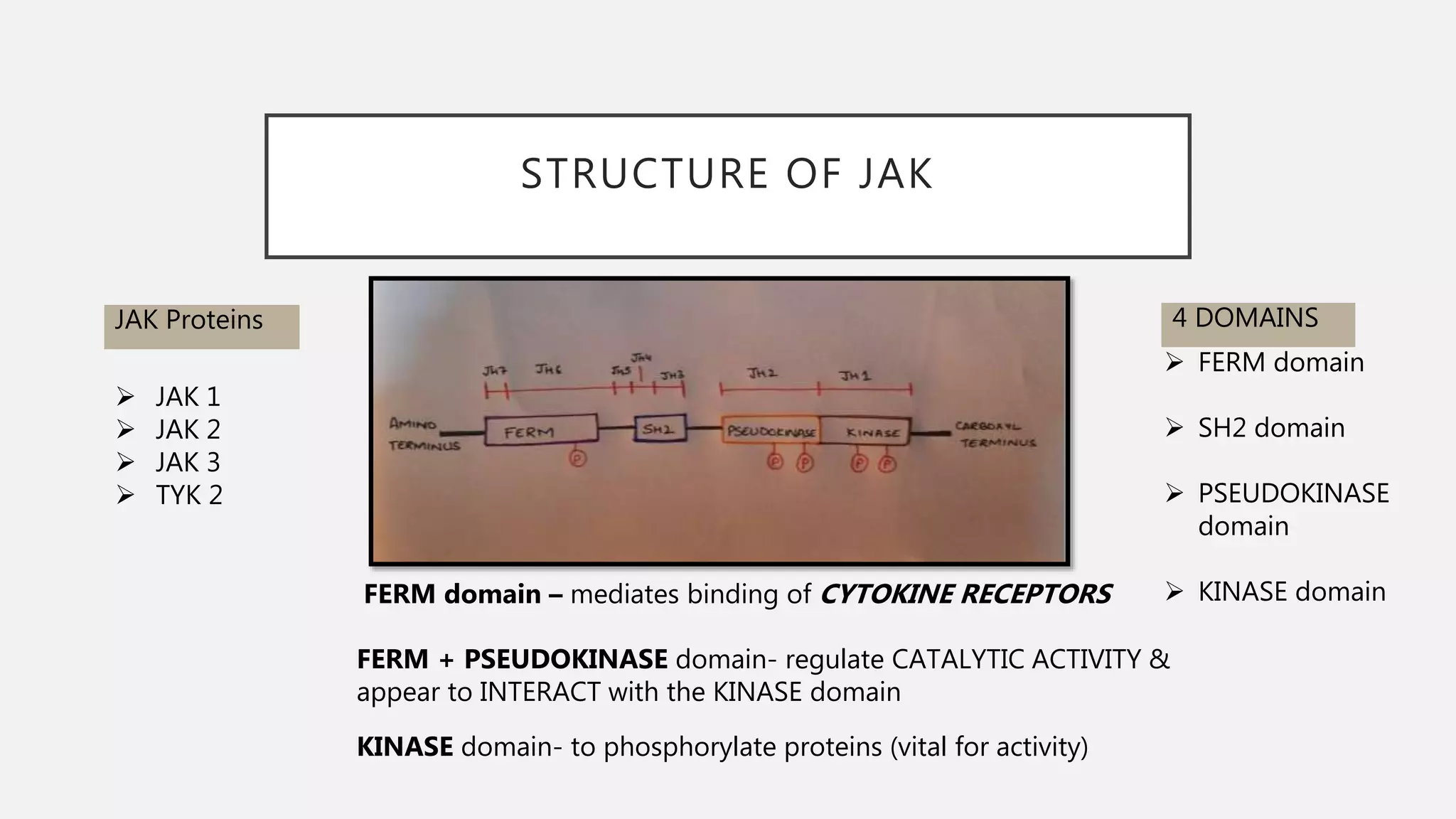
FERM domain – mediates binding of CYTOKINE RECEPTORS
FERM + PSEUDOKINASE domain- regulate CATALYTIC ACTIVITY &
appear to INTERACT with the KINASE domain
KINASE domain- to phosphorylate proteins (vital for activity)
JAKs auto phosphorylate at ' MULTIPLE SITES '
Including TWO in the ACTIVATION LOOP of the KINASE DOMAIN.
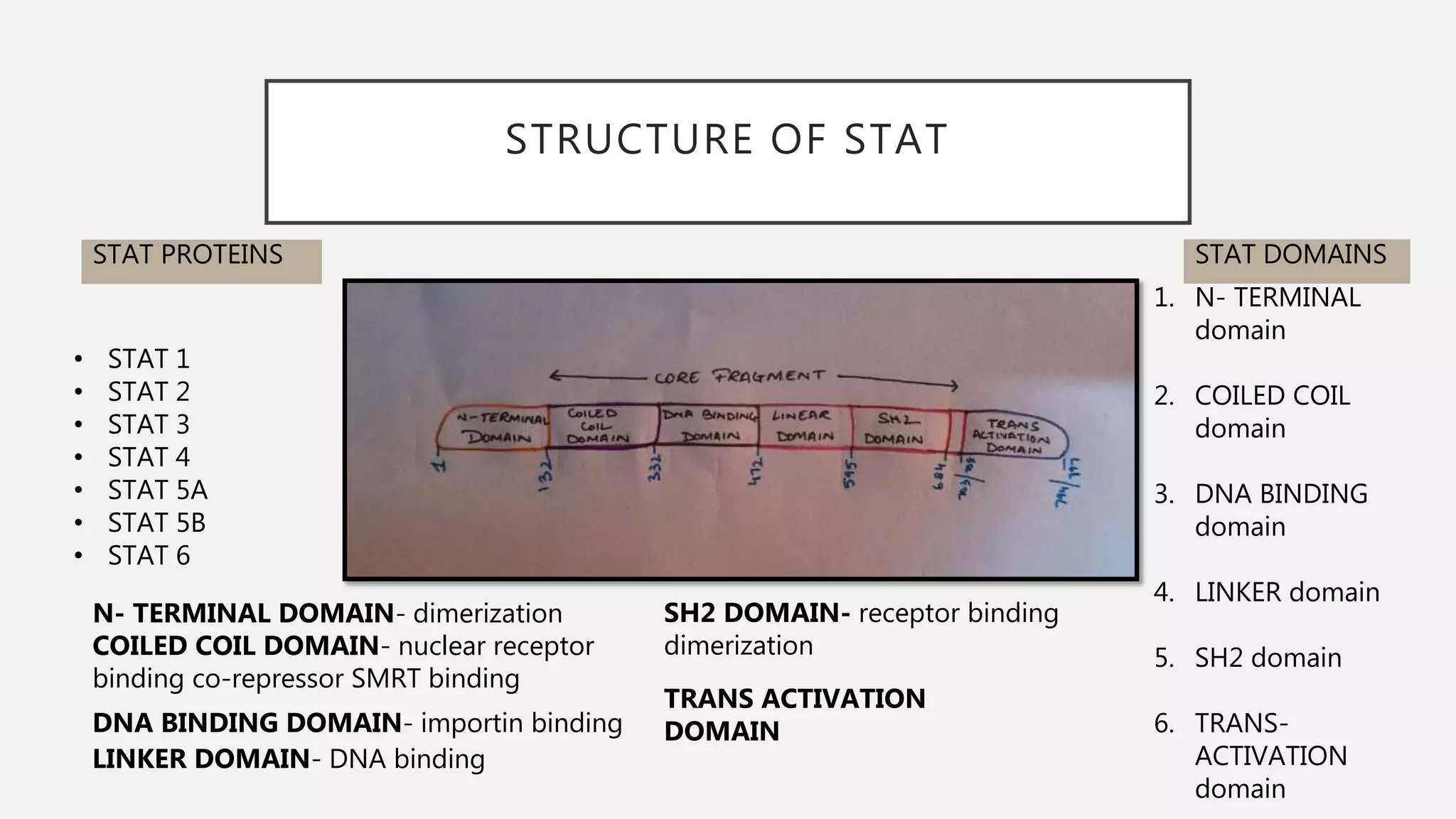
STRUCTURE OF STAT
STAT PROTEINS STAT DOMAINS
• STAT 1
• STAT 2
• STAT 3
• STAT 4
• STAT 5A
• STAT 5B
• STAT 6
1. N- TERMINAL
domain
2. COILED COIL
domain
3. DNA BINDING
domain
4. LINKER domain
5. SH2 domain
6. TRANS-
ACTIVATION
domain
N- TERMINAL DOMAIN- dimerization
COILED COIL DOMAIN- nuclear receptor
binding co-repressor SMRT binding
DNA BINDING DOMAIN- importin binding
LINKER DOMAIN- DNA binding
SH2 DOMAIN- receptor binding
dimerization
TRANS ACTIVATION
DOMAIN
JAK- STAT SIGNALLING PATHWAY
SIGNALLING MOLECULE- CYTOKINE
RECEPTOR- CYTOKINE RECEPTOR
CELLULAR ACTIVATORS / SECOND MESSENGERS- JAK STAT CROSS PHOSPHORYLATION
TRANSCRIPTION FACTORS- STAT DIMER
CELLULAR EFFECTS-
Lymphocyte development
Gamma signalling
NK Cell activation
WBC Formation
OVERVIEW
MECHANISM OF JAK STAT SIGNALLING
PATHWAY ACTIVATED BY CYTOKINES
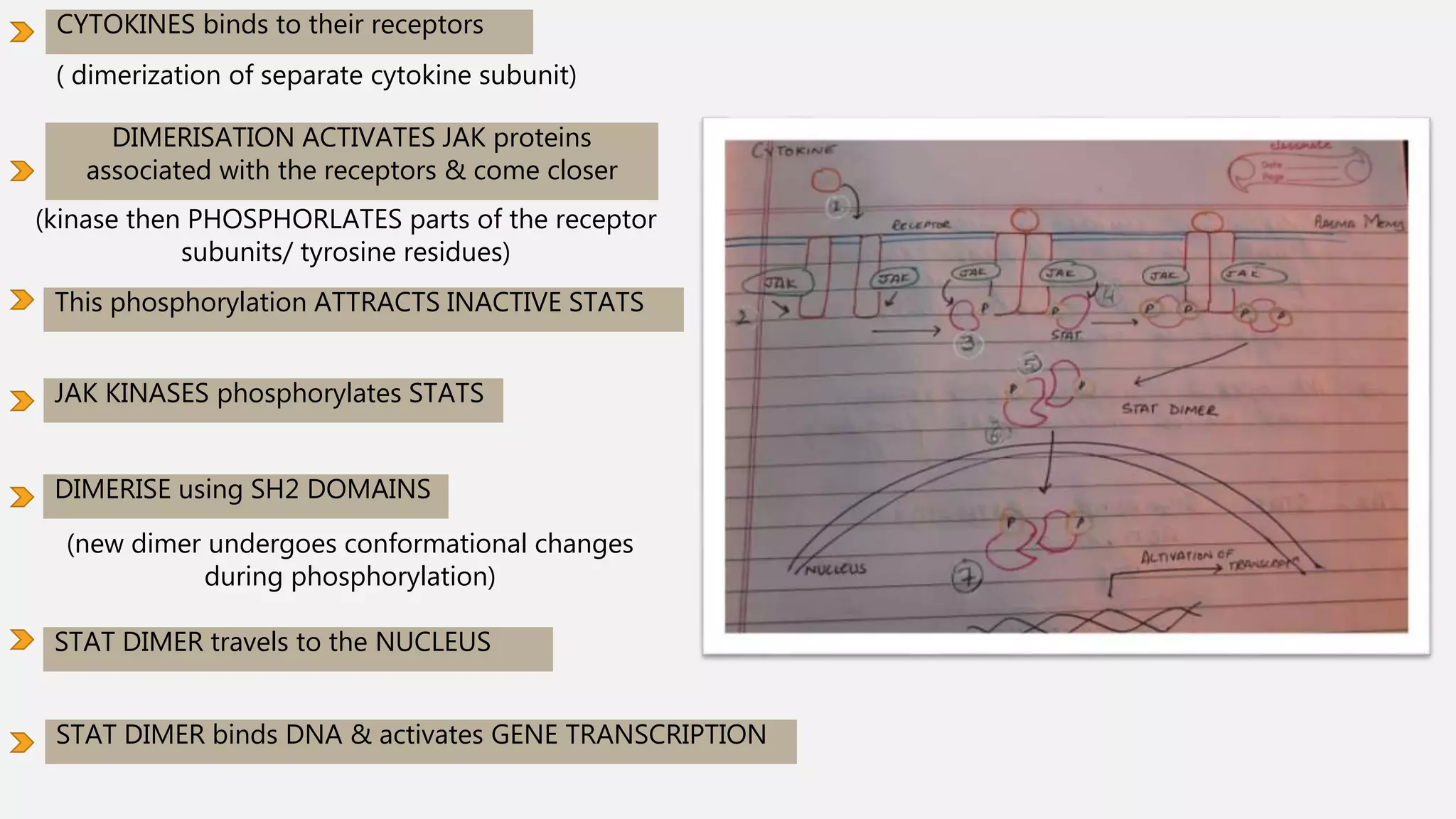
CYTOKINES binds to their receptors
DIMERISATION ACTIVATES JAK proteins
associated with the receptors & come closer
This phosphorylation ATTRACTS INACTIVE STATS
JAK KINASES phosphorylates STATS
DIMERISE using SH2 DOMAINS
STAT DIMER travels to the NUCLEUS
STAT DIMER binds DNA & activates GENE TRANSCRIPTION
( dimerization of separate cytokine subunit)
(kinase then PHOSPHORLATES parts of the receptor
subunits/ tyrosine residues)
(new dimer undergoes conformational changes
during phosphorylation)
JAK STAT PATHWAY ACTIVATED BY
ALPHA- INTERFERON
 Alpha Interferon is a Cytokine produced by the INNATE
IMMUNITY in response to environmental exposures including
viral infections
This has been developed as therapy of several forms of cancer &
viral infections
BUT major use has been as therapy of CHRONIC
HEPATITIS C.
MECHANISM
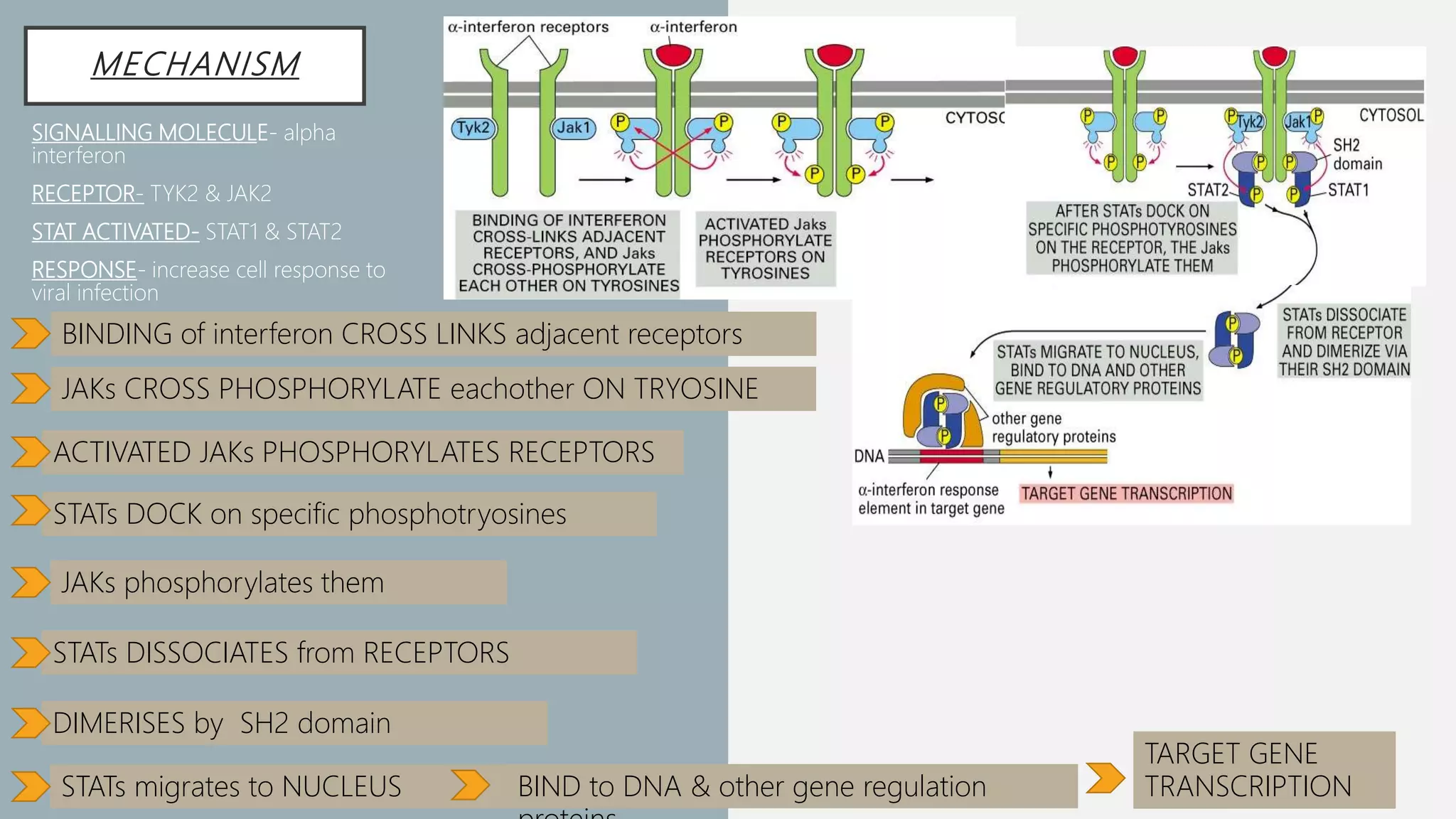
SIGNALLING MOLECULE- alpha
interferon
RECEPTOR- TYK2 & JAK2
STAT ACTIVATED- STAT1 & STAT2
RESPONSE- increase cell response to
viral infection
BINDING of interferon CROSS LINKS adjacent receptors
JAKs CROSS PHOSPHORYLATE eachother ON TRYOSINE
ACTIVATED JAKs PHOSPHORYLATES RECEPTORS
STATs DOCK on specific phosphotryosines
JAKs phosphorylates them
STATs DISSOCIATES from RECEPTORS
DIMERISES by SH2 domain
STATs migrates to NUCLEUS BIND to DNA & other gene regulation
TARGET GENE
TRANSCRIPTION
THANK YOU :)

Jak stat pathway

  • 1.
    TOPIC- JAK STAT PATHWAY SUBMITTEDBY- TANUSHREE AND MUSKAN
  • 2.
    JAK STAT PATHWAY (JANUSKINAS SIGNAL TRANSDUCER AND ACTIVATOR OF TRANSCRIPTION) • Also known as CYTOKINE SIGNALLING PATHWAY • Chain of interactions between proteins in a cell, involved in processes • This pathway communicates information from • Resulting in activation of genes through a process known as TRANSCRIPTION • This pathway stimulates cytokine which regulates many biological processes Cell Cell nucleus Via, chemical signals Cell proliferation Cell differentiation Apoptosis Immune regulation
  • 3.
    3 KEY COMPONENTS JANUSKINASE (JAK) RECEPTOR TYROSINE KINASE (RTK) SIGNAL TRANSDUCER AND ACTIVATOR OF TRANSCRIPTION (STAT)
  • 4.
    STRUCTURE OF JAK JAKProteins  JAK 1  JAK 2  JAK 3  TYK 2 4 DOMAINS  FERM domain  SH2 domain  PSEUDOKINASE domain  KINASE domain FERM domain – mediates binding of CYTOKINE RECEPTORS FERM + PSEUDOKINASE domain- regulate CATALYTIC ACTIVITY & appear to INTERACT with the KINASE domain KINASE domain- to phosphorylate proteins (vital for activity)
  • 5.
    JAKs auto phosphorylateat ' MULTIPLE SITES ' Including TWO in the ACTIVATION LOOP of the KINASE DOMAIN.
  • 6.
    STRUCTURE OF STAT STATPROTEINS STAT DOMAINS • STAT 1 • STAT 2 • STAT 3 • STAT 4 • STAT 5A • STAT 5B • STAT 6 1. N- TERMINAL domain 2. COILED COIL domain 3. DNA BINDING domain 4. LINKER domain 5. SH2 domain 6. TRANS- ACTIVATION domain N- TERMINAL DOMAIN- dimerization COILED COIL DOMAIN- nuclear receptor binding co-repressor SMRT binding DNA BINDING DOMAIN- importin binding LINKER DOMAIN- DNA binding SH2 DOMAIN- receptor binding dimerization TRANS ACTIVATION DOMAIN
  • 7.
    JAK- STAT SIGNALLINGPATHWAY SIGNALLING MOLECULE- CYTOKINE RECEPTOR- CYTOKINE RECEPTOR CELLULAR ACTIVATORS / SECOND MESSENGERS- JAK STAT CROSS PHOSPHORYLATION TRANSCRIPTION FACTORS- STAT DIMER CELLULAR EFFECTS- Lymphocyte development Gamma signalling NK Cell activation WBC Formation OVERVIEW
  • 8.
    MECHANISM OF JAKSTAT SIGNALLING PATHWAY ACTIVATED BY CYTOKINES
  • 9.
    CYTOKINES binds totheir receptors DIMERISATION ACTIVATES JAK proteins associated with the receptors & come closer This phosphorylation ATTRACTS INACTIVE STATS JAK KINASES phosphorylates STATS DIMERISE using SH2 DOMAINS STAT DIMER travels to the NUCLEUS STAT DIMER binds DNA & activates GENE TRANSCRIPTION ( dimerization of separate cytokine subunit) (kinase then PHOSPHORLATES parts of the receptor subunits/ tyrosine residues) (new dimer undergoes conformational changes during phosphorylation)
  • 10.
    JAK STAT PATHWAYACTIVATED BY ALPHA- INTERFERON  Alpha Interferon is a Cytokine produced by the INNATE IMMUNITY in response to environmental exposures including viral infections This has been developed as therapy of several forms of cancer & viral infections BUT major use has been as therapy of CHRONIC HEPATITIS C.
  • 11.
    MECHANISM SIGNALLING MOLECULE- alpha interferon RECEPTOR-TYK2 & JAK2 STAT ACTIVATED- STAT1 & STAT2 RESPONSE- increase cell response to viral infection BINDING of interferon CROSS LINKS adjacent receptors JAKs CROSS PHOSPHORYLATE eachother ON TRYOSINE ACTIVATED JAKs PHOSPHORYLATES RECEPTORS STATs DOCK on specific phosphotryosines JAKs phosphorylates them STATs DISSOCIATES from RECEPTORS DIMERISES by SH2 domain STATs migrates to NUCLEUS BIND to DNA & other gene regulation TARGET GENE TRANSCRIPTION
  • 12.