Presented by Shakshi Sharma
M. Pharm : Pharmacology (Ist
semester)
Department of Pharmacology
ISF college of Pharmacy, Moga
 Receptor
 Types of Receptor
 Enzyme linked receptor and their structure
 Cellular response
 JAK-STAT pathway
 Drugs targeted in JSAK-STAT pathway
 Physiological role of JAK-STAT pathway
 MAP kinase and their types
 Drugs targeted in MAP kinase
 Physiological role of MAP kinase signaling
 The concept of receptor was introduced by John
Newport Langley and Paul Ehrlich in 20th
century.
 Receptor is defined as a macromolecule or binding site
located on the surface or inside the effector cell that
serves to recognize the signal/molecule/drug and
initiate the response to it, but itself has no other
function.
1. G- protein coupled receptor- e.g., Ach-
Muscarinic and Adrenergic receptors.
2. Ion channel receptor- e.g., Ach-
Nicotine, GABA, Glutamate.
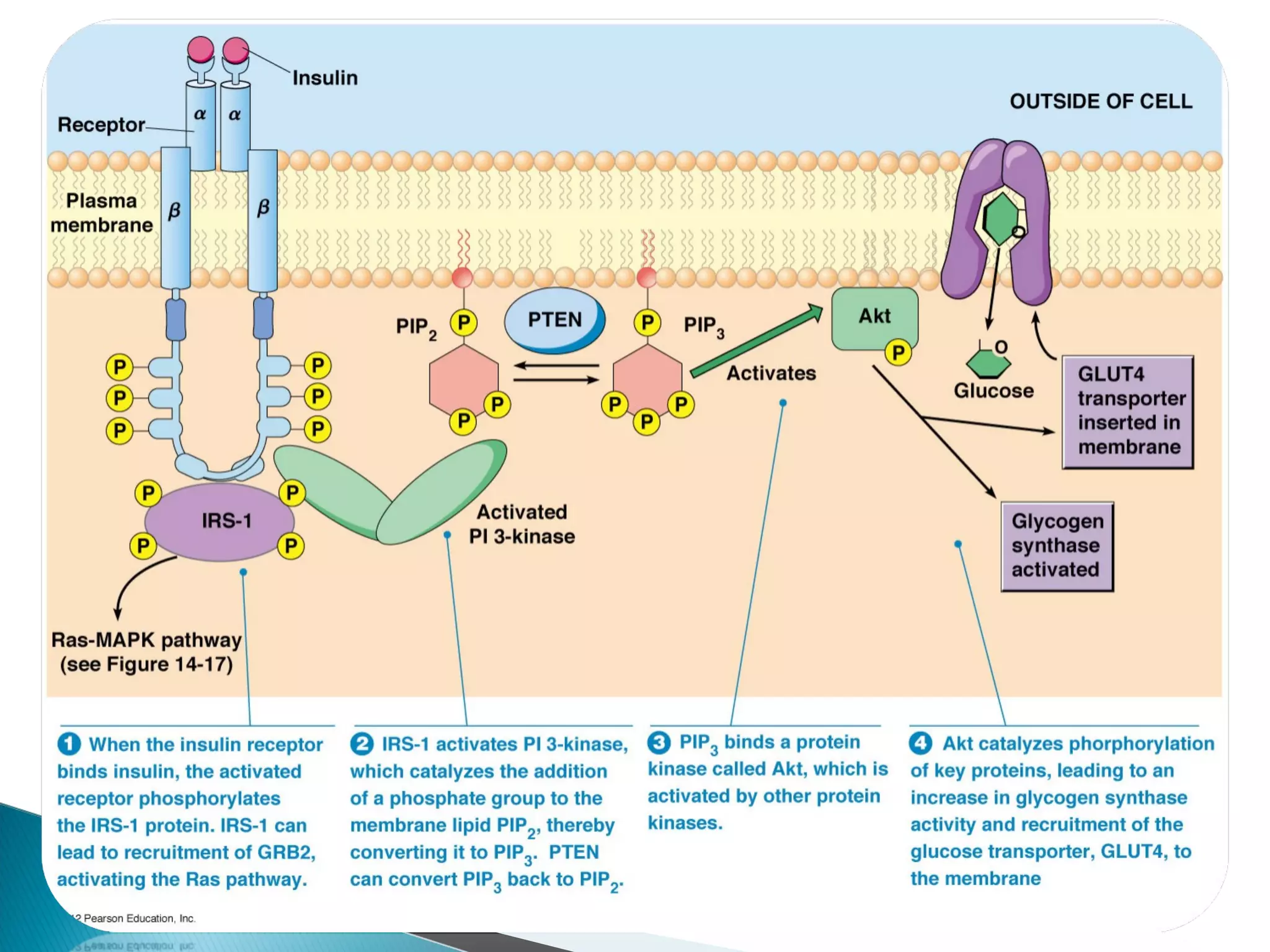
3. Transmembrane enzyme linked
receptor- e.g., Insulin.
4. Receptors regulating gene expression-
e.g., Steroids, Thyroxin.
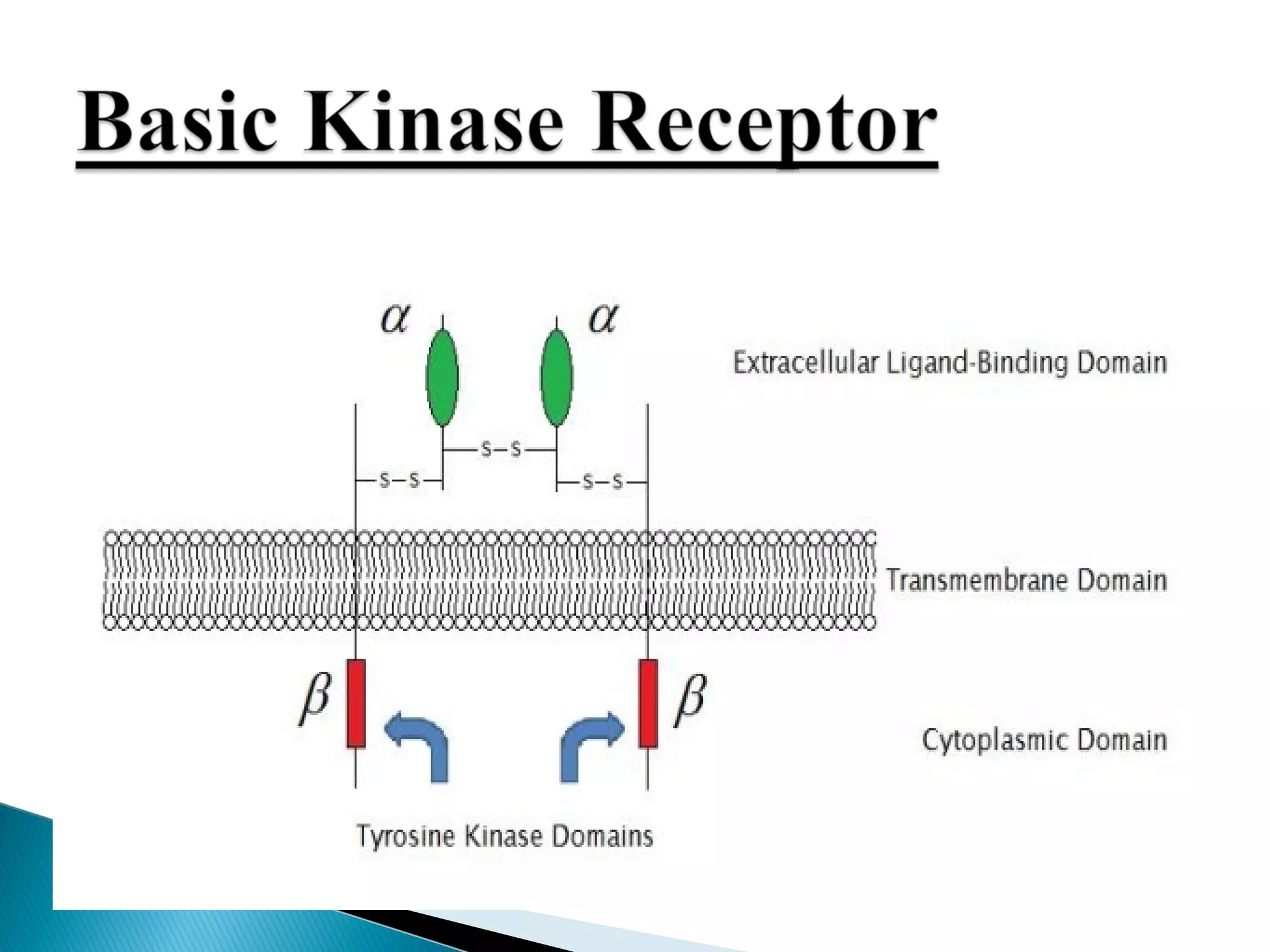
These are also known as Catalytic Receptor, is a
transmembrane receptor, where the binding of an
extracellular ligand causes enzymatic activity on the
intracellular side.
Example:- Insulin, Epidermal growth factor (EGF),
Nerve growth factor (NGF) receptors.
7
Ligand Receptor Get
autophosphorylate
Activate ligand which
futher regulates
various pathways
PI3-K /Akt
pathway
RAS/MAPK
pathway
JAK/STAT
pathway
Binds
to
The JAK/STAT signaling pathway transmits
information from extracellular chemical signals to the
nucleus resulting in DNA transcription and expression
of genes involved in immunity, proliferation,
differentiation, apoptosis, and oncogenesis.
 JAK- Family of cytoplamic non-receptor tyrosine kinases
which get activated after the binding of a cytokine to the cell-
surface cytokine receptor.
 STAT- Family of transcription factors that become activated
when one of the tyrosine residues is phosphorylated by JAK.
 STAT3- Dimers then translocate from the cytoplasm into the
nucleus-bind to Interferon-Stimulated Response Elements.
 Cellular responses to dozens of cytokines and growth factors
are mediated by the evolutionarily conserved.
 TOFACITINIB – JAK-STAT inhibitor, used in
Rheumatoid arthritis.
 RUXOLITINIB – JAK inhibitor, used in
myeloproliferative disorder.
 PYRIMETHAMINE – STAT3 inhibitor, used in
chronic lymphocytic leukaemia.
 TOFACITINIB - JAK inhibitor, used in rheumatoid
arthritis.
 Modulates development and physiology of white
adipose tissue.
 STAT proteins regulate adipocyte differentiation.
 Adipose tissue immune cells produce JAK-STAT
activator.
 It is an enzyme that translocates the signals to the
nucleus and activates many transcriptional factors by
phosphorylating many different proteins that regulate
expression of important cell cycle and differentiation
specific proteins.
 MAP kinases are serine/threonine-specific protein
kinases that respond to extracellular stimuli
(mitogens, osmotic stress, heat shock, and pro-
inflammatory cytokines) and regulate various cellular
activities, such as gene expression, mitosis,
differentiation, proliferation, cell survival/apoptosis.
 MAP kinases are activated within the protein kinase
cascades called MAPK cascade/MAPK signaling
toolkit.
1. c-Jun NH2-terminal kinases (JNKs)- this
phosphorylates Jun.
1. p38 MAPK- regulates cell death (apoptosis) and
inflammatory cytokine expression (may be important in
arthritis).
1. Extracellular signal-related kinases (ERKs)- crucial in
cell division, memory and learning (abnormal ERKs may
lead to Alzheimers).
• JNKs and p38
are also called SAPK (Stress activated
protein kinase) which gets activated on any stress. It help
the cells to survive under any condition.
 BRAF inhibitor:- Venurafenib, Dabarafenib
 Kinase inhibitor:- Sorafenib
 RTK inhibitor:- Gefitinib, Erlotinib
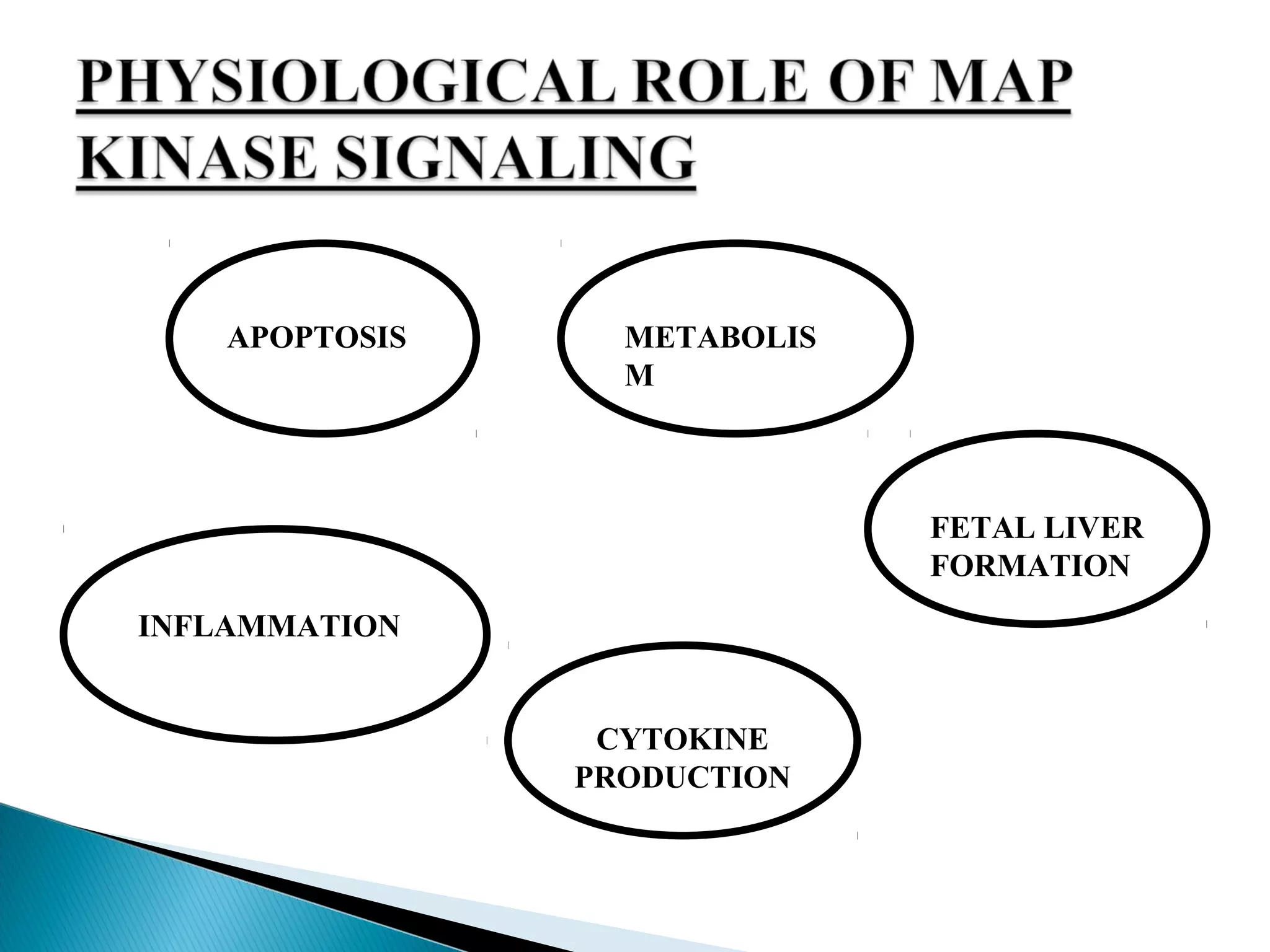
APOPTOSIS
INFLAMMATION
CYTOKINE
PRODUCTION
METABOLIS
M
FETAL LIVER
FORMATION
Enzyme linked receptor

Enzyme linked receptor

  • 1.
    Presented by ShakshiSharma M. Pharm : Pharmacology (Ist semester) Department of Pharmacology ISF college of Pharmacy, Moga
  • 2.
     Receptor  Typesof Receptor  Enzyme linked receptor and their structure  Cellular response  JAK-STAT pathway  Drugs targeted in JSAK-STAT pathway  Physiological role of JAK-STAT pathway  MAP kinase and their types  Drugs targeted in MAP kinase  Physiological role of MAP kinase signaling
  • 3.
     The conceptof receptor was introduced by John Newport Langley and Paul Ehrlich in 20th century.  Receptor is defined as a macromolecule or binding site located on the surface or inside the effector cell that serves to recognize the signal/molecule/drug and initiate the response to it, but itself has no other function.
  • 4.
    1. G- proteincoupled receptor- e.g., Ach- Muscarinic and Adrenergic receptors. 2. Ion channel receptor- e.g., Ach- Nicotine, GABA, Glutamate. 3. Transmembrane enzyme linked receptor- e.g., Insulin. 4. Receptors regulating gene expression- e.g., Steroids, Thyroxin.
  • 5.
    These are alsoknown as Catalytic Receptor, is a transmembrane receptor, where the binding of an extracellular ligand causes enzymatic activity on the intracellular side. Example:- Insulin, Epidermal growth factor (EGF), Nerve growth factor (NGF) receptors.
  • 7.
    7 Ligand Receptor Get autophosphorylate Activateligand which futher regulates various pathways PI3-K /Akt pathway RAS/MAPK pathway JAK/STAT pathway Binds to
  • 8.
    The JAK/STAT signalingpathway transmits information from extracellular chemical signals to the nucleus resulting in DNA transcription and expression of genes involved in immunity, proliferation, differentiation, apoptosis, and oncogenesis.
  • 9.
     JAK- Familyof cytoplamic non-receptor tyrosine kinases which get activated after the binding of a cytokine to the cell- surface cytokine receptor.  STAT- Family of transcription factors that become activated when one of the tyrosine residues is phosphorylated by JAK.  STAT3- Dimers then translocate from the cytoplasm into the nucleus-bind to Interferon-Stimulated Response Elements.  Cellular responses to dozens of cytokines and growth factors are mediated by the evolutionarily conserved.
  • 11.
     TOFACITINIB –JAK-STAT inhibitor, used in Rheumatoid arthritis.  RUXOLITINIB – JAK inhibitor, used in myeloproliferative disorder.  PYRIMETHAMINE – STAT3 inhibitor, used in chronic lymphocytic leukaemia.  TOFACITINIB - JAK inhibitor, used in rheumatoid arthritis.
  • 12.
     Modulates developmentand physiology of white adipose tissue.  STAT proteins regulate adipocyte differentiation.  Adipose tissue immune cells produce JAK-STAT activator.
  • 13.
     It isan enzyme that translocates the signals to the nucleus and activates many transcriptional factors by phosphorylating many different proteins that regulate expression of important cell cycle and differentiation specific proteins.
  • 14.
     MAP kinasesare serine/threonine-specific protein kinases that respond to extracellular stimuli (mitogens, osmotic stress, heat shock, and pro- inflammatory cytokines) and regulate various cellular activities, such as gene expression, mitosis, differentiation, proliferation, cell survival/apoptosis.  MAP kinases are activated within the protein kinase cascades called MAPK cascade/MAPK signaling toolkit.
  • 16.
    1. c-Jun NH2-terminalkinases (JNKs)- this phosphorylates Jun. 1. p38 MAPK- regulates cell death (apoptosis) and inflammatory cytokine expression (may be important in arthritis). 1. Extracellular signal-related kinases (ERKs)- crucial in cell division, memory and learning (abnormal ERKs may lead to Alzheimers). • JNKs and p38 are also called SAPK (Stress activated protein kinase) which gets activated on any stress. It help the cells to survive under any condition.
  • 17.
     BRAF inhibitor:-Venurafenib, Dabarafenib  Kinase inhibitor:- Sorafenib  RTK inhibitor:- Gefitinib, Erlotinib
  • 18.