Radio-nuclidesRadio-nuclides
inin
Nephro-urologyNephro-urology
Essam Abou-Bieh, MD
Urology & Nephrology Center
Mansoura University
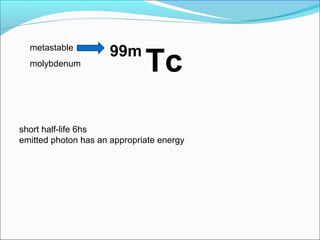
Tc99m
short half-life 6hs
emitted photon has an appropriate energy
metastable
molybdenum
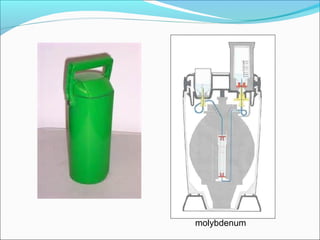
molybdenum
Scintigraphic Renal Studies
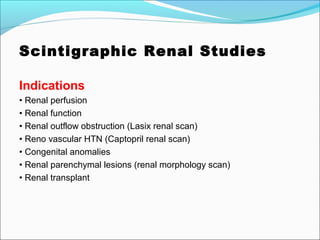
Indications
• Renal perfusion
• Renal function
• Renal outflow obstruction (Lasix renal scan)
• Reno vascular HTN (Captopril renal scan)
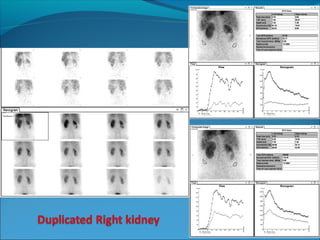
• Congenital anomalies
• Renal parenchymal lesions (renal morphology scan)
• Renal transplant
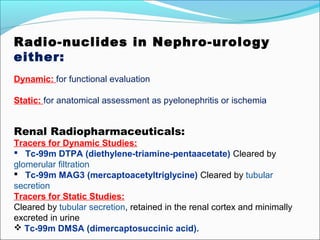
Radio-nuclides in Nephro-urology
either:
Dynamic: for functional evaluation
Static: for anatomical assessment as pyelonephritis or ischemia
Renal Radiopharmaceuticals:
Tracers for Dynamic Studies:
 Tc-99m DTPA (diethylene-triamine-pentaacetate) Cleared by
glomerular filtration
 Tc-99m MAG3 (mercaptoacetyltriglycine) Cleared by tubular
secretion
Tracers for Static Studies:
Cleared by tubular secretion, retained in the renal cortex and minimally
excreted in urine
 Tc-99m DMSA (dimercaptosuccinic acid).
Tc-99m DTPA Tc-99m MAG-3
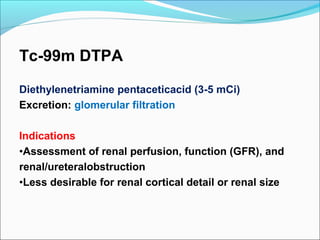
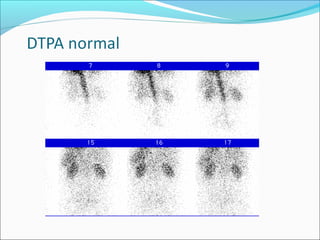
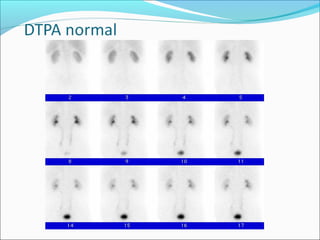
Tc-99m DTPA
Diethylenetriamine pentaceticacid (3-5 mCi)
Excretion: glomerular filtration
Indications
•Assessment of renal perfusion, function (GFR), and
renal/ureteralobstruction
•Less desirable for renal cortical detail or renal size
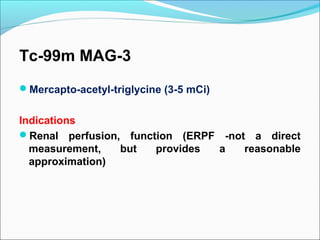
Tc-99m MAG-3
Mercapto-acetyl-triglycine (3-5 mCi)
Indications
Renal perfusion, function (ERPF -not a direct
measurement, but provides a reasonable
approximation)
Basic Renal Scintigraphy
Patient Preparation
Patient must be well hydrated 30-60 min. pre-injection
Void before injection
Image Acquisition and Interpretation
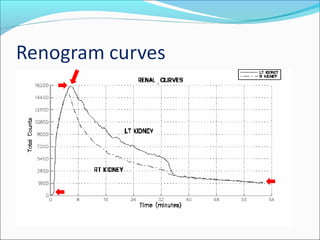
Renogram Phases
I. Vascular (perfusion) phase: Kid-to-Ao
II. Uptake phase
III. Excretory (washout ) phase
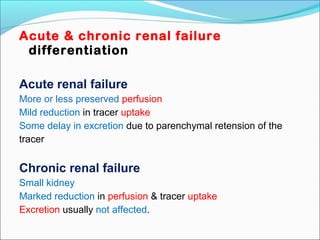
Acute & chronic renal failure
differentiation
Acute renal failure
More or less preserved perfusion
Mild reduction in tracer uptake
Some delay in excretion due to parenchymal retension of the
tracer
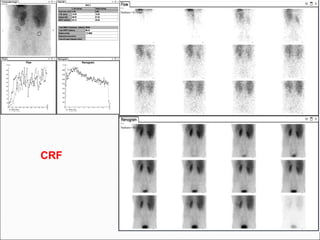
Chronic renal failure
Small kidney
Marked reduction in perfusion & tracer uptake
Excretion usually not affected.
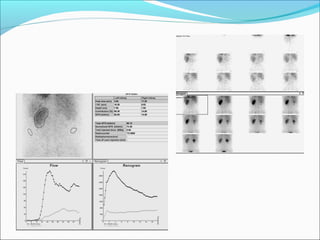
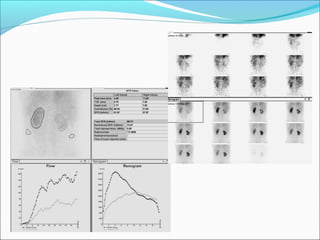
CRF
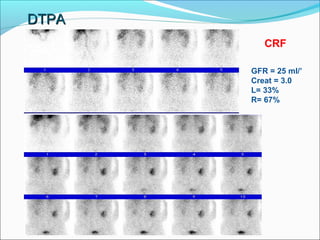
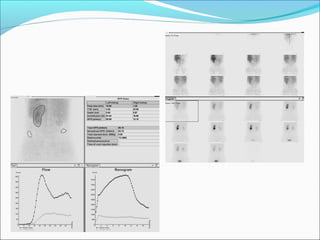
DTPADTPA
GFR = 25 ml/’
Creat = 3.0
L= 33%
R= 67%
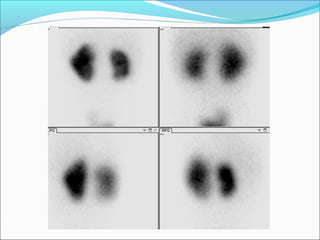
CRF
Evaluation of
Hydronephrosis
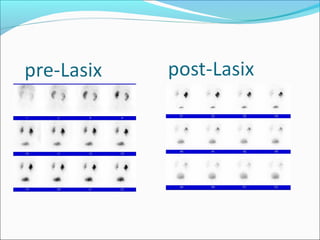
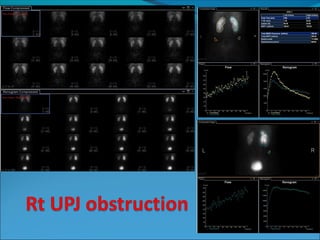
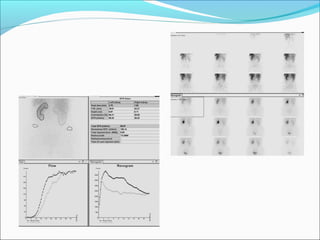
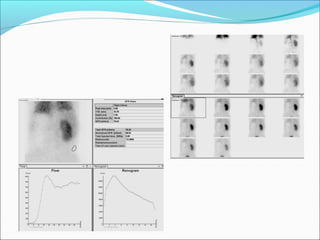
Diuretic (Lasix) Renal Scan
Obstruction
Obstruction to urine outflow leads to obstructive
uropathy (hydronephrosis, hydroureter) and may
lead to obstructive nephropathy (loss of renal
function)
Diuretic Renal Scan
Principle
Tracer pooling in dilated renal pelvis
Lasix induces increased urine flow
If obstructed >>> will not wash out
If dilated, non-obstructed >>> will wash out
Can quantitate rate of washout (T1/2)
Diuretic Renal Scan
Indications
Evaluate functional significance of hydronephrosis
Determine need for surgery
Obstructive hydronephrosis - surgical Rx
Non-obstructive hydronephrosis - medical Rx
Monitor effect of therapy
Diuretic Renal Scan
Washout (diuretic response)
T1/2
Time required for 50% tracer to leave the dilated unit i.e.
time required for activity to fall to 50% of peak.
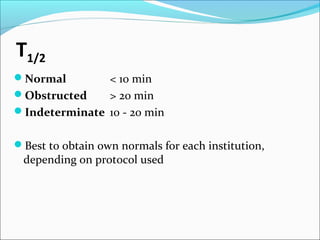
T1/2
Normal < 10 min
Obstructed > 20 min
Indeterminate 10 - 20 min
Best to obtain own normals for each institution,
depending on protocol used
Diuretic Renal Scan Interpretation
Interpret whole study, not T1/2 alone
Visual (dynamic images)
Washout curve shape
 T1/2
“F minus 15”
Diuretic Renogram
Furosemide (Lasix) injected 15 min before
radiopharmaceutical
Rationale: kidney in maximal diuresis, under maximal
stress
Some equivocals will become clearly positive, some
clearly negative
English, Br JUrol 1987:10-14
Upsdell, Br JUrol 1992:126-132
Renovascular Hypertension
Caused by renal hypoperfusion
Atherosclerosis
Fibromuscular dysplasia
Mediated by renin - AT - aldosterone system
Potentially curable by renal revascularization
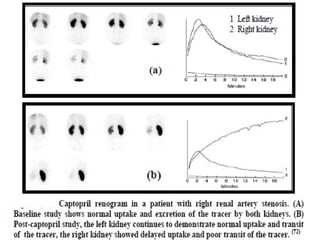
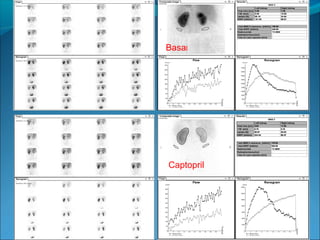
Captopril Renal Scan (ACEI Renography)
Evaluation of Renovascular Hypertension
Off ACEI & ATII receptor blockers x 3-7 days
Off diuretics for 5-7d
No solid food for 4 hrs
Patient well hydrated
ACEI
Captopril 25-50 mg po (crushed), 1 hr pre-scan
ACEI RenographyACEI Renography
Patient PreparationPatient Preparation
Basal
Captopril
Renal Transplant
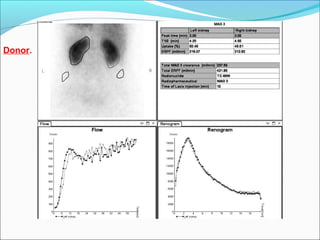
Assessment of the donor.
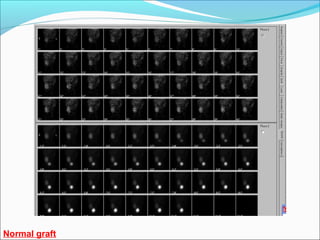
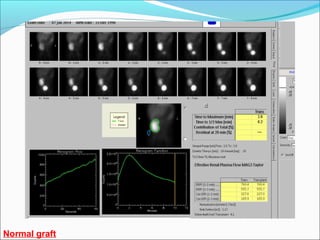
Assessment of the recipient.
Acute rejection vs ATN.
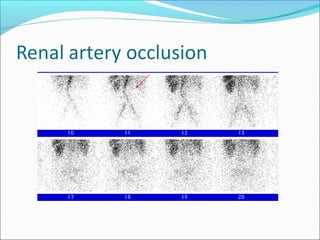
Vascular : arterial/venous occlusion.
Urological: obstruction, leakage.
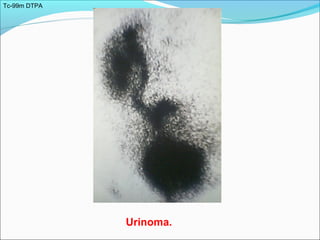
DD of urinoma from other collection.
Chronic complications:
Chronic rejection,
Ureteric stricture,
etc……………
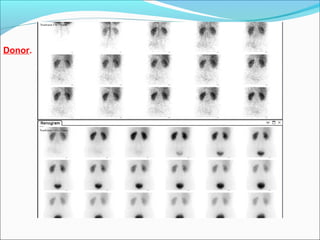
Donor.
Donor.
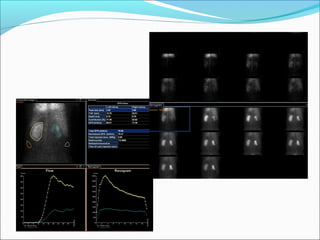
Normal graft
Normal graft
Tc-99m DTPA
Urinoma.
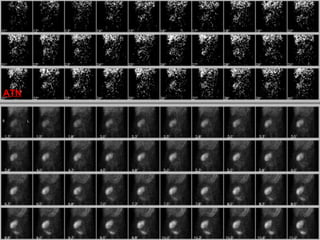
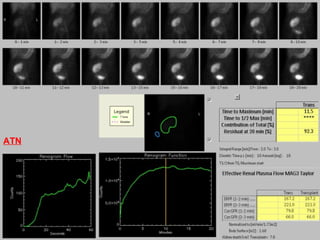
ATN
ATN
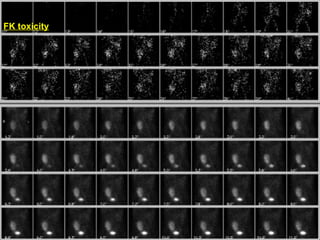
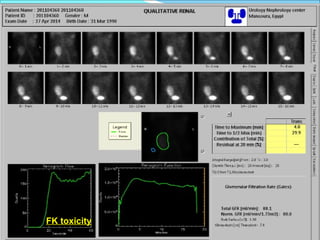
FK toxicity
FK toxicity
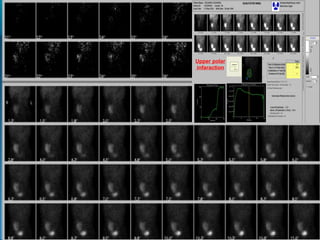
Upper polar
infaraction
Tc-99m DMSA
“Cold Defect “
Acute or chronic PN
Hydronephrosis
Cyst
Tumors
Trauma (contusion, laceration, rupture,
hematoma)
Infarct
DD of true SOL from pseudo tumor
Renal Cortical Scintigraphy
Procedure
Tracers
Tc-99m DMSA (3-5 mCi)
Acquisition
2 hrs post-injection
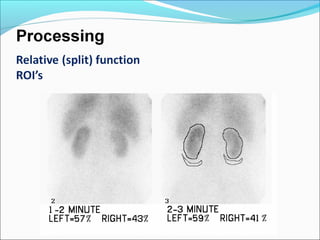
Processing: relative uptake
Tc-99m DMSA
Dimercapto-succinic Acid (3-5 mCi)
Indications
•Tracer of choice for renal parenchymal evaluation
•Not suitable for perfusion or obstruction
•Limited function assessment, but can provide
differential renal function
Renal Cortical Scintigraphy
Interpretation
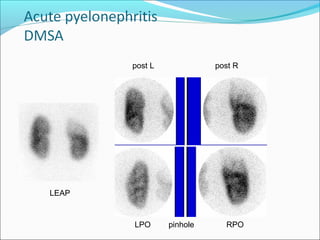
Acute PN
single or multiple “cold” defects
renal contour not distorted
diffuse decreased uptake
diffusely enlarged kidney or focal bulging
Chronic PN
volume loss, cortical thinning
defects with sharp edges
Differentiation of Ac PN vs. Ch PN unreliable
DMSA grading for chronic pyelonephritis
Grade 0 : Normal
Grade I : One lesion (or) reduced uptake (< 45%)
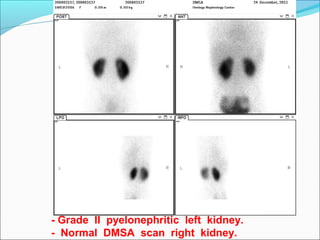
Grade II : One lesions + reduced uptake
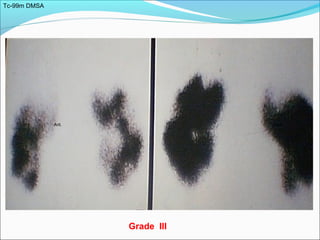
Grade III : More than one lesion
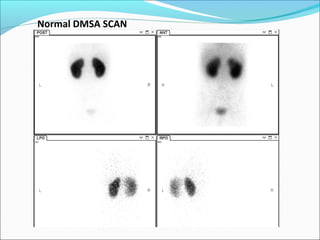
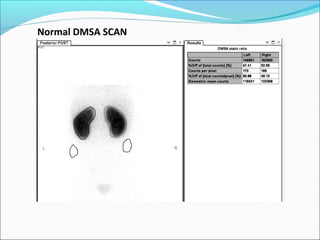
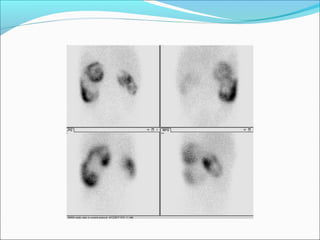
Normal DMSA SCAN
Normal DMSA SCAN
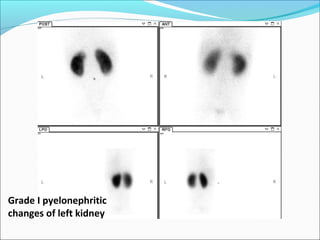
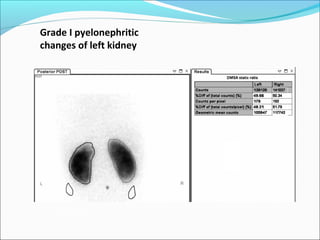
Grade I pyelonephritic
changes of left kidney
Grade I pyelonephritic
changes of left kidney
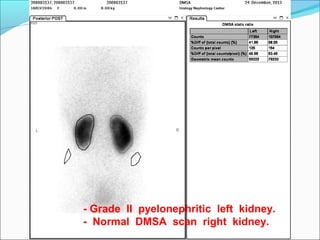
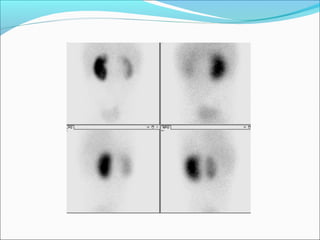
- Grade II pyelonephritic left kidney.
- Normal DMSA scan right kidney.
- Grade II pyelonephritic left kidney.
- Normal DMSA scan right kidney.
Tc-99m DMSA
Ant. Post.
Grade III
post L
LPO pinhole
post R
RPO
LEAP
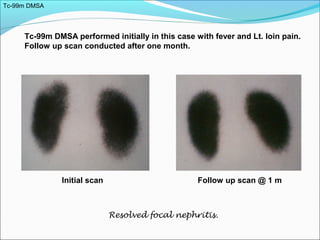
Tc-99m DMSA performed initially in this case with fever and Lt. loin pain.
Follow up scan conducted after one month.
Initial scan Follow up scan @ 1 m
Resolved focal nephritis.
Tc-99m DMSA
Renal Cortical Scintigraphy
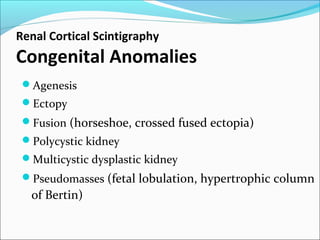
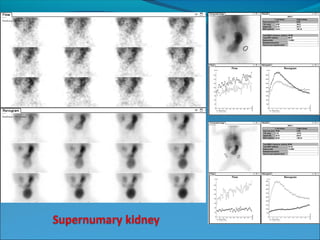
Congenital Anomalies
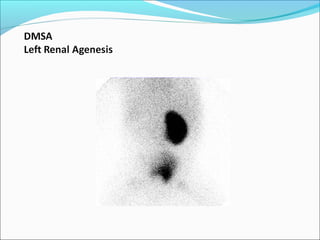
Agenesis
Ectopy
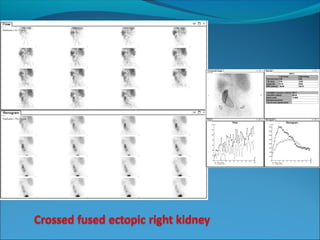
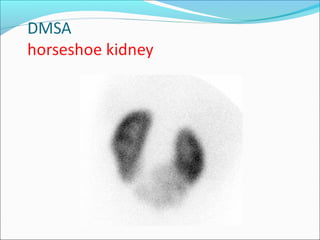
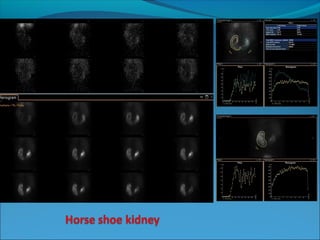
Fusion (horseshoe, crossed fused ectopia)
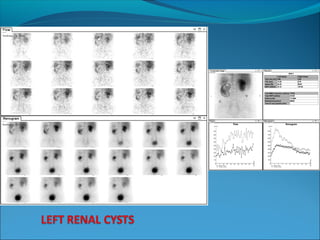
Polycystic kidney
Multicystic dysplastic kidney
Pseudomasses (fetal lobulation, hypertrophic column
of Bertin)
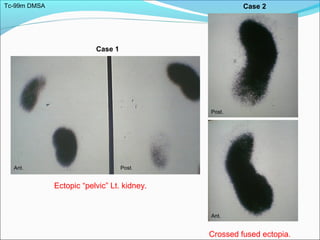
Tc-99m DMSA
Ant. Post.
Ant.
Post.
Case 1
Case 2
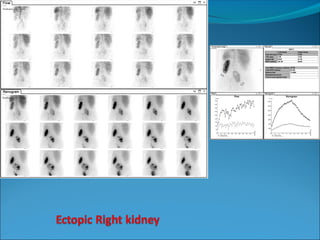
Ectopic “pelvic” Lt. kidney.
Crossed fused ectopia.
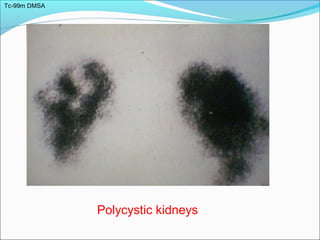
Tc-99m DMSA
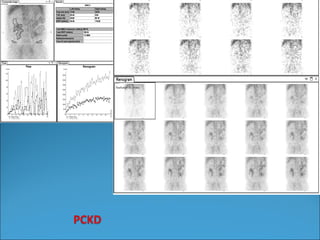
Polycystic kidneys
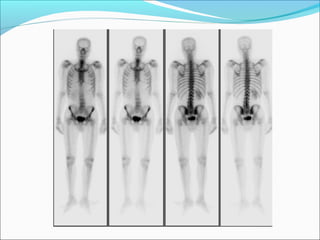
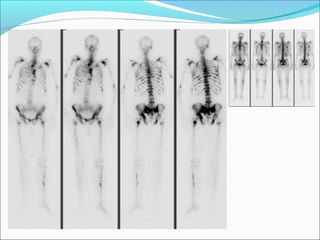
Bone Scan
Tc99m MDP
methyl diphosphonate
‫ك‬‫ك‬‫ك‬‫ك‬‫ك‬‫ك‬‫ك‬‫ك‬‫ك‬‫ك‬‫ك‬‫ك‬ ‫َو‬‫ك‬‫ك‬‫ك‬‫ك‬‫ك‬‫ك‬‫ك‬‫ك‬‫كك‬  ‫كَو‬‫ك‬‫ك‬‫ك‬‫كك‬‫ك‬‫ك‬‫ك‬‫ك‬‫ك‬‫ك‬
 ‫كَو‬‫ك‬‫ك‬‫ك‬‫ك‬‫ك‬‫ك‬‫ك‬ ‫َو‬‫ك‬‫ك‬‫كك‬‫ك‬‫ك‬‫ك‬‫ك‬‫ك‬ ‫كَو‬‫ك‬‫ك‬‫ك‬‫ك‬‫ك‬‫ك‬‫ك‬‫ك‬‫ك‬‫ك‬‫ك‬‫ك‬‫ك‬ ‫ككَو‬‫ك‬‫ك‬‫ك‬‫ك‬‫ك‬ ‫كَو‬‫ك‬‫ك‬‫كك‬‫ك‬ ‫كَو‬‫ك‬‫ك‬‫ك‬‫ك‬‫ك‬ ‫كَو‬‫ك‬‫ك‬  ‫كَو‬‫ك‬‫ك‬‫ك‬ ‫َو‬‫ك‬‫ك‬‫ك‬‫ك‬‫ك‬‫ك‬‫ك‬‫ك‬

Isotope