InvasiveĀ SpeciesĀ 101:
        AĀ PrimerĀ forĀ Gardeners
                RobertĀ Emanuel,Ā Ph.D.
WaterĀ ResourcesĀ andĀ CommunityĀ DevelopmentĀ Faculty,
           TillamookĀ andĀ ClatsopĀ counties
Introduction
WhatĀ areĀ invasiveĀ species?
WhyĀ shouldĀ weĀ care?
BiologyĀ &Ā management
SomeĀ commonĀ invaders
WhatĀ canĀ gardenersĀ doĀ aboutĀ them?
ResourcesĀ forĀ moreĀ information.
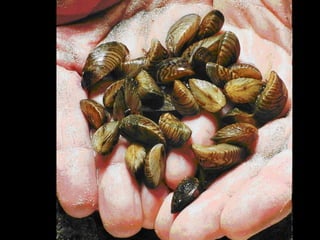
Invasive species means an alien species
whose introduction does or is likely to
cause economic or environmental harm
or harm to human health.
BiologicalĀ invadersĀ destroyĀ habitats orĀ 
    out‐competeĀ nativeĀ plantsĀ andĀ 
               animals.
     WhyĀ shouldĀ weĀ care?
InvasiveĀ speciesĀ costs AmericansĀ aboutĀ 
           $143Ā billion/year!


 AtĀ leastĀ 30Ā newĀ potentialĀ biologicalĀ 
  invadersĀ enterĀ theĀ USĀ everyĀ day…
UnderstandingĀ BiologicalĀ Invasions
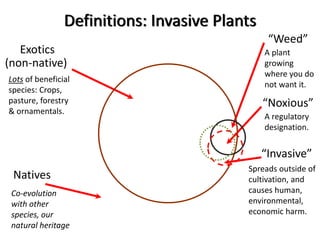
Definitions:Ā InvasiveĀ Plants
                                                ā€œWeedā€
   Exotics                                     AĀ plantĀ 
(non‐native)                                   growingĀ 
                                               whereĀ youĀ doĀ 
Lots ofĀ beneficialĀ 
                                               notĀ wantĀ it.
species:Ā Crops,Ā 
pasture,Ā forestryĀ                              ā€œNoxiousā€
&Ā ornamentals.
                                               AĀ regulatoryĀ 
                                               designation.


                                               ā€œInvasiveā€
                                          SpreadsĀ outsideĀ ofĀ 
 Natives                                  cultivation,Ā andĀ 
 Co‐evolutionĀ                             causesĀ human,Ā 
 withĀ otherĀ                               environmental,Ā 
 species,Ā ourĀ                             economicĀ harm.
 naturalĀ heritage
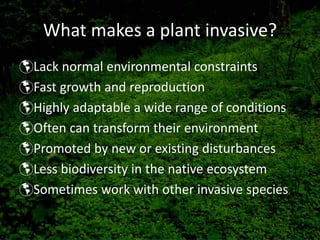
WhatĀ makesĀ aĀ plantĀ invasive?
LackĀ normalĀ environmentalĀ constraints
FastĀ growthĀ andĀ reproduction
HighlyĀ adaptableĀ aĀ wideĀ rangeĀ ofĀ conditions
OftenĀ canĀ transformĀ theirĀ environment
PromotedĀ byĀ newĀ orĀ existingĀ disturbances
LessĀ biodiversityĀ inĀ theĀ nativeĀ ecosystem
SometimesĀ workĀ withĀ otherĀ invasiveĀ species
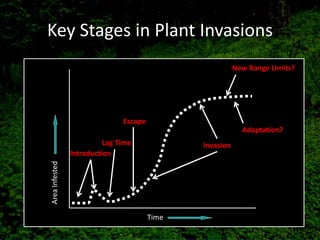
KeyĀ StagesĀ inĀ PlantĀ Invasions
                                                          NewĀ RangeĀ Limits?


                               Escape
                                                            Adaptation?
                          LagĀ Time             Invasion
                Introduction
AreaĀ Infested


                                        Time
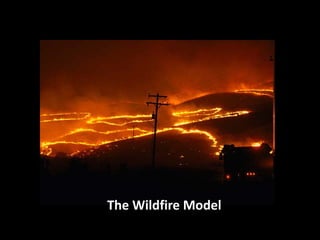
TheĀ WildfireĀ Model
HowĀ doĀ weĀ manageĀ invasiveĀ plants?
Prevention *
QuarantineĀ beforeĀ introduction
MonitoringĀ &Ā mapping
ChemicalĀ treatmentĀ (herbicides)
BiologicalĀ controlsĀ (biocontrol)
CulturalĀ treatmentĀ (handĀ pulling,Ā cutting,Ā etc.)
SomeĀ InvasiveĀ Species
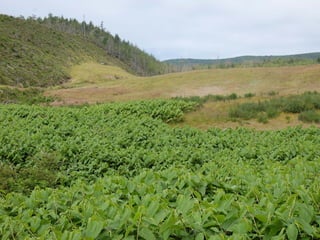
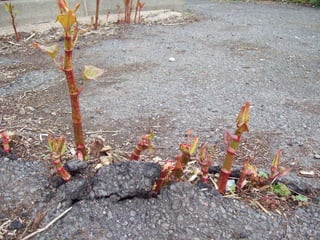
Photo ‐ knotweedĀ 


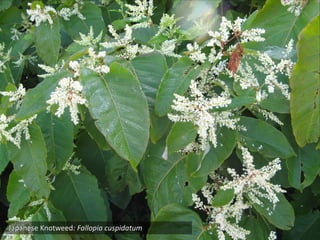
JapaneseĀ Knotweed:Ā Fallopia cuspidatum
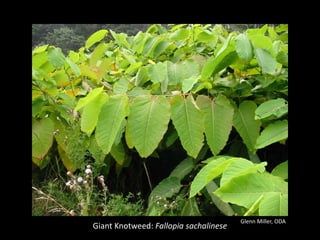
GlennĀ Miller,Ā ODA
GiantĀ Knotweed:Ā Fallopia sachalinese
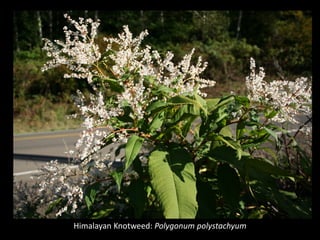
HimalayanĀ Knotweed:Ā Polygonum polystachyum
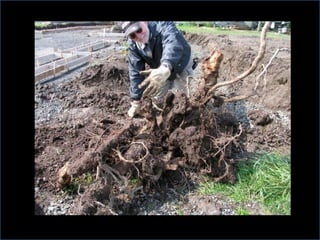
Photo ‐ knotweedĀ 


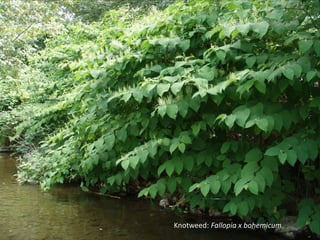
         Knotweed:Ā Fallopia xĀ bohemicum
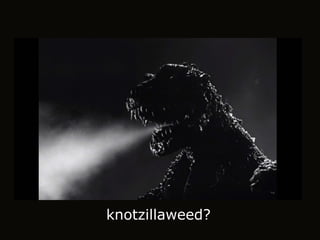
knotzillaweed?
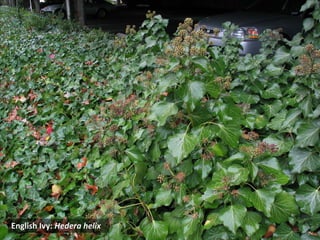
Photo ‐ EnglishĀ ivy


EnglishĀ Ivy:Ā Hedera helix
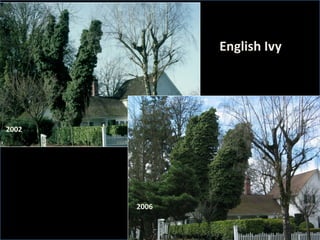
EnglishĀ Ivy


  Photos – blackĀ walnutĀ treeĀ coveredĀ 
2002         byĀ EnglishĀ ivy


                  2006
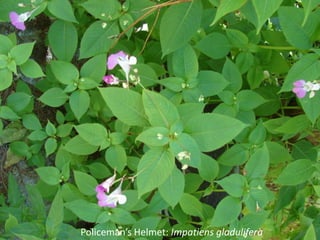
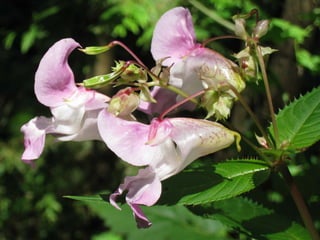
Policeman’sĀ Helmet:Ā ImpatiensĀ gladulifera
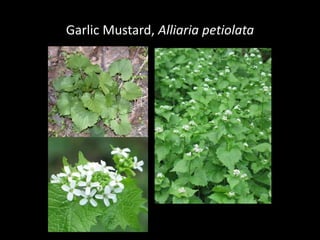
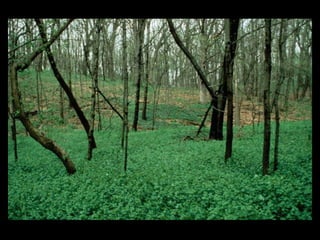
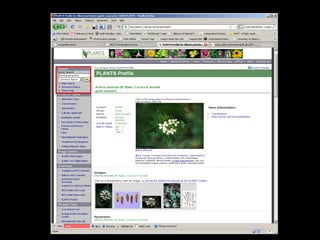
GarlicĀ Mustard,Ā Alliaria petiolata
ParrotĀ feather,Ā Myriophyllum aquaticum
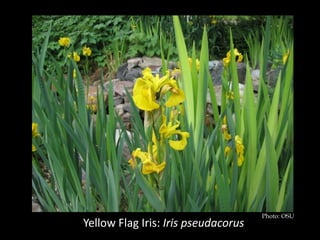
Photo: OSU
YellowĀ FlagĀ Iris:Ā IrisĀ pseudacorus
Photo: Wikimedia
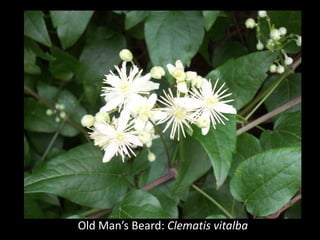
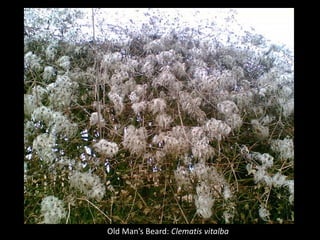
OldĀ Man’sĀ Beard:Ā ClematisĀ vitalba
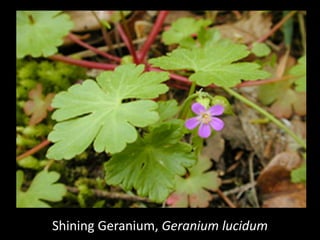
ShiningĀ Geranium,Ā GeraniumĀ lucidum
LynnĀ Ketchum,Ā OSUĀ EESCĀ 
Photo: University of Georgia
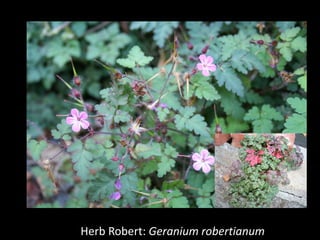
HerbĀ Robert:Ā GeraniumĀ robertianum
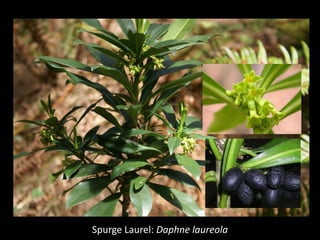
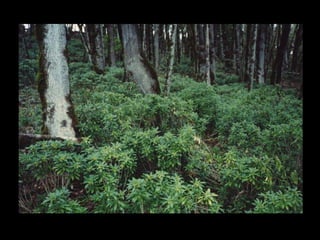
SpurgeĀ Laurel:Ā DaphneĀ laureola
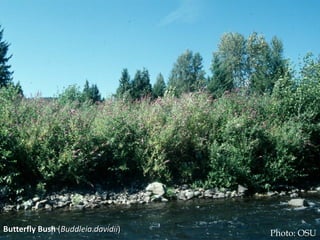
Photo ‐ butterflyĀ bushĀ infestationĀ inĀ 
                     LaneĀ Co.


ButterflyĀ BushĀ (BuddleiaĀ davidii)         Photo: OSU
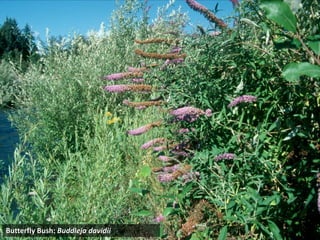
Photo – butterflyĀ bushĀ infestationĀ inĀ 
                    LaneĀ Co.


ButterflyĀ Bush:Ā Buddleja davidii
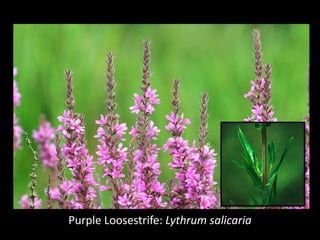
PurpleĀ Loosestrife:Ā Lythrum salicaria
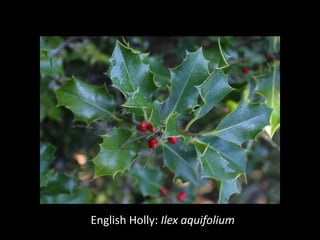
EnglishĀ Holly:Ā IlexĀ aquifolium
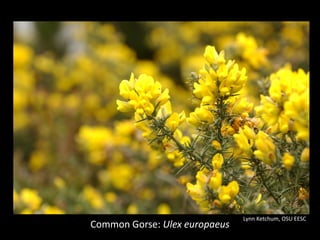
LynnĀ Ketchum,Ā OSUĀ EESC
CommonĀ Gorse:Ā Ulex europaeus
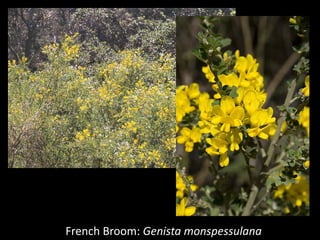
FrenchĀ Broom:Ā Genista monspessulana
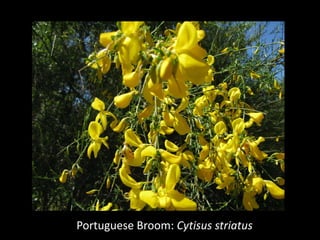
PortugueseĀ Broom:Ā Cytisus striatus
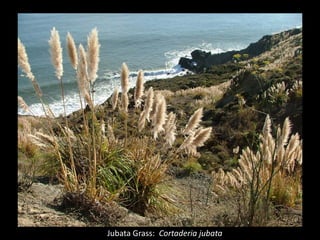
Jubata Grass:Ā Ā Cortaderia jubata
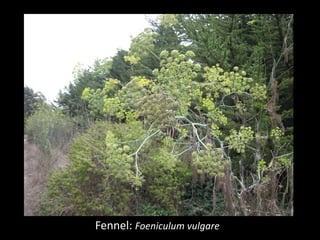
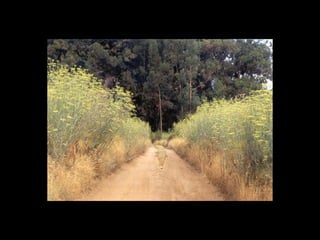
Fennel:Ā Foeniculum vulgare
ButĀ wait!Ā There’sĀ MORE!
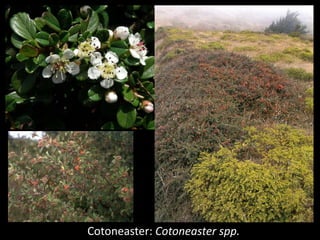
Cotoneaster:Ā CotoneasterĀ spp.
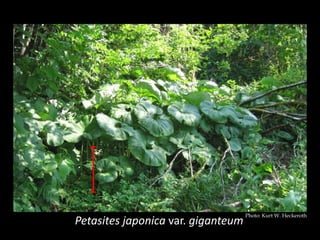
Photo: Kurt W. Heckeroth
Petasites japonica var.Ā giganteum
GiantĀ Reed:Ā Arundo donax
Photo: University of Georgia
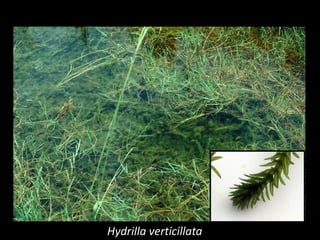
                               Hydrilla verticillata
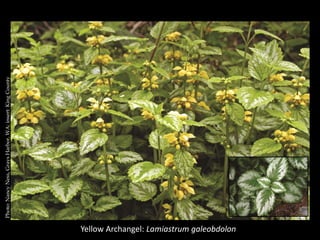
Photo: Nancy Ness, Grays Harbor, WA; insert: King County


YellowĀ Archangel:Ā Lamiastrum galeobdolon
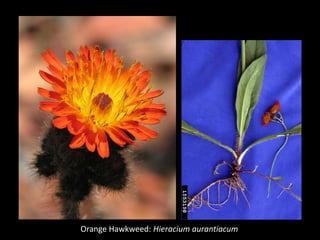
OrangeĀ Hawkweed:Ā Hieracium aurantiacum
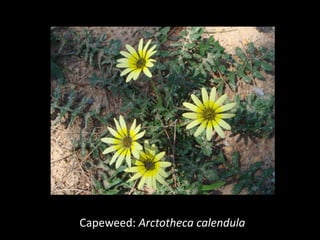
Capeweed:Ā Arctotheca calendula
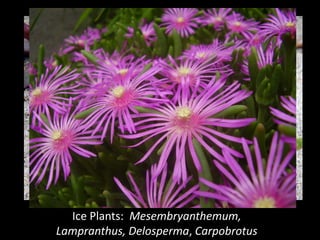
IceĀ Plants:Ā  Mesembryanthemum,Ā 
Lampranthus,Ā Delosperma,Ā Carpobrotus
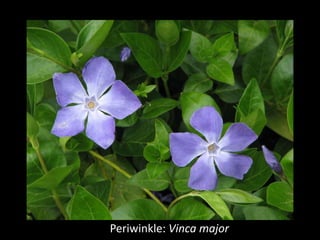
Periwinkle:Ā Vinca major
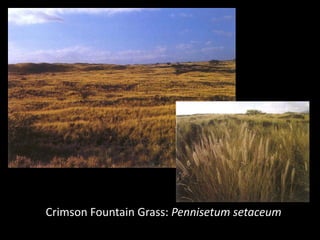
CrimsonĀ FountainĀ Grass:Ā Pennisetum setaceum
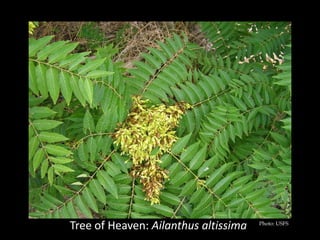
TreeĀ ofĀ Heaven:Ā AilanthusĀ altissima   Photo: USFS
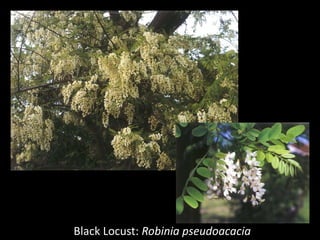
BlackĀ Locust:Ā Robinia pseudoacacia
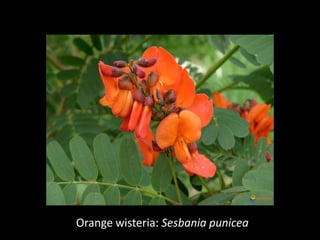
OrangeĀ wisteria:Ā Sesbania punicea
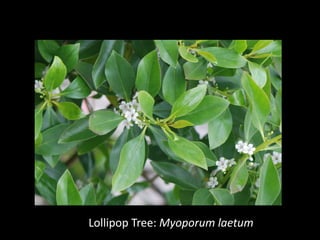
LollipopĀ Tree:Ā Myoporum laetum
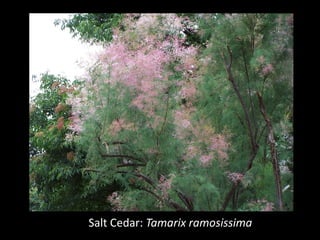
SaltĀ Cedar:Ā Tamarix ramosissima
OnlyĀ you canĀ preventĀ theĀ invasion!
WhatĀ canĀ gardenersĀ do?

KnowĀ theĀ enemyĀ &Ā teachĀ othersĀ aboutĀ them
GrowĀ nativeĀ &Ā non‐invasiveĀ whereverĀ possible
HelpĀ othersĀ toĀ doĀ theĀ same
HelpĀ theĀ publicĀ withĀ informationĀ onĀ treatment
MonitorĀ andĀ reportĀ newĀ invaders
CheckĀ clothes,Ā vehicles,Ā petsĀ whenĀ outĀ &Ā about
WhatĀ canĀ gardenersĀ do?
Don’tĀ shareĀ unlessĀ youĀ knowĀ it’sĀ notĀ invasive
CheckĀ seedĀ mixesĀ beforeĀ youĀ buyĀ them
StayĀ awayĀ fromĀ genericĀ wildflowerĀ mixtures
WatchĀ forĀ hitchhikersĀ inĀ nurseryĀ stock
UseĀ weed‐freeĀ soilĀ andĀ mulch
WatchĀ introductionsĀ forĀ aggressiveĀ behavior
Don’tĀ dumpĀ yourĀ yardĀ clippingsĀ inĀ theĀ wild!
IfĀ youĀ haveĀ aĀ knownĀ invasiveĀ 
              (butĀ can’tĀ partĀ withĀ it)

DeadheadĀ faithfully
UseĀ rootĀ barriers
DisposeĀ ofĀ plantĀ materialĀ properly—baggedĀ inĀ 
theĀ garbageĀ orĀ burnedĀ (completely)
PleaseĀ don’tĀ shareĀ yourĀ invaderĀ withĀ others!

      ContainĀ it,Ā controlĀ it,Ā orĀ cageĀ it!
ForĀ WaterĀ Gardeners
AlwaysĀ washĀ newĀ introductionsĀ (thinkĀ snails)
KeepĀ waterĀ gardenĀ separateĀ fromĀ nativeĀ waters
NeverĀ dumpĀ waterĀ gardenĀ materialsĀ orĀ waterĀ 
intoĀ nativeĀ waters
ResearchĀ yourĀ plantsĀ forĀ invasiveĀ potential—
manyĀ commonlyĀ usedĀ aquaticsĀ are!
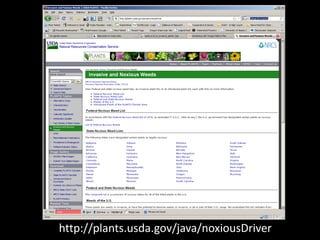
SomeĀ Resources
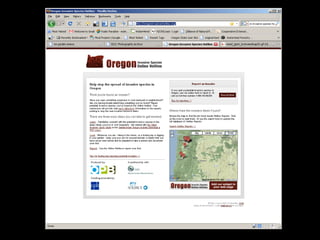
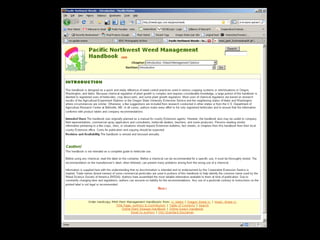
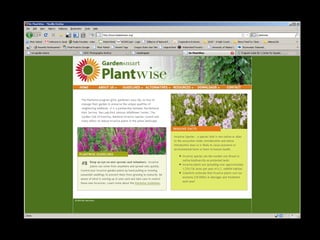
http://plants.usda.gov/java/noxiousDriver
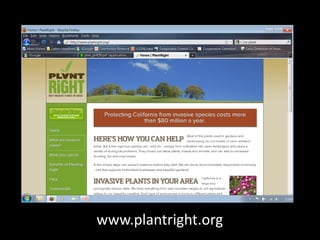
www.plantright.org
RobertĀ M.Ā Emanuel,Ā Ph.D.
WaterĀ ResourcesĀ &Ā CommunityĀ Development
TillamookĀ &Ā ClatsopĀ counties
2204Ā FourthĀ Street
Tillamook,Ā ORĀ 97141
(503)Ā 842‐5708Ā XĀ 2Ā Ā Ā 
robert.emanuel@oregonstate.edu
blogs.oregonstate.edu/h2onc

Invasives Workshop for Gardeners 2.18.11