COLLECTION OF SOLID WASTE
S. Yashmeen Sulthana Barveen, M.E., M.I.S.T.E
 Collection of UnSeparated Waste
 Collection of Separated Waste
COLLECTION OF SOLID WASTE
COLLECTION OF UNSEPARATED WASTE
 From low-Rise detached Dwellings
 From Low and Medium Rise Apartments
 From High Rise Apartments.
FROM LOW RISE DETACHED DWELLINGS
 Curb
 Alley
 Set out- Set back
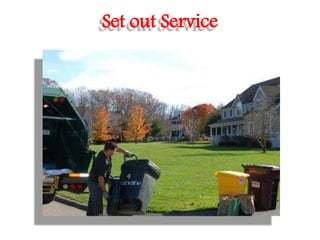
 Set out
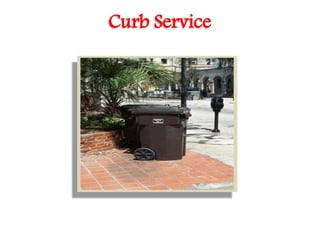
CURB
 Home owner – Placing the containers to be emptied at the
curb on collection day.
 Returning the empty container to their storage location.
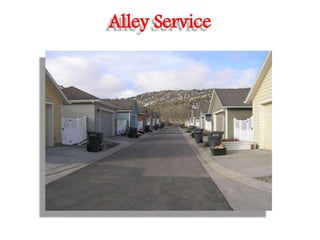
ALLEYS
 Alley storage of containers used for solid waste.
Curb Service
Alley Service
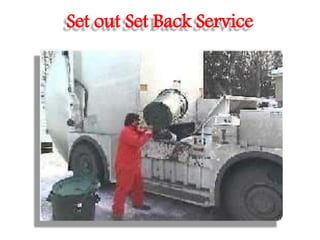
SET OUT –SET BACK SERVICE
 Container are set out from the homeowner’s property.
 Set back after being emptied by additional crews.
 Work in conjunction with the collection crew responsible for
loading the collection vehicle.
SET OUT SERVICE
 Same as set out- set back service.
 Homeowner is responsible for returning the containers to their
storage location.
Set out Set Back Service
Set out Service
MANUAL METHODS USED FOR THE COLLECTION OF
RESIDENTIAL WASTE
 Direct lifting and carrying of loaded containers to the
collection vehicle for emptying.
 Rolling of loaded containers to the collection vehicle for
emptying.
 Use of small lifts or hooks of loaded containers to the
collection vehicle.
 For curb collection – Collection crew transfer the wastes
directly from the containers to the collection vehicle.
 Collection vehicle are equipped with auxiliary container.
 Auxiliary container are emptied by mechanical means.
 Wastes are emptied into a large container carried by a satellite
vehicle.
 When the container is loaded, the satellite vehicle is driven to
the collection vehicle and emptied.
 90 gal container used in conjunction with mechanized
collection vehicle.
FROM LOW AND MEDIUM RISE APARTMENTS
 Curbside collection service is common.
 Maintenance Staff is responsible for transporting the containers
to the street by manual or mechanical means.
 Large containers are used, the containers are emptied by
mechanical means.
FROM HIGH RISE APARTMENT:
 Large containers are used to collect wastes from large
apartment buildings.
 Size and type of container used, container may be emptied
mechanically using collection vehicle.
FROM COMMERCIALAND INDUSTRIAL FACILITIES:
 Manual and Mechanical means used to collect the waste.
 Avoid traffic congestion during the day, solid waste collected in the
late evening and early morning hours.
 Manual Collection – Waste collected in plastic bag, card board box
other disposable containers.
 Waste Collection – Four person crew
- 1driver + 2 or 3 more collector
 Space for storage container available – Container coupled with
large stationary compactor.
 Depending on the size and type of container used – mechanized
collection system.
 Minimize difficulties due to traffic congestion – mechanical
collection during the evening hours
COLLECTION OF WASTE
SEPARATED AT THE SOURCE
COLLECTION OF WASTE SEPARATED AT THE SOURCE
 Residential Curbside Collection
 Commercial Facilities
RESIDENTIAL CURBSIDE COLLECTION:
 Source Separated recyclables are collected separately.
 Residents to separate different materials (newspaper, plastic,
glass and metals).
 Stored in own container and collected separately.
 One container – commingled recyclables
 One container – Paper
 One container – Heavy recyclables (glass, aluminum and tin
cans.)
Principle types of collection vehicles used for the collection of
separated waste
 Standard Collection vehicle
 Specialized collection vehicle including closed body recycling
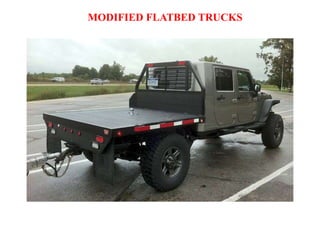
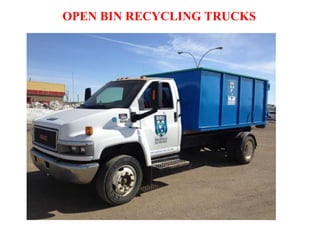
trucks, recycling, trailers, modified flatbed trucks, open bin
recycling trucks.
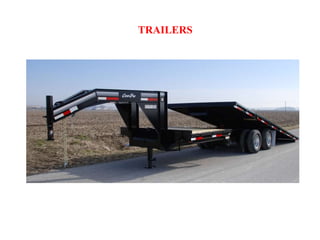
TRAILERS
MODIFIED FLATBED TRUCKS
OPEN BIN RECYCLING TRUCKS
COMMERCIAL FACILITIES
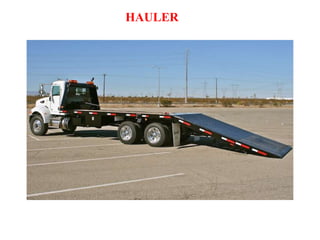
 Separated waste collected by hauler.
 Recycled waste are stored in separate containers.
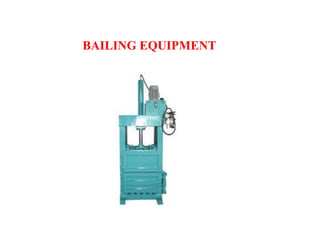
 Large commercial facilities – bailing equipment used
for the paper and cardboard
 Crushers are used for the aluminum cans.
 Commingled MSW separated materials collected by
private haulers.
HAULER
BAILING EQUIPMENT

Collection of solid waste

  • 1.
    COLLECTION OF SOLIDWASTE S. Yashmeen Sulthana Barveen, M.E., M.I.S.T.E
  • 2.
     Collection ofUnSeparated Waste  Collection of Separated Waste COLLECTION OF SOLID WASTE
  • 3.
    COLLECTION OF UNSEPARATEDWASTE  From low-Rise detached Dwellings  From Low and Medium Rise Apartments  From High Rise Apartments.
  • 4.
    FROM LOW RISEDETACHED DWELLINGS  Curb  Alley  Set out- Set back  Set out
  • 5.
    CURB  Home owner– Placing the containers to be emptied at the curb on collection day.  Returning the empty container to their storage location. ALLEYS  Alley storage of containers used for solid waste.
  • 6.
  • 7.
  • 8.
    SET OUT –SETBACK SERVICE  Container are set out from the homeowner’s property.  Set back after being emptied by additional crews.  Work in conjunction with the collection crew responsible for loading the collection vehicle. SET OUT SERVICE  Same as set out- set back service.  Homeowner is responsible for returning the containers to their storage location.
  • 9.
    Set out SetBack Service
  • 10.
  • 11.
    MANUAL METHODS USEDFOR THE COLLECTION OF RESIDENTIAL WASTE  Direct lifting and carrying of loaded containers to the collection vehicle for emptying.  Rolling of loaded containers to the collection vehicle for emptying.  Use of small lifts or hooks of loaded containers to the collection vehicle.
  • 12.
     For curbcollection – Collection crew transfer the wastes directly from the containers to the collection vehicle.  Collection vehicle are equipped with auxiliary container.  Auxiliary container are emptied by mechanical means.  Wastes are emptied into a large container carried by a satellite vehicle.  When the container is loaded, the satellite vehicle is driven to the collection vehicle and emptied.  90 gal container used in conjunction with mechanized collection vehicle.
  • 13.
    FROM LOW ANDMEDIUM RISE APARTMENTS  Curbside collection service is common.  Maintenance Staff is responsible for transporting the containers to the street by manual or mechanical means.  Large containers are used, the containers are emptied by mechanical means.
  • 14.
    FROM HIGH RISEAPARTMENT:  Large containers are used to collect wastes from large apartment buildings.  Size and type of container used, container may be emptied mechanically using collection vehicle.
  • 15.
    FROM COMMERCIALAND INDUSTRIALFACILITIES:  Manual and Mechanical means used to collect the waste.  Avoid traffic congestion during the day, solid waste collected in the late evening and early morning hours.  Manual Collection – Waste collected in plastic bag, card board box other disposable containers.  Waste Collection – Four person crew - 1driver + 2 or 3 more collector
  • 16.
     Space forstorage container available – Container coupled with large stationary compactor.  Depending on the size and type of container used – mechanized collection system.  Minimize difficulties due to traffic congestion – mechanical collection during the evening hours
  • 17.
  • 18.
    COLLECTION OF WASTESEPARATED AT THE SOURCE  Residential Curbside Collection  Commercial Facilities
  • 19.
    RESIDENTIAL CURBSIDE COLLECTION: Source Separated recyclables are collected separately.  Residents to separate different materials (newspaper, plastic, glass and metals).  Stored in own container and collected separately.  One container – commingled recyclables  One container – Paper  One container – Heavy recyclables (glass, aluminum and tin cans.)
  • 20.
    Principle types ofcollection vehicles used for the collection of separated waste  Standard Collection vehicle  Specialized collection vehicle including closed body recycling trucks, recycling, trailers, modified flatbed trucks, open bin recycling trucks.
  • 21.
  • 22.
  • 23.
  • 24.
    COMMERCIAL FACILITIES  Separatedwaste collected by hauler.  Recycled waste are stored in separate containers.  Large commercial facilities – bailing equipment used for the paper and cardboard  Crushers are used for the aluminum cans.  Commingled MSW separated materials collected by private haulers.
  • 25.
  • 26.