Invasive Species 101:
Primer for Green Industry Professionals
                  Robert Emanuel, Ph.D.
  Water Resources and Community Development Faculty,
             Tillamook and Clatsop counties
Introduction
What are invasive species?
Why should we care?
Biology & management
Some invaders to watch
What can professionals do?
Resources for more information.
Invasive species means an alien species
whose introduction does or is likely to
cause economic or environmental harm
or harm to human health.
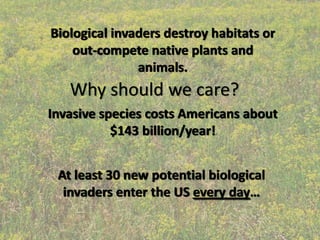
Biological invaders destroy habitats or 
    out‐compete native plants and 
               animals.
   Why should we care?
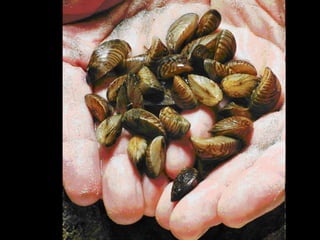
Invasive species costs Americans about 
           $143 billion/year!


 At least 30 new potential biological 
  invaders enter the US every day…
Understanding Biological Invasions
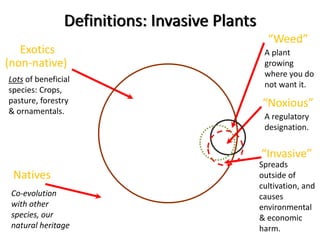
Definitions: Invasive Plants
                                                 “Weed”
   Exotics                                      A plant 
(non‐native)                                    growing 
                                                where you do 
Lots of beneficial 
                                                not want it.
species: Crops, 
pasture, forestry                              “Noxious”
& ornamentals.
                                                A regulatory 
                                                designation.


                                               “Invasive”
                                               Spreads 
 Natives                                       outside of 
                                               cultivation, and 
 Co‐evolution                                  causes 
 with other                                    environmental
 species, our                                  & economic 
 natural heritage                              harm.
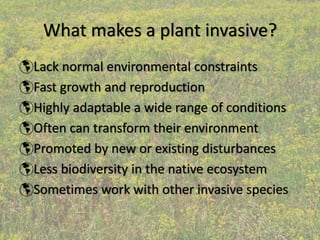
What makes a plant invasive?
Lack normal environmental constraints
Fast growth and reproduction
Highly adaptable a wide range of conditions
Often can transform their environment
Promoted by new or existing disturbances
Less biodiversity in the native ecosystem
Sometimes work with other invasive species
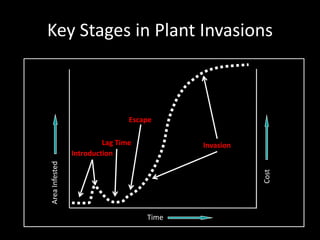
Key Stages in Plant Invasions


                                Escape

                         Lag Time          Invasion
                Introduction
Area Infested


                                                      Cost
                                    Time
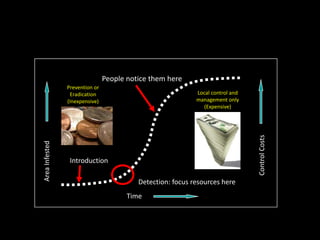
What does this mean for management?

                                  People notice them here
                 Prevention or 
                  Eradication                                 Local control and 
                 (Inexpensive)                                management only 
                                                                 (Expensive)


                                                                                   Control Costs
 Area Infested


                  Introduction

                                            Detection: focus resources here
                                         Time
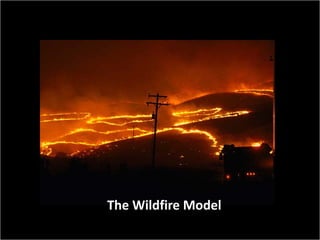
The Wildfire Model
How do we manage invasive plants?
Prevention *
Quarantine before introduction
Monitoring & mapping
Chemical treatment (herbicides)
Biological controls (biocontrol)
Cultural treatment (hand pulling, cutting, etc.)
Some Invasive Species

High Desert Oregon & Environs
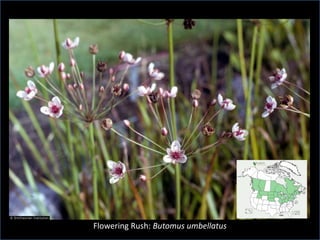
Flowering Rush: Butomus umbellatus
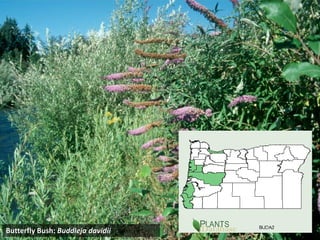
Photo – butterfly bush infestation in 
                    Lane Co.


Butterfly Bush: Buddleja davidii
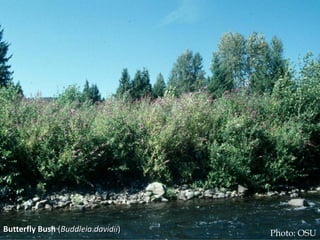
Photo ‐ butterfly bush infestation in 
                     Lane Co.


Butterfly Bush (Buddleia davidii)         Photo: OSU
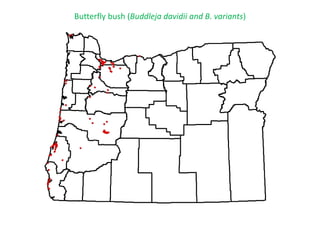
Butterfly bush (Buddleja davidii and B. variants)
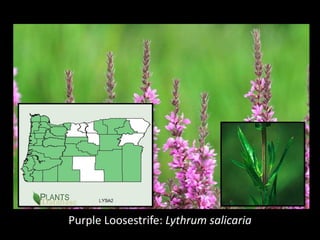
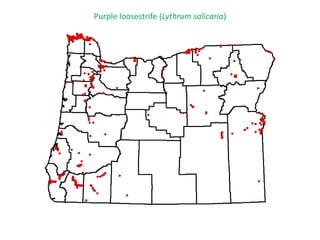
Purple Loosestrife: Lythrum salicaria
Purple loosestrife (Lythrum salicaria)
Photos: King County , WA
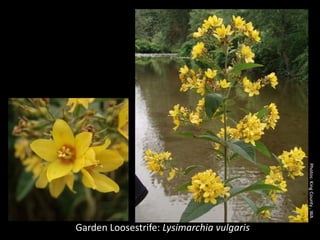
Garden Loosestrife: Lysimarchia vulgaris
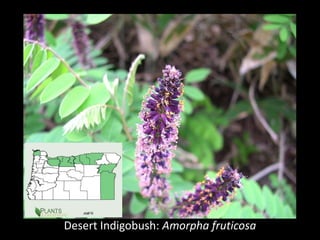
Desert Indigobush: Amorpha fruticosa
Photo ‐ knotweed 


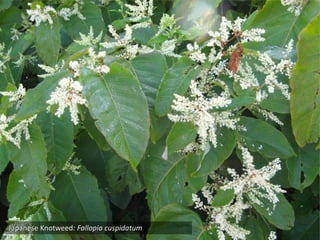
Japanese Knotweed: Fallopia cuspidatum
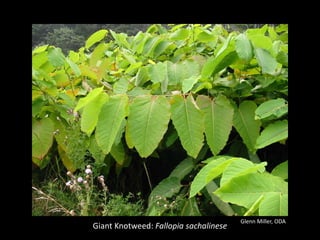
Glenn Miller, ODA
Giant Knotweed: Fallopia sachalinese
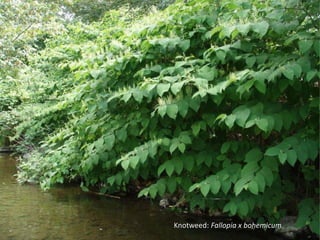
Photo ‐ knotweed 


         Knotweed: Fallopia x bohemicum
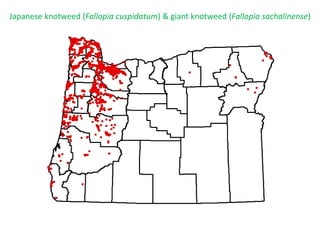
Japanese knotweed (Fallopia cuspidatum) & giant knotweed (Fallopia sachalinense)
Photo: OSU
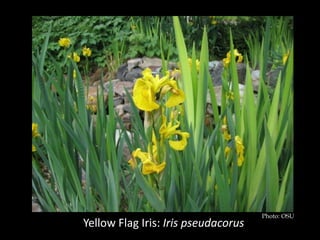
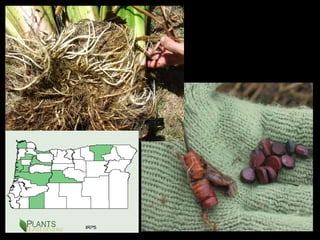
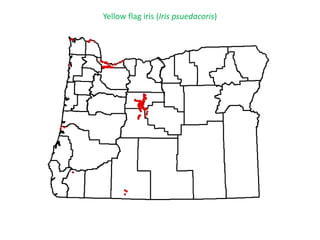
Yellow Flag Iris: Iris pseudacorus
Yellow flag iris (Iris psuedacoris)
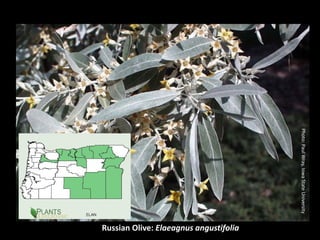
Photo: Paul Wray, Iowa State University
                                          Russian Olive: Elaeagnus angustifolia
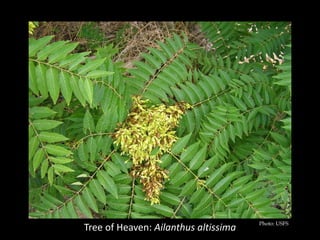
Photo: USFS
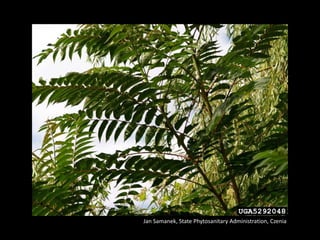
Tree of Heaven: Ailanthus altissima
Jan Samanek, State Phytosanitary Administration, Czenia
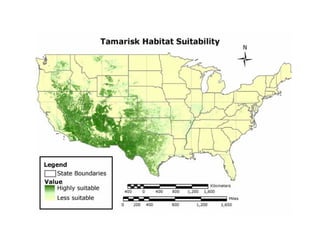
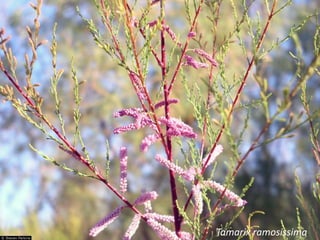
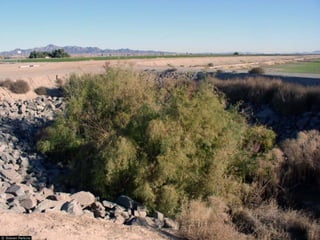
Tamarix ramosissima
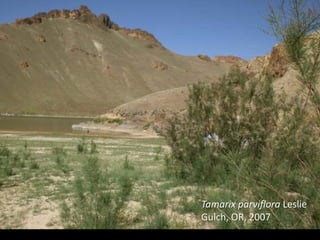
Tamarix parviflora Leslie 
Gulch, OR, 2007
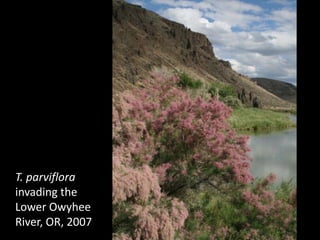
T. parviflora
invading the 
Lower Owyhee 
River, OR, 2007
Eric Coombs, ODA
                        Eric Coombs, ODA


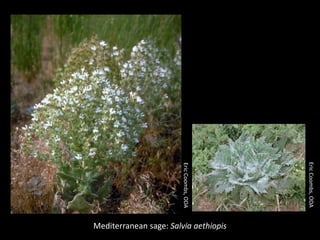
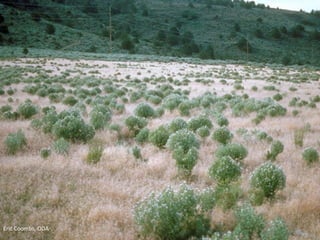
Mediterranean sage: Salvia aethiopis
Eric Coombs, ODA
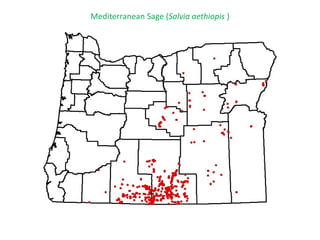
Mediterranean Sage (Salvia aethiopis )
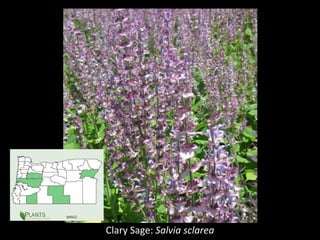
Clary Sage: Salvia sclarea
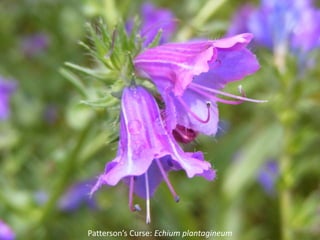
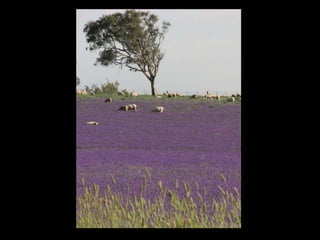
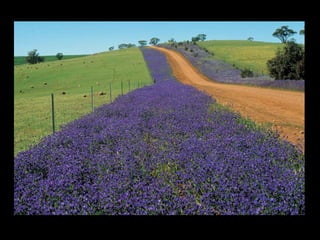
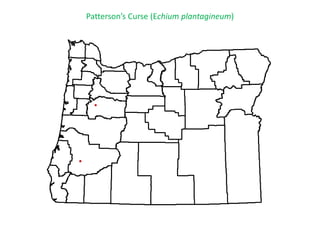
Patterson’s Curse: Echium plantagineum
Patterson’s Curse (Echium plantagineum)
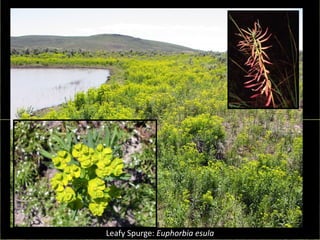
Leafy Spurge: Euphorbia esula
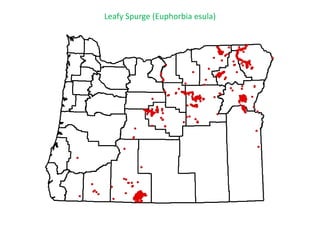
Leafy Spurge (Euphorbia esula)
BS Thurner Hof
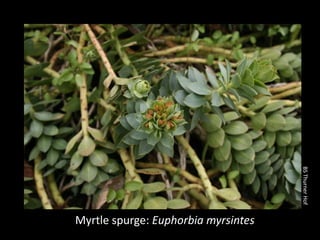
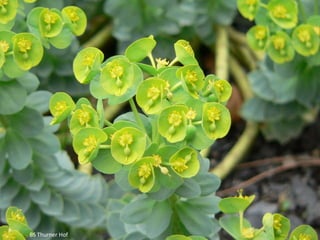
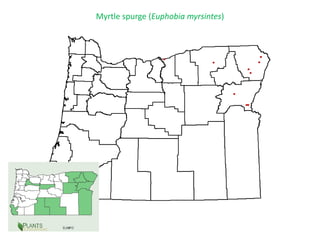
Myrtle spurge: Euphorbia myrsintes
BS Thurner Hof
Myrtle spurge (Euphobia myrsintes)
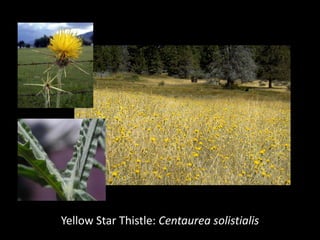
Yellow Star Thistle: Centaurea solistialis
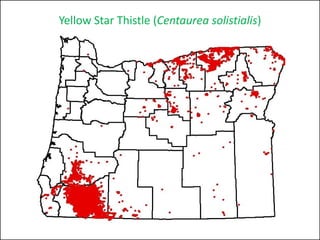
Yellow Star Thistle (Centaurea solistialis)
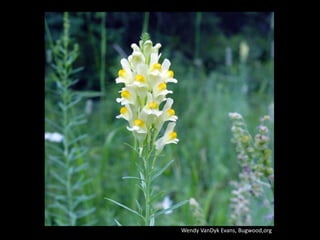
Wendy VanDyk Evans, Bugwood,org
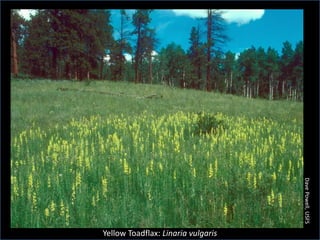
Dave Powell, USFS
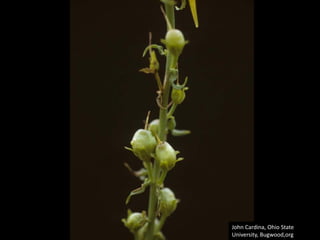
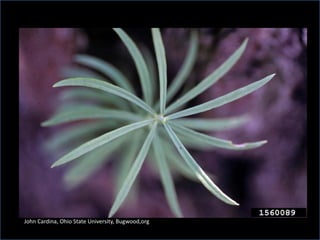
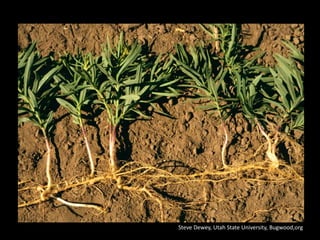
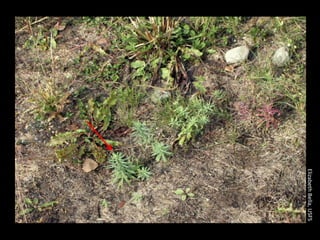
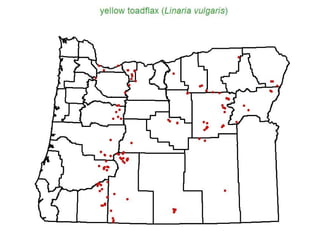
Yellow Toadflax: Linaria vulgaris
John Cardina, Ohio State 
University, Bugwood,org
John Cardina, Ohio State University, Bugwood,org
Steve Dewey, Utah State University, Bugwood,org
Elizabeth Bella, USFS
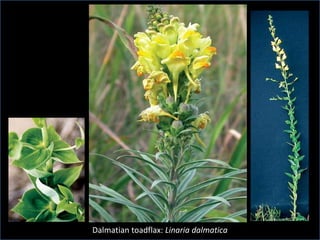
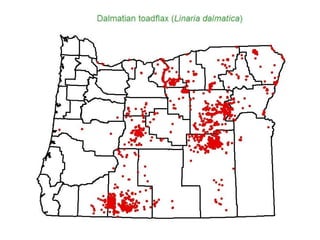
Dalmatian toadflax: Linaria dalmatica
Michael Shephard, USDA Forest Service
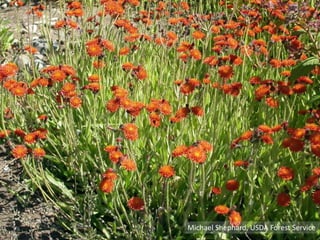
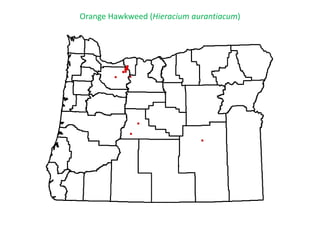
Orange Hawkweed: Hieracium aurantiacum
Michael Shephard, USDA Forest Service
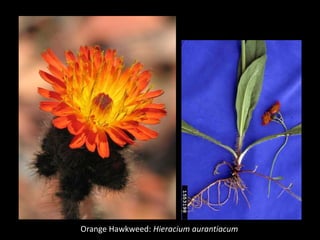
Orange Hawkweed: Hieracium aurantiacum
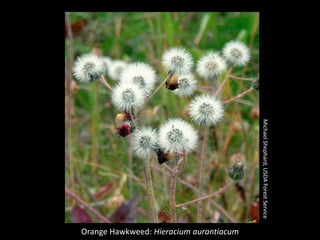
Orange Hawkweed (Hieracium aurantiacum)
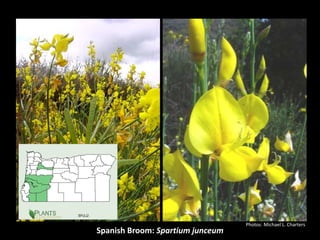
Photos: Michael L. Charters
Spanish Broom: Spartium junceum
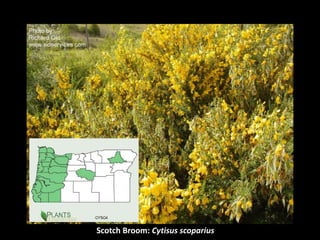
Scotch Broom: Cytisus scoparius
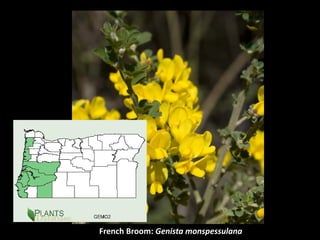
French Broom: Genista monspessulana
But wait! There’s MORE!
Photo: University of Georgia
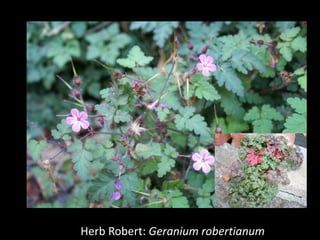
Herb Robert: Geranium robertianum
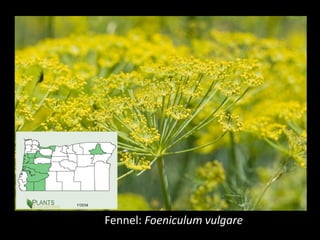
Fennel: Foeniculum vulgare
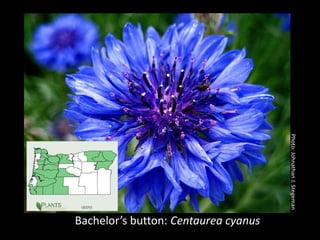
Photo: Johnathan J. Stegeman
Bachelor’s button: Centaurea cyanus
Richard Old
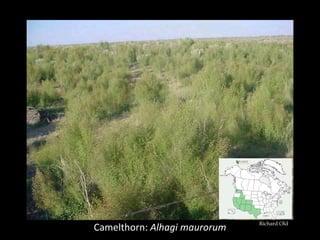
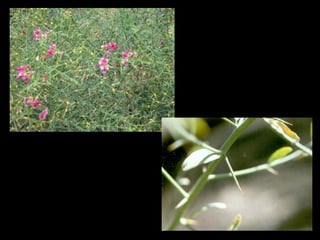
Camelthorn: Alhagi maurorum
Only you can prevent the invasion!
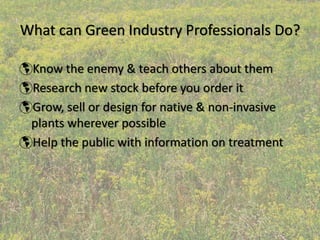
What can Green Industry Professionals Do?

 Know the enemy & teach others about them
 Research new stock before you order it
 Grow, sell or design for native & non‐invasive 
 plants wherever possible
 Help the public with information on treatment
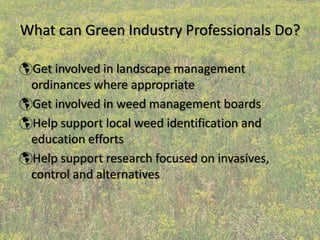
What can Green Industry Professionals Do?

 Get involved in landscape management 
 ordinances where appropriate
 Get involved in weed management boards
 Help support local weed identification and 
 education efforts
 Help support research focused on invasives, 
 control and alternatives
What can industry professionals do?
 Watch for hitchhikers in nursery stock
 Use weed‐free soil and mulch
 Watch introductions for aggressive behavior
 Discourage use of commercial wildflower or 
 other mixes. 
 Check clothes, vehicles, equipment, & pets
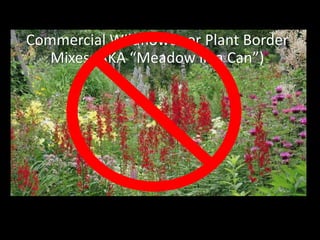
Commercial Wildflower or Plant Border 
   Mixes (AKA “Meadow in a Can”)
If you have a known invasive 
          (but a client can’t part with it)

Deadhead faithfully
Use root barriers
Dispose of plant material properly—bagged in 
the garbage or burned (completely)

      Contain it, control it, or cage it!
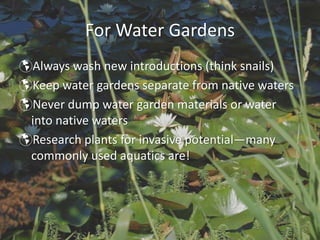
For Water Gardens
Always wash new introductions (think snails)
Keep water gardens separate from native waters
Never dump water garden materials or water 
into native waters
Research plants for invasive potential—many 
commonly used aquatics are!
Some Resources
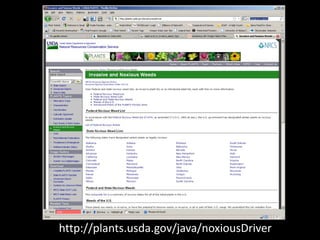
http://plants.usda.gov/java/noxiousDriver
Invasive Spp. Web Resources
All of this information located at: 
bit.ly/is4gip
Oregon Invasive Species Council
www.oregon.gov/OISC/
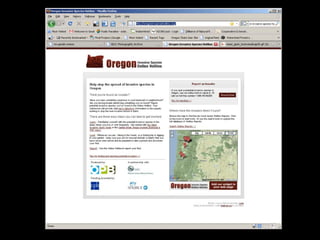
Oregon Invasive Species Hotline:
oregoninvasiveshotline.org/
National Invasive Species Clearinghouse: 
www.invasivespeciesinfo.gov
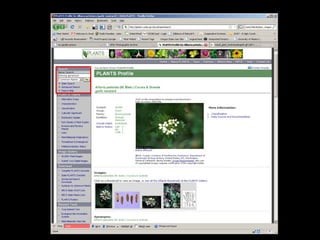
USDA PLANTS Database: 
plants.usda.gov/index.html
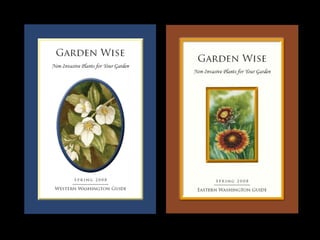
WA State Noxious Weed Board: 
www.nwcb.wa.gov/index.htm
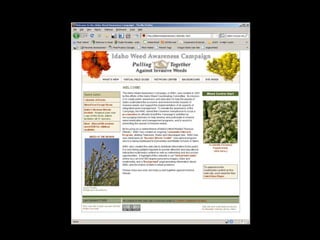
Idaho Weed Awareness:
idahoweedawareness.net/index.html
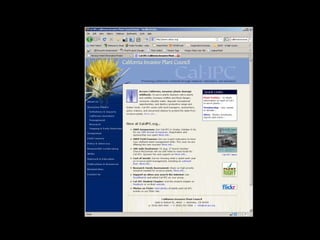
California Invasive Plant Council:
www.cal‐ipc.org 
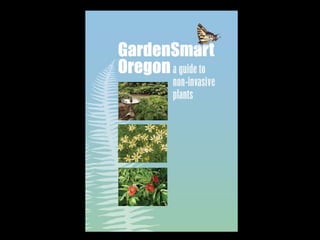
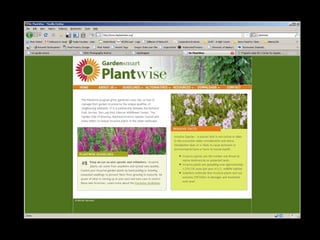
Be Plantwise:
www.beplantwise.org/
People and Organizations
 Brooke Gray Eastern Oregon EDRR 
Coordinator, Weed Educator: 541‐447‐6228
 Dan Sherwin, Deschutes County Vegetation 
Manager, dansh@co.deschutes.or.us , 
541‐322‐7135
 Local Soil and Water Conservation Districts
 OSU Extension Service offices in each county
Questions?

Robert M. Emanuel, Ph.D.
Water Resources & Community Development
Tillamook & Clatsop counties
2204 Fourth Street
Tillamook, OR 97141
(503) 842‐5708 X 2   
robert.emanuel@oregonstate.edu
blogs.oregonstate.edu/h2onc

High Desert Green Industry Invasive Spp