Projects in Contemporary Organizations
- Introduction to Project and Project
Management
What is Project?
A project is a sequence of interrelated activities that has a
definite starting and ending point and results in the
accomplishment of a unique, often major outcome within
a pre-fixed budget.
In the broadest sense, a project is a specific, finite task to
be accomplished within a resource constraint in terms of
time and money.
Project Management Institute(PMI) defines project as
“a temporary endeavor undertaken to create a unique
product or service”
A project may may also be defined as a means of
moving from a problem to its solution via a series of
planned activities.
• A project is a means of moving from a problem to
a solution via a series of planned activities.
• A project has a definite beginning and end.
• A project consists of several activities.
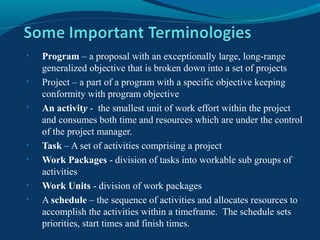
• Program – a proposal with an exceptionally large, long-range
generalized objective that is broken down into a set of projects
• Project – a part of a program with a specific objective keeping
conformity with program objective
• An activity - the smallest unit of work effort within the project
and consumes both time and resources which are under the control
of the project manager.
• Task – A set of activities comprising a project
• Work Packages - division of tasks into workable sub groups of
activities
• Work Units - division of work packages
• A schedule – the sequence of activities and allocates resources to
accomplish the activities within a timeframe. The schedule sets
priorities, start times and finish times.
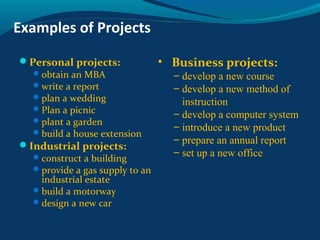
Examples of Projects
Personal projects:
obtain an MBA
write a report
plan a wedding
Plan a picnic
plant a garden
build a house extension
Industrial projects:
construct a building
provide a gas supply to an
industrial estate
build a motorway
design a new car
• Business projects:
– develop a new course
– develop a new method of
instruction
– develop a computer system
– introduce a new product
– prepare an annual report
– set up a new office
Projects can be of any size (small, medium, large)
and duration (short term, medium term, long
term).
They can be simple, like planning a party, or
complex like launching a space shuttle.
Essential Features of Project
In the first place, all projects must be planned out
in advance if they are to be successfully executed.
Secondly, the execution of the project must be
controlled to ensure that the desired results are
achieved.
Characteristics of a Project
A project is a part of a program
It has a definite Goal /objective
It needs Resources -Expenditure to achieve the
goal
It has a Life cycle with finite due date – starting
and finishing dates
It has Interdependencies – a project is
Multidisciplinary
It is Unique in nature
Limited Resources
What is Project Management?:
Project management is the planning and control of
events that, together, comprise the project.
Project Management may also be defined as the adept
use of techniques and skills (hard and soft) in
planning and controlling tasks and resources needed
for the project, from both inside and outside of
organisation, to achieve targeted results.
Project management aims to ensure the effective use
of resources and delivery of the project objectives on
time and within cost constraints.
Why Project Management?
Better control
Better customer relations
Shorter development times
Lower costs
Higher quality and reliability
Higher profit margins
Sharper orientation toward results
Better interdepartmental coordination
Higher worker morale
Forces of Project Management
The exponential expansion of human knowledge
The growing demand for a broad range of complex,
sophisticated, customized goods and services
The evolution of worldwide competitive markets for
the production and consumption of goods and
services
Objective of Project Management
Performance - performs to a
technical/performance
standard which satisfies the
end user
Time - has been finished on
time
Cost - is within its cost
budget
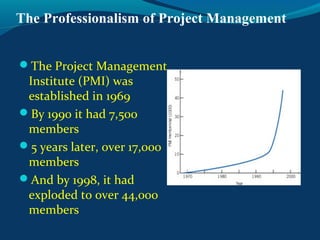
The Professionalism of Project Management
The Project Management
Institute (PMI) was
established in 1969
By 1990 it had 7,500
members
5 years later, over 17,000
members
And by 1998, it had
exploded to over 44,000
members
Project management, on the other hand, involves five
process groups as identified in the PMBOK® Guide,
namely:
Project initiation
● Selection of the best project given resource limit
● Recognizing the benefits of the project
● Preparation of the documents to sanction the project
● Assigning of the project manager
Project planning
- Definition of the work requirements
- Definition of the quality and quantity of work
- Definition of the resources needed
- Scheduling the activities
- Evaluation of the various risks
Project execution
● Negotiating for the project team members
Directing and managing the work●
Working with the team members to help them improve●
Project execution
● Negotiating for the project team members
Directing and managing the work●
Working with the team members to help them improve●
Project monitoring and control
● Tracking progress
Comparing actual outcome to predicted outcome●
Analyzing variances and impacts●
Making adjustments●
Project closure
● Verifying that all of the work has been accomplished
Contractual closure of the contract●
Financial closure of the charge numbers●
Administrative closure of the papework●
Skill Requirements for Effective Project
Management
Conflict Resolution – Effective project management requires
to resolve the conflict that may arise in every step of project
management
Creativity and Flexibility – Project personnel must be
creative while planning the project and be flexible in executing
the project tasks.
Ability to Adjust to Change – The project team must have
ability to adjust the project activities if the project demands
some changes during its execution for successful
accomplishment of the project.
Good Planning – A good project output results from its good
planning.
Negotiation – Project managers must have the skill to
negotiate with external parties on issues that can play as a
barrier to project execution
win-win versus win-loss
win-win - The negotiation must be mutual in which both
parties are benefited or
win-loss - it may be the case that one party gains from the
negotiation and the other party looses.
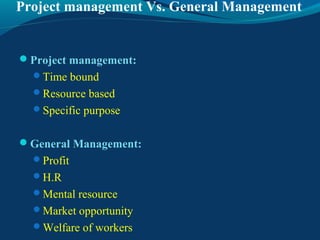
Project management Vs. General Management
Project management:
Time bound
Resource based
Specific purpose
General Management:
Profit
H.R
Mental resource
Market opportunity
Welfare of workers
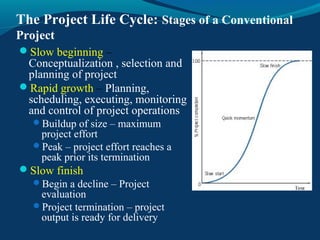
The Project Life Cycle: Stages of a Conventional
Project
Slow beginning –
Conceptualization , selection and
planning of project
Rapid growth – Planning,
scheduling, executing, monitoring
and control of project operations
Buildup of size – maximum
project effort
Peak – project effort reaches a
peak prior its termination
Slow finish
Begin a decline – Project
evaluation
Project termination – project
output is ready for delivery
Risk during project life cycle
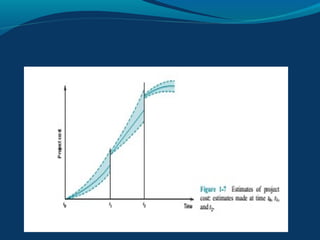
With most projects there is some uncertainty
about the ability to meet project goals
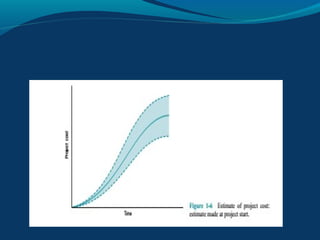
Uncertainty of outcome is greatest at the start of
a project
Uncertainty decreases as the project moves
toward completion
Introduction to Project and Project Management

Introduction to Project and Project Management

  • 1.
    Projects in ContemporaryOrganizations - Introduction to Project and Project Management
  • 2.
    What is Project? Aproject is a sequence of interrelated activities that has a definite starting and ending point and results in the accomplishment of a unique, often major outcome within a pre-fixed budget. In the broadest sense, a project is a specific, finite task to be accomplished within a resource constraint in terms of time and money.
  • 3.
    Project Management Institute(PMI)defines project as “a temporary endeavor undertaken to create a unique product or service” A project may may also be defined as a means of moving from a problem to its solution via a series of planned activities. • A project is a means of moving from a problem to a solution via a series of planned activities. • A project has a definite beginning and end. • A project consists of several activities.
  • 4.
    • Program –a proposal with an exceptionally large, long-range generalized objective that is broken down into a set of projects • Project – a part of a program with a specific objective keeping conformity with program objective • An activity - the smallest unit of work effort within the project and consumes both time and resources which are under the control of the project manager. • Task – A set of activities comprising a project • Work Packages - division of tasks into workable sub groups of activities • Work Units - division of work packages • A schedule – the sequence of activities and allocates resources to accomplish the activities within a timeframe. The schedule sets priorities, start times and finish times.
  • 5.
    Examples of Projects Personalprojects: obtain an MBA write a report plan a wedding Plan a picnic plant a garden build a house extension Industrial projects: construct a building provide a gas supply to an industrial estate build a motorway design a new car • Business projects: – develop a new course – develop a new method of instruction – develop a computer system – introduce a new product – prepare an annual report – set up a new office
  • 6.
    Projects can beof any size (small, medium, large) and duration (short term, medium term, long term). They can be simple, like planning a party, or complex like launching a space shuttle.
  • 7.
    Essential Features ofProject In the first place, all projects must be planned out in advance if they are to be successfully executed. Secondly, the execution of the project must be controlled to ensure that the desired results are achieved.
  • 8.
    Characteristics of aProject A project is a part of a program It has a definite Goal /objective It needs Resources -Expenditure to achieve the goal It has a Life cycle with finite due date – starting and finishing dates It has Interdependencies – a project is Multidisciplinary It is Unique in nature Limited Resources
  • 9.
    What is ProjectManagement?: Project management is the planning and control of events that, together, comprise the project. Project Management may also be defined as the adept use of techniques and skills (hard and soft) in planning and controlling tasks and resources needed for the project, from both inside and outside of organisation, to achieve targeted results. Project management aims to ensure the effective use of resources and delivery of the project objectives on time and within cost constraints.
  • 10.
    Why Project Management? Bettercontrol Better customer relations Shorter development times Lower costs Higher quality and reliability Higher profit margins Sharper orientation toward results Better interdepartmental coordination Higher worker morale
  • 11.
    Forces of ProjectManagement The exponential expansion of human knowledge The growing demand for a broad range of complex, sophisticated, customized goods and services The evolution of worldwide competitive markets for the production and consumption of goods and services
  • 12.
    Objective of ProjectManagement Performance - performs to a technical/performance standard which satisfies the end user Time - has been finished on time Cost - is within its cost budget
  • 13.
    The Professionalism ofProject Management The Project Management Institute (PMI) was established in 1969 By 1990 it had 7,500 members 5 years later, over 17,000 members And by 1998, it had exploded to over 44,000 members
  • 14.
    Project management, onthe other hand, involves five process groups as identified in the PMBOK® Guide, namely: Project initiation ● Selection of the best project given resource limit ● Recognizing the benefits of the project ● Preparation of the documents to sanction the project ● Assigning of the project manager
  • 15.
    Project planning - Definitionof the work requirements - Definition of the quality and quantity of work - Definition of the resources needed - Scheduling the activities - Evaluation of the various risks
  • 16.
    Project execution ● Negotiatingfor the project team members Directing and managing the work● Working with the team members to help them improve● Project execution ● Negotiating for the project team members Directing and managing the work● Working with the team members to help them improve●
  • 17.
    Project monitoring andcontrol ● Tracking progress Comparing actual outcome to predicted outcome● Analyzing variances and impacts● Making adjustments● Project closure ● Verifying that all of the work has been accomplished Contractual closure of the contract● Financial closure of the charge numbers● Administrative closure of the papework●
  • 18.
    Skill Requirements forEffective Project Management Conflict Resolution – Effective project management requires to resolve the conflict that may arise in every step of project management Creativity and Flexibility – Project personnel must be creative while planning the project and be flexible in executing the project tasks. Ability to Adjust to Change – The project team must have ability to adjust the project activities if the project demands some changes during its execution for successful accomplishment of the project.
  • 19.
    Good Planning –A good project output results from its good planning. Negotiation – Project managers must have the skill to negotiate with external parties on issues that can play as a barrier to project execution win-win versus win-loss win-win - The negotiation must be mutual in which both parties are benefited or win-loss - it may be the case that one party gains from the negotiation and the other party looses.
  • 20.
    Project management Vs.General Management Project management: Time bound Resource based Specific purpose General Management: Profit H.R Mental resource Market opportunity Welfare of workers
  • 21.
    The Project LifeCycle: Stages of a Conventional Project Slow beginning – Conceptualization , selection and planning of project Rapid growth – Planning, scheduling, executing, monitoring and control of project operations Buildup of size – maximum project effort Peak – project effort reaches a peak prior its termination Slow finish Begin a decline – Project evaluation Project termination – project output is ready for delivery
  • 22.
    Risk during projectlife cycle With most projects there is some uncertainty about the ability to meet project goals Uncertainty of outcome is greatest at the start of a project Uncertainty decreases as the project moves toward completion