Presented By
153015013 Shamim Hossain
153015014 Sharmin Jahan
153015007 Alpona
Project Planning and Planning Process
OUTLINE OF PRESENTATION
• Introduction
• Commonly used tools for project planning
• Steps in Planning a project with Example
• Summary
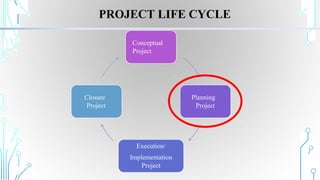
PROJECT LIFE CYCLE
Conceptual
Project
Planning
Project
Execution/
Implementation
Project
Closure
Project
INTRODUCTION
 Project planning is a form of operational planning, where by the consecutive
steps to implement the project activities are carefully mapped out, based on
an analysis of relevant information and linked to the program in which the
project takes place and to which it should contribute. Essentially, project
planning involves establishing the scope, aims and objectives of a project.
 Planning normally answer the question like what, how, who and when.
 Planning is simply how to seek the balance between project constraints
to achieve the set goal.
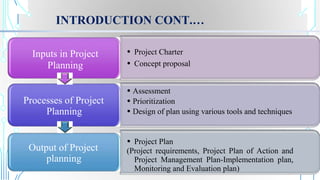
INTRODUCTION CONT.…
• Project Charter
• Concept proposal
Inputs in Project
Planning
• Assessment
• Prioritization
• Design of plan using various tools and techniques
Processes of Project
Planning
• Project Plan
(Project requirements, Project Plan of Action and
Project Management Plan-Implementation plan,
Monitoring and Evaluation plan)
Output of Project
planning
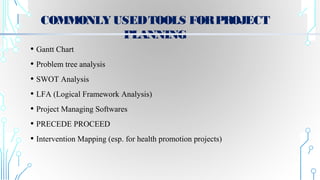
COMMONLYUSEDTOOLS FORPROJECT
PLANNING
• Gantt Chart
• Problem tree analysis
• SWOT Analysis
• LFA (Logical Framework Analysis)
• Project Managing Softwares
• PRECEDE PROCEED
• Intervention Mapping (esp. for health promotion projects)
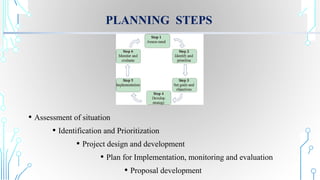
PLANNING STEPS
• Assessment of situation
• Identification and Prioritization
• Project design and development
• Plan for Implementation, monitoring and evaluation
• Proposal development
ASSESSMENT OF SITUATION
• Stakeholder analysis (Project team, scientific community, leaders, community
people, beneficiaries)
• Study of legal frameworks
• Construct framework for situation analysis
• Baseline information collection and analysis (Secondary data review, surveys
and other formal and informal sources)
IDENTIFICATION AND PRIORITIZATION
Two components
•Problem identification and prioritization
•Identification and prioritization of strategies
PROJECT DESIGN AND DEVELOPMENT
• Defining scope of project and set objectives
• Defining project duration
• Define the quality plan
• Planning for resources
 Human Resource planning
 Time and resource allocation
 Financial planning
 Logistics planning
• Planning for communication and coordination
PLAN FOR IMPLEMENTATION
• Plan for piloting/testing and scale up
• Plan for tracking budget and work plan
• Plan for risks and adaptable changes
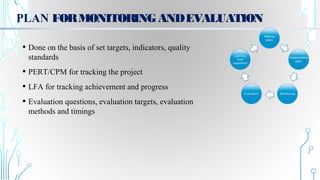
PLAN FORMONITORINGANDEVALUATION
• Done on the basis of set targets, indicators, quality
standards
• PERT/CPM for tracking the project
• LFA for tracking achievement and progress
• Evaluation questions, evaluation targets, evaluation
methods and timings
PROPOSAL DEVELOPMENT
• Adjustment in objectives and targets and other factors
• Proposal outline
• Writing of proposal
• Submission to concerned authority for approval
SUMMARY
Planning is expanding of concepts and refinement of ideas
Relevance of planning
•Selecting the important problem and appropriate strategy
•Pre determines appropriate scope and quality
•Identification of available resources and ways to mobilize them.
•Helps in implementation and evaluation process
Project planning and planning process

Project planning and planning process

  • 1.
    Presented By 153015013 ShamimHossain 153015014 Sharmin Jahan 153015007 Alpona Project Planning and Planning Process
  • 2.
    OUTLINE OF PRESENTATION •Introduction • Commonly used tools for project planning • Steps in Planning a project with Example • Summary
  • 3.
  • 4.
    INTRODUCTION  Project planningis a form of operational planning, where by the consecutive steps to implement the project activities are carefully mapped out, based on an analysis of relevant information and linked to the program in which the project takes place and to which it should contribute. Essentially, project planning involves establishing the scope, aims and objectives of a project.  Planning normally answer the question like what, how, who and when.  Planning is simply how to seek the balance between project constraints to achieve the set goal.
  • 5.
    INTRODUCTION CONT.… • ProjectCharter • Concept proposal Inputs in Project Planning • Assessment • Prioritization • Design of plan using various tools and techniques Processes of Project Planning • Project Plan (Project requirements, Project Plan of Action and Project Management Plan-Implementation plan, Monitoring and Evaluation plan) Output of Project planning
  • 6.
    COMMONLYUSEDTOOLS FORPROJECT PLANNING • GanttChart • Problem tree analysis • SWOT Analysis • LFA (Logical Framework Analysis) • Project Managing Softwares • PRECEDE PROCEED • Intervention Mapping (esp. for health promotion projects)
  • 7.
    PLANNING STEPS • Assessmentof situation • Identification and Prioritization • Project design and development • Plan for Implementation, monitoring and evaluation • Proposal development
  • 8.
    ASSESSMENT OF SITUATION •Stakeholder analysis (Project team, scientific community, leaders, community people, beneficiaries) • Study of legal frameworks • Construct framework for situation analysis • Baseline information collection and analysis (Secondary data review, surveys and other formal and informal sources)
  • 9.
    IDENTIFICATION AND PRIORITIZATION Twocomponents •Problem identification and prioritization •Identification and prioritization of strategies
  • 10.
    PROJECT DESIGN ANDDEVELOPMENT • Defining scope of project and set objectives • Defining project duration • Define the quality plan • Planning for resources  Human Resource planning  Time and resource allocation  Financial planning  Logistics planning • Planning for communication and coordination
  • 11.
    PLAN FOR IMPLEMENTATION •Plan for piloting/testing and scale up • Plan for tracking budget and work plan • Plan for risks and adaptable changes
  • 12.
    PLAN FORMONITORINGANDEVALUATION • Doneon the basis of set targets, indicators, quality standards • PERT/CPM for tracking the project • LFA for tracking achievement and progress • Evaluation questions, evaluation targets, evaluation methods and timings
  • 13.
    PROPOSAL DEVELOPMENT • Adjustmentin objectives and targets and other factors • Proposal outline • Writing of proposal • Submission to concerned authority for approval
  • 14.
    SUMMARY Planning is expandingof concepts and refinement of ideas Relevance of planning •Selecting the important problem and appropriate strategy •Pre determines appropriate scope and quality •Identification of available resources and ways to mobilize them. •Helps in implementation and evaluation process