






METRICS AND KPI’S
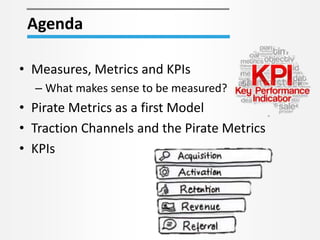
• Measures, Metrics and KPIs
– What makes sense to be measured?
• Pirate Metrics as a first Model
• Traction Channels and the Pirate Metrics
• KPIs
Agenda
MEASURES, METRICS AND KPI’S
Measures
Anything that is measured, e.g. number of
customers, total revenue, etc.
There is nothing inherently good or bad with a
measure so it is not helping you to figure out if you
are doing good.
Metric
A value typically derived by a combination of
two or more measures, e.g. total revenue over
time, development of unique visitors etc.
Metrics do provide you with an information if the
values are good or bad.
KPI
”The most important performance information
that enables organizations or their stakeholders
to understand whether the organization is on
track or not.”
”Something you are willing to pay a significant
amount of money to increase it.”
METRICS- WHAT MAKES SENSE?
What makes sense to be measured?
• Values that help you to understand you business,
your customers behaviour and your current
strengths and weaknesses
• Values that help you to improve your business
• Values that let you compare behaviour over time
HOW TO MEASURE?
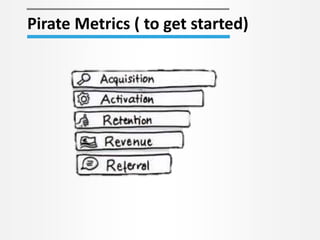
Pirate Metrics ( to get started)
Acquisition
Acquisition is the first contact point with a
customer and your product or website.
Examples:
• Duel: Downloaded the App and registered
• Germinal: Came to the website and registered for the
newsletter
Activation
Activation is the stage where people actually use
your product.
Examples:
• Fullfekr: reading the Q&A, starting a free chat
• Lynxir/Easypaz: Item placed to the Shopping cart/
first order
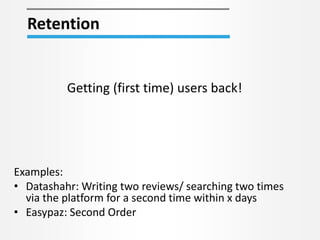
Retention
Getting (first time) users back!
Examples:
• Datashahr: Writing two reviews/ searching two times
via the platform for a second time within x days
• Easypaz: Second Order
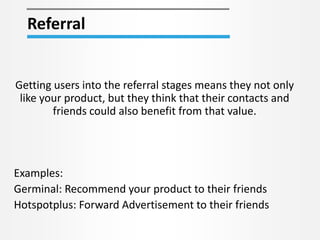
Referral
Getting users into the referral stages means they not only
like your product, but they think that their contacts and
friends could also benefit from that value.
Examples:
Germinal: Recommend your product to their friends
Hotspotplus: Forward Advertisement to their friends
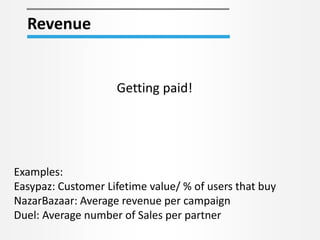
Revenue
Getting paid!
Examples:
Easypaz: Customer Lifetime value/ % of users that buy
NazarBazaar: Average revenue per campaign
Duel: Average number of Sales per partner
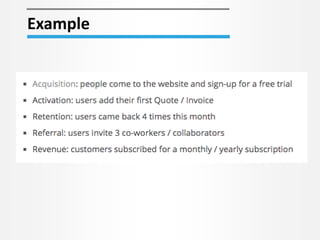
Example
Limits of the Pirate Metrics
• Great to measure the onboarding process but
not so good in measuring what happens after!
• Originally focussed on SaaS services
• Primarily measuring simple numbers
IMPLEMENTING TRACTION CHANNELS
Traction Channels and Pirate Metrics
You don’t only want to know what happens with
users once they are acquired but where they
come from
Traction Channels and Pirate Metrics
Metrics to measure:
• Cost per Acquisition
• What is the % for each acquisition channel
• How do those users behave while going through the
funnel
– How many from each channel use the service once?
– How many per channel are coming back?
– How many invite friends?
• CLV for each Traction Channel
KPI’S
KPI’s
Where are you willing to pay a significant
amount of money to increase the value?
HOMEWORK
Homework
• Discuss and define your initial number of
Metrics
• Define a first version of your KPIs
• Create a google spreadsheet to measure them
weekly and share it with Sara
• Insert the first set of numbers

Introduction to Metrics and KPIs

  • 1.
  • 2.
    • Measures, Metricsand KPIs – What makes sense to be measured? • Pirate Metrics as a first Model • Traction Channels and the Pirate Metrics • KPIs Agenda
  • 3.
  • 4.
    Measures Anything that ismeasured, e.g. number of customers, total revenue, etc. There is nothing inherently good or bad with a measure so it is not helping you to figure out if you are doing good.
  • 5.
    Metric A value typicallyderived by a combination of two or more measures, e.g. total revenue over time, development of unique visitors etc. Metrics do provide you with an information if the values are good or bad.
  • 6.
    KPI ”The most importantperformance information that enables organizations or their stakeholders to understand whether the organization is on track or not.” ”Something you are willing to pay a significant amount of money to increase it.”
  • 7.
  • 8.
    What makes senseto be measured? • Values that help you to understand you business, your customers behaviour and your current strengths and weaknesses • Values that help you to improve your business • Values that let you compare behaviour over time
  • 9.
  • 10.
    Pirate Metrics (to get started)
  • 11.
    Acquisition Acquisition is thefirst contact point with a customer and your product or website. Examples: • Duel: Downloaded the App and registered • Germinal: Came to the website and registered for the newsletter
  • 12.
    Activation Activation is thestage where people actually use your product. Examples: • Fullfekr: reading the Q&A, starting a free chat • Lynxir/Easypaz: Item placed to the Shopping cart/ first order
  • 13.
    Retention Getting (first time)users back! Examples: • Datashahr: Writing two reviews/ searching two times via the platform for a second time within x days • Easypaz: Second Order
  • 14.
    Referral Getting users intothe referral stages means they not only like your product, but they think that their contacts and friends could also benefit from that value. Examples: Germinal: Recommend your product to their friends Hotspotplus: Forward Advertisement to their friends
  • 15.
    Revenue Getting paid! Examples: Easypaz: CustomerLifetime value/ % of users that buy NazarBazaar: Average revenue per campaign Duel: Average number of Sales per partner
  • 16.
  • 17.
    Limits of thePirate Metrics • Great to measure the onboarding process but not so good in measuring what happens after! • Originally focussed on SaaS services • Primarily measuring simple numbers
  • 18.
  • 19.
    Traction Channels andPirate Metrics You don’t only want to know what happens with users once they are acquired but where they come from
  • 20.
    Traction Channels andPirate Metrics Metrics to measure: • Cost per Acquisition • What is the % for each acquisition channel • How do those users behave while going through the funnel – How many from each channel use the service once? – How many per channel are coming back? – How many invite friends? • CLV for each Traction Channel
  • 21.
  • 22.
    KPI’s Where are youwilling to pay a significant amount of money to increase the value?
  • 23.
  • 24.
    Homework • Discuss anddefine your initial number of Metrics • Define a first version of your KPIs • Create a google spreadsheet to measure them weekly and share it with Sara • Insert the first set of numbers

Editor's Notes

  • #3 Brief overview on the topic of lean startup, then we will move to one essential feature and framework, It is hands on so after a short introduction you will create something Change your place Take notes
  • #5 Which Mentor do you want to talk to, what do you want to achieve with your product, revenue?, team, feedback, processes
  • #6 Which Mentor do you want to talk to, what do you want to achieve with your product, revenue?, team, feedback, processes
  • #7 Which Mentor do you want to talk to, what do you want to achieve with your product, revenue?, team, feedback, processes
  • #9 Which Mentor do you want to talk to, what do you want to achieve with your product, revenue?, team, feedback, processes
  • #11 Stages
  • #12 Which Mentor do you want to talk to, what do you want to achieve with your product, revenue?, team, feedback, processes
  • #13 Which Mentor do you want to talk to, what do you want to achieve with your product, revenue?, team, feedback, processes
  • #14 Which Mentor do you want to talk to, what do you want to achieve with your product, revenue?, team, feedback, processes
  • #15 Which Mentor do you want to talk to, what do you want to achieve with your product, revenue?, team, feedback, processes
  • #16 Which Mentor do you want to talk to, what do you want to achieve with your product, revenue?, team, feedback, processes
  • #17 Which Mentor do you want to talk to, what do you want to achieve with your product, revenue?, team, feedback, processes
  • #18 Which Mentor do you want to talk to, what do you want to achieve with your product, revenue?, team, feedback, processes
  • #20 Which Mentor do you want to talk to, what do you want to achieve with your product, revenue?, team, feedback, processes
  • #21 Which Mentor do you want to talk to, what do you want to achieve with your product, revenue?, team, feedback, processes
  • #23 Which Mentor do you want to talk to, what do you want to achieve with your product, revenue?, team, feedback, processes
  • #25 Which Mentor do you want to talk to, what do you want to achieve with your product, revenue?, team, feedback, processes