This document outlines an agenda for a workshop on using the Lean Canvas methodology. The Lean Canvas is introduced as a one-page tool for capturing a business model. It consists of 9 sections including the problem being solved, customer segments, unique value proposition, solution, channels, revenue streams, costs, key metrics, and unfair advantage. Attendees will complete their own Lean Canvas, get feedback, and discuss risks including product/market fit, building a customer base, and ensuring a viable business model. The goal is to help startups validate problems and solutions before fully developing products.
Introduction to Lean Canvas workshop and agenda, covering key concepts like Lean Startup, Lean Canvas, and the risks and challenges involved.
The problem startup face when they build products without customer input, risking failure due to lack of market validation.
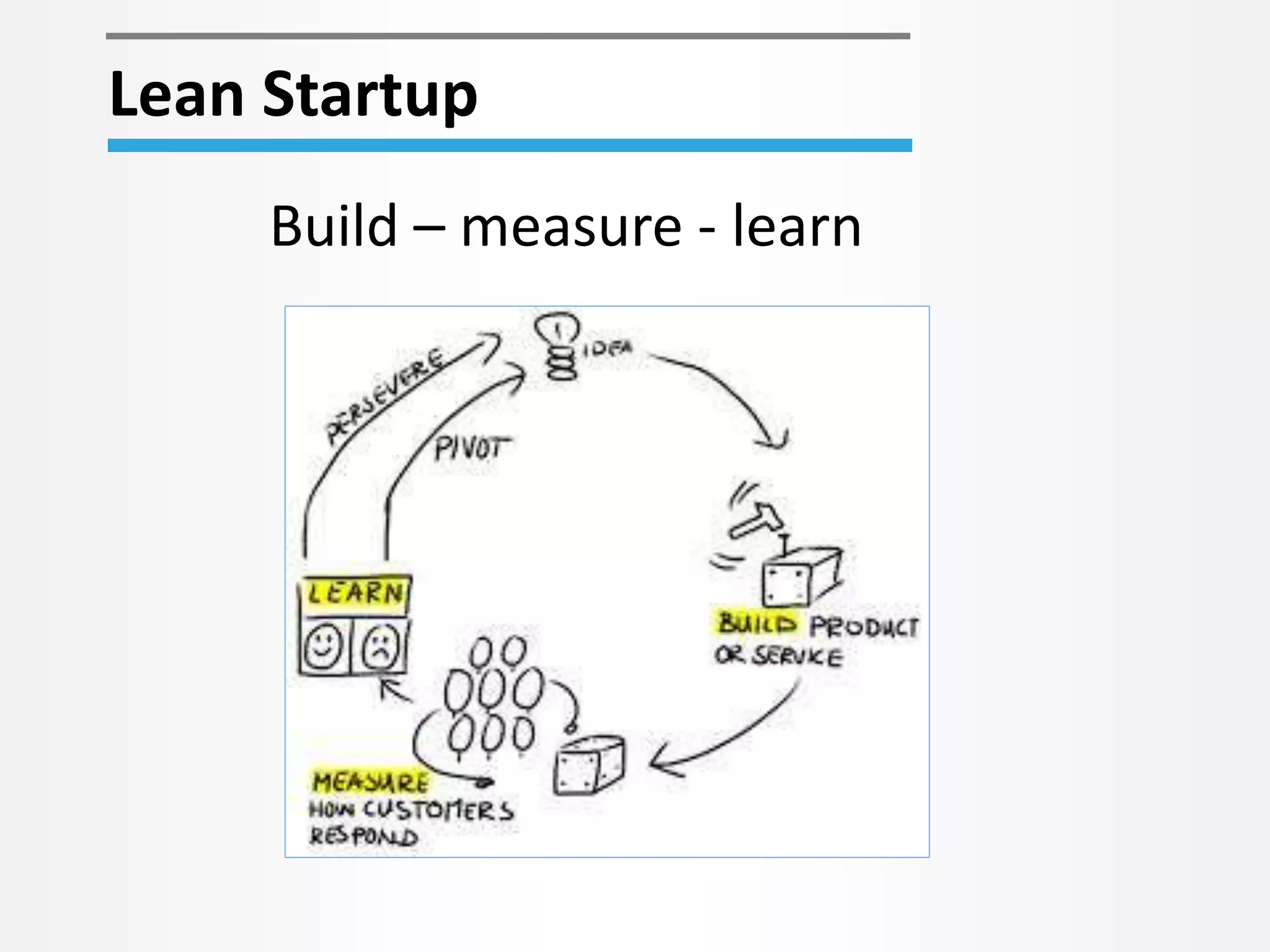
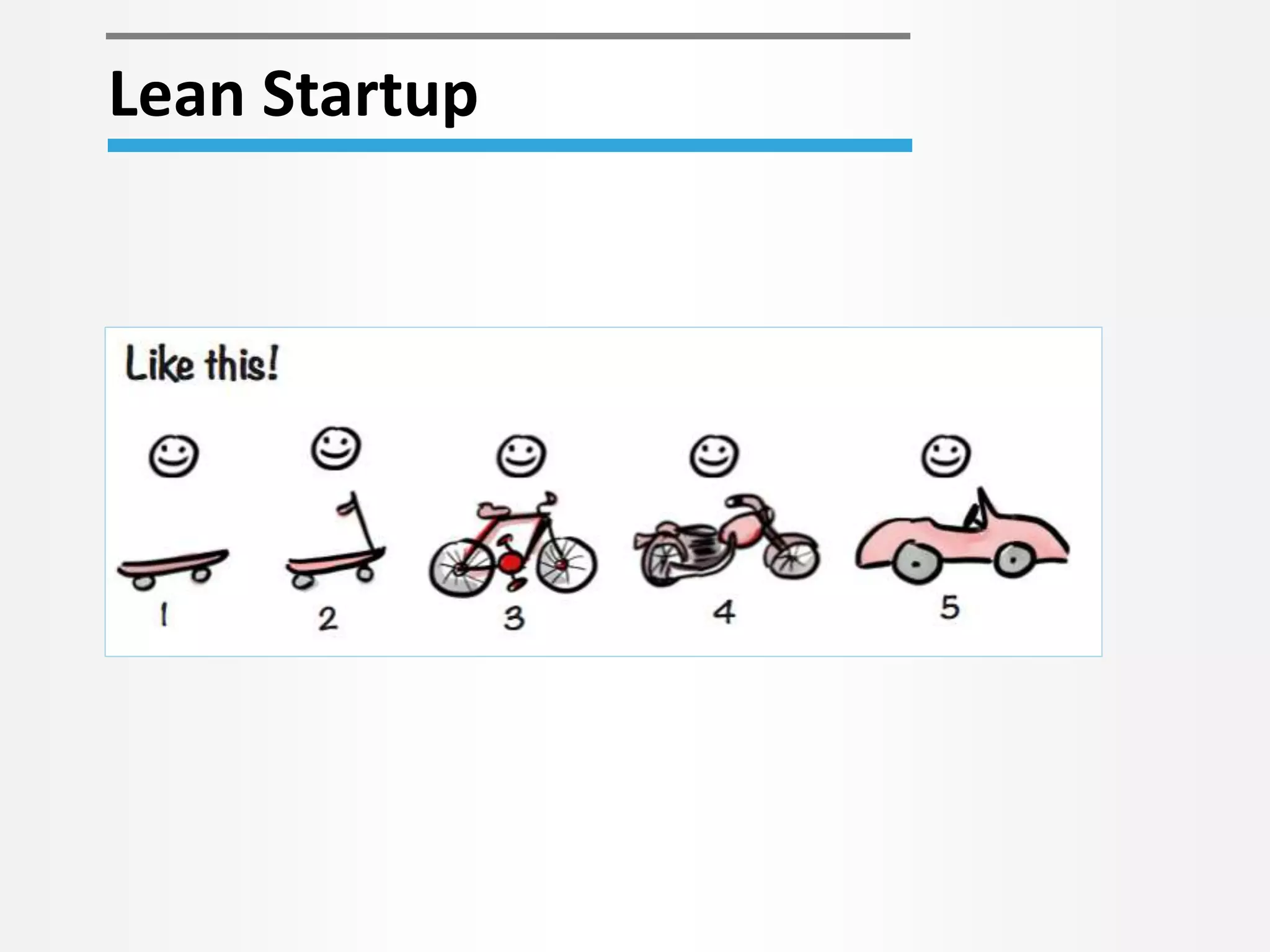
Introduction to Lean Startup principles, emphasizing building, measuring, learning, focusing on customer needs, and using MVPs to reduce risk.
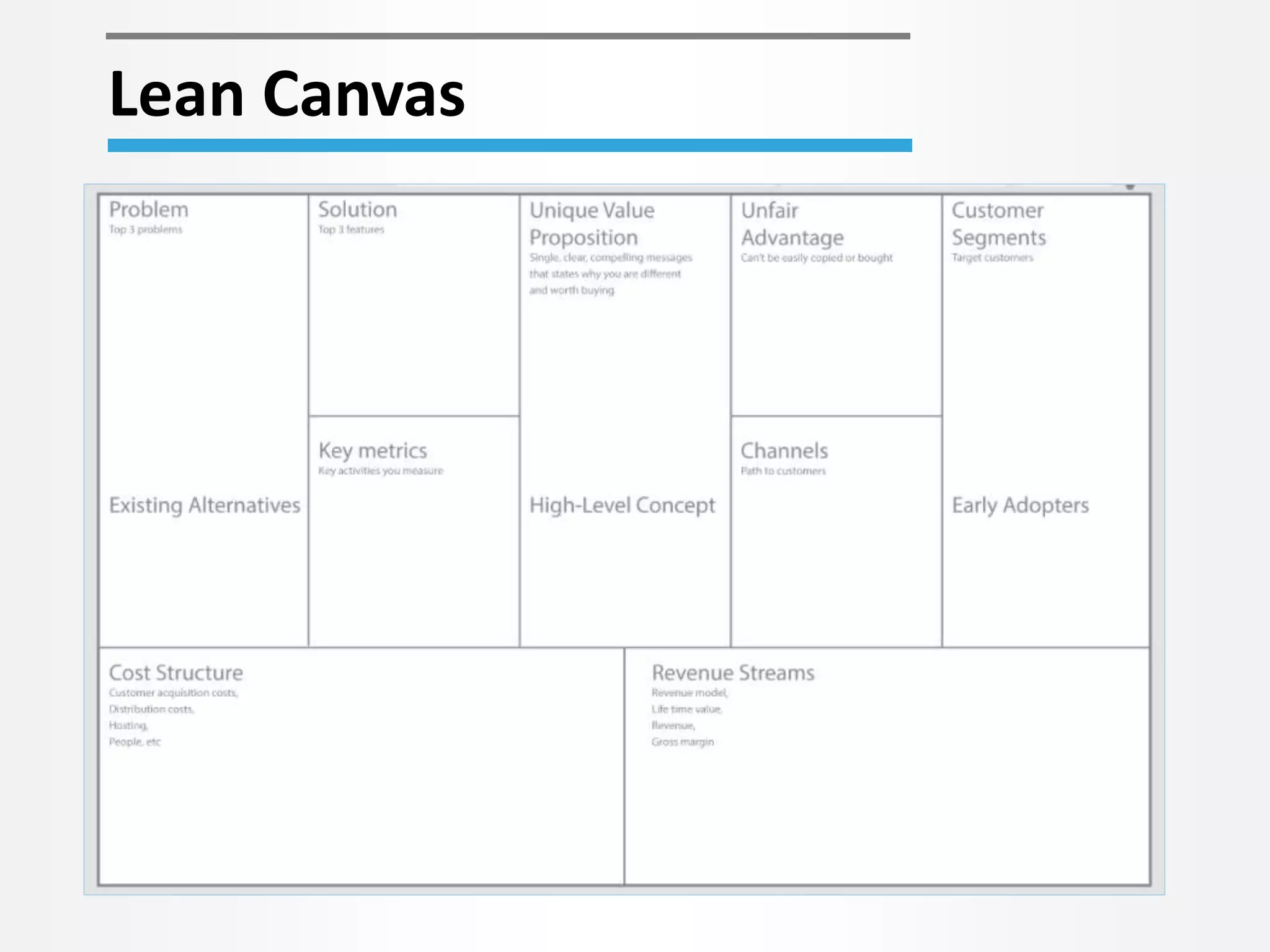
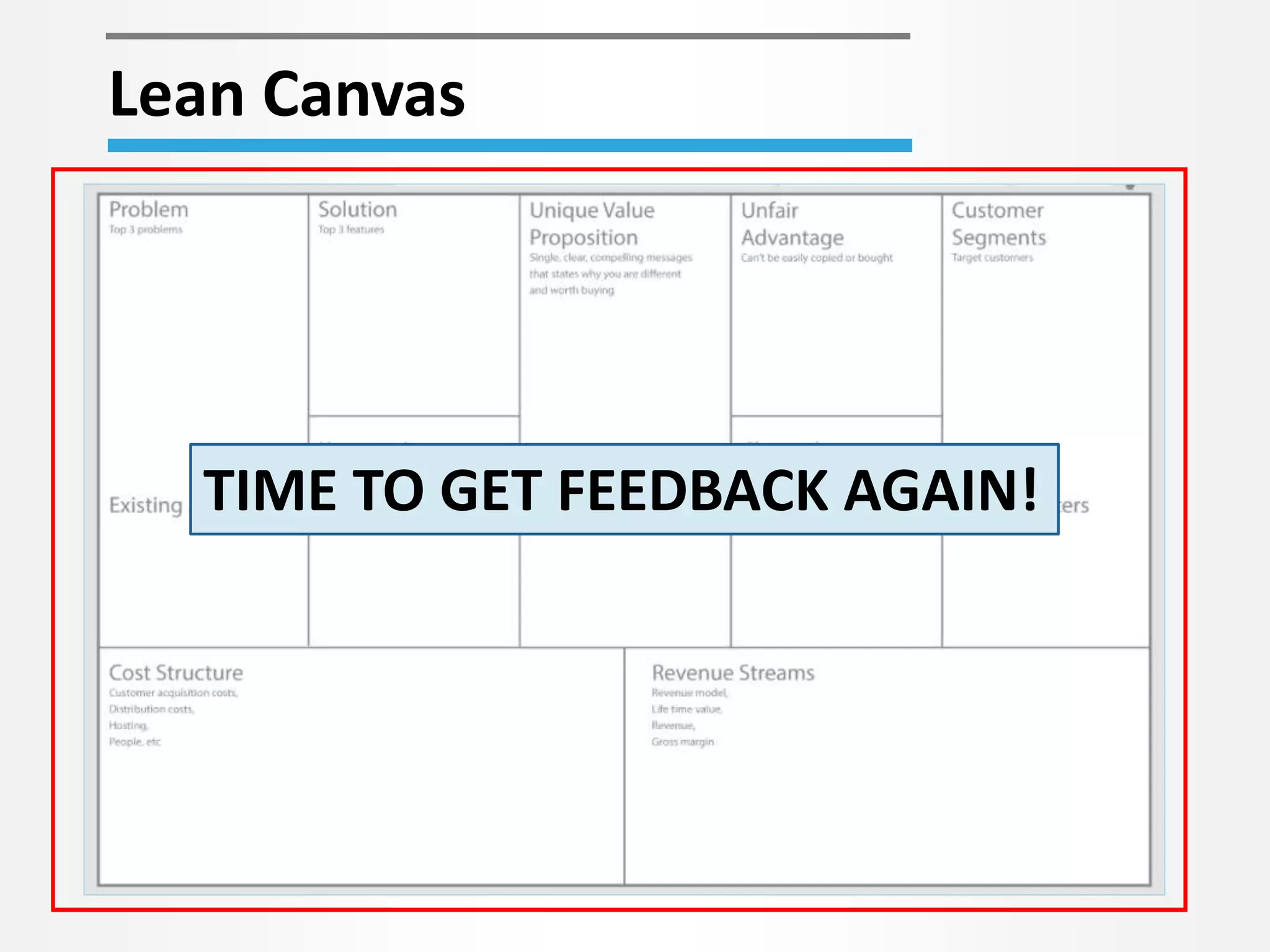
Lean Canvas definition and features, highlighting its one-page format, adaptability, and focus on entrepreneurs while outlining its components.
In-depth explanation of the components of Lean Canvas including problems, customer segments, unique value proposition, solutions, channels, revenue, and metrics.
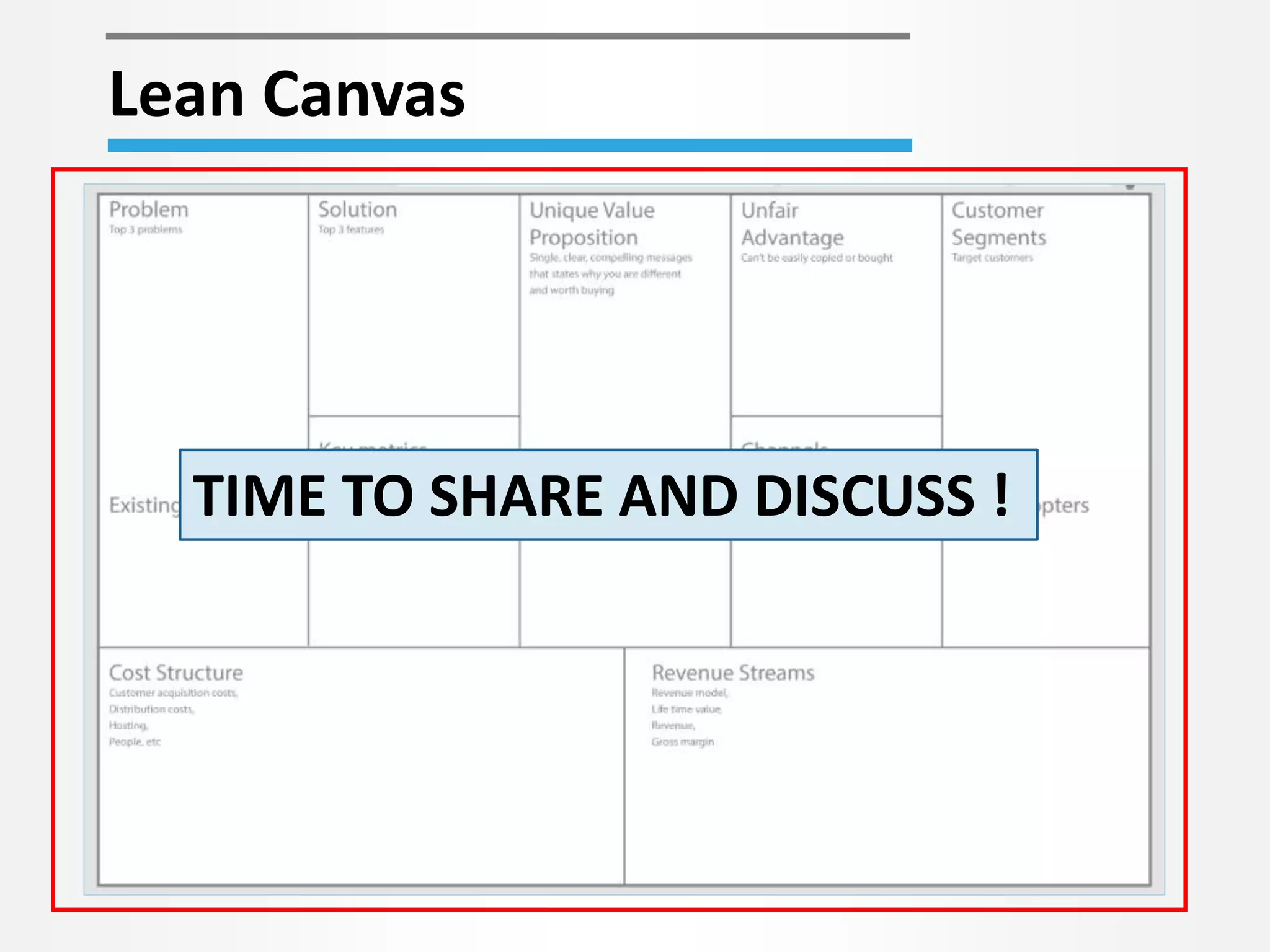
Encouragement to share and discuss Canvas presentations among peers for constructive feedback and improvement.
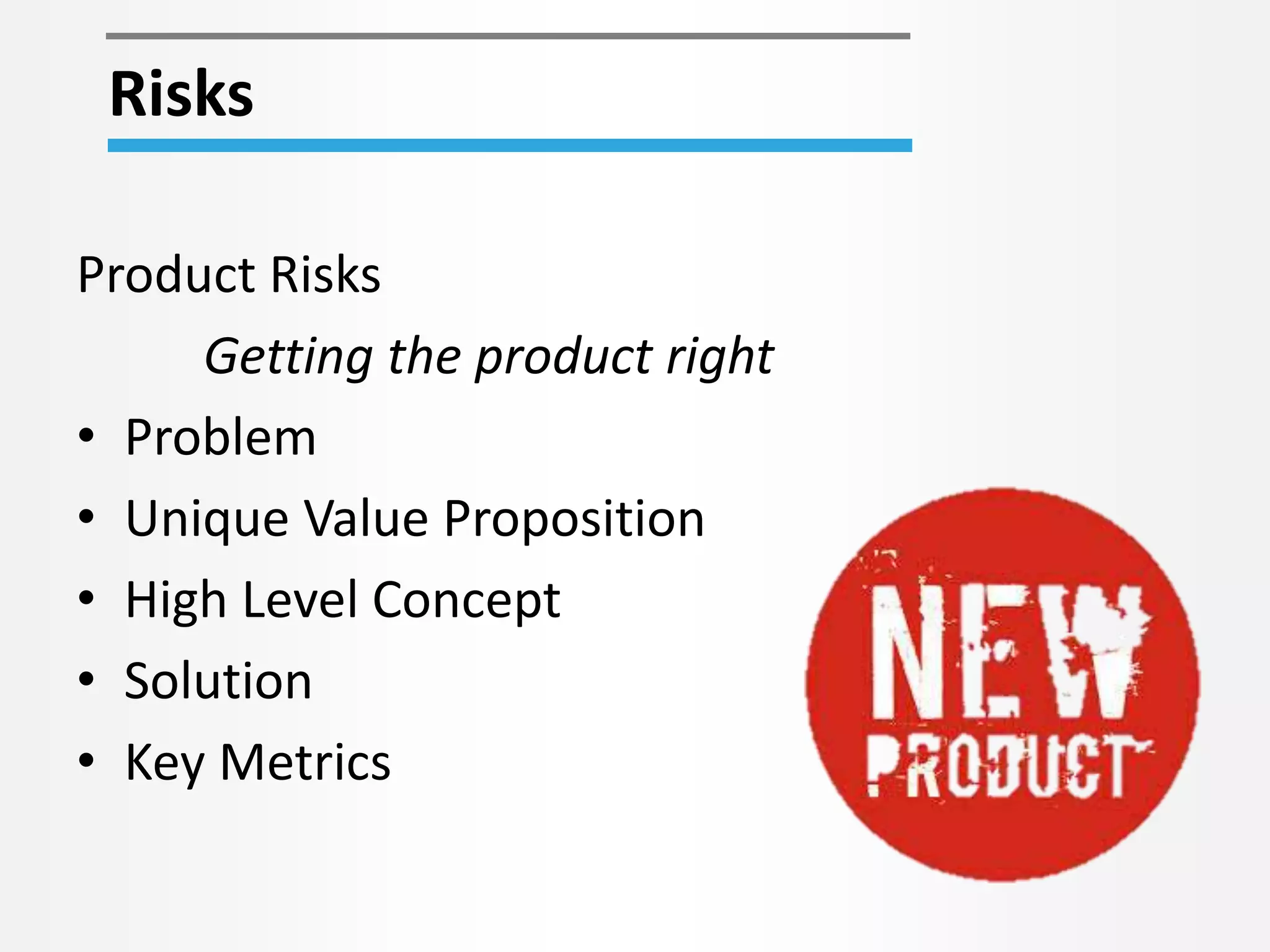
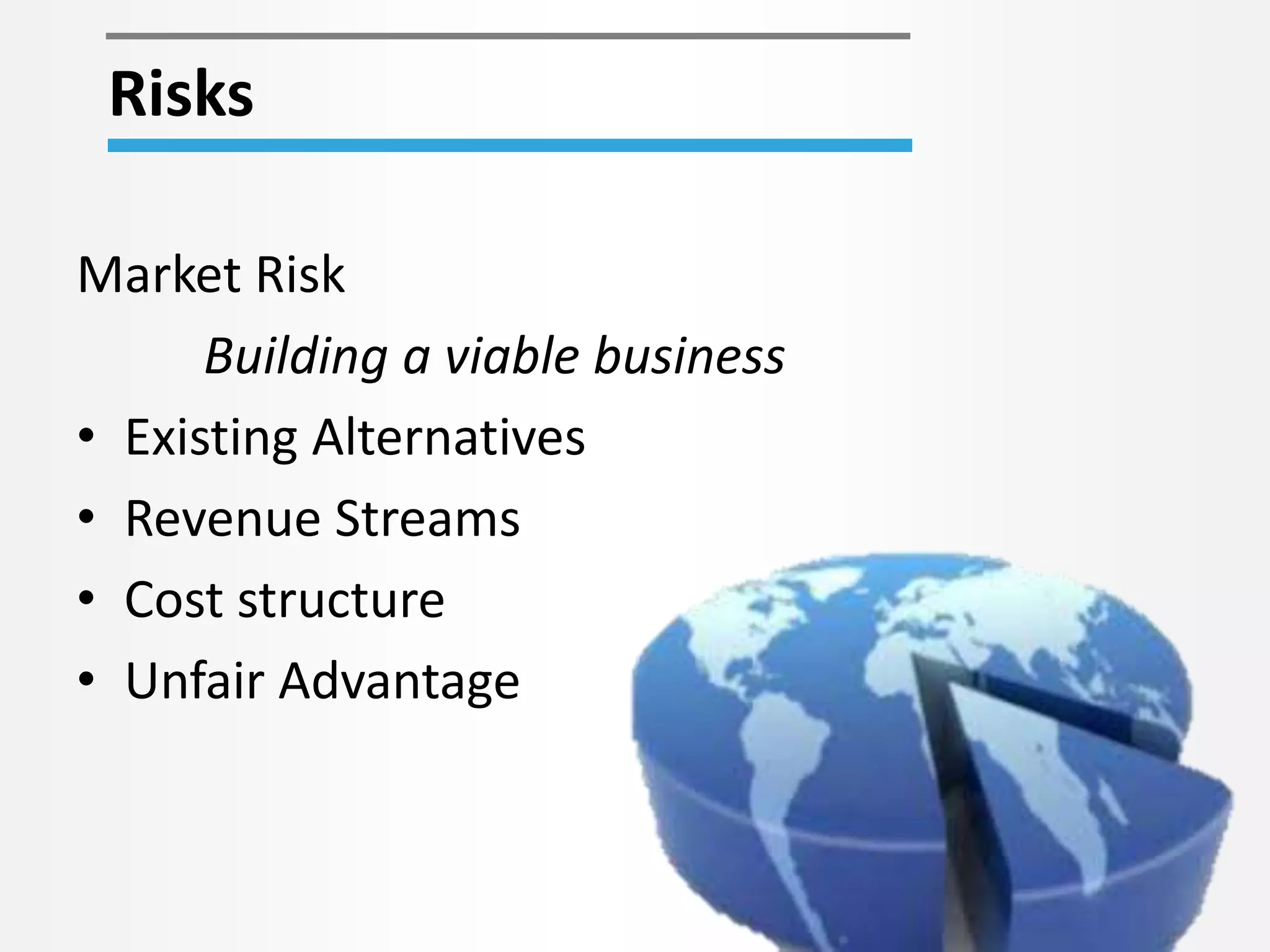
Overview of different risks associated with startups: product risks, customer risks, and market risks with respective components outlined.
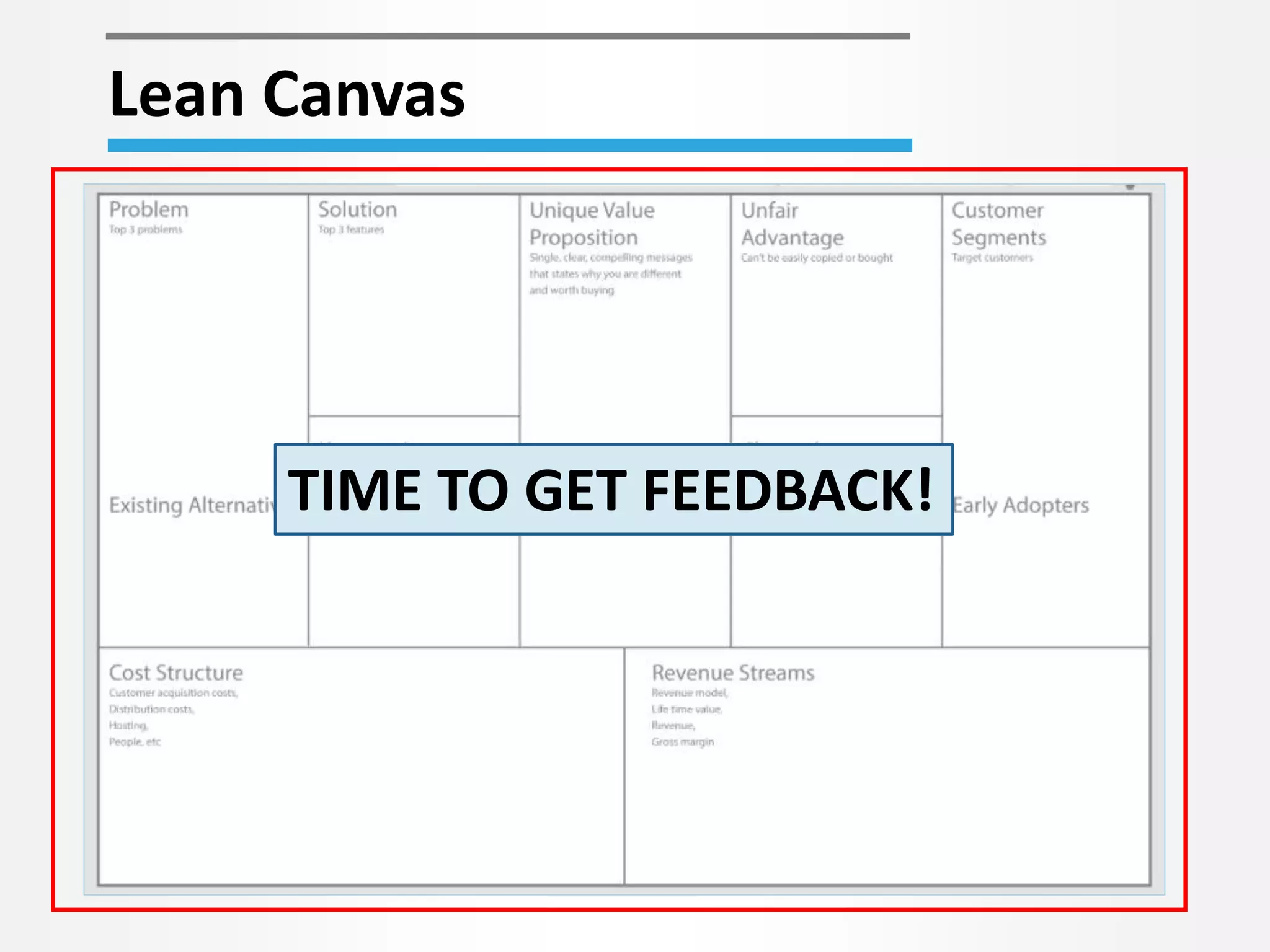
A final call for feedback and assignment to validate Canvas presentations, identify customer segments, and discuss improvements.
The Problem
Manystartups begin with an idea for a product that they
think people want.
They spend months, perfecting that product without ever
showing the product, even in a very rudimentary form, to
the prospective customer.
When they fail to reach broad uptake from customers, it
is often because they never spoke to prospective
customers and determined whether or not the product
was interesting.
When customers ultimately communicate, through their
indifference, that they don't care about the idea, the
startup fails.
Lean Startup
“Ifstartups invest their time into building
products or services step by step to meet
the needs of early customers, they can
reduce the market risks and sidestep the
need for large amounts of initial project
funding and expensive product launches
and failures.”
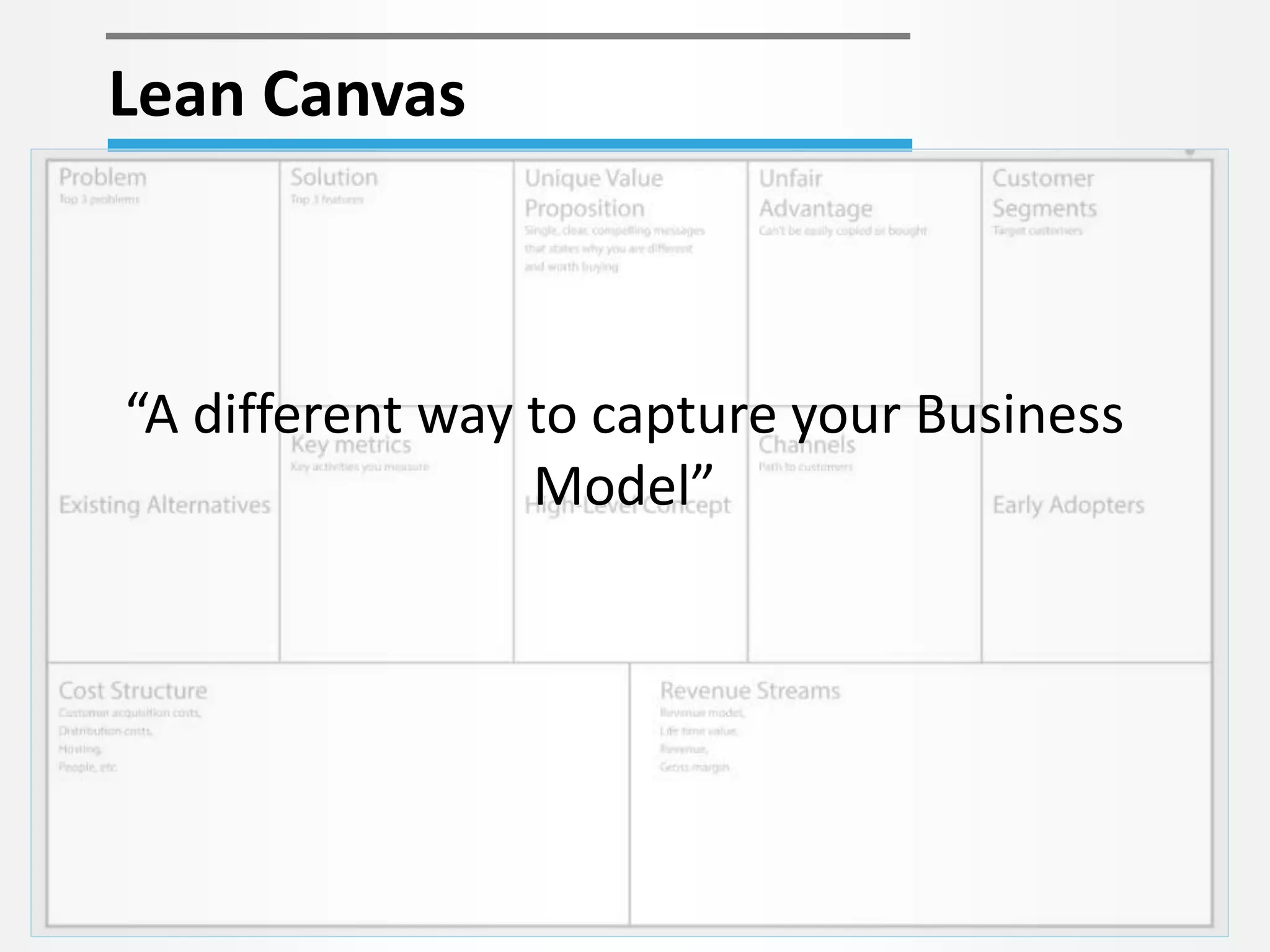
Lean Canvas
“Adifferent way to capture your Business
Model”
14.
Lean Canvas
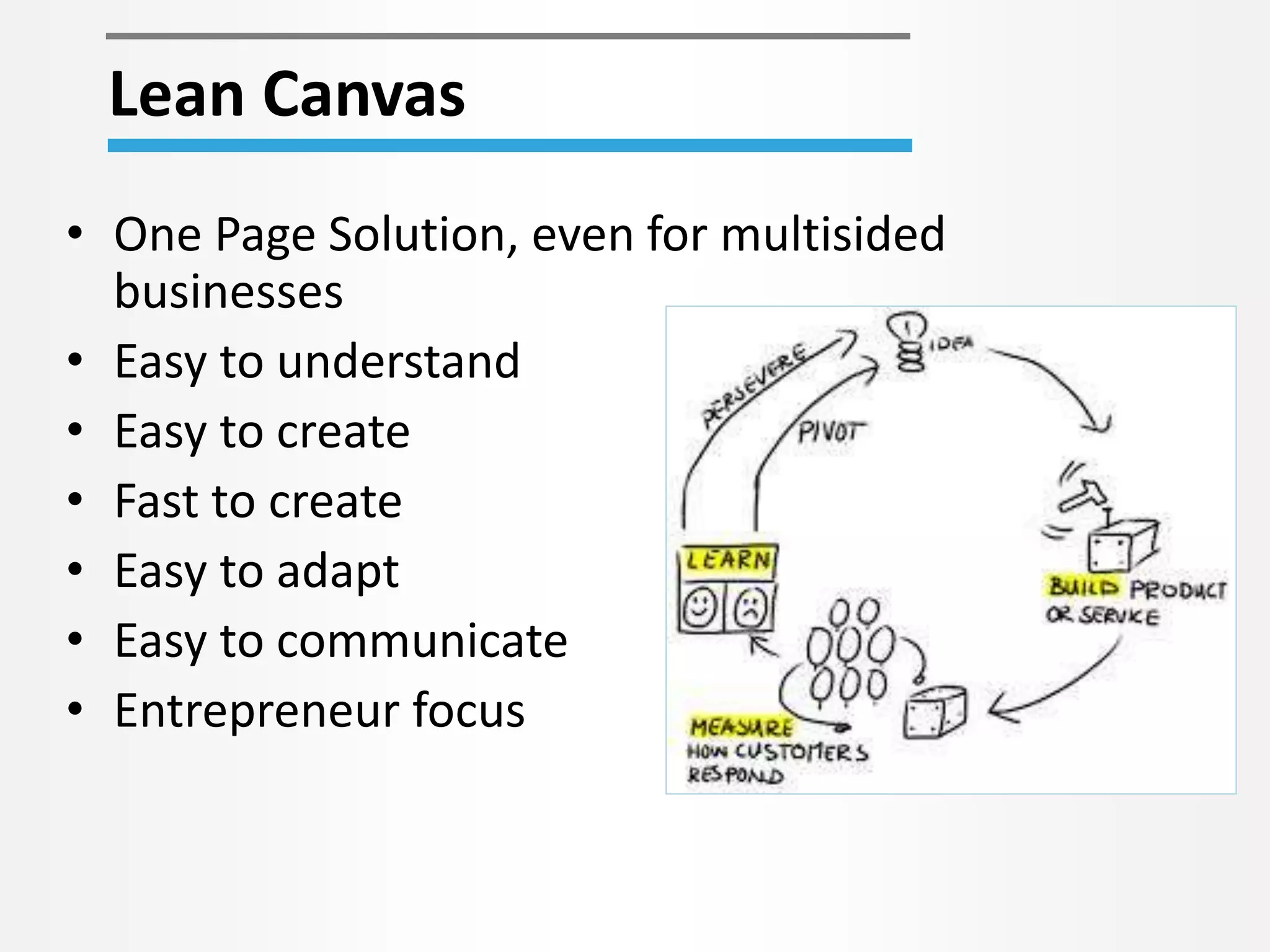
•One Page Solution, even for multisided
businesses
• Easy to understand
• Easy to create
• Fast to create
• Easy to adapt
• Easy to communicate
• Entrepreneur focus
15.
Lean Canvas
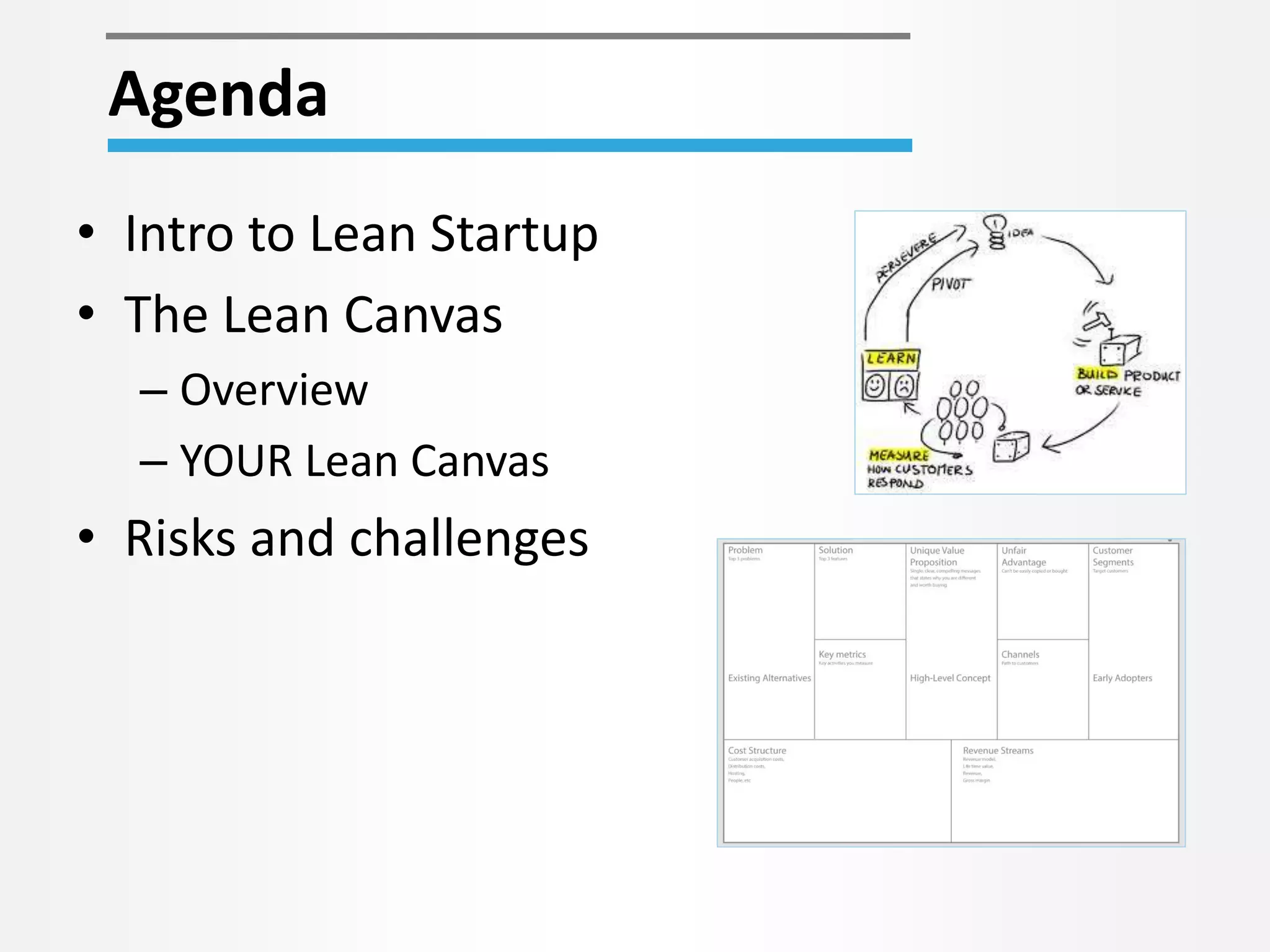
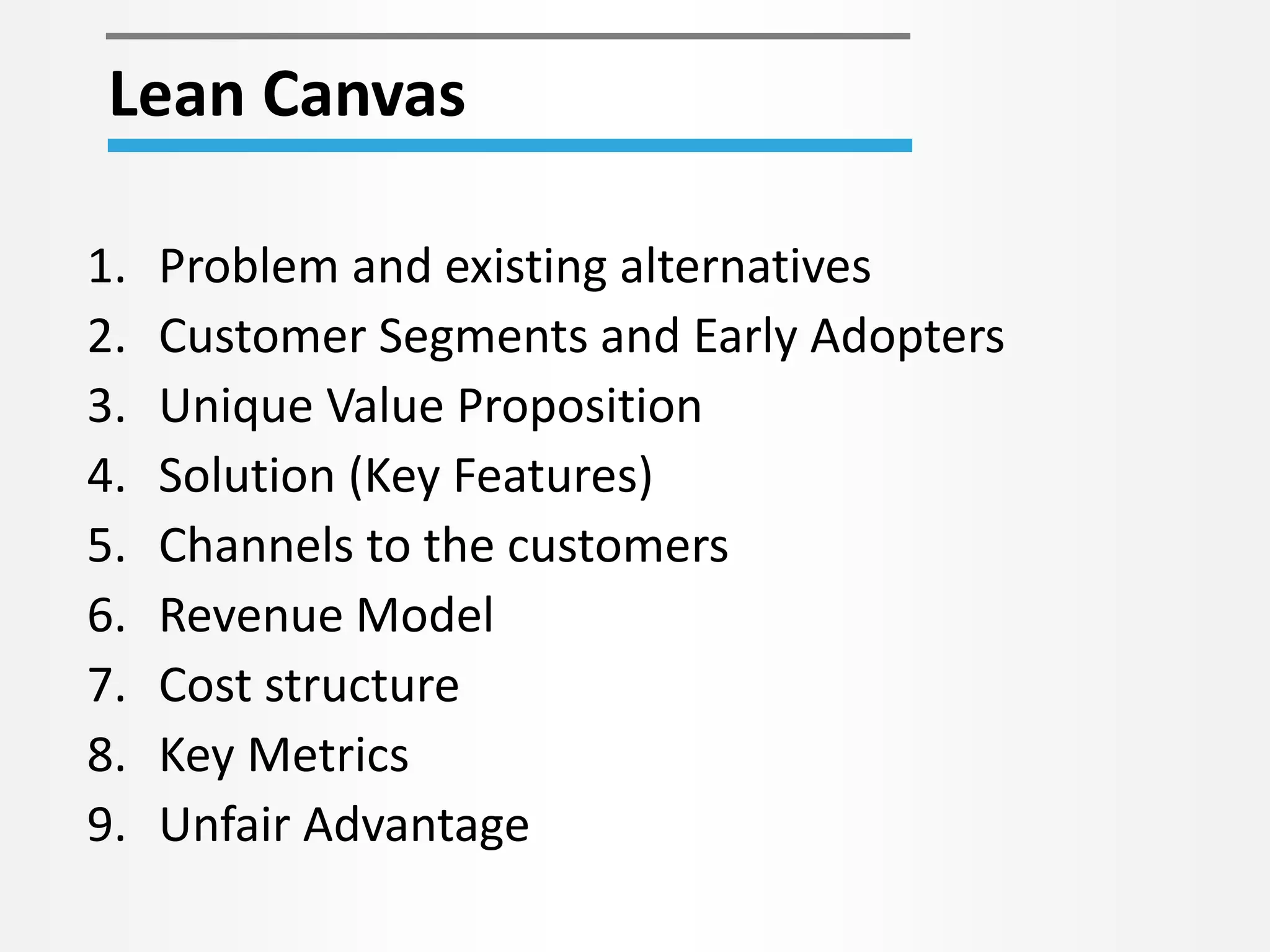
1.Problem and existing alternatives
2. Customer Segments and Early Adopters
3. Unique Value Proposition
4. Solution (Key Features)
5. Channels to the customers
6. Revenue Model
7. Cost structure
8. Key Metrics
9. Unfair Advantage
Lean Canvas
12
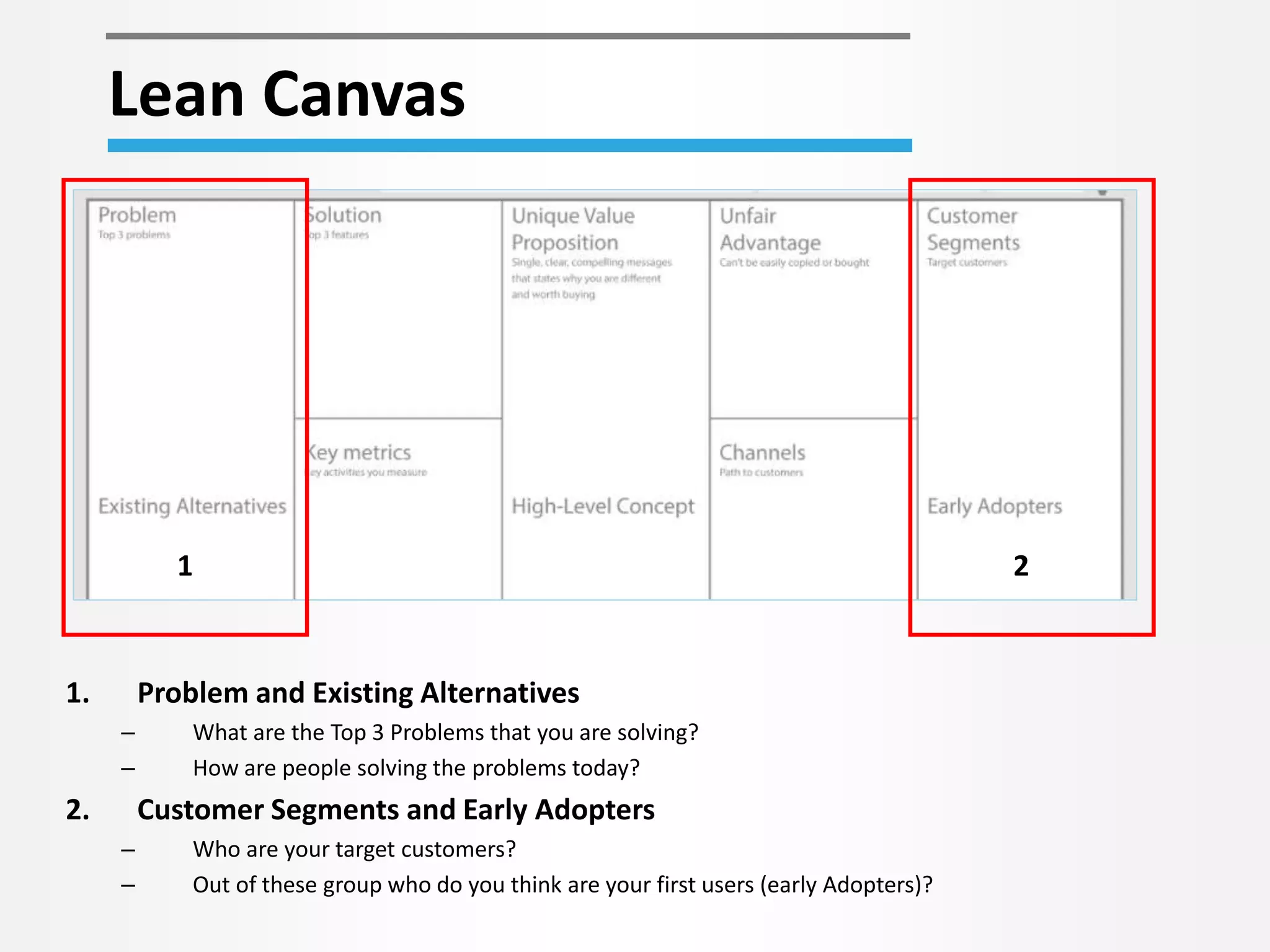
1. Problem and Existing Alternatives
– What are the Top 3 Problems that you are solving?
– How are people solving the problems today?
2. Customer Segments and Early Adopters
– Who are your target customers?
– Out of these group who do you think are your first users (early Adopters)?
18.
Lean Canvas
3
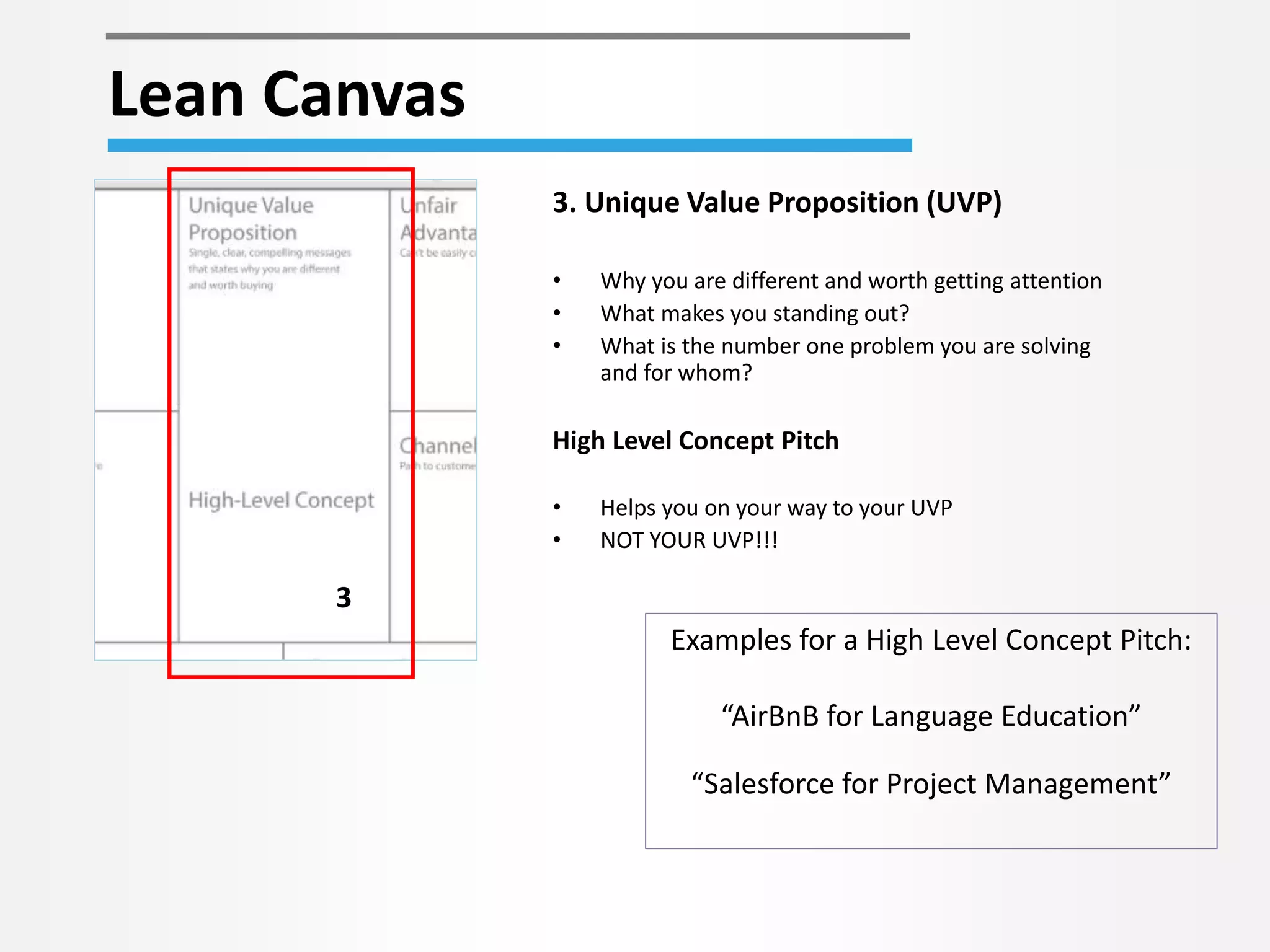
3. Unique Value Proposition (UVP)
• Why you are different and worth getting attention
• What makes you standing out?
• What is the number one problem you are solving
and for whom?
High Level Concept Pitch
• Helps you on your way to your UVP
• NOT YOUR UVP!!!
Examples for a High Level Concept Pitch:
“AirBnB for Language Education”
“Salesforce for Project Management”
19.
Lean Canvas
4
4. Solution
• Top three features of your product
according to the problem you are
currently solving?
Example (KSNA)
1. Persian language
2. Easy access
3. Focus on Beginners Level
20.
Lean Canvas
5
5. Channels (Your path to the customer)
• How do you reach your customers?
• Possible channels are:
– SEO
– Blogs/websites
– Facebook Ads
– Print Ads
– Word of mouth
– Events (Conferences, Tradeshows)
– Partnerships
– Friends
Examples
1. Tea talks (Bi- Language)
2. Sharing on Hackernews (Taskulu)
3. …….
21.
Lean Canvas
76
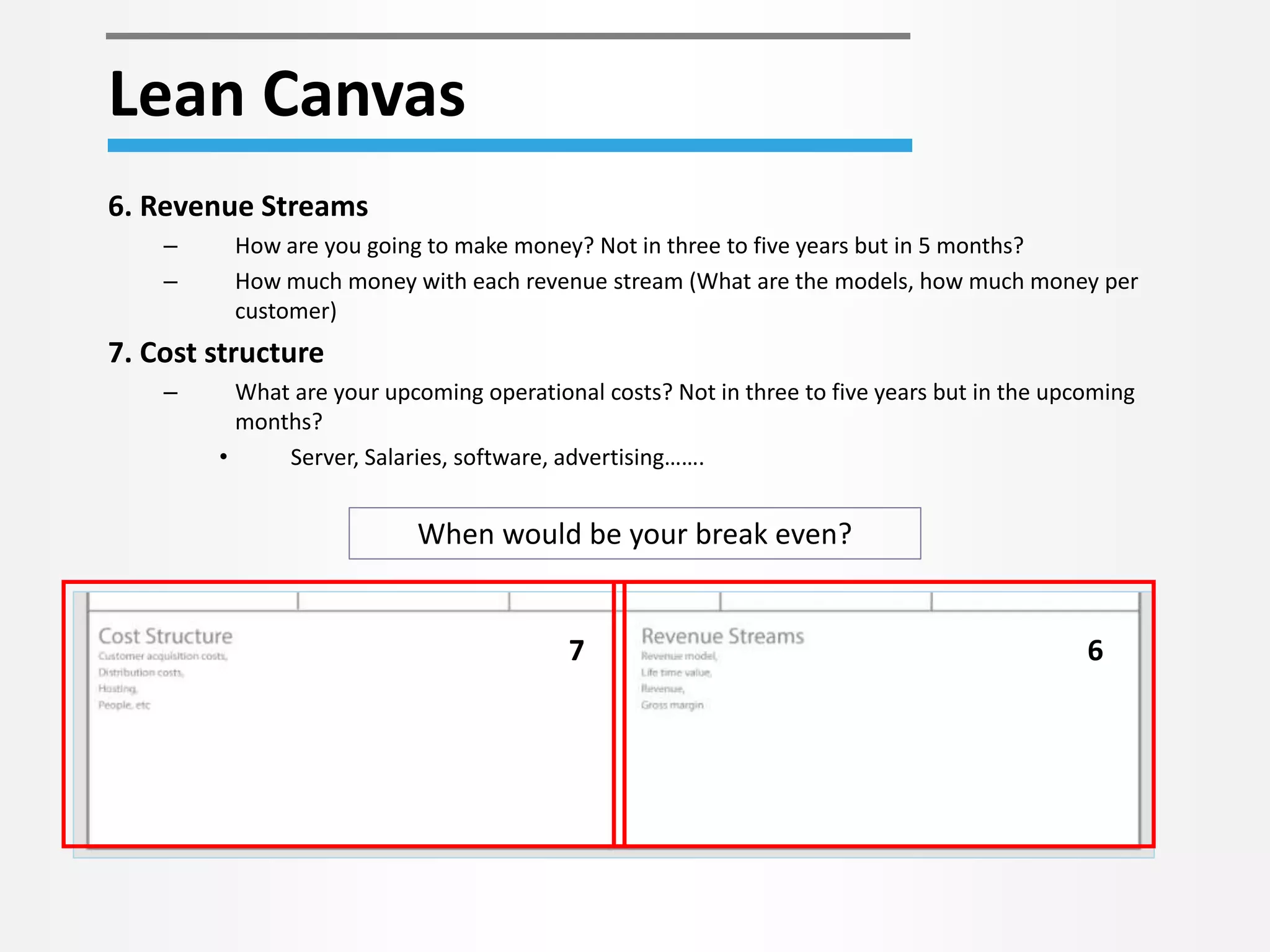
6. Revenue Streams
– How are you going to make money? Not in three to five years but in 5 months?
– How much money with each revenue stream (What are the models, how much money per
customer)
7. Cost structure
– What are your upcoming operational costs? Not in three to five years but in the upcoming
months?
• Server, Salaries, software, advertising…….
When would be your break even?
22.
Lean Canvas
8
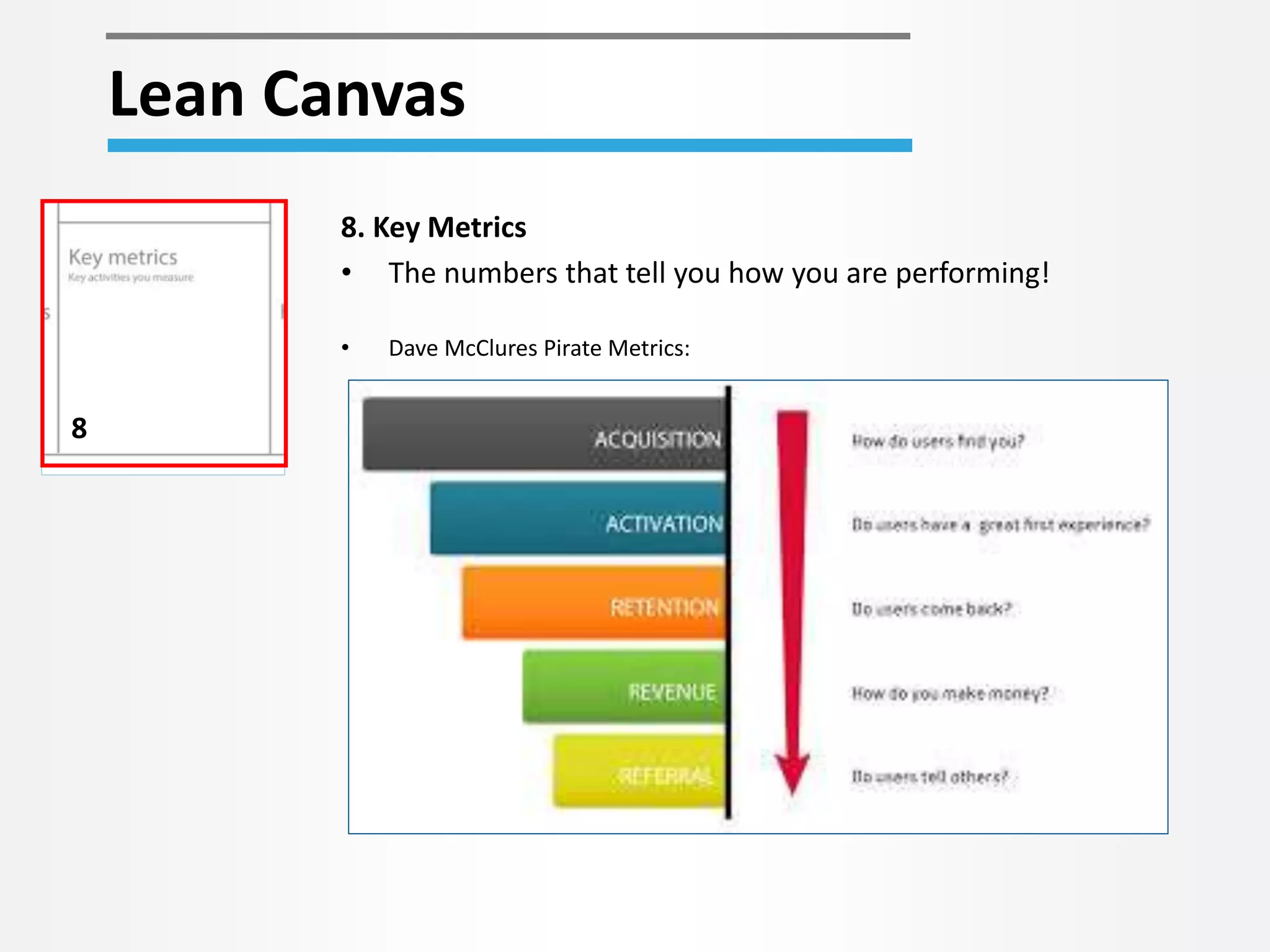
8. Key Metrics
• The numbers that tell you how you are performing!
• Dave McClures Pirate Metrics:
23.
Lean Canvas
9
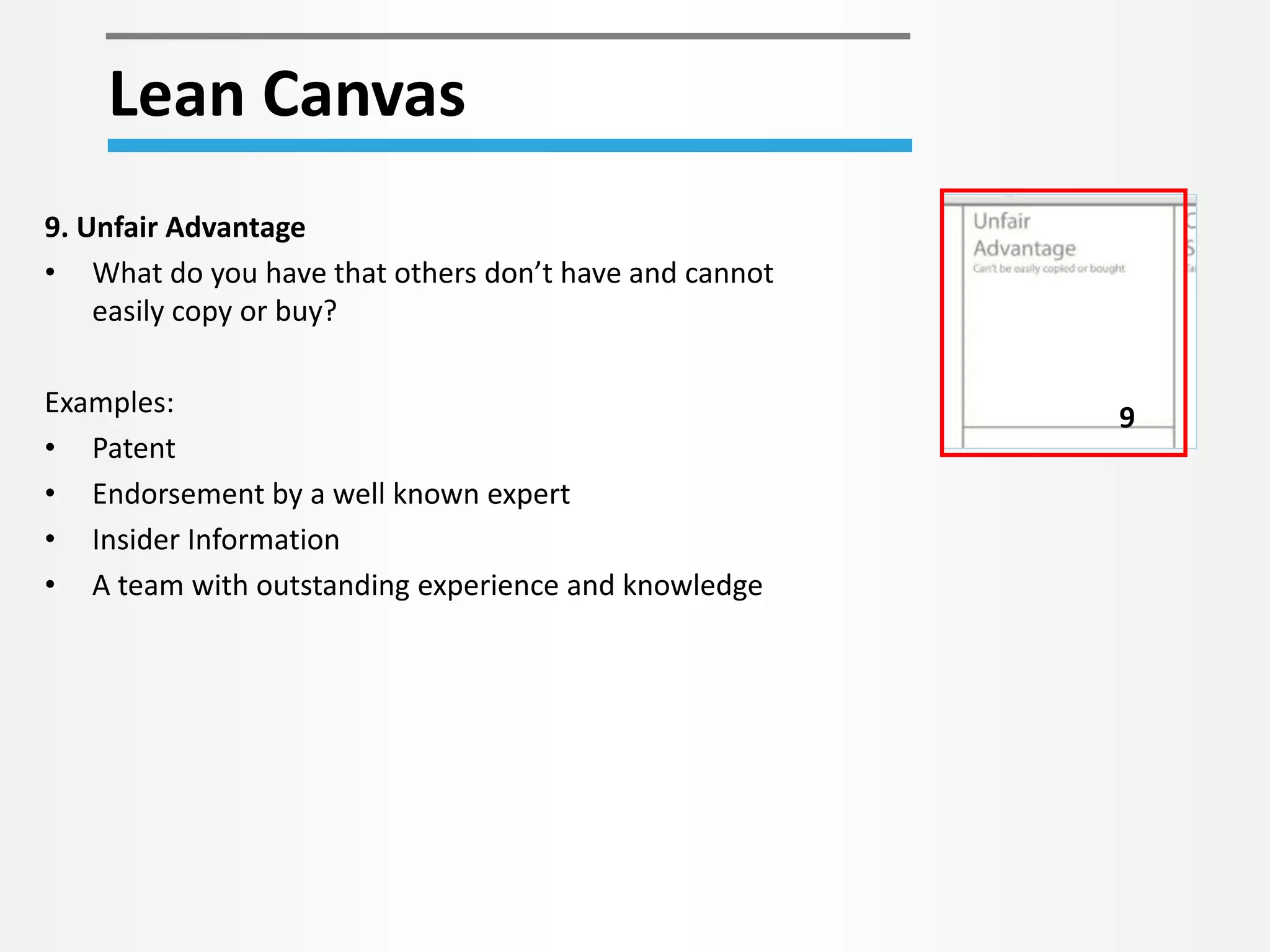
9. Unfair Advantage
• What do you have that others don’t have and cannot
easily copy or buy?
Examples:
• Patent
• Endorsement by a well known expert
• Insider Information
• A team with outstanding experience and knowledge
Feedback
Present yourCanvas to one other team and ask
them for feedback
– Where did they have trouble to understand?
– Did they have the feeling you were to general/to
detailed?
– Could they think about different key features,
customers, additional channels,……
Homework
• Presentyour canvas to at least one more
person and get their feedback
• Discuss the feedback you got and decide what
to implement
• Is there more than one customer segment?
– If yes, create a canvas for each of them and decide
which one you want to focus on!
• Find ways how to validate your risks
Editor's Notes
#3 Brief overview on the topic of lean startup, then we will move to one essential feature and framework,
It is hands on so after a short introduction you will create something
Change your place
Take notes
#4 90% of Startups fail
What do you think is the problem?
#8 Framework and philosophy
Getting early feedback
Only produce what customers really need
Don’t waste your time building an entire product nobody wants
Zappos
dropbox
#11 Getting early feedback
Only produce what customers really need
Don’t waste your time building an entire product nobody wants
#12 Getting early feedback
Only produce what customers really need
Don’t waste your time building an entire product nobody wants
#14 Developed by Ash Maurya,
Goal: to make a entrepreneur focused version (compared to the Business Model Canvas)
Changed 4 Boxes (Key Activities and Key ressources)
Customer Relationship (covered by the channels
and
Key Partners: Partnerships are important but should not be the starting ground of your business
#21 Example: Taskulu (Hackernews and word of mouth)
#23 Taskulu:
Acqusition: Signups
Activation: creating the first project
Retention: Coming back and create another project or update the old one
Revenue: Number of people that get paying customers
Referr