INTRODUCTION TO MANAGERIAL
       ACCOUNTING


                         1
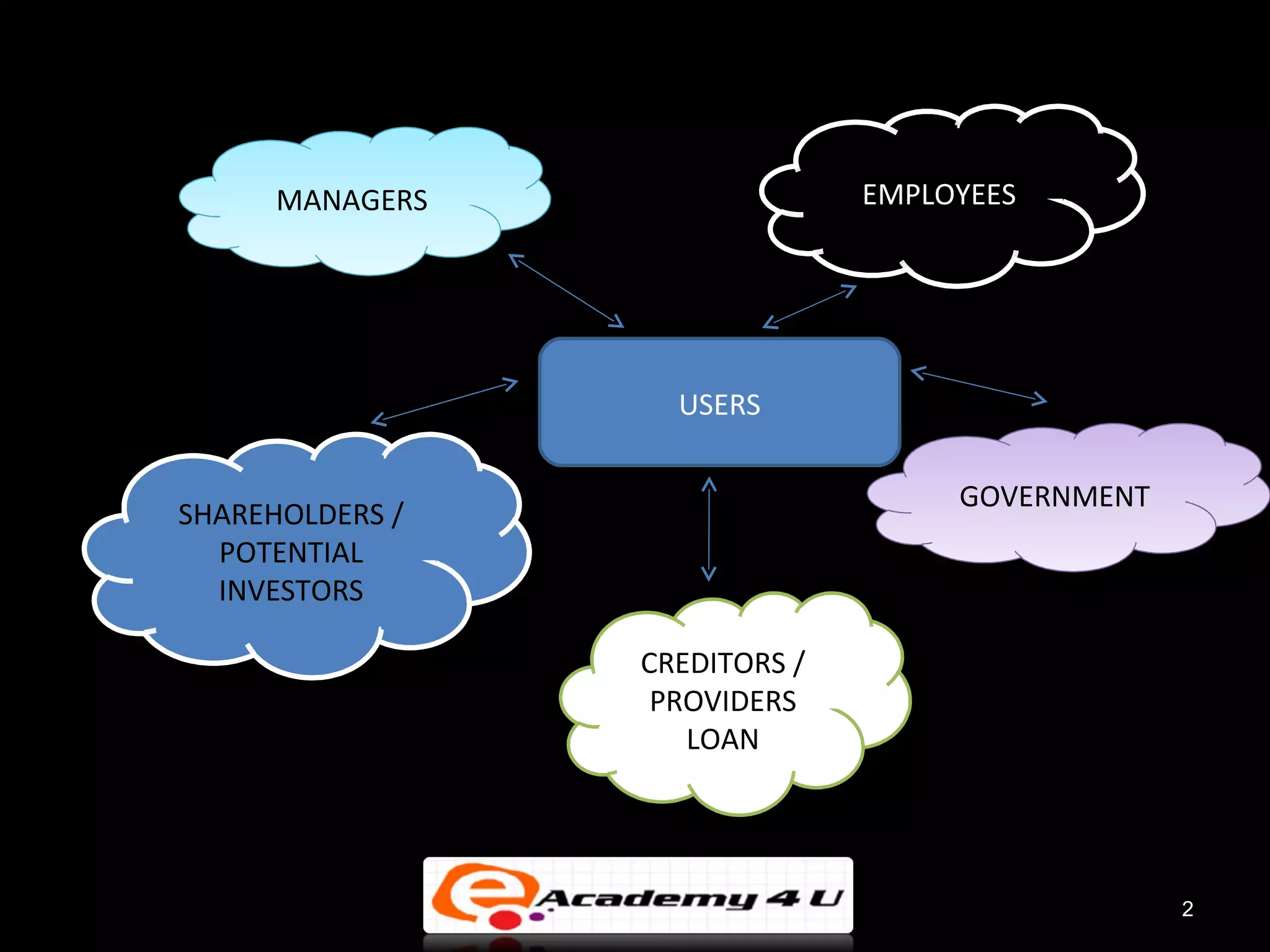
MANAGERS                 EMPLOYEES


                   USERS

                                    GOVERNMENT
SHAREHOLDERS /
  POTENTIAL
  INVESTORS

                 CREDITORS /
                  PROVIDERS
                    LOAN


                                                 2
DEFINITION
• MA is concerned with the provision of information to
  people within the organization to help them make
  better decisions
• FA is concerned with the provision of information to
  external parties outside the organizaation


                                                     3
1)Cost accounting is the process of
  determining and accumulating the cost of
  product or activity whereas
2)Management Accounting provides
  information to internal users in
  organisation to make better decision and
  improve efficiency and effectiveness of
  existing operation. This concerns
  forecasting and monitoring business
  activities, reporting to both internal
  (employees) and external parties
  (shareholders
                                         4
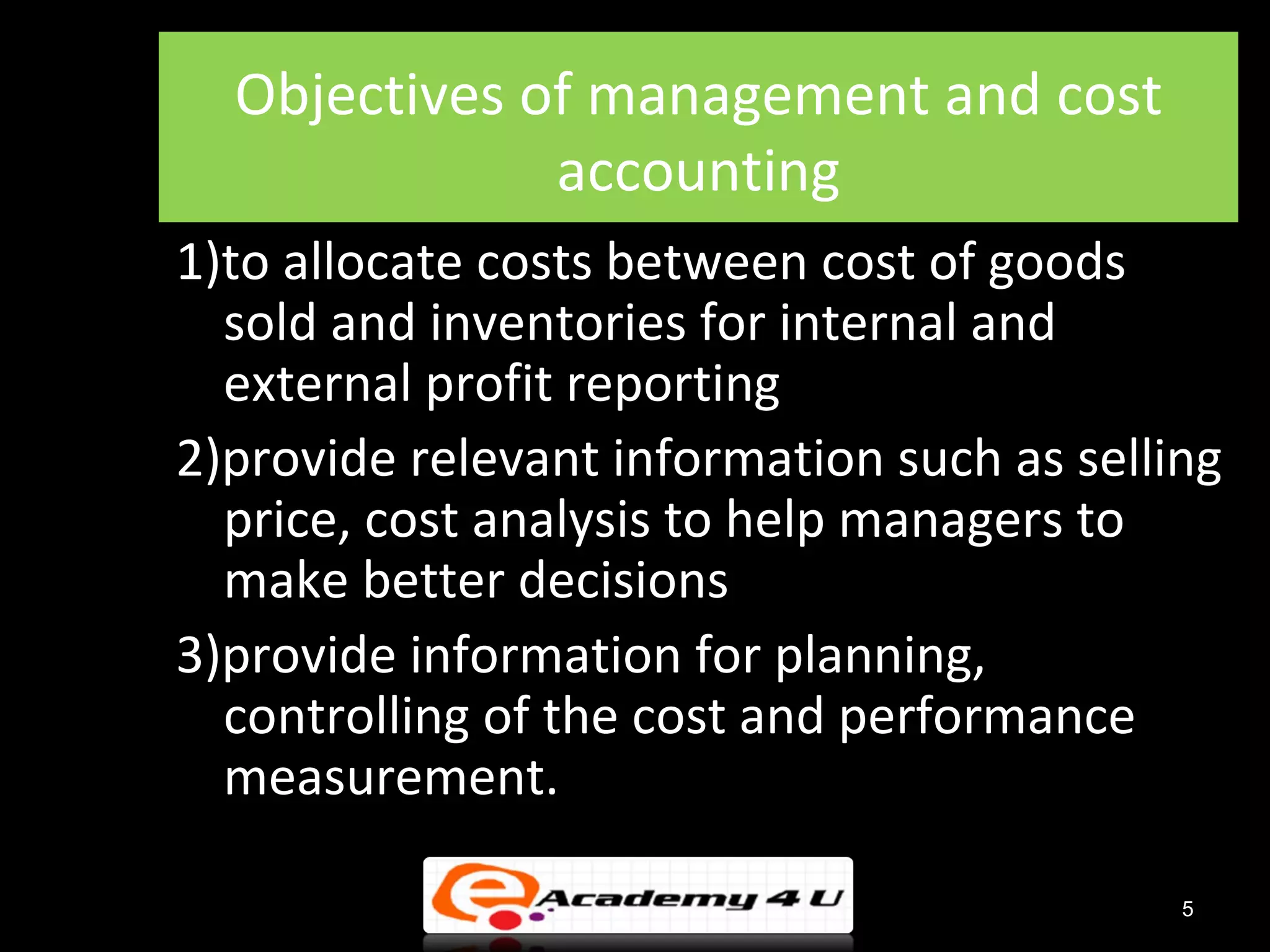
Objectives of management and cost
              accounting
1)to allocate costs between cost of goods
  sold and inventories for internal and
  external profit reporting
2)provide relevant information such as selling
  price, cost analysis to help managers to
  make better decisions
3)provide information for planning,
  controlling of the cost and performance
  measurement.

                                            5
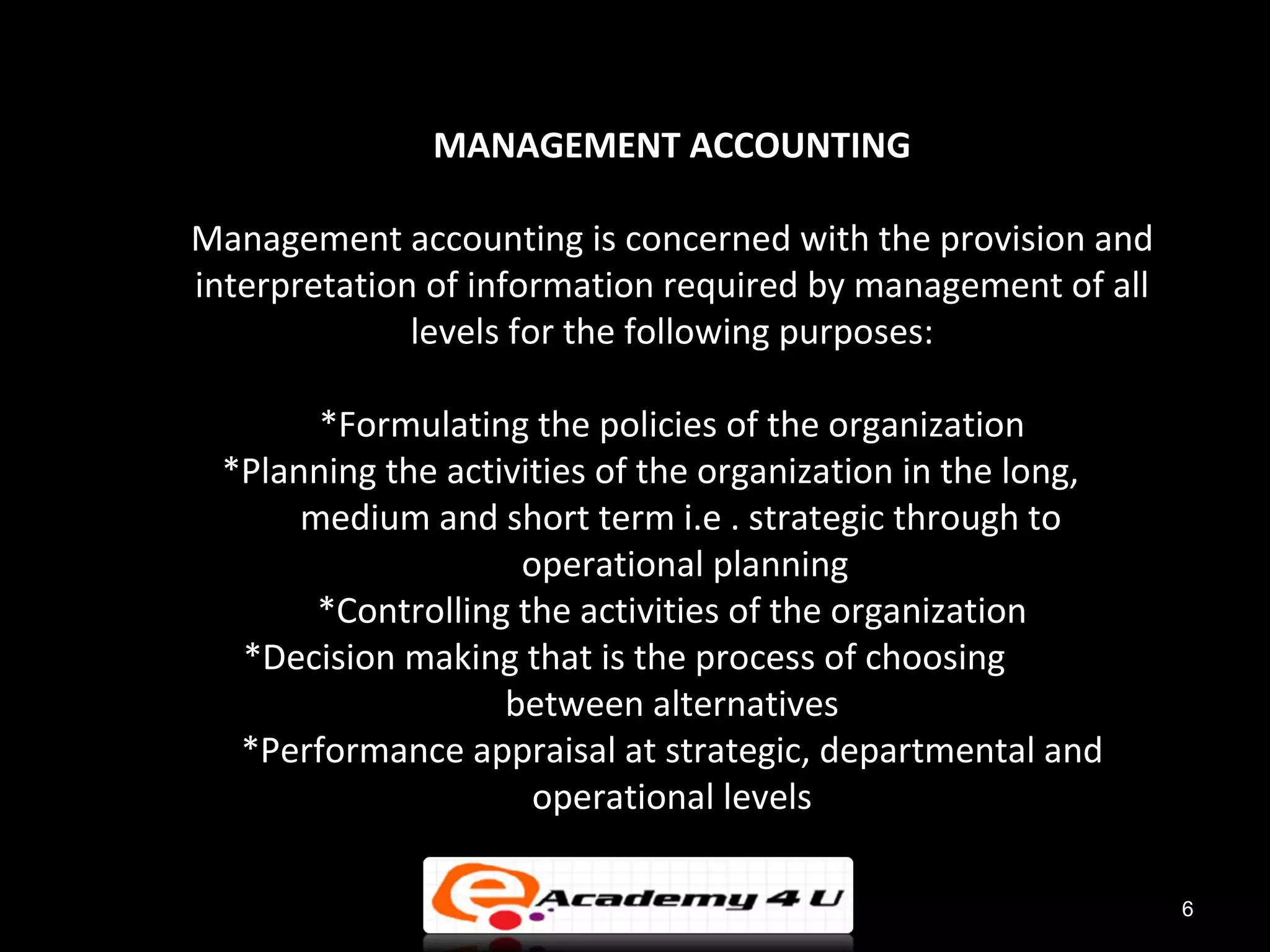
MANAGEMENT ACCOUNTING

Management accounting is concerned with the provision and
interpretation of information required by management of all
              levels for the following purposes:

       *Formulating the policies of the organization
 *Planning the activities of the organization in the long,
      medium and short term i.e . strategic through to
                    operational planning
       *Controlling the activities of the organization
  *Decision making that is the process of choosing
                   between alternatives
  *Performance appraisal at strategic, departmental and
                     operational levels

                                                              6
7
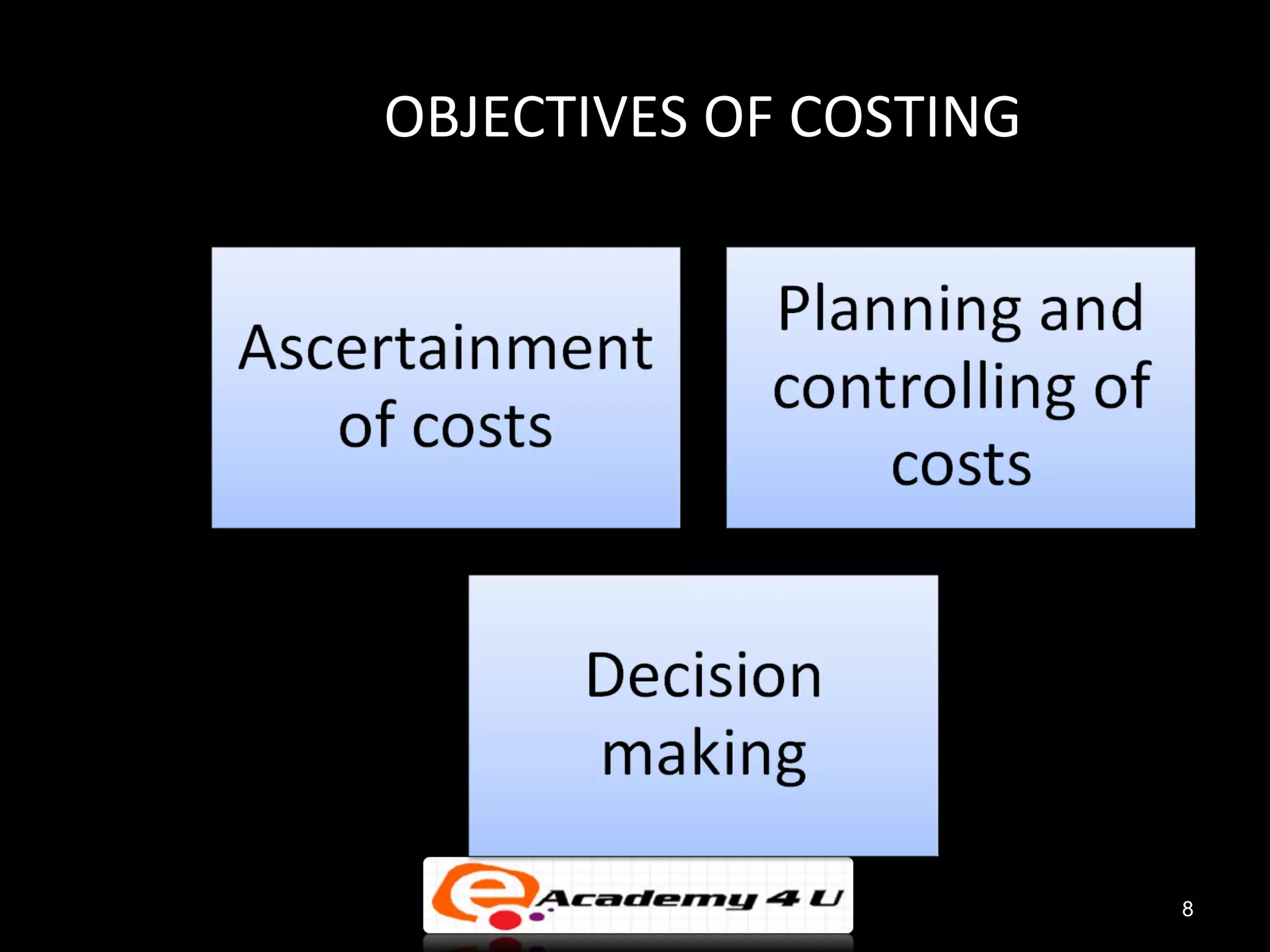
OBJECTIVES OF COSTING


                        8
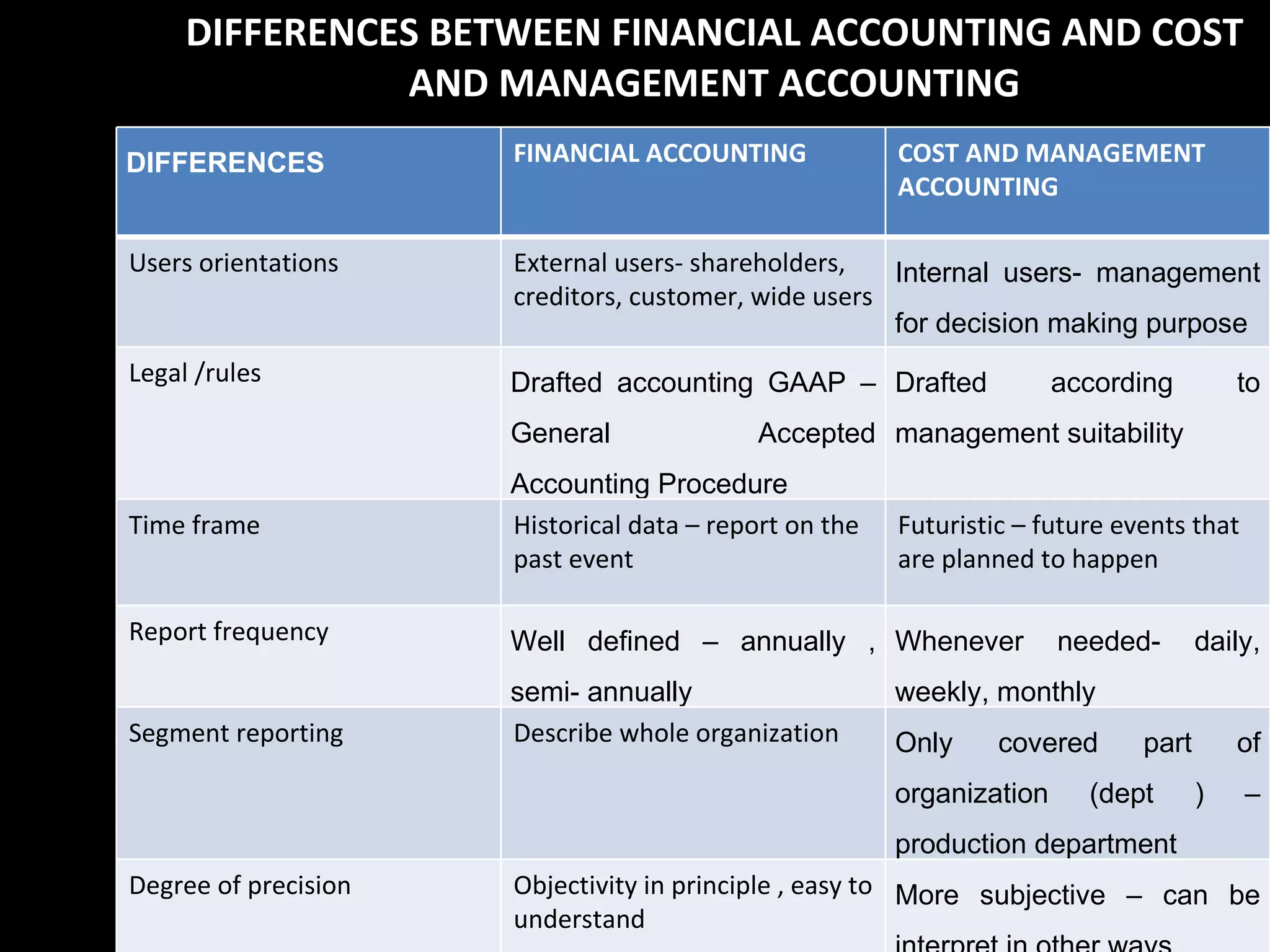
DIFFERENCES BETWEEN FINANCIAL ACCOUNTING AND COST
               AND MANAGEMENT ACCOUNTING
DIFFERENCES           FINANCIAL ACCOUNTING              COST AND MANAGEMENT
                                                        ACCOUNTING

Users orientations    External users- shareholders,   Internal users- management
                      creditors, customer, wide users
                                                      for decision making purpose
Legal /rules          Drafted accounting GAAP – Drafted                according         to
                      General               Accepted management suitability
                      Accounting Procedure
Time frame            Historical data – report on the   Futuristic – future events that
                      past event                        are planned to happen

Report frequency      Well defined – annually , Whenever               needed-       daily,
                      semi- annually                    weekly, monthly
Segment reporting     Describe whole organization       Only     covered      part       of
                                                        organization     (dept       )    –
                                                        production department
Degree of precision   Objectivity in principle , easy to More subjective – can be
                                                                            9
                      understand
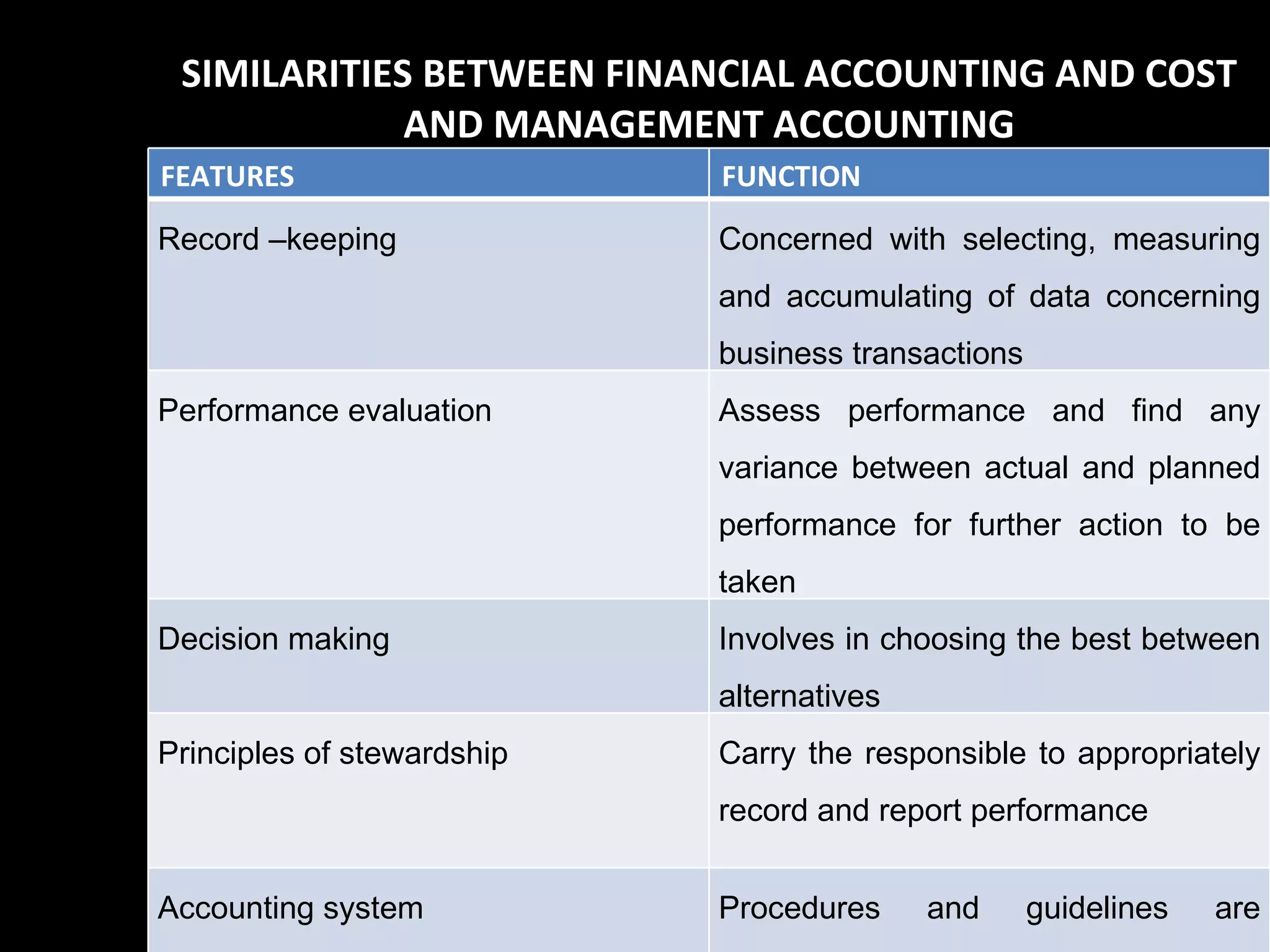
SIMILARITIES BETWEEN FINANCIAL ACCOUNTING AND COST
             AND MANAGEMENT ACCOUNTING
FEATURES                    FUNCTION

Record –keeping             Concerned with selecting, measuring
                            and accumulating of data concerning
                            business transactions
Performance evaluation      Assess performance and find any
                            variance between actual and planned
                            performance for further action to be
                            taken
Decision making             Involves in choosing the best between
                            alternatives
Principles of stewardship   Carry the responsible to appropriately
                            record and report performance


Accounting system           Procedures     and      guidelines 10 are
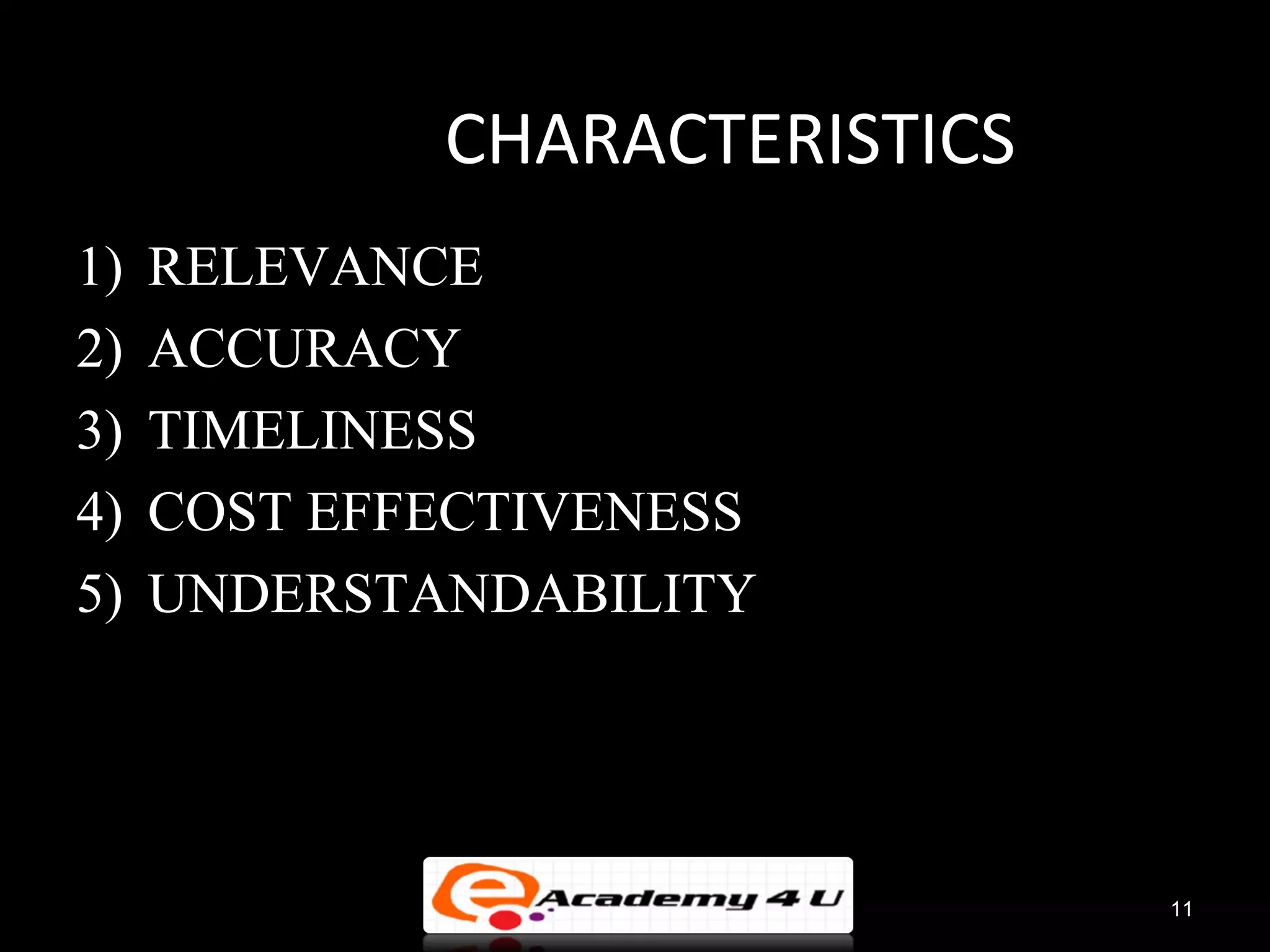
CHARACTERISTICS
1)   RELEVANCE
2)   ACCURACY
3)   TIMELINESS
4)   COST EFFECTIVENESS
5)   UNDERSTANDABILITY


                               11
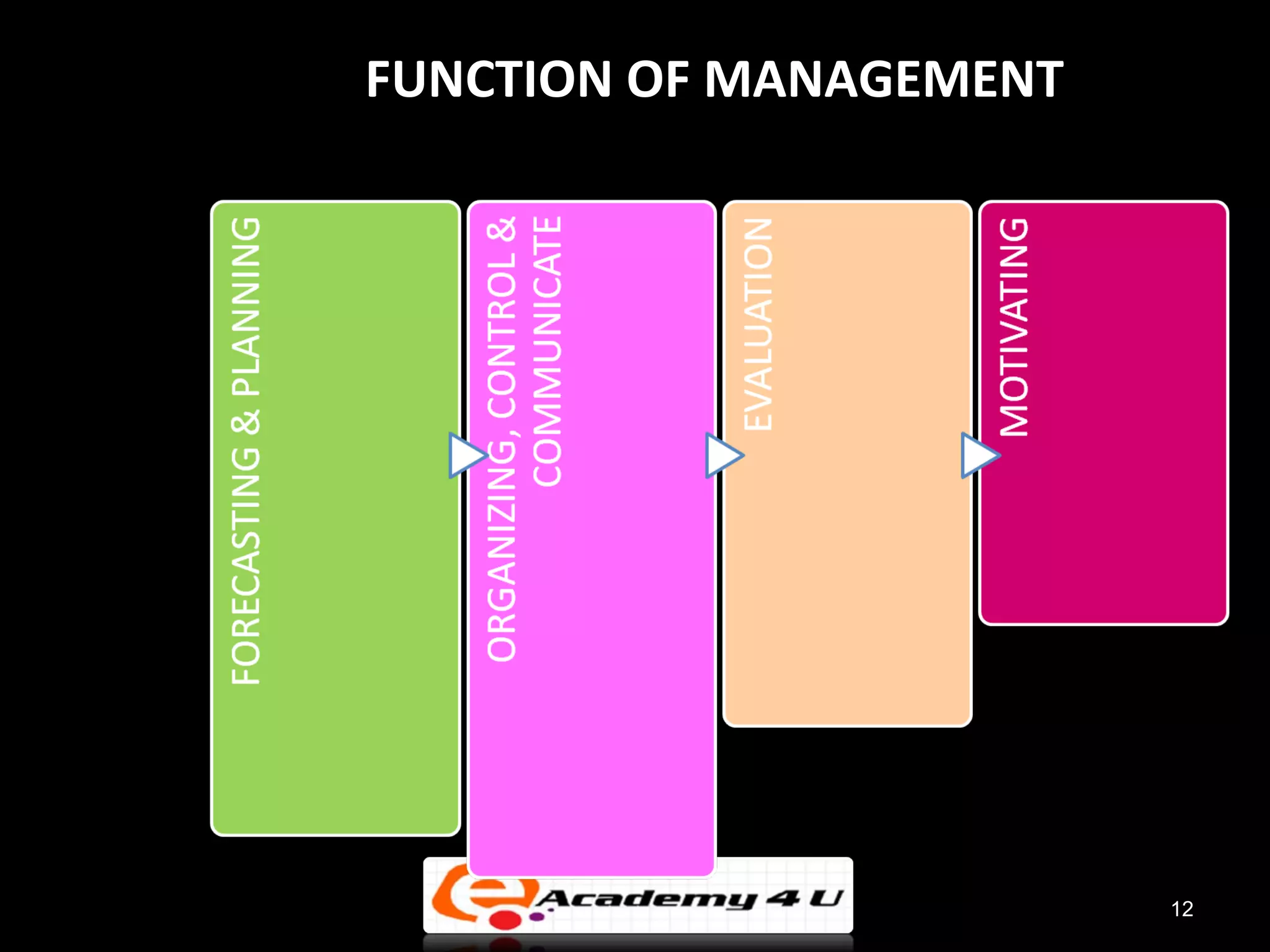
FUNCTION OF MANAGEMENT


                         12
Roles of management
  accountant in the managerial
            process
1)The management accountant assists in the
  setting up of information system relating
  to cost accounting matters. This system is a
  value added to the managers. For example,
  for production manager, by using the card
  of standard cost he may highlight
  information such as breakdown of the
  production elements of a particular
  product to be produced.
                                           13
2)The management accountant advises and
monitors the system so that it runs smoothly
     as expected and that information are
              updated regularly.
  3)The management accountant interprets
  the figures reported and explains how the
data and information can be made useful. He
also makes recommendations for alternative
    courses of actions in a decision making
                    process.
 4)The management will use his expertise to
   analyse raw data and present them in a
   more useful format to the management  14
Roles of management accountants in
                  the 21st century:
 1) Focus not only on financial information but also
 non-financial information such as quality of goods
        and services and customer satisfaction
 2)Use of external information such as information
  on the external environment and competitors to
           maintain competitive advantage
3)More forward looking rather than looking into the
  past e.g. proposal on “looking beyond budgeting”
  4)Changes in the environment are becoming the
 norm, therefore management accountants need to
adopt to changes through the application of relevant
   management accounting approaches e.g. ABC,
                    target costing                15

Introduction to managerial accounting

  • 1.
  • 2.
    MANAGERS EMPLOYEES USERS GOVERNMENT SHAREHOLDERS / POTENTIAL INVESTORS CREDITORS / PROVIDERS LOAN 2
  • 3.
    DEFINITION • MA isconcerned with the provision of information to people within the organization to help them make better decisions • FA is concerned with the provision of information to external parties outside the organizaation 3
  • 4.
    1)Cost accounting isthe process of determining and accumulating the cost of product or activity whereas 2)Management Accounting provides information to internal users in organisation to make better decision and improve efficiency and effectiveness of existing operation. This concerns forecasting and monitoring business activities, reporting to both internal (employees) and external parties (shareholders 4
  • 5.
    Objectives of managementand cost accounting 1)to allocate costs between cost of goods sold and inventories for internal and external profit reporting 2)provide relevant information such as selling price, cost analysis to help managers to make better decisions 3)provide information for planning, controlling of the cost and performance measurement. 5
  • 6.
    MANAGEMENT ACCOUNTING Management accountingis concerned with the provision and interpretation of information required by management of all levels for the following purposes: *Formulating the policies of the organization *Planning the activities of the organization in the long, medium and short term i.e . strategic through to operational planning *Controlling the activities of the organization *Decision making that is the process of choosing between alternatives *Performance appraisal at strategic, departmental and operational levels 6
  • 7.
  • 8.
  • 9.
    DIFFERENCES BETWEEN FINANCIALACCOUNTING AND COST AND MANAGEMENT ACCOUNTING DIFFERENCES FINANCIAL ACCOUNTING COST AND MANAGEMENT ACCOUNTING Users orientations External users- shareholders, Internal users- management creditors, customer, wide users for decision making purpose Legal /rules Drafted accounting GAAP – Drafted according to General Accepted management suitability Accounting Procedure Time frame Historical data – report on the Futuristic – future events that past event are planned to happen Report frequency Well defined – annually , Whenever needed- daily, semi- annually weekly, monthly Segment reporting Describe whole organization Only covered part of organization (dept ) – production department Degree of precision Objectivity in principle , easy to More subjective – can be 9 understand
  • 10.
    SIMILARITIES BETWEEN FINANCIALACCOUNTING AND COST AND MANAGEMENT ACCOUNTING FEATURES FUNCTION Record –keeping Concerned with selecting, measuring and accumulating of data concerning business transactions Performance evaluation Assess performance and find any variance between actual and planned performance for further action to be taken Decision making Involves in choosing the best between alternatives Principles of stewardship Carry the responsible to appropriately record and report performance Accounting system Procedures and guidelines 10 are
  • 11.
    CHARACTERISTICS 1) RELEVANCE 2) ACCURACY 3) TIMELINESS 4) COST EFFECTIVENESS 5) UNDERSTANDABILITY 11
  • 12.
  • 13.
    Roles of management accountant in the managerial process 1)The management accountant assists in the setting up of information system relating to cost accounting matters. This system is a value added to the managers. For example, for production manager, by using the card of standard cost he may highlight information such as breakdown of the production elements of a particular product to be produced. 13
  • 14.
    2)The management accountantadvises and monitors the system so that it runs smoothly as expected and that information are updated regularly. 3)The management accountant interprets the figures reported and explains how the data and information can be made useful. He also makes recommendations for alternative courses of actions in a decision making process. 4)The management will use his expertise to analyse raw data and present them in a more useful format to the management 14
  • 15.
    Roles of managementaccountants in the 21st century: 1) Focus not only on financial information but also non-financial information such as quality of goods and services and customer satisfaction 2)Use of external information such as information on the external environment and competitors to maintain competitive advantage 3)More forward looking rather than looking into the past e.g. proposal on “looking beyond budgeting” 4)Changes in the environment are becoming the norm, therefore management accountants need to adopt to changes through the application of relevant management accounting approaches e.g. ABC, target costing 15