Introduction: Principles of First Aid and  Approach to an Incident. Offshore First Aid Course
Scope Principles of First Aid What is First Aid? Aims of First Aid Approach to an Incident Primary Survey Vital Signs Survey Secondary Survey Accessing Assistance
Objectives Understanding of the  Definition  and  Aims  of First Aid.  Correctly  Approach An Incident  in a safe and structured manner Describe  Primary Survey ,  Vital Signs Survey  and  Secondary Survey. Correctly  Access Assistance .
What is First Aid? “ Emergency care provided for injury or sudden illness before medical care is available”.
Aims of First Aid The aims of first aid are: To preserve life To prevent further injury To protect the unconscious To promote recovery To access medical aid
Approach to an Incident A systematic approach: Primary Survey Vital Signs Survey Secondary Survey Accessing Assistance
Approach to an Incident Reduce risk of themselves or others Minimise risk of missing potentially serious injuries Prioritise the casualty’s injuries to enable management in order of severity
Primary Survey A quick assessment of the overall scenario prior to becoming involved (DR ABC) Danger  Response  Airway  Breathing  Circulation
Primary Survey: Danger
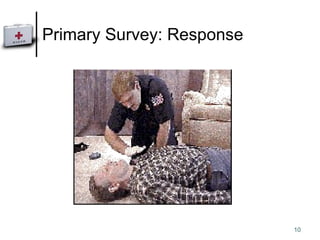
Primary Survey: Response
Primary Survey: Airway
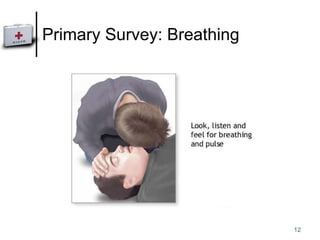
Primary Survey: Breathing
Primary Survey: Circulation
Vital Signs Survey Further assessment of the casualty’s physical condition, while waiting for the arrival of an ambulance.  Pulse,  Breathing Pattern  Conscious Level
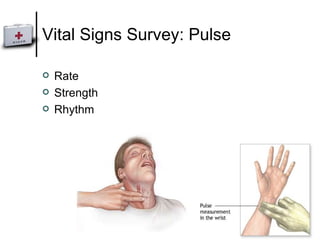
Vital Signs Survey:  Pulse   Rate Strength Rhythm
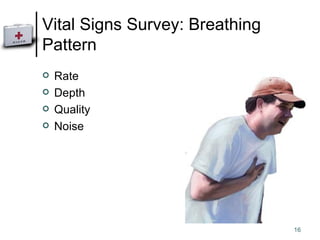
Vital Signs Survey:  Breathing Pattern   Rate Depth Quality Noise
Vital Signs Survey: Conscious Level  Alert Voice Pain Unconscious
Secondary Survey A more thorough assessment of the victim Systematic Questioning (History Taking) Head-to-Toe Physical Examination
Secondary Survey: History Where does it hurt? What happened? When did it happen? Why did it happen How did it happen?
Secondary Survey: Head-to-toe Examination General Signs and Symptoms Head and Neck Chest and Abdomen Spine (Back) Arms and Hands Legs and Feet

Introduction to First Aid

  • 1.
    Introduction: Principles ofFirst Aid and Approach to an Incident. Offshore First Aid Course
  • 2.
    Scope Principles ofFirst Aid What is First Aid? Aims of First Aid Approach to an Incident Primary Survey Vital Signs Survey Secondary Survey Accessing Assistance
  • 3.
    Objectives Understanding ofthe Definition and Aims of First Aid. Correctly Approach An Incident in a safe and structured manner Describe Primary Survey , Vital Signs Survey and Secondary Survey. Correctly Access Assistance .
  • 4.
    What is FirstAid? “ Emergency care provided for injury or sudden illness before medical care is available”.
  • 5.
    Aims of FirstAid The aims of first aid are: To preserve life To prevent further injury To protect the unconscious To promote recovery To access medical aid
  • 6.
    Approach to anIncident A systematic approach: Primary Survey Vital Signs Survey Secondary Survey Accessing Assistance
  • 7.
    Approach to anIncident Reduce risk of themselves or others Minimise risk of missing potentially serious injuries Prioritise the casualty’s injuries to enable management in order of severity
  • 8.
    Primary Survey Aquick assessment of the overall scenario prior to becoming involved (DR ABC) Danger Response Airway Breathing Circulation
  • 9.
  • 10.
  • 11.
  • 12.
  • 13.
  • 14.
    Vital Signs SurveyFurther assessment of the casualty’s physical condition, while waiting for the arrival of an ambulance. Pulse, Breathing Pattern Conscious Level
  • 15.
    Vital Signs Survey: Pulse Rate Strength Rhythm
  • 16.
    Vital Signs Survey: Breathing Pattern Rate Depth Quality Noise
  • 17.
    Vital Signs Survey:Conscious Level Alert Voice Pain Unconscious
  • 18.
    Secondary Survey Amore thorough assessment of the victim Systematic Questioning (History Taking) Head-to-Toe Physical Examination
  • 19.
    Secondary Survey: HistoryWhere does it hurt? What happened? When did it happen? Why did it happen How did it happen?
  • 20.
    Secondary Survey: Head-to-toeExamination General Signs and Symptoms Head and Neck Chest and Abdomen Spine (Back) Arms and Hands Legs and Feet