Chest Injuries   Offshore First Aid Assoc. Prof Dr Nik Hisamuddin Nik Ab Rahman Consultant Emergency Medicine School of Medical Sciences, USM Malaysia [email_address] http://www.emergencycare.webs.com/
Scope Introduction Fractured ribs Pneumothorax Flail Segment Sucking or Open Chest Wound
Objectives Recognise and manage fractured ribs Recognise and manage pneumothorax Recognise And Manage  Flail Segment Recognise And Manage  Sucking Or Open Chest Wound
Introduction External trauma to the chest (blunt or penetrating) Potential to damage underlying organs (the heart and lungs).  Consider the potential for problems such as spinal injury and act accordingly.
Fractured Ribs The most common chest injury.  Pain increases on movement, - impede the victim's ability to breathe properly.  May cause damage to the underlying lung.
Fractured Ribs Recognition Pain at site which increases with movement or touch Pain at site when breathing in Difficulty breathing, Rapid shallow breathing Rapid pulse Bruising Deformity Bloody sputum ‘ Guarding’ of the injury
Fractured Ribs Management Primary survey - act accordingly Position of comfort (often sitting position with the injured side downwards). Stabilise the fracture site - Put the arm on the injured side in a ‘collar and cuff’ or a sling. Seek medical aid Provide supplemental oxygen if able Observe for respiratory compromise
Fractured Ribs: Creating a Sling
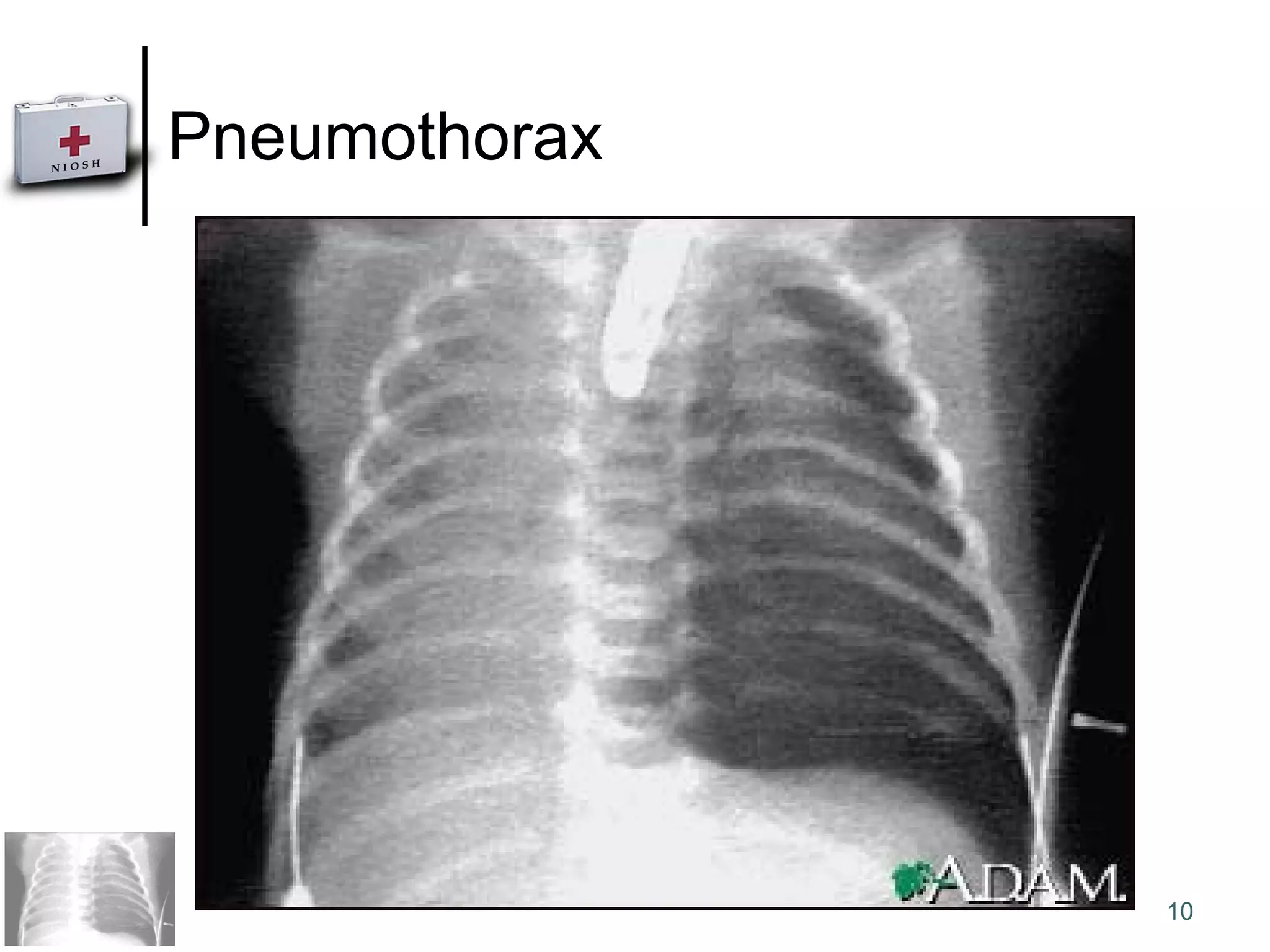
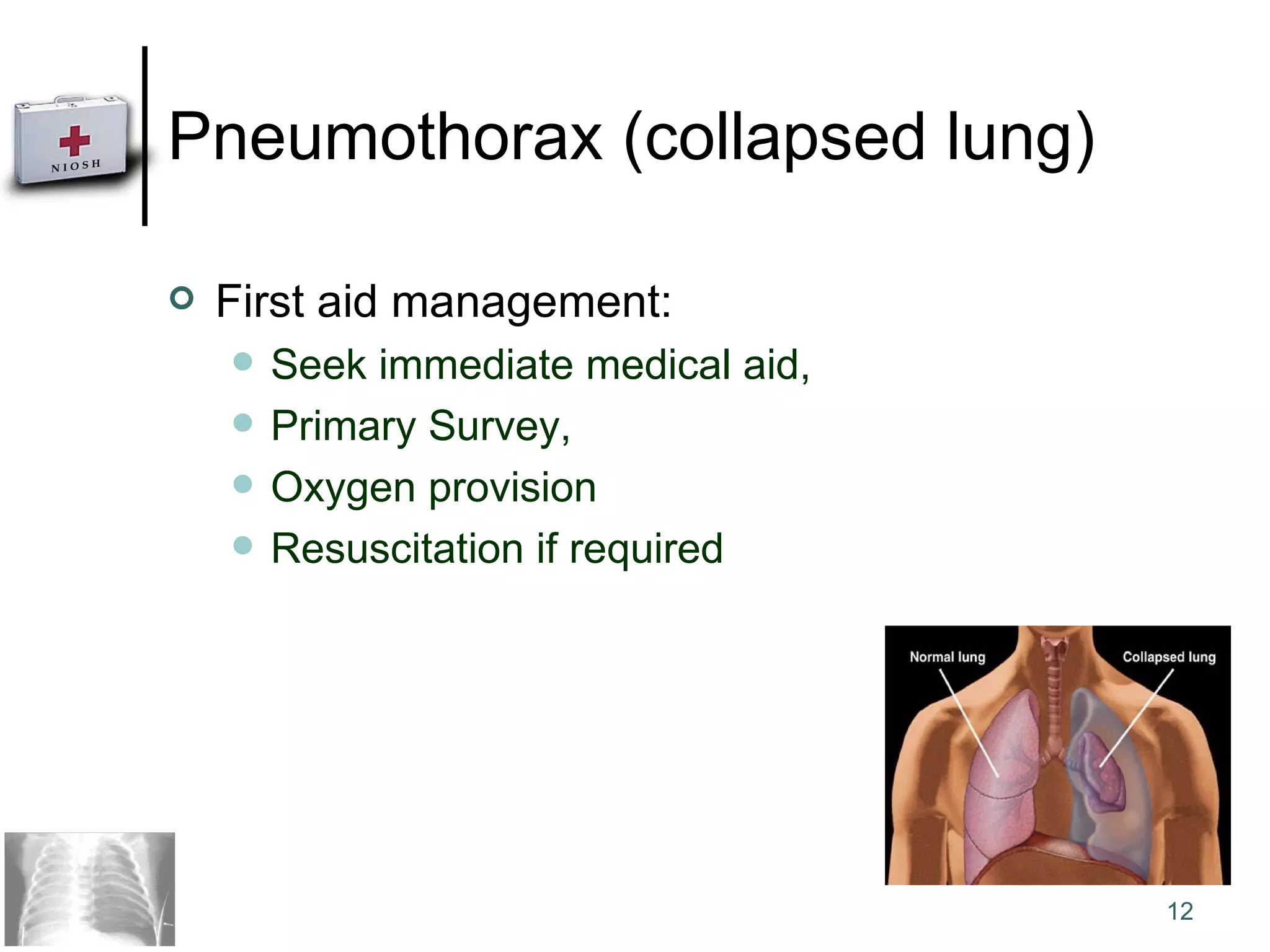
Pneumothorax  (collapsed lung)  Air enters the between the lungs and the inside of the chest wall ( pleural space ).  The air takes up space, causing a section of the lung to collapse.  If air continues to enter - tension pneumothorax. Causes: Spontaneous or trauma.
Pneumothorax
Pneumothorax  (collapsed lung)  Recognition Severe chest pain  Breathing distress (Rapid, shallow breathing) Rapid pulse Bluish skin colour (cyanosis)  Possible altered conscious state Possible deviated windpipe (trachea) Distended neck veins
Pneumothorax  (collapsed lung)  First aid management:  Seek immediate medical aid,  Primary Survey,  Oxygen provision  Resuscitation if required
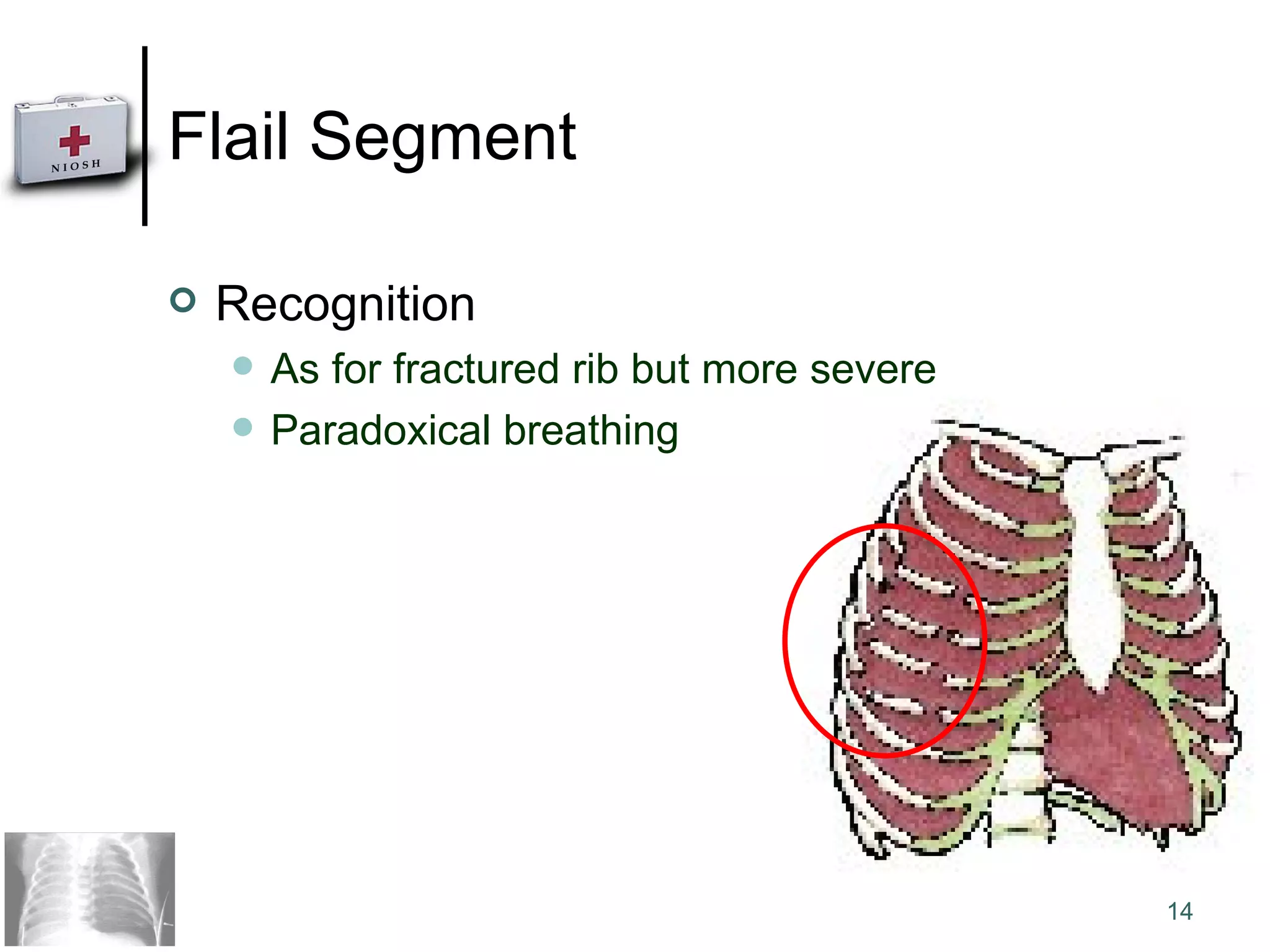
Flail Segment When ribs and/or the breastbone are fractured in a number of places and result in a free-floating section of bone.
Flail Segment Recognition As for fractured rib but more severe Paradoxical breathing
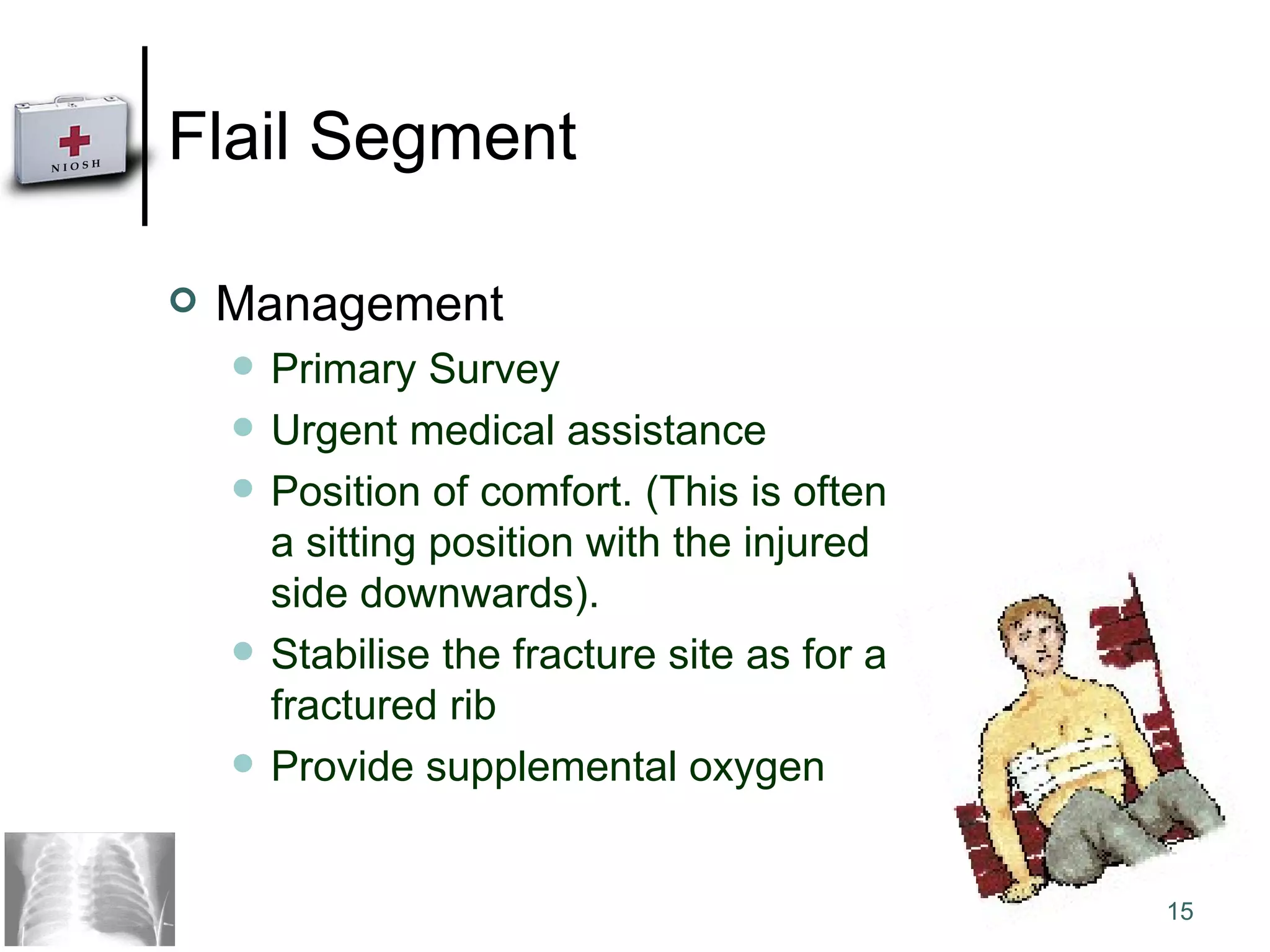
Flail Segment Management  Primary Survey Urgent medical assistance  Position of comfort. (This is often a sitting position with the injured side downwards). Stabilise the fracture site as for a fractured rib  Provide supplemental oxygen
Sucking or Open Chest Wound Penetrating chest injury.  Wound through the chest wall, through the pleura and into the lung tissue.  This allow air to be sucked inwards on inspiration,
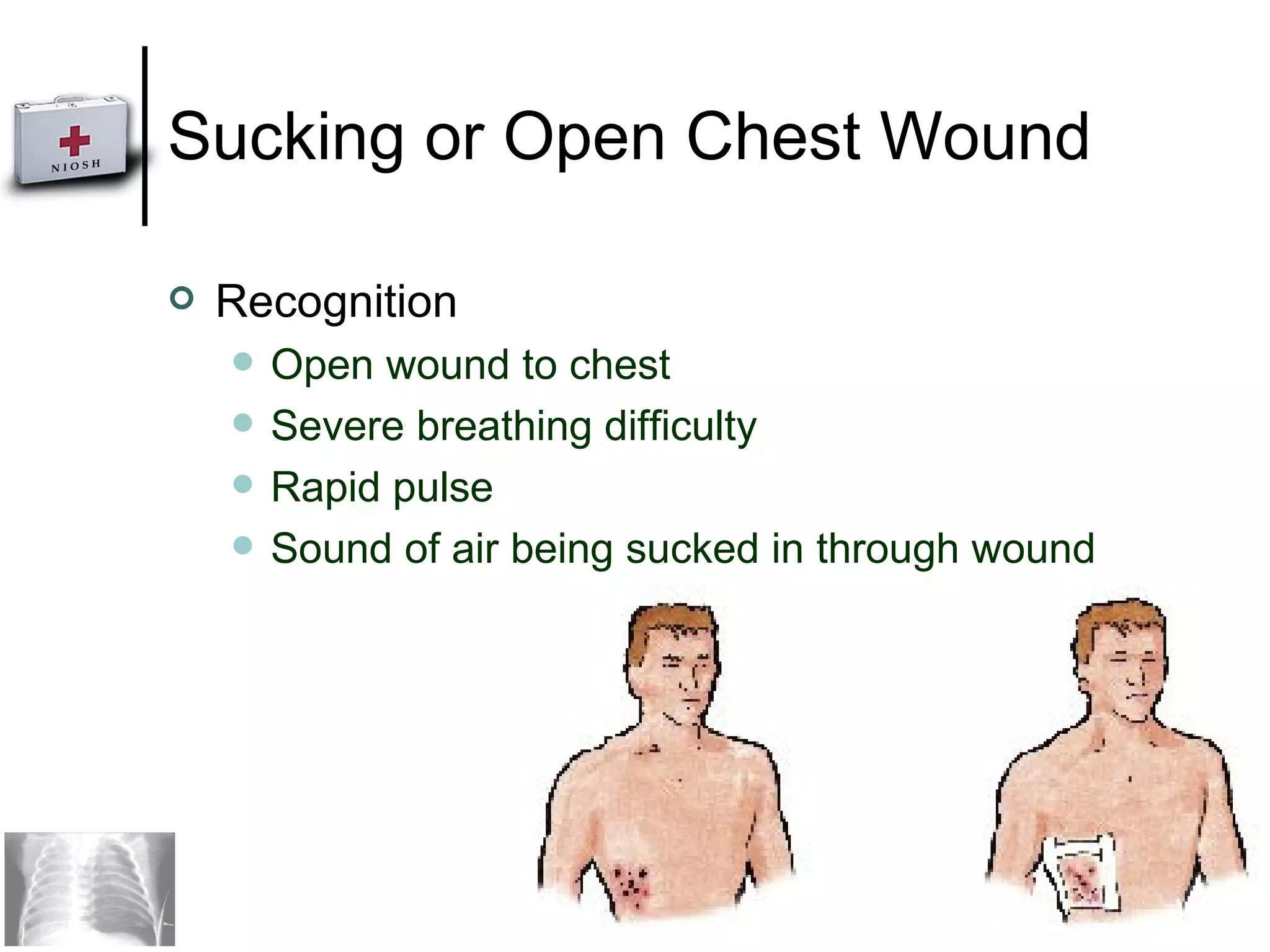
Sucking or Open Chest Wound Recognition Open wound to chest  Severe breathing difficulty  Rapid pulse Sound of air being sucked in through wound
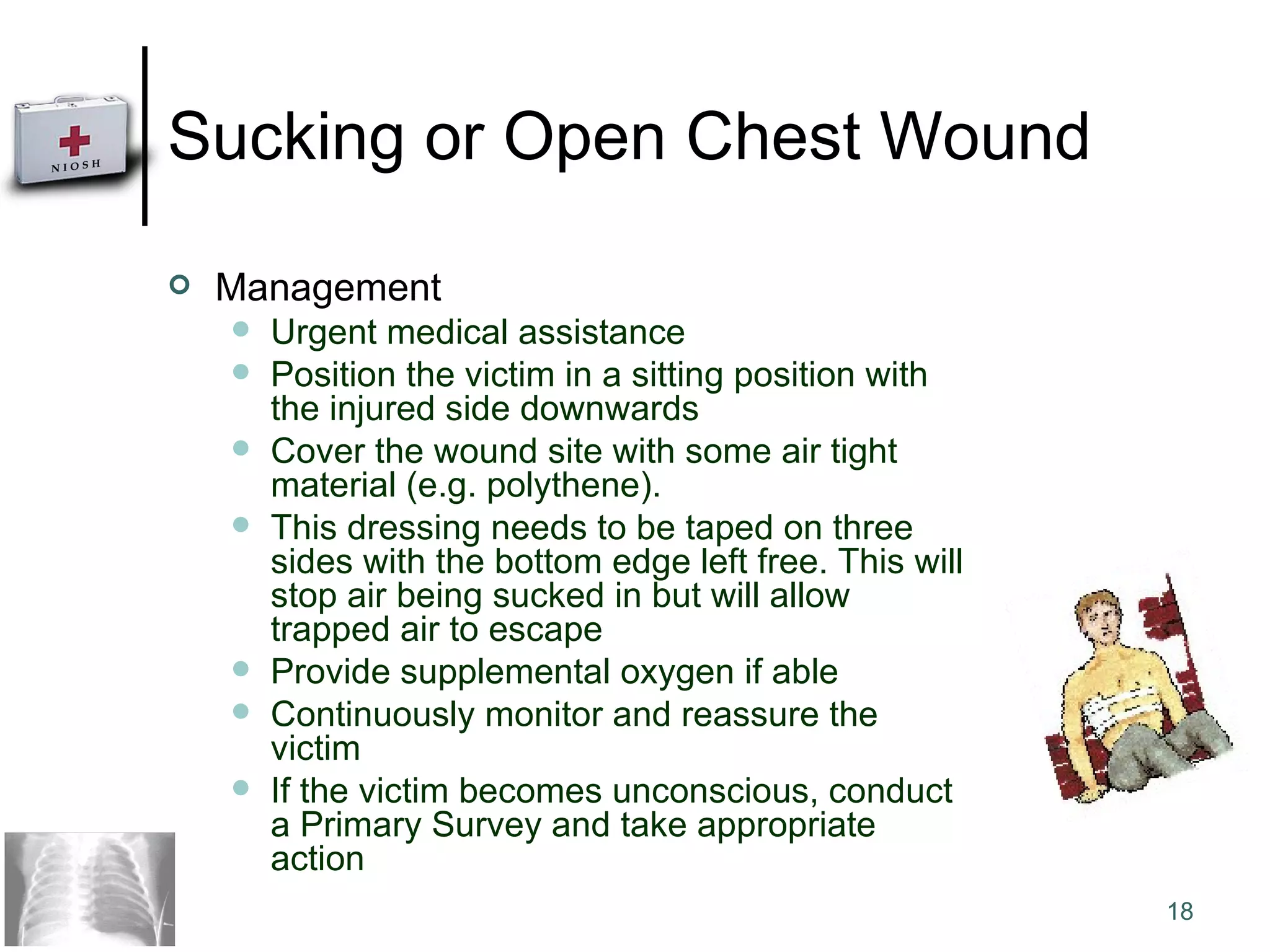
Sucking or Open Chest Wound Management Urgent medical assistance Position the victim in a sitting position with the injured side downwards  Cover the wound site with some air tight material (e.g. polythene).  This dressing needs to be taped on three sides with the bottom edge left free. This will stop air being sucked in but will allow trapped air to escape  Provide supplemental oxygen if able Continuously monitor and reassure the victim If the victim becomes unconscious, conduct a Primary Survey and take appropriate action

First Aid For Chest Injury

  • 1.
    Chest Injuries Offshore First Aid Assoc. Prof Dr Nik Hisamuddin Nik Ab Rahman Consultant Emergency Medicine School of Medical Sciences, USM Malaysia [email_address] http://www.emergencycare.webs.com/
  • 2.
    Scope Introduction Fracturedribs Pneumothorax Flail Segment Sucking or Open Chest Wound
  • 3.
    Objectives Recognise andmanage fractured ribs Recognise and manage pneumothorax Recognise And Manage Flail Segment Recognise And Manage Sucking Or Open Chest Wound
  • 4.
    Introduction External traumato the chest (blunt or penetrating) Potential to damage underlying organs (the heart and lungs). Consider the potential for problems such as spinal injury and act accordingly.
  • 5.
    Fractured Ribs Themost common chest injury. Pain increases on movement, - impede the victim's ability to breathe properly. May cause damage to the underlying lung.
  • 6.
    Fractured Ribs RecognitionPain at site which increases with movement or touch Pain at site when breathing in Difficulty breathing, Rapid shallow breathing Rapid pulse Bruising Deformity Bloody sputum ‘ Guarding’ of the injury
  • 7.
    Fractured Ribs ManagementPrimary survey - act accordingly Position of comfort (often sitting position with the injured side downwards). Stabilise the fracture site - Put the arm on the injured side in a ‘collar and cuff’ or a sling. Seek medical aid Provide supplemental oxygen if able Observe for respiratory compromise
  • 8.
  • 9.
    Pneumothorax (collapsedlung) Air enters the between the lungs and the inside of the chest wall ( pleural space ). The air takes up space, causing a section of the lung to collapse. If air continues to enter - tension pneumothorax. Causes: Spontaneous or trauma.
  • 10.
  • 11.
    Pneumothorax (collapsedlung) Recognition Severe chest pain Breathing distress (Rapid, shallow breathing) Rapid pulse Bluish skin colour (cyanosis) Possible altered conscious state Possible deviated windpipe (trachea) Distended neck veins
  • 12.
    Pneumothorax (collapsedlung) First aid management: Seek immediate medical aid, Primary Survey, Oxygen provision Resuscitation if required
  • 13.
    Flail Segment Whenribs and/or the breastbone are fractured in a number of places and result in a free-floating section of bone.
  • 14.
    Flail Segment RecognitionAs for fractured rib but more severe Paradoxical breathing
  • 15.
    Flail Segment Management Primary Survey Urgent medical assistance Position of comfort. (This is often a sitting position with the injured side downwards). Stabilise the fracture site as for a fractured rib Provide supplemental oxygen
  • 16.
    Sucking or OpenChest Wound Penetrating chest injury. Wound through the chest wall, through the pleura and into the lung tissue. This allow air to be sucked inwards on inspiration,
  • 17.
    Sucking or OpenChest Wound Recognition Open wound to chest Severe breathing difficulty Rapid pulse Sound of air being sucked in through wound
  • 18.
    Sucking or OpenChest Wound Management Urgent medical assistance Position the victim in a sitting position with the injured side downwards Cover the wound site with some air tight material (e.g. polythene). This dressing needs to be taped on three sides with the bottom edge left free. This will stop air being sucked in but will allow trapped air to escape Provide supplemental oxygen if able Continuously monitor and reassure the victim If the victim becomes unconscious, conduct a Primary Survey and take appropriate action