Presented By: Guided By:
Renuka Lodha Prof. R.K. Agrawal
 Energy Audit is the key to a systematic approach
 Used for decision-making
 Attempts to balance the total energy inputs with its use
 It quantifies energy usage.
 By the Energy Conservation Act, 2001
 Energy Audit is defined as "the verification, monitoring
and analysis of use of energy including submission of
technical report containing recommendations for
improving energy efficiency with cost benefit analysis
and an action plan to reduce energy consumption".
 In any industry, the three top operating expenses are:
energy (both electrical and thermal),
labour
materials.
 Thus energy management function constitutes a
strategic area for cost reduction
 Energy Audit will help
To understand about the ways energy and fuel are
used in industry.
Help in identifying the areas where waste can occur.
Help in identifying where scope for improvement
exists.
 The Energy Audit would give a positive orientation to
the
Energy cost reduction
Preventive maintenance
Quality control programs
 An audit programme will help to keep focus on
Variations in the energy costs
Viability and reliability of supply of energy
Decide on appropriate energy mix
Identify energy conservation technologies
Retro fit for energy conservation equipment etc.
 The primary objective :
To determine ways to reduce energy consumption
per unit of product output
To lower operating costs.
 Energy Audit provides
A bench-mark for managing energy in organization
The basis for planning a more effective use of energy
throughout the organization
 The type of Energy Audit to be performed depends on:
Function and type of industry.
Depth to which final audit is needed.
Potential and magnitude of cost reduction desired.
 Two types of Energy Audit
i) Preliminary Audit
ii) Detailed Audit
 It uses existing or easily obtained data
 It is a relatively quick exercise to:
Establish energy consumption in the organization
Identify the most likely and the easiest areas for attention
Identify immediate improvements/ savings
Set a ‘reference point’.
Identify areas for more detailed study/measurement
 It offers the most accurate estimate of energy savings
and cost.
 It evaluates all major energy using systems.
 It accounts for the energy use of all major equipment,
 Includes detailed energy cost saving calculations and
project cost.
 A comprehensive audit:
 Provides a detailed energy saving project
implementation plan for a facility
One of the key elements is the energy balance.
Based on an inventory of energy
Uses systems, assumptions of current operating
conditions and calculations of energy use.
This estimated use is then compared to utility bill
charges.
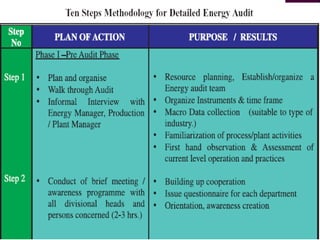
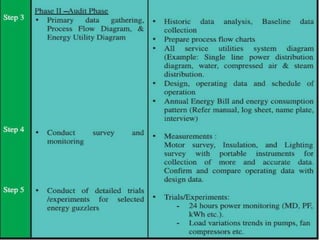
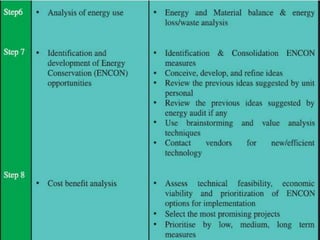
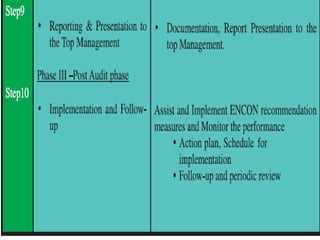
 Detailed energy auditing is carried out in three phases:
1) Phase I - Pre Audit Phase
2) Phase II - Audit Phase
3) Phase III - Post Audit Phase
Energy management and audit

Energy management and audit

  • 1.
    Presented By: GuidedBy: Renuka Lodha Prof. R.K. Agrawal
  • 2.
     Energy Auditis the key to a systematic approach  Used for decision-making  Attempts to balance the total energy inputs with its use  It quantifies energy usage.
  • 3.
     By theEnergy Conservation Act, 2001  Energy Audit is defined as "the verification, monitoring and analysis of use of energy including submission of technical report containing recommendations for improving energy efficiency with cost benefit analysis and an action plan to reduce energy consumption".
  • 4.
     In anyindustry, the three top operating expenses are: energy (both electrical and thermal), labour materials.  Thus energy management function constitutes a strategic area for cost reduction
  • 5.
     Energy Auditwill help To understand about the ways energy and fuel are used in industry. Help in identifying the areas where waste can occur. Help in identifying where scope for improvement exists.
  • 6.
     The EnergyAudit would give a positive orientation to the Energy cost reduction Preventive maintenance Quality control programs
  • 7.
     An auditprogramme will help to keep focus on Variations in the energy costs Viability and reliability of supply of energy Decide on appropriate energy mix Identify energy conservation technologies Retro fit for energy conservation equipment etc.
  • 8.
     The primaryobjective : To determine ways to reduce energy consumption per unit of product output To lower operating costs.
  • 9.
     Energy Auditprovides A bench-mark for managing energy in organization The basis for planning a more effective use of energy throughout the organization
  • 10.
     The typeof Energy Audit to be performed depends on: Function and type of industry. Depth to which final audit is needed. Potential and magnitude of cost reduction desired.
  • 11.
     Two typesof Energy Audit i) Preliminary Audit ii) Detailed Audit
  • 12.
     It usesexisting or easily obtained data  It is a relatively quick exercise to: Establish energy consumption in the organization Identify the most likely and the easiest areas for attention Identify immediate improvements/ savings Set a ‘reference point’. Identify areas for more detailed study/measurement
  • 13.
     It offersthe most accurate estimate of energy savings and cost.  It evaluates all major energy using systems.  It accounts for the energy use of all major equipment,  Includes detailed energy cost saving calculations and project cost.
  • 14.
     A comprehensiveaudit:  Provides a detailed energy saving project implementation plan for a facility One of the key elements is the energy balance. Based on an inventory of energy Uses systems, assumptions of current operating conditions and calculations of energy use. This estimated use is then compared to utility bill charges.
  • 15.
     Detailed energyauditing is carried out in three phases: 1) Phase I - Pre Audit Phase 2) Phase II - Audit Phase 3) Phase III - Post Audit Phase