Energy Management & Audits


              By
         Imran Mitchell
Effect of High Energy Cost on
              Profitability
In many companies energy cost account for up to 30 % of their
   operation cost.
1. J.P.S (Electrical Bill)
2. Fuel Charge (Diesel, LPG and other fuel source)
 This often reduces the competitiveness of the business

 What can be done to help reduce how much we spend on
 energy ?
Energy Management Program
             Definition
• Energy management is the discipline and measures executed
  to achieve the minimum possible energy use and cost while
  meeting the true needs of the activities occurring within a
  facility.
• Actions intended to achieve this energy efficiency focus on
  reducing necessary end-use, increasing efficiency, reducing
  wasted energy, and finding superior energy alternatives.
  Read more:
Plant assessment
• A critical part of an energy
  management program

   – Looks for opportunities to improve the
     bottom line of a company
   – Without assessments, an energy
     management program would have
     difficulty identifying energy savings
     and would fail to show improvement
Energy management
• Can be:
  –   Informal
  –   Decentralized, not centrally coordinated or managed
  –   Project-oriented
  –   Ongoing Process
• Many companies:
  Miss important savings opportunities because they lack
   the means for addressing energy use across the
   business
Effective energy management
•     How to Have a effective Energy Management Program:
1.    A top-down commitment to energy management
2.    A commitment to continuous improvement
3.    Embraced an approach that integrates energy management across all
      aspects of the business
4.    Management systems in place
5.    A system to regularly assess and track energy performance
6.    Set measurable performance goals
7.    An effective reward system for energy performance
8.    An empowered energy staff
Effective energy management
             Make the Commitment:
             Management and business
             owner/s have to be serious
             about energy usage reduction,
             they must be willing to provide
             the resource needed for the
             success of the Project
Effective energy management
              Assess Performance & Set Goals:
              If you don’t have a target that you
              are trying to meet you will not
              know if the project is successful or
              not.
Effective energy management
               Create and Action Plan:
               The action plan will come
               from the audit that is
               conducted at your facility
Effective energy management

              Implement Action Plan
              You will not realize any savings
              by just conducting an energy
              audit. The recommendations that
              are made must be executed
Effective energy management
              Evaluate Progress
              Tracking of the results from the
              actions/ recommendations that
              were implemented is
              absolutely necessary. This will
              inform you at to your success
              or failure rate.
Effective energy management
               Recognize Achievement:
               It is good to celebrate the
               successes that arise from
               the project.
Energy Audit Definition
• An energy audit is a systematic study or
  survey to identify how energy is being
  used in a building or plant. It also identify
  energy saving opportunities
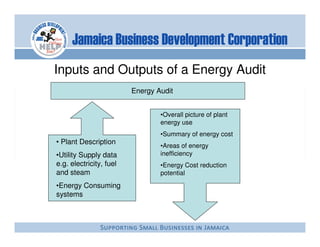
Inputs and Outputs of a Energy Audit
                         Energy Audit


                                 •Overall picture of plant
                                 energy use
                                 •Summary of energy cost
• Plant Description
                                 •Areas of energy
•Utility Supply data             inefficiency
e.g. electricity, fuel           •Energy Cost reduction
and steam                        potential
•Energy Consuming
systems
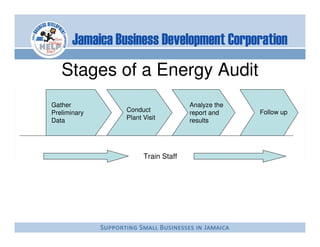
Stages of a Energy Audit
Gather                            Analyze the
Preliminary   Conduct             report and    Follow up
Data          Plant Visit         results


                    Train Staff
Stages of a Energy Audit
Gather Preliminary Data
• This can be in the form of a simple walk through
  of the facility
• Historical usage data is also gathered during this
  process
• It set the stage for a detail audit
Plant Visit/ Detail Audit
• Detail evaluation of Energy use patterns
• Review of Equipment operation characteristics
• Will provide technical solutions and economic
  analysis
• A priority listing of energy saving
  recommendations
• Report generation
Analyze the report and results and Follow up


• The data that is collected from the detailed audit must be
  reviewed and recommendations made
• Report generation

• After the recommendation have being implemented then
  a follow up is necessary to evaluate ho effective the
  recommendation were
Clients Responsibilities
1.   Must provide the auditors with the relevant data that
     will be requested. E.g. Monthly JPS bills
2.   Have a person who is familiar with the daily operations
     to accompany the auditors
3.   If equipment is left at the premises for the purpose of
     data collection the client is responsible for those
     equipment until retrieved by the auditor
4.   The client must be willing to invest in implementation
     the recommendations

Energy management & audits

  • 1.
    Energy Management &Audits By Imran Mitchell
  • 2.
    Effect of HighEnergy Cost on Profitability In many companies energy cost account for up to 30 % of their operation cost. 1. J.P.S (Electrical Bill) 2. Fuel Charge (Diesel, LPG and other fuel source) This often reduces the competitiveness of the business What can be done to help reduce how much we spend on energy ?
  • 3.
    Energy Management Program Definition • Energy management is the discipline and measures executed to achieve the minimum possible energy use and cost while meeting the true needs of the activities occurring within a facility. • Actions intended to achieve this energy efficiency focus on reducing necessary end-use, increasing efficiency, reducing wasted energy, and finding superior energy alternatives. Read more:
  • 4.
    Plant assessment • Acritical part of an energy management program – Looks for opportunities to improve the bottom line of a company – Without assessments, an energy management program would have difficulty identifying energy savings and would fail to show improvement
  • 5.
    Energy management • Canbe: – Informal – Decentralized, not centrally coordinated or managed – Project-oriented – Ongoing Process • Many companies: Miss important savings opportunities because they lack the means for addressing energy use across the business
  • 6.
    Effective energy management • How to Have a effective Energy Management Program: 1. A top-down commitment to energy management 2. A commitment to continuous improvement 3. Embraced an approach that integrates energy management across all aspects of the business 4. Management systems in place 5. A system to regularly assess and track energy performance 6. Set measurable performance goals 7. An effective reward system for energy performance 8. An empowered energy staff
  • 7.
    Effective energy management Make the Commitment: Management and business owner/s have to be serious about energy usage reduction, they must be willing to provide the resource needed for the success of the Project
  • 8.
    Effective energy management Assess Performance & Set Goals: If you don’t have a target that you are trying to meet you will not know if the project is successful or not.
  • 9.
    Effective energy management Create and Action Plan: The action plan will come from the audit that is conducted at your facility
  • 10.
    Effective energy management Implement Action Plan You will not realize any savings by just conducting an energy audit. The recommendations that are made must be executed
  • 11.
    Effective energy management Evaluate Progress Tracking of the results from the actions/ recommendations that were implemented is absolutely necessary. This will inform you at to your success or failure rate.
  • 12.
    Effective energy management Recognize Achievement: It is good to celebrate the successes that arise from the project.
  • 13.
    Energy Audit Definition •An energy audit is a systematic study or survey to identify how energy is being used in a building or plant. It also identify energy saving opportunities
  • 14.
    Inputs and Outputsof a Energy Audit Energy Audit •Overall picture of plant energy use •Summary of energy cost • Plant Description •Areas of energy •Utility Supply data inefficiency e.g. electricity, fuel •Energy Cost reduction and steam potential •Energy Consuming systems
  • 15.
    Stages of aEnergy Audit Gather Analyze the Preliminary Conduct report and Follow up Data Plant Visit results Train Staff
  • 16.
    Stages of aEnergy Audit Gather Preliminary Data • This can be in the form of a simple walk through of the facility • Historical usage data is also gathered during this process • It set the stage for a detail audit
  • 17.
    Plant Visit/ DetailAudit • Detail evaluation of Energy use patterns • Review of Equipment operation characteristics • Will provide technical solutions and economic analysis • A priority listing of energy saving recommendations • Report generation
  • 18.
    Analyze the reportand results and Follow up • The data that is collected from the detailed audit must be reviewed and recommendations made • Report generation • After the recommendation have being implemented then a follow up is necessary to evaluate ho effective the recommendation were
  • 19.
    Clients Responsibilities 1. Must provide the auditors with the relevant data that will be requested. E.g. Monthly JPS bills 2. Have a person who is familiar with the daily operations to accompany the auditors 3. If equipment is left at the premises for the purpose of data collection the client is responsible for those equipment until retrieved by the auditor 4. The client must be willing to invest in implementation the recommendations