Downloaded 117 times

![Qualitative Research Qualitative research ‘consists of a set of interpretive, material practices that make the world visible … [as] they turn the world into a series of representations … [through] studying things in their natural settings , attempting to make sense of, phenomena in terms of the meanings people bring to them. ’ Norman Denzin and Yvonne Lincoln, Handbook of Qualitative Research , 3 rd Edn., Sage, 2003, p. 3.](https://image.slidesharecdn.com/introduction-to-critical-enquiry-research-1222062701299032-8/75/Introduction-To-Critical-Enquiry-Research-6-2048.jpg)

This document provides an introduction to approaches and methodologies for critical enquiry research in the creative industries. It discusses key concepts like defining problems, gathering evidence, analyzing evidence, and drawing conclusions. It also outlines various qualitative research techniques like action research, interviews, surveys, case studies, ethnography, and discourse analysis. Finally, it touches on entering the research industry by discussing how to present research, apply for funding, and manage projects and timelines.
Overview of critical enquiry in creative industries, presented by Associate Professor Terry Flew.
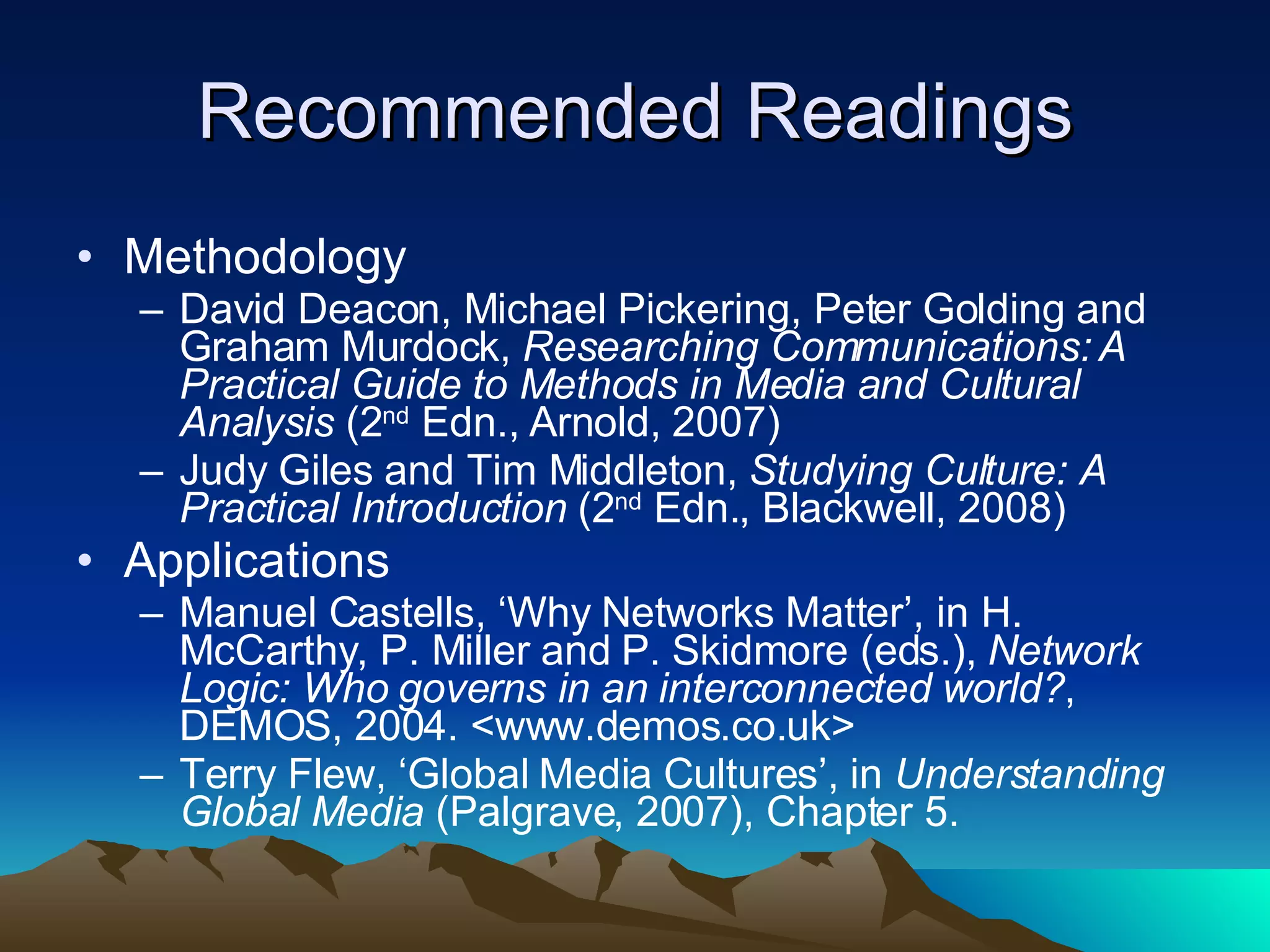
Key readings for understanding communication research methods, highlighting works by Deacon & Golding, and Flew.
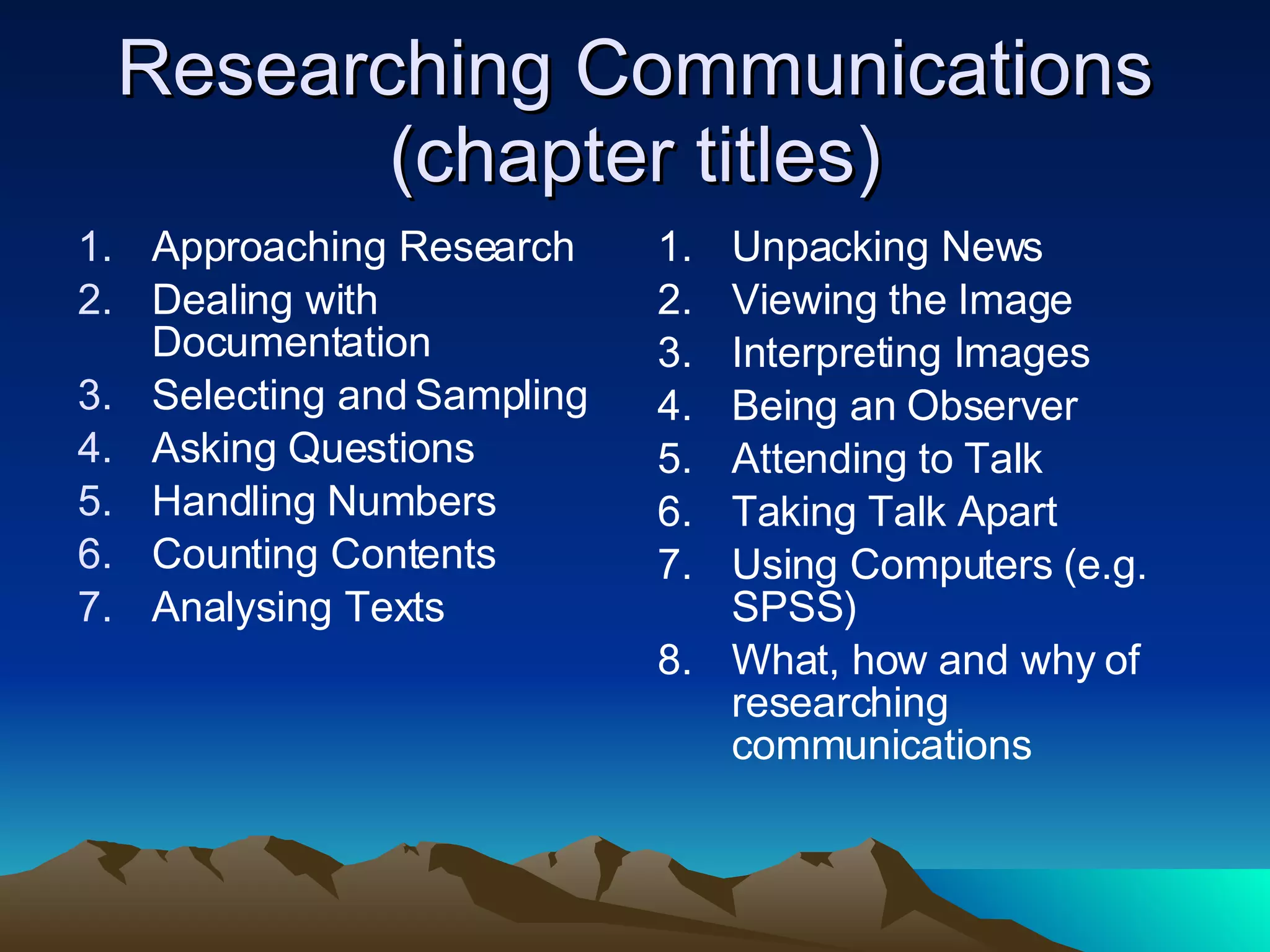
Chapter titles outline the key aspects and methodologies in researching communications, from sampling to analysis.
Key themes in cultural studies include identity, representation, and consumption, with a case study on global tourism.
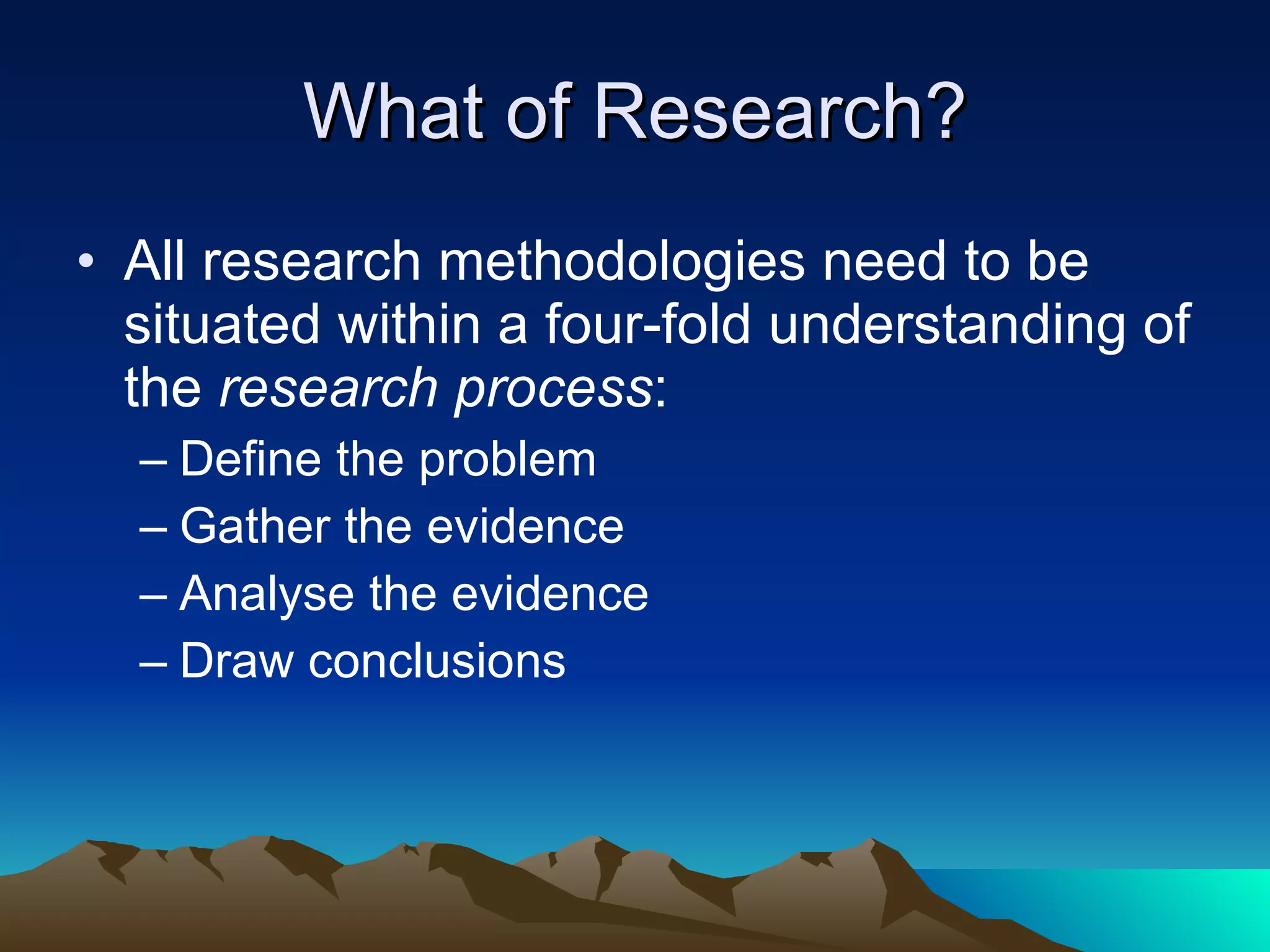
A framework for research methodology consisting of defining the problem, gathering and analyzing evidence, and drawing conclusions.
Qualitative research defined as interpretive practices focusing on meanings of phenomena in natural settings.
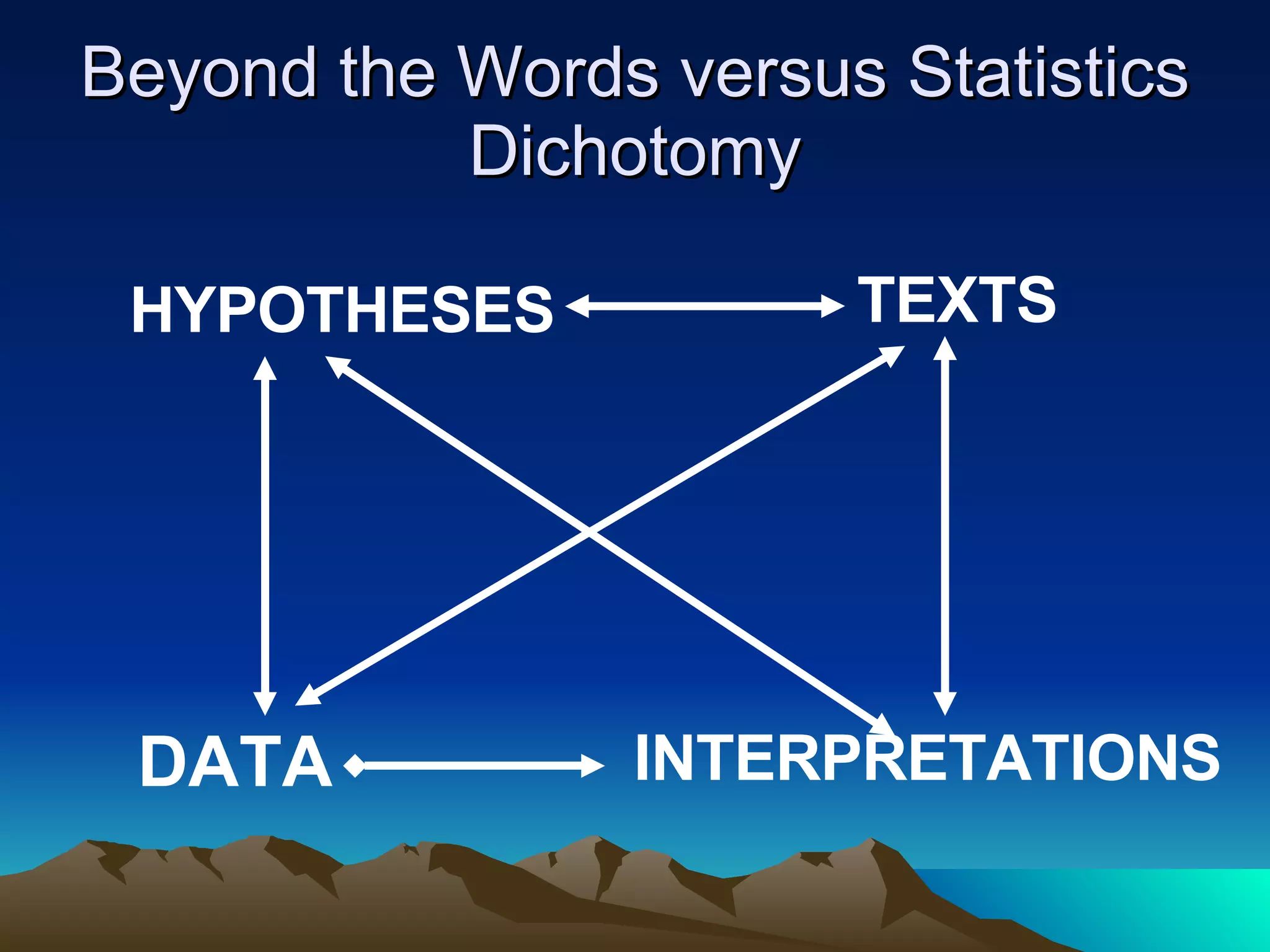
Exploration of the need for a balance between qualitative interpretations and quantitative data in research.
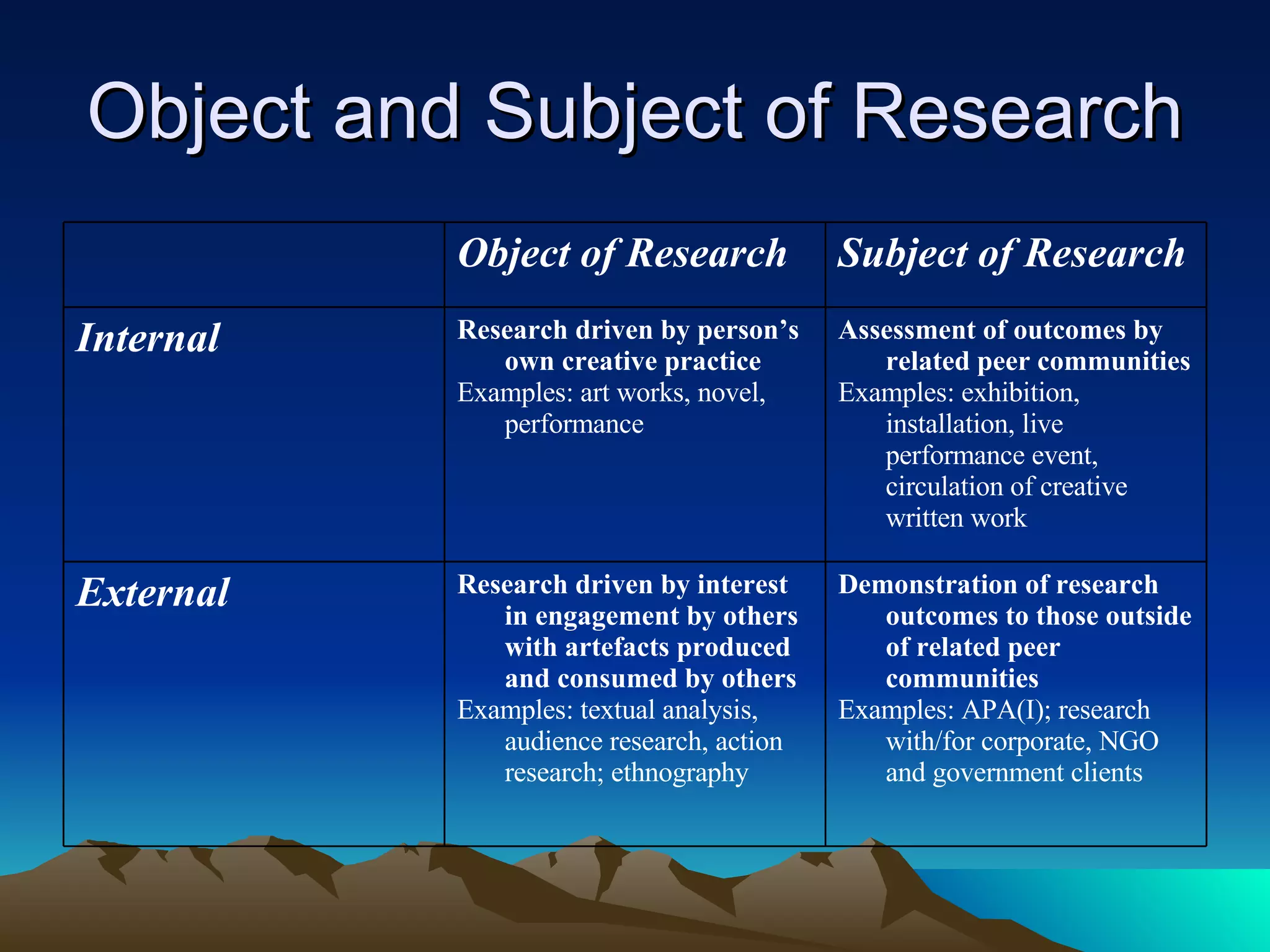
Research objectives include demonstrating outcomes to external communities and engaging with creative practices.
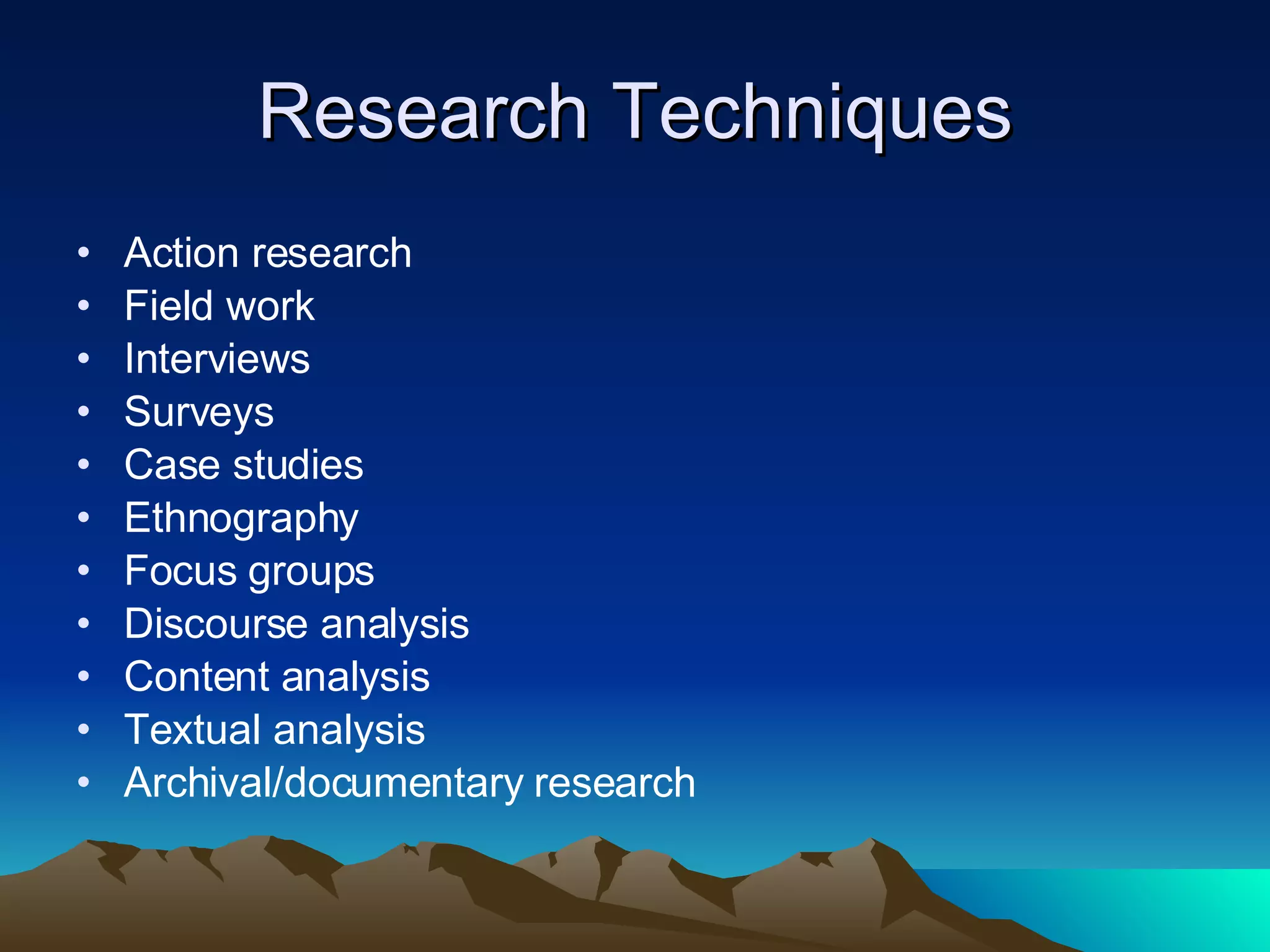
A variety of research techniques such as action research, interviews, and case studies are outlined for effective study.
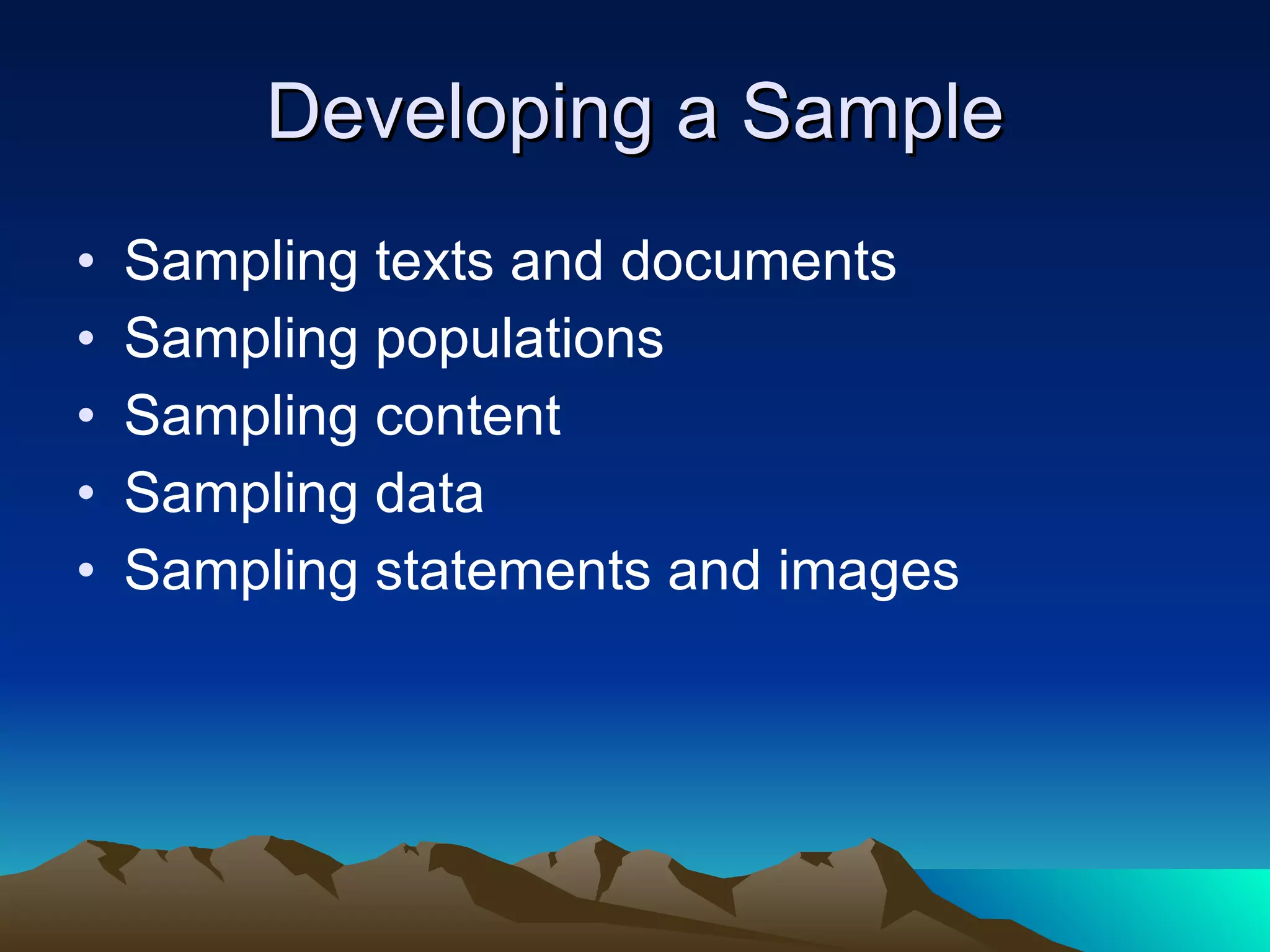
Strategies for sampling texts, populations, and data to ensure comprehensive research.
Modes of engagement including surveys and interviews with a focus on evidence reliability and representation.
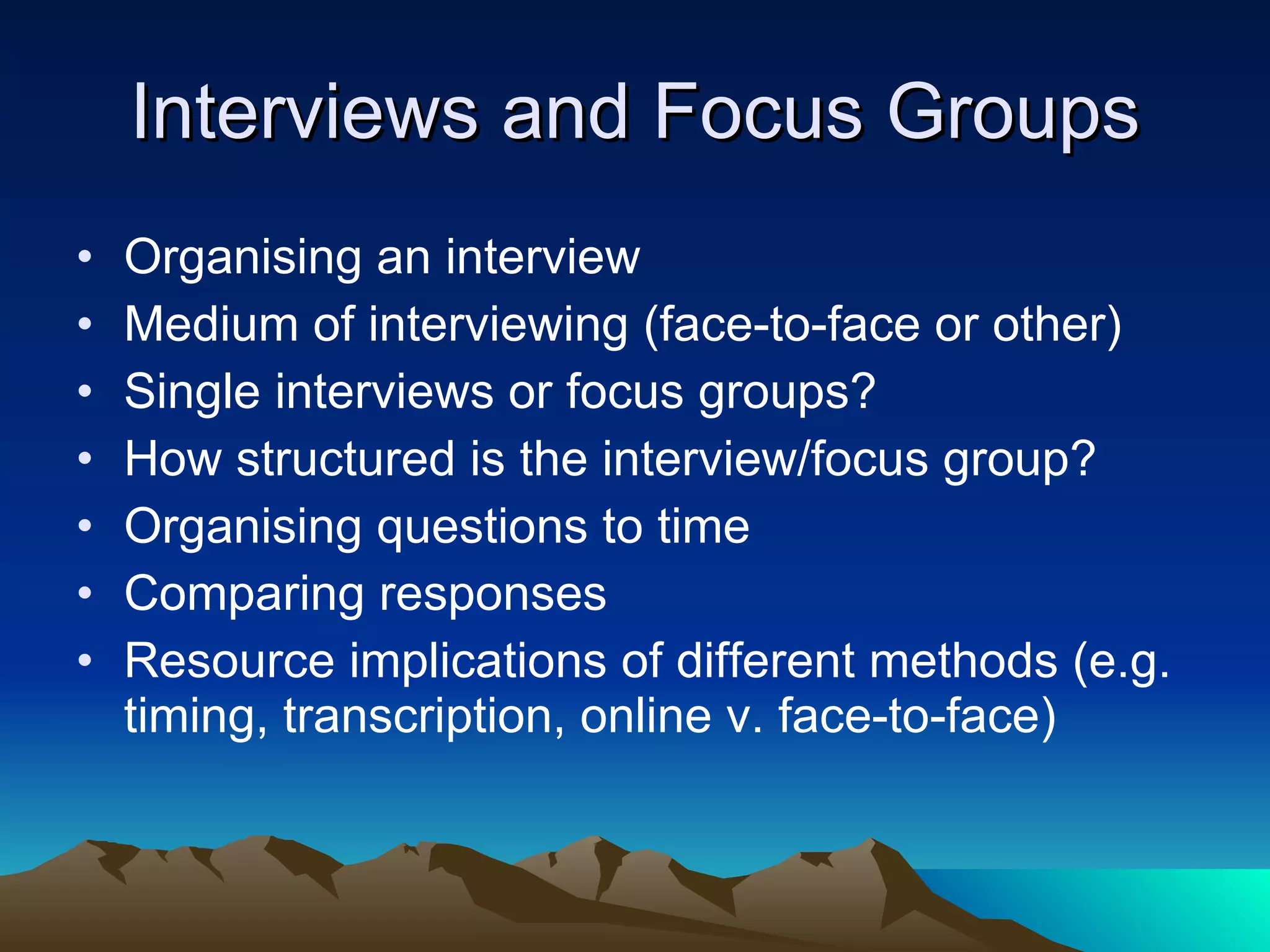
Guidelines on organizing interviews and focus groups, considering structure and resource implications.
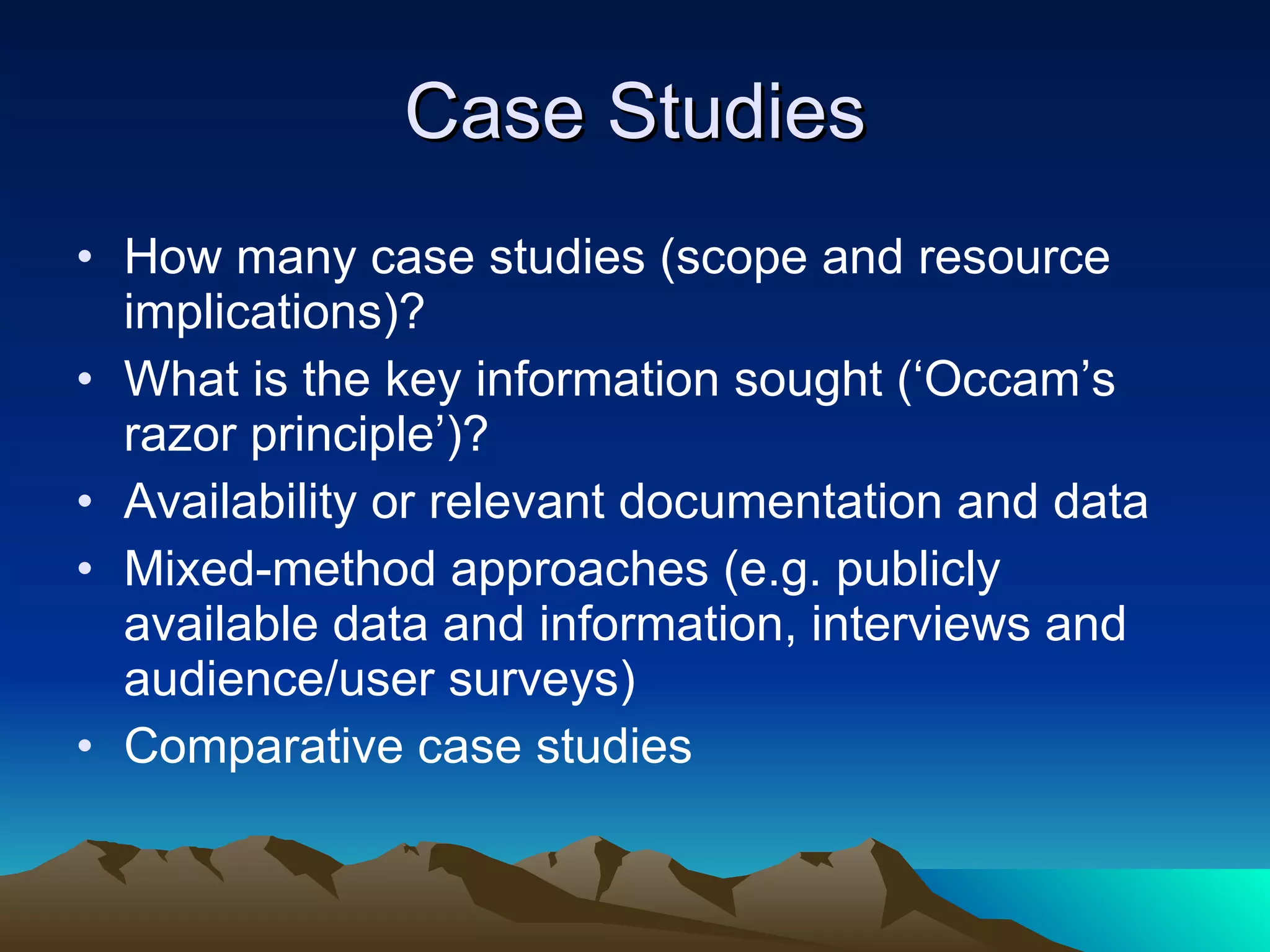
Approach to case studies; considers scope, key information, and method comparisons for depth in research.
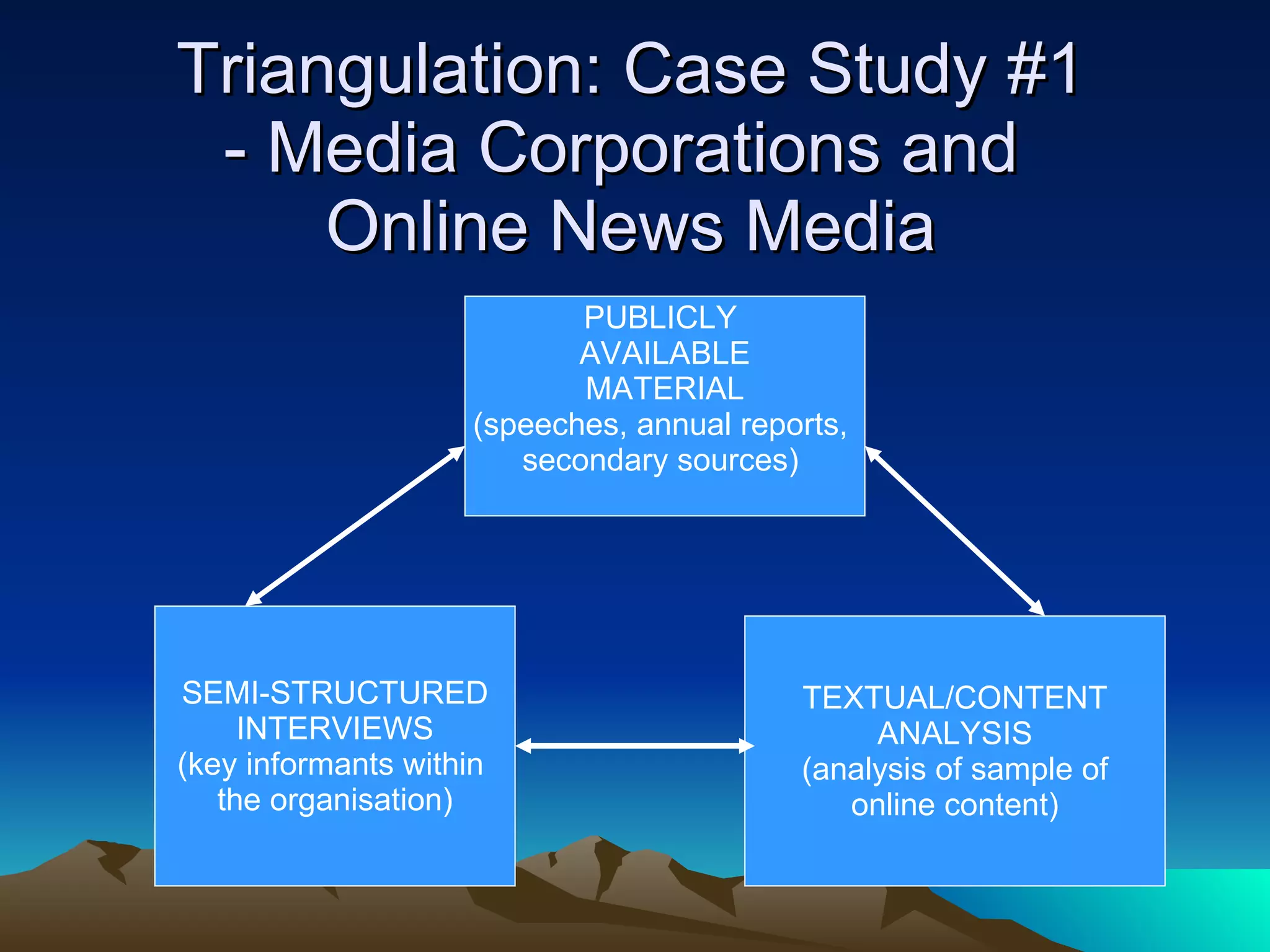
Case Study #1 highlights data triangulation in media corporations with various research methods applied.
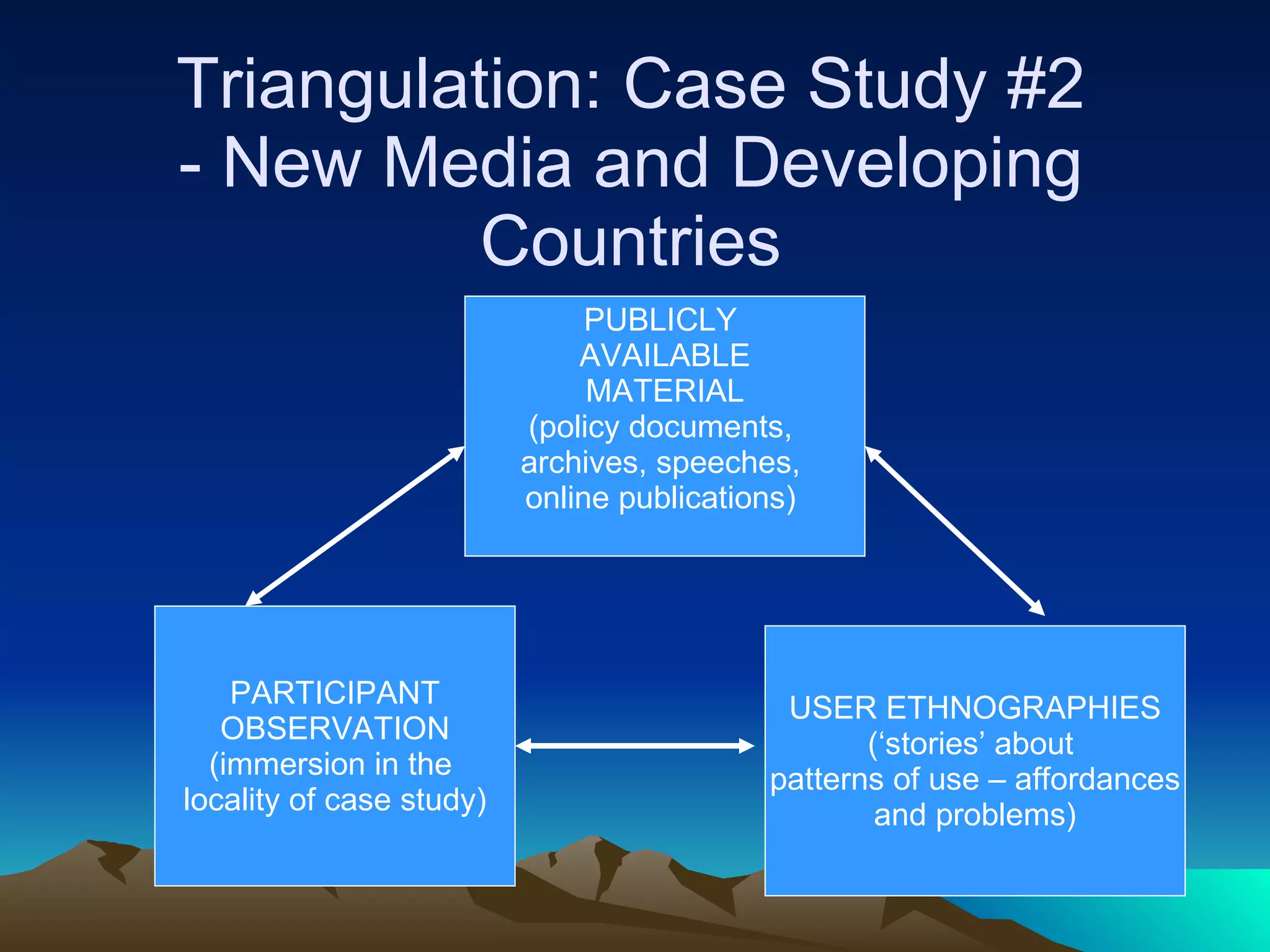
Case Study #2 focuses on media and development through participant observation and user ethnographies.
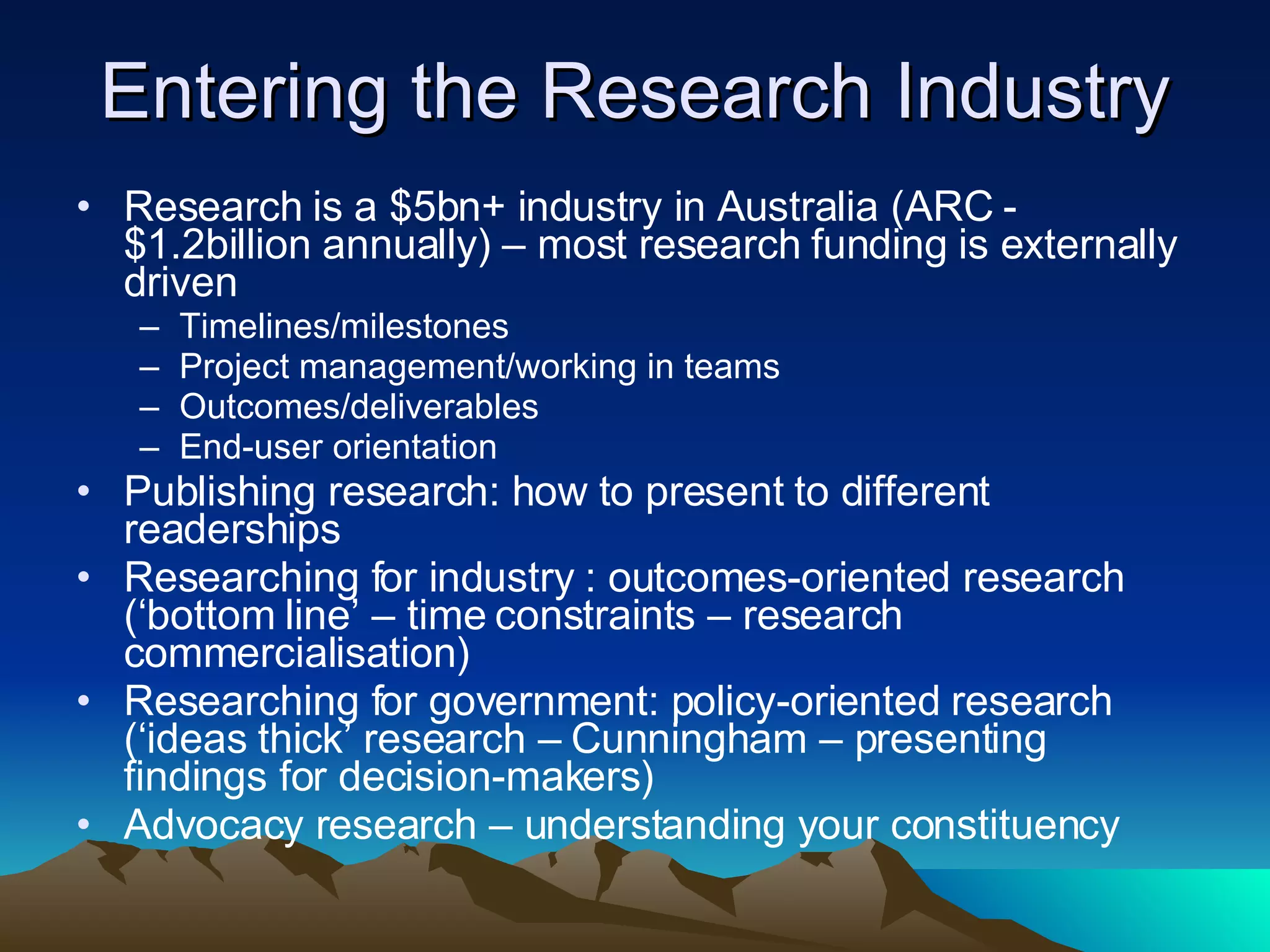
Insights into the research industry in Australia, including funding, project management, and publishing.
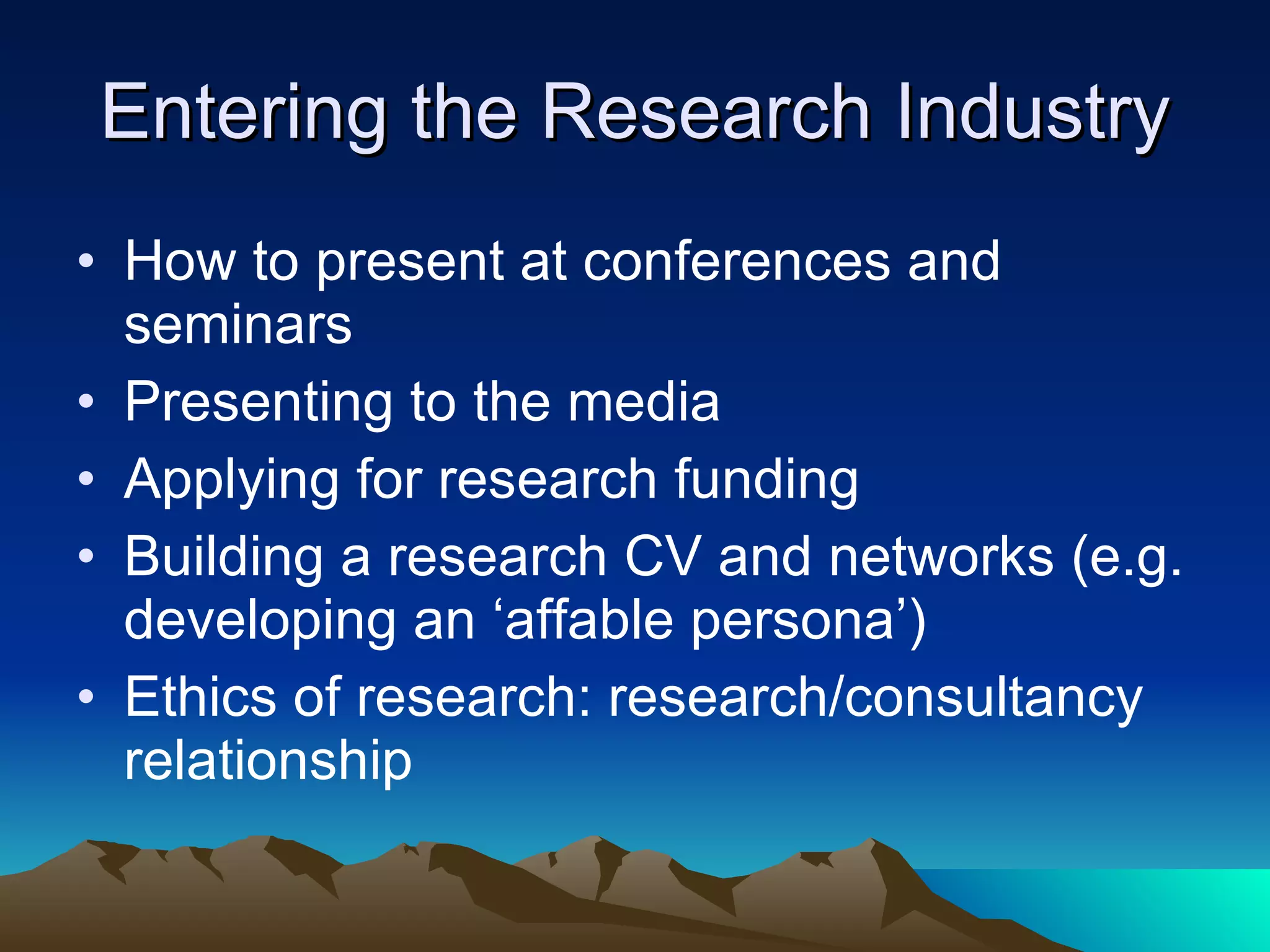
Best practices for effectively presenting research, applying for funding, and managing research ethics.


