2009 ISEAL Auditor Training Project: Framework for Developing An Effective Auditor Training Program © Social Accountability International
Introduction, Overview & Background
Introduction This framework is designed to take you step by step through the process of developing an auditor training program.  It outlines all the content, delivery and assessment factors you should consider, as well as how to incorporate adult learning strategies and methods. This framework contains links to a Toolbox, which has forms and templates for you to use at each step of the process.
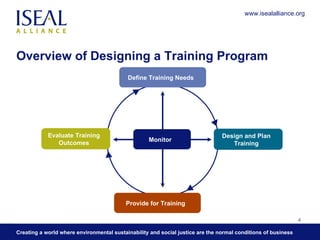
Overview of Designing a Training Program Monitor Define Training Needs Provide for Training Design and Plan Training Evaluate Training Outcomes
Overview of this Course Define training needs Background Knowledge for Designing an Auditor Training Course Defining Auditor Learning Objectives: What an Auditor Needs to Know Design and plan training Course Design Overview: The Big Picture Integrating Learning Objectives into Course Design: Teaching by Objectives Integrating Learning Styles into Course Design: Teaching Based on Student Learning Styles Integrating Learning Motivations into Course Design: Being Aware of Student Motivations Course Design: Putting It All Together Provide for training Trainer Qualification & Calibration Planning “In-Person” Training Considerations for Taking the Program “Online” Evaluate training outcomes Evaluating Student Performance Evaluating Training Program  Effectiveness Monitor Managing a Social & Environmental Auditor Training Program Continual improvement Define Training Needs Provide for Training Monitor Design and Plan Training Evaluate Training Outcomes
Background What makes for a good auditor? What makes for a good audit?
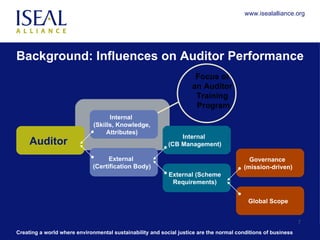
Background: Influences on Auditor Performance Auditor Internal  (Skills, Knowledge, Attributes) External  (Certification Body) Internal  (CB Management) External (Scheme Requirements) Governance  (mission-driven) Global Scope Focus of  an Auditor  Training  Program
Background: Common Auditing Challenges Lack of consistent results in assessing risk Lack of clear evidence of performance Timeliness of information provided by auditors Trust in auditors - integrity Wording of non-compliances Variation in time allocation Communication of process to all parties
Background: Underlying Problems with Auditor Competencies Knowledge Misunderstanding application of law vs. standard Weak knowledge of specifics steps in audit process Understanding which documents will provide greatest insight  Poor interviewing techniques Inadequate information from external stakeholders Lack of time management Poorly written non-conformances and audit reports Skills Attitude Bias toward either management or workers Cultural bias toward discrimination Unwillingness to investigate below the surface
Improving Auditor Competencies Skills Knowledge  Attitude
Background: Understanding the Auditor as Adult Learner Student Characteristics Learning Motivation Learning Styles
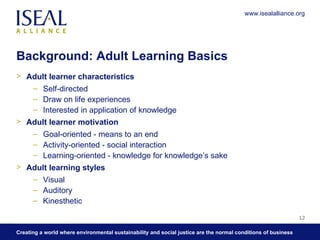
Background: Adult Learning Basics Adult learner characteristics Self-directed Draw on life experiences Interested in application of knowledge Adult learner motivation Goal-oriented - means to an end Activity-oriented - social interaction Learning-oriented - knowledge for knowledge’s sake Adult learning styles Visual Auditory Kinesthetic

Introduction, Overview & Background

  • 1.
    2009 ISEAL AuditorTraining Project: Framework for Developing An Effective Auditor Training Program © Social Accountability International
  • 2.
  • 3.
    Introduction This frameworkis designed to take you step by step through the process of developing an auditor training program. It outlines all the content, delivery and assessment factors you should consider, as well as how to incorporate adult learning strategies and methods. This framework contains links to a Toolbox, which has forms and templates for you to use at each step of the process.
  • 4.
    Overview of Designinga Training Program Monitor Define Training Needs Provide for Training Design and Plan Training Evaluate Training Outcomes
  • 5.
    Overview of thisCourse Define training needs Background Knowledge for Designing an Auditor Training Course Defining Auditor Learning Objectives: What an Auditor Needs to Know Design and plan training Course Design Overview: The Big Picture Integrating Learning Objectives into Course Design: Teaching by Objectives Integrating Learning Styles into Course Design: Teaching Based on Student Learning Styles Integrating Learning Motivations into Course Design: Being Aware of Student Motivations Course Design: Putting It All Together Provide for training Trainer Qualification & Calibration Planning “In-Person” Training Considerations for Taking the Program “Online” Evaluate training outcomes Evaluating Student Performance Evaluating Training Program Effectiveness Monitor Managing a Social & Environmental Auditor Training Program Continual improvement Define Training Needs Provide for Training Monitor Design and Plan Training Evaluate Training Outcomes
  • 6.
    Background What makesfor a good auditor? What makes for a good audit?
  • 7.
    Background: Influences onAuditor Performance Auditor Internal (Skills, Knowledge, Attributes) External (Certification Body) Internal (CB Management) External (Scheme Requirements) Governance (mission-driven) Global Scope Focus of an Auditor Training Program
  • 8.
    Background: Common AuditingChallenges Lack of consistent results in assessing risk Lack of clear evidence of performance Timeliness of information provided by auditors Trust in auditors - integrity Wording of non-compliances Variation in time allocation Communication of process to all parties
  • 9.
    Background: Underlying Problemswith Auditor Competencies Knowledge Misunderstanding application of law vs. standard Weak knowledge of specifics steps in audit process Understanding which documents will provide greatest insight Poor interviewing techniques Inadequate information from external stakeholders Lack of time management Poorly written non-conformances and audit reports Skills Attitude Bias toward either management or workers Cultural bias toward discrimination Unwillingness to investigate below the surface
  • 10.
    Improving Auditor CompetenciesSkills Knowledge Attitude
  • 11.
    Background: Understanding theAuditor as Adult Learner Student Characteristics Learning Motivation Learning Styles
  • 12.
    Background: Adult LearningBasics Adult learner characteristics Self-directed Draw on life experiences Interested in application of knowledge Adult learner motivation Goal-oriented - means to an end Activity-oriented - social interaction Learning-oriented - knowledge for knowledge’s sake Adult learning styles Visual Auditory Kinesthetic