Procedural Assessment:
 Where do we stand?
     March 2013


  Walter J. Coyle MD, FACG, FASGE
Objectives

 The   apprentice model
  – The way we were
 Competency    based education
  – Where we are now
 Outcomes   based learning
  – Procedural focus
  – Milestone development
Apprenticeship
 Successfulfor thousands of years
 Key properties:
  – Good mentor
  – Motivated student
  – Adequate exposure AND hands on time
 Problems:
  – Consistency
  – Objective measures of success
  – Low ceiling for promotion

     The Mystery of Mastery. Psychology Today 1986;20:32
Apprenticeship
 Works  well for very sub-specialized areas
  and few centers of excellence
 Still model for advanced endoscopy
  – AEF match
  – Variation in level of exposure and mastery
  – Who monitors the mentors?
  – How do the graduates do?
 Medicine   resents outside monitoring
  – Better if we did it ourselves
Competency based training
 ACGME      initiative from the 1990s
  – Applied to all aspects of training
  – Knowledge, professionalism, procedures
 Ineffective   for procedural training
  – GI procedures still in apprentice model
  – Little consensus on assessment and outcomes
  – Little data to define milestones
      How should a 2nd year fellow scope?


                             Lurie. Med Educ 2012;46:1365
Competency based training

 Diverse training methods and assessment
  techniques
 Small programs vs large; research fellows
 Silo mentality: no consistent standard
 Explains why we have this problem now
Outcomes based learning
 More   process oriented
 Focus on the process not the problem
 ACGME wants us to move here
 Starting point: 1st year fellow
 Ending point: Staff GI
 Milestone development: easier for
  knowledge core vs procedures

                    N Engl J Med 2012;3686:1051-56
Milestone development
 Final   milestone: Colonoscopy
  – >95% cecal intubation rate
  – >25% ADR
  – Low complication
  – Patient satisfaction
 Stepwise milestones: None with great data
  or evidence
  – 1st year vs 2nd vs 3rd

                    Gastrointest Endosc 2010;71:319-24
Procedural Education: initial
      focus on process
 Intense   didactic
  – FYF course, DVDs, local resources
 Intense   hands on training with scope
  – ? Simulators
  – Training box/tool
  – Standardized patient
  – Example of pilot training?
Procedural Education:
subsequent focus on process
 Ongoing,   continuous assessment:
  – Mentor feedback; patient feedback
  – Objective outcomes based assessment tool
  – Universal tool ?
 Development  of outcomes based, data
 driven milestones that apply throughout
 fellowship
  – How???
Procedural Education: A
          Proposal
 Universal
          assessment tool agreed upon
 Web-based submission of assessments
  – Collection and development of milestone
  – Feedback to fellow and program
  – Fellow compared to peers nationally
 Progressionthrough milestones will be
 fellow driven, not fixed year driven
Data on Fellow


      Sedlack, GIE 2010;72:1125-33
Procedural Education: A
          Proposal
 Requirements   of system
  – Ease of use: minutes, APP for phone, link on
    desktop
  – Secure
  – Can provide data back to program and fellow in
    real time
  – Dynamic and progressive
Procedural Education: A
          Proposal
 Cost:GI programs, GI societies, ACGME
 Web site location and maintenance
  – ACGME
  – CORI database like initiative
  – GIQuik
  – Endoscopic report generating systems
        Provation initiative with Mayo Clinic
 Time    frame
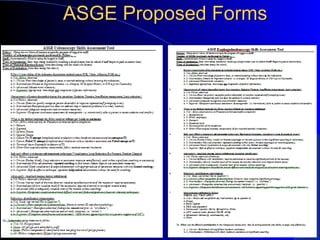
ASGE Proposed Forms
Integrated Assessment

 Are we ready and committed??
 Resource Commitment
 Staff Commitment
 Barriers breaking silos


 Only   definite: change is here
Summary
 Prior models and procedural mentoring are
  probably inadequate
 Classic competency based assessment is
  flawed for procedures
 Outcomes and milestones are a next step
 GI directed development of milestones and
  tools is critical
Summary


Need  to think of the process NOT
 the problem

Assessing Procedural Competencies

  • 1.
    Procedural Assessment: Wheredo we stand? March 2013 Walter J. Coyle MD, FACG, FASGE
  • 2.
    Objectives  The apprentice model – The way we were  Competency based education – Where we are now  Outcomes based learning – Procedural focus – Milestone development
  • 3.
    Apprenticeship  Successfulfor thousandsof years  Key properties: – Good mentor – Motivated student – Adequate exposure AND hands on time  Problems: – Consistency – Objective measures of success – Low ceiling for promotion The Mystery of Mastery. Psychology Today 1986;20:32
  • 4.
    Apprenticeship  Works well for very sub-specialized areas and few centers of excellence  Still model for advanced endoscopy – AEF match – Variation in level of exposure and mastery – Who monitors the mentors? – How do the graduates do?  Medicine resents outside monitoring – Better if we did it ourselves
  • 5.
    Competency based training ACGME initiative from the 1990s – Applied to all aspects of training – Knowledge, professionalism, procedures  Ineffective for procedural training – GI procedures still in apprentice model – Little consensus on assessment and outcomes – Little data to define milestones  How should a 2nd year fellow scope? Lurie. Med Educ 2012;46:1365
  • 6.
    Competency based training Diverse training methods and assessment techniques  Small programs vs large; research fellows  Silo mentality: no consistent standard  Explains why we have this problem now
  • 7.
    Outcomes based learning More process oriented  Focus on the process not the problem  ACGME wants us to move here  Starting point: 1st year fellow  Ending point: Staff GI  Milestone development: easier for knowledge core vs procedures N Engl J Med 2012;3686:1051-56
  • 8.
    Milestone development  Final milestone: Colonoscopy – >95% cecal intubation rate – >25% ADR – Low complication – Patient satisfaction  Stepwise milestones: None with great data or evidence – 1st year vs 2nd vs 3rd Gastrointest Endosc 2010;71:319-24
  • 9.
    Procedural Education: initial focus on process  Intense didactic – FYF course, DVDs, local resources  Intense hands on training with scope – ? Simulators – Training box/tool – Standardized patient – Example of pilot training?
  • 10.
    Procedural Education: subsequent focuson process  Ongoing, continuous assessment: – Mentor feedback; patient feedback – Objective outcomes based assessment tool – Universal tool ?  Development of outcomes based, data driven milestones that apply throughout fellowship – How???
  • 11.
    Procedural Education: A Proposal  Universal assessment tool agreed upon  Web-based submission of assessments – Collection and development of milestone – Feedback to fellow and program – Fellow compared to peers nationally  Progressionthrough milestones will be fellow driven, not fixed year driven
  • 12.
    Data on Fellow Sedlack, GIE 2010;72:1125-33
  • 13.
    Procedural Education: A Proposal  Requirements of system – Ease of use: minutes, APP for phone, link on desktop – Secure – Can provide data back to program and fellow in real time – Dynamic and progressive
  • 14.
    Procedural Education: A Proposal  Cost:GI programs, GI societies, ACGME  Web site location and maintenance – ACGME – CORI database like initiative – GIQuik – Endoscopic report generating systems  Provation initiative with Mayo Clinic  Time frame
  • 15.
  • 16.
    Integrated Assessment  Arewe ready and committed??  Resource Commitment  Staff Commitment  Barriers breaking silos  Only definite: change is here
  • 17.
    Summary  Prior modelsand procedural mentoring are probably inadequate  Classic competency based assessment is flawed for procedures  Outcomes and milestones are a next step  GI directed development of milestones and tools is critical
  • 18.
    Summary Need tothink of the process NOT the problem