Improving HKU Programmes through an OBASL Approach: A Case from the Faculty of Education May, 12, 2010.Daniel Churchill, Faculty of EducationDiane Salter, CETL
Program DevelopmentThe ProcessCritical Success FactorsRoles The Internal ProcessFaculty of Education Example CETL - How We Can Help
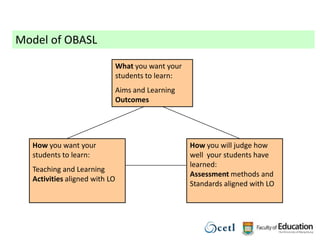
Model of OBASLWhat you want your students to learn:Aims and Learning OutcomesHow you want your students to learn:Teaching and Learning Activities aligned with LOHow you will judge how well  your students have learned:Assessment methods and Standards aligned with LO
How to develop or ‘rethink’ a programme….
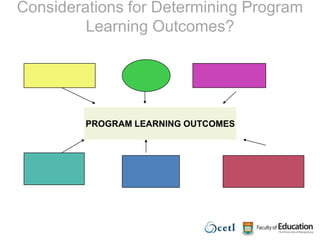
Considerations for Determining Program Learning Outcomes?PROGRAM LEARNING OUTCOMES
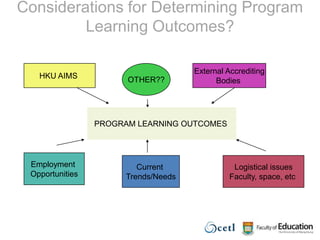
Considerations for Determining Program Learning Outcomes?HKU AIMS External AccreditingBodies OTHER??PROGRAM LEARNING OUTCOMES Employment OpportunitiesCurrent Trends/NeedsLogistical issuesFaculty, space, etc
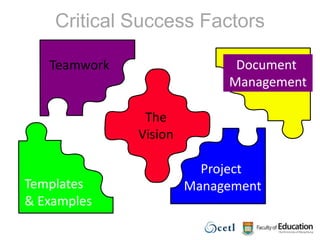
Critical Success FactorsDocument ManagementTeamworkTheVisionProject ManagementTemplates & Examples
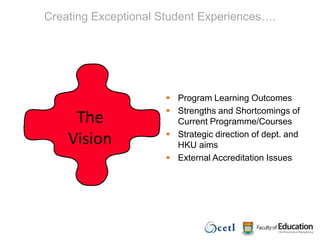
Creating Exceptional Student Experiences….TheVisionProgram Learning Outcomes Strengths and Shortcomings of Current Programme/CoursesStrategic direction of dept. and HKU aims External Accreditation Issues
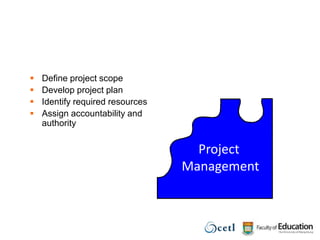
Project ManagementDefine project scopeDevelop project planIdentify required resourcesAssign accountability and authority
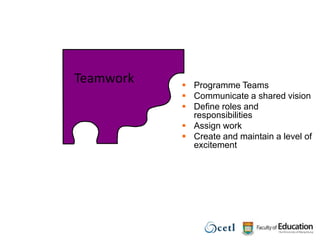
TeamworkProgramme Teams Communicate a shared visionDefine roles and responsibilitiesAssign work Create and maintain a level of excitement
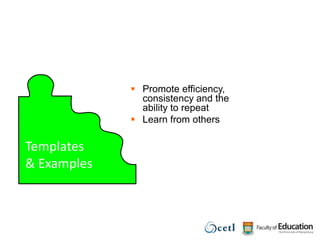
Templates & ExamplesPromote efficiency, consistency and the ability to repeatLearn from others
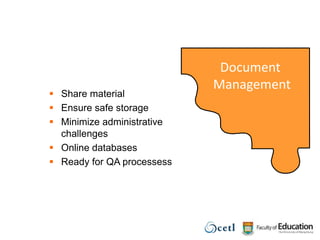
Document ManagementShare materialEnsure safe storage Minimize administrative challengesOnline databases Ready for QA processess
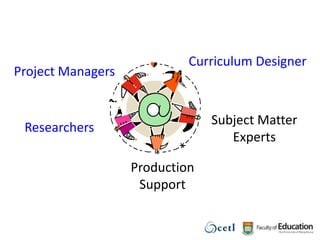
Curriculum DesignerProject ManagersSubject MatterExpertsResearchersProductionSupport
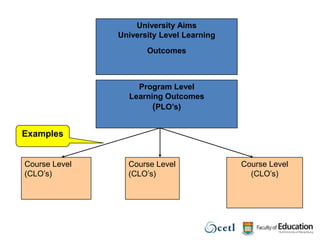
University Aims University Level Learning Outcomes Program Level Learning Outcomes (PLO’s)ExamplesCourse Level(CLO’s)Course Level(CLO’s)Course Level(CLO’s)
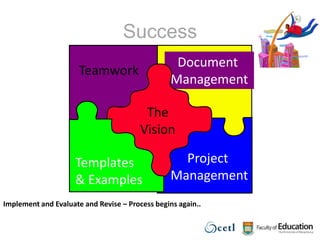
Document ManagementTeamworkTheVisionProject ManagementTemplates & ExamplesSuccessImplement and Evaluate and Revise – Process begins again..
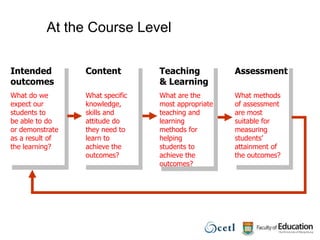
Outcomes-based ApproachAt the Course Level IntendedoutcomesWhat do we expect ourstudents tobe able to door demonstrateas a result ofthe learning?ContentWhat specificknowledge,skills and attitude dothey need tolearn to achieve theoutcomes?Teaching& LearningWhat are themost appropriateteaching andlearning methods for helping students to achieve theoutcomes?AssessmentWhat methods of assessment are most suitable for measuring students’ attainment of the outcomes?
Programme Revised IT in Education Programme forSchool Leaders, Instructional Designers, Multimedia Designers, Project Managers,  Educators, Corporate Trainers, Publishers…
WG to develop PLOPresent to Programme Committee for EndorsementStudent Consultative Committee ConsultationExternal Examiner ConsultationRevise the CurriculumWrite Individual ModulesMSC[ITE] REVISION PROCESSDevelop LO MapDevelop AssessmentPromotion and MarketingIndividual module documentation
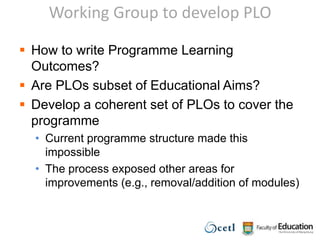
Working Group to develop PLOHow to write Programme Learning Outcomes?
Are PLOs subset of Educational Aims?
Develop a coherent set of PLOs to cover the programme
Current programme structure made this impossible
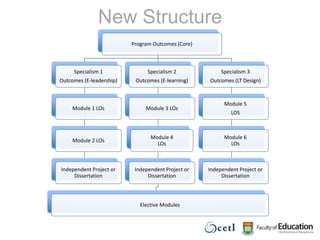
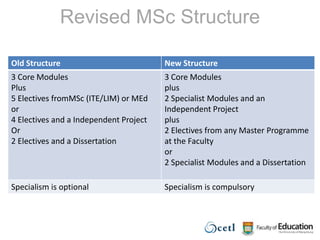
The process exposed other areas for improvements (e.g., removal/addition of modules)New Structure
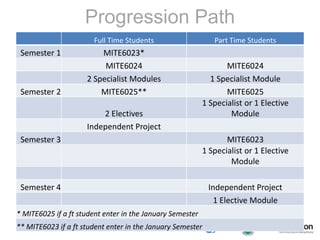
Revised MSc Structure
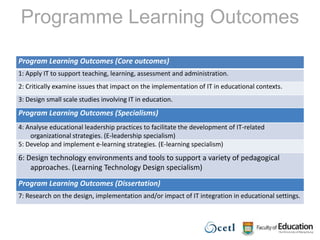
Programme Learning Outcomes
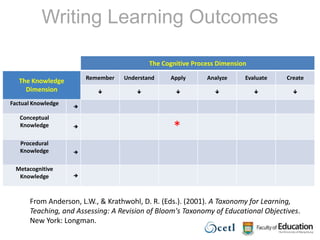
Writing Learning Outcomes*From Anderson, L.W., & Krathwohl, D. R. (Eds.). (2001). A Taxonomy for Learning, Teaching, and Assessing: A Revision of Bloom's Taxonomy of Educational Objectives. New York: Longman.
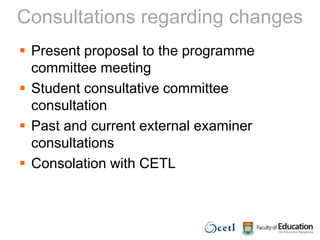
Consultations regarding changesPresent proposal to the programme committee meetingStudent consultative committee consultationPast and current external examiner consultationsConsolation with CETL
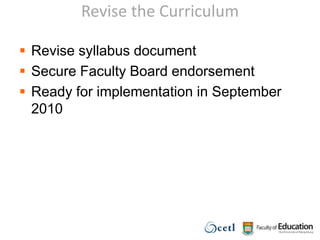
Revise the CurriculumRevise syllabus documentSecure Faculty Board endorsement Ready for implementation in September 2010
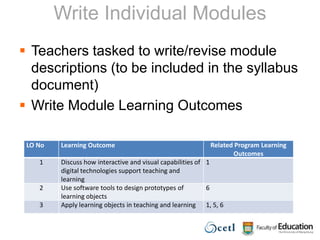
Write Individual ModulesTeachers tasked to write/revise module descriptions (to be included in the syllabus document)Write Module Learning Outcomes
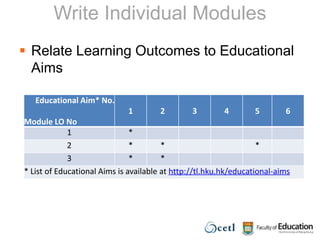
Write Individual ModulesRelate Learning Outcomes to Educational Aims
Develop LO MapSee the distributed document 1Why develop this document?Align curriculum around PLOsExamine redundancies Develop a system that would lead to further development
Develop AssessmentDesign assessment items that evaluate achievement of LOUnderstand how assessment builds across modules leading to achievement of PLOsExamine possible redundancies in assessment
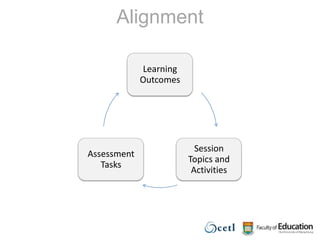
Alignment
Develop Module DocumentationModule Outline  DocumentClear communication of goals and expectationsLinks between LOs, assessment and contentSee example of a Module Outline that is distributed (document 2)

Learning Outcomes

  • 1.
    Improving HKU Programmesthrough an OBASL Approach: A Case from the Faculty of Education May, 12, 2010.Daniel Churchill, Faculty of EducationDiane Salter, CETL
  • 2.
    Program DevelopmentThe ProcessCriticalSuccess FactorsRoles The Internal ProcessFaculty of Education Example CETL - How We Can Help
  • 3.
    Model of OBASLWhatyou want your students to learn:Aims and Learning OutcomesHow you want your students to learn:Teaching and Learning Activities aligned with LOHow you will judge how well your students have learned:Assessment methods and Standards aligned with LO
  • 4.
    How to developor ‘rethink’ a programme….
  • 5.
    Considerations for DeterminingProgram Learning Outcomes?PROGRAM LEARNING OUTCOMES
  • 6.
    Considerations for DeterminingProgram Learning Outcomes?HKU AIMS External AccreditingBodies OTHER??PROGRAM LEARNING OUTCOMES Employment OpportunitiesCurrent Trends/NeedsLogistical issuesFaculty, space, etc
  • 7.
    Critical Success FactorsDocumentManagementTeamworkTheVisionProject ManagementTemplates & Examples
  • 8.
    Creating Exceptional StudentExperiences….TheVisionProgram Learning Outcomes Strengths and Shortcomings of Current Programme/CoursesStrategic direction of dept. and HKU aims External Accreditation Issues
  • 9.
    Project ManagementDefine projectscopeDevelop project planIdentify required resourcesAssign accountability and authority
  • 10.
    TeamworkProgramme Teams Communicatea shared visionDefine roles and responsibilitiesAssign work Create and maintain a level of excitement
  • 11.
    Templates & ExamplesPromoteefficiency, consistency and the ability to repeatLearn from others
  • 12.
    Document ManagementShare materialEnsuresafe storage Minimize administrative challengesOnline databases Ready for QA processess
  • 13.
    Curriculum DesignerProject ManagersSubjectMatterExpertsResearchersProductionSupport
  • 14.
    University Aims UniversityLevel Learning Outcomes Program Level Learning Outcomes (PLO’s)ExamplesCourse Level(CLO’s)Course Level(CLO’s)Course Level(CLO’s)
  • 15.
    Document ManagementTeamworkTheVisionProject ManagementTemplates& ExamplesSuccessImplement and Evaluate and Revise – Process begins again..
  • 16.
    Outcomes-based ApproachAt theCourse Level IntendedoutcomesWhat do we expect ourstudents tobe able to door demonstrateas a result ofthe learning?ContentWhat specificknowledge,skills and attitude dothey need tolearn to achieve theoutcomes?Teaching& LearningWhat are themost appropriateteaching andlearning methods for helping students to achieve theoutcomes?AssessmentWhat methods of assessment are most suitable for measuring students’ attainment of the outcomes?
  • 17.
    Programme Revised ITin Education Programme forSchool Leaders, Instructional Designers, Multimedia Designers, Project Managers, Educators, Corporate Trainers, Publishers…
  • 18.
    WG to developPLOPresent to Programme Committee for EndorsementStudent Consultative Committee ConsultationExternal Examiner ConsultationRevise the CurriculumWrite Individual ModulesMSC[ITE] REVISION PROCESSDevelop LO MapDevelop AssessmentPromotion and MarketingIndividual module documentation
  • 19.
    Working Group todevelop PLOHow to write Programme Learning Outcomes?
  • 20.
    Are PLOs subsetof Educational Aims?
  • 21.
    Develop a coherentset of PLOs to cover the programme
  • 22.
    Current programme structuremade this impossible
  • 23.
    The process exposedother areas for improvements (e.g., removal/addition of modules)New Structure
  • 24.
  • 25.
  • 26.
    Writing Learning Outcomes*FromAnderson, L.W., & Krathwohl, D. R. (Eds.). (2001). A Taxonomy for Learning, Teaching, and Assessing: A Revision of Bloom's Taxonomy of Educational Objectives. New York: Longman.
  • 27.
    Consultations regarding changesPresentproposal to the programme committee meetingStudent consultative committee consultationPast and current external examiner consultationsConsolation with CETL
  • 28.
    Revise the CurriculumRevisesyllabus documentSecure Faculty Board endorsement Ready for implementation in September 2010
  • 29.
    Write Individual ModulesTeacherstasked to write/revise module descriptions (to be included in the syllabus document)Write Module Learning Outcomes
  • 30.
    Write Individual ModulesRelateLearning Outcomes to Educational Aims
  • 31.
    Develop LO MapSeethe distributed document 1Why develop this document?Align curriculum around PLOsExamine redundancies Develop a system that would lead to further development
  • 32.
    Develop AssessmentDesign assessmentitems that evaluate achievement of LOUnderstand how assessment builds across modules leading to achievement of PLOsExamine possible redundancies in assessment
  • 33.
  • 34.
    Develop Module DocumentationModuleOutline DocumentClear communication of goals and expectationsLinks between LOs, assessment and contentSee example of a Module Outline that is distributed (document 2)