

Introduction of mass spectrometer
Presented by Creative Proteomics
www.creative-proteomics.com
basic types of mass analyzer
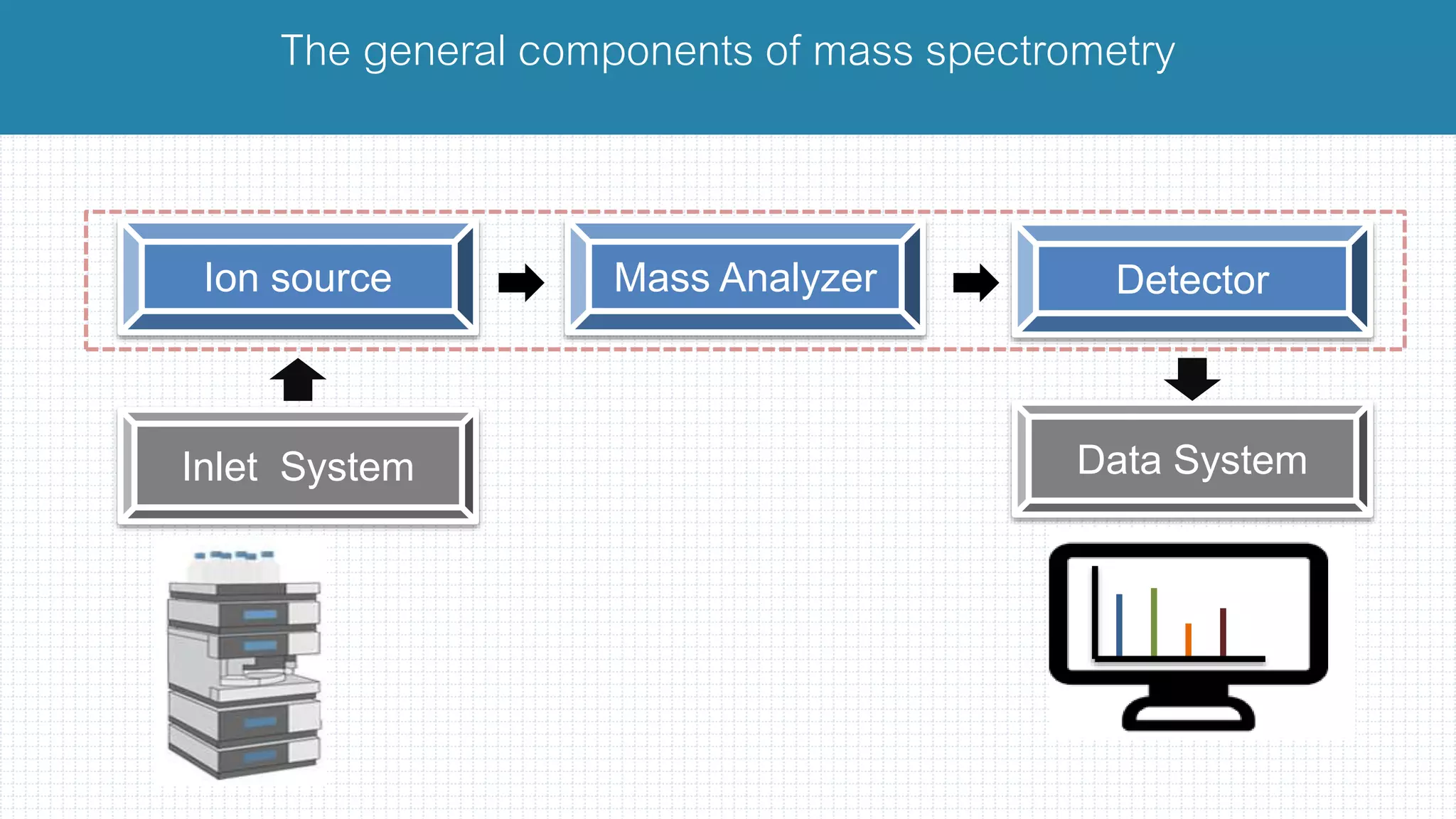
Inlet System
Ion source Mass Analyzer Detector
Data System
The general components of mass spectrometry
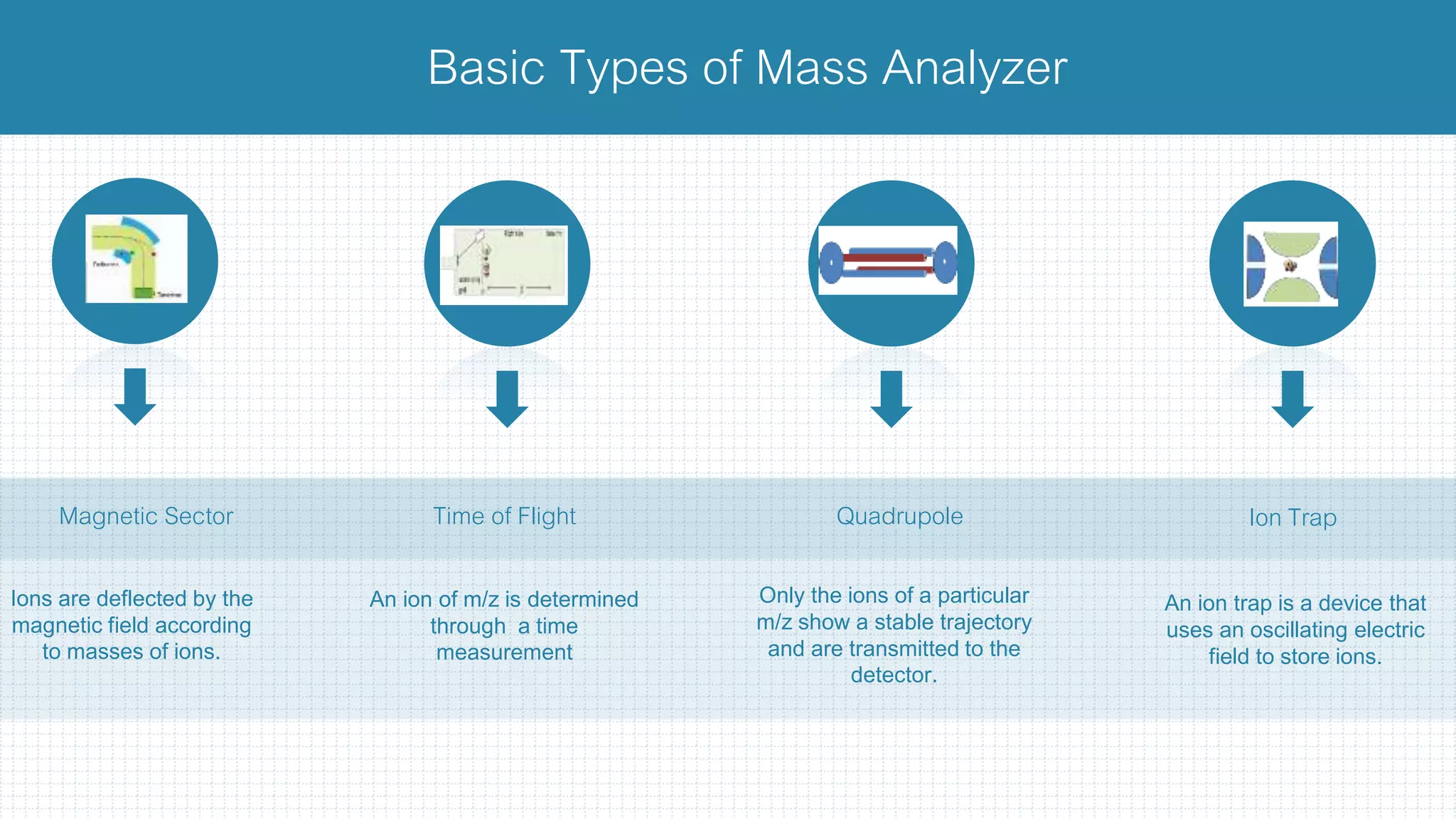
Basic Types of Mass Analyzer
Magnetic Sector Time of Flight Quadrupole Ion Trap
Ions are deflected by the
magnetic field according
to masses of ions.
An ion of m/z is determined
through a time
measurement
Only the ions of a particular
m/z show a stable trajectory
and are transmitted to the
detector.
An ion trap is a device that
uses an oscillating electric
field to store ions.
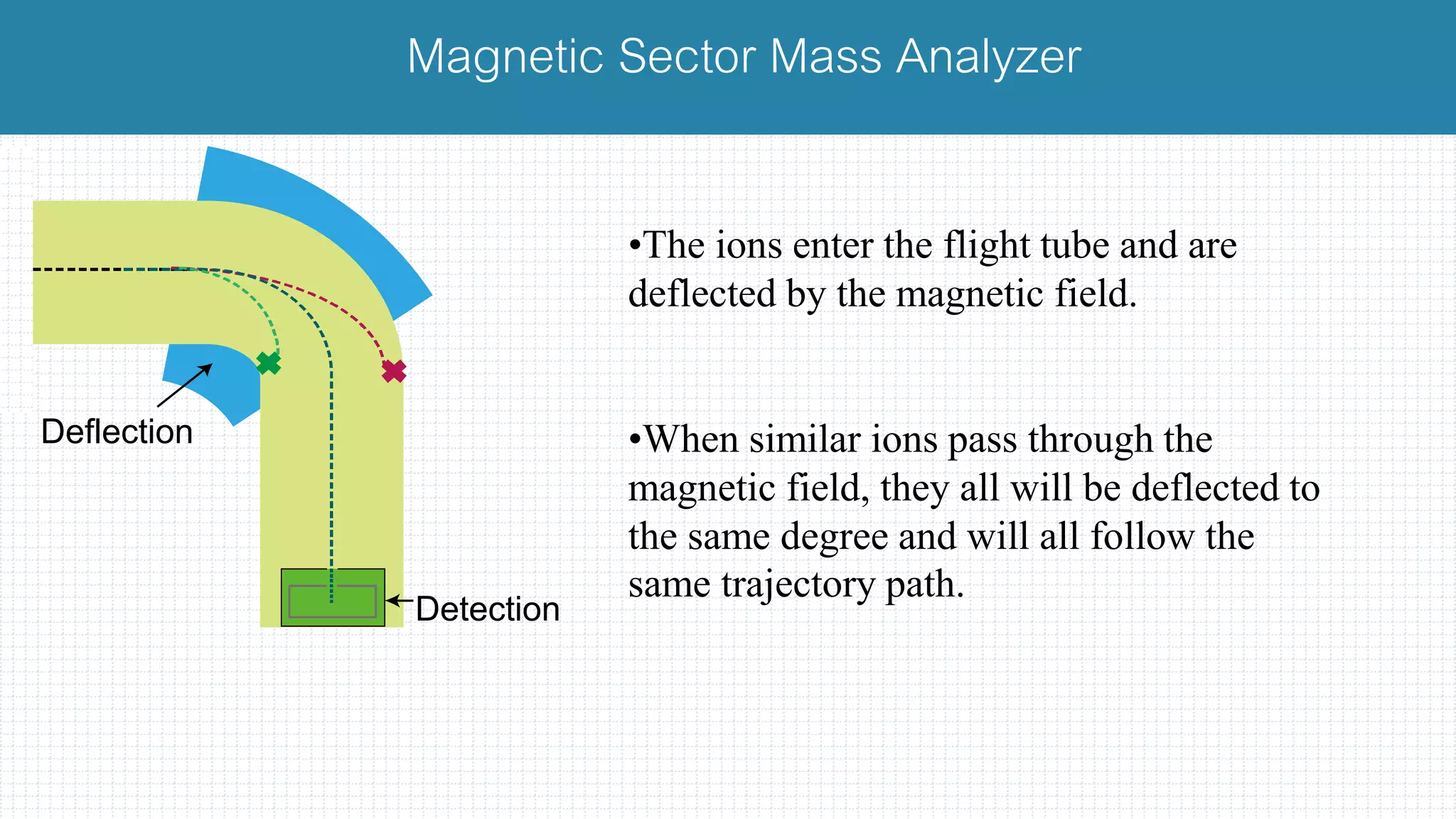
Magnetic Sector Mass Analyzer
•The ions enter the flight tube and are
deflected by the magnetic field.
•When similar ions pass through the
magnetic field, they all will be deflected to
the same degree and will all follow the
same trajectory path.
Deflection
Detection
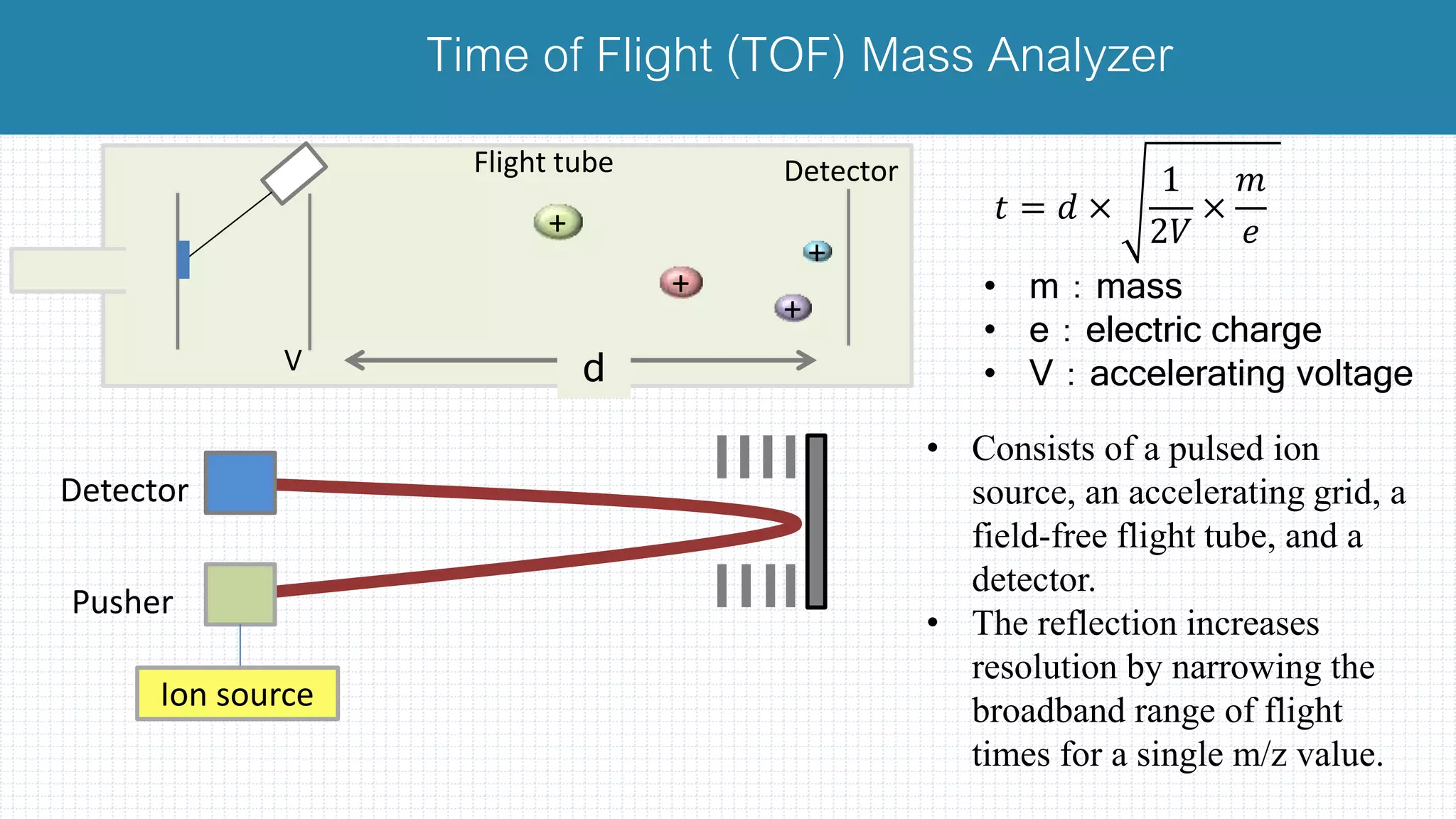
𝑡 = 𝑑 ×
1
2𝑉
×
𝑚
𝑒
• m:mass
• e:electric charge
• V:accelerating voltage
Detector
Pusher
Ion source
• Consists of a pulsed ion
source, an accelerating grid, a
field-free flight tube, and a
detector.
• The reflection increases
resolution by narrowing the
broadband range of flight
times for a single m/z value.
Time of Flight (TOF) Mass Analyzer
+
+
+
+
d
Flight tube
V
Detector
+
+-
-
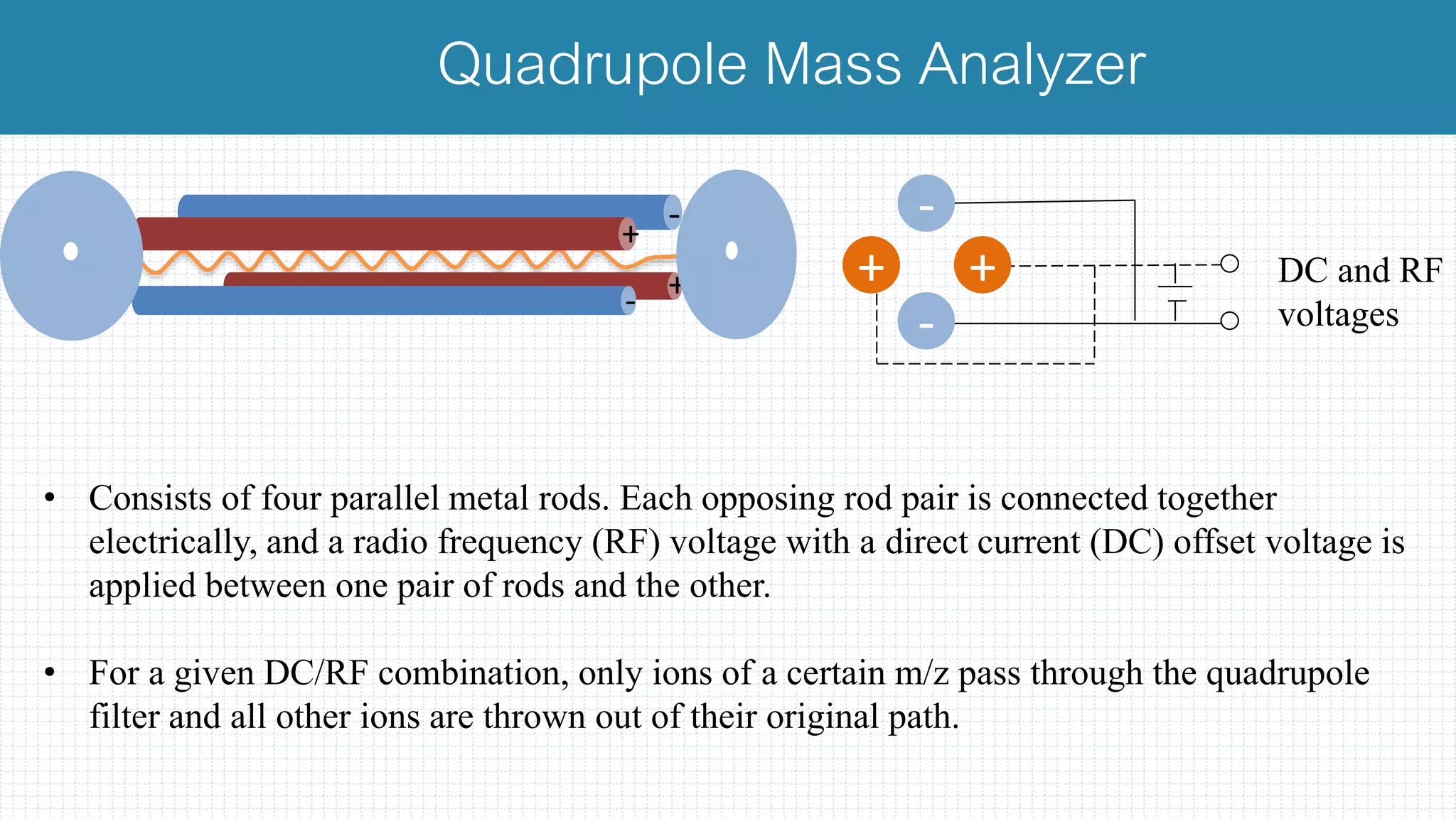
• Consists of four parallel metal rods. Each opposing rod pair is connected together
electrically, and a radio frequency (RF) voltage with a direct current (DC) offset voltage is
applied between one pair of rods and the other.
• For a given DC/RF combination, only ions of a certain m/z pass through the quadrupole
filter and all other ions are thrown out of their original path.
-
-
+ +
Quadrupole Mass Analyzer
DC and RF
voltages
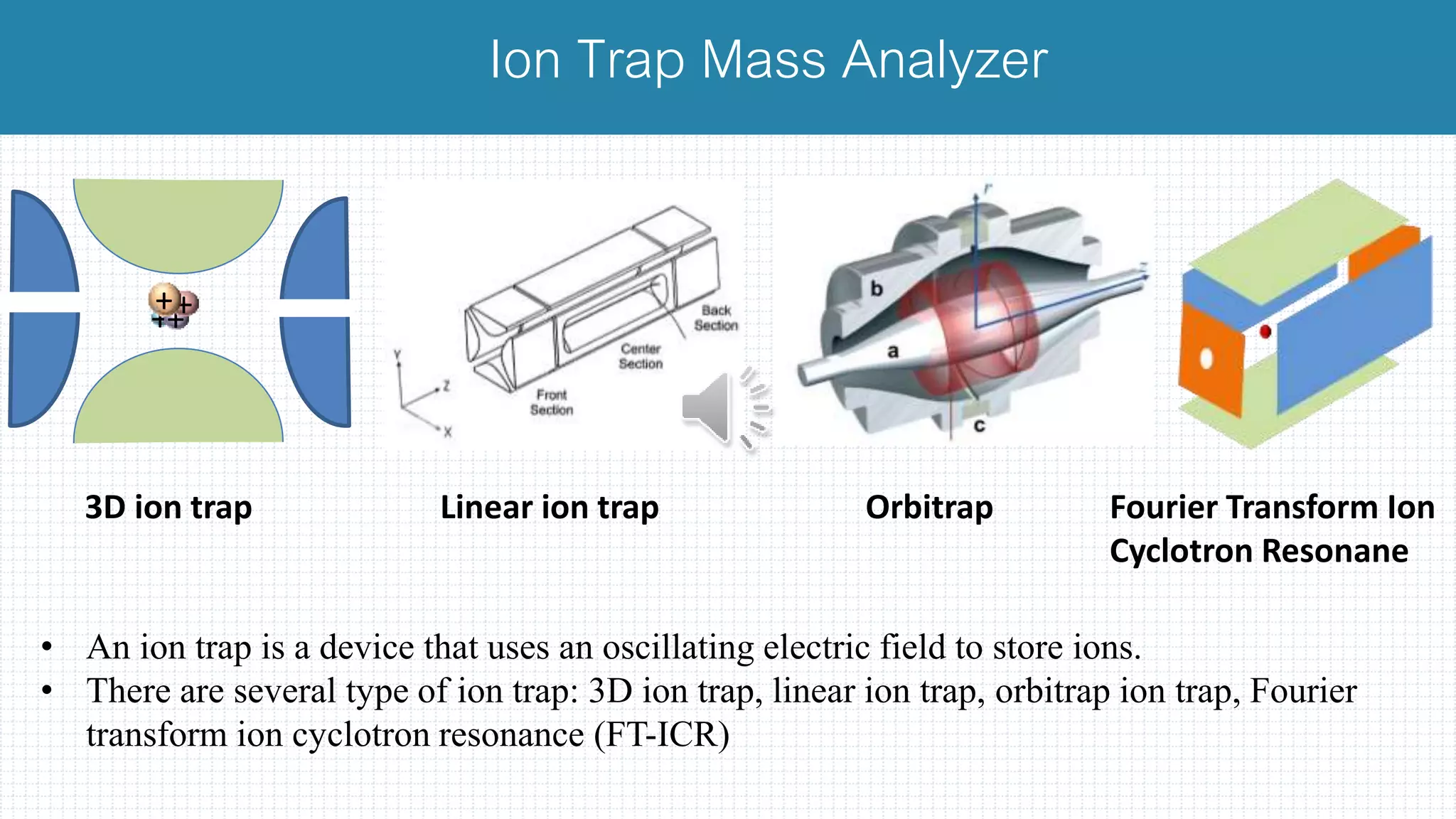
• An ion trap is a device that uses an oscillating electric field to store ions.
• There are several type of ion trap: 3D ion trap, linear ion trap, orbitrap ion trap, Fourier
transform ion cyclotron resonance (FT-ICR)
Ion Trap Mass Analyzer
++++
3D ion trap OrbitrapLinear ion trap Fourier Transform Ion
Cyclotron Resonane
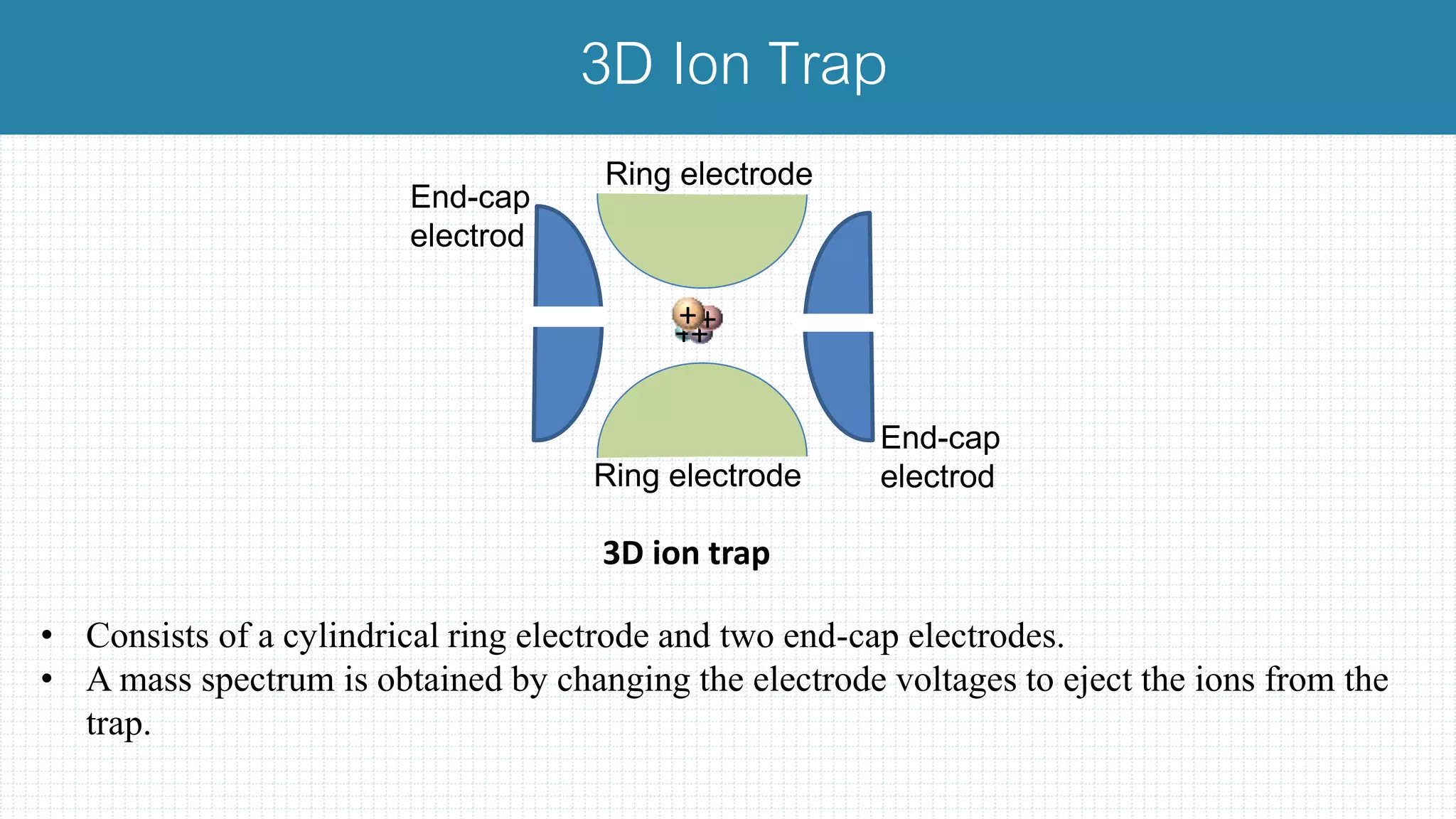
• Consists of a cylindrical ring electrode and two end-cap electrodes.
• A mass spectrum is obtained by changing the electrode voltages to eject the ions from the
trap.
3D Ion Trap
End-cap
electrod
Ring electrode
Ring electrode
End-cap
electrod
++++
3D ion trap
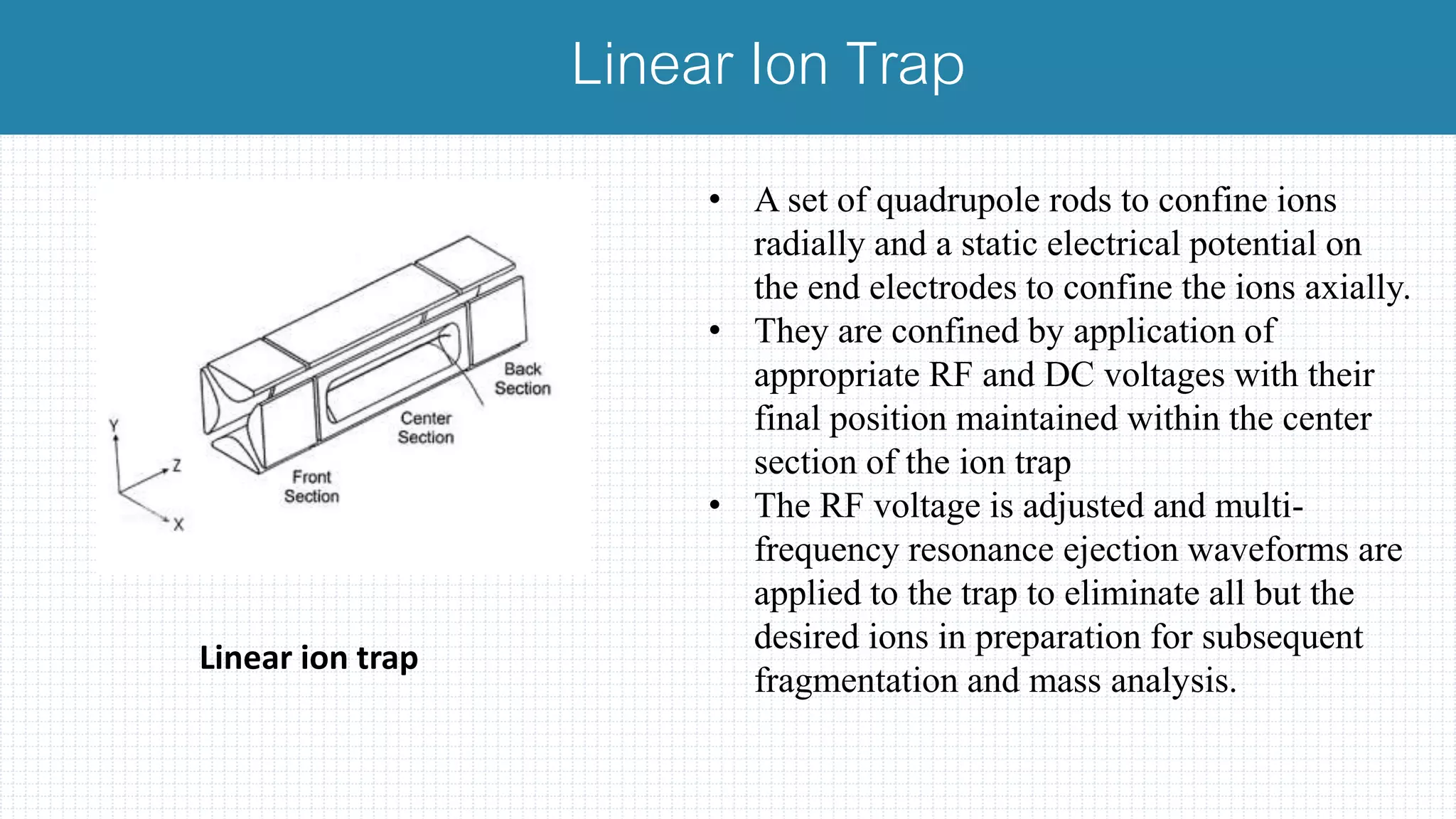
• A set of quadrupole rods to confine ions
radially and a static electrical potential on
the end electrodes to confine the ions axially.
• They are confined by application of
appropriate RF and DC voltages with their
final position maintained within the center
section of the ion trap
• The RF voltage is adjusted and multi-
frequency resonance ejection waveforms are
applied to the trap to eliminate all but the
desired ions in preparation for subsequent
fragmentation and mass analysis.
Linear Ion Trap
Linear ion trap
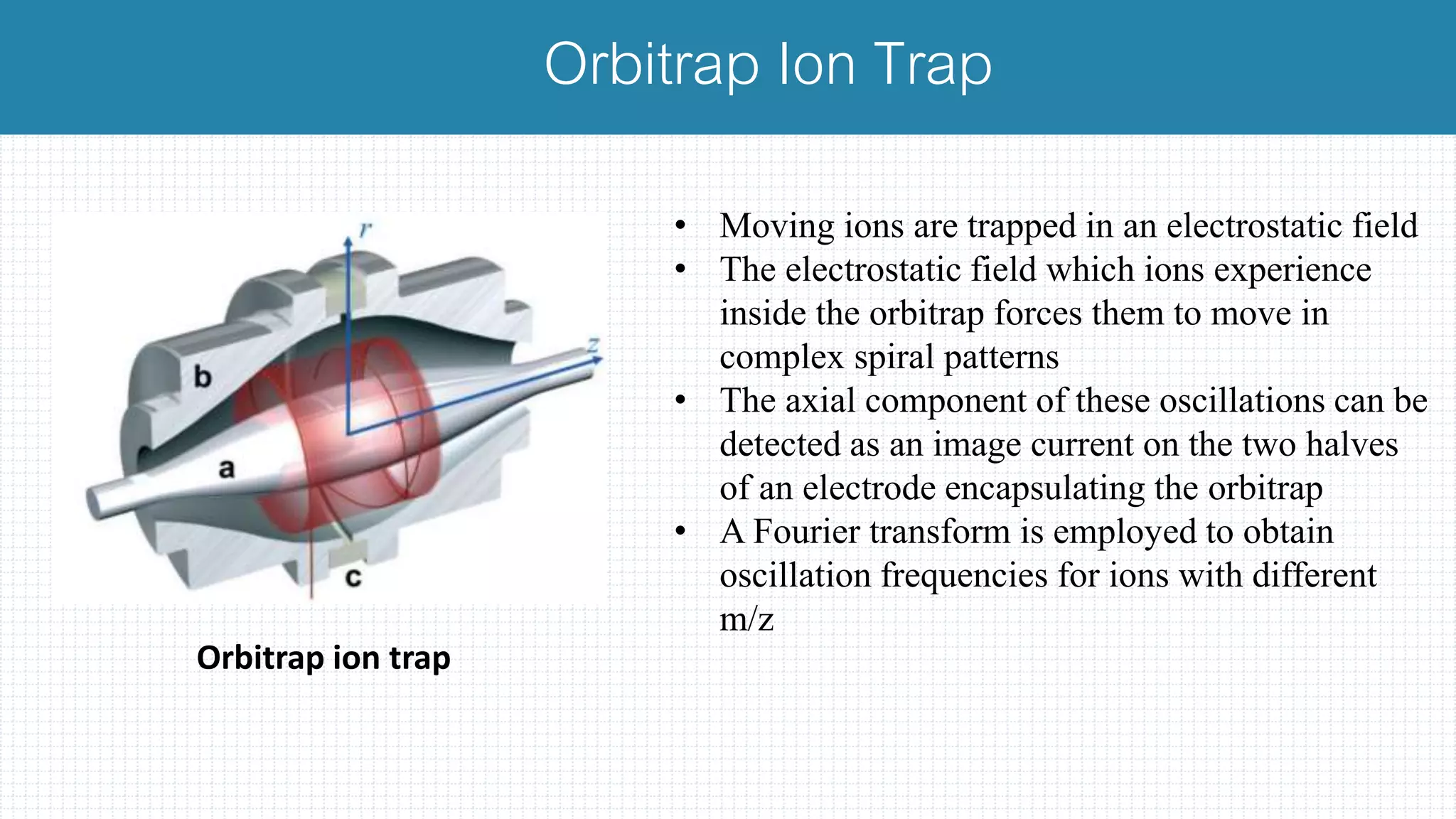
• Moving ions are trapped in an electrostatic field
• The electrostatic field which ions experience
inside the orbitrap forces them to move in
complex spiral patterns
• The axial component of these oscillations can be
detected as an image current on the two halves
of an electrode encapsulating the orbitrap
• A Fourier transform is employed to obtain
oscillation frequencies for ions with different
m/z
Orbitrap Ion Trap
Orbitrap ion trap
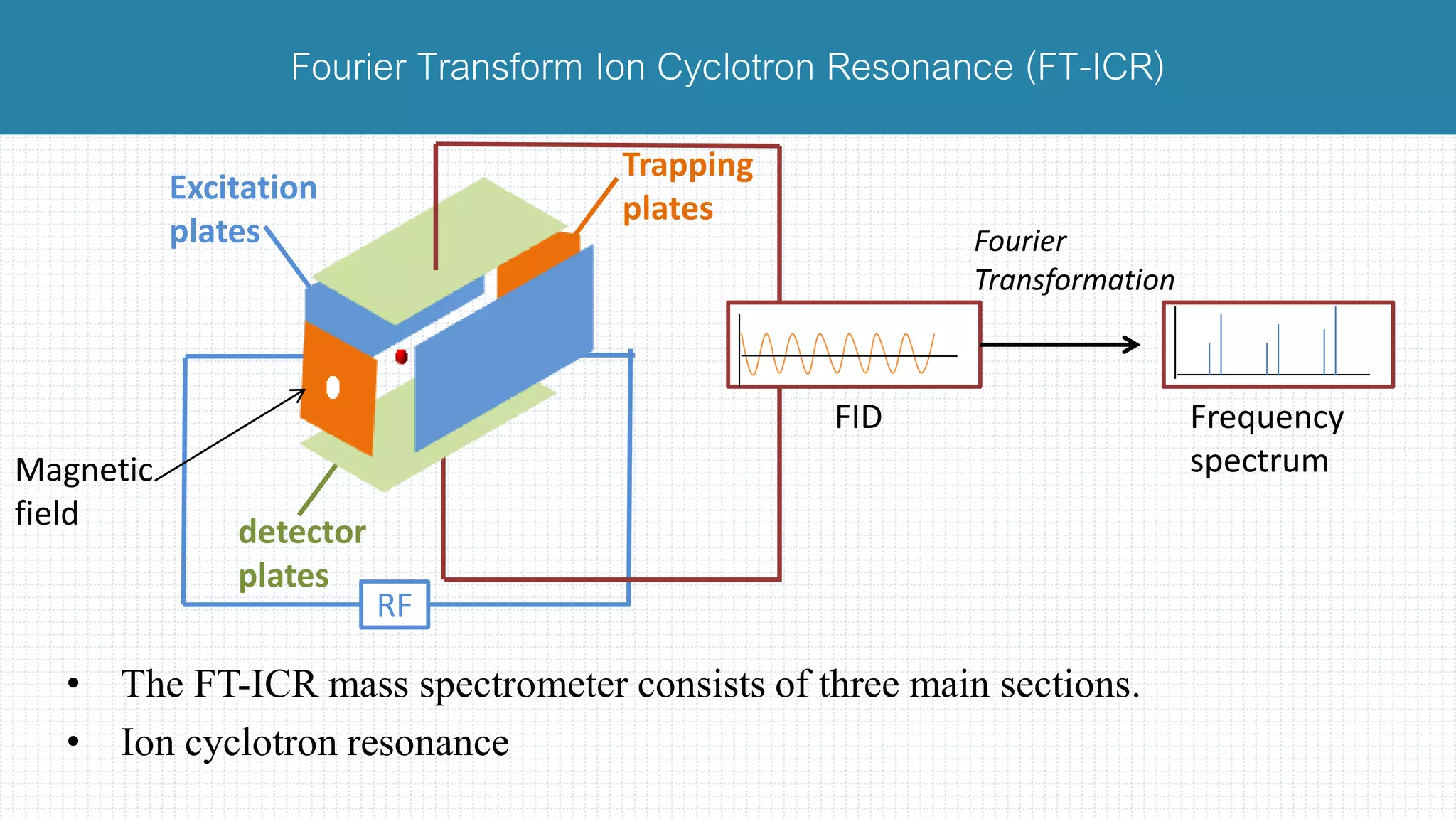
• The FT-ICR mass spectrometer consists of three main sections.
• Ion cyclotron resonance
Fourier Transform Ion Cyclotron Resonance (FT-ICR)
Excitation
plates
detector
plates
Trapping
plates
Magnetic
field
FID Frequency
spectrum
Fourier
Transformation
RF
• Schwartz J C, Senko M W, Syka J E P. A two-dimensional
quadrupole ion trap mass spectrometer. Journal of the American
Society for Mass Spectrometry, 2002, 13(6): 659-669.
• Scigelova M, Makarov A. Orbitrap mass analyzer–overview and
applications in proteomics. Proteomics, 2006, 6(S2): 16-21.
References
Our Information
www.creative-proteomics.com
45-1 Ramsey Road, Shirley, NY 11967, US
THANKS

Introduction of mass spectrometer - basic types of mass analyzer

  • 1.
    Introduction of massspectrometer Presented by Creative Proteomics www.creative-proteomics.com basic types of mass analyzer
  • 2.
    Inlet System Ion sourceMass Analyzer Detector Data System The general components of mass spectrometry
  • 3.
    Basic Types ofMass Analyzer Magnetic Sector Time of Flight Quadrupole Ion Trap Ions are deflected by the magnetic field according to masses of ions. An ion of m/z is determined through a time measurement Only the ions of a particular m/z show a stable trajectory and are transmitted to the detector. An ion trap is a device that uses an oscillating electric field to store ions.
  • 4.
    Magnetic Sector MassAnalyzer •The ions enter the flight tube and are deflected by the magnetic field. •When similar ions pass through the magnetic field, they all will be deflected to the same degree and will all follow the same trajectory path. Deflection Detection
  • 5.
    𝑡 = 𝑑× 1 2𝑉 × 𝑚 𝑒 • m:mass • e:electric charge • V:accelerating voltage Detector Pusher Ion source • Consists of a pulsed ion source, an accelerating grid, a field-free flight tube, and a detector. • The reflection increases resolution by narrowing the broadband range of flight times for a single m/z value. Time of Flight (TOF) Mass Analyzer + + + + d Flight tube V Detector
  • 6.
    + +- - • Consists offour parallel metal rods. Each opposing rod pair is connected together electrically, and a radio frequency (RF) voltage with a direct current (DC) offset voltage is applied between one pair of rods and the other. • For a given DC/RF combination, only ions of a certain m/z pass through the quadrupole filter and all other ions are thrown out of their original path. - - + + Quadrupole Mass Analyzer DC and RF voltages
  • 7.
    • An iontrap is a device that uses an oscillating electric field to store ions. • There are several type of ion trap: 3D ion trap, linear ion trap, orbitrap ion trap, Fourier transform ion cyclotron resonance (FT-ICR) Ion Trap Mass Analyzer ++++ 3D ion trap OrbitrapLinear ion trap Fourier Transform Ion Cyclotron Resonane
  • 8.
    • Consists ofa cylindrical ring electrode and two end-cap electrodes. • A mass spectrum is obtained by changing the electrode voltages to eject the ions from the trap. 3D Ion Trap End-cap electrod Ring electrode Ring electrode End-cap electrod ++++ 3D ion trap
  • 9.
    • A setof quadrupole rods to confine ions radially and a static electrical potential on the end electrodes to confine the ions axially. • They are confined by application of appropriate RF and DC voltages with their final position maintained within the center section of the ion trap • The RF voltage is adjusted and multi- frequency resonance ejection waveforms are applied to the trap to eliminate all but the desired ions in preparation for subsequent fragmentation and mass analysis. Linear Ion Trap Linear ion trap
  • 10.
    • Moving ionsare trapped in an electrostatic field • The electrostatic field which ions experience inside the orbitrap forces them to move in complex spiral patterns • The axial component of these oscillations can be detected as an image current on the two halves of an electrode encapsulating the orbitrap • A Fourier transform is employed to obtain oscillation frequencies for ions with different m/z Orbitrap Ion Trap Orbitrap ion trap
  • 11.
    • The FT-ICRmass spectrometer consists of three main sections. • Ion cyclotron resonance Fourier Transform Ion Cyclotron Resonance (FT-ICR) Excitation plates detector plates Trapping plates Magnetic field FID Frequency spectrum Fourier Transformation RF
  • 12.
    • Schwartz JC, Senko M W, Syka J E P. A two-dimensional quadrupole ion trap mass spectrometer. Journal of the American Society for Mass Spectrometry, 2002, 13(6): 659-669. • Scigelova M, Makarov A. Orbitrap mass analyzer–overview and applications in proteomics. Proteomics, 2006, 6(S2): 16-21. References
  • 13.