What is Media?
Introduction to AS Media Studies (MEST 1)
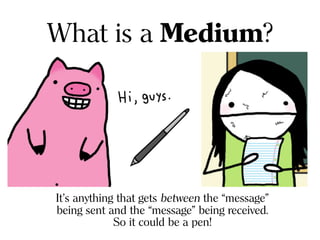
What is a Medium?
It’s anything that gets between the “message”
being sent and the “message” being received.
So it could be a pen!
in other words...
• The media is how messages are
transmitted.
• The “message” could be anything,
including news, facts about the world
(documentary), drama, comedy, music,
opinion: anything you can access through
the media.
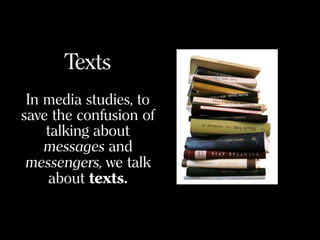
Texts
In media studies, to
save the confusion of
talking about
messages and
messengers, we talk
about texts.
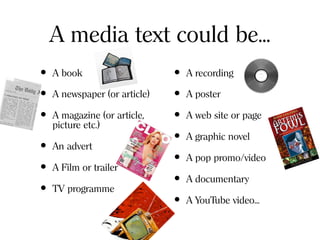
A media text could be...
• A book
• A newspaper (or article)
• A magazine (or article,
picture etc.)
• An advert
• A Film or trailer
• TV programme
• A recording
• A poster
• A web site or page
• A graphic novel
• A pop promo/video
• A documentary
• A YouTube video...
But...
What does the medium do to the message?
(In other words, what happens in between?)
Packages
• Media texts come in individual packages
(newspaper stories, TV or radio programmes,
films, magazine spreads, web sites etc.)
• To create these packages, producers encode
them using the conventions of that media
platform
• The package is then decoded by the
consumer (the audience)
• (We’ll discuss this business of encoding and
decoding more later.)
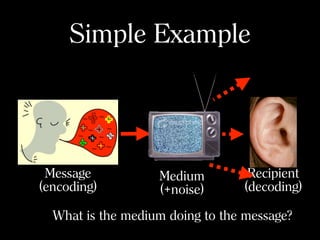
Simple Example
Message
(encoding)
Recipient
(decoding)
Medium
(+noise)
What is the medium doing to the message?
Mixed Messages
• The media are often accused of
dumbing down the message.
• They’re often accused of bias
• The media can be very selective of the
facts they tell us
• The media can distort the truth or
simply get things wrong
Mediated experience
• Something that happens to you is a
direct experience.
• But most of your knowledge about the
world is indirect.
• You learn about the world through media
texts: mediated experience
Key Concepts
• In Media Studies, we look at all these texts with a
particular focus on key concepts.
• The key concepts are:
• Media Language
• Audience
• Institutions
• Representation
Media Language
• What we mean by “media language” are the
forms and conventions used in media texts to
encode and convey meanings.
• In a film, for example, the “media language”
being used might include the way the camera
moves, or the way music or lighting is used
• Both genre and narrative are important
aspects of media language
Audience
• Who are the audience?
• Who is the spectator?
• What does the audience get out of using
the media?
• How is the audience affected by the
media language being used?
• How is the audience targeted?
Institutions
• Who makes media texts – and why?
• Who owns and runs the media – and
why?
• Who controls and regulates the media –
and why ?
• Do they do a good job?
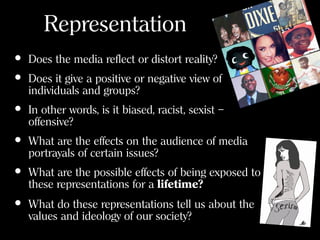
Representation
• Does the media reflect or distort reality?
• Does it give a positive or negative view of
individuals and groups?
• In other words, is it biased, racist, sexist –
offensive?
• What are the effects on the audience of media
portrayals of certain issues?
• What are the possible effects of being exposed to
these representations for a lifetime?
• What do these representations tell us about the
values and ideology of our society?
Review
• List some of the media texts you have
accessed in the last 24 hours.
• How did you access these texts – and
why?

Introducing AS Media Presentation

  • 1.
    What is Media? Introductionto AS Media Studies (MEST 1)
  • 2.
    What is aMedium? It’s anything that gets between the “message” being sent and the “message” being received. So it could be a pen!
  • 3.
    in other words... •The media is how messages are transmitted. • The “message” could be anything, including news, facts about the world (documentary), drama, comedy, music, opinion: anything you can access through the media.
  • 4.
    Texts In media studies,to save the confusion of talking about messages and messengers, we talk about texts.
  • 5.
    A media textcould be... • A book • A newspaper (or article) • A magazine (or article, picture etc.) • An advert • A Film or trailer • TV programme • A recording • A poster • A web site or page • A graphic novel • A pop promo/video • A documentary • A YouTube video...
  • 6.
    But... What does themedium do to the message? (In other words, what happens in between?)
  • 7.
    Packages • Media textscome in individual packages (newspaper stories, TV or radio programmes, films, magazine spreads, web sites etc.) • To create these packages, producers encode them using the conventions of that media platform • The package is then decoded by the consumer (the audience) • (We’ll discuss this business of encoding and decoding more later.)
  • 8.
  • 9.
    Mixed Messages • Themedia are often accused of dumbing down the message. • They’re often accused of bias • The media can be very selective of the facts they tell us • The media can distort the truth or simply get things wrong
  • 10.
    Mediated experience • Somethingthat happens to you is a direct experience. • But most of your knowledge about the world is indirect. • You learn about the world through media texts: mediated experience
  • 11.
    Key Concepts • InMedia Studies, we look at all these texts with a particular focus on key concepts. • The key concepts are: • Media Language • Audience • Institutions • Representation
  • 12.
    Media Language • Whatwe mean by “media language” are the forms and conventions used in media texts to encode and convey meanings. • In a film, for example, the “media language” being used might include the way the camera moves, or the way music or lighting is used • Both genre and narrative are important aspects of media language
  • 13.
    Audience • Who arethe audience? • Who is the spectator? • What does the audience get out of using the media? • How is the audience affected by the media language being used? • How is the audience targeted?
  • 14.
    Institutions • Who makesmedia texts – and why? • Who owns and runs the media – and why? • Who controls and regulates the media – and why ? • Do they do a good job?
  • 15.
    Representation • Does themedia reflect or distort reality? • Does it give a positive or negative view of individuals and groups? • In other words, is it biased, racist, sexist – offensive? • What are the effects on the audience of media portrayals of certain issues? • What are the possible effects of being exposed to these representations for a lifetime? • What do these representations tell us about the values and ideology of our society?
  • 16.
    Review • List someof the media texts you have accessed in the last 24 hours. • How did you access these texts – and why?