MEDIA LANGUAGE
(Media literacy, Media Code)
IDEOLOGY
GENRE
REPRESENTATION
AUDIENCE
INSTITUTION
NARRATION
 Media language is the way in which the meaning of a media text is
conveyed to the audience. One of the ways Media Language works
is to convey meaning through signs and symbols suggested by the
way a scene is set up and filmed.
 Media literacy is the ability to access, analyze, evaluate, and
create media. Media literate youth and adults are better able to
understand the complex messages we receive from television, radio,
Internet, newspapers, magazines, books, billboards, video games,
music, and all other forms of media
An ideology is a world view, a system of values, attitudes and beliefs which
an individual, group or society holds to be true or important; these are
shared by a culture or society about how that society should function.
The media is a successful carrier of ideology because it reaches such a huge
audience. The study of the media allows us to consider and question
dominant ideologies and look for the implications of different ideology and
value systems.
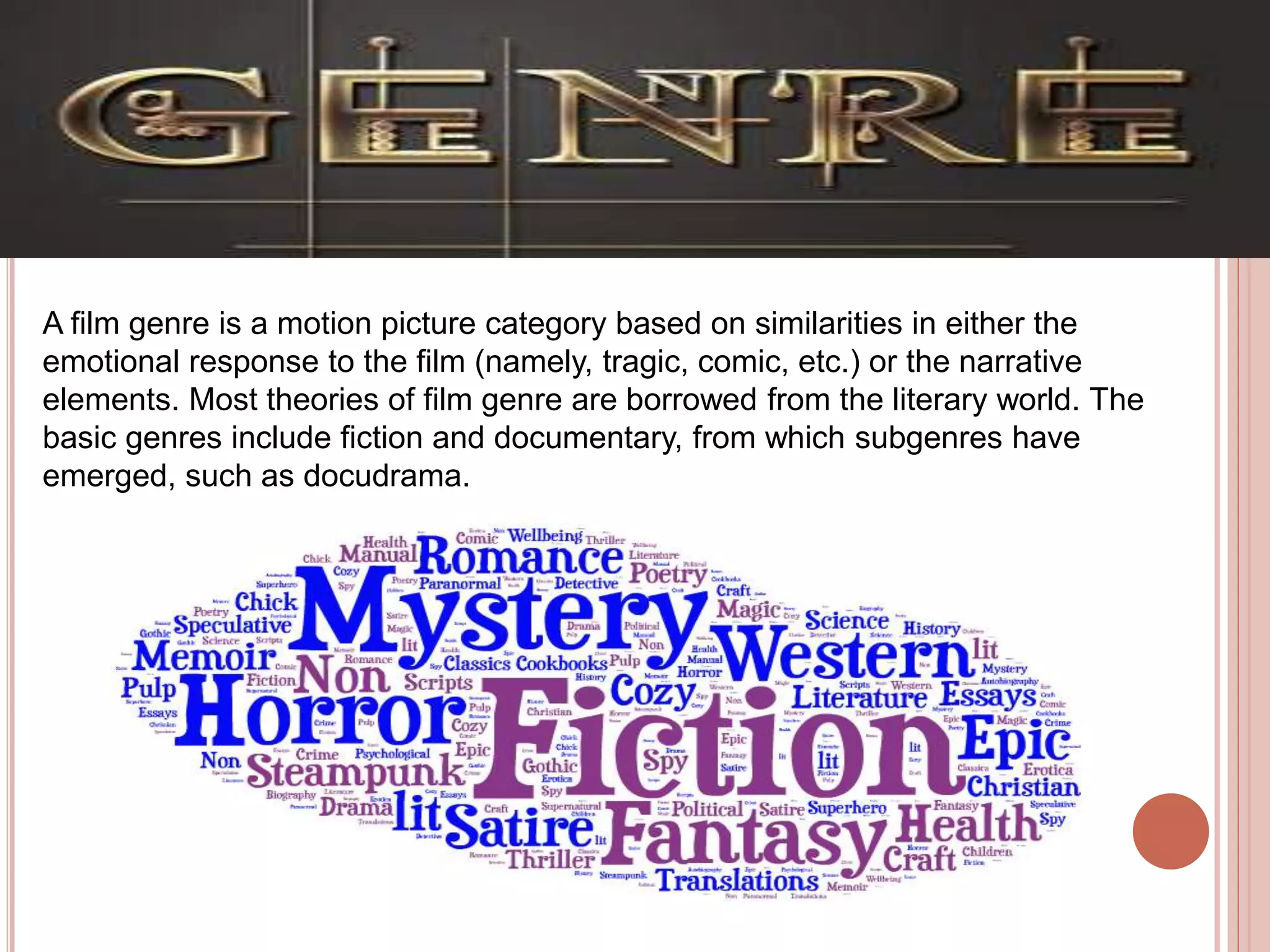
A film genre is a motion picture category based on similarities in either the
emotional response to the film (namely, tragic, comic, etc.) or the narrative
elements. Most theories of film genre are borrowed from the literary world. The
basic genres include fiction and documentary, from which subgenres have
emerged, such as docudrama.
AUDIENCE
A target audience is the intended audience or
readership of a publication, advertisement, or other
message. In marketing and advertising, it is a
particular group of consumers within the
predetermined target market, identified as the
targets or recipients for a particular advertisement
or message.
NARRATION
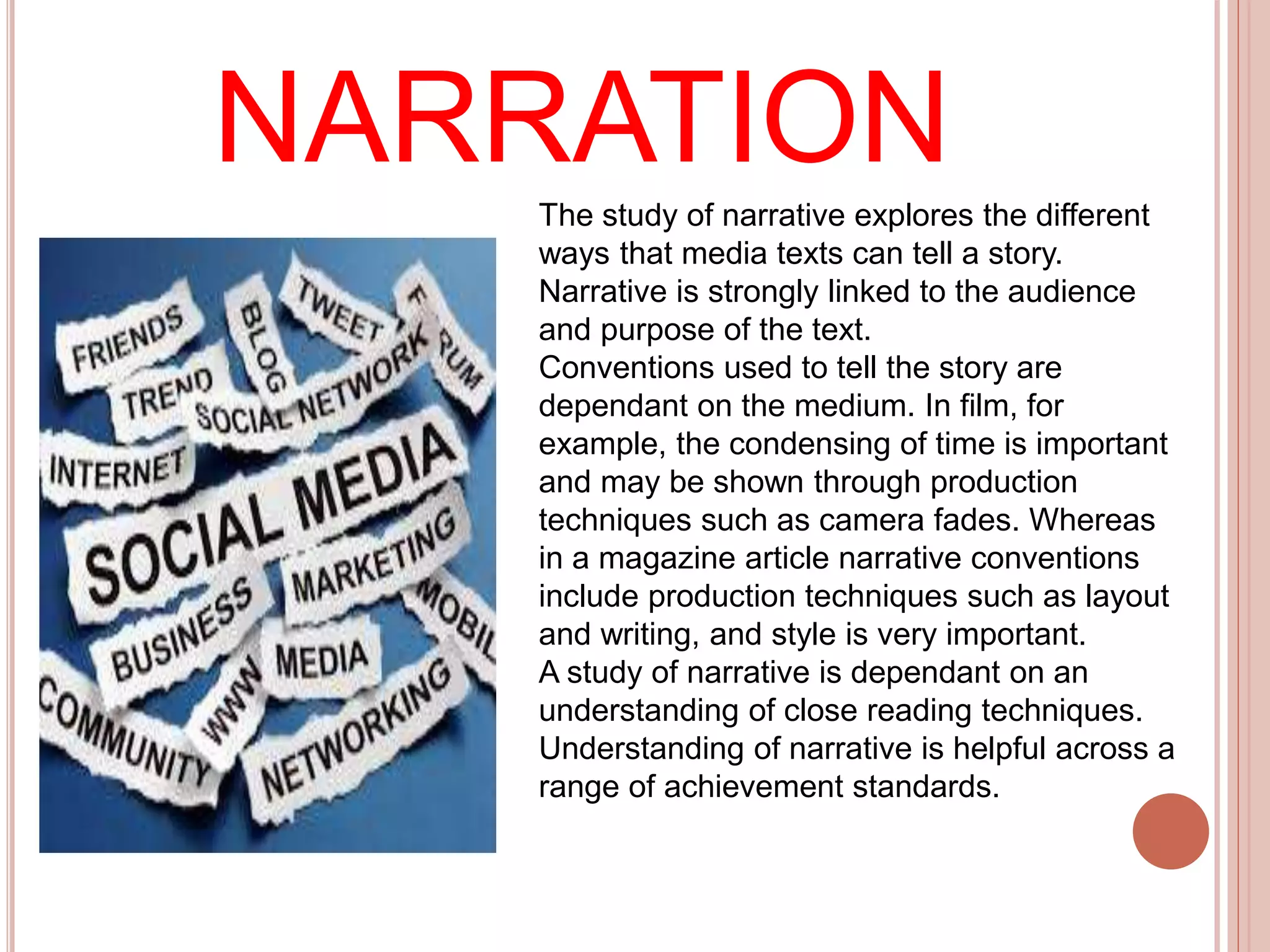
The study of narrative explores the different
ways that media texts can tell a story.
Narrative is strongly linked to the audience
and purpose of the text.
Conventions used to tell the story are
dependant on the medium. In film, for
example, the condensing of time is important
and may be shown through production
techniques such as camera fades. Whereas
in a magazine article narrative conventions
include production techniques such as layout
and writing, and style is very important.
A study of narrative is dependant on an
understanding of close reading techniques.
Understanding of narrative is helpful across a
range of achievement standards.

Sara media presentation key media

  • 2.
    MEDIA LANGUAGE (Media literacy,Media Code) IDEOLOGY GENRE REPRESENTATION AUDIENCE INSTITUTION NARRATION
  • 3.
     Media languageis the way in which the meaning of a media text is conveyed to the audience. One of the ways Media Language works is to convey meaning through signs and symbols suggested by the way a scene is set up and filmed.  Media literacy is the ability to access, analyze, evaluate, and create media. Media literate youth and adults are better able to understand the complex messages we receive from television, radio, Internet, newspapers, magazines, books, billboards, video games, music, and all other forms of media
  • 4.
    An ideology isa world view, a system of values, attitudes and beliefs which an individual, group or society holds to be true or important; these are shared by a culture or society about how that society should function. The media is a successful carrier of ideology because it reaches such a huge audience. The study of the media allows us to consider and question dominant ideologies and look for the implications of different ideology and value systems.
  • 5.
    A film genreis a motion picture category based on similarities in either the emotional response to the film (namely, tragic, comic, etc.) or the narrative elements. Most theories of film genre are borrowed from the literary world. The basic genres include fiction and documentary, from which subgenres have emerged, such as docudrama.
  • 7.
    AUDIENCE A target audienceis the intended audience or readership of a publication, advertisement, or other message. In marketing and advertising, it is a particular group of consumers within the predetermined target market, identified as the targets or recipients for a particular advertisement or message.
  • 9.
    NARRATION The study ofnarrative explores the different ways that media texts can tell a story. Narrative is strongly linked to the audience and purpose of the text. Conventions used to tell the story are dependant on the medium. In film, for example, the condensing of time is important and may be shown through production techniques such as camera fades. Whereas in a magazine article narrative conventions include production techniques such as layout and writing, and style is very important. A study of narrative is dependant on an understanding of close reading techniques. Understanding of narrative is helpful across a range of achievement standards.