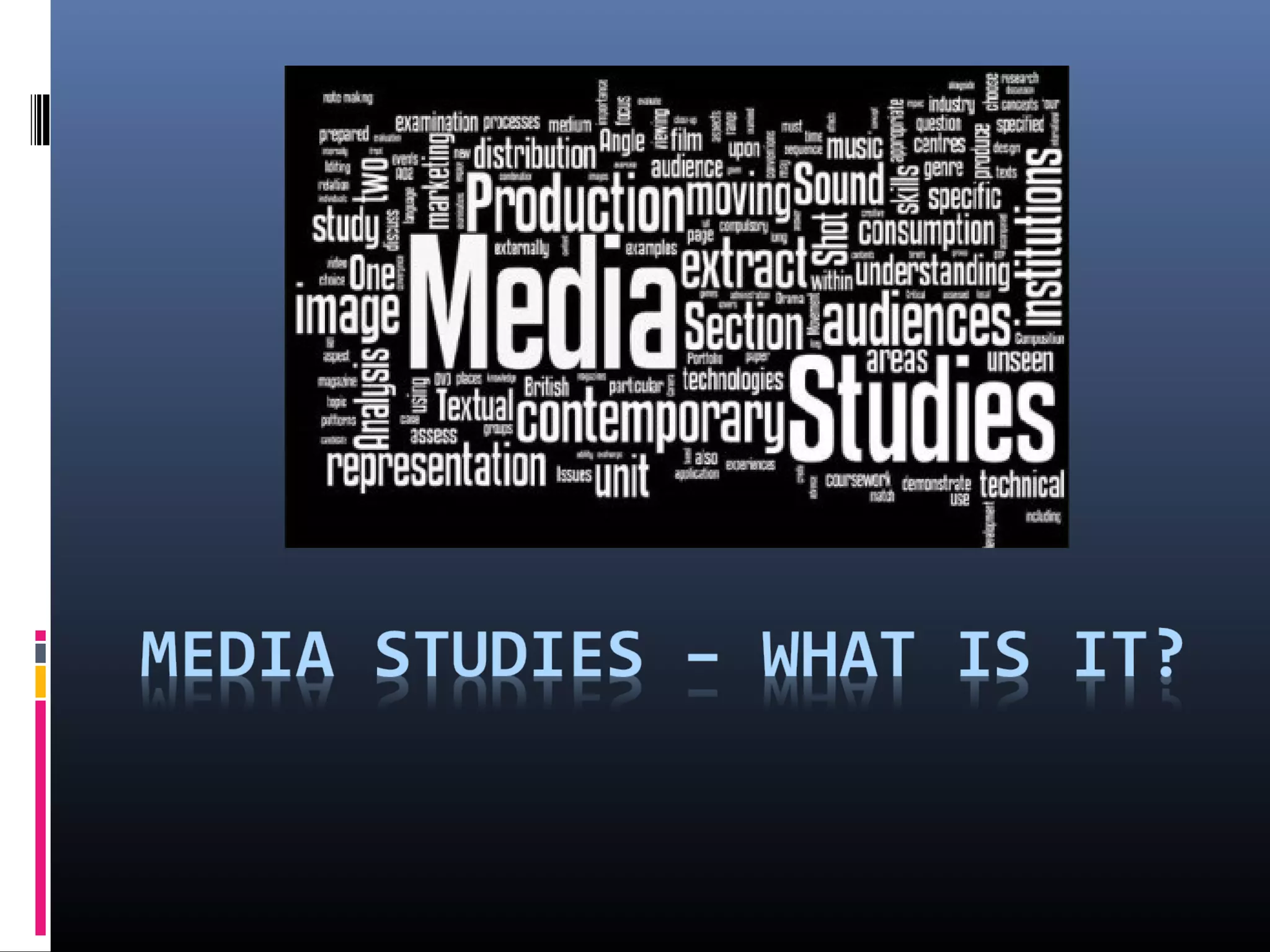
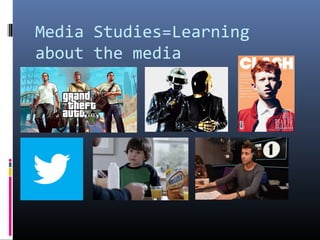
Media Studies=Learning
about the media
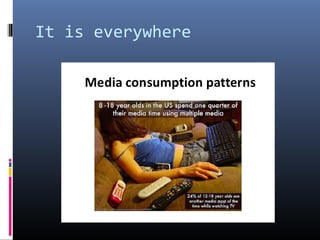
It is everywhere
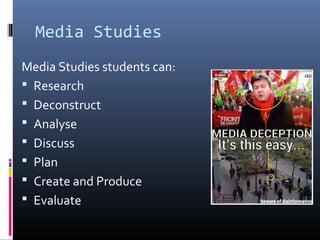
Media Studies
Media Studies students can:
 Research
 Deconstruct
 Analyse
 Discuss
 Plan
 Create and Produce
 Evaluate
Is it for you?
 YES if:
 You like working with media texts like films and
magazines, etc, but you want a deeper
understanding of how they are made and how
they work.
 You think you might like to work in the media
when you leave school.
 You have an inquisitive and analytical mind and
like to be critical of things.
 You enjoy being creative.
Is it for you?
 NO if:
 You find writing or working with computers
hard.
 You think it’s going to be an easy ride for two
years.
 You don’t watch films or TV, read magazines or
newspapers, use the internet, or listen to the
radio.
 You find creating imaginary products difficult.
You are going to need a creative imagination.
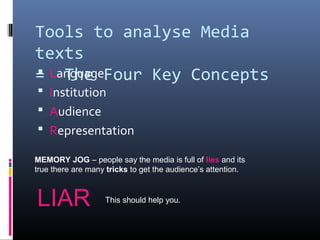
Tools to analyse Media
texts
= The Four Key Concepts Language
 Institution
 Audience
 Representation
MEMORY JOG – people say the media is full of lies and its
true there are many tricks to get the audience’s attention.
LIAR This should help you.
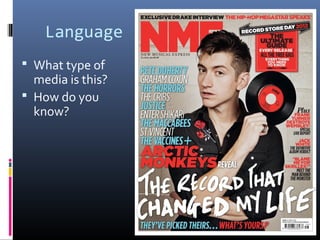
Language
 What type of
media is this?
 How do you
know?
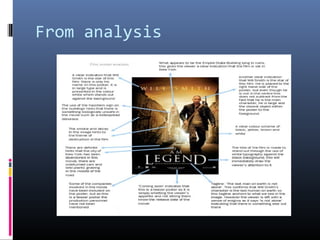
From analysis
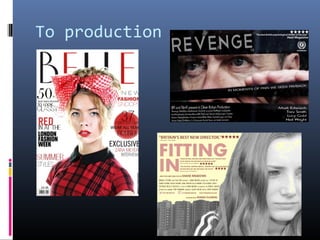
To production
Institution
 This is who makes the Media texts. The
institution can be a large company like Warner
Bros. Pictures or a small company like Working
Title.
Audience
 People who listen, watch, read or use media
texts are called the audience.
 Audiences are grouped together by gender,
age, how much money they earn and what
they like.
 Institutions work hard to make their media
texts appeal to the right audience.
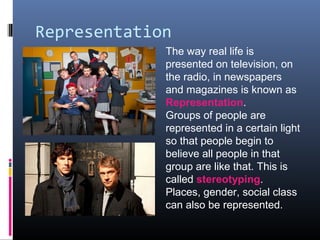
Representation
The way real life is
presented on television, on
the radio, in newspapers
and magazines is known as
Representation.
Groups of people are
represented in a certain light
so that people begin to
believe all people in that
group are like that. This is
called stereotyping.
Places, gender, social class
can also be represented.
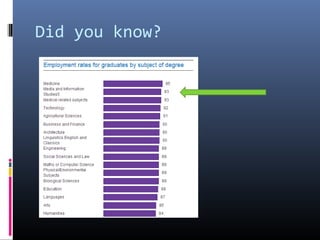
Did you know?
Thinking about A Level
 http://youtu.be/CjSuEDRRbOY
Links
 YouTube channel
http://www.youtube.com/user/AshfieldMedia
 Blog
http://ashfieldmediastudies.blogspot.co.uk/
 Twitter @AshfieldMedia
QUESTIONS?

Year 9 options evening

  • 2.
  • 3.
  • 4.
    Media Studies Media Studiesstudents can:  Research  Deconstruct  Analyse  Discuss  Plan  Create and Produce  Evaluate
  • 5.
    Is it foryou?  YES if:  You like working with media texts like films and magazines, etc, but you want a deeper understanding of how they are made and how they work.  You think you might like to work in the media when you leave school.  You have an inquisitive and analytical mind and like to be critical of things.  You enjoy being creative.
  • 6.
    Is it foryou?  NO if:  You find writing or working with computers hard.  You think it’s going to be an easy ride for two years.  You don’t watch films or TV, read magazines or newspapers, use the internet, or listen to the radio.  You find creating imaginary products difficult. You are going to need a creative imagination.
  • 7.
    Tools to analyseMedia texts = The Four Key Concepts Language  Institution  Audience  Representation MEMORY JOG – people say the media is full of lies and its true there are many tricks to get the audience’s attention. LIAR This should help you.
  • 8.
    Language  What typeof media is this?  How do you know?
  • 9.
  • 10.
  • 11.
    Institution  This iswho makes the Media texts. The institution can be a large company like Warner Bros. Pictures or a small company like Working Title.
  • 12.
    Audience  People wholisten, watch, read or use media texts are called the audience.  Audiences are grouped together by gender, age, how much money they earn and what they like.  Institutions work hard to make their media texts appeal to the right audience.
  • 13.
    Representation The way reallife is presented on television, on the radio, in newspapers and magazines is known as Representation. Groups of people are represented in a certain light so that people begin to believe all people in that group are like that. This is called stereotyping. Places, gender, social class can also be represented.
  • 14.
  • 15.
    Thinking about ALevel  http://youtu.be/CjSuEDRRbOY
  • 16.
    Links  YouTube channel http://www.youtube.com/user/AshfieldMedia Blog http://ashfieldmediastudies.blogspot.co.uk/  Twitter @AshfieldMedia
  • 17.